Most people pick basement wall paint the way they’d pick paint for a bedroom — grab a can, roll it on, done. Then six months later it’s peeling in sheets, chalking white, or hiding a moisture problem that quietly turns into mold behind the drywall.
Basement walls are their own animal. Concrete is alkaline and porous. Masonry moves water. Finished walls sit in the dampest, least-ventilated room in the house. The “best” paint depends entirely on which of those three you’re dealing with — and on one test you should run before you buy anything.
Here’s the short version, then the details.
Best paint for basement walls at a glance
The best paint for basement walls depends on the surface: use a masonry waterproofer for bare concrete or block that sees moisture, a masonry acrylic latex for bare walls you just want sealed and colored, and a mildew-resistant interior latex for finished drywall. Never use ordinary interior wall paint on bare below-grade masonry.
Wall type
Recommended paint
What it does
What to avoid
Bare poured concrete
Masonry waterproofer or masonry acrylic
Resists alkalinity and bonds to porous concrete
Ordinary interior wall paint
Concrete block or brick
Masonry waterproofer, block filler, or masonry acrylic
Fills porous surfaces and improves adhesion
Painting over efflorescence
Finished drywall
Mildew-resistant interior acrylic latex
Provides a washable finish for humid spaces
Cheap flat builder-grade paint
That table is the whole decision. Everything below is why — and the mistakes that cost people a second paint job.
Run this test before you buy a single can
⚠️ Warning: The number one reason basement paint fails isn’t the paint. It’s moisture the wall was pushing out that had nowhere to go once you sealed it.
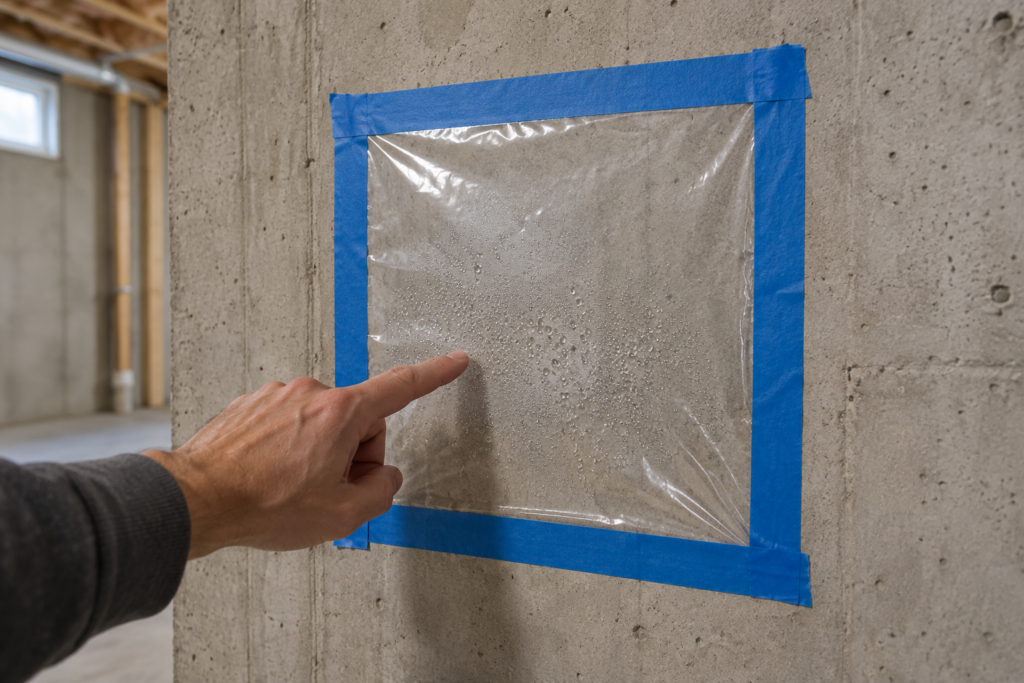
🧪 The test to run: Tape an 18×18-inch square of clear plastic sheeting tightly to the wall on all four edges. Leave it 24 to 72 hours (the plastic-sheet method is described in ASTM D4263). Then check it:
Condensation under the plastic, or the concrete darkened → the wall is passing moisture. Painting now will fail. Find the source first.
Dry and unchanged → No moisture was detected during the test period, but check several locations and repeat the test after heavy rain if the basement has a history of dampness.
The plastic-sheet test is only a basic screening method. If the results are unclear or the basement has a history of water intrusion, use a masonry moisture meter or have the wall evaluated by a waterproofing professional. For a fuller workup before you commit to a finish, our basement moisture test guide walks through the readings worth taking.
Test in a few spots, not one. Walls closest to grade and near the floor-wall joint are usually the wettest.
If you’re seeing standing water, seepage after rain, or a wall that’s wet to the touch, stop. Paint is not waterproofing. You have a drainage problem, and the fix is grading, gutters, or drain tile — not a bucket of paint. If that’s your situation, the best basement wall systems guide covers the assemblies that actually hold back water.
Best paint for bare concrete basement walls
Bare poured-concrete foundation walls need a paint built for two things concrete throws at you: high alkalinity and porosity.
Fresh concrete sits around pH 12–13. That alkalinity chews through ordinary paint binders (it’s called saponification — the paint literally turns soapy and lets go). This is why regular interior latex fails on bare concrete even when the wall is bone dry.
When a masonry waterproofer makes sense
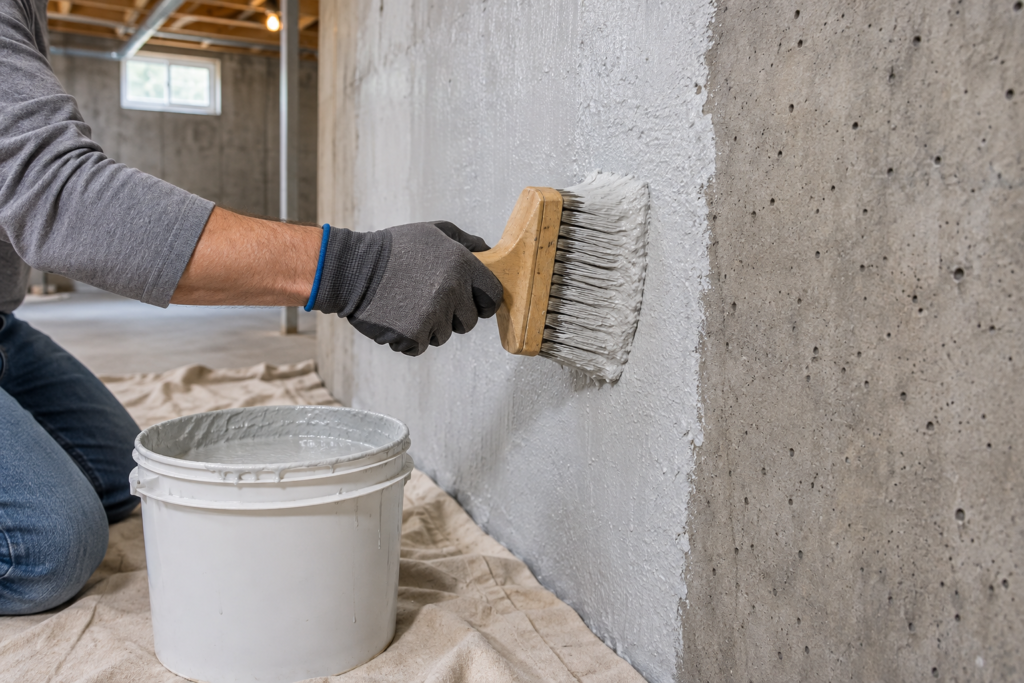
For bare concrete or block with minor moisture transmission, a masonry waterproofer may be appropriate. Drylok Extreme is a latex-based masonry waterproofer designed to penetrate masonry pores and resist water pressure from the negative side (water pushing toward you from outside the wall). Note that it’s a low-perm coating — the manufacturer rates it under 1 perm — so on a below-grade wall you still need to think about which way the wall dries. More on that below.
It isn’t the automatic answer for every wall, though — the right coating depends on the wall’s condition, any existing coatings, the moisture source, and the manufacturer’s requirements. Read the label against your actual wall.
Two rules people ignore and regret:
For rated waterproofing performance, follow the manufacturer’s surface-preparation requirements.Previously painted masonry may require removal or special preparation. If your wall’s already painted, that usually means stripping it or switching to a decorative masonry acrylic that doesn’t promise waterproofing.
Apply the first coat according to the manufacturer’s instructions, working the coating thoroughly into pores and pinholes. Some products permit a brush, roller, or sprayer, but complete coverage is essential. Miss the pinholes and you get leaks that look like paint failure — it isn’t; it’s incomplete coverage.
Masonry acrylic latex (when you just want it sealed and colored)
If the wall’s already dry, above the water table, and you mainly want a clean, sealed, finished look — a concrete/masonry acrylic latex (Behr Masonry, INSL-X, Rust-Oleum) is easier to apply, comes in real colors, and breathes well. It’s alkali-resistant but it is not a waterproofer. Don’t let the “for masonry” label fool you into thinking it stops water.
❌ The mistake: Painting new concrete too soon. Fresh concrete needs to cure and its pH needs to drop before it’ll hold paint — plan on roughly 28–30 days minimum, longer in a cool basement. Paint a green wall and it’ll bubble and peel no matter how good the product is. If you’re on a deadline, that’s the deadline that matters.
Best paint for masonry, block and brick walls
Cinder block (CMU) and brick are more porous than poured concrete, so they drink paint. Budget for more product than the can’s coverage number suggests — the first coat mostly disappears into the block.
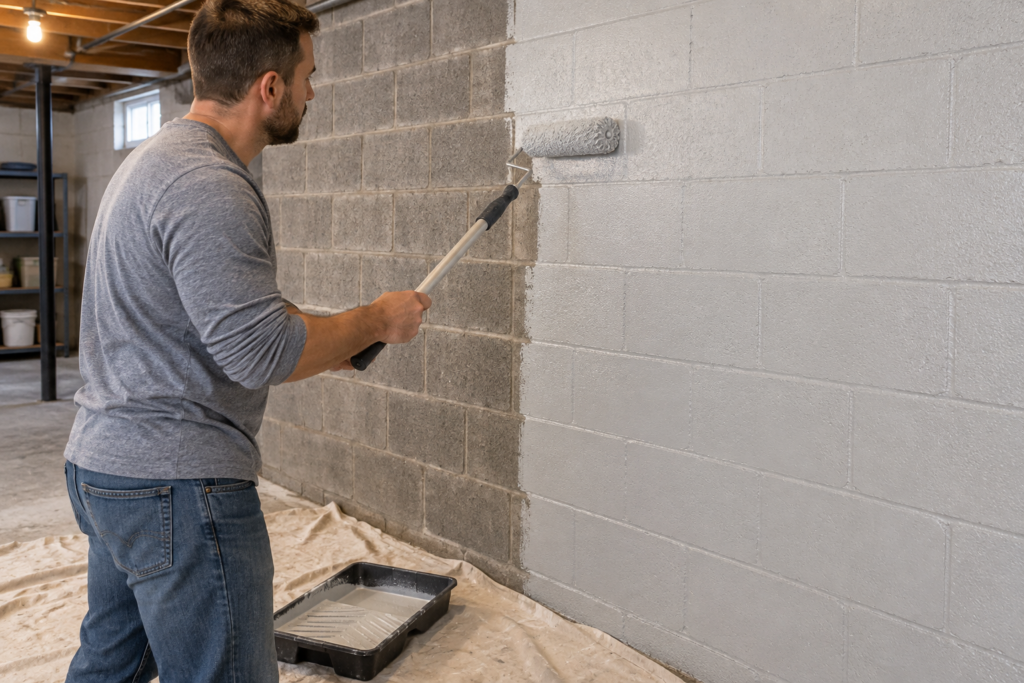
For block that sees moisture, the same masonry waterproofer works and the extra porosity actually helps it key in. For dry block you’re just finishing, a masonry acrylic (often a block-filler primer first, then topcoat) gives you a smooth, sealed surface.
😬 What people regret: reaching for an elastomeric coating on interior below-grade walls. Elastomerics are thick, flexible, and great for bridging hairline cracks on exterior masonry. Below grade, on the inside, they can seal so tightly that moisture trying to leave the wall gets trapped in the assembly — and now you’ve got a damp wall that can’t dry in either direction. Save elastomeric for outside.
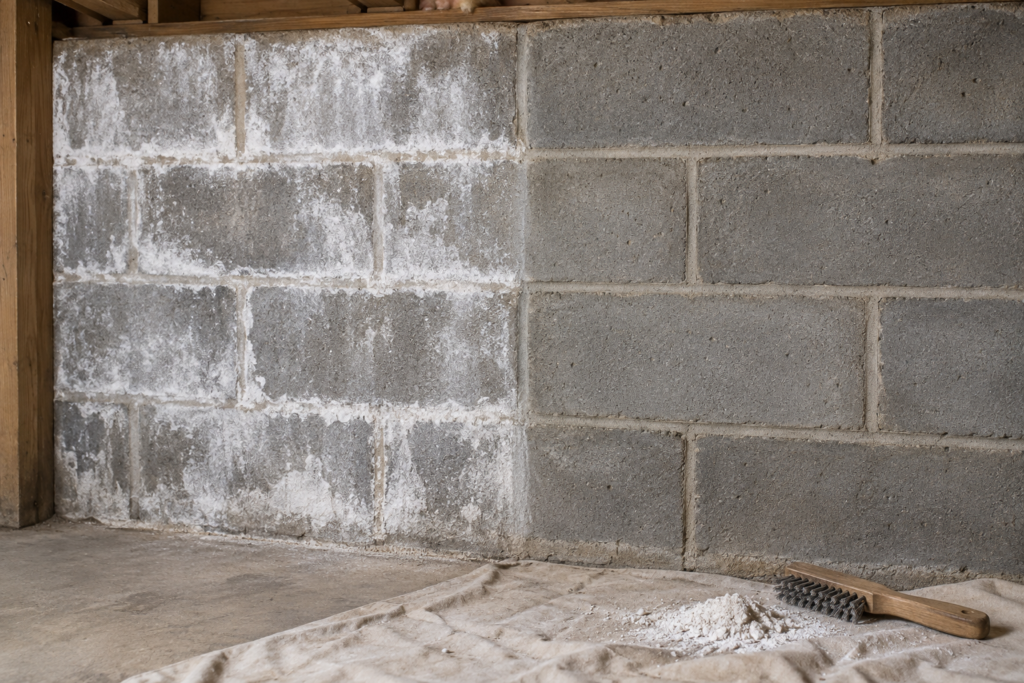
Those white, powdery, crystalline deposits are efflorescence — mineral salts left behind as water moves through the masonry and evaporates. It’s not dirt and it’s not a paint problem. It’s a moisture signal.
❌ The mistake that guarantees a redo: painting over it. Paint won’t bond to the salt layer, and the water that carried the salt is still moving. It’ll push the paint right back off.
Clean remaining deposits with a masonry cleaner recommended by the paint manufacturer. Follow its ventilation, rinsing, drying, and protective-equipment instructions.
Let it fully dry.
Figure out where the water’s coming from. If efflorescence keeps returning, no paint will hold until the source is addressed.
Recurring efflorescence and musty smells often mean you’ve already got moisture living in the wall assembly — worth getting ahead of it with the right mold-resistant basement materials before you seal anything in.
Can you paint over previously painted basement walls?
Yes, but only if the existing coating is firmly bonded and compatible with the new paint. Scrape loose material, clean the wall, repair cracks, and test adhesion in a small area first. Masonry waterproofers often require bare or specifically prepared masonry to deliver their advertised water-resistance performance, so follow the exact product label rather than assuming they can go over old paint.
The practical split: if the old paint is sound and you just want a fresh, sealed, decorative finish, a compatible masonry acrylic over the top is fine. If you’re painting because the wall has a moisture problem, old paint is working against you — a waterproofer over it won’t perform, and you’re back to stripping.
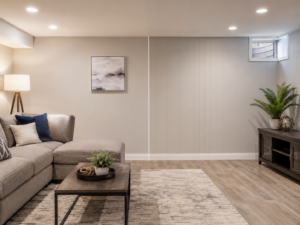
Best paint for finished basement walls (drywall)
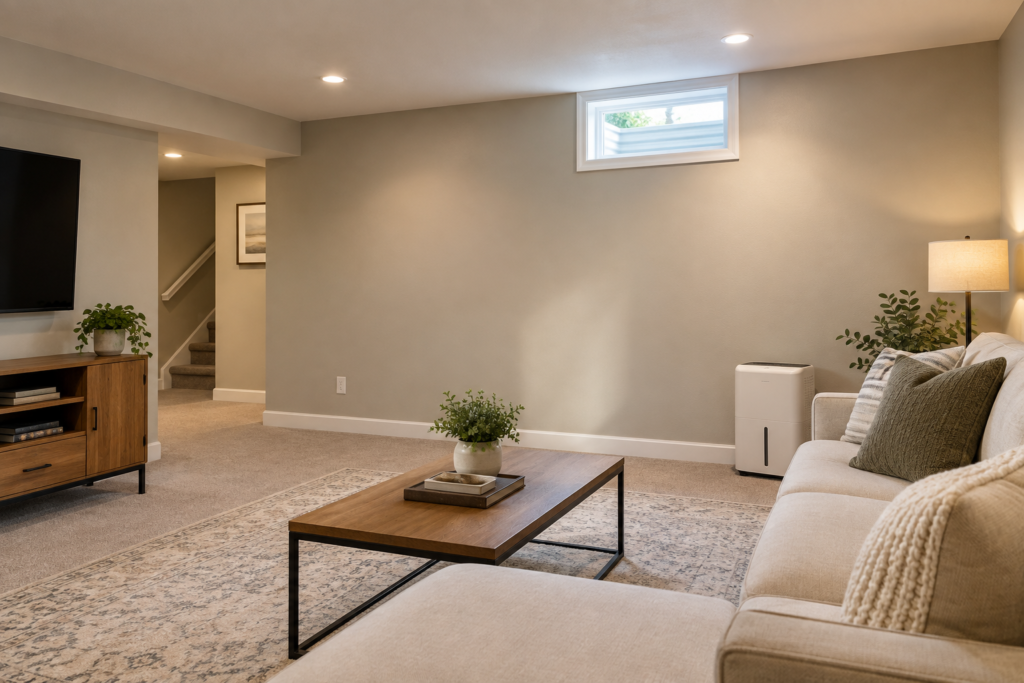
Once you’ve got framed, insulated, drywalled walls, you’re back in normal-paint territory — with one adjustment. A finished basement is still the dampest, least-ventilated room in the house, so the paint needs to fight mildew.
Use a mildew-resistant interior acrylic latex. Bathroom/kitchen formulas (Zinsser Perma-White, or a premium interior with a mildewcide) are built for exactly this air.
Prime first, especially over new drywall or any water-stained spots — a stain-blocking primer keeps old marks from ghosting through.
Skip flat. An eggshell or satin sheen wipes down and resists moisture better than a dead-flat finish that grabs every bit of humidity.
One assembly note that trips people up: a finished basement wall is a system, and the paint is the last layer of it. If the framing behind it isn’t handling vapor correctly, no paint saves you. How that wall is built — and whether it dries inward or outward — matters more than the color. If you’re planning the finish, the basement wall panels vs. drywall breakdown and the basement subfloor guide both feed into getting the assembly right the first time.
Don’t call it a vapor barrier — and don’t accidentally build one
Here’s the technical point most basement paint advice gets wrong, and it costs people real money.
Below-grade concrete generally needs to be able to dry inward, toward the living space, because it can’t dry outward into the soil. If you coat the interior face with a low-perm film, you can trap moisture inside the wall — the exact opposite of what you wanted. (A low-perm coating like a masonry waterproofer — Drylok Extreme is rated under 1 perm — sits on the impermeable end of that scale, which is exactly why drying direction matters.)
The current building code (IRC) doesn’t use the term “vapor barrier” anymore. It classifies materials as Class I, II, or III vapor retarders by permeance, and the right class depends on your climate and wall assembly — our basement vapor barrier guide maps out where each one belongs by location. On a below-grade wall, that difference decides whether the wall dries or rots.
This is the single most important thing to get right, and it’s worth reading up on before you commit a coating you can’t easily remove: how Drylok compares to a true vapor retarder goes deeper than a paint can’s back label ever will.
The cost math nobody runs
💸 Cost difference: A gallon of masonry waterproofer runs roughly $35–$60, and a 5-gallon pail can hit $200. Feels like the cheap fix. But here’s the trap: if you paint over an active moisture problem, the coating fails in months, and now you’re paying to strip failed paint (labor-heavy, miserable) before you can do the real job. The “cheap” can turned into a strip-and-redo plus the actual waterproofing you needed all along.
The honest framing: paint is the finish for a wall that’s already dry or lightly damp. It is not the repair for a wall with a water problem. Buy the coating only after correcting the drainage or water-entry problem — not instead of correcting it. Getting that order wrong is the most expensive mistake in this entire article.
How to paint basement walls: the short version
Test for moisture (plastic-sheet test, above). Don’t skip it.
Clean the surface — remove efflorescence, dust, old flaking paint, and any mold.
Let it fully cure and dry (new concrete ~28–30 days).
Prime if needed — alkali-resistant/masonry primer or block filler for non-self-priming topcoats. Waterproofers go on bare, no primer.
Work the first coat thoroughly into the pores per the product’s instructions; complete coverage matters more than the tool.
Two coats minimum. Porous block may want three.
Ventilate and let each coat cure before the next.
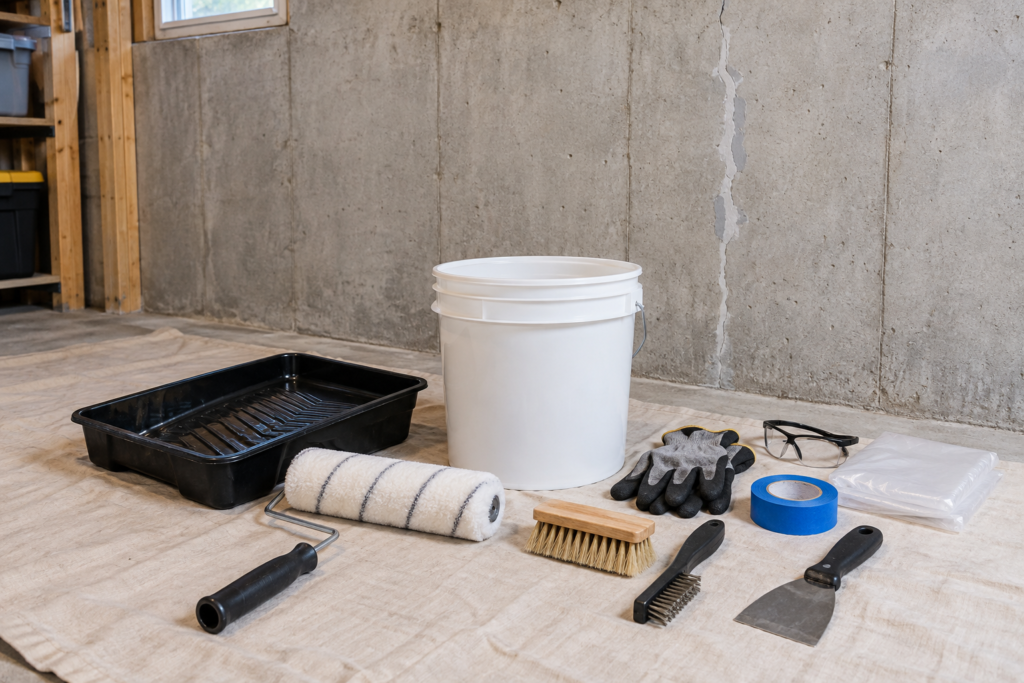
Tools and paint I’d reach for
Everything in one place (Amazon keyword links carrying the site tag — swap to specific product links if you prefer):
Can I use regular interior paint on basement concrete walls? No. Bare concrete is highly alkaline and porous, which breaks down ordinary interior paint binders and causes peeling. Use a masonry-rated paint (waterproofer or masonry acrylic) on bare walls; regular interior latex is only appropriate on finished drywall.
Does waterproofing paint actually stop basement water? It resists moisture and can hold back some water pressure from the negative side, but it is not a fix for active water intrusion. If water is seeping in, the solution is drainage and grading, not paint.
How long does new concrete need to cure before painting? Plan on roughly 28–30 days minimum, and longer in a cool basement. The concrete needs to cure and its pH to drop before paint will bond. Painting too soon causes bubbling and peeling.
Why is white powder coming through my basement paint? That’s efflorescence — mineral salts left behind by moisture moving through the masonry. It means water is still passing through the wall. Remove it and address the moisture source; painting over it will only push the new paint off.
Can you paint over previously painted basement walls? Yes, if the existing coating is firmly bonded and compatible with the new paint — scrape loose spots, clean, repair cracks, and test adhesion first. But masonry waterproofers usually need bare or specially prepared masonry to perform, so check the product label before coating over old paint.
What paint is best for finished (drywall) basement walls? A mildew-resistant interior acrylic latex in an eggshell or satin sheen, over a stain-blocking primer. Basements are humid, so a mildewcide-containing formula outperforms standard flat wall paint.
Best Paint for Exterior Plywood: What Actually Lasts Outdoors by Admin August 27, 2026 DIY The best paint for exterior plywood is a high-quality 100% acrylic latex exterior paint applied over an exterior-rated primer. Just as important, every exposed plywood edge…