When you think about it, drawer slides don’t get nearly enough credit. They’re just strips of hardware, but without them, a cabinet runner is basically useless—scraping across wood, making a racket, and wearing out long before it should. A decent pair of slides makes all the difference: they provide a smooth glide, prevent sticking, and have the strength to hold up under weight without sagging.
I learned this the hard way on an early build. I picked up the cheapest unbranded roller slides I could find because I figured, “Hardware is hardware.” Big mistake. Those drawers jammed halfway, clattered when I closed them, and gave the whole project a wobbly, homemade feel.
Worse, I built a wide 36-inch shop drawer, loaded it down with heavy router bits and cast-iron clamps, and the cheap roller mechanism literally bent out of shape within six months.
Eventually, I upgraded to better full-extension drawer slides and later tried soft-close cabinet drawers. That’s when it clicked—slides aren’t just hardware, they’re what make a project feel solid, almost like something you’d find in a custom kitchen.
What are the best drawer slides?
The best drawer slides depend entirely on your project. Undermount soft-close slides like Blum are best for premium kitchens, side-mount ball-bearing slides work well for garages and workshops, and heavy-duty Accuride slides are ideal for tool storage and industrial applications.
Best Drawer Slides by Project Type
Google and Bing highly favor “best X for Y” segmentation because it gets you straight to the correct hardware. Here is exactly what you should buy based on what you are building:
Best for Kitchens: Blum Tandem 563H
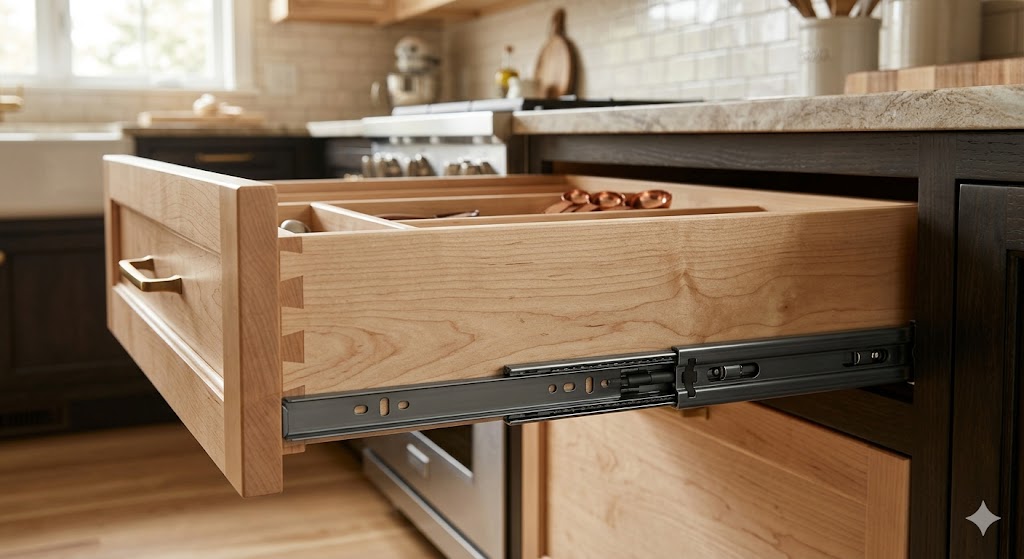
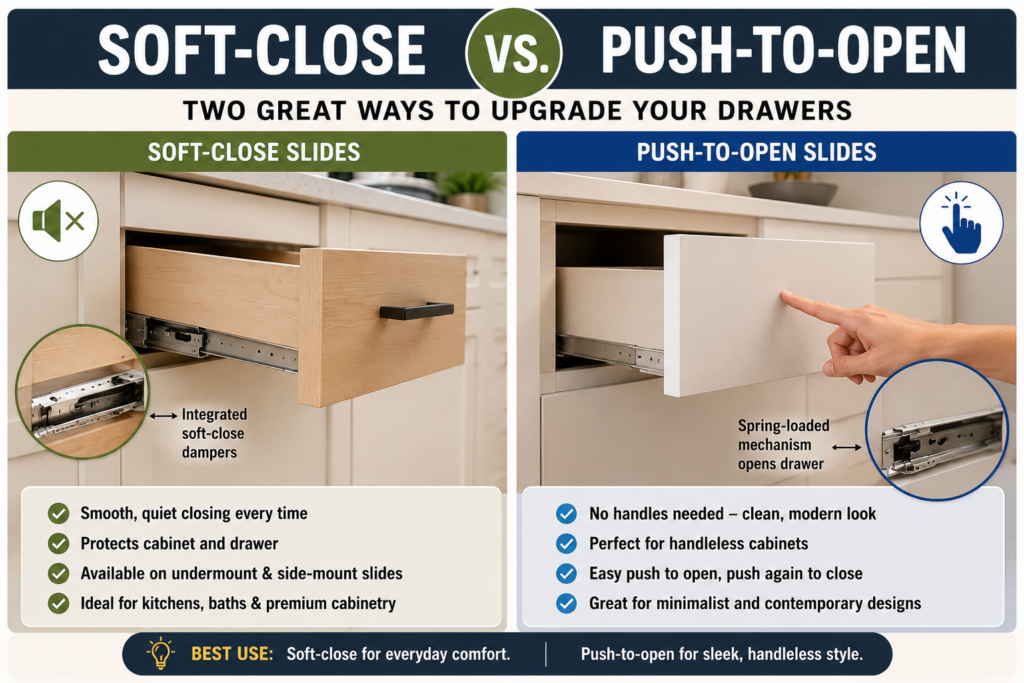
If you are building high-end kitchen cabinets or a custom vanity, do not skimp here. The Blum Tandem 563H features integrated Blumotion soft-close technology, meaning the drawer catches smoothly and pulls itself shut without a sound. They mount completely underneath the drawer box, maximizing your visible wood grain.
Best for Workshops: Liberty D806
For a garage, basement, or workshop setup, you want pure, dependable strength over stealth. The Liberty D806 is a side-mounted, ball-bearing workhorse. They don’t have fancy soft-close features, but they glide effortlessly even when packed to the brim with heavy wrenches, socket sets, and hardware organizers.
Best Budget Option: Lontan Full Extension Soft Close
If you are flipping a piece of thrifted furniture, remodeling a laundry room, or working on a tight budget, the Lontan Full Extension Soft Close slide is your best bet. It delivers the high-end feel of soft-close technology at a fraction of the cost of premium brands, and installing it doesn’t require specialized routing jigs.
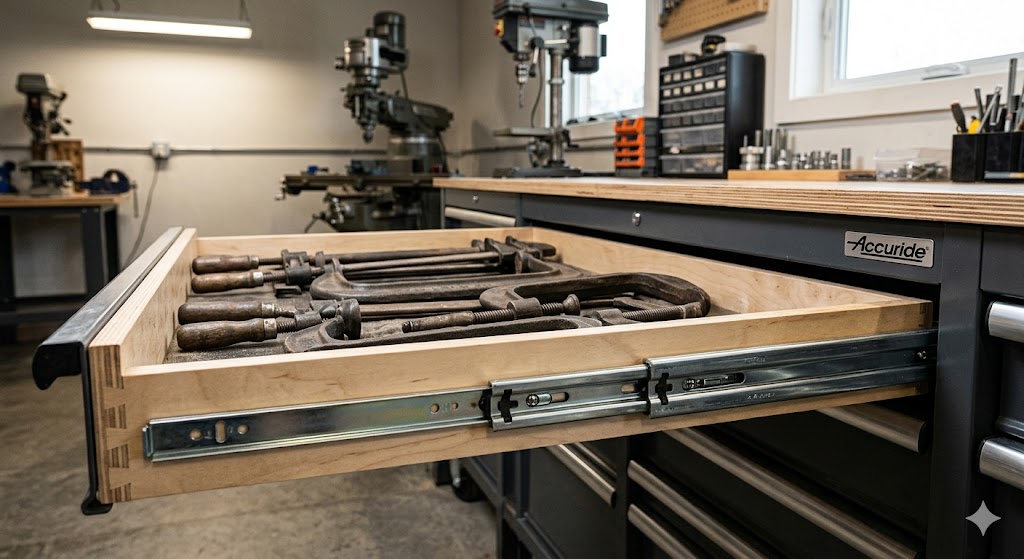
Best Heavy-Duty: Accuride 9301
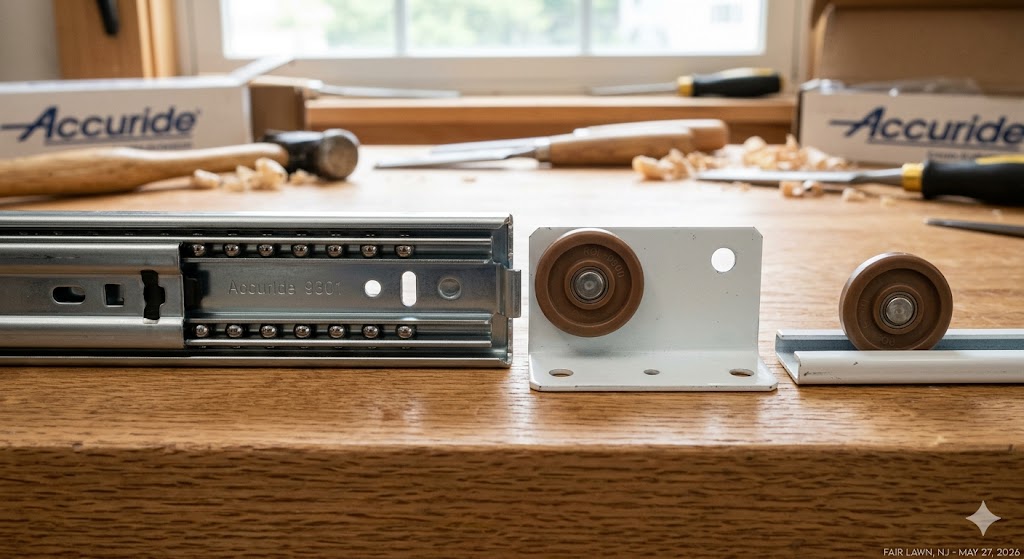
When you are building deep pantry pull-outs, heavy under-bed storage drawers, or serious tool chests, standard hardware will fail. The Accuride 9301 is an industrial-grade slide rated for massive weight profiles. It handles intense abuse without sagging by even 1/8 inch.
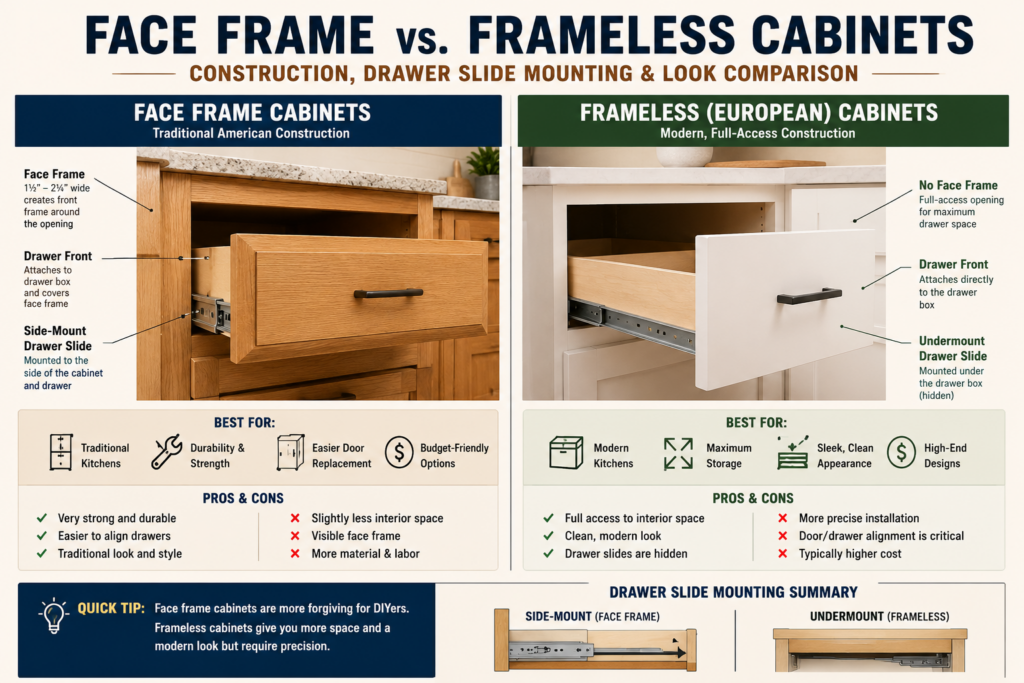
Types of Drawer Slides Explained: Side-Mount, Undermount & Roller Slides
If you’ve ever tried to build a cabinet and skipped thinking about the hardware, you probably learned the same lesson I did—the hard way. Drawer slide sizes and styles aren’t all the same. Some are cheap and clunky, others glide like butter.
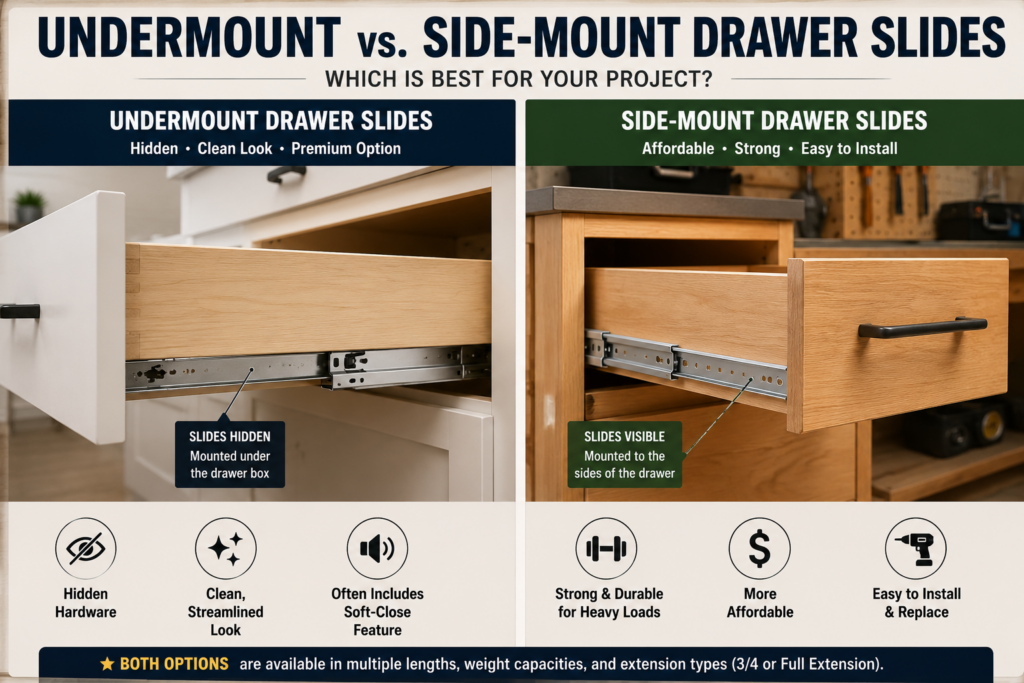
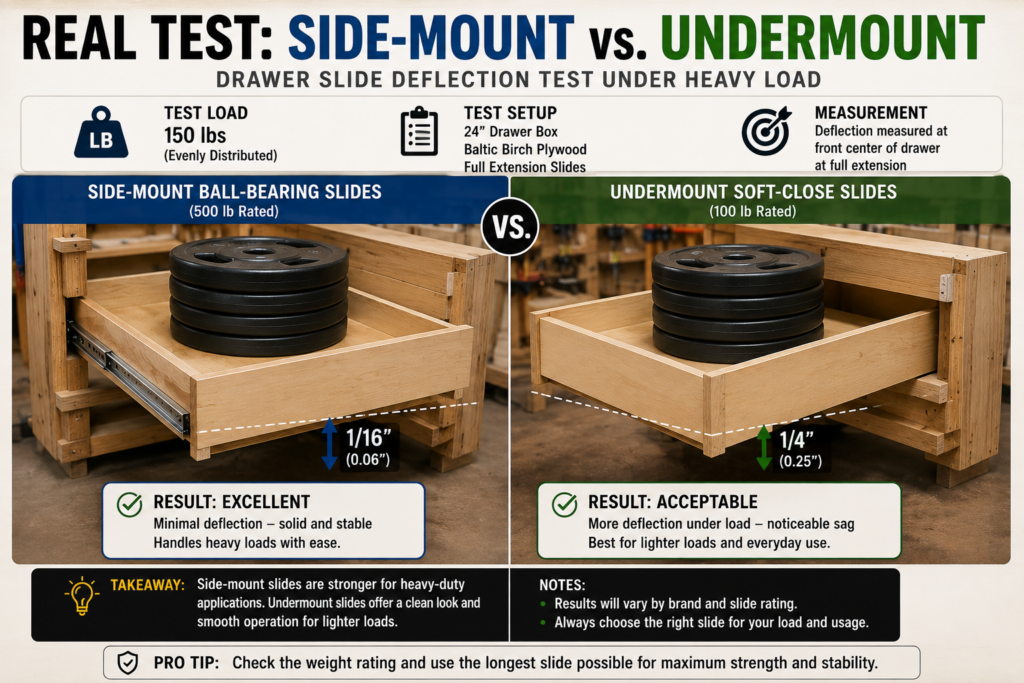
Choosing between undermount drawer slides and side-mount drawer slides depends entirely on the project and how much abuse the drawer is going to take.
Side-Mount Drawer Slides: Affordable Strength for Cabinets & Shops
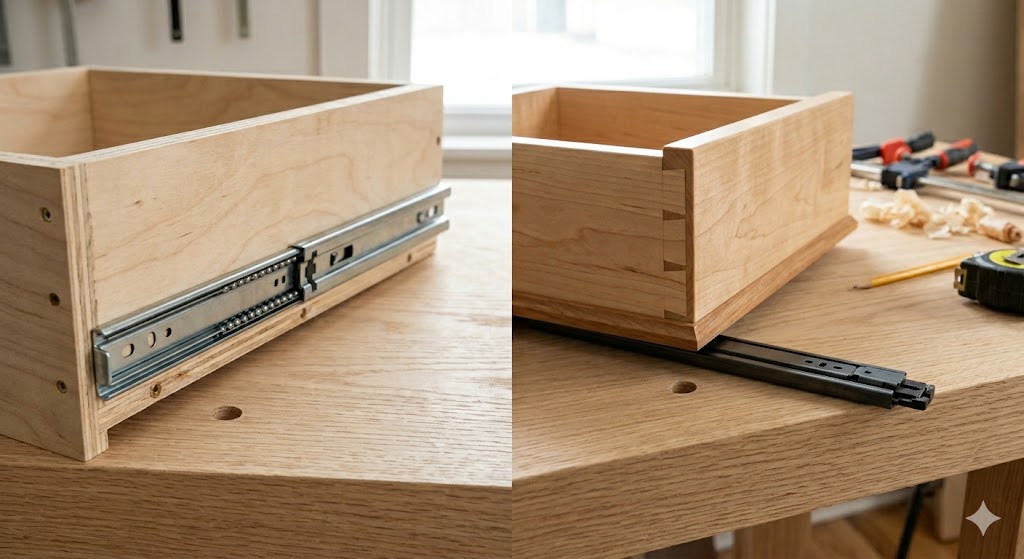
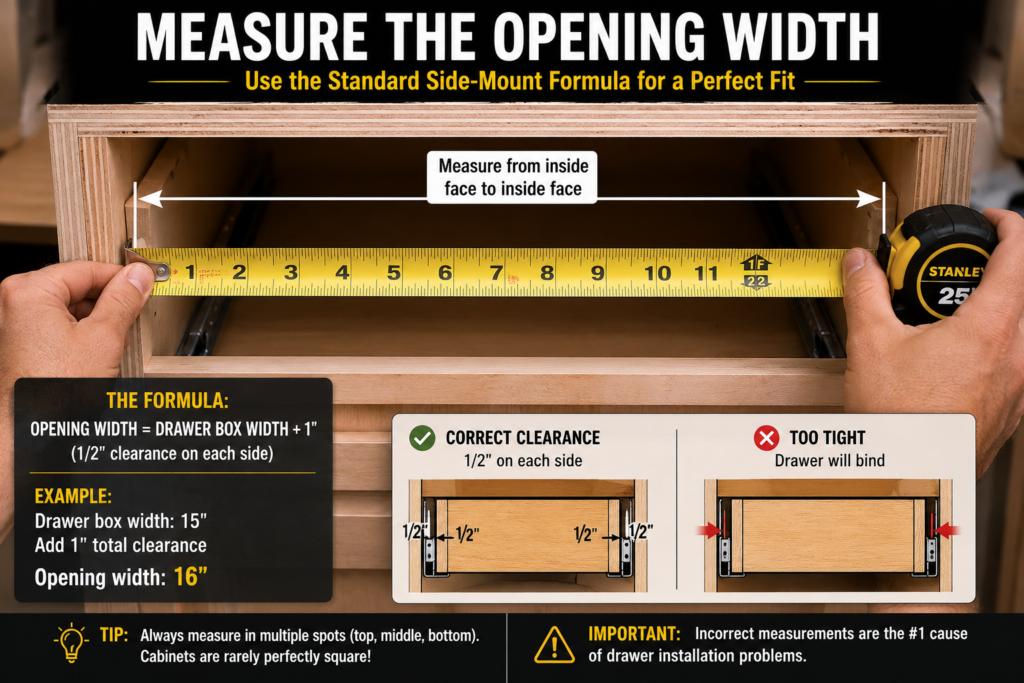
These sit on both sides of the drawer and require exactly 1/2 inch of clearance space on each side of the drawer box. You can see them when the drawer is open, which doesn’t bother me in a workshop but would in a master kitchen. They’re strong, affordable, and easy to put in. I use them for tool storage because they’ll hold a lot of weight without complaining.
Undermount Drawer Slides: Sleek Hidden Hardware for Kitchens
These hide underneath the drawer. You don’t see the hardware, just a clean look. They cost more, and you have to be precise when installing them—being off even a single millimeter can throw the locking mechanisms out of whack.
But when they’re done right? Smooth, quiet, and they make a kitchen feel high-end. I put them in a friend’s kitchen once, and she kept opening drawers just to watch them shut softly.
Center-Mount Drawer Slides: Simple and Hidden
A single track runs along the bottom center of the drawer. They’re simple to line up and invisible from the sides, but they can’t hold much weight. They’re perfect for a nightstand or a kid’s desk. I used one for my son’s desk drawer, and it’s been fine for paper and crayons.
Quick Pros & Cons Comparison
Slide Type
Pros
Cons
Side-Mount
Strong, affordable, easy install
Visible hardware
Undermount
Hidden, smooth, premium feel
Expensive and precise
Center-Mount
Simple and hidden
Low weight capacity
Heavy-Duty
Massive load support
Bulky and costly
Ball-Bearing vs Roller Drawer Slides: Which Works Best?
Ball-bearing tracks use steel balls housed in a track to provide incredibly smooth, linear motion. They are the heavy lifters—reliable even when the drawer’s fully loaded down. Roller runners use a plastic wheel riding in a shaped metal track; they are cheaper and okay for light furniture like a sock drawer, but they readily fail under heavy loads.
When choosing your core box materials, knowing whichplywood is best for cabinets is just as important as choosing the slides. Pairing quality hardware with the right plywood thickness guide ensures your cabinet boxes won’t bow over time.
For more advanced design tolerances and structural spacing advice, professional woodworking journals like Fine Woodworking offer incredible project breakdowns.
How to Choose Drawer Slides: Length, Capacity & Features That Matter
When shopping, don’t just grab the first set you see. Here are the specs that matter most:
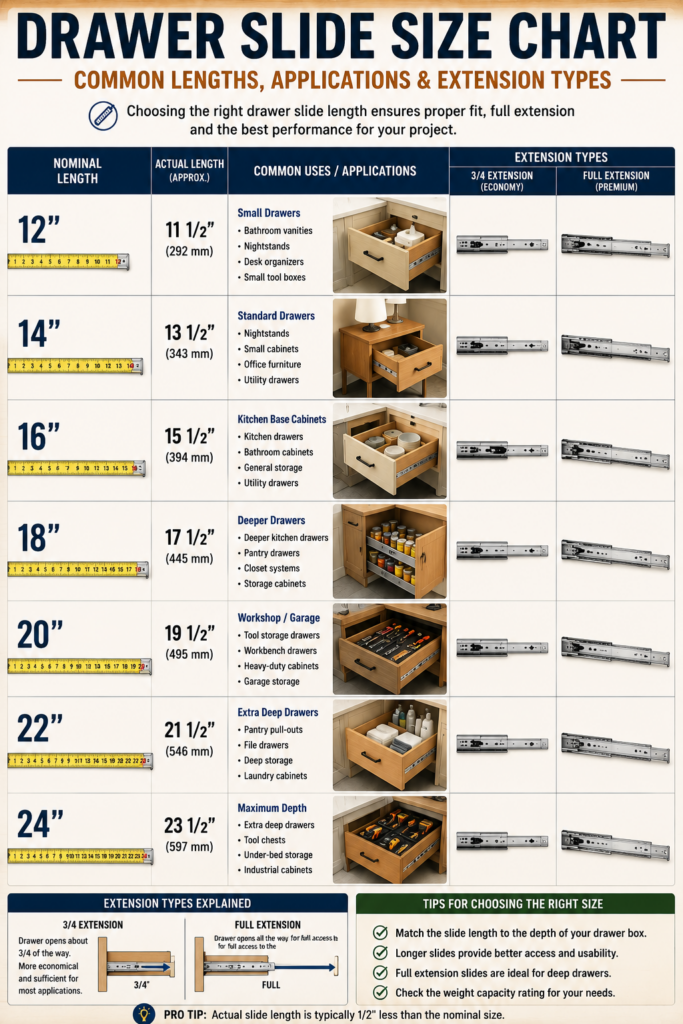
Drawer Slide Sizes & Length: Match slide length to drawer depth. If your drawer box is 20 inches deep, buy 20-inch slides.
Extension: 3/4 extension vs. full extension drawer slides. Full-extension slides let the drawer box pull completely past the cabinet face so you can reach items in the very back.
Mounting Style: Side, undermount, or center.
Finish: Zinc-plated or stainless steel for rust resistance.
Soft-Close Feature: Worth the extra cost in kitchens and bedrooms to prevent slamming.
Common Drawer Slide Installation Mistakes
Before you grab your drill, be aware of these incredibly common installation traps that can ruin a project:
Buying the Wrong Slide Length: Never Guess Your Drawer Depth. If your runner is longer than your cabinet interior depth, the drawer won’t close. If it’s too short, you’ll lose valuable extension space.
Ignoring the Clearance Spacing: Most side-mount slides require exactly 1/2 inch of space between the drawer box and the cabinet opening on both sides. If your box is even 1/16 of an inch too wide, the drawer mechanism will bind and grind.
Skipping Pilot Holes: If you drive screws directly into plywood or hardwood without drilling pilot holes first, the screw will follow the wood grain, wander off-center, tilt the slide, and potentially split your wood.
Uneven Mounting Heights: If your left slide is 1/8 inch higher than your right slide, the drawer will pitch sideways, scrape the cabinet frame, and refuse to close smoothly.
Overloading Light Hardware: Trying to save twenty bucks by using standard residential slides on a deep kitchen pantry drawer filled with heavy canned goods will quickly result in bent tracks and spilled bearings.
How to Install Drawer Slides Correctly (Step-by-Step DIY Guide)
Drawer mechanisms look simple until you mess one up. I’ve had a drawer jam just because I was off by the width of a nickel. Once you’ve had to yank a drawer back out and redo it from scratch, you stop rushing and measure twice.
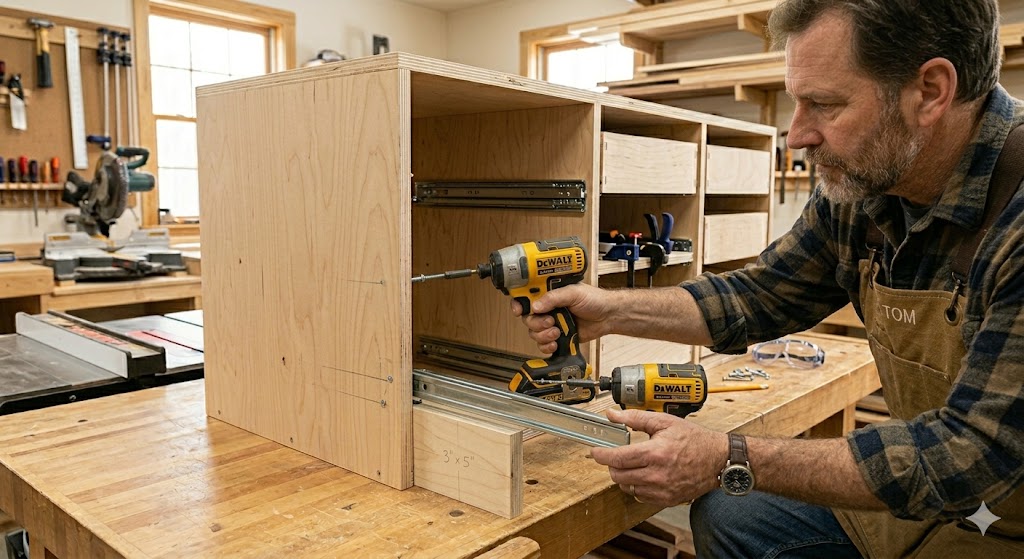
I don’t use anything fancy for this. A drill, a tape measure, a square, a level, a pencil that’s usually hiding under a pile of clamps, and some screws. The real trick? A couple of scrap wood blocks cut to the exact height of your drawer spacing. They keep everything perfectly lined up on your DIYworkbench.
The Schema-Ready 5-Step Installation Process:
Mark the slide height: Use your scrap spacer blocks inside the cabinet frame to draw a perfectly level reference line across both interior walls.
Install cabinet rails: Line up your cabinet rails with the pencil marks, pre-drill pilot holes, and secure the hardware using the provided screws. Always use a level to double-check.
Attach drawer rails: Separate the drawer member from the slide. Center it perfectly along the side or bottom of your drawer box, drill pilot holes, and screw it down firmly.
Test drawer movement: Align the drawer rails with the cabinet rails, then gently push the drawer in. Do not force it; it should click into its tracks naturally.
Adjust alignment: Slide the drawer in and out. If it binds or sticks, slightly loosen the mounting screws, tap the slide frame a hair to adjust its position, and retighten.
💡 Pro Tip: Cut one spacer block and keep it handy. I’ve built entire banks of drawers using the same beat-up block. Way faster than pulling out the tape every five minutes.
Even the best cabinet hardware can act up. I’ve had brand-new ones give me trouble, so don’t panic if yours aren’t running smoothly. Most fixes are simple once you know what to look for.
The drawer won’t close all the way
This one drives people crazy. Most of the time, it’s not broken—it’s just a little out of alignment. Loosen the screws, bump the slide a hair, and retighten.
I had one drawer in my shop that refused to close; it turned out that a tiny wood chip from a router bit had dropped directly into the ball-bearing track. Cleaned it out with an old toothbrush, and suddenly it worked like new.
Drawer sagging
If your drawer is full of heavy junk (think cast iron pans, automotive tools, or paper files), standard slides will bow. That sagging front is the hardware saying, “Nope, too much weight.”
The only real solution here is to swap in heavy-duty drawer slides. Standard drawer hardware is rated for roughly 75 to 100 lbs; heavy-duty options bump that limit significantly.
Drawer sticks or grinds
Usually, it just needs lube. Forget thick garage grease—it turns into a giant magnet for sawdust and dirt.
A quick spray of dry silicone lubricant on the ball bearings, followed by running the drawer back and forth a few times, usually fixes it. If it still drags, check for screw heads sticking out too far or rails that got bent out of square during installation. If you are working with rough cabinet edges, review our tips for making plywood look nice.
Best Budget Drawer Slides: Top Mid-Range Options for DIY Projects
Not every project calls for top-dollar hardware. Sometimes you just want a slide runner that glides smoothly and doesn’t slam shut every time the kids raid the snack drawer. That’s where a couple of budget-friendly slide brands shine.
The first is Lontan Full Extension Soft Close Slides. I’ve used these on smaller kitchen projects, and for the price, they’re hard to beat. They install with basic tools—no weird tricks, no specialty jigs—and the soft-close works like a charm. Smooth, quiet, reliable. They may not be Blum-level fancy, but they give a kitchen or dresser that “custom feel” without costing a fortune.
Then there’s the Liberty D806 Ball-Bearing Slides. These are my go-to when I’m building garage cabinets, shop furniture, or a heavy-duty French cleat wall system. They’re not flashy—no soft-close, no hidden undermount system—but they hold up. I loaded one set down with a drawer full of heavy sockets and clamps, and it still opened like it was brand new.
Best Drawer Slide Brands: Lontan, Blum, Liberty & Accuride
Lontan Full Extension Soft Close: A solid budget-friendly option that still feels smooth and reliable. They’re simple to install, making them a favorite for DIYers upgrading kitchen drawers without breaking the bank.
Blum Tandem 563H: These are the gold standard if you want a high-end finish. Blum slides practically disappear under the drawer, and the soft-close motion is flawless. For detailed clearance layouts and locking device variations, check out the official Blum Technical Documentation.
Liberty D806 Ball-Bearing: A dependable pick for garage cabinets, workbenches, or any utility project. They’re not flashy, but they’ll hold up well under everyday use.
Accuride 9301 Heavy-Duty: Built for serious weight, these models can handle up to 500 lbs. Perfect for tool chests, pull-out shelves, or storage that needs to support heavy loads without sagging. You can consult the official Accuride Heavy Duty Slides Resource to match your specific drawer width to its ideal weight limits.
Best Heavy-Duty Drawer Slides for Tool Cabinets, Kitchens & Workshops
There are times you want drawers that just feel fancy, and then there are times you need them to survive serious abuse. I’ve found two brands that stand out on those opposite ends—Blum and Accuride.
Let’s talk about Blum Tandem 563H Undermount Slides first. These are the kind of slides that make people say “wow” when they pull a drawer open. Since they mount underneath, you don’t see any hardware. It’s just a clean look and a smooth, soft-close cabinet drawer motion that feels high-end.
The catch? They aren’t cheap, and you can’t fudge the install. If you are building a custom kitchen with premium materials, make sure you understand plywood grades explained before purchasing your lumber.
Now, on the heavy-duty side of things, there’s Accuride 9301. These aren’t for show. These are for weight—lots of it. These slides are rated up to 500 pounds, which is wild. They are perfect for a shop, a tool chest, or even a heavy pull-out workbench station.
Another thing I like? They feature full-extension travel. That means you can pull the drawer completely out of the cabinet body and easily reach whatever heavy gear is buried in the very back. No more fishing around in the dark.
So here’s the deal: if you’re chasing looks and buttery motion, grab Blum. If you need strength and reliability, Accuride’s your best friend. Between the two, you’ve got both ends of the spectrum covered.
Frequently Asked Questions About Drawer Slides
What are the strongest drawer slides?
Heavy-duty ball-bearing slides, such as the Accuride 9301 series, are among the strongest on the market and can support up to 500 pounds. They are ideal for vehicle storage, heavy tool chests, and deep pantry pull-outs.
Are undermount drawer slides better than side-mount drawer slides?
Undermount slides look cleaner because they are completely hidden and operate more smoothly with soft-close mechanisms. However, side-mount slides are much easier to install, less expensive, and typically handle heavier raw weight capacities.
What size drawer slides do I need?
Most drawer slides should match the depth of your drawer box. Measure the outer depth of the drawer (not including the decorative drawer front face) and round down to the nearest whole inch. Common residential sizes range from 12 inches to 24 inches.
Can I replace drawer slides without replacing the drawer?
Yes. You can upgrade or replace old slides independently, provided the clearance between the drawer box and the cabinet frame meets the requirements of the new hardware (typically exactly 1/2 inch on each side for side-mount styles).
For high-traffic areas like kitchens, bathrooms, and bedrooms, absolutely. They dramatically reduce ambient noise, prevent small fingers from getting pinched in heavy drawers, and reduce shock wear on your cabinet frames over time.
Final Thoughts
Drawer slides aren’t glamorous, but they make or break a project. Good ones give you smooth, solid motion. Bad ones make every single drawer a daily fight.
If you’re on a budget, go with Lontan or Liberty. Want a premium, hidden finish? Grab Blum. Need heavy-duty strength to haul heavy tools? Go with Accuride.
Even premium slide hardware benefits from occasional cleaning and lubrication, especially in dusty workshops. Whether you are assembling simple shop storage frames or buying the premium lumber outlined in our best plywood for cabinets guide, don’t cheap out on your hardware. Your drawers—and your sanity—will thank you in the long run.
Related Posts:
Drawer Boxes & Slides Explained: Best Types & Sizes by Admin May 19, 2026 DIY Drawer boxes are the structural containers that hold drawer contents, while drawer slides are the mechanical tracks that allow the drawer to open and close…