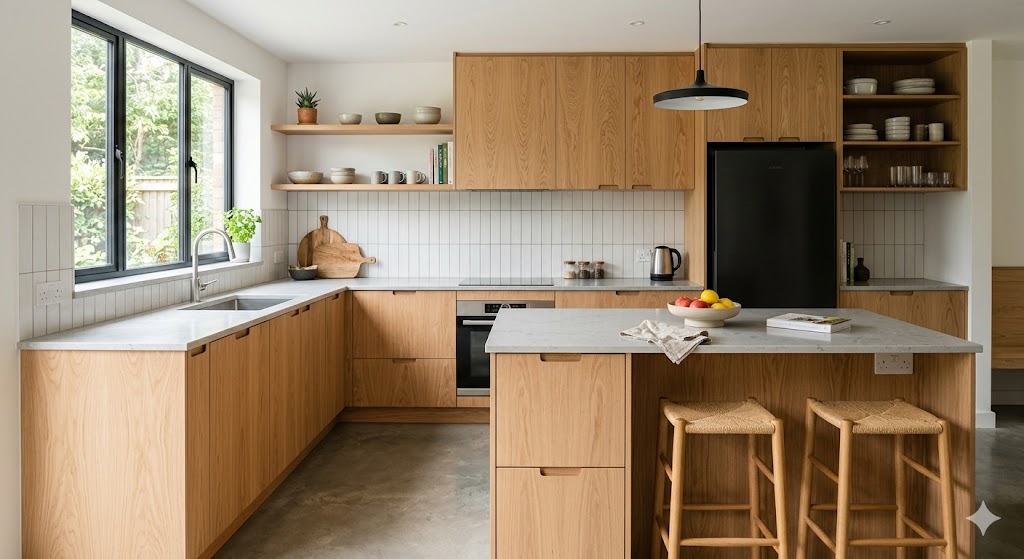
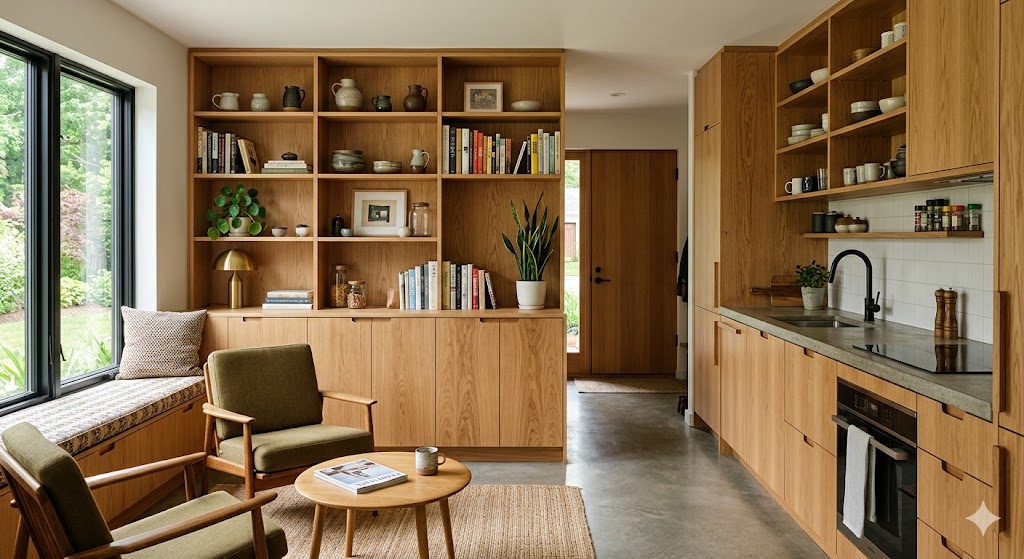
Oak plywood is a premium hardwood plywood made with a thin veneer of real red or white oak bonded over a stable plywood or engineered core. It is the preferred choice for 2026 cabinetry, high-end furniture, and interior woodworking because it offers the aesthetic beauty of solid oak with the structural stability and cost-efficiency of a sheet good.
✅ 2026 Recommended Materials & Cost Overview
If you want your project to last 10+ years without warping or veneer failure, these are the standards most professional builders use:
💸 Oak Plywood Cost in 2026 (Price Per Sheet Breakdown)
Understanding the cost difference before you head to the lumber yard is vital to avoid overpaying. In 2026, prices vary by core type and veneer rarity.
Red Oak (Veneer Core): Expect to pay $120 – $155 per 3/4″ sheet. This is the industry standard for home libraries and built-ins.
White Oak (Veneer Core): Currently trending at $185 – $220. The higher price reflects its popularity in “Scandi-style” designs.
Shop Grade Oak: Often found for $75 – $90, but be warned: this is where most mistakes happen, as these sheets often contain internal gaps that ruin cuts.
When calculating your budget, don’t forget to consult a plywood thickness guide to ensure you aren’t buying more material than the structural load requires.
Oak Plywood vs Solid Oak (Which Should You Use?)
Oak plywood is often compared to solid oak, especially when building cabinets or furniture. While both materials offer durability and a premium look, they behave very differently in real-world projects.
Solid oak is stronger in terms of raw density, but it expands and contracts significantly with humidity. This movement can cause cracking, splitting, or warping of panels over time—especially on wide surfaces like cabinet doors or tabletops.
Oak plywood, on the other hand, is engineered for stability. Because it’s made from cross-laminated layers, it resists movement and stays flat even in changing environments. This is why most professional cabinet shops prefer plywood over solid wood for large panels.
Another major difference is cost. Solid oak can be 2–3x more expensive than oak plywood for the same coverage area. On top of that, plywood produces less waste and is easier to cut, making it more efficient for DIY builds.
The tradeoff is edge appearance. Solid oak has a continuous grain, while plywood requires edge banding to hide the core layers. However, when done properly, the visual difference is almost impossible to notice.
👉 Bottom line: Use oak plywood for cabinets, shelving, and furniture panels, and reserve solid oak for trim, edges, and structural accents.
🏗️ Advanced Core Engineering: Why Your Choice Impacts 20-Year Durability
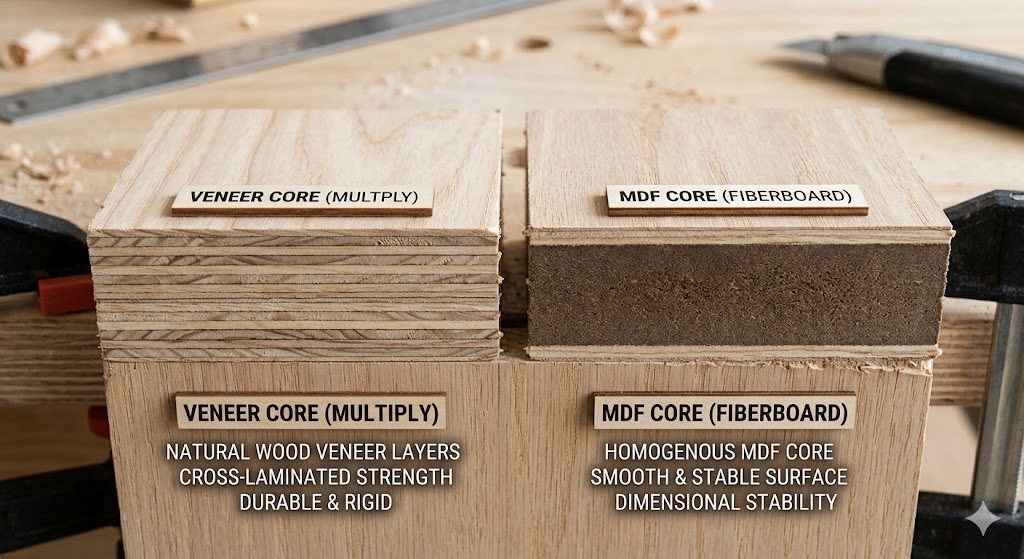
The internal architecture of oak plywood has evolved significantly. In 2026, the “core” is no longer just scrap wood glued together; it is a precision-engineered component. Selecting the wrong core for your specific environment is a classic mistake that leads to structural failure.
Veneer Core (VC) remains the traditional choice, consisting of alternating layers of softwood. While lightweight and excellent for screw-holding, it is prone to “telegraphing,” where the grain of the inner plies eventually shows through the thin oak veneer.
For high-end cabinetry, MDF Core or Particle Board Core (PBC) has become the secret weapon of pro shops. Because these cores are perfectly flat and chemically stable, they eliminate the regret of warping in wide-span applications like wardrobe doors.
However, the warning here is weight: an MDF-core sheet is significantly heavier and often requires a second person for safe handling. If you are working on a high-end CNC machine, Classic Core (a hybrid of veneer and MDF outer layers) offers the best of both worlds: the lightness of wood plys with the ultra-smooth surface of engineered fiber.
Environmental factors also dictate core choice. In 2026, “no-added formaldehyde” (NAF) cores are the standard for healthy indoor air quality. If you are building in a high-humidity area, look for a Marine-Grade Core option, which utilizes phenolic glues that won’t delaminate when exposed to moisture.
Choosing a standard shop-grade core for a bathroom vanity is a costly error that usually results in the veneer peeling off within the first 24 months. Always match the core to the “micro-climate” of the room where the furniture will live.
🎨 The Science of Oak Finishing: Tannins, Tones, and Textures
Finishing oak plywood in 2026 requires more than just a bucket of stain; it requires an understanding of wood chemistry. Oak is packed with tannins, which are natural acidic chemicals that react with water-based finishes and metal fasteners. A common warning for DIYers is the “black spot” phenomenon—if you use steel wool to prep your oak, tiny fragments can lodge in the grain and turn black when hit with a water-based topcoat.
To achieve the “Raw Oak” look trending on Pinterest and Instagram, you must avoid traditional oil-based polyurethanes, which turn the wood a dated yellow or amber hue. Instead, the 2026 “Pro Move” is using a reactive stain or a whitewash sealer. These products neutralize the naturally warm undertones of Red Oak, making it look like the much more expensive White Oak. This is a massive cost-saving hack if you are on a budget but want a high-end aesthetic.
Furthermore, “Grain Filling” has made a huge comeback. Oak is an open-pored wood. If you want a modern, high-gloss finish, you must use a silica-based grain filler to level the surface before applying your clear coat. Failing to do this results in a “pockmarked” finish that looks amateurish.
Conversely, if you prefer the “Ceruse” look—where the grain is highlighted in a contrasting color like white or gold—you need to use a brass wire brush to open those pores even further. This technical prep work is the difference between a project that looks like a “DIY mistake” and one that looks like a custom designer piece. Check out our types of plywood finishing for a deep dive into chemical compatibility.
📐 Structural Engineering with Oak: Preventing Sag and Deflection
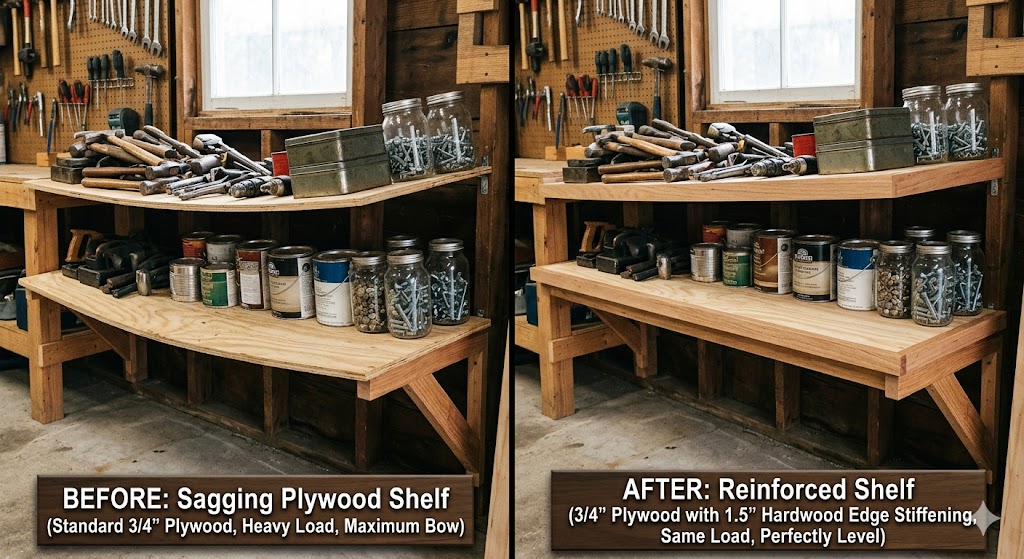
One of the most frequent regrets in home library builds is the “sagging shelf.” Oak plywood is incredibly strong, but it is not invincible. To avoid the mistake of a bowed bookcase, you must understand the Span Rating and Elastic Modulus of your material. A 3/4″ oak plywood shelf can typically span 30 to 32 inches without significant deflection under a standard load of books. However, if you are planning 36-inch or 48-inch spans, you are heading toward a structural warning.
To combat sag without adding bulk, professionals use a technique called “Edge Stiffening.” By gluing a 1-inch solid oak “cleat” or “nosing” to the front of the plywood shelf, you effectively double its resistance to bending. This doesn’t just improve the look by hiding the plys; it acts as a structural I-beam. Another 2026 trend is “Double-Layering,” where two 1/2″ sheets are laminated together to create a 1-inch thick “super-ply” for floating shelves. This provides a massive, chunky aesthetic while ensuring the shelf stays dead-flat for decades.
Always refer to a plywood weight chart and a “Sagulator” (load calculator) before finalizing your designs. Over-engineering your project by just 10% in the planning phase can save you the hundreds of dollars it would cost to replace sagging shelves three years down the line. Remember, the glue joints in your cabinets are only as strong as the surface they are bonded to. Because oak is a heavy, oily wood, always “dry-fit” your pieces first to ensure your joinery is tight. A loose pocket-hole joint in oak plywood is a recipe for a squeaky, unstable cabinet.
😬 The Most Common Oak Plywood Regrets (Avoid These in 2026)
The “Warped Door” Regret: Using a standard veneer core for large, slab-style cabinet doors.
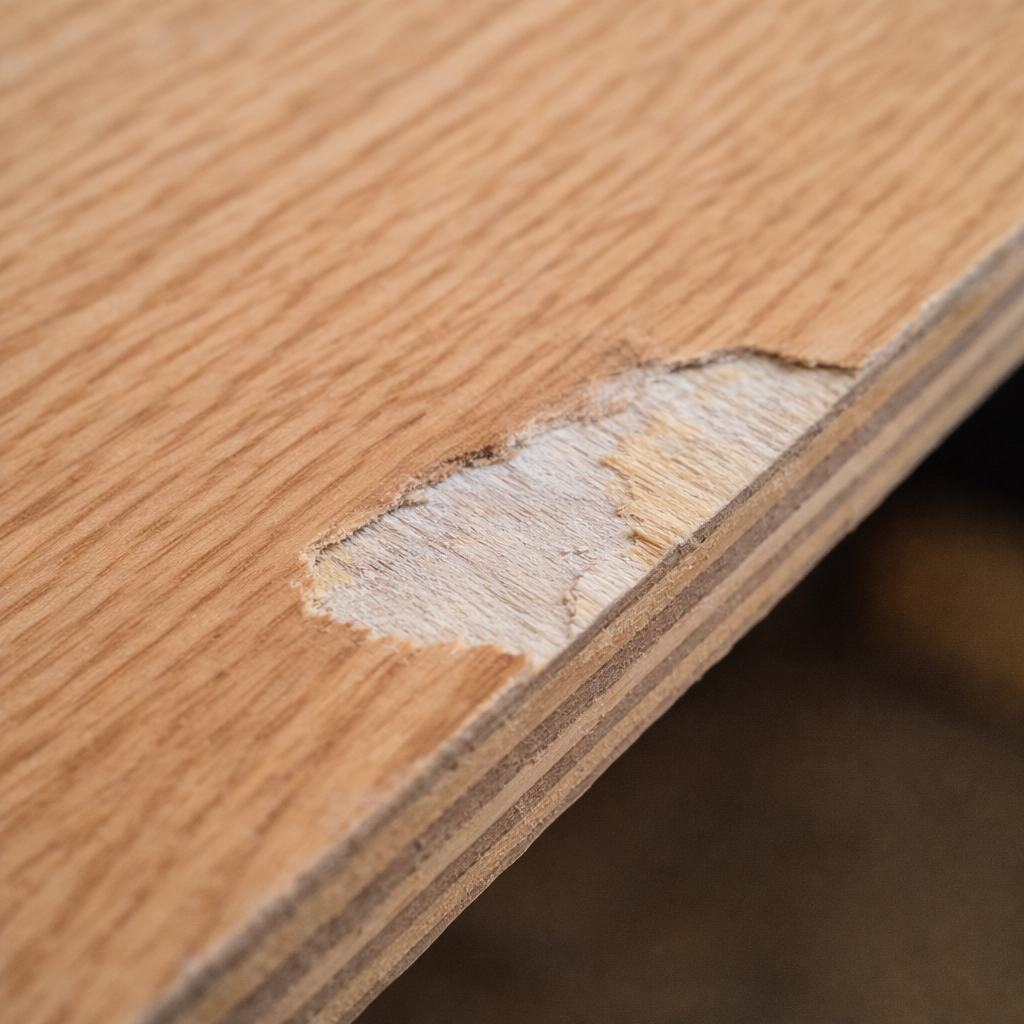
The “Sand-Through” Regret: Trying to remove a small scratch with a power sander. Modern oak veneers are thinner than ever—often just 1/42″. Once you hit the glue line, the board is ruined.
The “Blotchy Finish” Regret: Skipping wood conditioner on Red Oak. The open grain absorbs stain unevenly, leading to a “muddy” look.
⚠️ 5 Mistakes That Will Ruin Your Oak Project
Using the Wrong Saw Blade: Oak is brittle. Use an 80-tooth carbide blade. If you still see chipping, your blade is dull—a common warning that you’re about to waste a $150 sheet.
Failing to Seal the Edges: Use a high-quality edge banding guide to apply real wood tape.
Ignoring the Weight: 3/4″ Oak Plywood weighs ~75 lbs. Don’t lift alone.
Storing Sheets Vertically:Warning: This causes bowing. Store flat with “stickers.”
🧪 Real Test: Red Oak vs. White Oak Durability
Red Oak: More porous. Best for dry-area cabinets.
White Oak: Naturally more water-resistant due to tyloses. Better for vanities or mudroom benches.
How to Choose the Right Oak Plywood (Quick Buyer Checklist)
Choosing the right oak plywood comes down to a few key decisions. If you get these right, you avoid almost every common mistake.
1. Pick the Right Core For cabinets and furniture, veneer core (VC) is the best all-around choice. For flat doors or large panels, MDF-core prevents warping.
2. Check the Veneer Thickness Avoid ultra-thin veneers (1/42″). Slightly thicker veneers give you more room for sanding and finishing without risking damage.
3. Match the Grade to the Project Use A1 or A2 grade for visible surfaces, such as cabinet faces. Lower grades are fine for hidden structures.
4. Consider the Environment High-humidity areas require better sealing or marine-grade options. Standard plywood will fail over time in moisture.
5. Plan for Edges If your project exposes edges, budget for real wood edge banding or solid oak trim.
👉 Quick rule: If it’s visible → upgrade the veneer If it’s structural → upgrade the core If it’s in moisture → upgrade the protection
Best Projects to Use Oak Plywood (And Where It Fails)
Oak plywood is extremely versatile, but it’s not the best choice for every project. Knowing where it performs best—and where it fails—can save you time and money.
✅ Best Uses for Oak Plywood
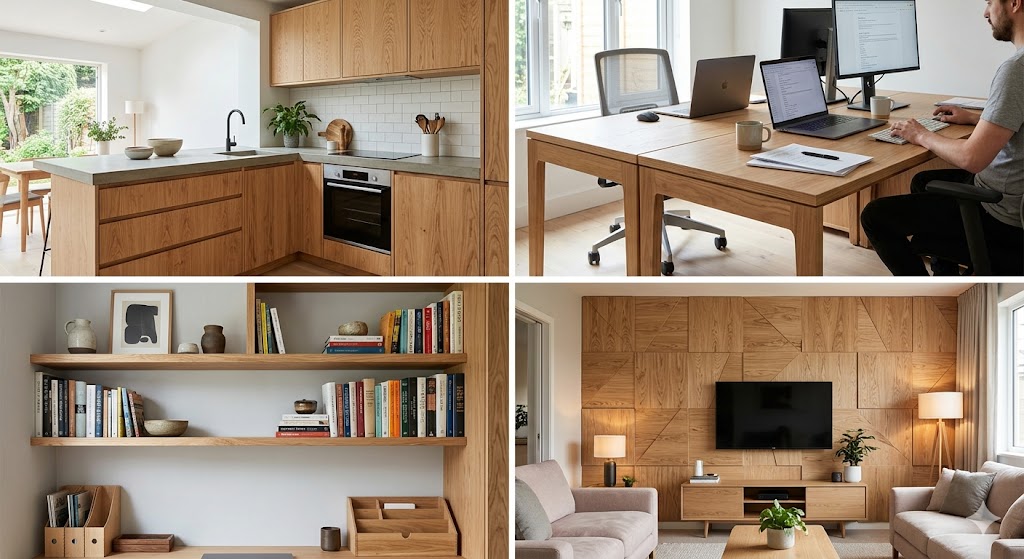
Cabinetry: This is where oak plywood shines. Its stability prevents warping, and the veneer provides a clean, professional finish for doors, boxes, and panels.
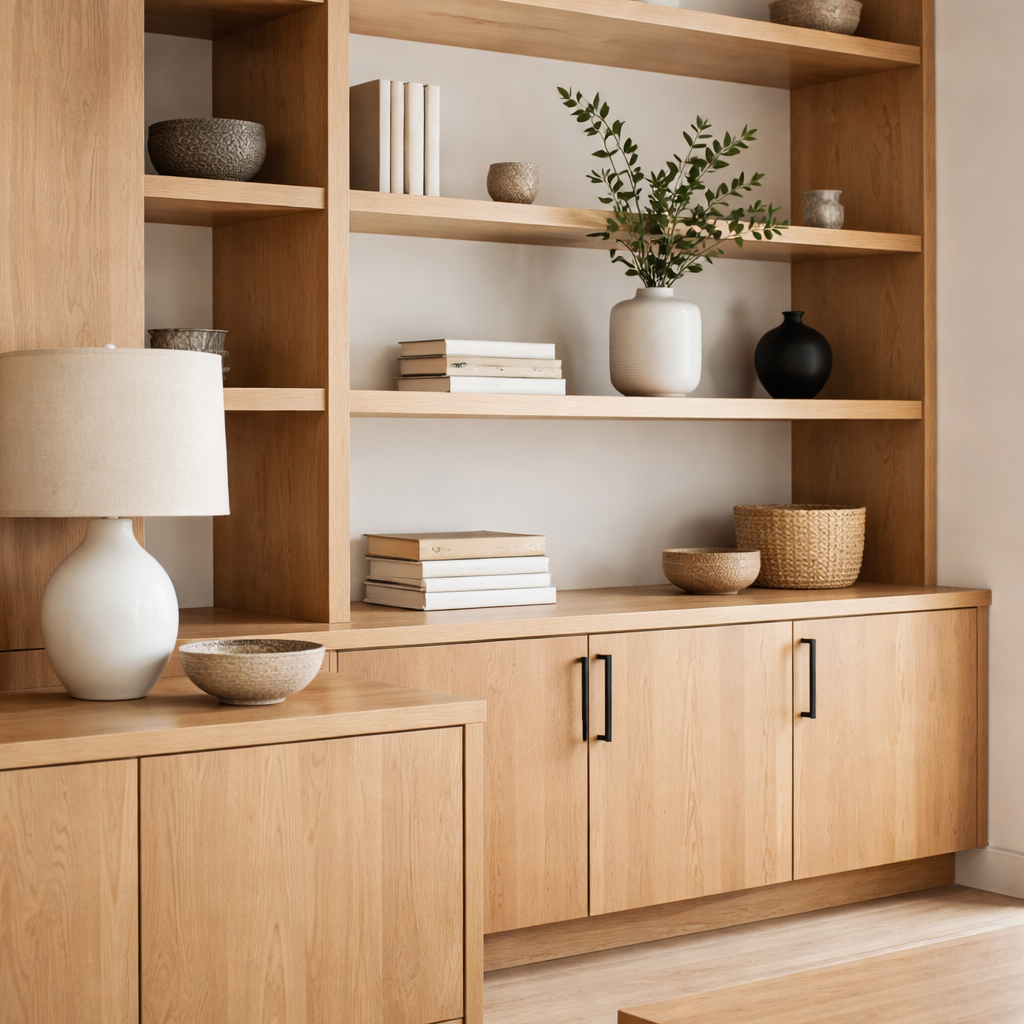
Built-In Shelving: When properly supported, oak plywood creates strong, visually appealing shelves that hold weight without sagging.
Furniture Panels: Media consoles, desks, and bed frames benefit from plywood’s flatness and ease of construction.
Wall Paneling & Accent Walls: Oak plywood is increasingly used in modern interiors for slat walls and decorative panels.
❌ Where Oak Plywood Falls Short
Outdoor Projects: Standard oak plywood is not waterproof. Without sealing, it will delaminate over time.
Heavy Structural Loads: While strong, it’s not a replacement for solid beams or framing lumber.
Curved or Bent Applications: Oak plywood is rigid and not ideal for bending without specialized techniques.
👉 Pro Insight: If your project involves moisture, heavy loads, or outdoor exposure, consider alternatives like marine plywood or pressure-treated lumber.
H3: Can you stain oak plywood to look like walnut?
Yes, but it’s a mistake to use a simple wipe-on stain. You need a grain filler to achieve the smooth walnut look.
Is Oak Plywood Still Worth It in 2026?
Short answer: yes—but only if you choose the right core and avoid thin veneers. With rising costs, it’s no longer the “default” choice, but for durability and appearance, it still outperforms most alternatives when used correctly.
Summary: Is Oak Plywood Worth It?
If you want durability and a timeless aesthetic, yes. Just be wary of the rising cost of premium sheets and the warning signs of thin veneers. By focusing on core quality and avoiding the “sand-through” regret, you can create professional-grade furniture that stands the test of time.