Exterior plywood is plywood carrying an Exterior bond classification, meaning the panel is manufactured for long-term exposure to weather or moisture. It uses moisture-resistant exterior adhesives, but the panel’s construction also affects its long-term bond performance. The Exterior stamp does not mean the wood itself is waterproof or resistant to decay. Untreated veneers can still absorb water, swell, check, and eventually rot.
Get the grade right, get the finish right, and exterior plywood can serve for decades outdoors. Get either one wrong and panels can fail in a fraction of that time.
Here’s the quick comparison, then we’ll go deep.
Exterior Plywood at a Glance
Type
Face/Back Grade
Relative Cost
Best Use
Outdoor Suitability
CDX
C face / D back
$
Roof & wall sheathing (covered)
Cover with roofing or siding; not for permanent exposure
BCX
B face / C back
$$
Soffits, painted trim, shed walls
Good painted surface with maintenance
ACX
A face / C back
$$–$$$
Visible painted surfaces outdoors
Good painted surface with maintenance
Pressure-Treated
Usually C-D
$$–$$$
Ground-contact structures, planters, and wet locations when appropriately rated
Best for wet or soil-contact locations (check use category)
APA 303 Siding (incl. T1-11)
Textured face
$$
Siding, shed exteriors
Long service when finished and maintained
MDO
Resin-overlaid face
$$$
Signs, concrete forms, painted panels
Excellent paint base; seal edges and penetrations
Marine Grade
A-A, A-B or B-B
$$$$
Boats, transoms
Premium structural quality for wet use; not rot-proof, requires a full finish system
Sheet prices change with thickness, species, and treatment level — for current numbers, see our plywood price guide. Actual service life depends on climate, finishing, and installation; see the lifespan section below.
What “Exterior” Actually Means (And What It Doesn’t)
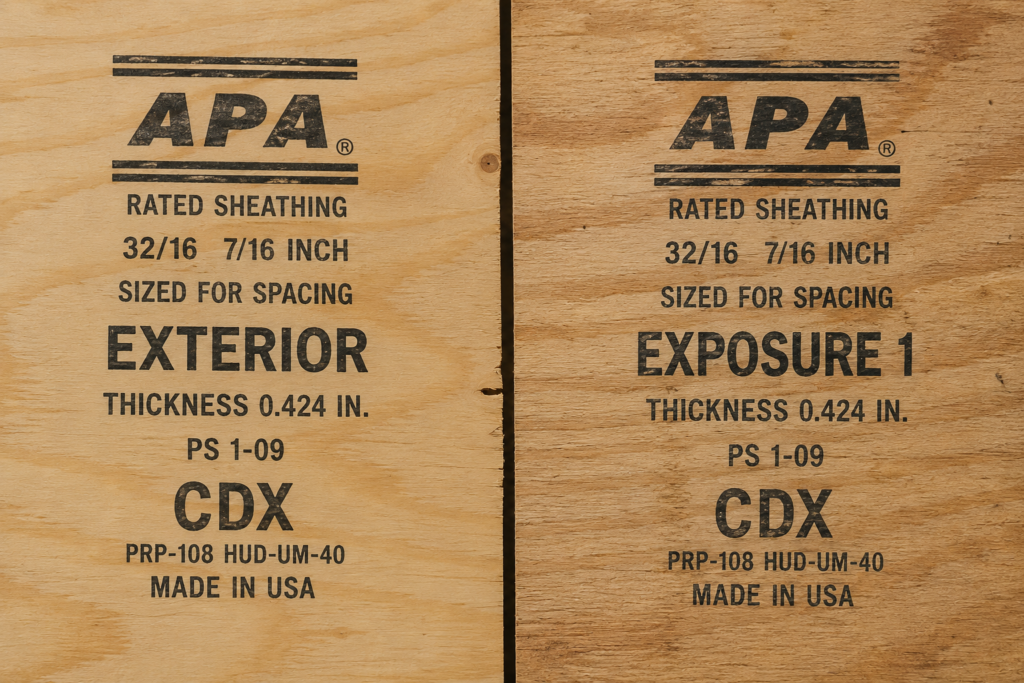
Plywood carries a bond classification, and there are two you’ll see at the lumberyard:
Exterior — panels manufactured for long-term exposure to weather or moisture.
Exposure 1 — panels that use moisture-resistant exterior adhesives but are intended for temporary construction exposure or protected applications, not permanent direct weather exposure.
Most CDX at big-box stores carries an Exposure 1 bond classification, not true Exterior. For sheathing that gets covered, that’s fine — it’s exactly what Exposure 1 is designed for. For a fence gate or an exposed shed wall, it’s not. Check the panel stamp for the words EXTERIOR or EXPOSURE 1 rather than relying on informal product names like CDX or ACX — the stamp identifies bond classification separately from panel and veneer grade.
Important: Neither bond classification makes plywood rot-resistant. Decay resistance comes from preservative treatment, which is a completely separate process. “Exterior glue” and “won’t rot” are two different claims, and the stamp only makes the first one. If your panel touches soil, sits near grade, or stays damp, you need pressure-treated plywood — not just an Exterior bond.
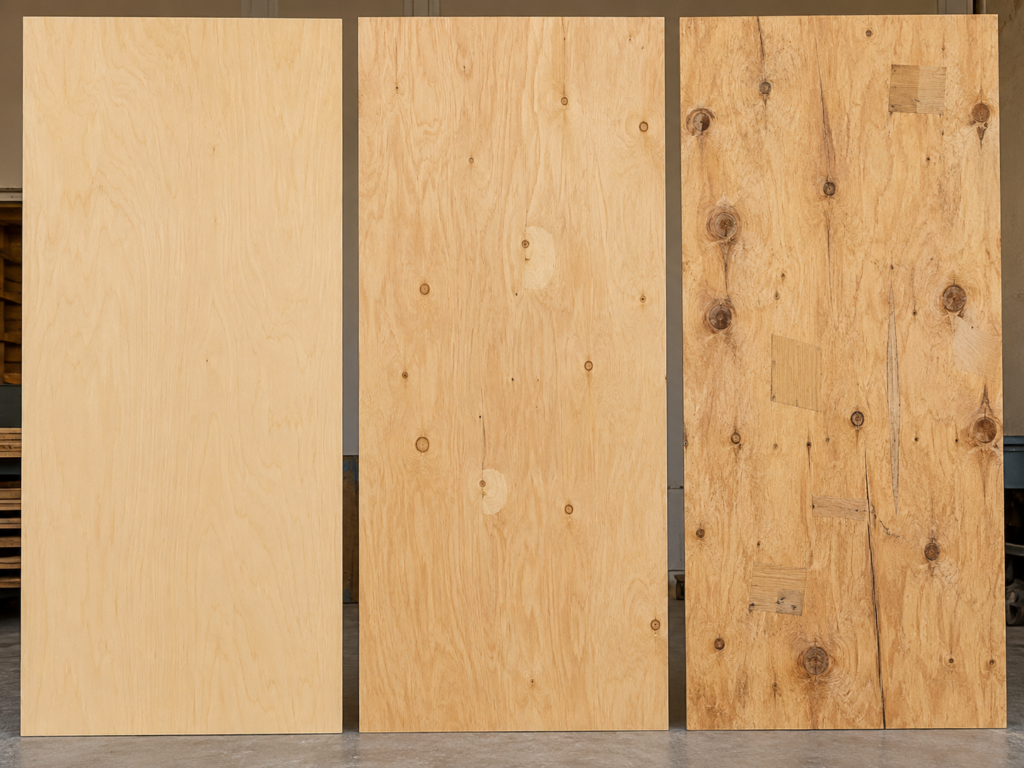
Veneer grades run A, B, C, and D. Veneer grade primarily describes surface quality — how many knots, patches, and repairs are allowed — not the panel’s bond classification. However, lower-grade veneers contain more openings and defects, making them harder to finish and generally unsuitable as permanently exposed finished surfaces.
A grade — Smooth, sanded, paintable. Repairs allowed but neatly made. This is what you want when the surface will be seen and painted.
B grade — Solid surface, minor repairs, tight knots up to about 1 inch. Slightly rougher than A but takes paint well.
C grade — Knotholes up to 1½ inches, splits allowed. Standard sheathing face.
D grade — Knotholes up to 2½ inches, larger splits. You’ll typically find it on the back of sheathing panels, never as an exposed finished face.
Common combinations pair a better face with a cheaper back:
ACX = A face, C back
BCX = B face, C back
CDX = C face, D back
These names are commonly used as trade shorthand. Always verify the bond classification printed on the panel stamp — APA distinguishes the panel grade, veneer grade, and exposure classification on its trademark.
Common mistake: Using CDX for a project where the panel stays exposed permanently. Most plywood sold as CDX sheathing carries an Exposure 1 bond classification. It can tolerate construction moisture but should normally be covered with roofing, siding, or another weather barrier rather than used as a permanently exposed finish panel. The open knotholes on the D back also trap water and are difficult to finish. CDX belongs under siding, roofing, or house wrap. If the plywood IS the exterior surface, spend up for BCX, APA 303 siding, or MDO.
Types of Exterior Plywood
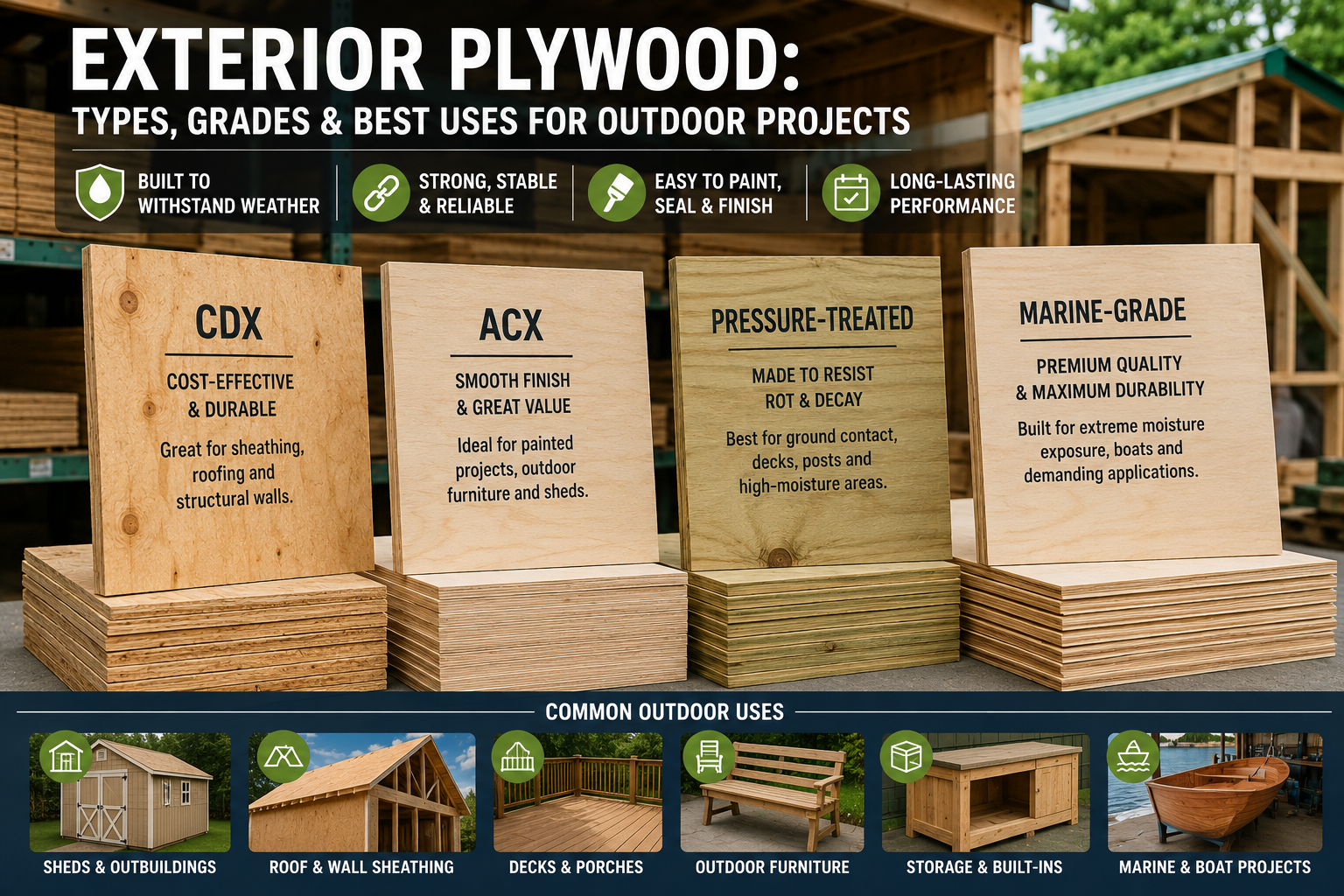
CDX Sheathing
The workhorse. Most CDX is destined for roofs and walls, where it gets covered by shingles, siding, or membrane within days. Used as designed — covered and kept dry — it can last for the service life of the assembly. Look for the APA trademark on panels from member mills; it certifies the panel was manufactured and tested to the applicable performance standard.
BCX and ACX Sanded Panels
Sanded panels commonly sold with an Exterior bond classification and a paint-ready face. Verify that the panel stamp actually says EXTERIOR, because product naming varies between suppliers. BCX is the value pick for soffits, porch ceilings, shed exteriors, and painted outdoor furniture. ACX earns its premium when the surface is at eye level and you want a furniture-quality painted finish.
Pressure-Treated Plywood
Standard softwood plywood run through a preservative treatment process, forcing chemicals (typically copper-based) into the veneers. This is the only plywood category on this list intentionally preservative-treated for decay resistance. Treated panels are rated for different exposure conditions, so check the end tag for the AWPA use category — UC3A and UC3B cover above-ground exterior use, while ground contact normally calls for UC4A or higher, and saltwater or brackish exposure falls under the UC5 categories.
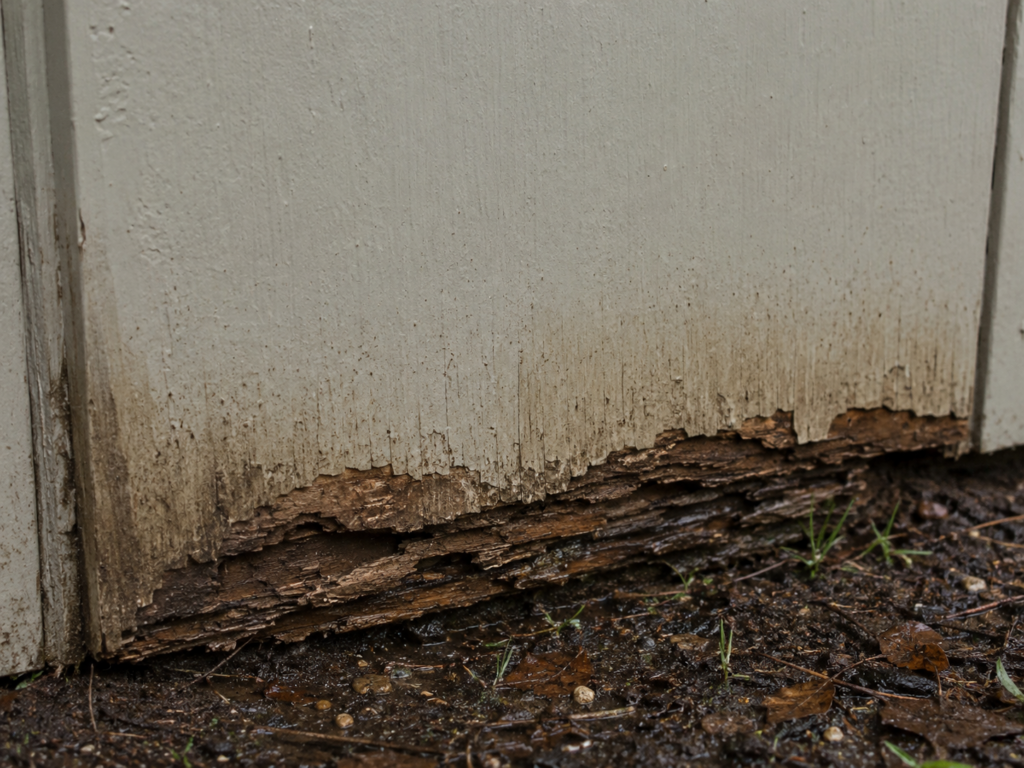
Why painted plywood still rots: A common failure pattern occurs when painted (but untreated) plywood remains in contact with damp soil. Small coating cracks allow moisture to reach the lower edges and wick into the veneers, where decay can begin even while most of the painted face still looks intact. Paint is a raincoat, not a wetsuit. Soil contact needs preservative treatment, full stop.
APA 303 Siding Panels (Including T1-11)
APA 303 plywood siding — including panels with T1-11-style grooving — can serve as both structural wall sheathing and the finished exterior surface when the selected panel and installation meet applicable code and manufacturer requirements. Popular for sheds, workshops, and rustic builds. The grooves are the weak point — they cut into the face veneer, so stain or paint must get worked into every groove or that’s where water enters first.
MDO (Medium Density Overlay)
Exterior plywood with a resin-impregnated fiber overlay bonded to the face. The overlay creates a smooth, durable paint base with better resistance to moisture penetration and surface checking than ordinary plywood — this is why sign shops have used it for decades. Cut edges and fastener penetrations still require sealing. For a smooth painted exterior where minimizing face checking matters, MDO generally performs better than ordinary ACX.
Marine Grade Plywood
The most misunderstood panel in the store. Marine grade means Exterior glue, B-grade or better veneers, and tightly controlled core gaps — APA marine-grade panels permit gaps no larger than 1/8 inch — so there are fewer hidden pockets for water to collect in. It is not rot-proof and it is not treated. It’s simply built to a higher structural, limited-core-gap standard for boat hulls and transoms where a saturated core void could become a soft spot.
Cost consideration: Marine grade typically costs several times more than standard sanded exterior panels. For a boat transom, pay it. For many ordinary outdoor projects, marine-grade construction does not justify the additional cost: the premium buys tightly controlled cores and two good faces, which matter in a hull but not in a mailbox post or garden box. Pressure-treated plywood is normally the appropriate plywood choice for ground contact.
How Long Does Exterior Plywood Last?
No plywood label guarantees a specific outdoor lifespan. The following are rough planning guides, not manufacturer warranties. Actual service life depends on climate, drainage, panel orientation, maintenance, edge sealing, and whether the panel is preservative-treated.
Condition
What to Expect
Covered sheathing (roof/wall, kept dry)
Can last for the service life of the assembly
Properly painted exposed panel, maintained
Often lasts many years with periodic inspection and recoating
Painted once, never maintained
Failure commonly begins at edges, joints, and coating cracks
Bare, untreated, exposed
High risk of rapid checking, swelling, and eventual decay
Pressure-treated, ground contact
Depends on treatment use category, drainage, and installation
One of the most important factors in the service life of exposed plywood is protecting its edges. Cut edges expose veneer boundaries and end grain, making them especially vulnerable to moisture uptake. For exposed plywood and plywood siding, seal the factory edges and reseal every edge cut during installation — APA specifically recommends sealing all siding edges before installation and resealing field-cut edges.
Common mistake: Finishing the faces of siding panels beautifully and never touching the bottom edges near the foundation. Moisture wicks up through unsealed end grain, and the bottom few inches of a panel can turn soft while the painted face above still looks fine. Prime every edge — especially the ones you’ll never see again after installation.
For panels that have already taken on water, our guide to getting moisture out of plywood covers how to dry panels before damage sets in.
Is the plywood the finished exterior surface? → APA 303 siding for texture, BCX for painted flat panels, MDO when you want the smoothest, most durable painted surface.
Does it touch soil, sit within splash range, or remain difficult to dry? → Use pressure-treated plywood carrying the appropriate AWPA use category. For ordinary ground contact, look for UC4A or the rating specified by the project requirements.
Boat hull, transom, or another part requiring premium marine structural plywood? → Use marine-grade plywood and the coating or treatment system specified by the boat design. For permanently submerged or saltwater applications, use materials specifically rated for that exposure; untreated marine plywood alone is not sufficient.
Visible and painted at eye level? → ACX or MDO.
How to Seal Exterior Plywood
Proper sealing is one of the most important factors affecting the service life of exposed exterior plywood. The process is the same whether you’re finishing siding, a shed wall, or a painted panel:
Let the panel dry and acclimate if it arrived wet or was stored outdoors.
Sand and clean the exposed surfaces so the primer can bond.
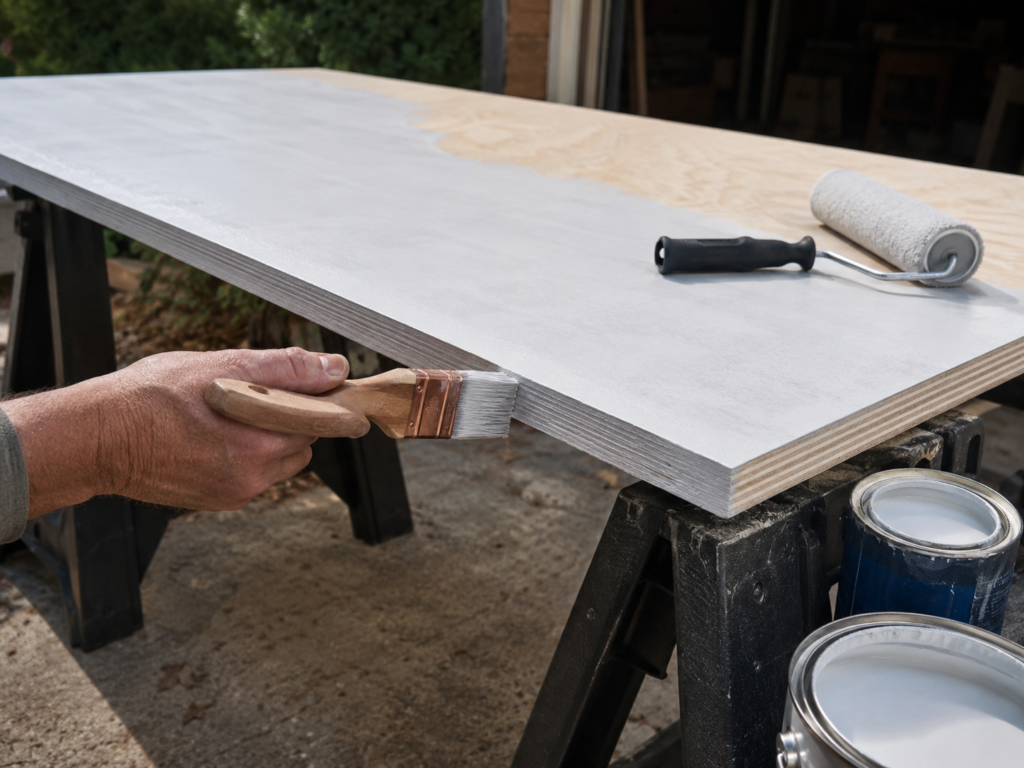
Seal or prime every exposed and field-cut edge — edges first, before the panel goes up, while you can still reach all four.
Apply the primer recommended for the panel and finish system.
Apply two compatible exterior topcoats.
Inspect joints, bottom edges, and fastener penetrations periodically, and recoat before the coating fails rather than after.
For APA Rated Siding, APA recommends finishing promptly — preferably within two weeks of installation — and using an all-acrylic latex paint system when painting.
Recommended Products for Exterior Plywood Projects
These are the finishing products that determine whether your panel serves for decades or fails early:
Manufacturer-approved exterior primer compatible with your chosen topcoat — for APA Rated Siding, an all-acrylic latex primer-and-topcoat system generally provides the best protection. See exterior acrylic latex primer on Amazon
Oil-based stain-blocking primer for compatible sanded panels and spot-sealing knots or tannin bleed — not the universal choice for every exterior panel. See Zinsser Cover Stain on Amazon
Penetrating epoxy sealer for compatible cut-edge and repair applications — confirm that the cured epoxy is compatible with the intended primer and topcoat. See TotalBoat penetrating epoxy on Amazon
(As an Amazon Associate, we earn from qualifying purchases.)
Installation Tips That Add Years
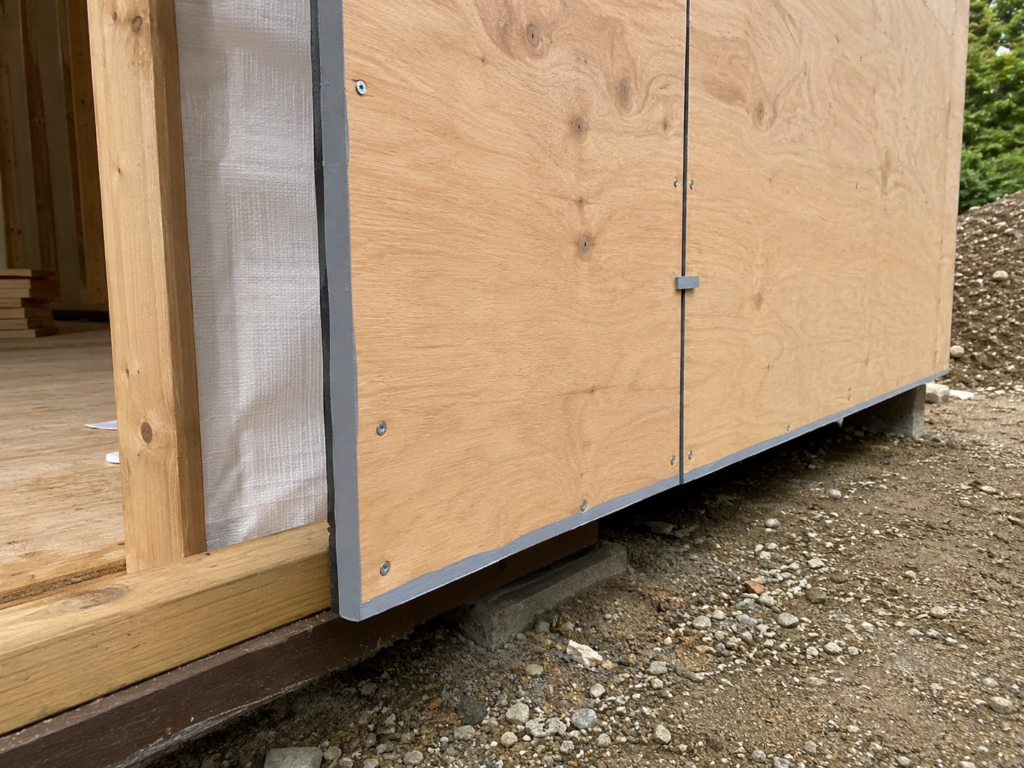
Leave a 1/8″ gap between panels unless the manufacturer specifies otherwise — plywood expands when it takes on moisture, and tight panels buckle. Keep the bottom edge of any exterior panel at least 6 inches above grade so rain splash doesn’t soak the end grain. For fasteners, use the type, size, and spacing specified by the panel manufacturer, project plans, and applicable building code — nails are standard and often code-specified for structural sheathing. In exposed or treated-wood applications, use corrosion-resistant fasteners compatible with the panel and its preservative treatment. And prime before installation, not after — it’s the only time in the panel’s life you can reach all four edges.
If you’re patching older exterior plywood rather than replacing it, our wood filler guide explains when ordinary filler is appropriate and when an exterior epoxy repair is required.
FAQ
Is exterior plywood waterproof? The glue is waterproof; the wood is not. Exterior plywood survives wetting and drying cycles without delaminating, but the veneers will still absorb water, swell, check, and eventually rot if left unfinished. Paint, stain, or sealer is required for exposed applications.
Can I use exterior plywood for a bathroom or other damp interior space? Yes. Exterior or Exposure 1 panels handle humid interiors like bathrooms, garages, and basements better than interior-glue panels. For subfloors under tile, follow the tile manufacturer’s underlayment requirements.
What is the cheapest plywood for outdoor use? CDX is the cheapest panel with moisture-resistant glue, but it’s designed to be covered. For permanently exposed painted projects, BCX is often one of the lowest-cost smooth-faced options that finishes well. Pressure-treated plywood is normally the appropriate plywood choice for ground contact.
Does exterior plywood need to be sealed? Yes, if it’s exposed. Prime or seal all faces and — most importantly — every cut edge. Unsealed end grain is a leading cause of early plywood failure outdoors.
Is marine plywood the same as pressure-treated plywood? No. Marine plywood has tightly controlled core gaps and high-grade veneers for structural use in boats, but it is untreated and will rot if left wet and unsealed. Pressure-treated plywood has chemical preservatives forced into the wood for genuine decay resistance. They solve different problems.
How thick should exterior plywood be? For wall sheathing, 7/16″–1/2″ is standard. Roof sheathing is typically 1/2″–5/8″ depending on rafter spacing and snow load. Siding panels run 19/32″–5/8″. Anything structural should follow the span rating on the panel stamp, not just thickness.
Related Posts:
Exterior Plywood Lifespan: How Long Each Type Lasts Outdoors by Admin August 21, 2026 DIY Exterior plywood has no single outdoor lifespan. Covered sheathing that remains dry can remain serviceable for the life of the surrounding assembly, while permanently exposed…
T1-11 Siding Lifespan: How Long Does It Last? by Admin August 31, 2026 DIY Last updated: August 2026 Ask ten contractors how long T1-11 siding lasts and you'll get answers ranging from "a lifetime" to "I've pulled panels that…
Sanded Plywood: AC vs BC Grades, Uses and Buying Guide by Admin August 18, 2026 DIY Sanded plywood is a structural plywood panel with one or both outer veneers factory-sanded for a smoother, paintable surface. In the common grades, AC plywood…