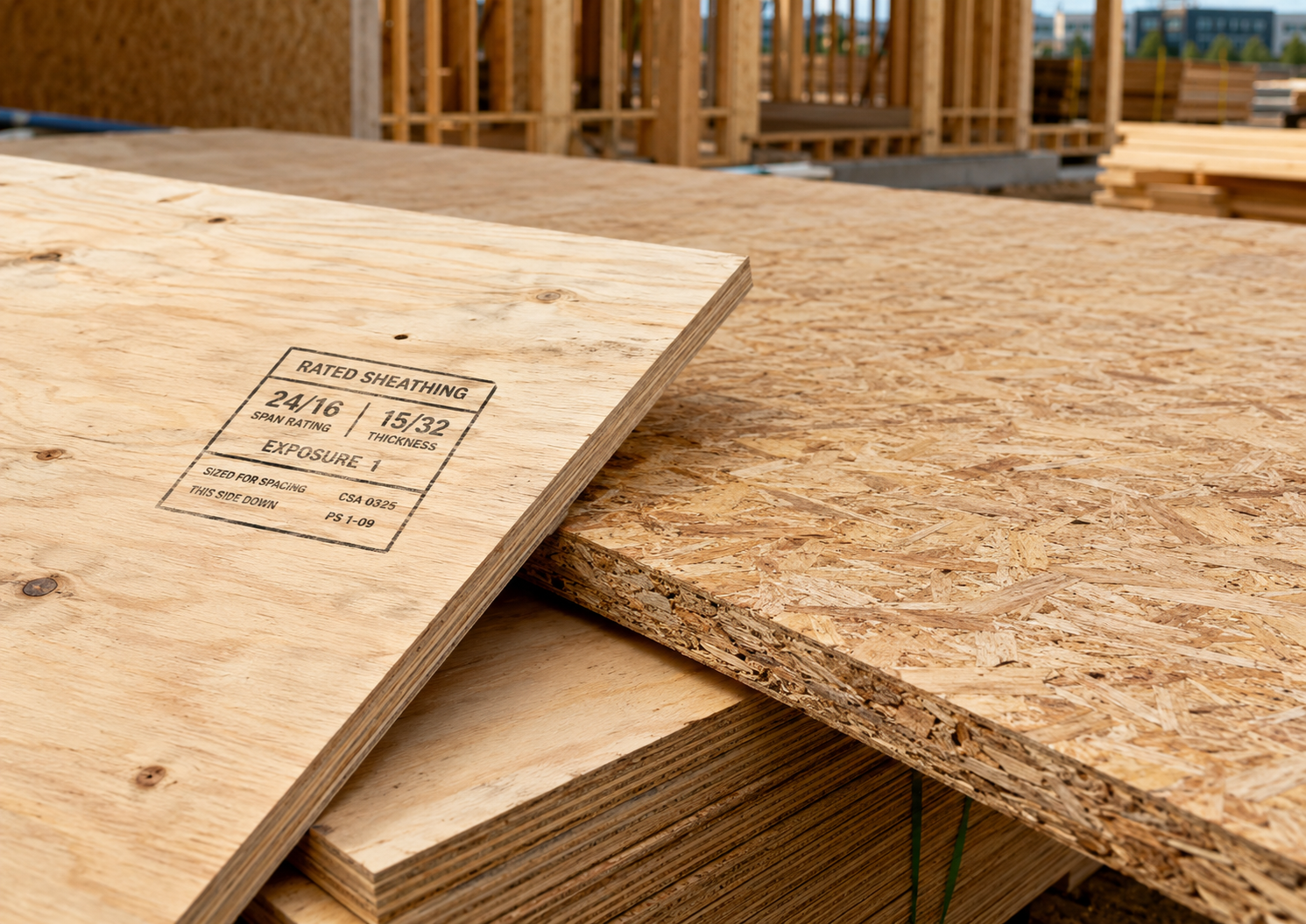
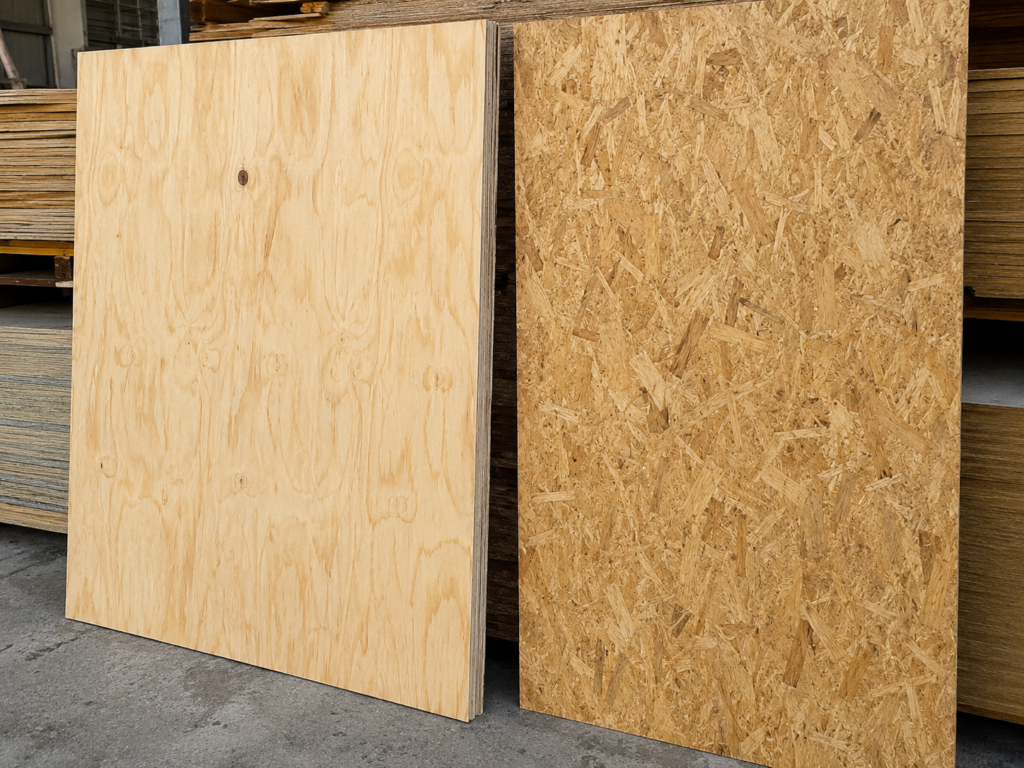
RTD is an abbreviation for Rated — “RTD Sheathing” and “RTD SHG” are shorthand for Rated Sheathing, a performance classification used by APA – The Engineered Wood Association. It is not a special manufacturing process, a glue technology, or a separate grade of plywood. Rated Sheathing can be plywood or OSB and may be manufactured under either the PS 1 or PS 2 product standard.
That’s worth stating up front, because a widely repeated internet claim says RTD stands for “Resistance Temperature Detector.” That definition does not come from APA, and it isn’t what the stamp on the panel means. According to APA – The Engineered Wood Association, RTD is shorthand for Rated Sheathing and is not a separate panel grade or manufacturing technology. What the stamp does tell you — span rating, bond classification, thickness — is what actually determines where the panel can go.
Quick Reference: RTD vs. CDX vs. OSB — What Each Term Tells You
These three terms answer different questions, so a head-to-head “which is better” framing is the wrong lens. Here’s what each one actually identifies:
Term
What it is
What it tells you
What it does NOT tell you
RTD (Rated Sheathing)
An APA performance classification
The panel is rated for structural sheathing use; check the stamp for span rating, thickness, and exposure classification
Whether the panel is plywood or OSB; the veneer grade
CDX
A common trade term for plywood sheathing
C- and D-grade veneers with an Exposure 1 bond; APA notes Exposure 1 plywood sheathing is commonly called CDX
The span rating or intended application — read the stamp
OSB
A panel type (oriented strand board)
The panel is made of wood strands, not veneers
Its rating — OSB can also carry a Rated Sheathing stamp
A single sheet at the lumberyard can be described by more than one of these at once: a plywood panel can be Rated Sheathing and be what the trade calls CDX.
What “Rated Sheathing” Means on the Stamp
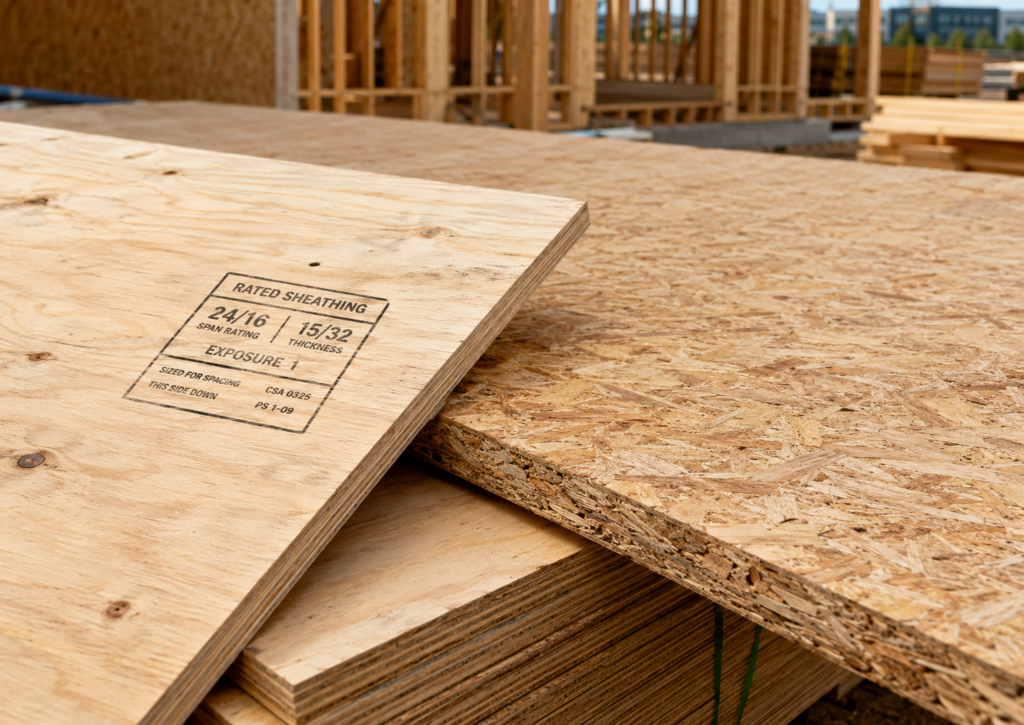
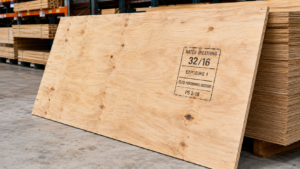
Rated Sheathing identifies the panel’s intended structural application — roof and wall sheathing, and subflooring where the span rating allows. The trademark stamp carries the information that matters:
Span rating (e.g., 24/16 or 32/16) — maximum support spacing for roof and subfloor use
Product standard (PS 1 or PS 2) and mill identification
If reading panel stamps is new to you, our guide to structural vs. non-structural plywood explains what the stamp labels mean, and our CAT plywood guide covers performance categories and why a “3/4-inch” sheet actually measures 23/32.
⚠️ Warning: Exposure 1 Is Not Decay Resistance
Many retail Rated Sheathing panels carry an Exposure 1 bond classification, but you must verify the classification printed on the individual panel stamp. Exposure 1 means the adhesive bond can tolerate temporary moisture during construction — rain delays before the roof or walls are covered. The panel is still intended to be protected after installation.
Two things follow from that:
Exposure 1 is a bond classification. It describes the glue line, not the wood. The bond survives temporary wetting; untreated wood can still decay if it stays wet.
Panels intended for longer-term exposure carry an Exterior classification, and decay protection is a separate matter entirely — that requires preservative-treated material, regardless of bond classification. Our exterior plywood guide covers the materials actually built for weather exposure.
Using standard RTD sheathing where it will stay wet or contact the ground will eventually fail — not at the glue line, but through ordinary wood decay. APA’s Rated Sheathing data sheet specifically warns that Exposure 1 plywood — commonly called CDX in the trade — is sometimes mistaken for having an Exterior bond classification and used in applications it isn’t built for.
RTD and CDX: Two Labels, Not Two Competing Products
Because both terms show up on the same shelf, buyers assume RTD and CDX are rival products. They aren’t.
Rated Sheathing (RTD) describes the panel’s performance classification and intended structural application.
CDX is the trade’s shorthand for a specific plywood construction: C-grade face, D-grade back, Exposure 1 bond.
A plywood panel stamped as Rated Sheathing with C/D veneers and Exposure 1 glue is, in trade language, CDX. One label describes what the panel is rated to do; the other describes how the plywood is built. Neither implies a better adhesive, a more controlled press, or a more consistent unit — those distinctions don’t exist between the two terms.
If you’re weighing veneer grades for a project where face quality matters, see our full CDX plywood guide, or compare it against ACX and BCX panels.
❌ Mistake: Buying RTD Sheathing for Furniture or Finish Work
Retail plywood sold as RTD sheathing is normally an unsanded structural panel, and “RTD” alone does not identify a veneer grade — the stamp and the face itself do. Expect knots, patches, and an unsanded surface. Every year people buy it for shelving, cabinets, or paint-grade projects because it’s the cheapest 4×8 in the aisle, then spend hours filling and sanding a surface that was never meant to be seen.
If your project needs a clean face, examine the panel stamp and face quality, and start with a sanded panel — our guide to plywood grades explained covers how to pick one. The money saved per sheet on sheathing disappears the first hour you spend fighting the surface.
Span Ratings: How to Match the Panel to Your Framing
The span rating on the stamp has two numbers. The first is the maximum support spacing for roof applications; the second is for subflooring. A 32/16 panel, for example, is rated for roof supports up to 32 inches on center and subfloor supports up to 16 inches on center, when installed under the specified conditions.
Span ratings generally assume that the panel’s long dimension or strength axis runs perpendicular to the supports. Follow the panel manufacturer’s installation instructions when orientation markings differ.
Common performance categories and where they typically land:
11/32 (3/8″ nominal) — wall sheathing over closer stud spacing
15/32 (1/2″ nominal) — common for wall sheathing and roofs, per its span rating
19/32 (5/8″ nominal) — stiffer roof deck, common on wider rafter spacing
23/32 (3/4″ nominal) — subfloor duty and heavier loads
Do not select a panel on thickness alone. The complete stamp — span rating, edge-support requirements, exposure classification — plus your design loads and local code determine the right panel. For roof-specific choices at 16-inch and 24-inch rafter spacing, our guide to the best plywood thickness for roofing walks through it span by span.
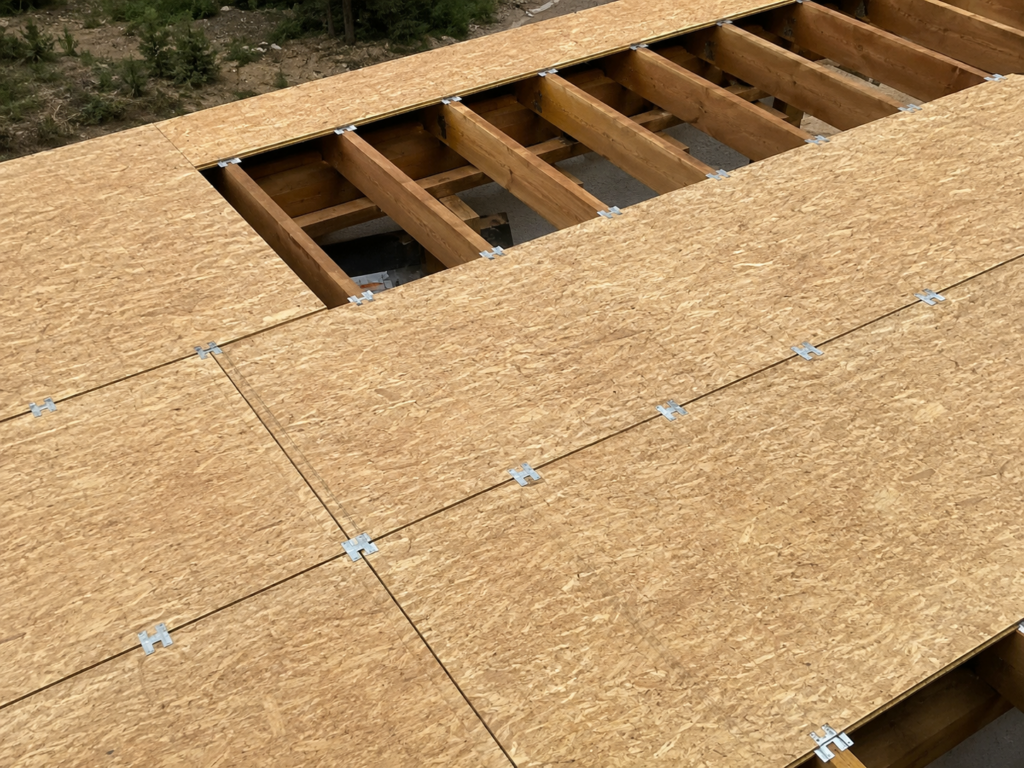
On panel edge clips (H-clips): edge support is not automatically required in every application. Whether you need clips or blocking depends on the panel’s span rating, framing spacing, installation conditions, and the applicable building code. Check the panel stamp and the applicable installation table before omitting clips or blocking — some span ratings are only valid with edge support. APA’s Product Support Help Desk and the load-span tables in its design guides are the authoritative references for both span ratings and edge-support requirements.
💸 Cost Difference: How to Price a Thickness Upgrade Correctly
Panel prices swing by region and by month, so a published dollar figure would mislead more than it helps. Price the upgrade yourself in two minutes:
Sheet count: roof area in squares × 100 ÷ 32 sq ft per sheet, plus your waste factor. A 30-square roof is roughly 94 sheets before waste.
Per-sheet delta: at your yard, this week, note the price difference between the two performance categories you’re comparing (say 15/32 vs. 19/32) in the same panel type.
Multiply. That’s the true upgrade cost — before tax and delivery.
Then judge the number against what you get: a stiffer deck, less deflection between supports on wider framing, and a more solid feel underfoot. On closer rafter spacing where the thinner panel’s span rating is already comfortably met, the upgrade is optional. On wider spacing near the panel’s rated limit, the stiffer deck is usually where the money is best spent.
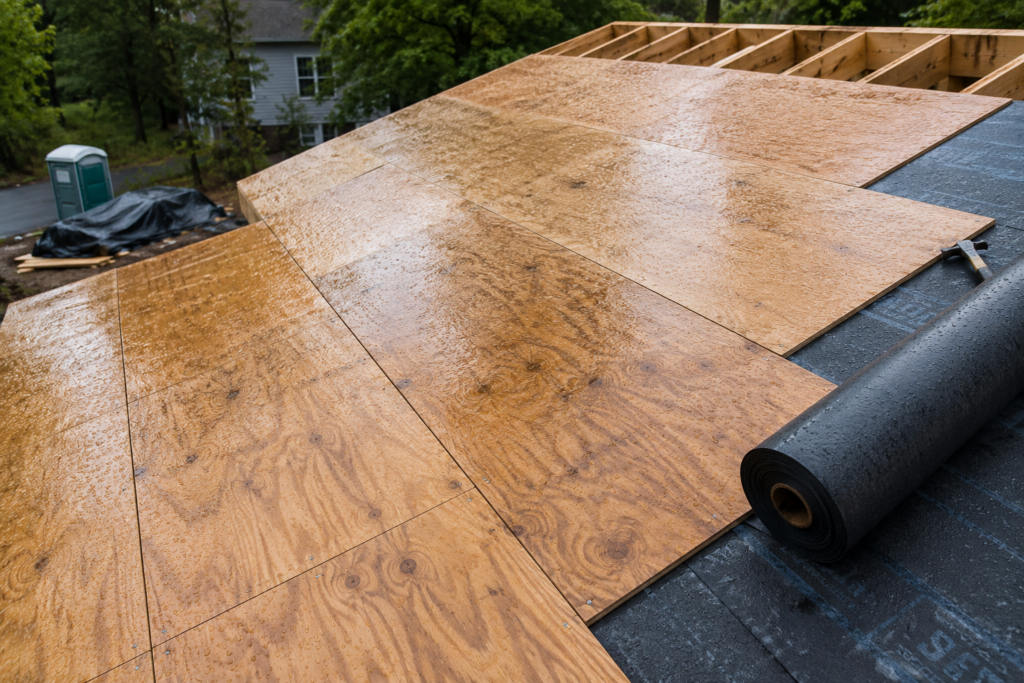
If Your Sheathing Gets Rained On
Exposure 1 panels are made to tolerate exactly this — moisture exposure during normal construction delays. Sensible practice while the deck is open:
Let panels dry before covering them with underlayment or finish materials.
Check butt joints for edge swell after wet/dry cycles; minor swell in plywood typically recedes as panels dry.
Inspect for flatness before shingling and address any joints that haven’t recovered.
Get the building dried in as soon as practical — the bond classification protects the glue line during construction, but the panel is designed to spend its service life covered.
Fastening Rated Sheathing on a Roof
APA’s general roof-sheathing guidance calls for minimum 8d common nails (0.131″ × 2-1/2″), typically spaced 6 inches on center at supported panel edges and 12 inches on center at intermediate supports. High-wind designs and local codes may require a different fastener or schedule — always check the applicable table for your wind zone and jurisdiction. (See APA’s Builder Tips, “Proper Installation of APA Rated Sheathing for Roof Applications,” Form N335, and the APA Engineered Wood Construction Guide, Form E30, for full fastening schedules.)
Unless the panel manufacturer specifies otherwise, leave approximately 1/8 inch between panel ends and edges to accommodate normal moisture-related expansion.
Note that roof sheathing is attached with framing/sheathing fasteners. Roofing nails are for the roofing materials that go on top, not for the structural deck.
Buying RTD Sheathing: What to Check at the Yard
Read the full stamp — span rating, performance category, bond classification, and product standard, not just the thickness on the shelf tag.
Confirm plywood vs. OSB if you have a preference; Rated Sheathing can be either.
Sight down the edges for core voids and open gaps; pull sheets with obvious voids at the ends.
Check flatness and reject panels with pronounced bows, twists, or cupping. Slight storage-related curvature may settle during proper installation, but badly distorted panels can leave an uneven roof or wall surface.
Look at the face if the panel will be visible from below (open garage ceilings and similar) — sheathing faces vary sheet to sheet.
Tools and Supplies for Sheathing Work
As an Amazon Associate, we earn from qualifying purchases.
Panel edge clips (H-clips) — for span ratings and framing layouts where edge support is required by the installation table: H-clips for 15/32″ and 19/32″ panels
8d common framing nails (0.131″ × 2-1/2″) — the baseline sheathing fastener in APA’s general guidance; verify your local schedule: 8d common nails
Chalk line reel — snapping rafter lines across the deck: chalk line kits
Circular saw blade for plywood — clean crosscuts without face tear-out: 40-tooth 7-1/4″ blades
What does RTD mean on plywood? RTD is an abbreviation for Rated. “RTD Sheathing” and “RTD SHG” are shorthand for Rated Sheathing, an APA performance classification for structural sheathing panels. It is not a manufacturing process or a separate grade, and it does not stand for Resistance Temperature Detector.
Is RTD plywood the same as CDX? The terms describe different things and often apply to the same sheet. Rated Sheathing (RTD) is a performance classification; CDX is a trade term for plywood with C- and D-grade veneers and an Exposure 1 bond. A plywood panel can be both Rated Sheathing and CDX at the same time.
Is RTD plywood always plywood? No. Rated Sheathing can be plywood or OSB and may be manufactured under the PS 1 or PS 2 product standard. Check the trademark stamp to see what you’re buying.
Can RTD sheathing get rained on? Panels with an Exposure 1 bond classification can tolerate temporary moisture during construction, such as rain delays before the roof is covered. They are intended to be protected after installation. Exposure 1 describes the glue bond — untreated wood can still decay if it stays wet long-term.
What thickness of RTD sheathing do I need for a roof? Select by span rating, not thickness alone. Match the first number of the span rating to your rafter spacing, and check whether that rating requires panel edge support. Design loads and local code also apply, so verify against the applicable installation table.
Do I need H-clips with RTD roof sheathing? Not automatically. Panel edge support may be required depending on the panel’s span rating, framing spacing, installation conditions, and local code. Check the panel stamp and the applicable installation table before omitting clips or blocking.
Related Posts:
Plywood Grade Stamp Explained: What It Means by Admin August 12, 2026 DIY Look at almost any sheet of structural plywood and you'll find a grade stamp inked onto the back or edge of the panel. Most buyers…
Rotozip Tool Guide: What It Is, and How to Use It by Admin May 15, 2025 Tools If you've ever tried cutting into drywall, plywood, or laminate with a jigsaw or handsaw, you probably know the struggle: rough edges, limited mobility, and…