Borate wood treatment is a water-soluble preservative, usually disodium octaborate tetrahydrate (DOT), applied to bare wood to help control decay fungi and wood-boring insects in the wood it adequately penetrates. It doesn’t bind to the wood, so liquid water can wash it back out, and it can’t restore strength that rot has already taken.
That solubility drives every decision in this article. It lets borate move into wood by diffusion, and it lets rain carry it away.
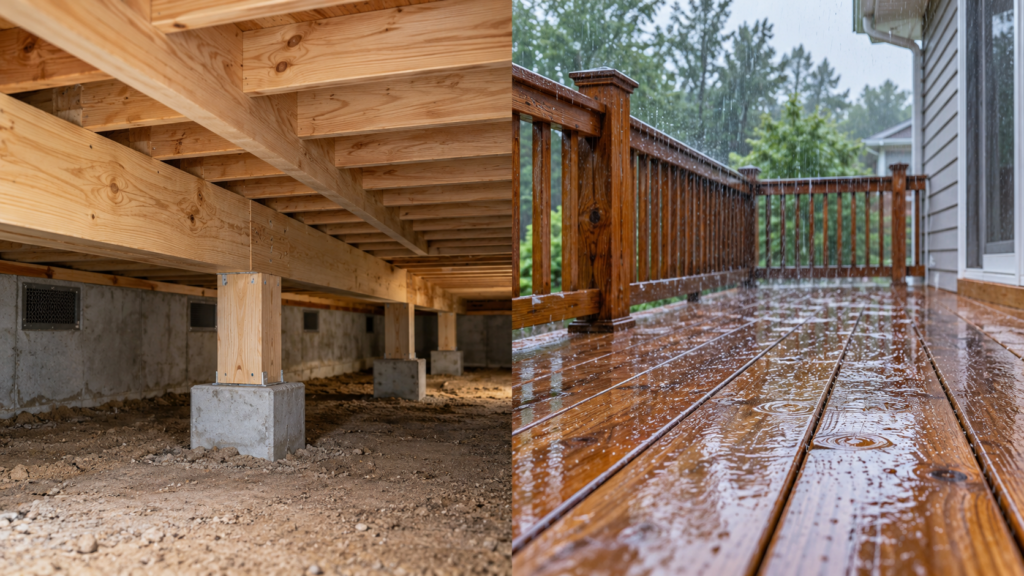
The product labels say the same thing. The Bora-Care label calls treatment permanent only if the wood isn’t exposed to rain, moisture, or ground contact. The Tim-bor Professional label limits its use to wood protected from excessive rain and not in direct contact with soil.
Factory-Treated Borate Lumber vs. Borate You Spray On
These are two different things, and people mix them up.
Factory-treated borate lumber (end tags usually read “SBX”) is pressure-treated to a set retention under the American Wood Protection Association’s Standard U1. The end tag shows its AWPA Use Category, which tells you where that product may be used. Borate lumber is mainly made for UC1 (interior, dry) and UC2 (interior, damp), which covers uses like sill plates and interior framing.
A borate you spray or brush on at home is a topical treatment. It has no Use Category, and a sprayed board does not become “UC2 lumber.” How far the borate gets into the wood, and how much stays there, depends on the product, the mix strength, the wood’s moisture, and time. If a building code or inspector calls for treated lumber, a can of borate won’t satisfy it. You need lumber with the right end tag.
Where Borate Works vs. Where It Fails
Location
Suitable?
Why
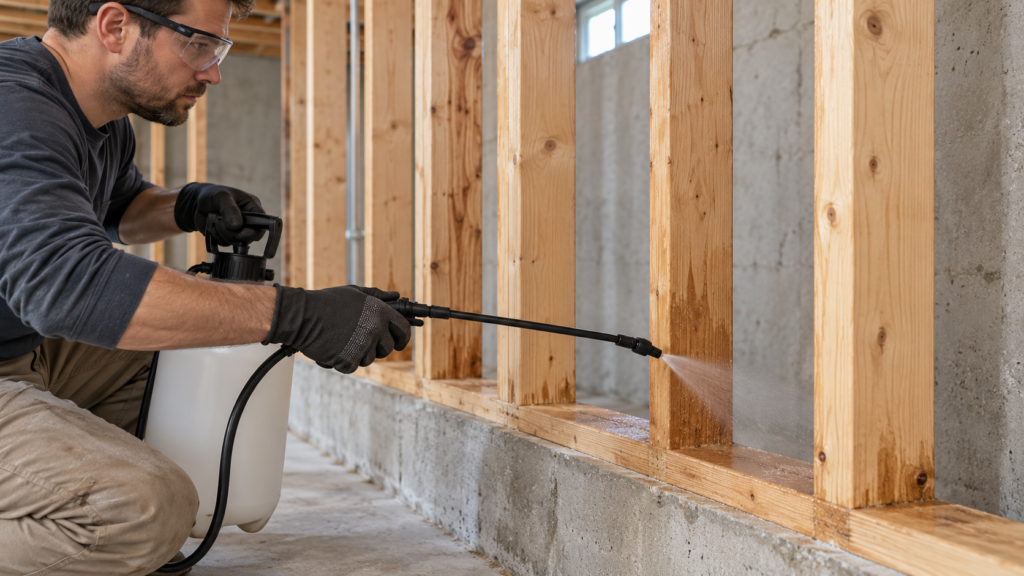
Interior wall framing and studs
✅ Yes
Protected from rain, so the borate stays in the wood
Subfloor and joists over a crawlspace
✅ Yes
Damp air, but no liquid water washing it out
Wood around a leak you have already fixed
✅ Yes
Can help control fungi left in the wood once the water source is gone
Window sills and door frames
⚠️ Sometimes
Rods or injected liquid can help at the wet ends, but coverage is limited
Framing where termites are a concern
✅ Yes
Borate labels cover termites and other wood-destroying insects
Deck boards, rails, fence pickets
❌ Poor
Rain leaches it out; coatings only slow that down
Posts in the ground or wood touching soil
❌ No
Needs lumber rated for ground contact
Wood with an active, unfixed leak
❌ Short-lived
Water keeps feeding rot and flushing out borate
Rot that has already weakened the wood
❌ No
Can’t restore lost strength; repair or replace it
Painted, stained, or sealed wood
❌ No
Labels call for bare wood; a finish blocks it
⚠️ Warning: Borate is not a waterproofer. If a board stays wet, borate buys you time at best. Stop the water first, or you’ll be treating the same spot again.
Why Moisture Matters More Than the Product
Rot is a living fungus feeding on wood, and it needs water. According to the USDA Forest Products Laboratory’s Wood Handbook, Chapter 14, serious decay happens only when wood moisture is above the fiber saturation point, about 30% on average. Wood air-dried to 20% or less gives a reasonable margin of safety. The same chapter says decay already in the wood will not progress if the wood is kept air-dry.
That’s why fixing the water source is step one, not a side note. Borate adds a chemical barrier where it reaches. Keeping the wood dry is what stops the fungus.
Borate also can’t give back wood that’s already been eaten. The Handbook notes that brown rot takes strength away early, often before the damage is easy to see. A soft joist or sill plate needs repair or replacement, whatever you spray on it. If you are not sure which kind of rot you have, see how to tell dry rot from wet rot.
Borate Product Types
Glycol-Based Borate (Bora-Care and Similar)
These are DOT concentrates in a glycol carrier. You dilute them with water at the ratio the label gives for your job, and the label ratios differ for prevention and for treating active problems. Bora-Care is a common choice for crawlspaces, attics, and exposed framing during a remodel.
Glycol products are often sold as the better choice for dry wood. A USDA Forest Products Laboratory study of spray-applied borates on framing lumber found no significant penetration difference between powdered DOT and glycol-borate at the same DOT concentration. A stronger glycol-borate mix did go deeper. A related study on topically applied borate solutions found that fast drying can limit how far a spray gets in, while wood held at higher humidity allowed much deeper movement over weeks and months.
In practice, mix strength, wood moisture, and time matter at least as much as the brand. Pick the product whose label covers your job and follow its mixing ratio.
Borate Rods
Rods are solid sticks of borate set into drilled holes. They dissolve when water reaches them, which suits the ends of window sills, door jambs, and trim that pick up water through the end grain. Don’t expect them to protect a whole board. In a USDA Forest Products Laboratory field study of borates in drilled holes, liquid borate injected into the holes generally spread farther along the wood than rods alone. If you’re already cutting out rot on a sill, read up on repairing a rotted window sill before you drill.
❌ Spraying borate on weather-exposed wood and treating it like pressure-treated lumber.
Some labels do cover exterior wood, with conditions. The Bora-Care label says exterior surfaces need a water-resistant topcoat for long-term protection and must stay out of rain or snow for a set time after treatment. The Tim-bor label limits exterior use to wood protected from excessive rain. That coating is now a maintenance job. Once it wears, the borate starts washing out.
A coated borate treatment is not a substitute for lumber rated for the exposure. On a deck, fence, or step, the lasting fix is usually drainage, spacing, and the right treated lumber. Using the wrong treatment rating is a common reason outdoor wood fails, so check which pressure-treated rating fits the job before you rebuild.
😬 The regret version: A homeowner sprays a soft, rotting fence post, sees no improvement, and decides borate “doesn’t work.” Borate was never going to make soft wood firm again, and a post in the ground needs lumber rated for ground contact.
Cost Difference: Treating Now vs. Replacing Later
💸 Prices change, so check current listings. The math is simple, though. Treating exposed, sound framing is a few hours of spraying plus product. Once rot has weakened a sill plate, rim joist, or subfloor, you’re paying for demolition, temporary support, new lumber, and carpentry labor, often with finish work on top.
That gap is the reason to treat sound framing you can reach during a remodel or in a crawlspace. Our wood rot guide covers how repair scope and cost grow with the damage.
Where borate isn’t worth it: wood that’s already structurally gone, and wood that will keep getting rained on.
How to Apply Borate So It Has a Real Chance of Working
Fix the water source first. A leak, missing flashing, grading that sends water toward the house. Nothing below matters until this is done.
Find the edge of the damage. Probe outward from the bad spot with an awl until you hit firm wood. Wood that’s soft, or that breaks across the grain into small cubes, needs repair, not just treatment.
Get down to bare wood. Both labels call for wood free of paint, sealer, or water repellent.
Mix to the label. Ratios differ between prevention and treating active problems, and between products. The label is the legal instruction.
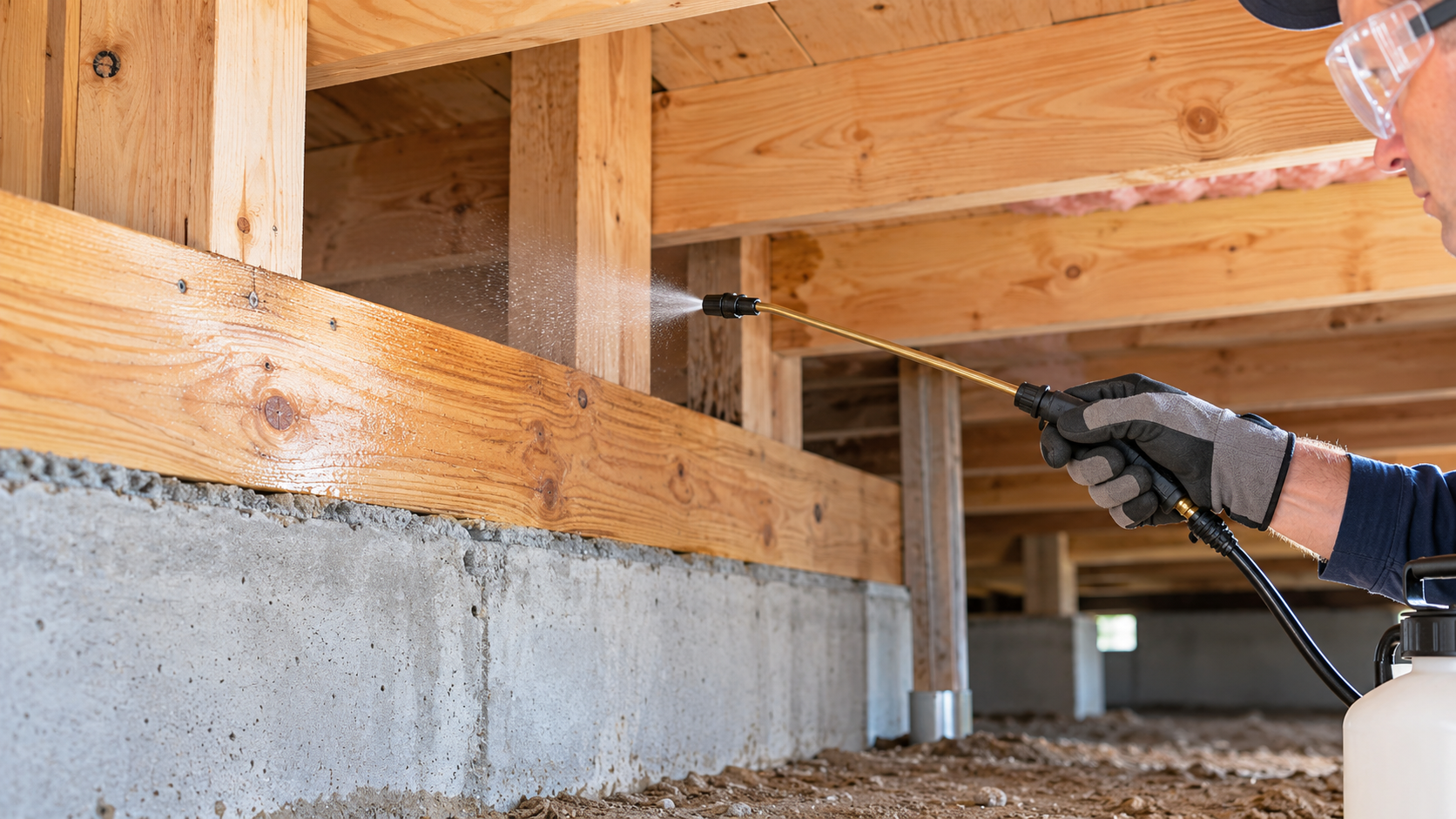
Apply the coats the label calls for. A pump sprayer works for framing; a brush is fine for small areas.
Give it time before closing up. Follow the label’s drying and weather-protection timing before painting, sealing, or covering.
Coat anything exposed. Wood that can get splashed or rained on needs the water-resistant finish its label calls for, and that finish has to be kept up.
Safety: Both labels contain hazard warnings and specify protective gear. Read and follow the label for the product you use.
A Real Test: How to Tell If the Problem Is Under Control
🧪 Rotted wood stays soft after treatment, so poking the same spot months later tells you nothing. Track these two things instead.
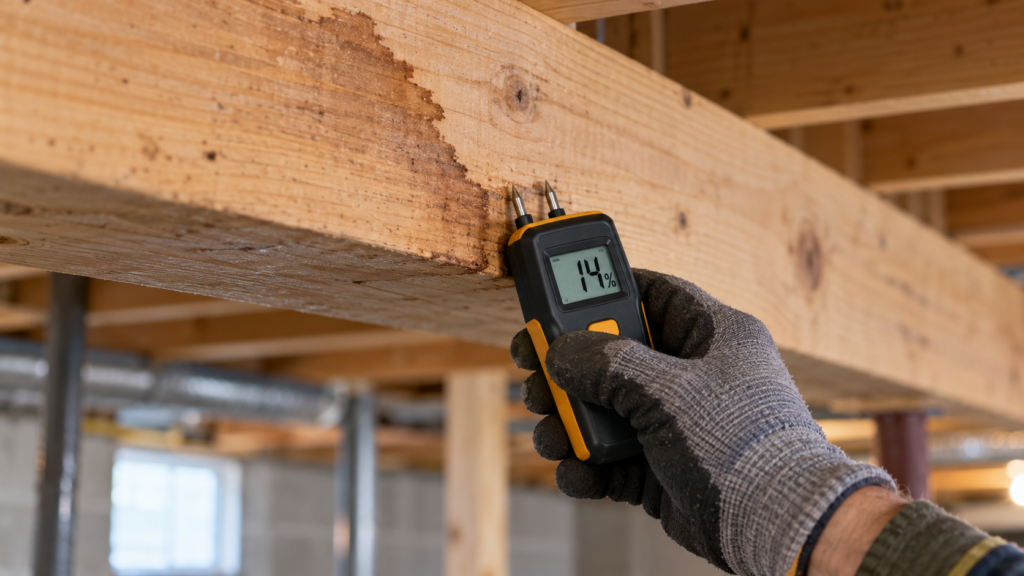
1. Moisture readings. Before you start, take moisture meter readings on the problem area and on sound wood of the same kind nearby, and write them down with the date. Recheck a few weeks after fixing the water source, then again after a wet stretch of weather. You want the problem area to come down and stay near the sound wood. If it stays high or jumps after rain, water is still getting in.
2. The edge of the damage. When you probe out to firm wood, mark that line with a pencil or paint pen and take a photo with a tape measure in the shot. Months later, probe just past the line. If firm wood beyond your mark has gone soft, the damage is still spreading. Go back to the water source and have the area checked by a pro.
What About Plywood?
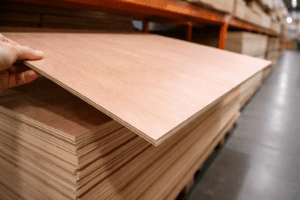
Borate treats the wood in plywood the same way it treats solid lumber. It’s useful on subfloor near a toilet or tub, roof sheathing near a past leak, and crawlspace plywood.
Keep one thing straight: glue bond and rot resistance are separate issues. An Exposure 1 or Exterior bond rating describes how the glue handles moisture. It says nothing about whether the wood veneers will rot. Borate can’t fix delamination, and it doesn’t turn interior plywood into outdoor plywood. If the plywood is already soft, here is what to do with rotten plywood.
When to Skip Borate and Do Something Else
The wood is structurally soft: replace it. For small non-structural spots such as trim, a two-part epoxy consolidant and filler may work.
The wood is in the ground: use lumber rated for ground contact.
The wood gets rained on regularly: use treated lumber rated for that exposure, and fix whatever keeps it wet.
You can’t stop the leak yet: put the money into stopping the leak first.
Borate can help control decay fungi in the wood it adequately penetrates, and product labels cover treating active problems. How well it works depends on the product, mix strength, coverage, penetration, and moisture. It cannot restore strength rot has already taken, so soft wood still needs repair or replacement.
How long does borate wood treatment last?
The Bora-Care label calls the treatment permanent only if the wood isn’t exposed to rain, moisture, or ground contact. In wood that gets wet, borate leaches out over time unless a maintained coating keeps water off.
Can you use borate outdoors?
Some labels allow exterior use with conditions, usually a water-resistant topcoat you have to keep up and protection from rain right after treatment. Check the label for your product. A coated borate treatment still isn’t a substitute for lumber rated for weather or ground contact.
Treat it like any pesticide. Both labels contain hazard warnings and specify protective gear. Read and follow the label for the product you use.
Is Bora-Care better than Tim-bor?
Not in any simple way. USDA research on spray-applied borates found no significant penetration difference between powdered DOT and glycol-borate at the same concentration, while stronger mixes and higher wood moisture improved penetration. Choose the product whose label covers your job and follow its mixing ratio.
Does spraying borate make lumber “treated lumber”?
No. AWPA Use Categories like UC2 apply to factory-treated products made to AWPA Standard U1, shown on the end tag. A board you spray at home doesn’t get a Use Category and doesn’t meet a code requirement for treated lumber.
Can borate be used on pressure-treated lumber?
It’s rarely needed. Lumber rated for its exposure already has protection. If a treated board has been cut, follow the treated-lumber supplier’s guidance for protecting the cut end.
Luan Plywood: What It’s Good For (and Where It Fails) by Admin January 17, 2026 DIY Luan plywood is a thin, lightweight, non-structural plywood used for underlayment, cabinet backs, and paneling. It’s cheap and easy to work with, but it’s weak,…