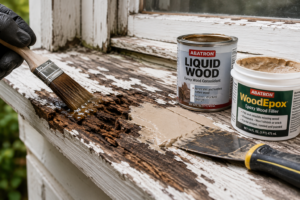
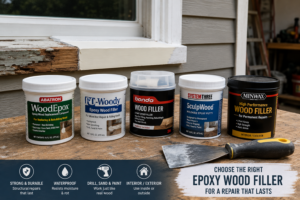
Most people buying wood hardener and epoxy consolidant assume they’re buying the same product in different bottles. They’re not. Using one when you need the other is one of the most common reasons rot repairs fail within a few years — the wood looks fine on the surface, the repair holds for a season or two, and then the soft spot comes back because the underlying fibers were never actually stabilized.
This guide breaks down what each product does at a chemical level, what each is actually designed for, and how to use them together correctly in a rot repair so the result lasts long-term. After reviewing the long-term performance of hardeners, consolidants, and filler systems in exterior rot repairs exposed to moisture cycling, the pattern is consistent: epoxy systems outlast solvent hardeners in any application where the wood will be exposed to weather, humidity, or repeated wetting and drying.
If you’re still deciding whether the damaged wood is even worth repairing, start with our guide on whether rotting wood can be saved before choosing a product.
What Is Wood Hardener?
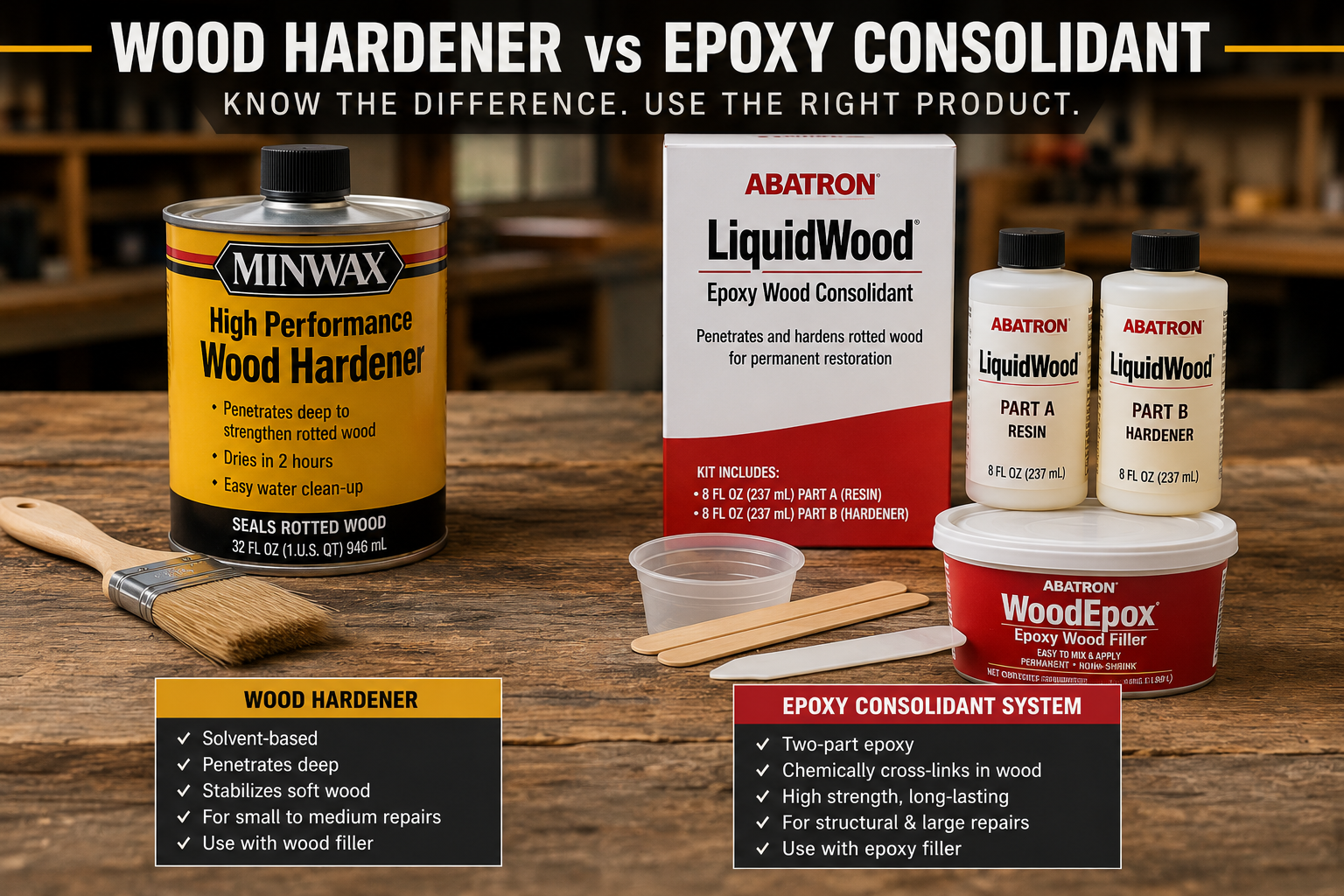
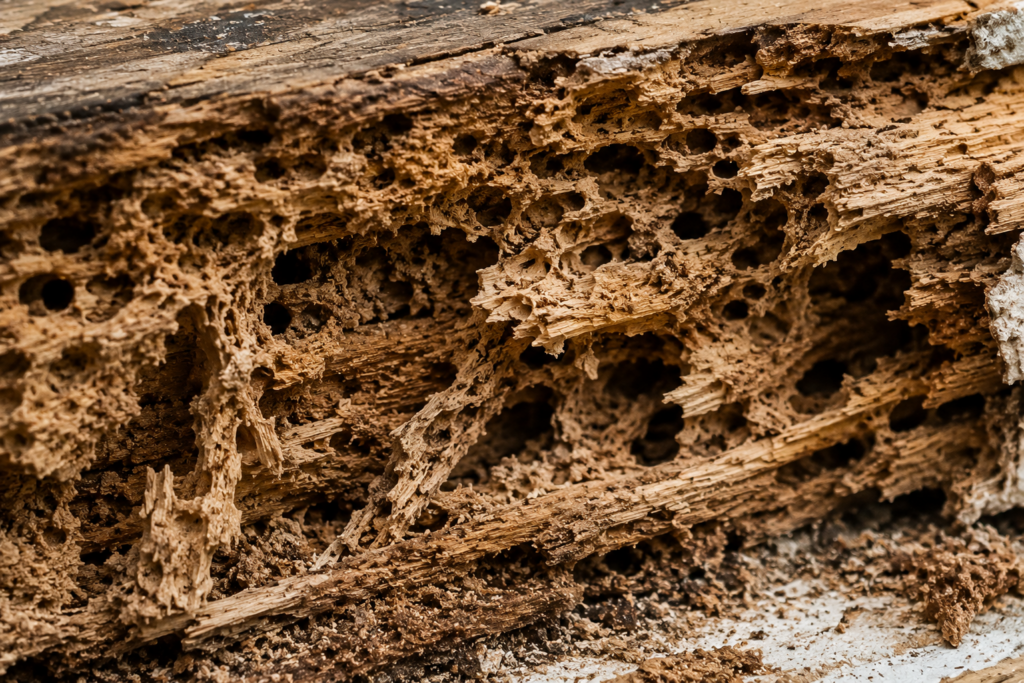
Wood hardener is a thin, penetrating liquid — most consumer wood hardeners use solvent-carried resins that cure as the solvent evaporates — designed to soak into soft, degraded wood fibers and stiffen them as it cures. The key word is thin. Wood hardener is formulated to penetrate deeply into wood weakened by rot, wicking into the fiber structure the same way water did when the wood was getting wet.
Once cured, wood hardener bonds the remaining wood fibers together, converting soft, punky wood into a harder substrate that can accept a filler or additional structural material on top. It doesn’t restore full structural strength to heavily rotted wood — it stabilizes what’s left.
Most wood hardeners on the market are solvent-based products that dry by solvent evaporation. A few are water-based. The solvent-based versions penetrate more aggressively, which is an advantage on heavily rotted, highly porous wood.
What it is not: Wood hardener is not a filler. It does not replace missing wood. It does not restore structural load capacity. It prepares damaged wood to accept a filler — that’s the entire job.
What Is Epoxy Consolidant?
Epoxy consolidant is a two-part epoxy resin system formulated specifically to penetrate and consolidate degraded wood. Unlike standard epoxy adhesives or fillers, consolidant is intentionally designed with very low viscosity — thin enough to soak into damaged wood fibers rather than sitting on the surface.
The key difference from wood hardener is the cure chemistry. Epoxy consolidant cures via a chemical cross-linking reaction between Part A (resin) and Part B (hardener), rather than by solvent evaporation. That cross-linked cure produces a significantly stronger, more durable bond within the wood fibers than a solvent-based hardener achieves.
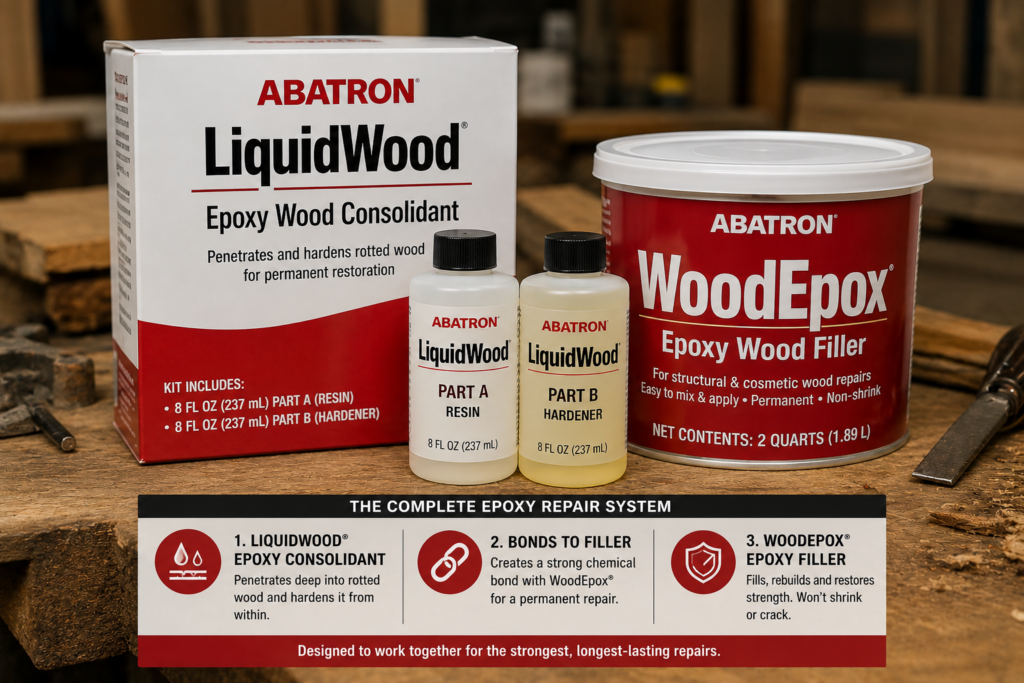
Epoxy consolidant also chemically bonds to the epoxy filler applied on top of it — the two products are designed as a system. The consolidant penetrates the wood, cures into a rigid matrix, and provides the filler with a surface it can chemically bond to rather than just sit on.
What it is not: Epoxy consolidant is not a gap-filler. It doesn’t rebuild missing wood volume. That’s the job of epoxy wood filler applied on top of it.
Wood Hardener vs Epoxy Consolidant: Full Comparison
Feature
Wood Hardener
Epoxy Consolidant
Chemistry
Acrylic or polyester resin in solvent
Two-part epoxy (resin + hardener)
Cure mechanism
Solvent evaporation
Chemical cross-linking
Viscosity
Very thin
Thin to medium
Penetration depth
Deep
Moderate to deep
Bond strength
Moderate
High
Compatibility with filler
Works with most fillers
Best paired with matching epoxy filler
Flexibility after cure
Slightly flexible
Rigid
Works on very wet wood
No — needs dry wood
No — needs dry wood
Price
Lower
Higher
Best use
Stabilizing soft fibers before filler
Full rot repair system base coat
Brands
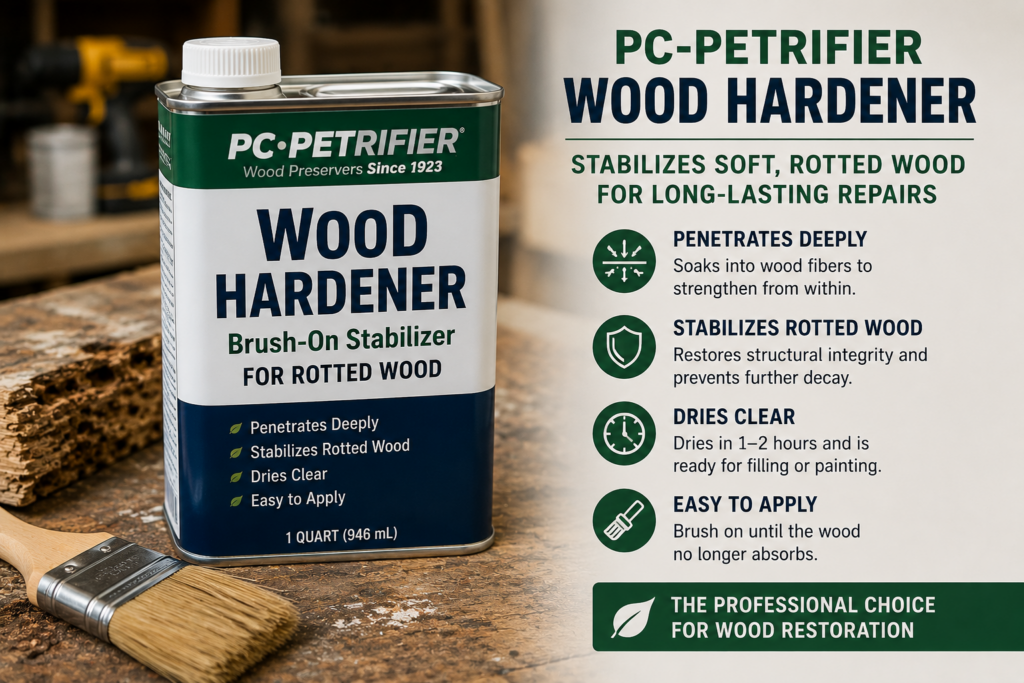
Minwax, PC-Petrifier
Abatron LiquidWood, PC-Woody, Rot Doctor
Quick Decision Table
Situation
Use
Wood is soft and punky but not missing material
Wood hardener alone
Small repair, painting over it
Wood hardener + standard wood filler
Structural repair (joist, sill, sash, trim)
Epoxy consolidant + epoxy filler
Large missing section needs rebuilding
Epoxy consolidant + epoxy filler
Budget repair on non-structural trim
Wood hardener + paintable filler
Repair needs to hold for 10+ years
Epoxy consolidant + epoxy filler
Wood is still slightly damp
Neither — dry first, then treat
Minwax Wood Hardener vs Abatron LiquidWood: Direct Comparison
These are the two products most buyers choose between when they search for this topic. Here’s the direct comparison.
Feature
Minwax High Performance Wood Hardener
Abatron LiquidWood Epoxy Consolidant
Chemistry
Solvent-carried resin
Two-part epoxy
Cure mechanism
Solvent evaporation
Chemical cross-linking
Price
~$12–$18 per quart
~$35–$55 per kit
Penetration
Deep — very low viscosity
Moderate to deep
Structural capability
Low — stabilizes only
Suitable for structural repair systems when used with epoxy filler
Moisture resistance after cure
Moderate
High
Compatible filler
Most exterior fillers
Abatron WoodEpox (system)
Availability
Home Depot, Lowe’s, Amazon
Primarily Amazon and specialty suppliers
Longevity in exterior use
3–7 years typical
Often decades when properly installed and maintained
Best use case
Minor surface rot stabilization
Any repair needing long-term durability
The honest summary: Minwax is cheaper, faster, and available at every hardware store. It does a legitimate job on minor surface rot where the goal is to stabilize soft fibers before a filler coat. Abatron LiquidWood is a meaningfully different product — its two-part epoxy chemistry produces a harder, more moisture-resistant cure that significantly outlasts Minwax in exterior applications exposed to weather cycling.
For a window sill or door frame repair that needs to hold for a decade, the price difference between the two is irrelevant compared to the performance difference.
When to Use Wood Hardener
Wood hardener is the right product when the wood is soft and degraded but still largely intact — punky and spongy under finger pressure but not crumbling or missing material. In this situation, the wood fibers are still present; they’ve just lost their rigidity because the lignin that binds them has been digested by rot fungi.
Wood hardener soaks in, stiffens the remaining fibers, and gives the wood enough hardness to accept a top filler coat. It’s faster and cheaper than an epoxy system, and for minor surface rot on non-structural trim — a painted windowsill with a soft spot, a doorframe corner, painted fence posts — it gets the job done.
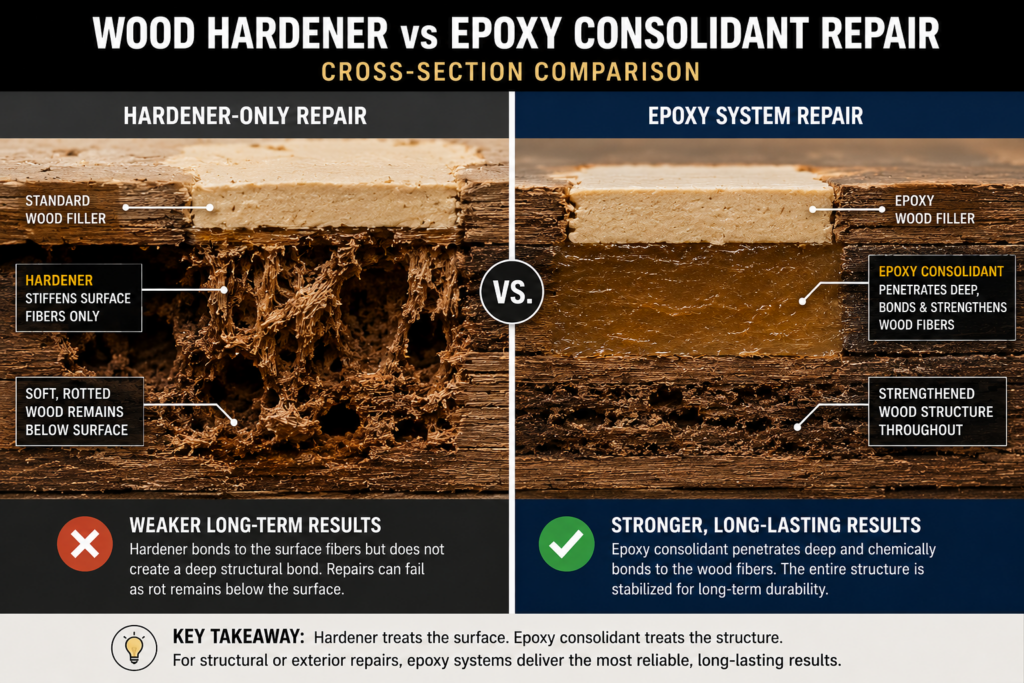
The limitation is durability. Acrylic and polyester hardeners cure via solvent evaporation rather than chemical cross-linking. The resulting bond is softer and less permanent than a cured epoxy system, and it’s more vulnerable to moisture over time.
On a repair that will see weather cycling — wetting, drying, freezing — a solvent-based hardener has a shorter effective lifespan than an epoxy consolidant. For exterior structural applications, it’s a starting point, not a finish.
The wood also needs to be dry before applying either product. A moisture meter reading below 15% is the standard threshold, the same benchmark used throughout our guide to getting moisture out of a plywood subfloor and our rim joist rot repair guide — the repair sequence is the same regardless of which wood component you’re treating.
When to Use Epoxy Consolidant
Epoxy consolidant is the right product for any rot repair where you need the result to last, where structural integrity matters, or where the repair will be subject to weather, moisture cycling, or mechanical load.
The cross-linked epoxy cure creates a significantly harder, more moisture-resistant matrix within the wood than a solvent hardener achieves. It also chemically bonds to the subsequent epoxy filler, creating a repair that behaves as a single, integrated material rather than a filler sitting on top of a softened substrate.
Use epoxy consolidant when:
The repair is on a structural or semi-structural component (rim joist, sill plate, door frame, window sash)
The repair will be exposed to weather or moisture cycling
You’re applying epoxy wood filler on top — the two products are designed as a system, and the chemical bond between them is part of what makes the repair durable
The repair needs to hold for ten years or more
The rot has created a void that needs rebuilding with filler
This is the system our wood filler guide and our best epoxy wood filler guide both identify as the only approach rated for structural exterior rot repairs — consolidant first, filler second, with the two products from the same manufacturer wherever possible to ensure chemical compatibility.
When to Use Both Together
The most common rot repair scenario involves using both products in sequence — but in a specific order and for specific reasons.
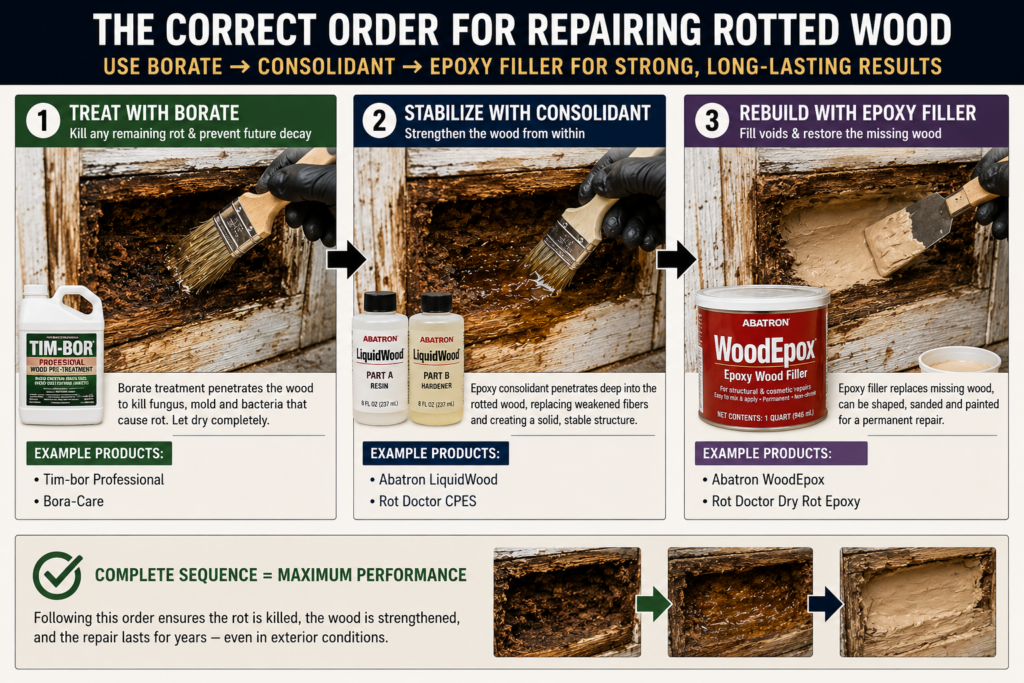
In a typical exterior rot repair on a window sill, door frame, or fascia board, the sequence looks like this: the soft material is removed down to solid wood, the exposed area is allowed to dry to below 15% moisture, a borate preservative is applied and allowed to dry, and then consolidant goes on first to penetrate and harden the remaining degraded fibers. Once the consolidant cures, filler is applied on top to rebuild the missing volume.
Some contractors apply wood hardener as a preliminary pass on very soft, highly porous wood before epoxy consolidant — the hardener stiffens the wood enough that the consolidant doesn’t all soak in immediately and disappear into the fiber. In highly porous rot cavities, consolidant can absorb so fast that a second application is needed before the wood stops drinking it.
A hardener pass first reduces consolidant consumption. This is a field technique, not a manufacturer-specified sequence, but it’s common on badly degraded wood.
Step-by-Step: Using Both Products in a Rot Repair
This sequence applies to rot repairs on exterior trim, window sills, door frames, fascia, and similar components. For structural framing repairs, the same sequence applies, but the assessment of whether to repair vs. replace is more critical — our guide to rotted fascia board repair and our rotted door frame repair guide cover those assessments in detail.
Remove all crumbling, soft material with a chisel or oscillating tool until you reach solid wood in every direction. Don’t leave soft material under the repair.
Check moisture with a meter. Below 15% before you proceed. If the wood is still damp, the repair won’t bond correctly regardless of which product you use.
Apply borate preservative and allow it to dry fully. This kills remaining fungal spores before you seal the cavity. Skipping this step leaves active rot biology behind the repair.
Apply wood hardener if the remaining wood is very porous or heavily degraded. Work it in with a brush, let it soak for a few minutes, and apply a second coat if the wood is still absorbing aggressively. Allow to cure per manufacturer instructions.
Apply epoxy consolidant — mix Part A and Part B precisely according to the specified ratio, then brush or pour onto the repair area. Let it penetrate and cure until tacky, not fully hard. Applying filler to a fully cured consolidant reduces the chemical bond.
Apply epoxy wood filler while the consolidant is still in its tacky window. Mix thoroughly and pack into the cavity, slightly overfilling. Epoxy filler doesn’t shrink, so you can shape and sand after curing without losing volume.
Sand, prime, and paint. Epoxy is not UV-stable — it must be painted. Prime before topcoat.
Common Mistakes
Using wood hardener and expecting it to act as a structural repair. Wood hardener stabilizes fibers. It doesn’t restore load capacity. On a rim joist, sill plate, or structural window sash with significant rot damage, wood hardener alone is not a legitimate structural repair — you need epoxy consolidant at minimum and potentially new lumber. Our guide to sistering joists covers the line between repairable and replace.
Applying either product to wet wood. Both products require dry wood to cure correctly. Moisture interferes with the penetration and curing of solvent-based hardeners, and moisture contamination in a two-part epoxy system can prevent proper cross-linking. Below 15% moisture content — confirmed with a meter — before you open either bottle.
Skipping the borate treatment. Sealing a rot cavity without first killing the fungal spores means the biology continues behind the repair. Whether you’re dealing with wet rot or dry rot changes how aggressively the biology spreads — our guide on wet rot vs dry rot covers the distinction and why dry rot in particular cannot simply be dried and filled. Borate penetrates and stays in the wood long-term; it’s not a surface treatment. This step is covered in detail in our wood rot prevention guide and applies to every rot repair regardless of which consolidant or filler system you use.
Mixing brands of consolidant and filler. The chemical bond between the consolidant and the filler is strongest when both products are from the same manufacturer and formulated as a system. Abatron LiquidWood and WoodEpox are designed to work together. PC-Petrifier and PC-Woody are designed to work together. Mixing brands can lead to adhesion problems at the consolidant-filler interface.
Let consolidant fully cure before applying filler. The chemical bond between epoxy consolidant and epoxy filler happens during the tacky window — the period when the consolidant has gelled but not fully hardened. Applying filler to fully cured consolidant reduces the bond to mechanical adhesion only, which is weaker. Follow the manufacturer’s open time spec.
Which One Should You Buy?
This is the question the article exists to answer, so here it is directly:
Small cosmetic repair on interior trim → Wood hardener (Minwax). Fast, cheap, does the job. No need for epoxy chemistry indoors.
Minor exterior surface rot on painted trim → Wood hardener as a stabilizing pass, followed by a compatible exterior filler. Acceptable for repairs where longevity is moderate, and re-painting is routine maintenance anyway.
Exterior trim expected to last 5+ years without attention → Epoxy consolidant (Abatron LiquidWood or Rot Doctor CPES) plus matched epoxy filler. The chemistry holds up in weather cycling, whereas solvent-based hardeners eventually soften and fail.
Structural repair — rim joist, sill plate, door frame, window sash → Epoxy consolidant plus epoxy filler, no exceptions. Wood hardener is not a structural repair product regardless of what the label suggests.
Budget repair, non-structural, will be repainted regularly → Wood hardener plus Minwax High Performance Filler or PC-Woody. Lower cost, acceptable results for non-critical applications.
Professional restoration or insurance documentation → Epoxy consolidant (Abatron or Rot Doctor CPES) plus epoxy filler. The cure documentation and product specs support professional repair claims in ways solvent hardeners don’t.
If you only read one sentence from this guide: for anything exterior and structural, buy the epoxy system. For anything interior and cosmetic, wood hardener is fine.
Recommended Products
Best budget option:Minwax High Performance Wood HardenerBest professional system: Abatron LiquidWood + WoodEpox — see our full best epoxy wood filler guide for the complete filler comparison. Best for deep penetration on heavily rotted wood: Rot Doctor CPES
Minwax High Performance Wood HardenerBest for: Minor surface rot stabilization on non-structural trim, budget repairs, interior applications Why it works: Deep penetration into porous degraded wood, easy single-component application, widely available Pros: Inexpensive, no mixing, works well as a primer pass before consolidant on very porous wood Watch out for: Solvent-based — ventilate well; not a structural repair solution on its own [Check Price on Amazon →]
PC-Petrifier Water-Based Wood HardenerBest for: Situations where solvent fumes are a concern, interior rot stabilization Why it works: Water-based formula is lower-odor than solvent hardeners and safer in enclosed spaces; good penetration on moderately degraded wood Pros: Low odor, easy cleanup, paintable Watch out for: Slightly less aggressive penetration than solvent-based hardeners on heavily porous wood [Check Price on Amazon →]
Abatron LiquidWood Epoxy ConsolidantBest for: Exterior structural rot repairs, any repair requiring long-term durability Why it works: Two-part epoxy system that cures to a rigid, moisture-resistant matrix; chemically bonds to Abatron WoodEpox filler applied on top; the industry standard for serious rot repair Pros: Strongest bond of any consolidant option, UV-stable until painted, compatible with matched filler system Watch out for: More expensive than hardener; requires precise mixing ratio; has a limited open time in warm temperatures [Check Price on Amazon →]
Abatron WoodEpox Epoxy Filler (use with LiquidWood)Best for: Rebuilding missing wood volume after consolidant application Why it works: Two-part epoxy putty that cures hard with zero shrinkage, sands and shapes like wood, bonds chemically to LiquidWood consolidant applied in the previous step Pros: No shrinkage, accepts screws and nails after curing, paintable, exterior-rated Watch out for: Cannot be stained — paint only; limited working time once mixed; buy in appropriate volume (it doesn’t store well once opened) [Check Price on Amazon →]
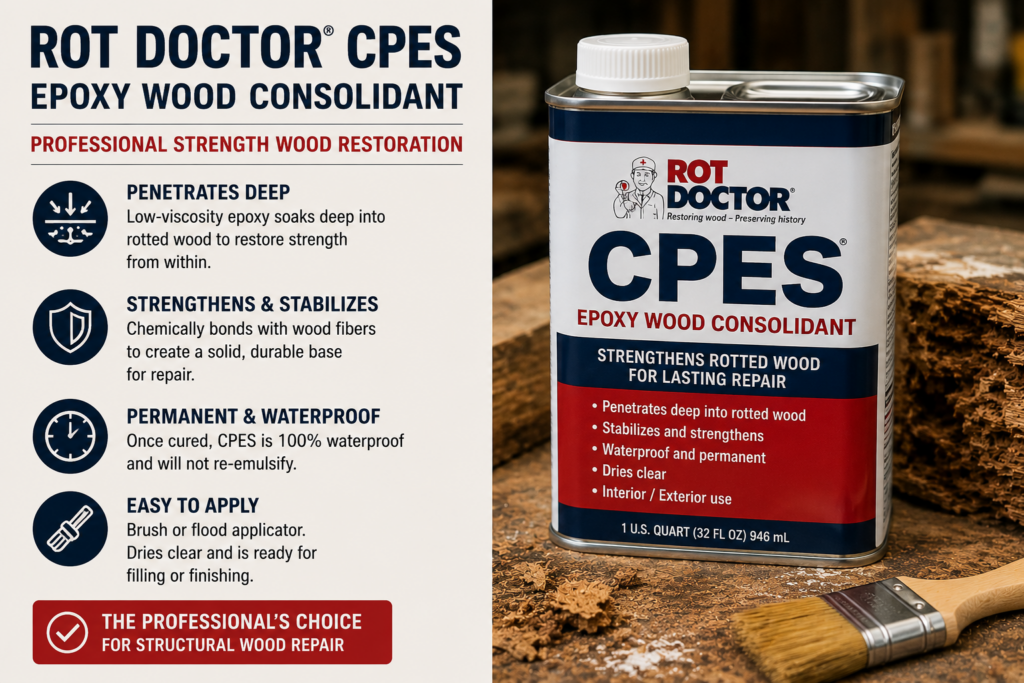
Rot Doctor CPES (Clear Penetrating Epoxy Sealer)Best for: Large-area consolidation on heavily rotted wood where deep penetration matters Why it works: Very low viscosity — penetrates deeper than most consolidants, even into wet-feeling wood that other epoxies won’t bond to well; useful on large cavities where absorption is a challenge Pros: Excellent penetration, flexible after cure (good for wood that moves seasonally), large container options Watch out for: Strong solvent odor; limited availability compared to Abatron; compatible fillers are specific [Check Price on Amazon →]
Is wood hardener the same as epoxy consolidant? No. Wood hardener is typically a solvent-based acrylic or polyester resin that cures by solvent evaporation. Epoxy consolidant is a two-part system that cures through chemical cross-linking. The epoxy cure produces a harder, more moisture-resistant, and more durable result. Wood hardener is faster and cheaper for minor repairs; epoxy consolidant is the correct choice for structural or long-term exterior repairs.
Do I need both wood hardener and epoxy consolidant? Not always. For minor surface rot on non-structural trim, wood hardener alone with a compatible filler is sufficient. For structural components, exterior applications, or any repair that needs to last more than a few years in a weather-exposed location, epoxy consolidant is the better choice and often replaces wood hardener entirely in the sequence.
Can I apply wood filler directly without using consolidant or hardener first? Only if the wood is solid all the way to the repair surface. If there is any soft, punky, or degraded wood at the repair boundary, filler applied directly will not bond reliably, and the repair will fail. Consolidant, or hardener, is the step that converts the degraded surface into something the filler can actually adhere to.
How long does epoxy consolidant take to cure? Open time varies by product and temperature. Abatron LiquidWood typically has a tacky window of 2–4 hours at 70°F before it starts to firm up, and reaches full cure in 24–48 hours. Warm temperatures accelerate cure; cold temperatures slow it significantly — below 50°F, many epoxy systems won’t cure properly at all.
Can I use these products on pressure-treated wood? Yes, with preparation. Pressure-treated wood contains preservative chemicals that can interfere with epoxy bonding if the surface isn’t clean and dry. Sand or abrade the repair area first, confirm moisture is below 15%, and follow the manufacturer’s prep guidelines. Our pressure-treated plywood guide covers the chemistry of how treatment affects wood behavior, which is relevant context for understanding why surface prep matters more on treated stock.
Best Wood Hardener for Rotted Wood by Admin June 25, 2026 DIY The best wood hardener for rotted wood depends on the severity of the damage. For light surface rot, a single-part penetrating wood hardener is usually…