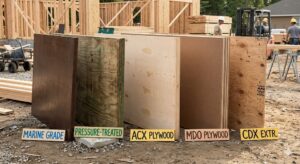
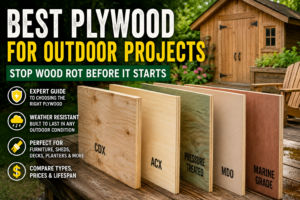
If you are planning to build a sleek patio sofa, a sturdy Adirondack chair, or a backyard dining table, your choice of sheet goods will dictate whether your project lasts for decades or rots into a soggy mess by next summer.
Choosing the right outdoor furniture plywood can be a minefield of confusing grades, unexpected costs, and hidden material traps.
Let’s skip the marketing fluff and look at the hard data. This guide will help you select the exact right panel for your build, keep you from throwing money away, and ensure your finished project stands up to Mother Nature.
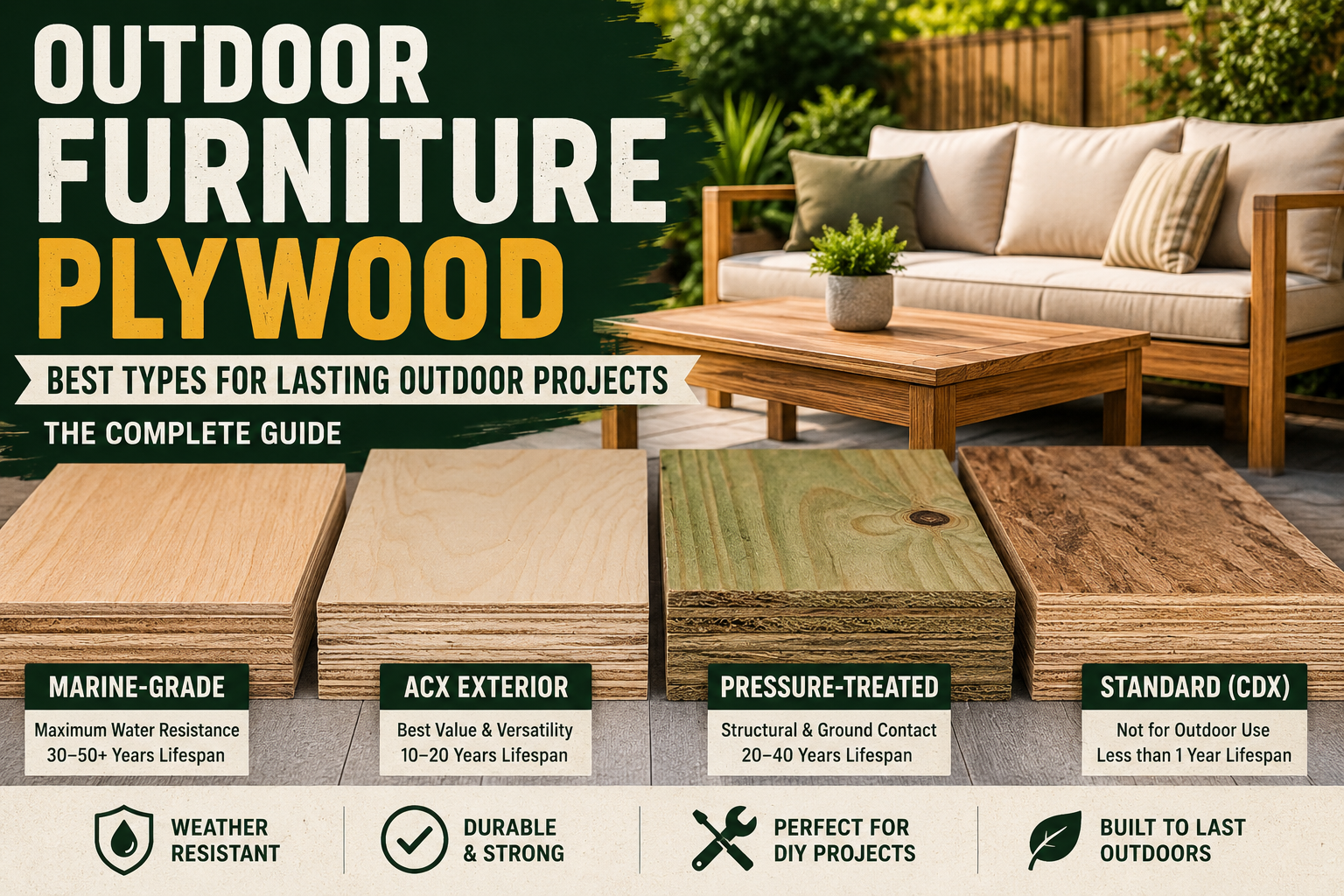
Most homeowners will get the best combination of cost, appearance, and durability from ACX exterior plywood. However, projects exposed to constant rain, coastal moisture, or standing water benefit significantly from upgrading to marine-grade plywood.
What Is the Best Outdoor Furniture Plywood?
If you need a direct, fast answer for your project shopping trip, here is how the core options rank based on intentional design:
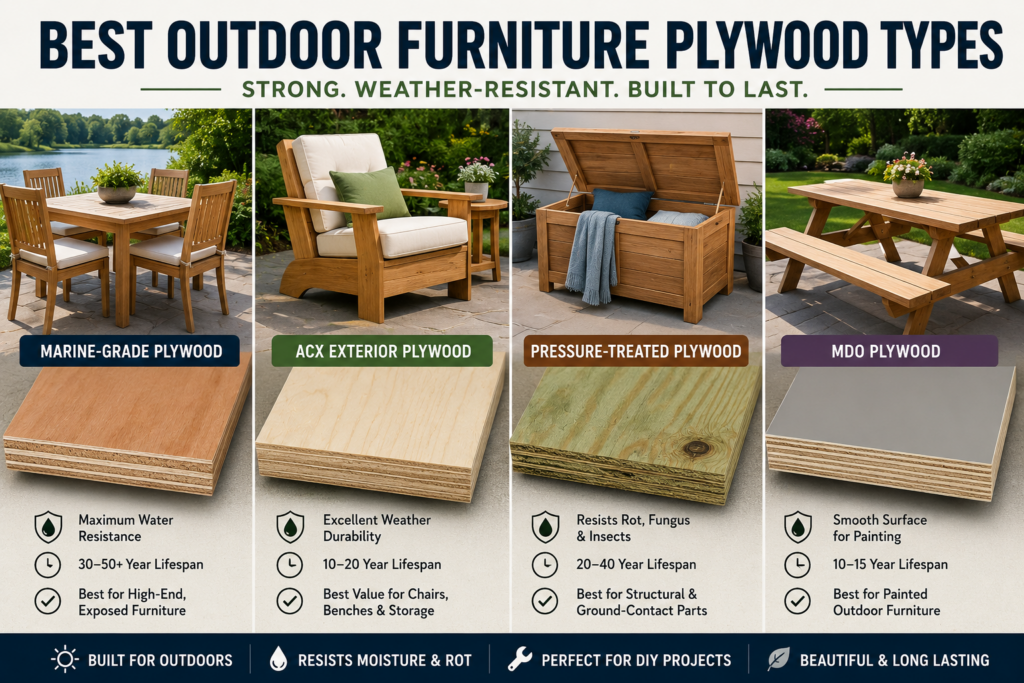
Best Overall:Marine-grade plywood (unmatched water resistance and finish quality).
Best Value:ACX plywood (affordable, highly durable when properly sealed, clean front face).
Best for Painted Furniture:MDO plywood (resin-fiber face eliminates grain telegraphing through paint).
Best Structural Use:Pressure-treated plywood (ideal for framing and ground-contact supports).
• Best thickness for most furniture: 3/4-inch plywood
Outdoor Furniture Plywood: The Top Options Compared
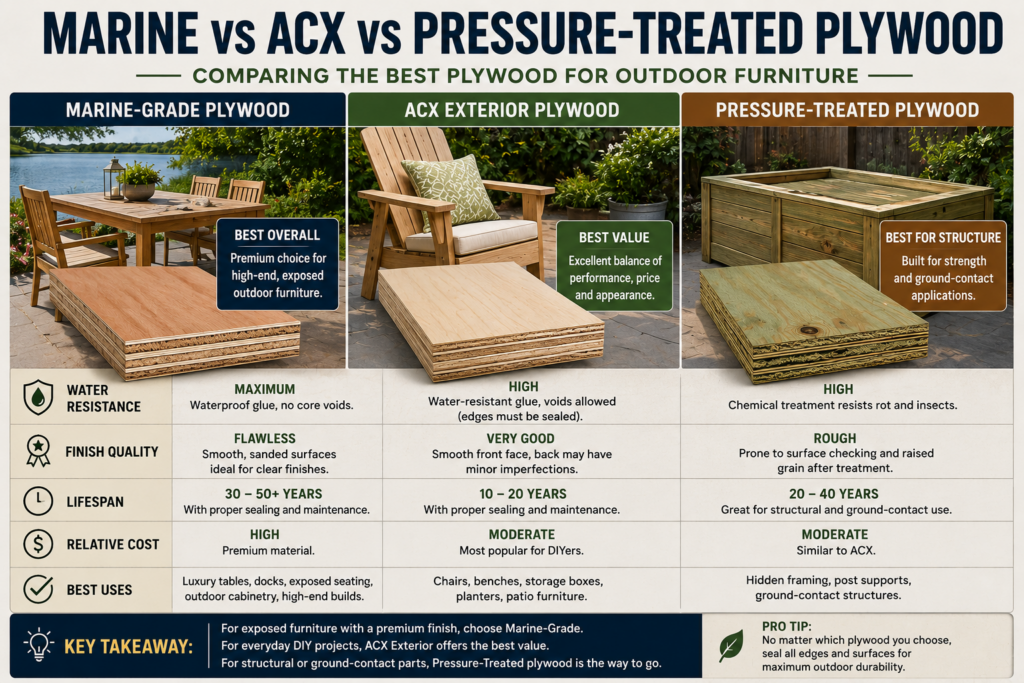
Before diving into the dirty details, here is a quick visual matrix showing how the main exterior-grade panels stack up in terms of budget, appearance, and lifespan.
Plywood Type
Best Use Case
Finish Quality
Weather Resistance
Lifespan
Relative Cost
Marine-Grade
Luxury tables, lakeside docks, exposed seating
Flawless, ultra-smooth
Maximum (Zero voids)
30 to 50+ Years
High
ACX Exterior
Standard chairs, benches, patio storage
Very good on front face
High (If edges are sealed)
10 to 20 Years
Moderate
Pressure-Treated
Hidden framing, structural ground support
Rough, prone to checking
High (Chemical rot defense)
20 to 40 Years
Moderate
Standard Interior
Never use outdoors
Varies
None (Glue dissolves)
Less than 1 Year
Low
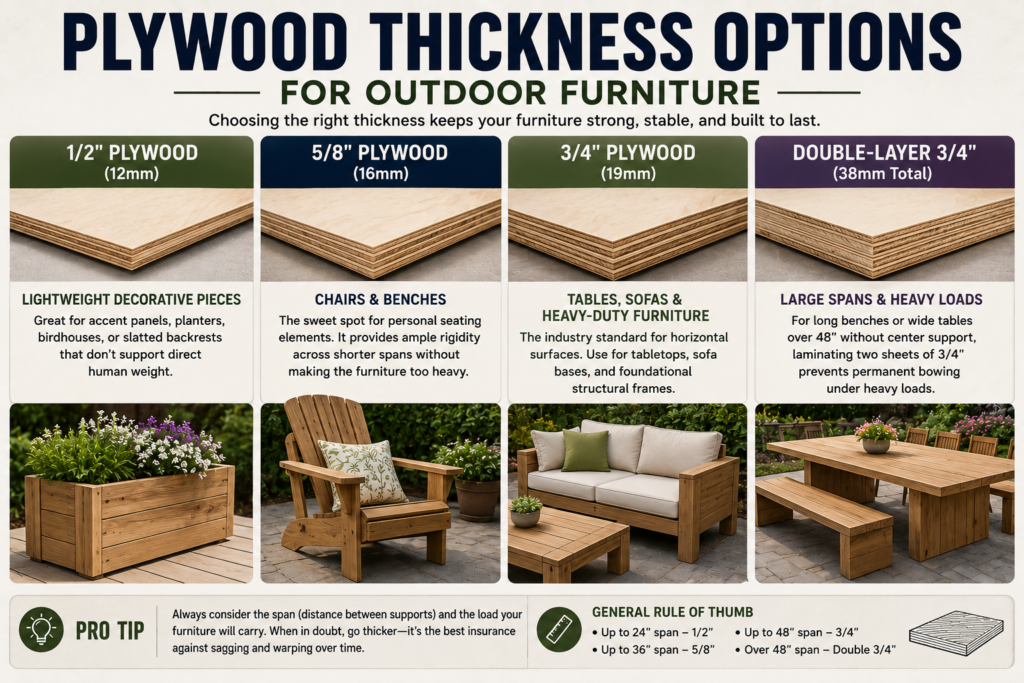
Best Plywood Thickness for Outdoor Furniture
Selecting the correct scale and depth prevents your furniture from sagging or bowing over time. Wood spans behave differently under open-air humidity cycles than they do inside a climate-controlled room.
1/2″ for Lightweight Decorative Pieces: Excellent for structural accent panels, custom planters, birdhouses, or slatted backrests that do not support direct human weight.
5/8″ for Chairs and Benches: The sweet spot for personal seating elements. It provides ample rigidity across shorter spans without making the furniture overwhelmingly heavy to rearrange on a patio.
3/4″ for Tables, Sofas, and Heavy-Duty Furniture: The absolute industry standard for horizontal surfaces. Use this for dining tabletops, deep-seated sofa bases, and foundational structural frames.
Double-Layer 3/4″ for Large Spans: For long benches or wide tables exceeding 48 inches without center support leg assemblies, laminating two sheets of 3/4″ material together prevents permanent bowing under heavy loads.
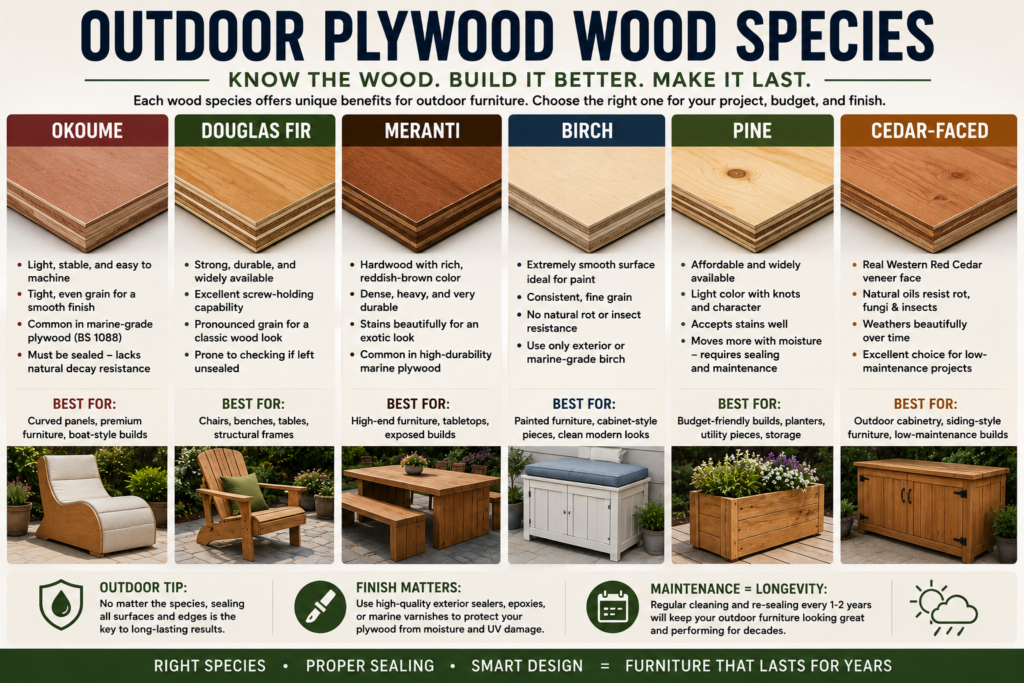
Wood Species for Outdoor Furniture Plywood
The specific wood species used to manufacture your plywood sheets strongly influences its weight, visual grain characteristics, and natural resistance to wood rot. When shopping for high-end outdoor furniture plywood, you are likely to encounter these core varieties:
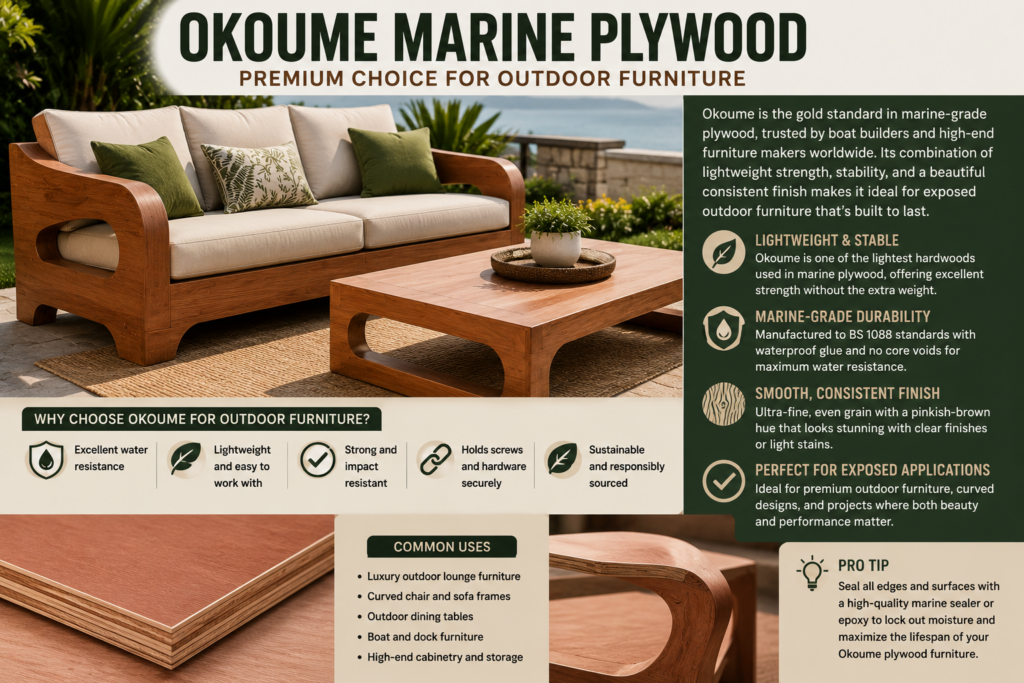
Native to west-central Africa, Okoume is the dominant wood species used in imported European marine-grade plywood (BS 1088). It features an ultra-consistent, pinkish-brown tone with a tightly packed grain structure. It is remarkably lightweight and flexible, making it the preferred choice for curved patio furniture panels, though it must be fully sealed because it lacks natural decay-resistant chemicals.
The standard powerhouse of North American exterior plywood. Douglas fir panels offer immense structural strength and exceptional screw-holding capability. The grain pattern is highly pronounced and dramatic. It has a moderate natural resistance to decay, but it is prone to “checking” (fine hairline surface splits along the grain lines) when left exposed to fluctuating outdoor humidity.
Often marketed as Dark Red Meranti or Philippine Mahogany, this hardwood group is widely used in high-durability utility marine sheets. It is significantly heavier and denser than Okoume or Fir. Its deep reddish-brown color stains beautifully, offering an exotic hardwood look at a lower price point than genuine mahogany solids.
While standard Baltic Birch is famous for shop furniture, you must ensure you are explicitly buying exterior-rated or marine-grade Birch if it is headed outside. Birch provides the smoothest surface for painting, but it has virtually no natural resistance to insects or rot. If water bypasses your topcoat, Birch can decay rapidly.
Commonly used in utility ACX panels and pressure-treated sheets. Radiata Pine features a light cream color with distinct dark knot patterns. It is a softwood that absorbs stains cleanly but expands and contracts in humid air. It requires diligent maintenance to prevent structural warping.
Cedar-Faced Plywood
An exceptional specialty choice if you can source it. These panels place a genuine Western Red Cedar veneer over an exterior-glue core. Cedar contains natural oils and tannins that are highly toxic to rot-causing fungi and wood-boring insects, allowing it to survive elegantly even if your clear varnish begins to weather away.
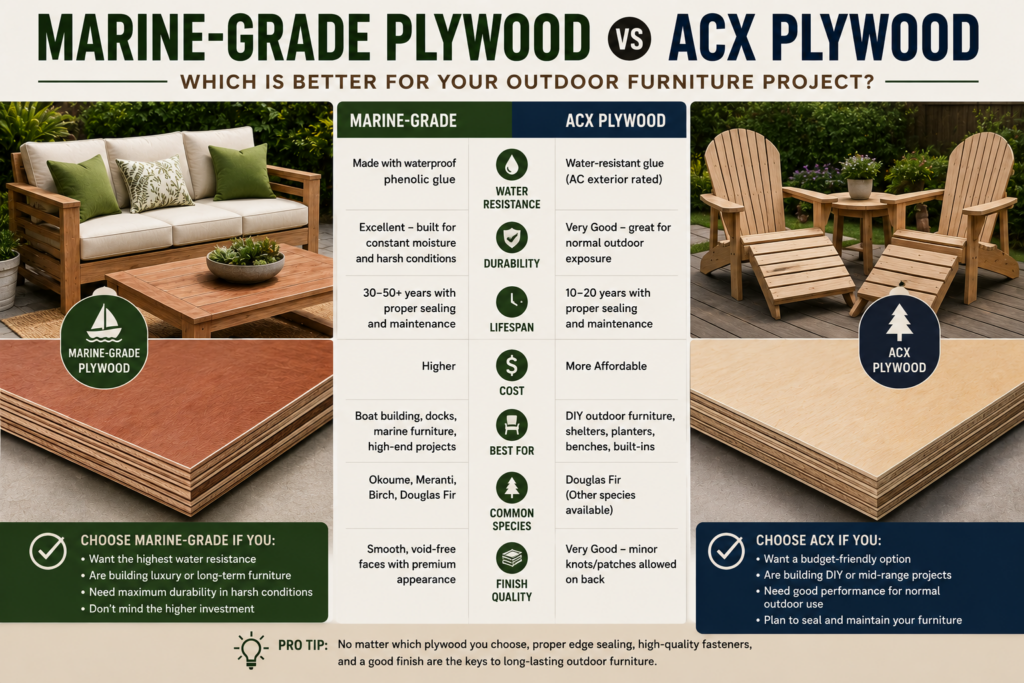
Marine Grade vs ACX Plywood for Outdoor Furniture
Choosing between these two popular options often forms the core of the debate in a patio build. Let’s break down how they compare directly under real workshop conditions:
Feature
Marine-Grade Plywood (BS 1088)
ACX Exterior Plywood
Upfront Cost
Higher ($140+ per sheet)
Lower ($45–$65 per sheet)
Core Voids
Strictly None (Solid plies)
Small manufacturing gaps allowed
Face Veneer Quality
A-A Grade (Impeccable wood grain)
A-C Grade (One perfect side, one utility side)
Inner Ply Uniformity
Same thickness throughout
Varying interior ply thicknesses allowed
Lifespan fully exposed
Often lasts several decades
Moderate (10 to 20 Years if maintained)
While Marine-grade sheets offer a technically superior structural core with zero internal air pockets, ACX exterior plywood remains the practical standard for typical household items.
In many outdoor furniture applications, ACX plywood offers one of the best balances between appearance, durability, and cost. It finishes beautifully with paint or solid stains while keeping the raw material cost manageable.
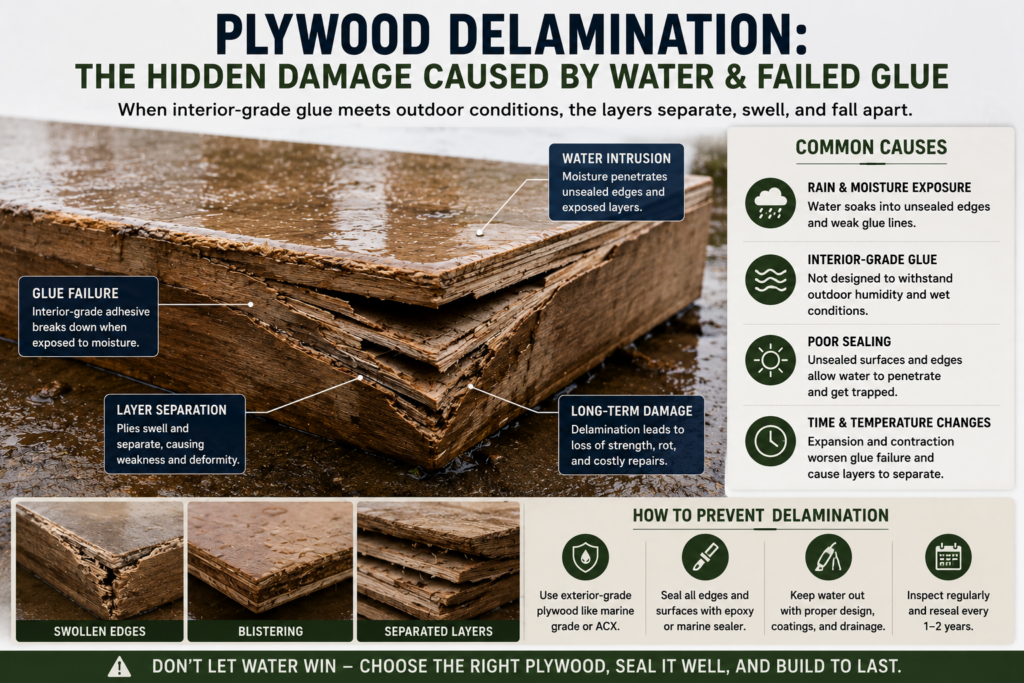
🧪 The Real Test: Why Standard Adhesives Fail Outdoors
Many builders assume that a coat of waterproof paint can make any standard sheet of wood survive the backyard.
The Hard Truth: It doesn’t. Standard interior or “moisture-resistant” plywood uses urea-formaldehyde glues. When subjected to the brutal humidity changes of an outdoor environment, these glues undergo chemical breakdown.
In real test environments, exposing a basic interior or shop-grade panel to direct rainfall results in core breakdown—the layers separating and peeling like wet cardboard—in a matter of weeks, regardless of how many layers of exterior paint are slapped on top.
True outdoor furniture plywood is strictly manufactured using high-performance phenol-formaldehyde or specialized waterproof structural resins. These adhesives are chemically immune to water breakdown, meaning the plies will never separate, even if submerged. For an in-depth breakdown of how exterior glues differ, review our comprehensive matrix of waterproof plywood types.
❌ The Mistake That Ruins Most DIY Outdoor Furniture
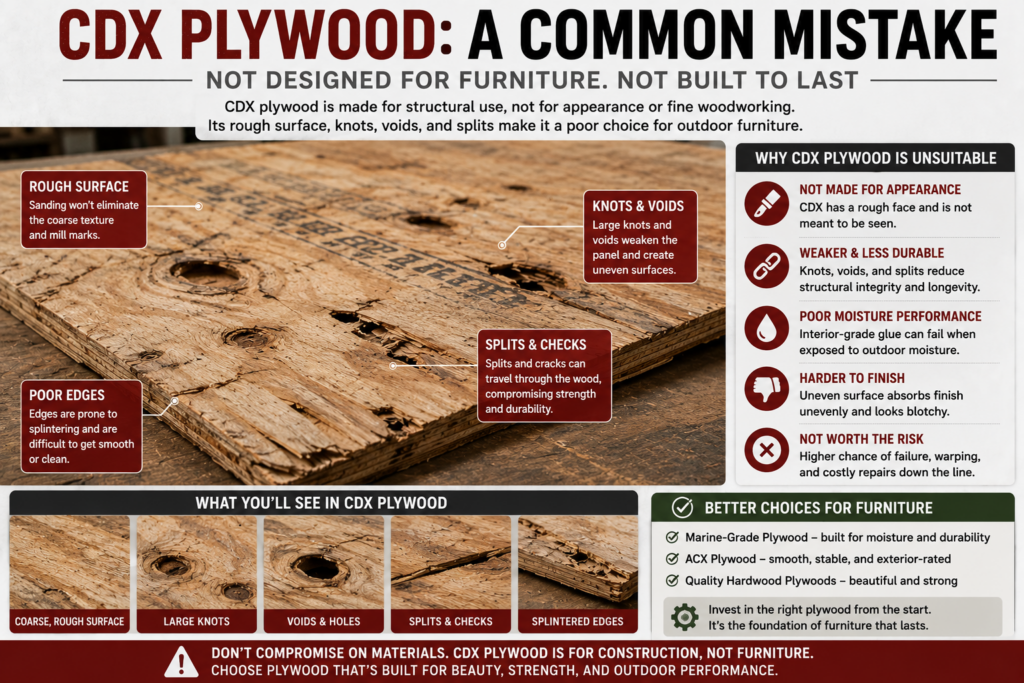
The single most common mistake woodworkers make when choosing outdoor material is selecting CDX construction-grade plywood for highly visible furniture.
It is an easy trap to fall into: you stroll into a big-box home improvement center, see a sheet labeled “Exterior Glue,” notice the low price tag, and toss it in your cart.
However, the “D” in CDX denotes a D-grade back face, which allows for open knot holes up to 2.5 inches wide, deep splits, and a highly uneven surface texture. No matter how many hours you spend behind a random orbital sander, you will never get a CDX panel smooth enough for a high-quality furniture finish. It is engineered for hidden roof sheathing and wall sub-structures—not for surfaces you intend to sit on. Before buying, familiarize yourself with standard panel classifications by reviewing our resource on plywood grades explained.
😬 The Regret of Buying the Wrong Grade
Few things are more frustrating than spending 20 hours cutting, pocket-holing, and assembling a gorgeous outdoor sectional, only to watch the wood warp, twist, and crack within six months. This is the ultimate builder’s regret.
When you use inferior soft-wood panels that aren’t engineered for exterior stability, the wood constantly absorbs and releases atmospheric moisture. This causes rapid expansion and contraction, which pulls screws loose, cracks joints, and ruins expensive cushions with weeping sap. Investing in a dimensionally stable, void-free panel from our verified exterior plywood guide saves you from having to build the exact same project twice.
Common Outdoor Furniture Projects and Recommended Plywood
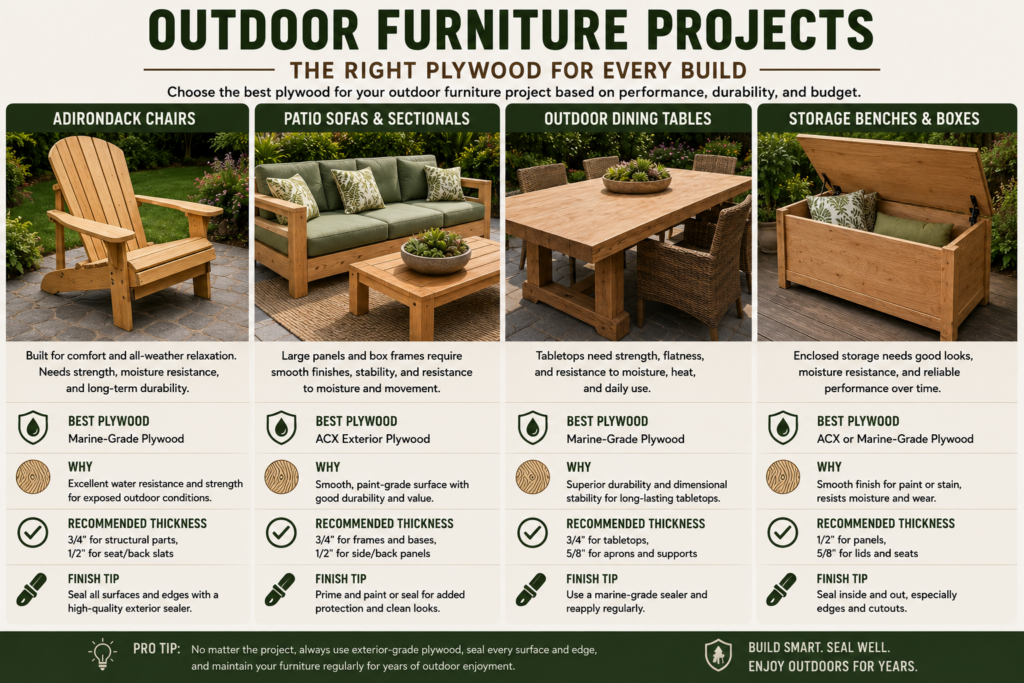
To optimize your project budget, you should match the technical demands of your specific build to the corresponding minimum acceptable plywood class.
Project Type
Recommended Plywood Class
Critical Detail Focus
Adirondack Chair
ACX Exterior Plywood
Focuses structural strength on short, curved slats; lightweight mobility.
Patio Sofa Frame
ACX or Marine-Grade Plywood
Requires a completely unblemished face grain; high exposure to direct rain.
Outdoor Dining Table
Marine-Grade Plywood (BS 1088)
Requires completely unblemished face grain; high exposure to direct rain.
Storage Bench / Box
ACX Exterior Plywood
Hinges and heavy lids require clean, flat edges to drop tightly into place.
Planter Box
Pressure-Treated Plywood
Constantly holds moist soil; internal elements require chemical rot defense.
Outdoor Kitchen Cabinet
MDO (Medium Density Overlay)
Requires a perfectly smooth painted finish to match exterior kitchen designs.
❌ Six Common Mistakes When Building Outdoor Furniture
Achieving long-term build success requires avoiding standard fabrication errors that compromise wood structures over time:
Using Interior-Grade Plywood: Assuming paint alone will protect cheap craft panels. The internal glues crystallize and shatter under cold-weather transitions.
Leaving Edges Completely Raw: Skipping the critical liquid encapsulation step allows moisture to wick up into the inner veneers.
Using Regular Drywall Screws: Standard black oxide fasteners rust inside wet wood holes within months, generating dark chemical stains and snapped joints.
Placing Bare Plywood Directly on Concrete: Concrete surfaces act like sponges, absorbing ground moisture and passing it directly into the unshielded end grain of furniture legs.
Forgetting UV Film Protection: Applying raw epoxies or clear sealers without UV absorbers allows sunlight to break them down, turning the protective barrier yellow and brittle.
Using CDX for Visible Surfaces: Trying to save money on top-facing surfaces with sheathing panels leads to extensive filler cracking and a rough, splintered tactile finish.
💸 Cost Comparison Examples: Is Marine Grade Worth It?
When sourcing materials, the upfront pricing can give you serious sticker shock. Consider these real-world examples:
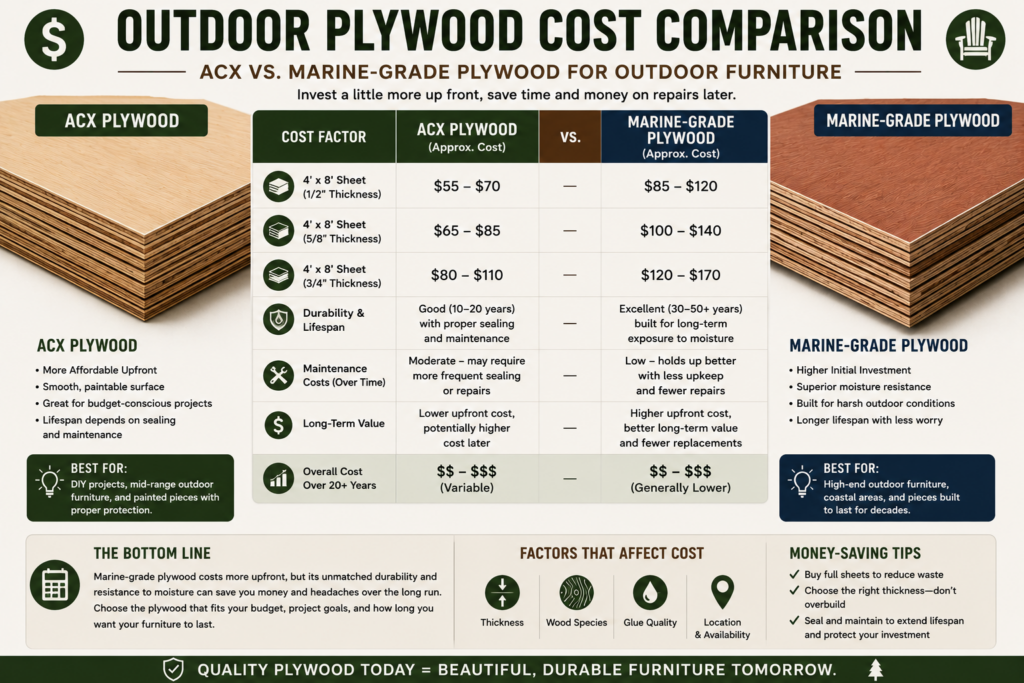
A standard sheet of ACX utility plywood costs roughly $45, next to a premium sheet of BS 1088 Marine-grade Okoume or Baltic Birch at $140+.
However, when looking at the total cost of ownership over time, the long-term math changes drastically.
Example A (ACX Panel Layout):
[$45 Initial Sheet] + [$25/yr Maintenance Sealing & Fastener Adjustments] x 5 Years = $170 Total Cost (Fails by Year 6)

Example B (Marine Panel Layout):
[$140 Initial Sheet] + [$40 Initial Epoxy Sealing] x 20 Years = $180 Total Cost (Remains Structural for Decades)
If you are building a temporary project that you plan to replace or update in a few years, ACX is highly economical. But if you are investing your valuable time into building an heirloom-quality outdoor dining set or a marine-facing structure, spring for materials featured in our marine plywood guide—it is significantly cheaper in the long run.
⚠️ Warning: Beware of Chemical Hazards and Corrosion
Before you buy a sheet of pressure-treated plywood for your furniture project, you need to read this critical warning:
Safety Warning: Pressure-treated lumber is infused with chemical preservatives like Copper Azole (CA) or Micronized Copper Azole (MCA) to prevent rot and insect damage.
Health Risks: Never use pressure-treated plywood for tabletop surfaces where food will be served, or for bare-skin contact surfaces (like daybed slats) unless it is completely sealed behind a robust, film-forming exterior coating. Never burn the scraps.
Fastener Fast-Corrosion: The high copper content in modern pressure-treated wood acts like a battery when wet, causing severe galvanic corrosion on standard steel or zinc screws. You must use high-grade ceramic-coated exterior screws or 304/316 stainless steel fasteners, or your joints will literally rust away and snap within a couple of seasons. Read up on chemical variances via our pressure-treated vs. exterior plywood breakdown.
Pro Tips for Sourcing & Preparing Your Materials
To get the absolute best results out of your outdoor build, keep these professional preparation steps in mind:
1. Source Smart
When mapping out your build, check local lumber yards rather than standard commercial hardware outlets. For project planning and identifying standard regional sizing, you can check out structural layout metrics to ensure your cut-lists minimize waste. If you need help identifying core types or reading stamps, consult the identification guides before heading to the checkout counter.
2. Seal the Edges (The Core Lifeline)
Plywood behaves like a bundle of microscopic drinking straws. Even if you buy the most expensive marine panel on Earth, water will wick rapidly into the exposed end-grain edges if left unsealed.
Always coat every raw, cut edge with at least two applications of a high-quality marine epoxy or an exterior-grade wood sealer before assembling your joints.
3. Provide a Drainage Path
Never allow the flat bottom edge of a plywood leg to sit directly in a puddle on your deck. Use plastic furniture glides, leveling feet, or rubber spacers to lift the wood fibers off the floor and away from standing water.
The Edge-Sealing Method
Sealing the exposed edges of outdoor furniture plywood is the single most critical step of your entire build. Using a two-part marine epoxy creates an impenetrable, plastic-like barrier that permanently locks water out. Here is the step-by-step professional method to seal your edges flawlessly.
1. Final Sanding and Clean:Prep: 5–10 mins.
Sand all your cut plywood edges smooth using 120-grit sandpaper. Avoid rounding over the crisp corners too aggressively, as epoxy tends to pull away from sharp 90-degree points; a tiny, subtle ease of the edge is perfect. Vacuum away all sawdust, then wipe the edges completely clean using a microfiber cloth dampened with denatured alcohol or acetone. Let it dry for 5 minutes.
2. Mix the Marine Epoxy:Timing: 2–3 mins.
Set your workspace temperature between 60°F and 80°F (15°C and 27°C). Using a dedicated mixing cup, dispense your two-part marine epoxy and hardener according to the manufacturer’s exact recommended ratio (typically 5:1 or 1:1 by volume). Stir thoroughly but slowly with a wooden stick for a full 2 minutes, scraping the sides and bottom of the cup to ensure a complete chemical mix without whipping excess air bubbles into the liquid.
3. Apply the First Coat (The Seal Coat):Application: 10 mins.
Using a disposable foam brush or a small dense foam roller, generously apply the liquid epoxy to the raw plywood edges. Because the end-grain is highly porous, you will notice the wood quickly drinking up the liquid. Keep moving along the edge, adding more epoxy to areas that turn dry or matte. Pro tip: Use a gloved finger or brush to immediately wipe away any runs or drips that squeeze out onto the face of the plywood before they harden.
4. Apply the Second Coat (The Build Coat):Wait: 2–4 hours (Hot-Coating).
Allow the first coat to cure until it is firm but still slightly tacky to the touch—this is called the “green stage” or “hot-coating window” (typically 2 to 4 hours, depending on the temperature). Apply a second layer of mixed epoxy directly over the first. Because the chemical bond is still active, you don’t need to sand between these two coats. This second layer forms a durable structural barrier once the pores in the wood are fully plugged.
5. Final Cure and Scuff Sanding:Cure: 24 hours.
Allow the epoxy to fully cure for at least 24 hours. Once completely hard, look closely at the edges: they should have a uniform, glass-like glossy appearance. If you notice any dull or rough spots where the epoxy was starved by the wood, scuff the surface with 220-grit paper and apply a third coat. If it looks perfectly solid, lightly scuff the glossy epoxy surface with 220-grit sandpaper to give your final topcoat of paint or spar varnish something to mechanically grip onto.
⚠️ Critical Warning on UV Protection: Marine epoxy is completely waterproof, but it is highly vulnerable to ultraviolet (UV) radiation from sunlight. Left unprotected, UV rays will degrade, yellow, and crack the epoxy over a couple of seasons. You must topcoat your cured, sanded epoxy edges with an exterior-grade paint or a high-quality UV-blocking spar varnish to protect the barrier from the sun.
Outdoor Furniture Plywood Maintenance Guide
Preserving your patio furniture across multiple years requires regular upkeep. Following a basic seasonal check protects your financial and labor investments before moisture damage settles deep into the wood grain.
Annual Clean and Inspection
Every spring, clean your furniture panels of environmental grit and dirt with a soft-bristled brush and a mild solution of dish soap and warm water. Avoid high-pressure washers, as they can lift wood fibers and crack your protective seal. Look closely at joints, lower feet, and flat surfaces for any finish tracking or hairline clearcoat splits.
Recoating Schedule
Clear varnish films do not last forever under strong UV sunlight. Plan to lightly sand the face panels with 220-grit sandpaper and brush on a new topcoat of marine spar varnish every 2 to 3 years. If you opted for high-solids exterior paint or deep penetrative wood stains, watch for localized fading or chalking as a sign that a fresh protective coat is needed.
Mold and Winter Storage Tactics
Fungal mold flourishes in stagnant, dark, damp air. If you use vinyl protective furniture covers during rainy winter months, make sure they feature ventilation flaps so vapor can escape. Whenever possible, store your outdoor plywood furniture in a dry garden shed or unheated garage during severe freezing weather to prevent frost cycles from expanding into deep structural hardware seams.
Project Cost Breakdown Matrix
The total financial commitment for raw wood varies with your choice of grade and the complexity of your structural design. These estimated project values can help you budget effectively for essential assembly hardware and raw sheet goods:
Project Scope
Required Plywood Sheets (4′ x 8′)
Estimated Cost (ACX Grade)
Estimated Cost (Marine Grade)
Single Adirondack Seating Chair
1 Sheet (typically 5/8″ thickness)
$45 – $65
$120 – $150
Outdoor Garden Storage Bench
1.5 Sheets (typically 3/4″ thickness)
$70 – $100
$180 – $240
6-Seater Backyard Dining Table
2 Sheets (typically 3/4″ thickness)
$90 – $130
$280 – $360
4-Piece Patio Sectional Sofa Base
3 to 4 Sheets (Combo 1/2″ and 3/4″)
$150 – $220
$450 – $600
🛒 Recommended Tools & Materials for Your Outdoor Build
To build outdoor furniture that truly stands the test of time, you need professional-grade sealing and assembly supplies. Here are the top-rated field items to secure your investment:
Strips away natural wood sap and dust for maximum finish bonding.
Conclusion
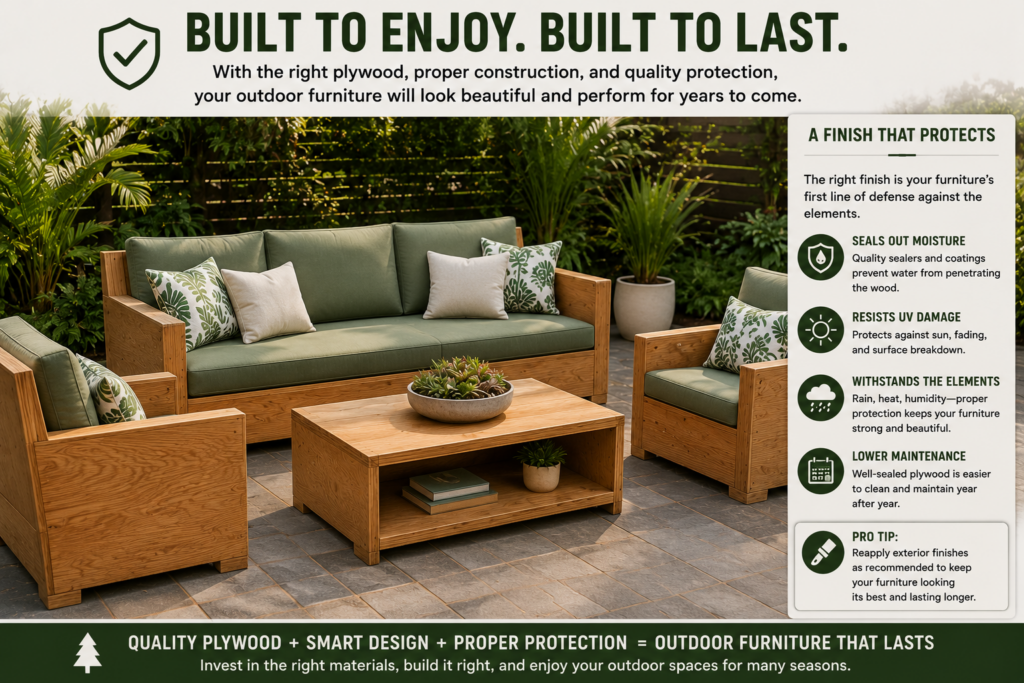
Choosing the right outdoor furniture plywood comes down to balancing appearance, durability, and budget. For most homeowners, ACX exterior plywood provides the best value. For premium projects exposed to constant moisture, marine-grade plywood remains the benchmark. Whatever material you choose, proper edge sealing, UV protection, and routine maintenance will determine how long your furniture survives outdoors.
Marine-grade plywood offers the highest durability and moisture resistance. For most homeowners, ACX plywood provides the best balance of cost, appearance, and longevity.
Can plywood be used for outdoor furniture?
Yes, but only if it is explicitly rated for exterior use with waterproof adhesives. Standard interior plywood will delaminate completely when exposed to humidity and rain.
Is marine plywood waterproof?
The glue holding marine plywood together is 100% waterproof. However, the wood plies themselves can still absorb atmospheric moisture and rot over time if they are not coated with a proper UV-rated exterior finish or marine epoxy.
How long does outdoor furniture plywood last?
Unprotected utility exterior plywood can degrade within 3 to 5 years. However, high-quality ACX or marine-grade plywood that has been fully sealed and properly maintained can easily last several decades.
Should outdoor plywood be sealed?
Absolutely. Every exterior project requires high-performance edge sealing and surface protection. Water penetrates raw end-grain rapidly, making edge sealing the single most critical step in preventing rot.
What plywood should not be used outdoors?
You should never use interior-grade plywood, shop-grade scraps, MDF, standard particle board, or raw CDX structural sheathing for outdoor furniture builds. None of these materials possesses the surface quality or adhesive strength required to withstand exposure to weather.