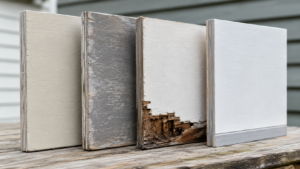
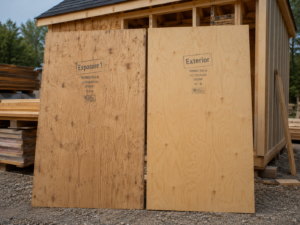
The best paint for exterior plywood is a high-quality 100% acrylic latex exterior paint applied over an exterior-rated primer. Just as important, every exposed plywood edge should be sealed before the finish coats are applied.
That combination works because exterior plywood constantly responds to changes in temperature and moisture. A good acrylic coating remains flexible enough to tolerate that movement better than a hard, brittle finish.
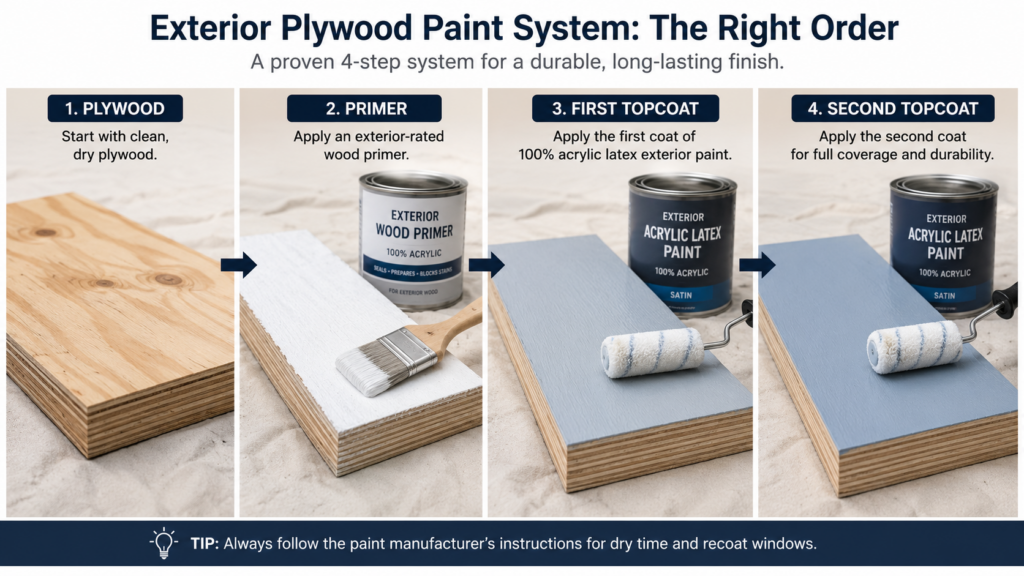
For most outdoor plywood projects, this is the system to use:
Part of the Job
Best Choice
Paint
100% acrylic latex exterior paint
Primer
Exterior-rated wood primer
Finish coats
Usually 2, following paint manufacturer directions
Cut plywood edges
Seal before painting
Smooth painted surface
MDO plywood performs especially well
Textured plywood siding
Acrylic paint or solid-color exterior stain
Existing small surface checks
Repair/prep before repainting; use compatible coating
The important point is that buying expensive exterior paint does not compensate for poorly prepared plywood. Unsealed edges, wet panels, dirt, weathered veneer, and skipped primer can cause a good coating system to fail early.
Why 100% Acrylic Latex Is the Best Paint for Exterior Plywood
Exterior plywood does not remain perfectly still after installation. The wood takes on and releases moisture as conditions change, causing small dimensional changes in the panel and its face veneer.
The phrase to look for on the label is 100% acrylic. A high-quality acrylic latex coating suits this environment because it combines:
good flexibility
strong adhesion when the surface is properly prepared
resistance to weather and sunlight
easy recoating
water cleanup
APA – The Engineered Wood Association recommends an all-acrylic latex primer-and-topcoat paint system as the best protection for exterior wood siding. Sherwin-Williams likewise describes quality acrylic latex paint as an excellent choice for rough-sawn exterior plywood siding.
That makes acrylic latex the best starting point for sheds, plywood siding, exterior panels, soffits, trim, and many other painted plywood projects.
What about oil-based paint?
Oil-based enamels can produce a smooth, hard film, but for APA Rated Siding, APA recommends an all-acrylic latex primer-and-topcoat system and does not recommend oil-based house paints.
On large plywood panels exposed outdoors, a hard aging coating also has less ability to accommodate the wood’s seasonal movement, so acrylic latex is normally the better choice for siding and broad exposed panels.
Oil- or alkyd-based products can still be useful in specific applications, particularly where a manufacturer recommends a stain-blocking primer for knots, resin, or difficult stains. The important distinction is between using a specialized primer where needed and choosing an oil-based finish simply because it feels harder.
Best Paint for Exterior Plywood by Project
The correct coating also depends on what you are building.
Project
Recommended Finish
Important Detail
Plywood shed walls
100% acrylic exterior paint
Seal bottom and cut edges carefully
Exterior plywood siding
Acrylic latex exterior paint
Prime and protect exposed edges
ACX plywood
Acrylic latex exterior paint
Lightly sand and prime first
BCX plywood
Acrylic exterior paint
Fill visible defects if appearance matters
T1-11 siding
Acrylic exterior paint or solid-color stain
Work coating fully into grooves
MDO plywood
High-quality exterior acrylic
Excellent choice for a smooth painted face
Exterior plywood soffit
Acrylic latex exterior paint
Use a plywood grade appropriate for the application
Outdoor plywood furniture
Exterior acrylic coating
Protect joints, fastener holes, and edges
Pressure-treated plywood
Compatible exterior coating
Make sure the panel is sufficiently dry first
Choosing the right plywood before painting can matter almost as much as choosing the coating. See our guide to the best plywood for outdoor projects if you are still selecting the panel.
Best Paint Products for Exterior Plywood
Rather than choosing paint solely by brand, start by checking the label. Look for 100% acrylic latex and exterior use, then verify that the manufacturer approves the product for wood siding or exterior wood surfaces.
Premium exterior acrylics — products such as Sherwin-Williams Duration or SuperPaint, Benjamin Moore Aura or Regal Select, and comparable exterior acrylic lines — may be considered where their manufacturer specifies compatibility with the plywood application. Many premium exterior acrylic paints are primarily sold through paint retailers rather than online. When choosing a topcoat, confirm that the product is intended for exterior wood and check the manufacturer’s current specifications.
Primers
Zinsser Cover Stain (oil-based) — strong stain-blocker for knotty or tannin-heavy panels; grips glossy and weathered surfaces.
Zinsser Bulls Eye 1-2-3 (water-based) — flexible, low-odor primer that pairs well with an acrylic topcoat.
KILZ exterior-rated primer — a reliable water-based option for clean plywood faces.
Edge sealer
A dedicated end-grain sealer, or your exterior primer worked into the edges as described below.
The system matters more than the logo on the can:
correct plywood + dry surface + sealed edges + proper primer + quality acrylic topcoat + good water management
is a better strategy than simply purchasing the most expensive paint available.
Best Primer for Exterior Plywood
Primer should not be treated as an optional coat.
Bare plywood can absorb coatings unevenly, especially around cut edges, patches, defects, and exposed wood fibers. Primer provides a more consistent surface for the finish paint and improves the overall coating system.
For clean exterior plywood, use an exterior-rated primer recommended for wood and compatible with your acrylic topcoat.
An acrylic exterior primer is a straightforward choice for many applications.
A stain-blocking primer may be more appropriate when the plywood contains knots, resin, tannin staining, or discoloration that could bleed through the finish. Check that the primer is approved for exterior use and compatible with the chosen finish paint.
Do not assume that a product labeled “paint and primer in one” means bare exterior plywood never needs proper preparation. Follow the coating manufacturer’s instructions for bare wood.
For more detail on surface preparation and interior applications, see our guide to painting plywood.
Seal Exterior Plywood Edges Before Painting
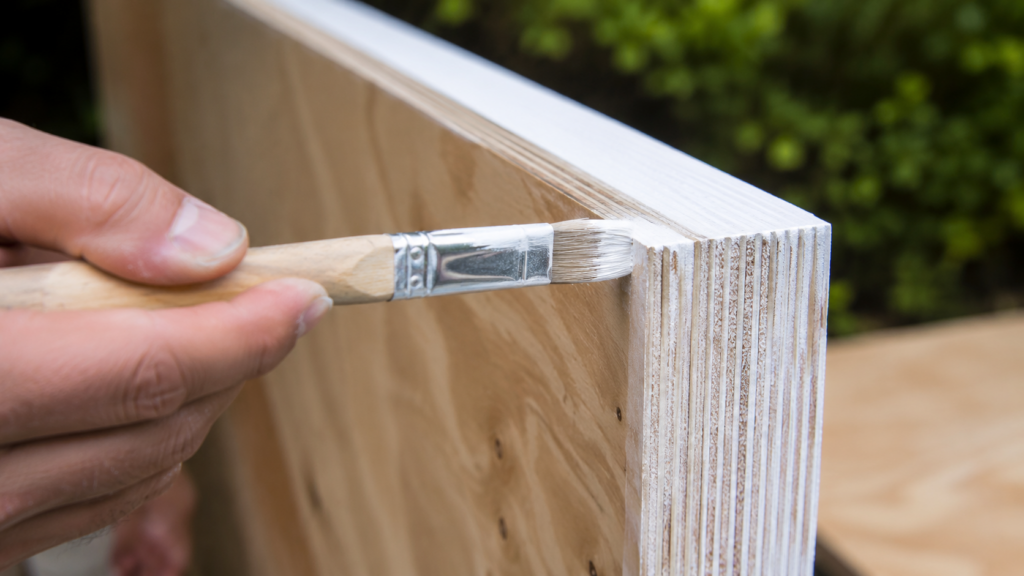
This is one of the most important steps in the entire job.
A plywood sheet is made from multiple layers of veneer. Cutting the sheet exposes those layers along the edge. Those exposed edges require protection because moisture can enter the panel more easily there than through a properly coated face.
APA guidance for exterior plywood siding specifically calls for sealing edges, including edges cut during installation. Use one of the following:
Exterior primer compatible with the finish system
A manufacturer-approved paintable edge treatment
Before installing or painting exterior plywood:
Inspect every factory and cut edge.
Sand loose fibers if necessary.
Apply the primer or edge treatment recommended for the plywood and paint system.
Give extra attention to bottom edges and areas exposed to splashback.
Seal newly cut edges made during installation.
Do not paint only the visible face and assume the job is finished. A beautiful front surface cannot protect a sheet if water repeatedly reaches an unfinished edge.
MDO Is Better When You Want a Smooth Painted Surface
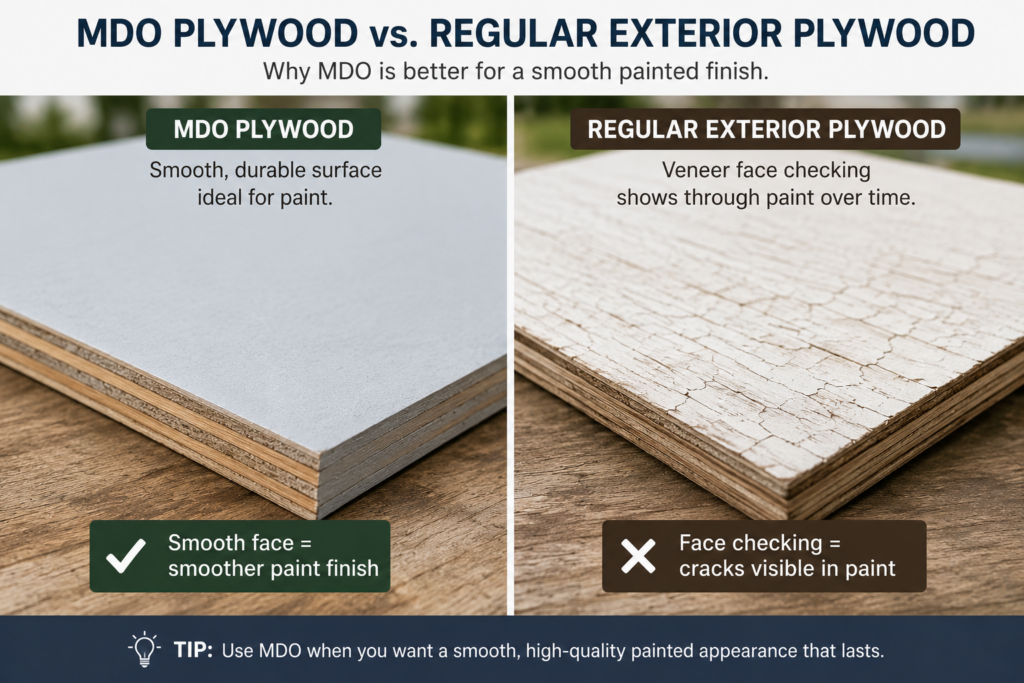
Ordinary plywood exposed outdoors can eventually develop small cracks in the face veneer known as checking. Paint can reduce weather exposure, but it does not turn ordinary plywood into a perfectly stable surface.
For projects where appearance is important, consider MDO plywood, or medium-density overlay plywood.
MDO carries a resin-treated overlay bonded to the face, making it an excellent paint base and a strong choice when a smooth, check-resistant exterior surface is required. APA points to MDO when a smooth, check-free painted surface is wanted, such as siding and soffits. Follow the panel and coating manufacturers’ finishing instructions and seal cut edges.
MDO is particularly useful for:
painted exterior signs
smooth exterior panels
soffits
architectural details
projects where visible face checking would be objectionable
If your primary goal is a smooth painted exterior rather than simply protecting a utility panel, choosing MDO may produce a better result than spending more money trying to make rough exterior plywood behave like MDO.
ACX and BCX Plywood: Can You Paint Them Outdoors?
Yes, provided the panel itself is suitable for the intended exposure.
ACX plywood
ACX plywood has a relatively smooth A-grade face, making it a good candidate when the painted side will remain visible.
BCX plywood has a B-grade face and may contain more visible repairs and imperfections than ACX.
It can still be painted successfully, but additional filling and sanding may be necessary when appearance matters. For utility projects where perfection is unnecessary, there is little reason to make BCX perfectly smooth before painting.
Paint or Solid-Color Stain for T1-11 Plywood?
Paint is not always the only option.
For textured exterior plywood siding such as T1-11, a solid-color exterior stain can also be appropriate. APA identifies solid-color stain as a coating that provides good protection for rated plywood siding.
The choice comes down largely to the finish you want.
Choose acrylic exterior paint when you want:
a more paint-like finished appearance
greater film build
broad color availability
a surface that is easy to wash
Consider solid-color stain when you want:
the texture of the plywood to remain prominent
a less film-like appearance
easier future recoating in some applications
Always confirm that the particular stain is approved for your plywood and exposure conditions.
How to Paint Exterior Plywood Step by Step
Good paint cannot rescue bad preparation.
1. Start with the correct plywood
Confirm that the panel grade is appropriate for its location and exposure. “Exterior” refers to the plywood’s bond classification; it does not mean the panel is automatically protected from decay in every wet environment.
2. Make sure the panel is ready for coating
Moisture requirements vary by coating and plywood type, so follow the paint and panel manufacturers’ instructions rather than relying on a fixed number of drying days. This is particularly important with pressure-treated material.
3. Clean the surface
Remove:
dirt
loose wood fibers
mildew
chalky material
construction debris
Paint bonds to the surface beneath it. If that surface is loose, dirty, or contaminated, the coating is only bonded to the contamination.
4. Sand where necessary
Smooth raised grain, splinters, repairs, and rough areas. Do not aggressively sand thin face veneers unless necessary. Remove all sanding dust afterward.
5. Seal cut edges
Treat every exposed plywood edge according to the coating and plywood manufacturer’s recommendations. Do this before the panels become difficult to reach.
6. Prime the plywood
Apply a uniform exterior primer compatible with both the plywood and the finish paint. Pay particular attention to edges, repairs, and exposed wood.
7. Apply the finish paint
Apply high-quality 100% acrylic latex exterior paint according to the manufacturer’s required coverage, temperature, drying time, and recoating instructions. Two finish coats are commonly used for complete coverage and protection, but the product label should control.
8. Protect the plywood from recurring water
Paint is a coating, not a substitute for good construction. Keep plywood away from standing water and soil contact unless the entire assembly has been designed for those conditions. Use appropriate flashing, trim, drainage, clearances, and detailing to prevent water from repeatedly entering the panel.
Common Exterior Plywood Painting Mistakes
Leaving cut edges unfinished
The face gets two perfect coats while the bottom or sawn edge remains exposed. Protect both.
Painting before the panel is ready for coating
Moisture requirements vary by coating and plywood type. Follow the paint and panel manufacturers’ instructions, particularly with pressure-treated plywood. Do not rely on a fixed number of drying days.
Skipping surface cleaning
Weathered fibers and dirt create a weak layer underneath the new paint.
Assuming “Exterior” means waterproof or decay-proof
An Exterior bond classification refers to the panel’s adhesive durability; it does not make the wood immune to decay. Even marine-grade plywood is not preservative-treated automatically. Proper detailing, drainage, edge protection, and an appropriate coating system still matter.
Using interior paint outdoors
Interior coatings are not formulated for prolonged exterior weather exposure.
Trying to solve a plywood problem with more paint
Severely damaged, delaminated, rotten, or structurally compromised plywood should be repaired or replaced. Another coat of paint will not restore the panel.
Exterior Paint vs Exterior Plywood Protection
One final distinction matters.
Paint protects the surface, but it does not change the plywood’s structural grade or exposure classification. Marine plywood, exterior plywood, pressure-treated plywood, MDO, and ordinary interior plywood are not interchangeable simply because all of them can theoretically be painted.
Start with plywood appropriate for the project, then use paint as part of the protection system. Our exterior plywood guide explains the differences between common exterior panel grades.
Frequently Asked Questions
What is the best paint for exterior plywood?
For most projects, use a high-quality 100% acrylic latex exterior paint over a compatible exterior primer. Seal exposed plywood edges as part of the coating system.
Do you need to prime exterior plywood?
Bare exterior plywood generally should be primed when the chosen coating system calls for primer. Primer improves surface uniformity and provides the proper base for the finish coat.
How many coats of paint should exterior plywood get?
Follow the paint manufacturer’s instructions. A common system is one primer coat followed by two finish coats, but required coverage varies by product and substrate.
Should plywood edges be sealed before painting?
Yes. Exposed and newly cut plywood edges should be protected because they expose the individual veneer layers to moisture.
Yes, when ACX is appropriate for the intended exposure. Its smoother A-grade face also makes it a useful choice when the painted surface will remain visible.
Is MDO better than regular plywood for painting?
MDO is an excellent option when you want a smooth, durable painted surface. Its resin-treated overlay provides a better paint base and helps reduce the appearance problems associated with face checking.
Can T1-11 plywood siding be painted?
Yes. High-quality acrylic latex exterior paint is appropriate for plywood siding, and solid-color exterior stain is another option for many textured siding applications.
Can you paint pressure-treated plywood?
Yes, but the plywood must be sufficiently dry and the coating must be compatible with treated wood. Follow the treatment and paint manufacturers’ instructions instead of relying on a universal waiting period.
Bottom Line
For most exterior plywood, the best painting system is straightforward:
Use a quality 100% acrylic latex exterior paint over a compatible exterior primer, seal every exposed plywood edge, and keep water from repeatedly reaching the panel.
For smooth high-visibility projects, consider MDO plywood before painting. For textured plywood siding such as T1-11, either acrylic paint or an appropriate solid-color exterior stain may work well.
The biggest difference between a paint job that holds up and one that starts failing early is usually not a secret paint product. It is choosing the correct panel, preparing it properly, protecting the edges, and managing moisture around the finished project.
Related Posts:
Exterior Plywood Lifespan: How Long Each Type Lasts Outdoors by Admin August 21, 2026 DIY Exterior plywood has no single outdoor lifespan. Covered sheathing that remains dry can remain serviceable for the life of the surrounding assembly, while permanently exposed…
Exposure 1 vs. Exterior Plywood: Which Can Be Used Outdoors? by Admin August 21, 2026 DIY Focus Keyphrase: Exposure 1 vs Exterior plywood Meta Description: Compare Exposure 1 and Exterior plywood, learn what the grade stamp means, and choose the right panel for…
DIY Plywood Chair Mat: How to Make One That Lasts by Admin January 8, 2026 DIY Plywood chair mats are more durable than plastic mats. Plastic mats crack and curl over time. Glass mats last longer but cost more and are…