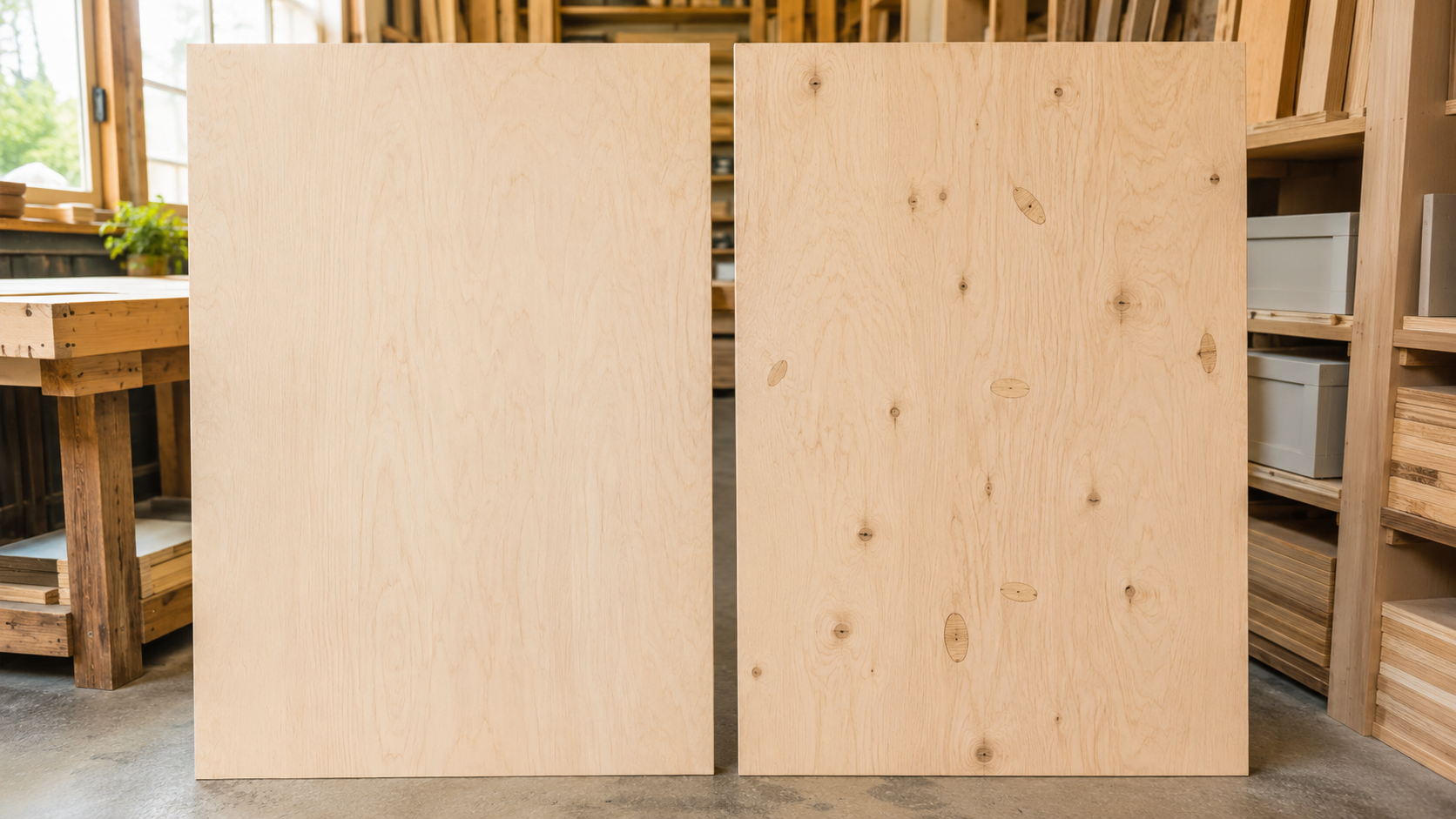
Sanded plywood is a structural plywood panel with one or both outer veneers factory-sanded for a smoother, paintable surface. In the common grades, AC plywood has an A-grade face and C-grade back, while BC plywood has a B-grade face and C-grade back. Choose AC for highly visible or glossy painted surfaces. Choose BC for shelves, shop fixtures and most projects receiving flat, eggshell or satin paint.
Sanded Plywood Grades Compared
Grade
Face and back
Bond classification
Surface
Best use
AC
A face, C back
Exterior
Sanded two sides
Visible painted panels, soffits and higher-finish projects
BC
B face, C back
Exterior
Sanded two sides
Shelving, shop fixtures, closet systems and painted utility work
A-D
A face, D back
Exposure 1
Sanded two sides
Protected indoor work where the back is concealed
B-D
B face, D back
Exposure 1
Sanded two sides
Protected utility projects and fixtures
CDX / Rated Sheathing
C face, D back in common trade usage
Usually Exposure 1; verify the stamp
Unsanded
Covered roof, wall and subfloor sheathing
Underlayment
C-Plugged or better face
Exposure 1 or Exterior
Touch-sanded or sanded
Approved base beneath finish flooring
What Does Sanded Plywood Mean?
Sanded plywood isn’t sheathing that someone ran a sander over. Under PS 1, the U.S. structural plywood standard, sanded panels are a distinct product category. Common sanded grades such as A-C and B-C use higher-quality A- or B-grade faces, with defects repaired using patches or plugs before sanding. Other sanded and touch-sanded categories, including underlayment, use different veneer requirements. Sanded panels are also made to tighter thickness tolerances than unsanded grades.
Those tighter tolerances matter as much as the smoothness. If you’ve ever tried to cut clean dados for cabinet boxes in sheathing-grade panels, you know how much thickness variation fights you. Sanded panels behave far better in fitted joinery.
One important note: labels such as 15/32, 23/32 and 3/4 are Performance Categories under PS 1, not simply the amount of wood left after sanding. A 23/32 panel and a 3/4 panel are separate categories with different target thicknesses — more on that in the FAQ.
If you’re new to how A, B, C and D veneer grades work, start with our pillar guide to plywood grades explained, then come back here for the sanded-specific details.
What Do AC and BC Mean?
The two letters are the face grade and the back grade.
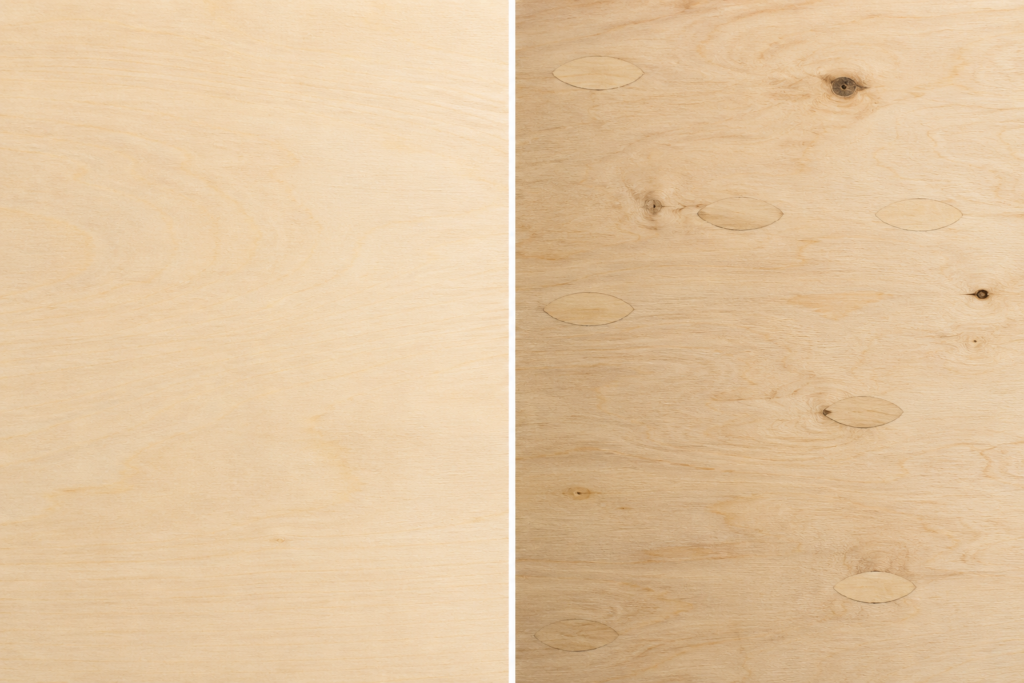
The A face is the best veneer grade in softwood plywood: smooth, paintable, with a maximum of 18 neatly made repairs (boat patches, router patches) sanded flush with the surface. It takes paint with minimal preparation.
The B face is a solid, sanded surface that allows tight knots up to 1 inch, minor splits, and circular repair plugs — the little “footballs” you’ll see on the face.
The C back (on both AC and BC) may contain tight knots up to 1½ inches, knotholes generally up to 1 inch, occasional larger permitted defects, splits and visible repairs. It is intended for the concealed side.
A-C is a formal PS 1 Exterior plywood grade. Retailers sometimes call it ACX, but the reliable way to verify moisture durability is to read the panel stamp and look for the word “Exterior” — don’t rely on the letter X, which also shows up in trade names for Exposure 1 products like CDX. Our guide to reading plywood stamps decodes every mark on the label, and our ACX vs BCX vs CDX comparison untangles the naming.
AC vs BC Plywood: Main Differences
Within comparable A-C and B-C panels from the same manufacturer, the principal grade difference is the face veneer. Both have a C-grade back and Exterior bond classification, but species, ply count, core construction and actual quality can still vary by product.
💸 Where the AC Premium Is Wasted
The price gap between AC and BC varies by region, species and week, but AC consistently costs more per sheet. On a multi-sheet project — a run of garage cabinets, a closet system — that spread adds up fast.
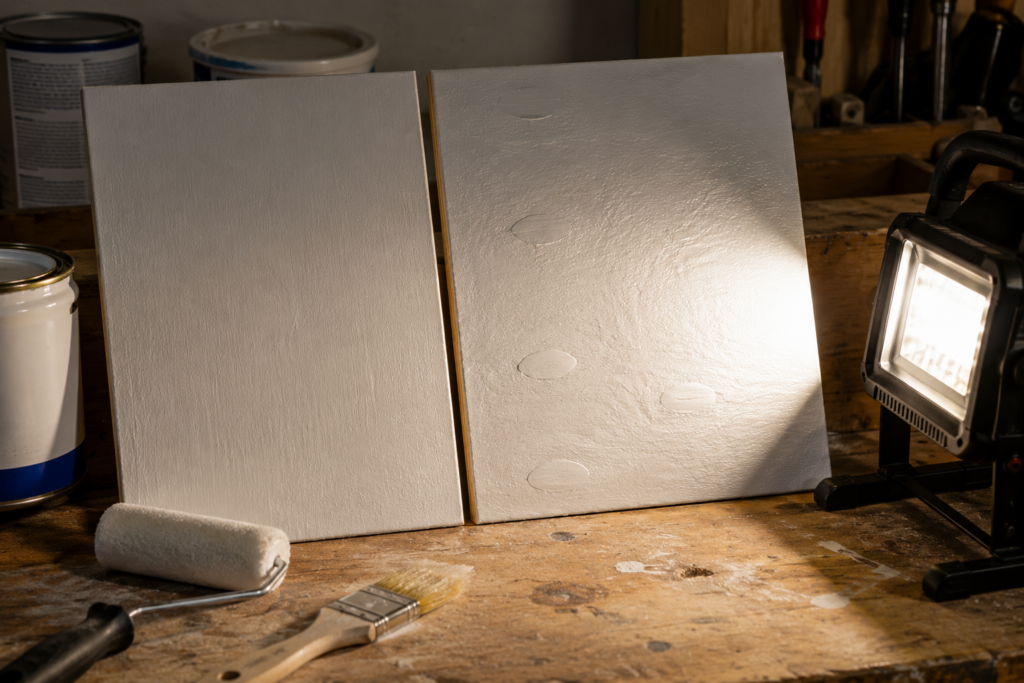
Lower-sheen finishes such as flat, eggshell and satin generally make B-face patches less noticeable. Gloss and semi-gloss reflect more light and are more likely to reveal patch outlines, grain variation and surface preparation defects. Clear finishes reveal both repairs and natural grain variation.
A useful buying rule: use AC for highly visible painted surfaces and higher-sheen finishes; use BC for utility projects receiving flat, eggshell or satin paint. Test an offcut when appearance is critical.
🧪 Run This Test Before You Buy a Full Lift
Before committing to AC or BC for a big project, test it yourself — it takes one offcut of each:
Prime one A face and one B face with the same primer.
Apply two coats of your actual project paint with your actual applicator (foam roller, brush, or sprayer).
View both at 3 feet and at arm’s length, then rake a work light across the surface at a low angle.
Raking light is the honest judge — it reveals patch outlines and sheen differences that overhead light hides. If the B face passes the raking-light test with your paint, buy BC and bank the difference. If you can spot the plugs, the AC premium is buying you something real.
Which Grade Should You Buy?
AC when the surface will be seen up close, finished with gloss or semi-gloss paint, or installed somewhere surface defects would be difficult to correct later, such as soffits, porch ceilings and visible cabinet ends.
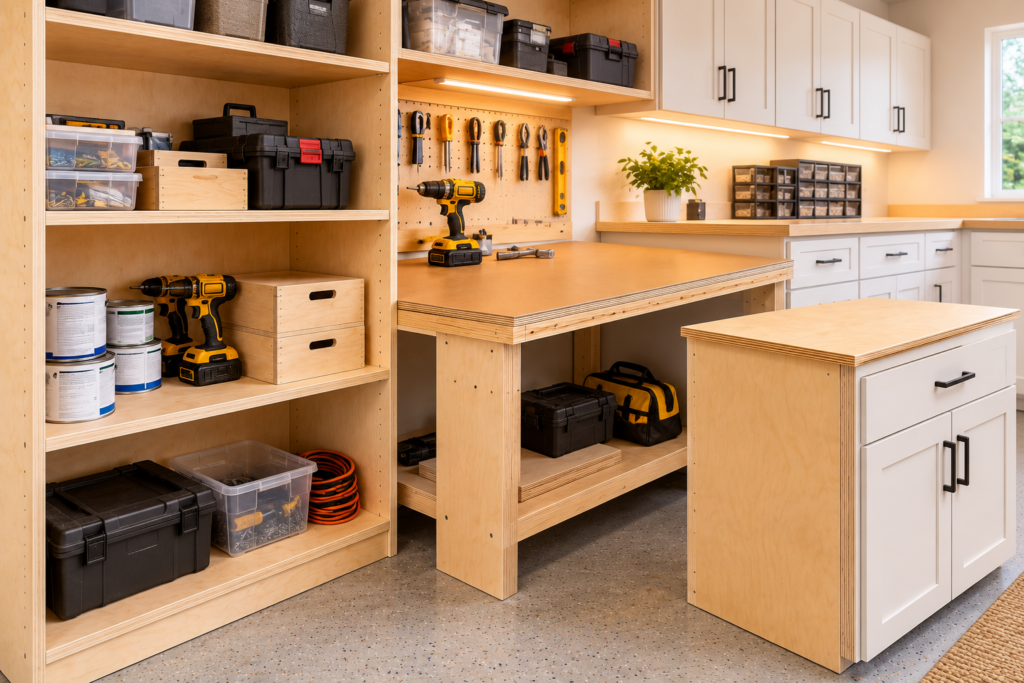
BC for painted utility work: shelving, garage cabinets, workbenches, closet systems. Details in our BC plywood guide.
A-D or B-D when the project stays indoors and the back is concealed — see “Other Sanded Grades” below.
Neither for clear or stain-grade work unless visible repairs and softwood grain are acceptable. An A face can still contain up to 18 repairs, and transparent finishes display them. For stained or clear-finished projects, step up to hardwood plywood — our cabinet grade vs furniture grade comparison covers where to spend.
Sanded Plywood vs CDX
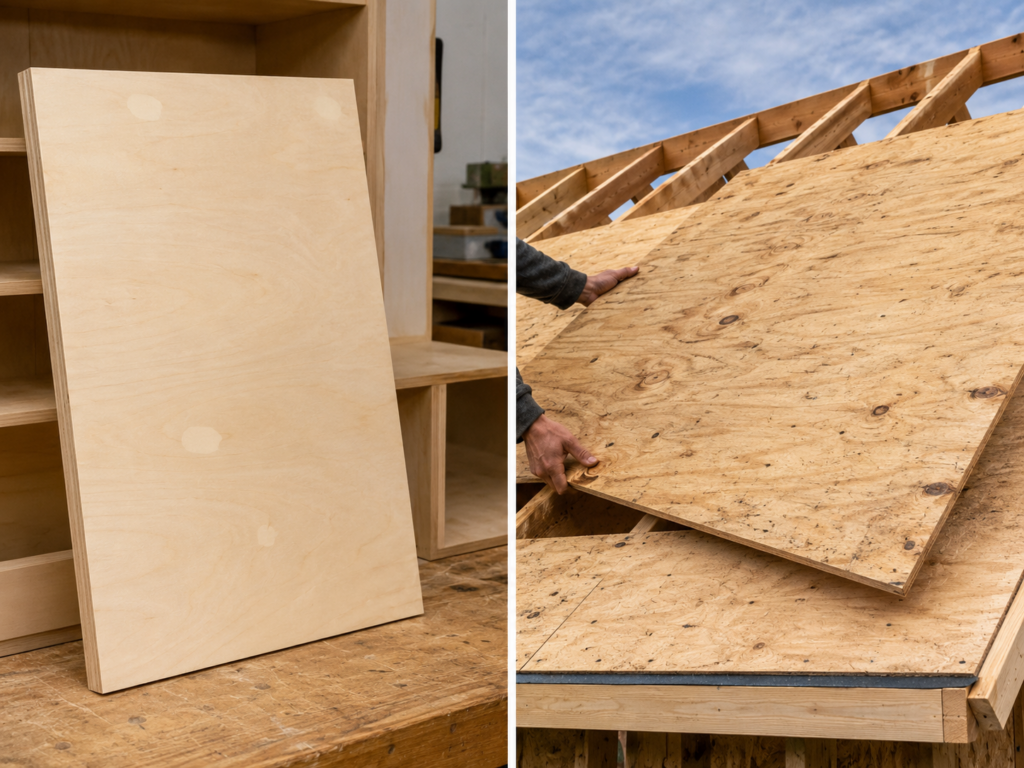
CDX is the panel most people picture when they think “plywood,” but it’s a different product for a different job. CDX is commonly APA Rated Sheathing with an Exposure 1 classification — moisture-resistant exterior-type adhesive, intended to tolerate construction delays, but not permanent weather exposure. It’s unsanded, carries a span rating (24/16, 32/16), and is engineered for structural spans in roofs, walls and subfloors that will be covered.
Sanded AC and BC panels generally carry a species group number instead of a span rating. Sanded plywood manufactured to PS 1 is still structural plywood with substantial strength and stiffness, but ordinary A-C and B-C panels do not carry the span ratings normally required for roof or floor sheathing. Don’t substitute them for Rated Sheathing solely because the thickness matches — and don’t pay the sanded premium for a panel that’s getting buried under shingles. Full details in our CDX plywood guide.
Sanded Plywood vs Underlayment
❌ The Mistake: Grabbing BC for Under Vinyl or Other Resilient Flooring
BC sanded plywood should not automatically be substituted for plywood marked and approved as underlayment. Underlayment panels have additional requirements for face quality, face-veneer thickness and defects in the veneer immediately beneath the face. These requirements reduce the risk of depressions, joints or internal defects telegraphing through thin resilient flooring.
BC’s face feels just as smooth in the store — that’s what makes this mistake so common. But “smooth surface” and “meets underlayment requirements” are different things. Follow the flooring manufacturer’s approved-underlayment list rather than choosing a panel because the face feels right. Our underlayment grade plywood guide covers the right panel for that job.
Sande vs Sanded Plywood
😬 The Regret: They’re Not the Same Thing
There are panels on big-box shelves labeled Sande plywood, and the word is not a misspelling of “sanded.” Sande identifies the face species, commonly Brosimum utile. A Sande panel may also have sanded faces, but the two terms describe different characteristics: Sande is the species; sanded is the surface treatment.
Check the complete product label for face grade, back grade, bond classification and intended exposure. Do not assume a Sande panel has the same construction or moisture rating as an A-C or B-C softwood panel. For species-based panel selection, see our hardwood plywood grades guide.
Can Sanded Plywood Be Used Outside?
⚠️ The Warning: Exterior Bond Doesn’t Mean Rot-Proof
AC and BC manufactured to PS 1 Exterior requirements have bonds suitable for repeated wetting and redrying or long-term weather exposure. Exterior describes bond durability; it does not make the wood decay-resistant or eliminate the need for proper detailing, finishing and maintenance.
For soffits and protected porch ceilings, choose the classification required by the application, seal all cut edges, and apply the coating system recommended by the panel or paint manufacturer. APA recommends sanded A-grade faces or MDO where appearance matters and warns that exposed non-overlaid plywood can still develop face checking.
Ground contact, planter boxes, or anywhere water sits is a different job entirely: decay resistance requires preservative-treated material, which is a separate property from bond classification. Our Exposure 1 vs Exterior plywood guide explains the distinction in depth.
Other Sanded Grades: A-D and B-D
A-D and B-D swap the C back for a D back, which permits open knotholes up to 2½ inches. Under PS 1, A-D and B-D are Exposure 1 sanded grades — D-grade veneer is not permitted in Exterior plywood. You may still see “interior plywood” used as a retail description, but Exposure 1 is the actual bond classification.
Their primary advantage is lower cost when the back will remain concealed and the panel will stay in a protected application: wall paneling, built-in backs, drawer bottoms, shop jigs. Worth buying if your yard stocks them; many carry only AC and BC.
Best Grade by Project
Painted cabinets and built-ins
BC for boxes getting rolled lower-sheen paint; AC for door panels and anything getting gloss, semi-gloss or sprayed finishes.
Shelving
BC. Add iron-on edge banding or a solid-wood nose and it reads as finished. For longer spans, thickness and support matter more than face grade — our plywood for shelves guide covers sag limits.
Workbenches and shop fixtures
BC or B-D. Because workbench and shop-fixture surfaces are likely to become worn, the cleaner A face rarely justifies its additional cost. Put the savings into a replaceable hardboard top layer.
Exterior soffits and porch ceilings
AC with the classification the application requires, cut edges sealed, finished with the manufacturer-recommended coating system.
Stain-grade furniture
Hardwood plywood, not softwood sanded grades.
Recommended Supplies for Sanded Plywood Projects
As an Amazon Associate, we earn from qualifying purchases.
High-density foam roller kit — helps produce a smoother painted finish on B-face plywood: 4″ foam roller kit
Iron-on birch edge banding — turns BC shelf edges into finished edges in minutes: 3/4″ edge banding roll
FAQ
What is sanded plywood used for? Sanded plywood (AC, BC, A-D, B-D) is used where the surface is seen, touched or painted: cabinets, shelving, built-ins, soffits, furniture and shop fixtures. Structural roof, wall and floor sheathing uses span-rated panels instead.
Is AC or BC plywood better? AC has a higher-quality face and costs more. Lower-sheen paints generally make B-face patches less noticeable, so BC handles most painted utility work well. Choose AC for gloss or semi-gloss finishes and highly visible surfaces, and test an offcut when appearance is critical.
Is sanded plywood waterproof? AC and BC made to PS 1 Exterior requirements have bonds suitable for repeated wetting and redrying, but the wood itself is not decay-resistant. Use sanded plywood outdoors only in sealed, properly detailed and maintained applications — never in ground contact.
Is sanded plywood structural? Sanded plywood manufactured to PS 1 is structural plywood, but common A-C and B-C grades usually do not carry roof or floor span ratings. Use span-rated Rated Sheathing or Sturd-I-Floor where the plans or building code require a structural span rating.
Can I use BC plywood as underlayment under vinyl flooring? Not automatically. Approved underlayment panels have additional requirements for face quality, face-veneer thickness and the veneer directly beneath the face that reduce the risk of defects telegraphing through thin flooring. Follow the flooring manufacturer’s approved-underlayment list.
What’s the difference between Sande plywood and sanded plywood? Sande identifies the face species — a tropical hardwood commonly identified as Brosimum utile — while sanded describes the panel’s surface treatment. A Sande panel may also be sanded. Check the full label for grade, bond classification and intended exposure.
Why is some sanded plywood marked 23/32 inch instead of 3/4 inch? 23/32 and 3/4 are separate plywood Performance Categories under PS 1. A 23/32 sanded panel may measure close to 0.703 inch, while a 3/4-category sanded panel may measure close to 0.734 inch. Always measure the actual sheet before cutting dados, rabbets or fitted joinery. See our plywood thickness guide for the full category table.
Does sanded plywood need more sanding before painting? Usually only light preparation. Inspect for raised grain, repair edges or patches as needed, lightly sand with a fine grit, and remove all dust before priming. Avoid aggressive sanding — the face veneer can be thin.
Related Posts:
Exterior Plywood Guide: Grades, Types, Uses and Lifespan by Admin July 21, 2026 DIY Exterior plywood is plywood carrying an Exterior bond classification, meaning the panel is manufactured for long-term exposure to weather or moisture. It uses moisture-resistant exterior…
What Is Sande Plywood? Uses, Pros, Cons, and Buying Guide by Admin March 28, 2026 Hardwood Sande plywood fills a very specific role: it gives you a smooth, paint-ready surface with solid strength—without paying hardwood prices. Once you understand where it…