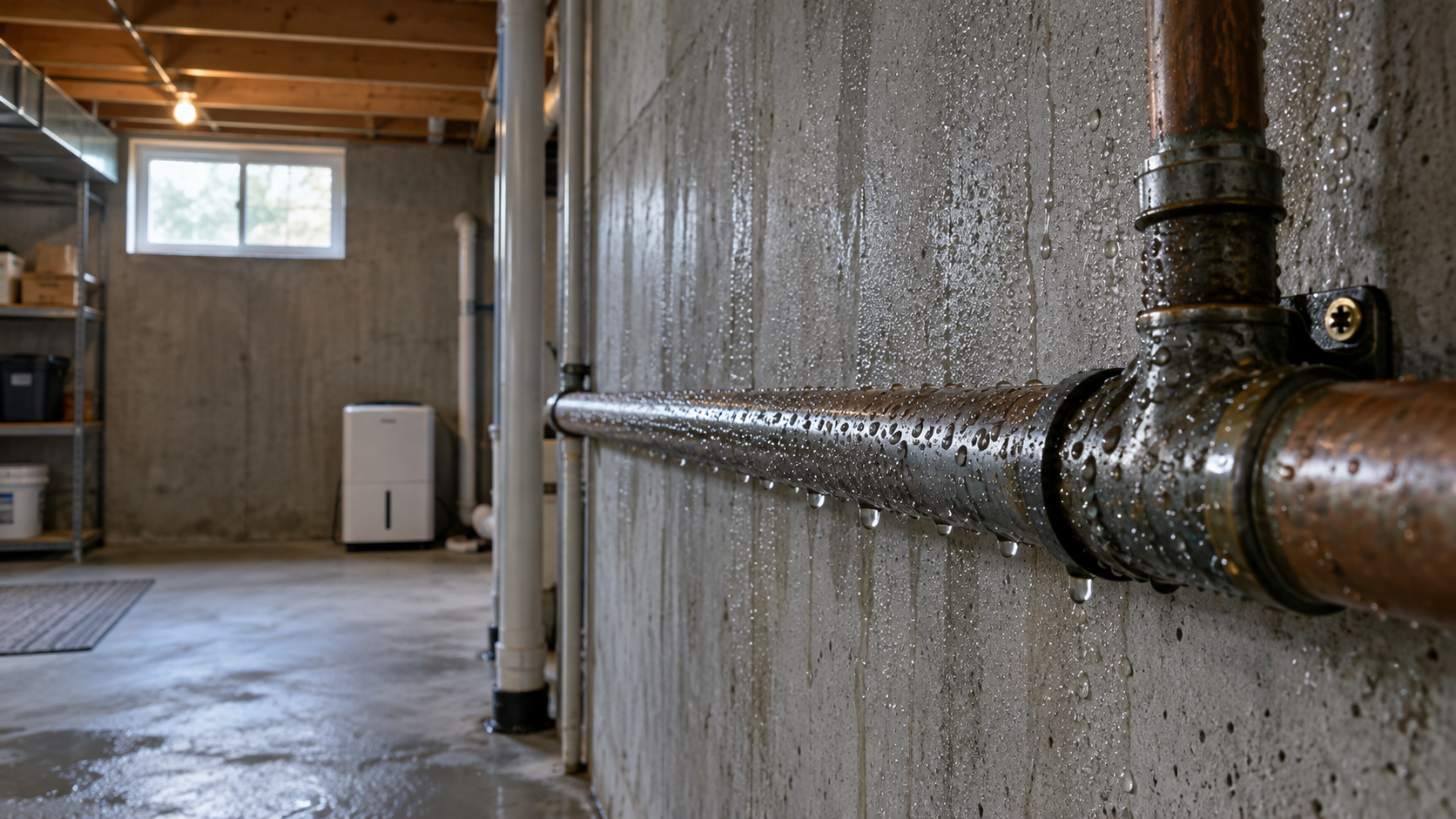
A basement that sweats isn’t always a basement that leaks. Beads of water on the walls, a damp film across the concrete floor, dripping pipes, a musty smell that’s worse in summer — these can all come from condensation, water pulled out of the indoor air, rather than water pushing in from the ground. Knowing how to stop basement condensation starts with one question: is the moisture coming out of the air, or in through the foundation? The two look almost identical and have nearly opposite fixes, so telling them apart is the first job. This guide covers how to confirm you have condensation, why basements are prone to it, and the fixes that actually work.
Quick Answer: How to Stop Basement Condensation
Confirm it’s condensation, not seepage — run the plastic-sheet test (below).
Lower the moisture in the air — a dehumidifier holding relative humidity in the 30–50% range.
Stop ventilating with humid outdoor air — opening windows in warm, humid weather makes it worse.
Warm up the cold surfaces — insulate walls, cold-water pipes, and cooling ducts.
Cut the moisture you’re adding — vent the dryer outside, run bath fans, seal an open sump pit.
Detail the floor correctly if you’re finishing it — never lay plywood or OSB straight onto a bare slab.
The rest of this article explains each step so you can match the fix to your actual situation.
First, Confirm It’s Condensation and Not Water Coming Through the Wall
This is the step most people skip, and skipping it is why so many basements never dry out. Condensation is an air problem: humid interior air meets a cold surface and gives up its moisture. Seepage and vapor drive are a source problem: liquid water or water vapor is migrating in from the wet soil around and beneath the foundation. Sealing the walls to fight condensation does nothing for seepage, and running a dehumidifier does nothing for a wall that’s wet from outside. You need to know which one you have before you spend a dollar.
The Plastic-Sheet Test (ASTM D4263)
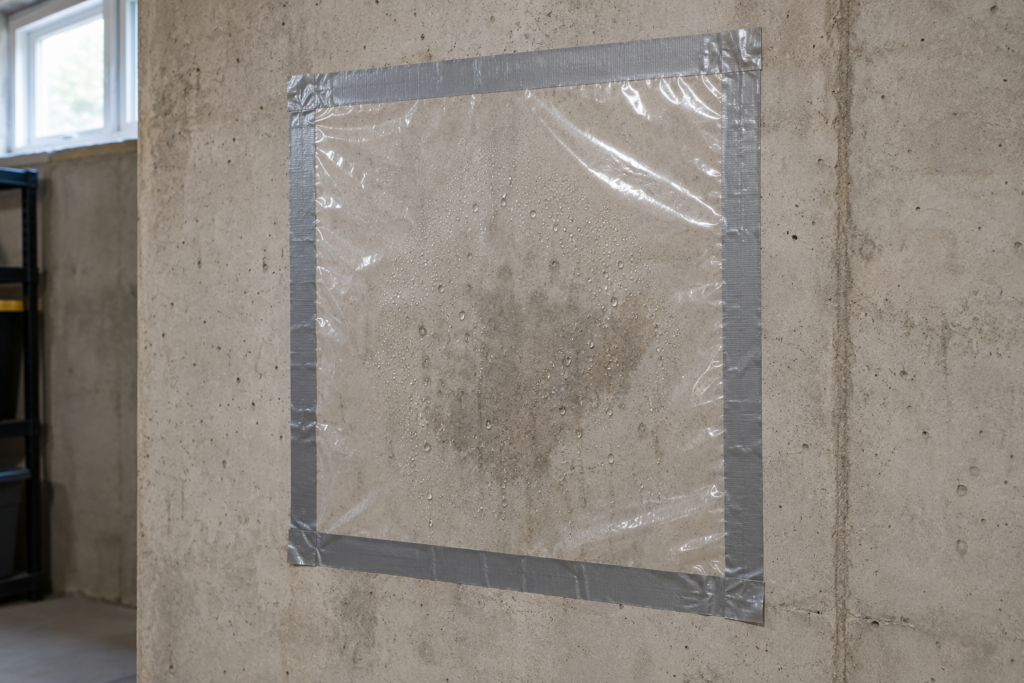
There’s a standardized, no-cost way to screen for this. ASTM D4263, the Standard Test Method for Indicating Moisture in Concrete by the Plastic Sheet Method, calls for taping a square of clear plastic tightly to the concrete — all four edges sealed — and leaving it at least 16 hours before reading it.
After at least 16 hours, inspect the plastic and the concrete. Moisture or darkening beneath the plastic, against the concrete, indicates moisture at or near the concrete surface — a sign that water or vapor may be moving in through the slab or wall. Moisture forming primarily on the room-facing side suggests humid basement air is condensing on the cold surface. Because this is only a qualitative screening test, persistent dampness may call for additional testing or a professional diagnosis.
Tape one square to a wall and another to the floor slab, since the two can behave differently. Keep in mind that D4263 is an indicator of surface moisture, not a definitive diagnosis of where that moisture is coming from.
If the screen points to water coming through the foundation, this is the wrong article — start with the source-side fixes: grading, gutters, drainage, and sealing bare masonry, which our guide to mold-resistant basement materials walks through from bulk water inward.
Why Basements Sweat
Air can only hold so much water vapor at a given temperature, and colder air holds less. The temperature at which the air becomes saturated and vapor starts turning back into liquid is the dew point. Any surface colder than the dew point of the surrounding air will collect water — the same reason a glass of iced tea “sweats” on a summer afternoon.
Basements are full of surfaces that stay cold. The slab and the below-grade walls are in direct contact with the ground, which holds a fairly stable, cool temperature year-round. Cold-water pipes and air-conditioning ducts are colder still. When warm, humid air reaches those surfaces, it condenses on them. The EPA notes that humid weather in generally cold regions can drive condensation onto un-insulated ground-contact floor slabs and basement walls — which is why condensation is usually a warm-season complaint even in cool climates. The muggier the outdoor air, the more moisture it carries down to deposit on those cold surfaces.
This also explains a mistake that feels like the obvious fix: opening the windows. In warm, humid weather, outdoor air is often more humid than the basement air, so ventilating pulls moisture in and makes the sweating worse. Ventilation only helps when the outside air is genuinely cold and dry.
How to Stop Basement Condensation
The EPA frames condensation control around two levers: raise the temperature of the cold surface, or lower the amount of moisture in the air. Every fix below pulls one of those two levers, and most basements need a mix.
1. Run a Dehumidifier and Keep Humidity in Range
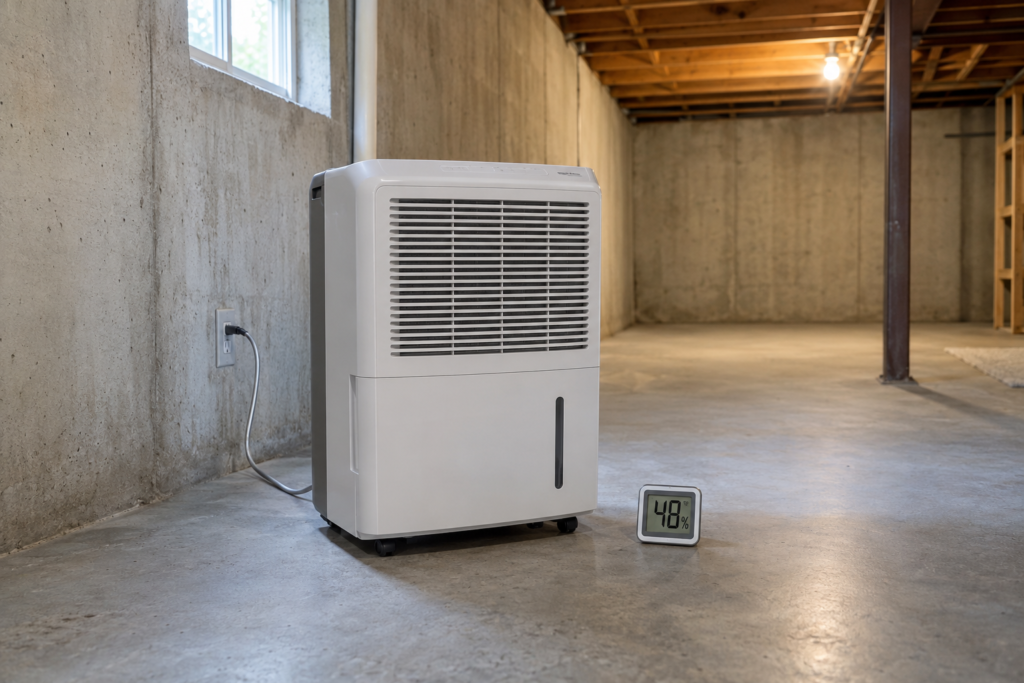
Keeping relative humidity below 60%, and preferably between 30% and 50%, reduces the likelihood of condensation and mold growth. However, condensation can still occur when pipes, ducts, walls, or floors are colder than the air’s dew point — humidity control lowers the odds, it doesn’t override physics. The EPA supports the below-60%, ideally 30–50%, target.
Start by measuring. An inexpensive hygrometer tells you where you actually stand and whether your fixes are working — don’t guess. Then size a dehumidifier to the space and set it to hold the low-50s or below. A dehumidifier is the right tool specifically when the outdoor air is warm and humid, which is exactly the condition that causes summer basement sweating.
2. Don’t Ventilate With Humid Outdoor Air
As covered above, opening windows or running a fan to the outside only dries the basement when the outside air is colder and drier than the inside air. In warm, humid weather it does the opposite. Use your hygrometer — and a glance at the outdoor dew point — to decide: ventilate on cool, dry days; seal up and dehumidify on warm, muggy ones.
3. Warm the Cold Surfaces So They Stay Above the Dew Point
The other lever is surface temperature. Keep a wall, pipe, or duct above the dew point of the surrounding air and water can’t condense on it.
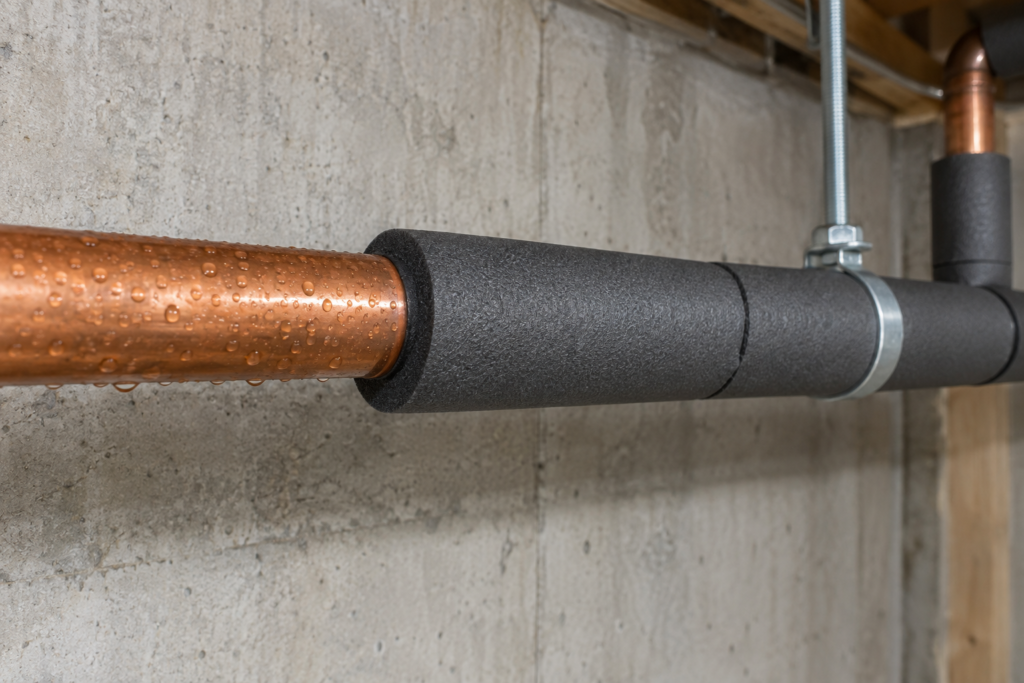
Cold-water pipes and cooling ducts are the quickest wins. Foam pipe sleeves and duct insulation keep those surfaces warm enough to stop dripping. The EPA gives this exact fix for a sweating, un-insulated air-conditioning duct: insulate the outside of the duct.
The walls can be insulated with rigid foam board, which raises the interior surface temperature and separates the warm room air from the cold concrete.
A code point worth getting right: the current International Residential Code (IRC R702.7) classifies vapor retarders as Class I (0.1 perm or less), Class II (greater than 0.1 up to 1.0 perm), and Class III (greater than 1.0 up to 10 perm) — the code no longer uses the older term “vapor barrier.” Just as important, R702.7 specifically exempts basement walls and the below-grade portion of any wall from the interior vapor-retarder requirement that applies to above-grade framed walls. Below grade, a low-perm layer on the interior face can trap moisture against the assembly rather than help — so don’t reflexively staple polyethylene sheeting to the inside of a basement wall. Our basement wall insulation guide covers detailing below-grade walls so the concrete face stays warm without trapping water.
4. Cut the Moisture You’re Adding to the Air
Some of the humidity is homegrown. Common indoor sources include a clothes dryer venting into the basement instead of outside, showers and cooking without exhaust fans, damp firewood, and an open sump pit, which can release a surprising amount of water vapor into the air. Vent moisture-generating appliances outdoors, run exhaust fans, and close off standing water sources — sealing an open sump pit is one of the quickest humidity wins, as covered in our guide to sump pump covers. Every gallon you don’t put into the air is a gallon the dehumidifier doesn’t have to pull back out.
5. Improve Air Circulation — But Only After Lowering Humidity
Air circulation can break up isolated damp pockets and help a dehumidifier treat the whole basement. But a fan does not remove moisture. Don’t direct warm, humid air at a cold wall, floor, pipe, or duct, because that can increase condensation on that surface. Control humidity first, then use circulation as a supporting measure — not a standalone cure.
6. Detail the Floor Correctly If You’re Finishing the Basement
If you’re finishing the basement, this is where condensation stops being an air-quality nuisance and starts destroying materials — because you’re putting wood on, or just above, a cold, sometimes-sweating slab.
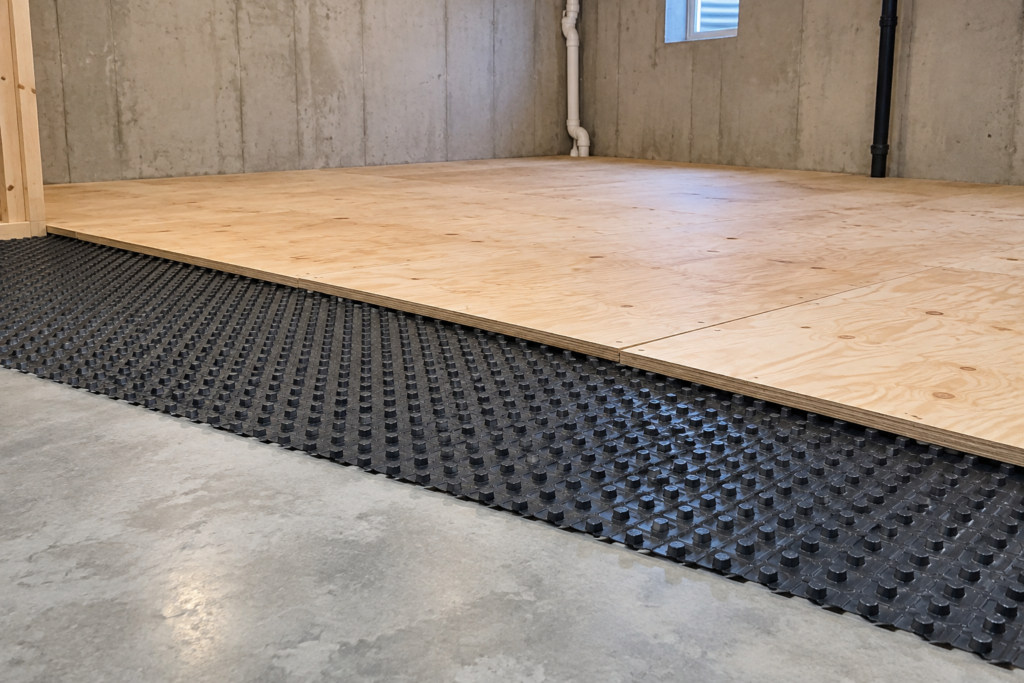
Laying plywood or OSB subfloor panels directly onto bare concrete is asking for trouble. The panels sit against a surface that periodically drops below the dew point, wick up that moisture, and over time swell, delaminate, and grow mold on the hidden underside — you won’t see it until it smells. Use a basement-rated subfloor assembly that separates plywood or OSB from the concrete and provides the vapor control required by the system manufacturer. Depending on the product, this may use a dimpled membrane, rigid foam, or integrated raised panels. Do not combine layers unless the manufacturer approves the complete assembly. Our basement subfloor guide covers the panel choice and the two installation methods that hold up below grade, and our basement vapor barrier guide covers where the vapor-control layer goes and which type belongs in each spot.
Before installing a finished floor, determine whether the slab is releasing excessive moisture. An ASTM F1869 calcium-chloride test estimates the moisture-vapor emission rate at the concrete surface. Compare the result with the limits specified by the flooring, adhesive, membrane, or subfloor manufacturer. If moisture levels are too high, correct drainage problems or install an approved vapor-mitigation system before placing wood-based materials over the slab.
Does Sealing the Walls Stop Condensation?
Usually not. Masonry waterproofing coatings such as Drylok are intended to resist moisture passing through masonry. They may help with limited dampness, but they don’t remove humid indoor air, and they don’t solve serious exterior drainage or hydrostatic-pressure problems. If your plastic-sheet screen showed moisture on the room-facing side, a wall coating won’t fix it — that water is coming from the room, not the soil, so you need the humidity and surface-temperature steps above.
When to Call a Pro
Bring in a waterproofing or foundation contractor if the plastic-sheet screen showed water coming through the wall or slab, if you have standing water after rain, or if grading, gutters, and downspouts haven’t solved a recurring wet basement. Those are drainage and foundation issues, not condensation, and they’re worth diagnosing properly before you finish the space.
FAQ
Will a dehumidifier alone stop basement condensation? Often, yes — if condensation is your only problem. Holding relative humidity in the 30–50% range removes much of the moisture available to condense. But if cold pipes or ducts are still dripping, or a surface is well below the dew point, pair the dehumidifier with insulation on those surfaces.
Why is my basement worse in summer? Warm summer air holds far more moisture, and the below-grade walls and slab stay cool year-round. When that humid air meets those cold surfaces, it condenses. It’s also why opening the windows in summer usually makes basement dampness worse instead of better.
How do I know if it’s condensation or a leak? Tape a sealed square of plastic sheet to the wall or floor and leave it at least 16 hours (ASTM D4263). Moisture on the room-facing side points toward condensation; moisture trapped behind the plastic against the concrete points toward water moving in through the foundation. It’s a screening test, so persistent dampness may need further diagnosis.
What humidity should a basement be? Follow the same target as the rest of the house: below 60% relative humidity, ideally between 30% and 50%, per EPA guidance. A cheap hygrometer lets you confirm you’re in range.
Can I put a plywood floor over a basement slab that sweats? Not directly. Use a basement-rated subfloor assembly that separates the wood from the concrete and provides manufacturer-specified vapor control, and confirm the slab isn’t also a moisture source (an ASTM F1869 test measures this) before you build a finished floor over it.