This article contains affiliate links. As an Amazon Associate, ThePlywood.com earns from qualifying purchases, at no extra cost to you.
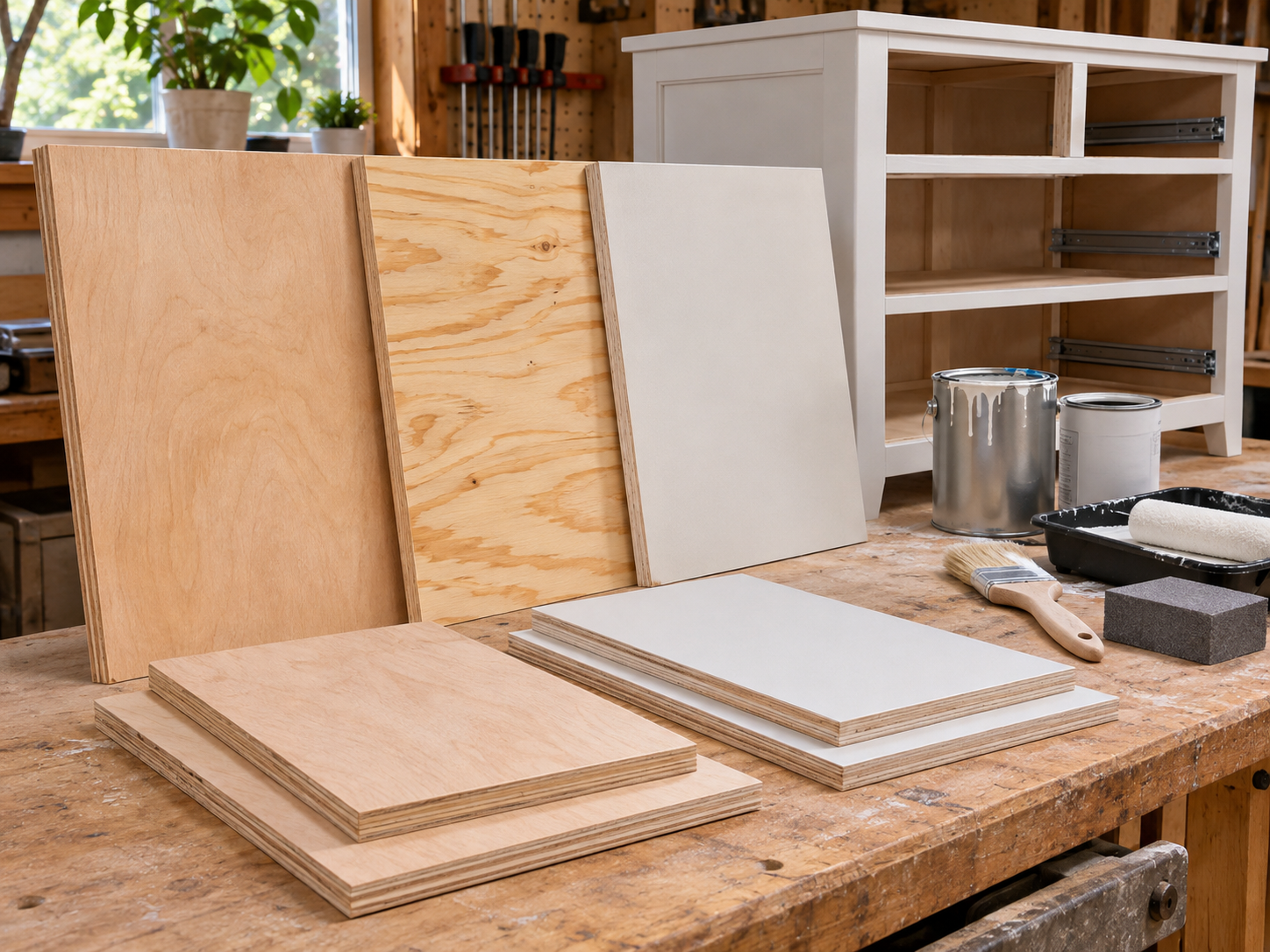
The cheapest plywood for painted furniture that still gives a smooth finish is usually a sanded poplar or birch hardwood plywood. A 3/4 in. 4×8 sheet runs about $66–$90 at big-box stores (checked November 2026). C-2 and D-3 panels can be economical choices, but inspect the face for patches, defects and sanding quality before you buy. A lower face grade is not automatically ready for a smooth paint finish.
Quick answer
Best value for painted furniture: sanded poplar hardwood plywood, about $66–$90 per 3/4 in. 4×8 sheet
Close second: sanded birch hardwood plywood, about $75–$86 per sheet
Smoothest paint finish: MDO, about $80–$161 per sheet, often special order
Best exposed edges: Baltic birch, about $65–$109 per 5×5 sheet
Lowest sheet price, roughest result: sanded pine or fir. Get a local quote, because big-box stores often don’t stock it at 3/4 in.
Skip for painted work: A-face birch or maple. Paint hides the face you paid extra for.
Plywood for Painted Furniture: Prices and Grades Compared
Prices are for 3/4 in. sheets listed at U.S. retailers and lumberyards in November 2026. They vary by region, store and week, so treat them as a starting point and check your local yard.
Panel
Grade to ask for
Price per sheet
Price per sq ft
How it takes paint
Exposed edges
Sanded pine / fir
BC or AC
Get a local quote
—
Grain and checks often show through
Visible plies, frequent core gaps
Sanded poplar hardwood plywood
B-2, C-2 or D-3 (inspect)
$66–$90 (4×8)
$2.05–$2.81
Smooth, tight grain, primes well
Needs edge banding or filler
Sanded birch hardwood plywood
B-2, C-2 or D-3 (inspect)
$75–$86 (4×8)
$2.34–$2.68
Good. Rotary birch grain can show faintly
Needs edge banding or filler
MDO
MDO General, 1 or 2 side
$80–$161 (4×8)
$2.50–$5.02
Smoothest. Overlay hides grain
Plies show. Needs filler
Baltic birch
B/BB or BB/BB
$65–$109 (5×5)
$2.60–$4.37
Good. Spot-prime face patches
Fills and paints cleanly
Price per square foot matters for Baltic birch. It usually comes in 5×5 ft sheets (25 sq ft), not 4×8 (32 sq ft). A Baltic birch sheet can be priced close to a 4×8 poplar sheet and still cost more per square foot of usable panel.
What a Three-Sheet Dresser Costs in Each Panel
A dresser or bookcase often takes about three 4×8 sheets of 3/4 in. plywood. Here’s the material cost at the prices above:
Panel
3 sheets, low
3 sheets, high
Sanded poplar
$196.95
$269.64
Sanded birch
$224.94
$257.34
MDO (one side)
$239.97
$481.62
Poplar and birch overlap. Depending on the stores you compare, three sheets of birch can cost less than poplar or up to about $60 more. MDO’s three-sheet cost ranges from about $240 to more than $480, so it’s worth buying only when you need its finish.
The trade-off with sanded pine: it usually costs less per sheet, but you pay in time. Expect extra filler, an extra primer coat and more sanding to keep the grain and patches from showing through paint. Whether that’s worth it depends on how much your time is worth and how smooth the finish needs to be.
Why the Cheapest Sheet Isn’t Always the Cheapest Choice
Hardwood plywood and construction (softwood) plywood use different grading systems, and that matters more for paint than the price tag.
Softwood plywood (PS 1 / APA grades A–D) is graded mostly for structure and soundness. An “A” face is sanded and repaired, but it is still rotary-cut fir or pine. That wood has hard and soft growth rings that sand unevenly and raise when wet primer hits them. Rotary-cut veneer also carries small cracks from the cutting knife (lathe checks), and these can open up later. Wood scientist Bruce Hoadley documented knife checks breaking through paint on fir plywood within a year. For a full breakdown of the softwood letters, see our guide to plywood grades A–D and our comparison of AC vs. BC sanded plywood.
Hardwood plywood (ANSI/HPVA HP-1-2024) grades the face veneer AA, A, B, C, D or E, and the back 1 through 4. The letter is mainly about appearance: color match, knots, streaks and repairs. Lower face grades allow more and larger knots, repairs and color variation. That’s why they’re often used for painted work, but it’s also why a C or D face can need filling and sanding before it paints smoothly. Our hardwood plywood grades guide explains what each letter and number allows.
Warning: “Paint grade” is a store and supplier term, not a grade defined in HP-1. One store’s “paint grade” might be a clean B-2 poplar, and another’s might be a heavily patched D-4. Ask for the actual face and back grade, and look at the sheet before you buy.
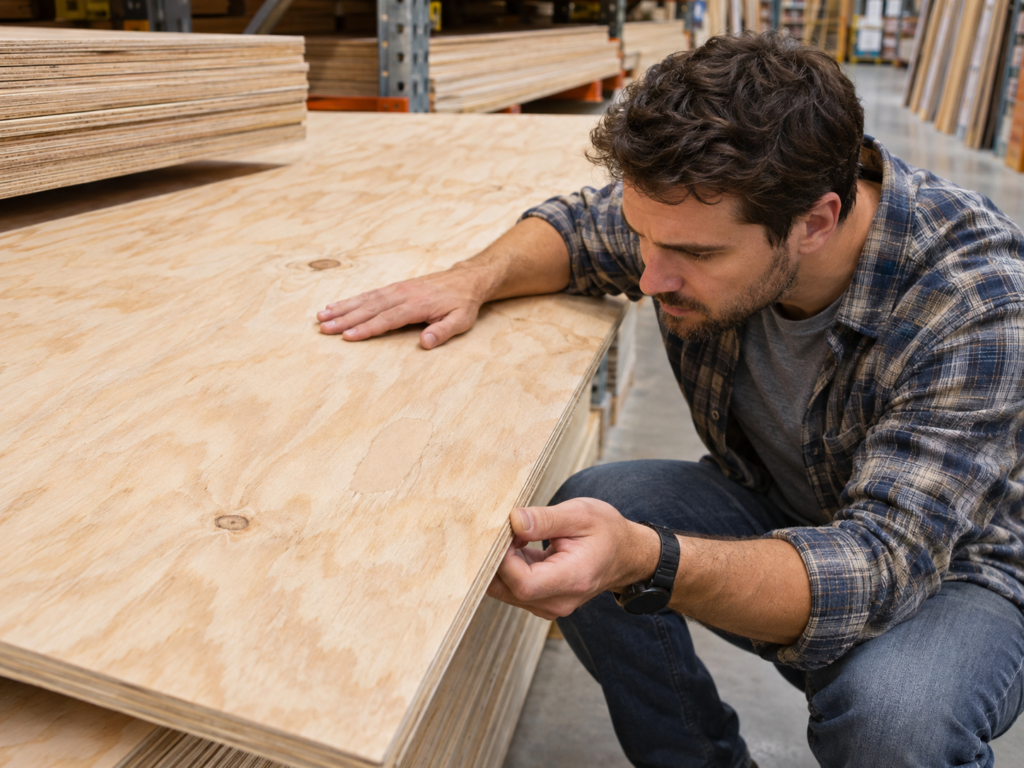
How to Inspect a Sheet Before You Buy
The grade letter tells you what the face is allowed to have. Looking at the sheet tells you what it actually has. Check these four things at the store:
Patches and repairs: football-shaped wood patches and putty fills paint over fine if they’re flush. Run your hand across them. Raised or sunken patches will show through paint.
Sanding quality: look across the face under a low light. Sanding marks, fuzzy areas or burn-throughs to the layer underneath mean extra prep work.
Flatness: sight down the long edge. A cupped or twisted sheet makes doors and panels harder to fit, whatever its grade.
Edge gaps: look at the cut ends. Large gaps in the inner plies take more filler if the edges will be painted.
The Picks: Which Plywood to Buy for Painted Furniture
Best Value: Sanded Poplar Hardwood Plywood
This is the default pick for painted dressers, bookcases, toy chests, nightstands and built-ins. Poplar’s tight, even grain sands smooth and doesn’t telegraph much through primer. In the listings we checked, it was the lowest-priced sanded hardwood plywood at big-box stores, at about $66–$90 per 3/4 in. sheet.
Look at the core too. MDF-core and combination-core hardwood plywood usually gives a flatter face, which helps glossy paint. Veneer-core is lighter and holds screws in the edges better. For furniture you’ll move or that has screws driven into the edges, veneer-core or combination-core is the safer choice. See our guide to cabinet grade plywood for how core types compare.
When not to use it: for pieces where the plywood edge will be the visible design detail. Domestic veneer-core edges often have gaps that take a lot of filling.
Close Second: Sanded Birch Hardwood Plywood
Birch has a slightly harder face than poplar, which helps on tabletops and drawer fronts that take bumps. Its rotary-cut grain sometimes shows faintly under thin or glossy paint, but a good primer coat usually solves that. At about $75–$86 per sheet, it costs roughly the same as poplar, so buy whichever sheet looks cleaner at your store.
When not to use it: under high-gloss paint on large flat panels, unless you’re willing to prime and sand twice.
Lowest Sheet Price: Sanded Pine or Fir
If it’s going in the garage, a playroom or a workshop, sanded softwood plywood is usually the lowest-cost sanded option and holds up fine structurally. Big-box stores often stock it in thinner sizes and not 3/4 in., so call a local lumberyard for a price. Expect grain that shows through paint, patches that need spot priming, and checks that may open up over time. A shellac-based or stain-blocking primer helps, and so does a second sanding after the first primer coat.
When not to use it: for anything you want to look like finished furniture, or anything painted in a gloss or semi-gloss sheen. Gloss shows every ridge.
MDO is exterior-bond plywood with a resin-treated fiber overlay. APA describes it as having the right “tooth” for rapid, even paint application. There’s no grain to telegraph and no checking on the face, so it’s the closest you’ll get to a sprayed, factory-smooth finish on plywood.
The downsides: it ranged from about $80 to $161 per sheet in our check, it’s often special order, the edges still show plies, and the paper face can tear or fuzz if you cut with a dull blade. Order MDO General grade, not Concrete Form grade. Concrete Form grade is made for concrete forms and can carry a release agent that affects paint. Our MDO vs. HDO guide covers the differences.
When not to use it: small projects where you’d have to buy a full special-order sheet for one piece.
Best Painted Edges: Baltic Birch
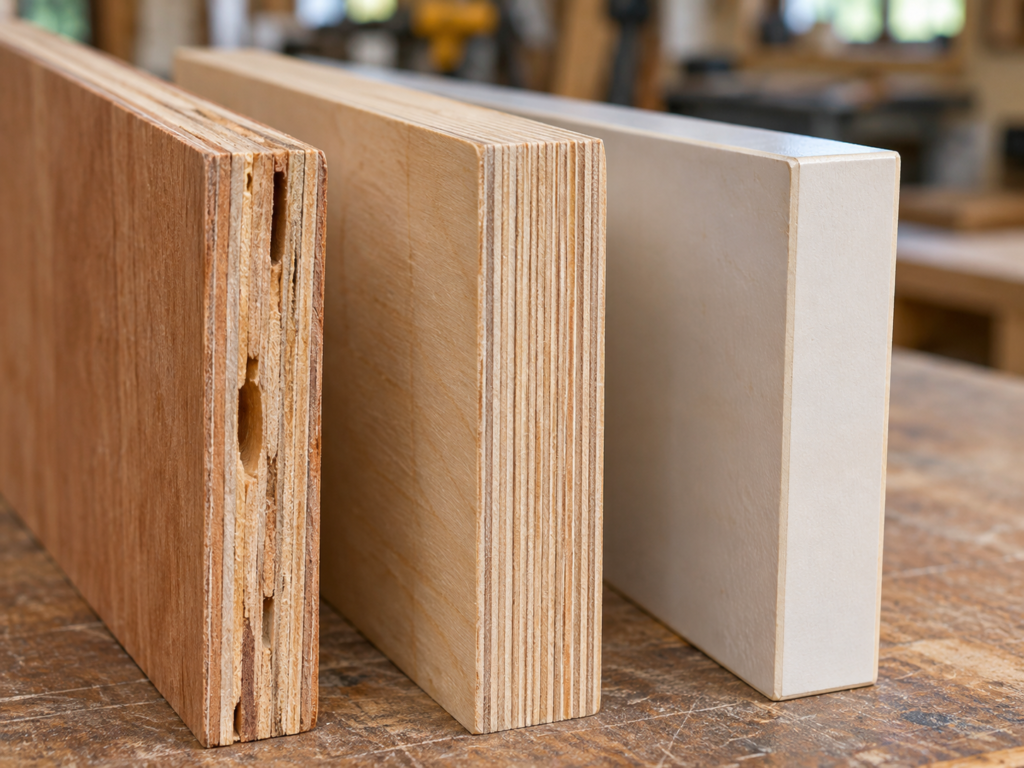
Baltic birch has thinner, more numerous plies and generally fewer and smaller core gaps than domestic veneer-core sheets, so a cut edge fills and paints cleanly. That makes it the pick for modern-style furniture with exposed, painted edges, and for drawer boxes. It usually comes in 5×5 ft sheets at about $65–$109, or $2.60–$4.37 per square foot, so plan your cut list before you buy. For more detail, see Baltic birch vs. birch plywood.
When not to use it: large flat painted panels on a budget. You’d be paying for edge quality you’ll cover with paint or banding anyway.
Supplies That Make Cheap Plywood Paint Well
You’ll buy the plywood itself locally, but these supplies matter as much as the sheet:
For full prep steps and a primer chart, see our guide to painting plywood.
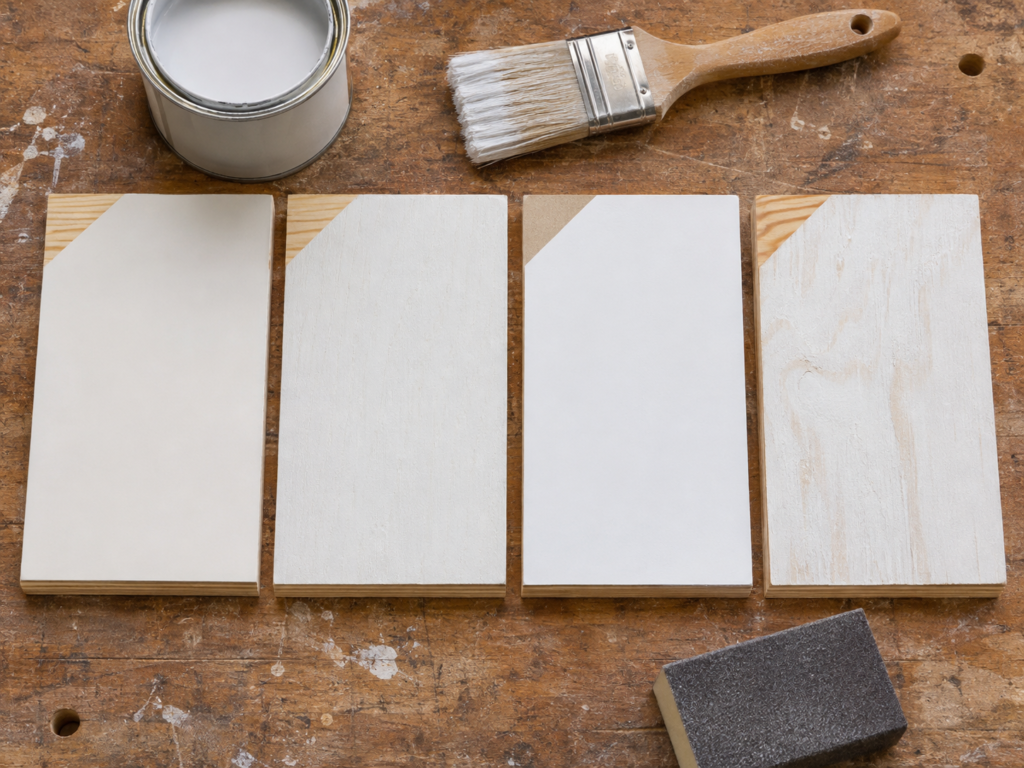
Test before you commit: cut a scrap from the sheet you bought, then prime and paint it with your actual topcoat and sheen. Look at it under a raking light, like a flashlight held low across the surface. If grain, patches or checks show on the scrap, they’ll show on the dresser.
5 Mistakes That Cost More Than the Plywood
Buying sanded pine for a glossy painted piece. Grain ridges and patches show under gloss. You either live with it or spend evenings filling and sanding.
Trusting the grade letter without looking at the sheet. Two sheets with the same grade can differ a lot in patching and sanding quality. A rough C or D face can need more prep than you planned for.
Paying for A-face birch or maple and then painting it. You’re paying for color and grain matching that the paint covers. B-face only makes sense if the inside stays clear-finished.
Skipping primer on knots and patches. Softwood knots and putty patches can bleed through or show as dull spots in the topcoat. Spot-prime them with shellac-based primer first.
Leaving plywood edges raw. Paint doesn’t hide plies. It outlines them. Band or fill the edges before priming, or the piece looks unfinished.
Regret check: a common painted-furniture regret is finishing a piece, seeing the grain or patches show through, and then sanding it back down. Ten minutes inspecting sheets at the store is cheaper than redoing a finish.
Frequently Asked Questions
What is the cheapest plywood for painted furniture?
Sanded pine or fir usually has the lowest sheet price, but it’s often hard to find at 3/4 in. at big-box stores and needs the most prep. Among sanded hardwood plywood, poplar was the lowest-priced in our November 2026 check, at about $66–$90 per 3/4 in. 4×8 sheet.
How much does 3/4 plywood for painted furniture cost?
In November 2026 listings, 3/4 in. 4×8 sheets ran about $66–$90 for sanded poplar, $75–$86 for sanded birch and $80–$161 for MDO. Baltic birch ran about $65–$109 per 5×5 sheet. Prices vary by region and store.
Is birch or poplar plywood better for painting?
Both work well. Poplar’s tight grain tends to hide better under paint. Birch has a slightly harder face but can show faint grain under thin or glossy finishes. They cost about the same, so buy the sheet with the cleaner, flatter face.
Is MDO better than hardwood plywood for painted furniture?
For the smoothest finish, yes. MDO’s fiber overlay hides grain completely. It often costs more, is usually special order and still needs edge work. For most furniture, sanded poplar or birch is the better value. MDO makes the most sense for large flat panels and glossy finishes.
Can I use cabinet grade plywood for painted furniture?
Yes. Many “cabinet grade” sheets are B- or C-face birch or maple, which paint very well. Just don’t pay extra for an A face you’ll cover. Our guide to furniture grade plywood explains what these store labels usually mean.
Do I need to prime plywood before painting furniture?
Yes. Primer seals the grain, blocks knot and patch bleed, and gives the topcoat an even surface. Use a shellac-based or stain-blocking primer on softwood plywood and any patched areas.
Bottom Line
For most painted furniture, sanded poplar or birch hardwood plywood gives the best mix of price and finish, at about $66–$90 per sheet. Inspect the face before you buy rather than relying on the grade letter. Save sanded pine for shop and utility pieces, buy MDO when you need a glass-smooth finish, and pay for Baltic birch only when painted edges are part of the design.
Sources
ANSI/HPVA HP-1-2024, American National Standard for Hardwood and Decorative Plywood (Decorative Hardwoods Association). Face and back grade tables as reproduced in the Columbia Forest Products Hardwood Plywood Grading Guide