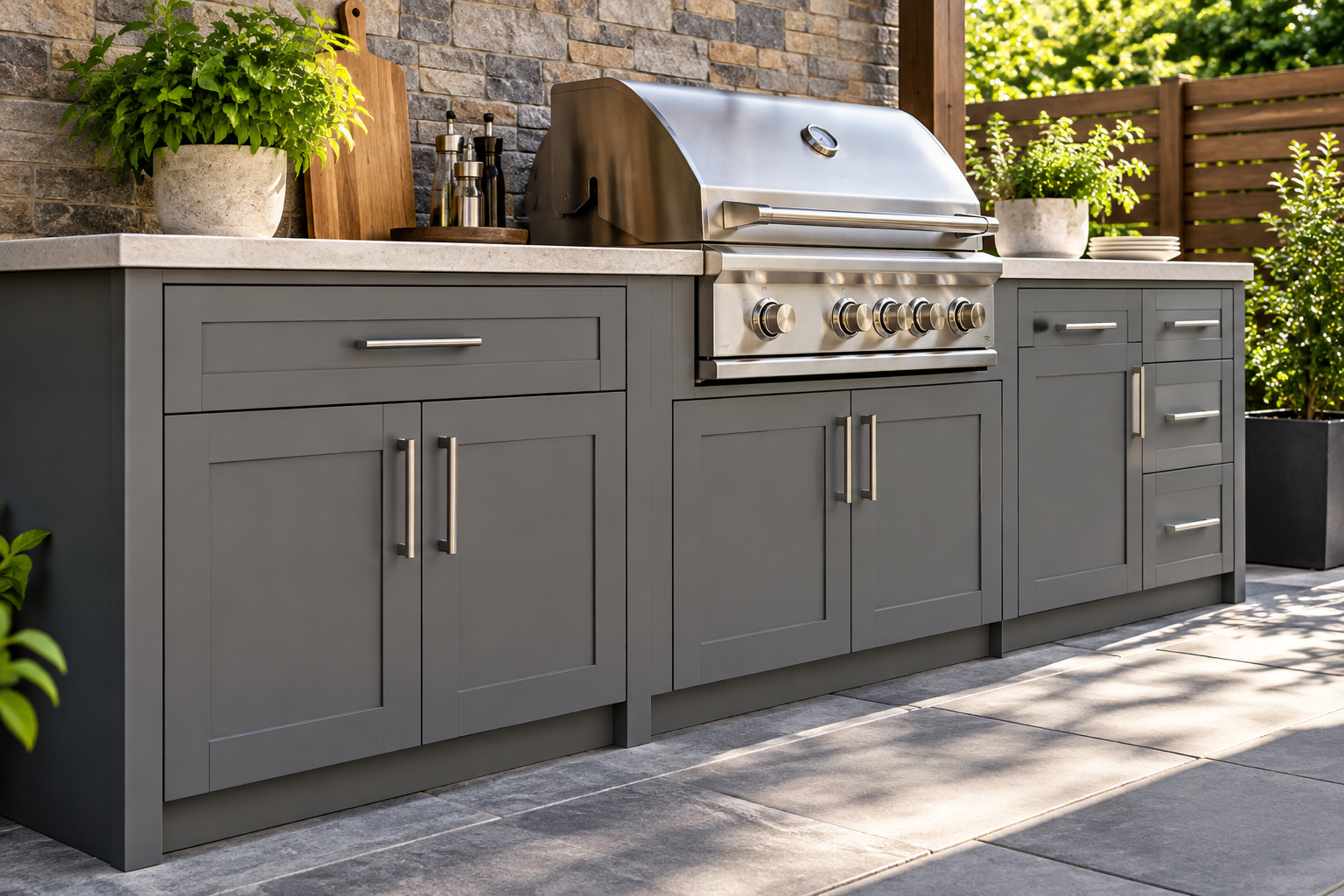
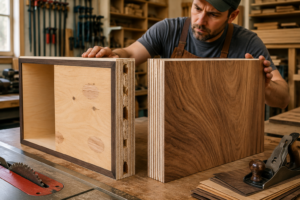
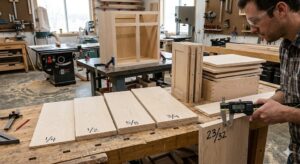
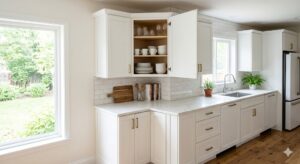
For most painted outdoor cabinets, Exterior-rated MDO (Medium Density Overlay) plywood is the best overall choice. A-C or B-C Exterior plywood is the budget alternative. Build the boxes and doors from 3/4″ panels, then seal every edge, prime, and paint with a top-quality exterior acrylic. This page also covers the grade chart, how bond rating differs from rot resistance, the finish schedule, and the situations where marine plywood, HDPE, or no plywood at all is the better call.
Quick answer
Grade: For most painted cabinets, use Exterior-rated MDO. A-C or B-C Exterior is the budget option. Use marine or HDPE under severe moisture. Exposure 1 panels (CDX, most OSB) are not suitable.
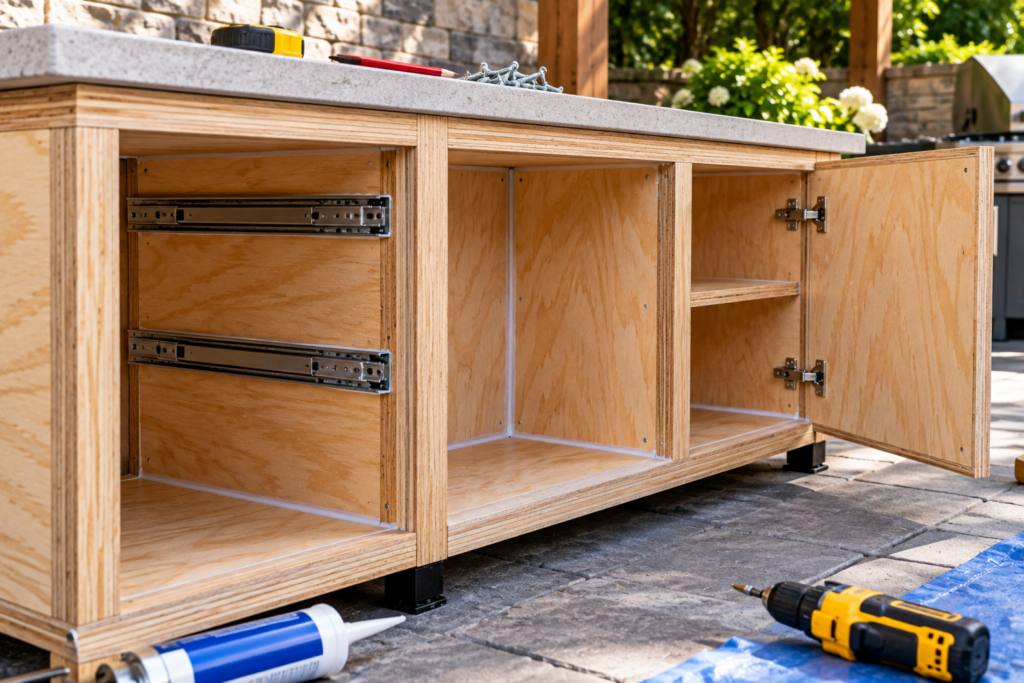
Thickness: 3/4″ for boxes, doors, and shelves. 1/2″ is enough for backs.
Finish: Seal the edges, apply a stain-blocking exterior primer, then two coats of exterior acrylic paint. Avoid clear finishes.
Skip plywood: where cabinets sit in standing water, are in ground contact, or surround a built-in grill without an insulated jacket.
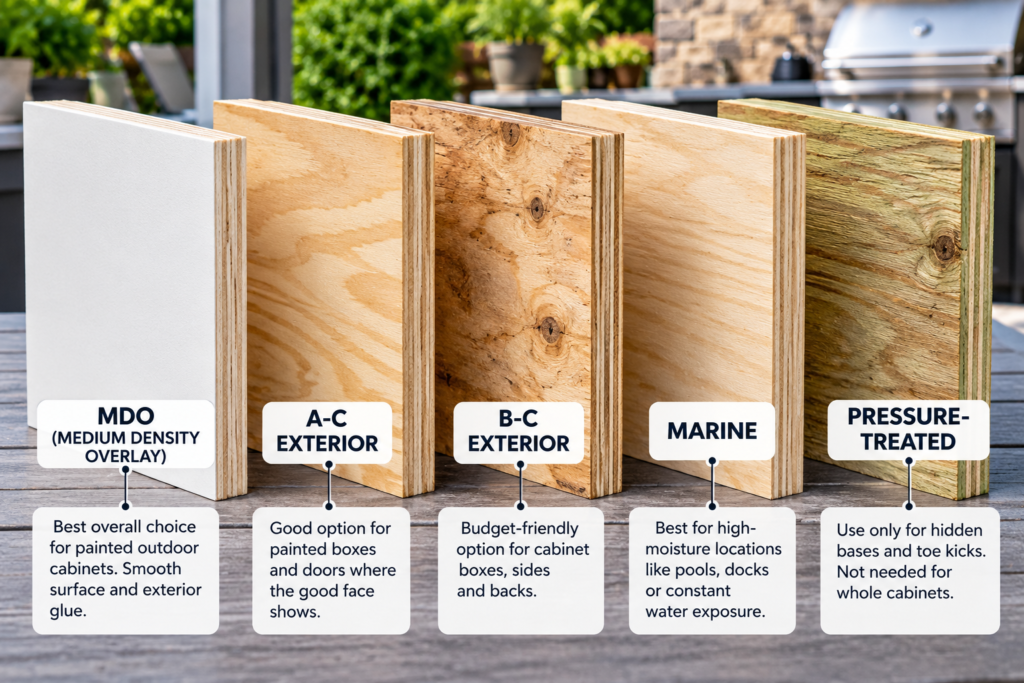
Outdoor Cabinet Plywood Chart: Grade by Situation
Plywood type
Bond classification (PS 1)
Face quality
Best outdoor cabinet use
Price tier
Main limitation
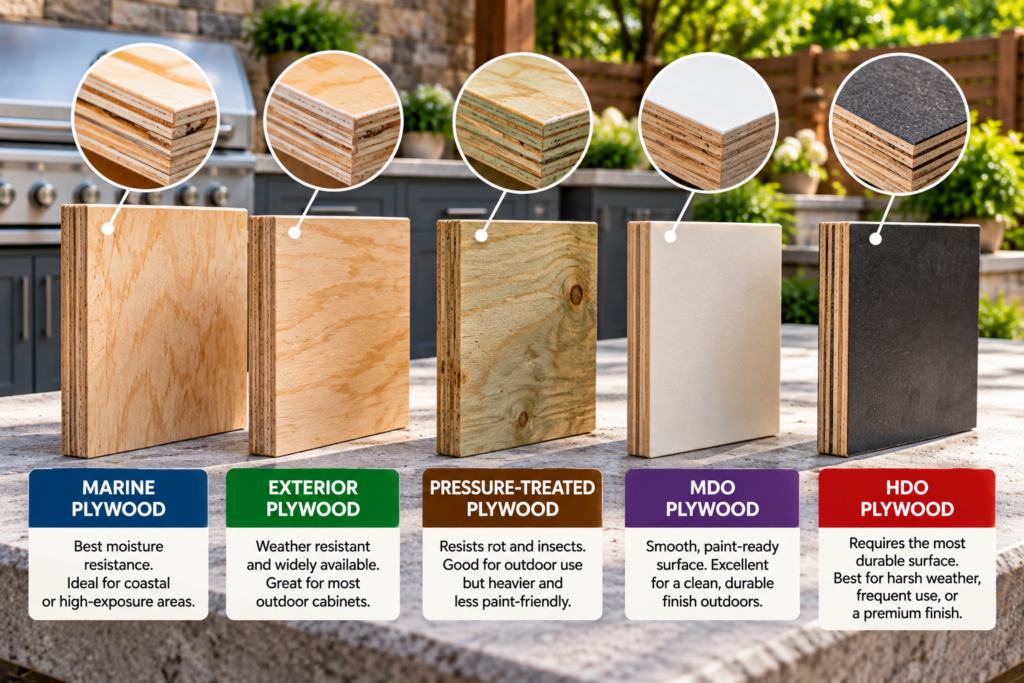
MDO (Medium Density Overlay)
Exterior
Resin-fiber overlay, very smooth
Painted doors, face frames, cabinet boxes
$$
Must be painted. The overlay is not meant to be stained or left bare.
A-C Exterior
Exterior
Sanded A face, C back
Painted boxes and doors where the good face shows
$$
Grain checks through paint over time
B-C Exterior
Exterior
Sanded B face with repairs
Cabinet boxes, sides, and backs
$–$$
Patches can telegraph through paint
Marine (APA or BS 1088)
Exterior
A or B faces, tighter core rules
Cabinets near pools, docks, or constant spray
$$$
Costs more. Not automatically stronger, and not guaranteed void-free.
Pressure-treated plywood
Exterior + preservative
Rough
Hidden bases and toe kicks only
$–$$
Often ships wet and can move as it dries. Needs rated fasteners.
CDX / Exposure 1
Exposure 1
Unsanded C/D
❌ Not for outdoor cabinets
$
Built for construction delays, not permanent weather exposure
Price tiers are relative. Check your local lumberyard for current pricing.
How to Read the Chart: Bond Rating vs. Rot Resistance
These are two separate properties, and mixing them up causes most failed outdoor cabinets.
Bond classification describes how well the glue holds. Under Voluntary Product Standard PS 1-22, Exterior panels are made for repeated wetting and drying or long-term weather exposure. Exposure 1 panels are meant only to survive temporary exposure during construction. APA’s grade guidance also limits veneer quality in Exterior panels to C-grade or better, which is part of why they resist delamination. Our plywood grade stamp guide shows how to confirm the bond classification on the panel before you buy.
Rot resistance is a different property. Exterior glue does not make the wood itself resist decay. An Exterior-rated panel that stays damp will still rot. Decay resistance comes from preservative treatment, rated under AWPA Use Category standards, or from keeping the wood dry with paint, sealed edges, and drainage. The trade-offs are covered in our pressure-treated vs. exterior plywood comparison.
The practical rule for outdoor cabinets: an Exterior bond keeps the panel from falling apart, and the finish keeps it from rotting. You need both.
Thickness
The 3/4″ recommendation comes from cabinetmaking convention, not from a building code. It gives screws enough material to hold hinges and it resists racking. Thinner shelves sag sooner under heavy loads such as propane tanks or bagged charcoal. Add a center support or a front edge band on any shelf wider than about 30″.
💸 Cost Difference: MDO vs. Marine vs. A-C
Marine plywood is usually the priciest option on the chart. For a painted patio cabinet, that extra cost mostly buys a tighter core, not a longer-lasting finish. Paint adheres very well to MDO’s overlay, and many sign shops use MDO outdoors for exactly that reason. Marine earns its price in constant-moisture locations. For a typical covered patio, it is usually overbuying. Our guide to the best plywood for outdoor projects compares these panels across other outdoor builds.
Decision Checklist: Which Panel Should You Buy?
☐ Will the cabinet be painted and mostly sheltered? Use MDO. It is the strongest pick for a paint finish.
☐ Will it get direct rain or sprinkler spray daily? Use MDO or marine, and add a sloped top or an overhang.
☐ Is it next to a pool or on a dock? Use marine, and consider HDPE instead.
☐ Are you on a tight budget and the cabinet is under a roof? Use B-C Exterior.
☐ Will any part touch soil or sit on a wet slab? Use a treated base or adjustable plastic feet. Do not build the whole cabinet from treated plywood.
☐ Is the panel stamp Exposure 1? Put it back on the rack.
Finish Schedule for Outdoor Plywood Cabinets
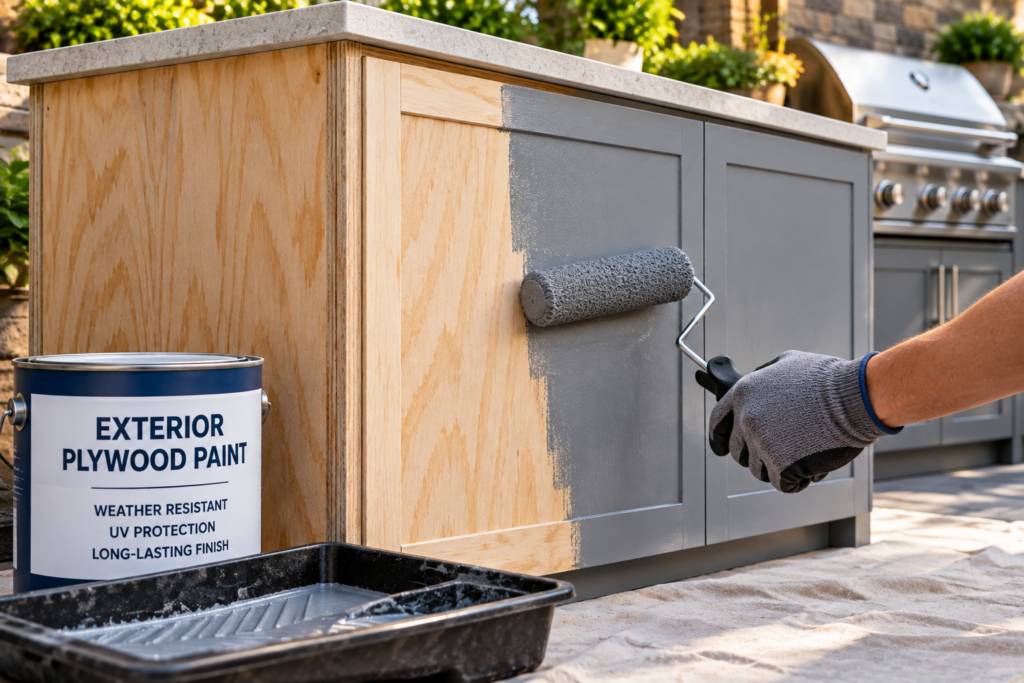
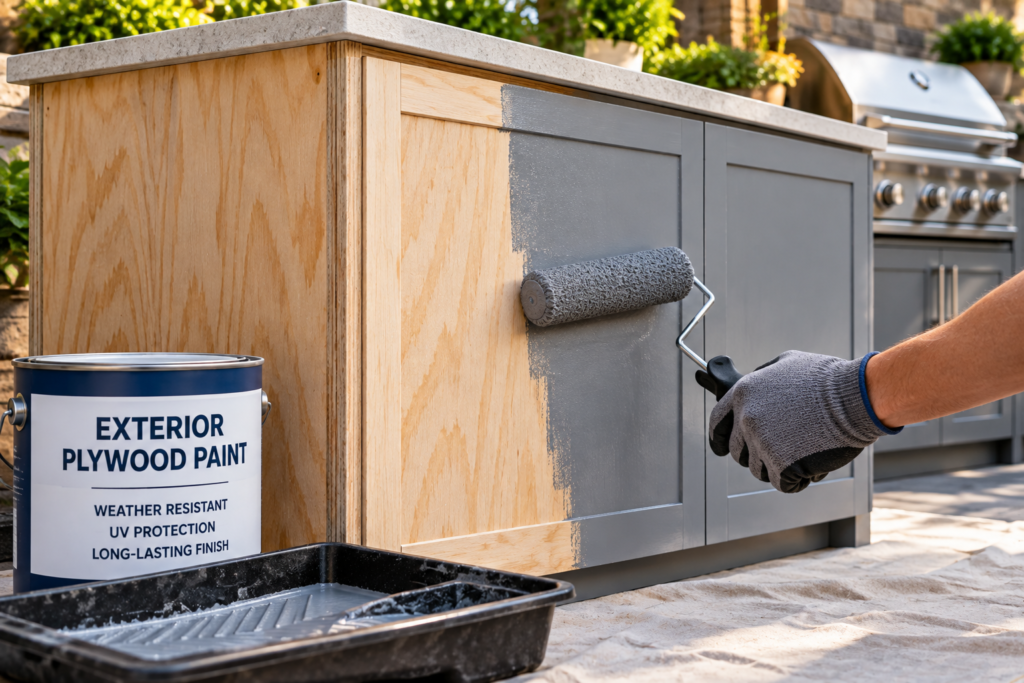
APA’s finishing guidance for exterior plywood recommends paint over a quality primer and advises against clear finishes for weather-exposed panels. Here is the order of operations:
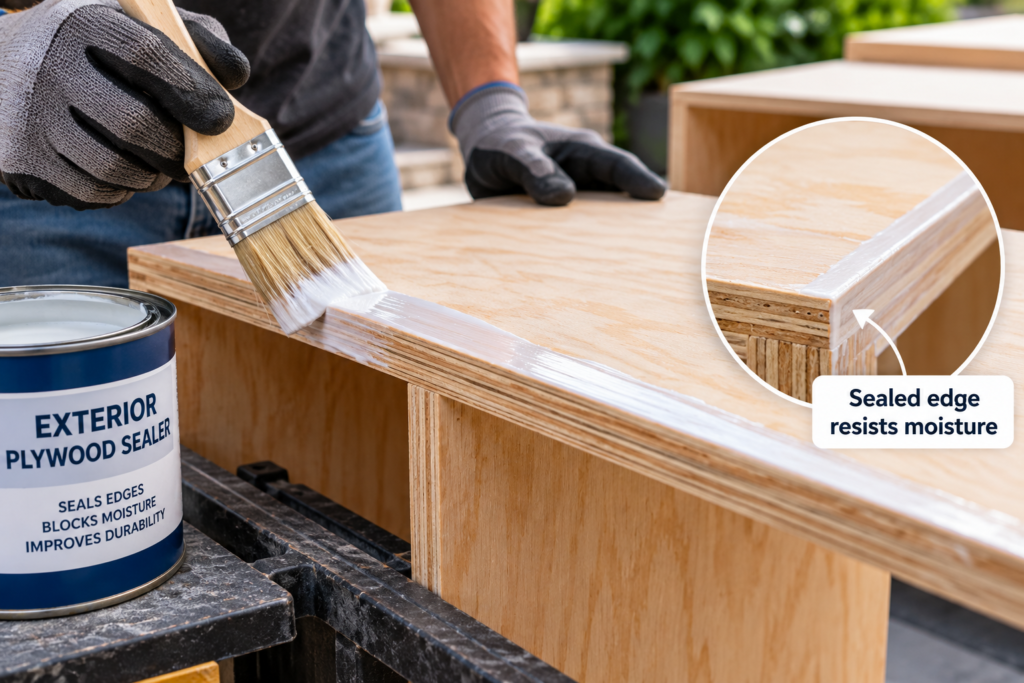
Seal all edges first. End grain is where water gets in. Use a thinned coat of primer, or penetrating epoxy for high-exposure areas.
Apply a stain-blocking exterior primer to every face, including the insides and backs. Unprimed interior faces absorb humidity and can cup the panel.
Apply two coats of 100% acrylic exterior paint. Satin and semi-gloss finishes are easier to wipe clean.
4. Caulk joints on top surfaces with exterior sealant so water can’t pool in seams.
These are material categories rather than specific brand endorsements. Compare labels for exterior rating and compatibility with your primer before you buy.
❌ Using CDX because the stamp says “Exposure 1.” That rating covers construction delays, not permanent weather. The result is delaminated faces within a few seasons of wetting.
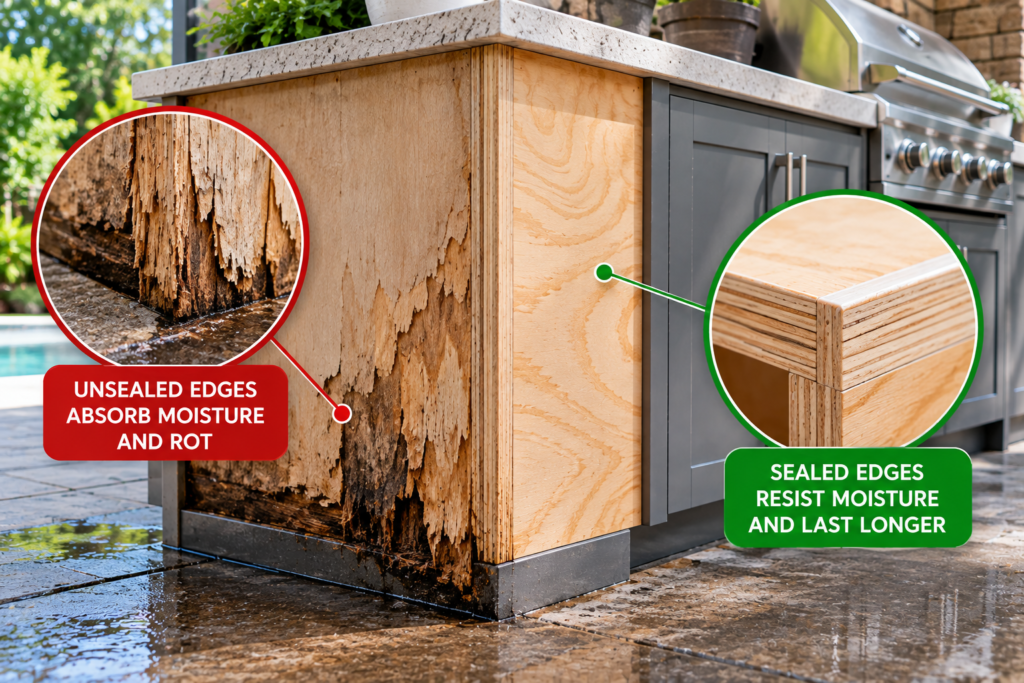
❌ Painting only the visible faces. Unsealed backs and edges wick moisture. The result is swelling, cupping, and paint peeling from the inside out.
❌ Using a clear finish or spar varnish on a weather-exposed panel. APA advises against clear finishes on exterior plywood because they don’t block UV from reaching the wood. The result is grey, checked faces and a failed coating.
❌ Building the whole cabinet from pressure-treated plywood. It often arrives wet and can shift as it dries. The result is racked boxes and doors that won’t close. Treated panels can also be a poor fit near food prep; check the treater’s consumer information sheet.
❌ Setting the box directly on a concrete slab. The bottom edge sits in water after every rain. The result is rot starting at the bottom edge.
❌ Using zinc-plated screws with treated wood. IRC R317.3 requires hot-dipped galvanized, stainless, silicon bronze, or copper fasteners in preservative-treated wood. The result is corroded fasteners and failed joints.
When You Should Not Use Plywood
⚠️ Built-in grill islands. Most grill manufacturers require an insulated jacket when a grill is installed in a combustible enclosure, and plywood is combustible. Read your grill’s installation manual. If it calls for a non-combustible enclosure, use steel studs with cement board, masonry, or stainless steel.
⚠️ Standing water or ground contact. Even marine plywood isn’t treated for decay. Use HDPE marine board or stainless steel.
⚠️ Uncovered locations where you won’t repaint. Plywood outdoors lasts only as long as its paint. If you won’t recoat every few years, HDPE is the lower-maintenance option.
⚠️ Food-prep countertops. Use stone, tile, concrete, or stainless on top of the plywood box.
FAQ
Can I use exterior plywood for outdoor kitchen cabinets? Yes, if it is Exterior-rated and fully primed and painted on every face and edge. Do not use it as the enclosure around a built-in grill unless the grill has an insulated jacket approved by its manufacturer.
Is marine plywood worth it for outdoor cabinets? Usually only near pools, docks, or constant spray. For covered patios, MDO or A-C Exterior with a good paint system performs well and costs less.
What thickness plywood for outdoor cabinets? 3/4″ for boxes, doors, and shelves, and 1/2″ for backs. This is common cabinetmaking practice, not a code requirement.
Can I stain outdoor plywood cabinets instead of painting? APA recommends paint as the most protective finish for exterior plywood, and semi-transparent stains mainly for textured siding panels. On sanded or MDO cabinet panels, paint is the more durable choice.
Is pressure-treated plywood good for outdoor cabinets? Only for hidden bases and toe kicks. It is often wet when purchased, can move as it dries, and requires corrosion-rated fasteners under IRC R317.3.
How long do plywood outdoor cabinets last? That depends mainly on exposure and upkeep. Covered, well-painted cabinets with sealed edges last far longer than uncovered ones. Our exterior plywood guide covers the factors that shorten or extend panel life outdoors.
For most painted outdoor cabinets, build from 3/4″ Exterior-rated MDO, or from A-C or B-C Exterior if budget matters more. Step up to marine plywood or HDPE for constant moisture. Seal every edge, prime every face, and finish with exterior acrylic paint. Remember that the Exterior bond stops delamination, while the paint is what prevents rot.
Sources: Voluntary Product Standard PS 1-22; APA – The Engineered Wood Association grade and finishing guidance; AWPA U1 Use Category System; International Residential Code R317.3; BS 1088.