If you are standing in the lumber aisle staring down the price tags of sheet goods, you are likely hitting the same wall every woodworker and DIYer eventually strikes: The Choice.
You want structural integrity for your project, but you do not want to set your wallet on fire. You see “Cabinet Grade” on one sign and “Furniture Grade” on another. They both feel solid. But one is clearly priced like a luxury item.
Is the jump in price an absolute hustle, or will you end up with a sagging, delaminating heap of structural disappointment if you cheap out? Let’s pull back the curtain on how these sheet goods are actually made, how to dodge a massive structural mistake, and which option will protect you from deep builder’s regret.
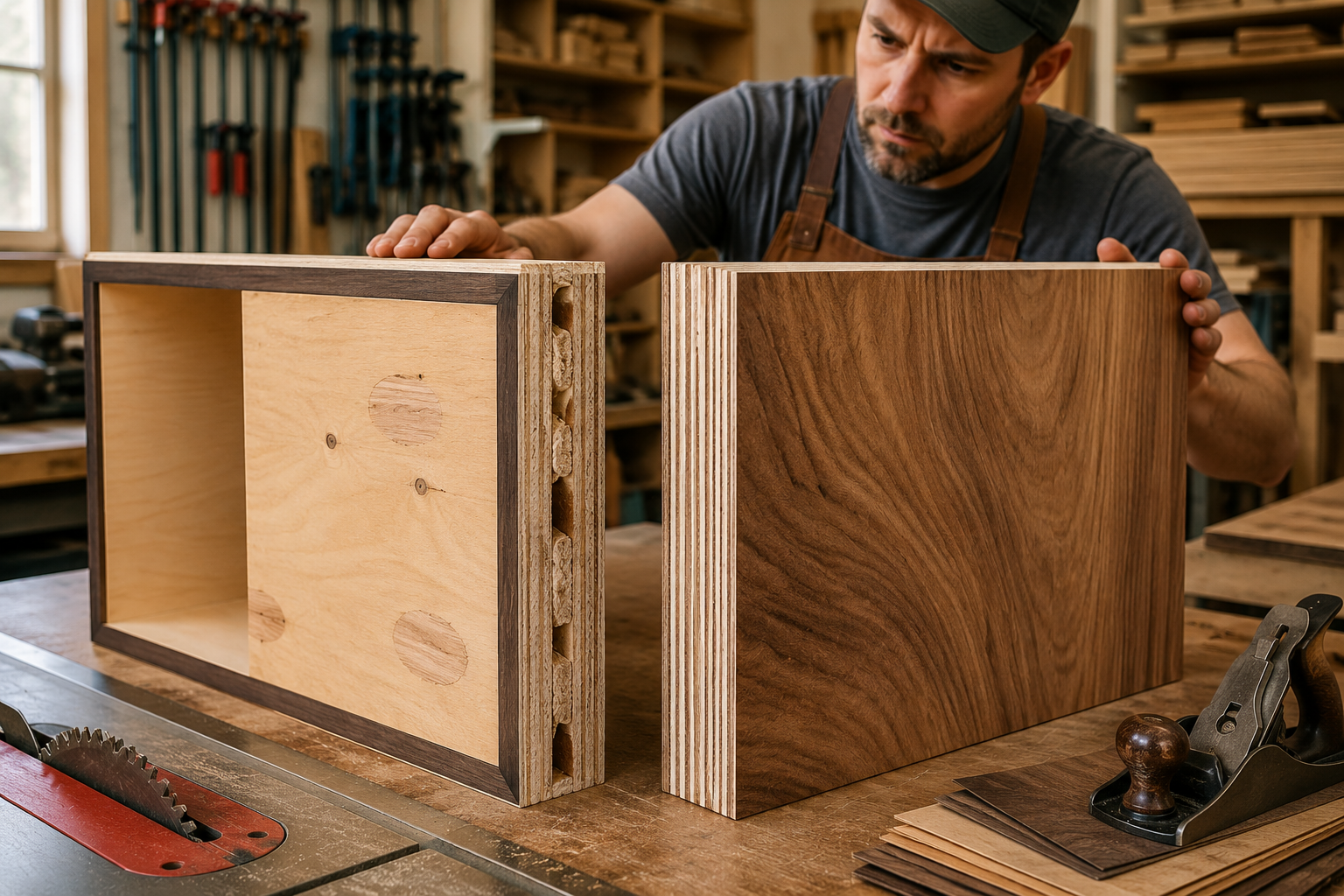
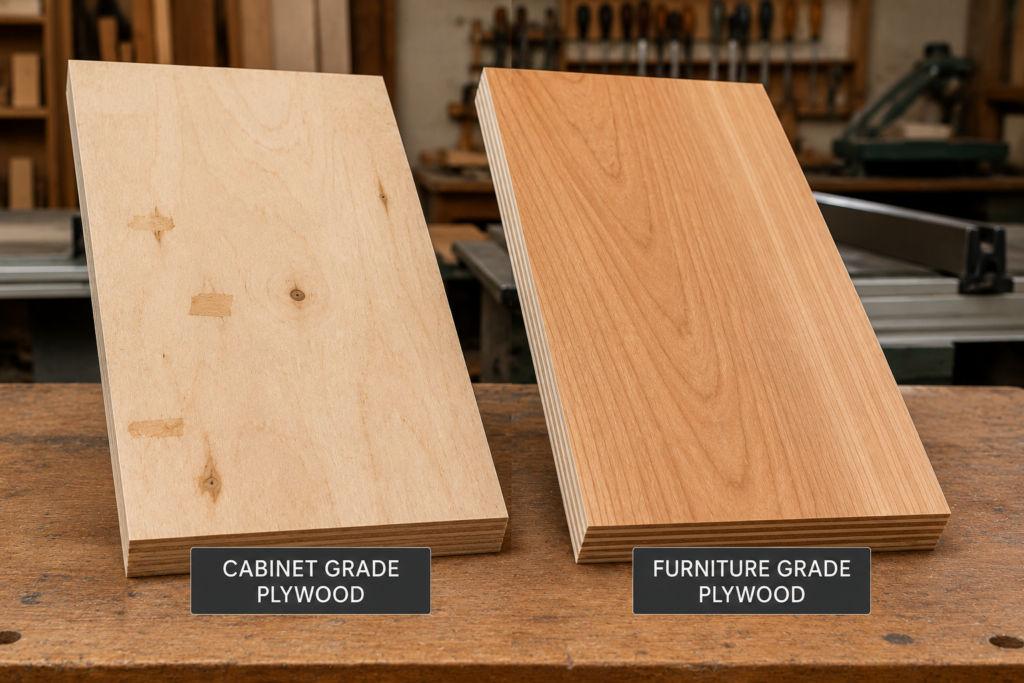
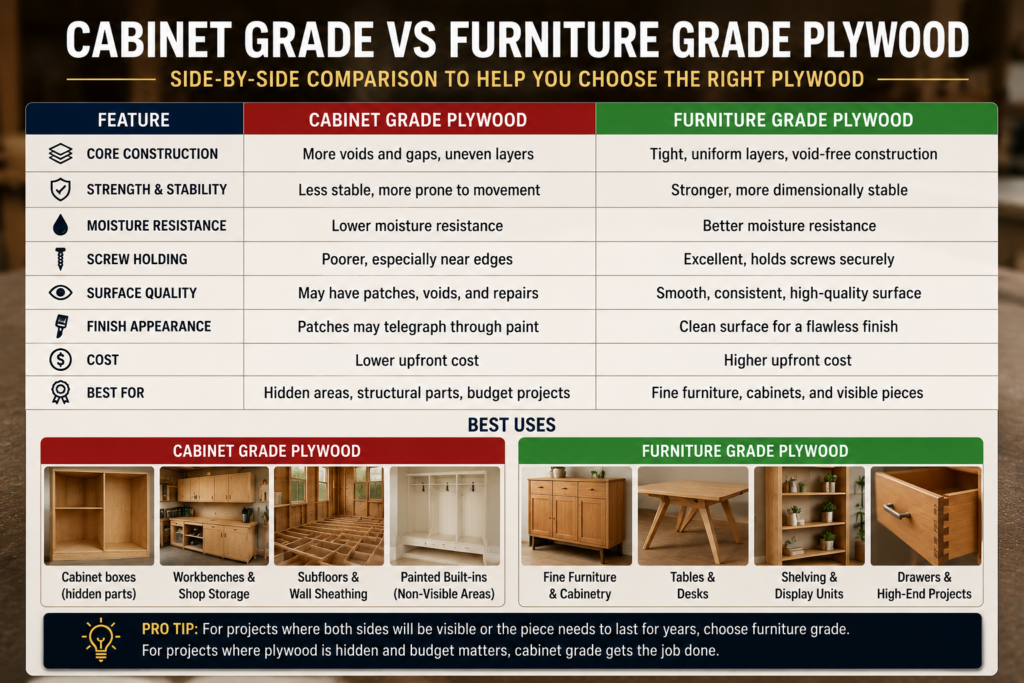
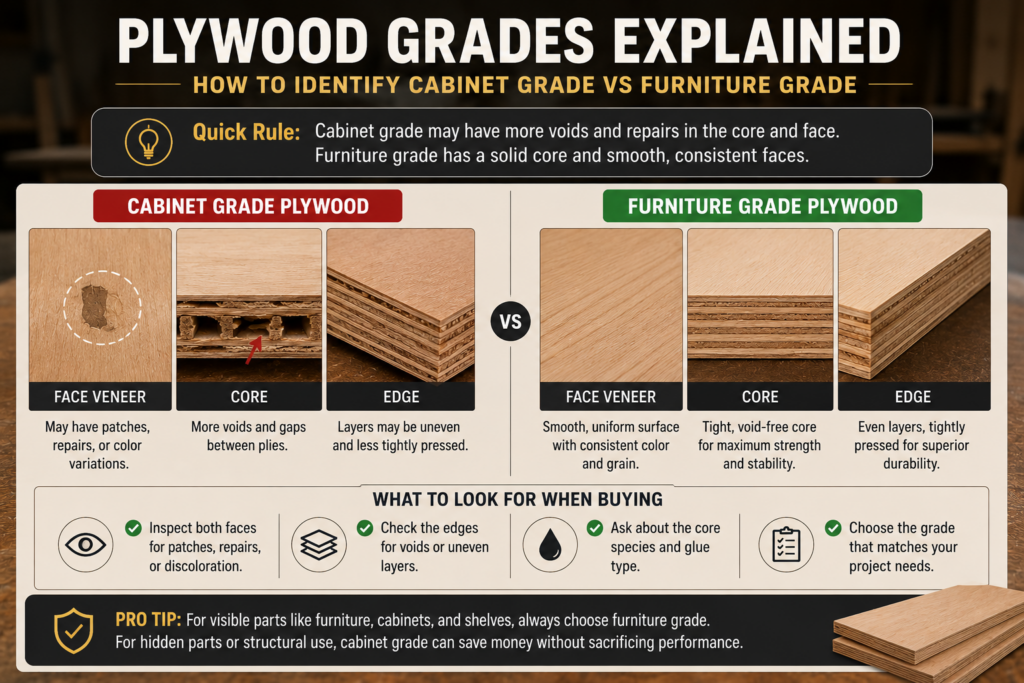
Cabinet-grade plywood is designed primarily for cabinetry, built-ins, and painted projects where raw edges are hidden. Furniture-grade plywood uses higher-quality face veneers and more consistent, lower-void cores, making it better suited for visible fine furniture, exposed stained edges, and fine woodworking projects.
The At-a-Glance Comparison
While commonly used in retail lumberyards and home centers, “cabinet grade” and “furniture grade” are industry marketing and trade terms rather than official, standardized plywood grades. In practice, suppliers use “furniture grade” to describe panels selected for visible, fine-furniture applications rather than a formal grading specification. The actual structural performance and beauty of a sheet depend on official face veneer grades (A through D), core construction types, wood species, and manufacturing standards.
Dining tables, heirloom desks, exposed-edge modern design
Average Cost (per 4×8 sheet)
$55 – $85
$110 – $220+
What Is Cabinet Grade Plywood?
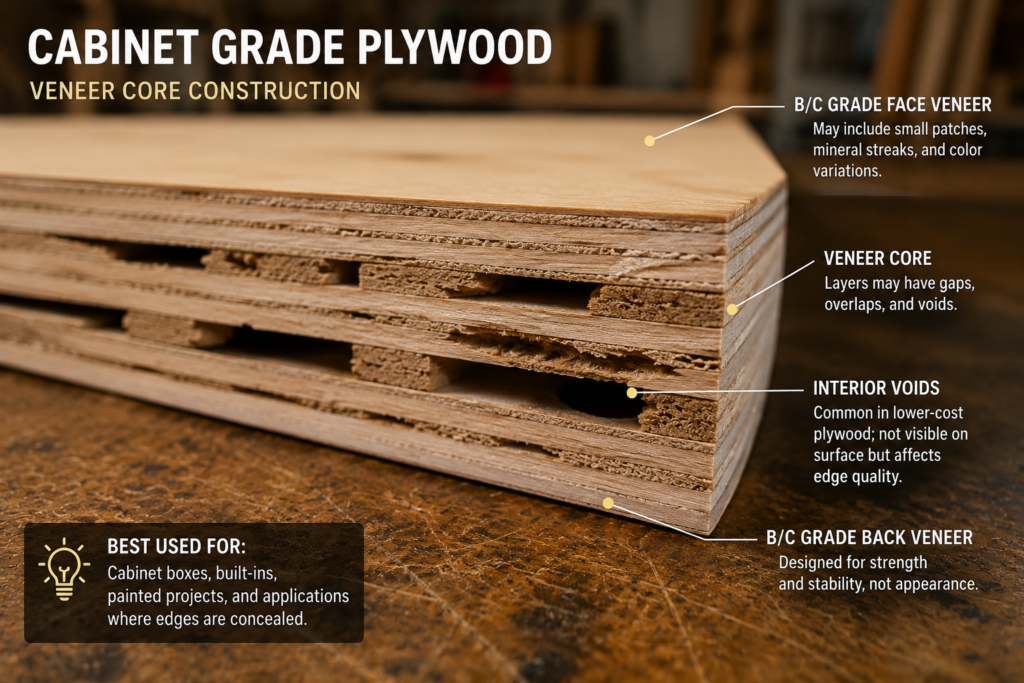
In commercial shops and lumberyards, cabinet-grade plywood refers to utility-grade hardwood panels designed for structural casework. These sheets prioritize strength and cost-efficiency over flawless, natural face grain.
The face veneers are typically made from species such as maple, birch, or red oak, graded at the B or C level. This means you will see natural variations, color shifts, and minor mineral streaks.
The interior cores are engineered to hold mechanical fasteners tightly, but they aren’t manufactured to look pretty from the side. They are designed with the explicit assumption that the sheet’s raw edges will be concealed by solid wood face frames, wood molding, or iron-on edge banding.
What Is Furniture Grade Plywood?
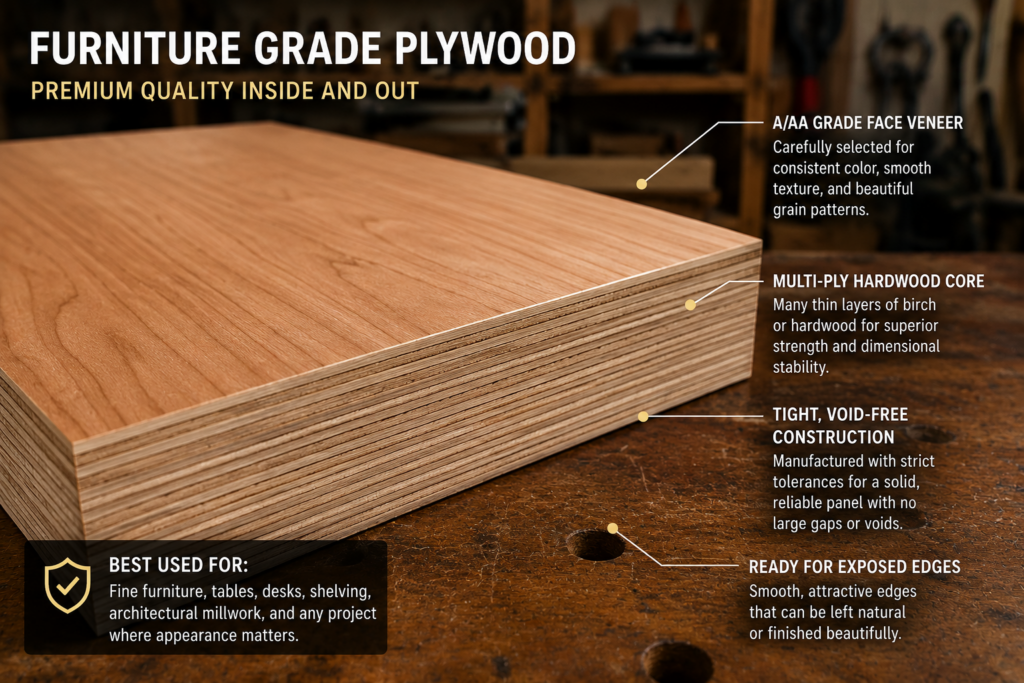
Furniture-grade plywood refers to premium sheet goods selected for visible furniture, architectural millwork, and high-end woodworking applications. These panels are manufactured specifically for architectural woodwork and freestanding furniture, where every surface is subjected to close inspection.
The face veneers typically feature A or AA-grade faces with minimal repairs, consistent color, and carefully selected grain patterns suitable for visible furniture applications.
Furthermore, “furniture grade” extends far beyond popular options like Baltic Birch or ApplePly. Fine furniture makers regularly select premium face veneers such as walnut, cherry, white oak, and mahogany, paired with ultra-stable internal cores. Premium furniture-grade panels are manufactured with far tighter void tolerances and more consistent cores than typical utility-grade sheets.
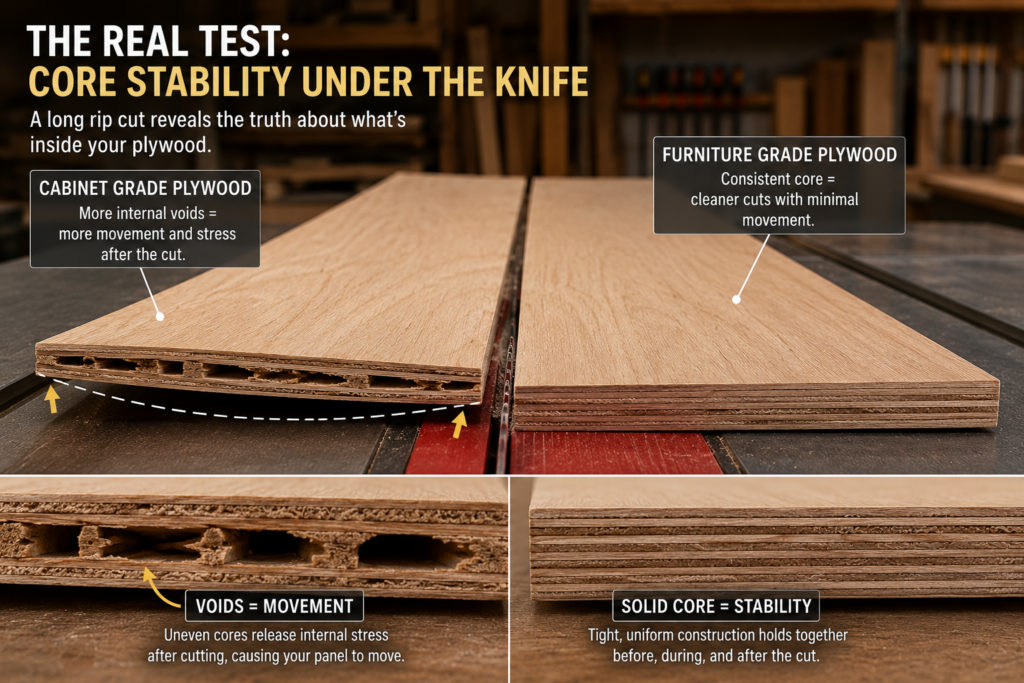
🧪 The Real Test: Core Stability Under the Knife
A few years ago, I undertook a massive built-in shelving project for a client’s library. To keep material costs manageable, I opted for a generic, budget-friendly “cabinet-grade” veneer-core sheet from a local distributor. On the rack, the face looked perfectly clean.
The nightmare began when making long rip cuts on the table saw.
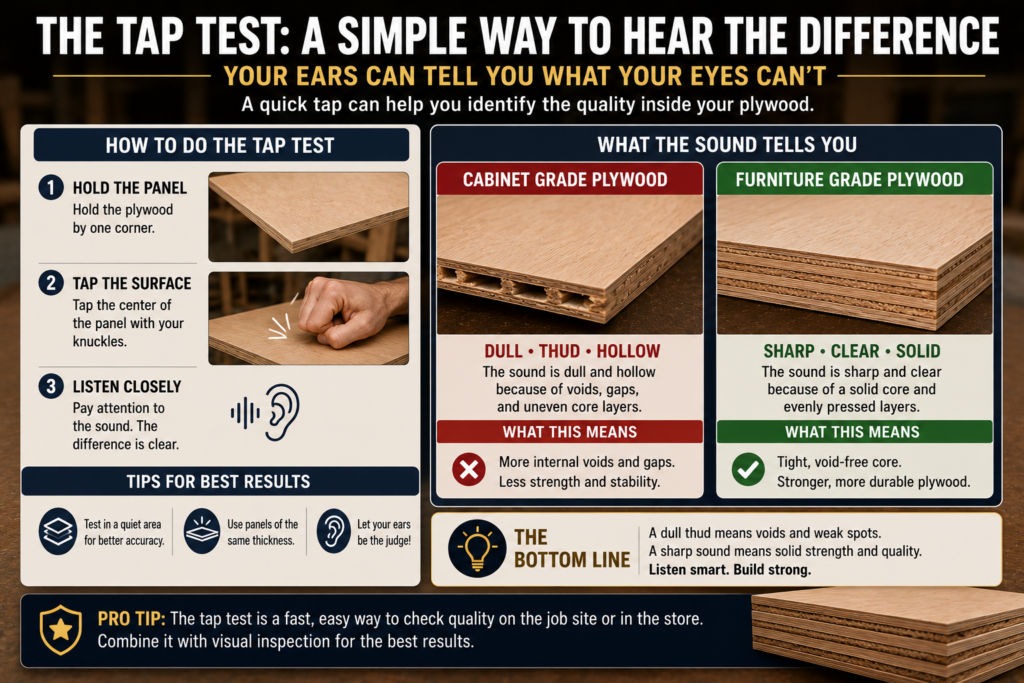
Lower-quality plywood with inconsistent core construction is more likely to move after ripping long sections. Because the internal layers contained hidden overlap gaps and uneven moisture pockets, internal tension was released the second the blade sliced through. The wood curled slightly outward behind the riving knife.
The Lesson: Cabinet-grade veneer core is perfectly fine for square boxes with rigid face frames to lock them into alignment. But if you are cutting long, unsupported spans—like table tops, floating shelves, or large cabinet doors—stable, high-density furniture panels or engineered cores are often worth the extra investment.
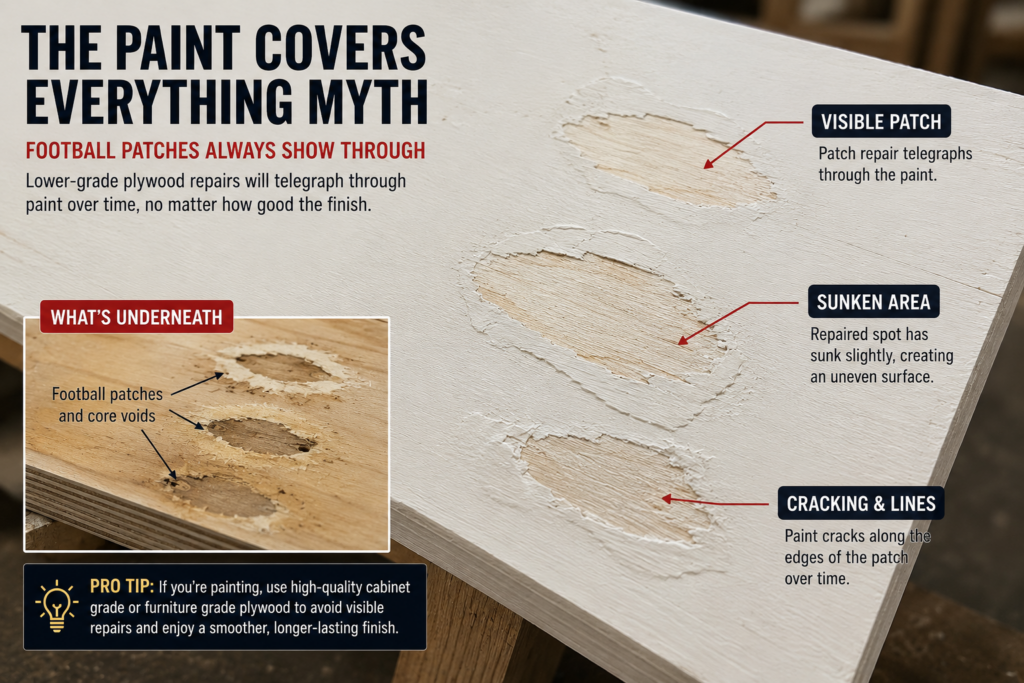
❌ The Mistake: The “Paint Covers Everything” Myth
The single biggest mistake builders make is buying low-grade, rough-sanded plywood, assuming that a thick coat of primer and high-quality paint will mask surface flaws.
It won’t. In fact, paint acts like a spotlight for structural imperfections.
If your plywood face has synthetic fills or “football patches” (football-shaped wood inserts used to replace knots in lower grades), those spots can be challenging. Over time, some patch outlines may become visible beneath painted finishes, particularly on lower-grade sheets exposed to seasonal humidity changes.
If you plan to paint, always look for a tight, close-grained cabinet sheet with an MDF face, or read our guide onselecting paint-grade panels.
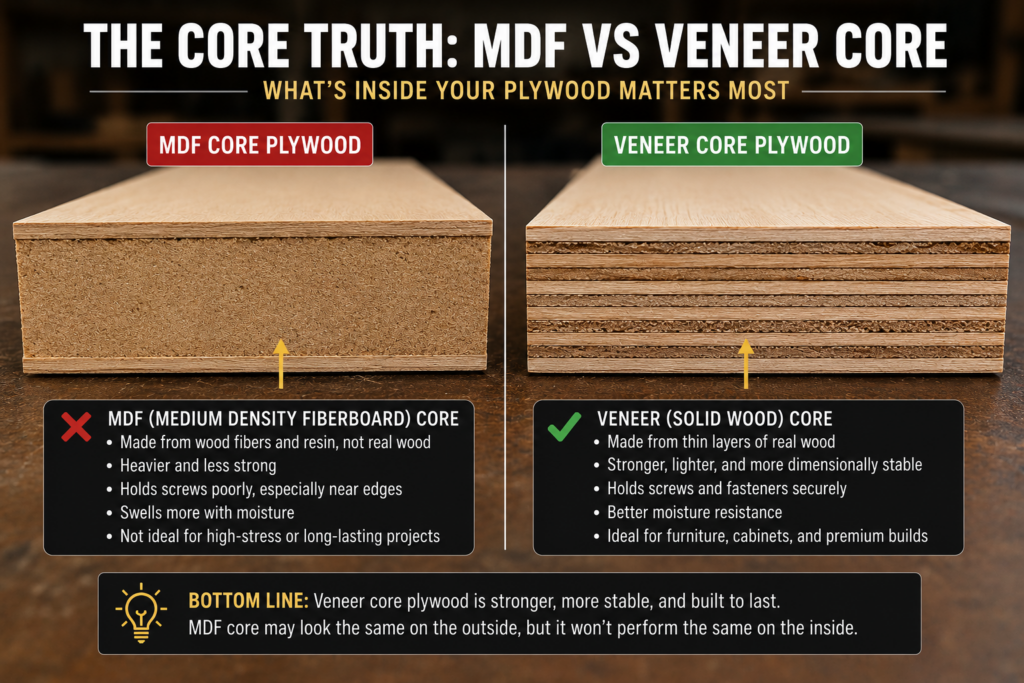
The Core Truth: MDF vs. Veneer Core
A common misconception among beginner woodworkers is that an MDF (Medium-Density Fiberboard) core plywood is inherently cheap or inferior to a traditional veneer core. That is completely untrue.
In fact, high-end furniture makers and cabinet shops actively prefer MDF-core panels for specific applications:
Exceptional Flatness: MDF has no grain pattern and doesn’t suffer from internal structural stress. This makes it the premier choice for flat-slab cabinet doors, large desktops, and intricate CNC routing work.
Flawless Painted Finishes: Because the surface layer sits on a perfectly flat engineered substrate, there is no telegraphing of wood grain through the paint.
Where MDF cores fail is in their weight (they are incredibly heavy) and in their structural span capacity. For long, heavy-duty shelving structures, a high-quality veneer core or calibrated multi-ply hardwood core is still king. To see how these alternative substrates stack up under stress, check out our deep-dive analysis on MDF vs particle board structures.
💸 The Cost Difference: Thinner Plies vs. High Ply Counts
Why does true furniture-grade plywood demand such a steep premium over standard cabinet-grade material? It is often less about the overall number of plies and more about the consistency and thickness of those plies.
It’s a common myth that a higher ply count automatically equals a better board. In reality, a high-quality, domestic 7-ply maple panel will easily outperform a cheap, poorly manufactured 13-ply import full of hidden voids.
Furniture-grade plywood often uses more consistent, thinner plies that improve stability and edge appearance.
Because these layers are uniform and calibrated to precise thicknesses, the wood handles seasonal moisture changes evenly across the entire sheet, significantly reducing the risk of warping, twisting, or cupping.
😬 The Regret: The Exposed Edge Disaster
Nothing screams “amateur DIY project” faster than an exposed plywood edge showing jagged gaps, glue pockets, and internal wood voids.
If you use standard cabinet sheets for a project where the edges are visible, you face hours of tedious labor: filling voids with wood putty, sanding it flush, or applying iron-on edge banding around complex curves.
Choosing a high-density, furniture-grade panel means you can actually sand, round over, and clear-coat the raw edges. The dense, repeating layers become an intentional, modern design feature rather than a flaw you are desperate to hide.
⚠️ Warning: Watch Out for Paper-Thin Veneers
When purchasing standard cabinet-grade wood from big-box home improvement centers, be on high alert for ultra-thin face veneers.
To save money, lower-tier manufacturers slice their face veneers paper-thin (sometimes less than 1/32″). If you get aggressive with your random orbital sander to remove a surface scratch or prep for finish, you will burn right through the wood’s finish layer into the glue line in seconds, permanently ruining the face of the board.
Always source your critical structural sheets from dedicated lumberyards that stock calibrated options. You can read up on our specific recommendations for the best plywood for cabinets to ensure your sheet choice matches your joinery method.
Can You Use Cabinet Grade Plywood for Furniture?
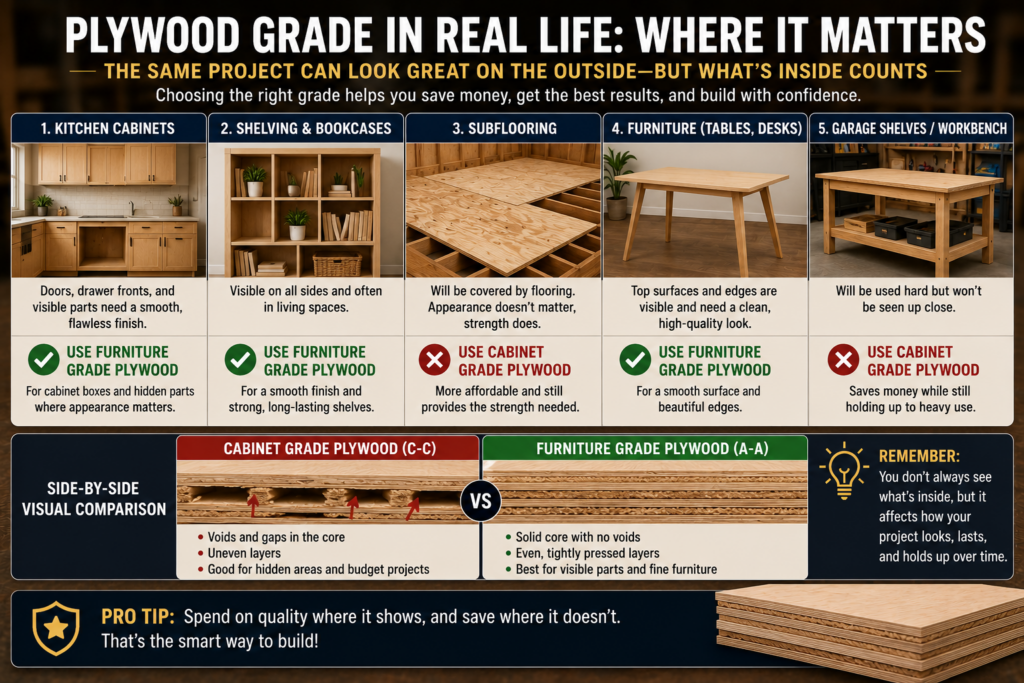
Yes, you can absolutely use cabinet-grade plywood for furniture, provided you plan your design around its limitations.
If your piece features a face-frame construction design where all the raw plywood edges are hidden by solid wood trim, a B-grade cabinet sheet will save you substantial money while offering identical structural integrity.
The secret is to select parts of the sheet with the cleanest grain for highly visible areas (like tabletop surfaces) and to hide sections with mineral streaks or minor filled patches on the undersides or interior partitions of the build.
Is Furniture Grade Plywood Worth the Extra Cost?
If your project features modern aesthetics, clean lines, floating elements, or exposed joinery, furniture-grade plywood is often worth the additional cost for visible surfaces and edges.
The premium price tag doesn’t just buy you a prettier outer face; it buys you peace of mind during processing. It means your tool setup generally produces cleaner cuts with less tear-out on delicate grain, your pocket-hole screws are less likely to strip into hidden internal core voids, and your wide panels will stay exceptionally flat over time. The time you save on fixing manufacturing flaws more than offsets the upfront financial investment.
Quick Reference: Project Selection Guide
To take the guesswork out of your next trip to the lumberyard, use this quick breakdown to match your specific project to the right choice.
For Strong, Hidden Case Construction:Kreg Pocket Hole Jig 720PRO – The industry standard for assembling cabinet boxes and structural furniture carcases quickly and securely.
Edge & Surface Prep
For Hiding Cabinet-Grade Raw Edges:Melamine/Wood Iron-On Edge Banding – The fastest way to elevate budget-friendly cabinet sheets to a professional finish.
For Flawless Edge Profiles:White Side Flush Trim Router Bit – Perfect for trimming solid wood edge banding or template routing multiple plywood parts flush.
For Clean Edge Profiles:FastCap Quad Edge Banding Trimmer – Cuts both sides of your edge banding simultaneously, saving hours of razor-blade scraping.
Sanding & Care
For Smooth Surface Preparation:Mirka Gold Hook & Loop Sanding Discs – Premium abrasive discs that prevent localized heat buildup, helping you avoid burning through thin face veneers.
For Minor Defect Correction:FastCap 2P-10 Veneer Repair Kit – Essential thick CA glue and activator to quickly down-clamp lifting veneers or splintered corners before sanding.
Cabinet Grade vs. Furniture Grade Plywood: FAQ
Can I mix both types of plywood on a single project?
Absolutely. Professional shops do this constantly to maximize profit margins. Use high-end furniture-grade sheets for high-visibility areas like the top panel, exposed outer gables, and drawer fronts. Then, use cheaper cabinet-grade or paint-grade sheets for interior dividers, back panels, and drawer boxes where the wood is hidden from view.
Why does my plywood smell strongly when I cut it?
The smell comes from the adhesives used to bind the layers together. Many premium panels sold in North America meet CARB2 or TSCA Title VI formaldehyde-emission standards, but you should verify the specific manufacturer and product before making assumptions. Some utility cabinet sheets use higher-emission urea-formaldehyde binders that produce a sharper, more pungent odor during cutting.
Does cabinet-grade plywood take stain well?
It depends heavily on the wood species and the face grade. Species like Red Oak and Ash take stain beautifully because of their open pore structure. However, lower-grade Birch or Maple cabinet sheets can easily become blotchy without proper preparation. For birch and maple plywood, a pre-stain conditioner often helps reduce blotching and improve color uniformity.
Luan vs Baltic Birch: Which Plywood Is Better? by Admin October 30, 2025 Hardwood If you’ve ever compared Luan vs Baltic Birch plywood at your local hardware store, you know they look similar but perform very differently once you…
Marine Plywood vs. Pressure-Treated Wood: Which Is Better? by Admin June 20, 2026 DIY Marine plywood is the best choice for boats, transoms, stringers, and other applications exposed to constant moisture because it uses waterproof glue and tightly controlled…