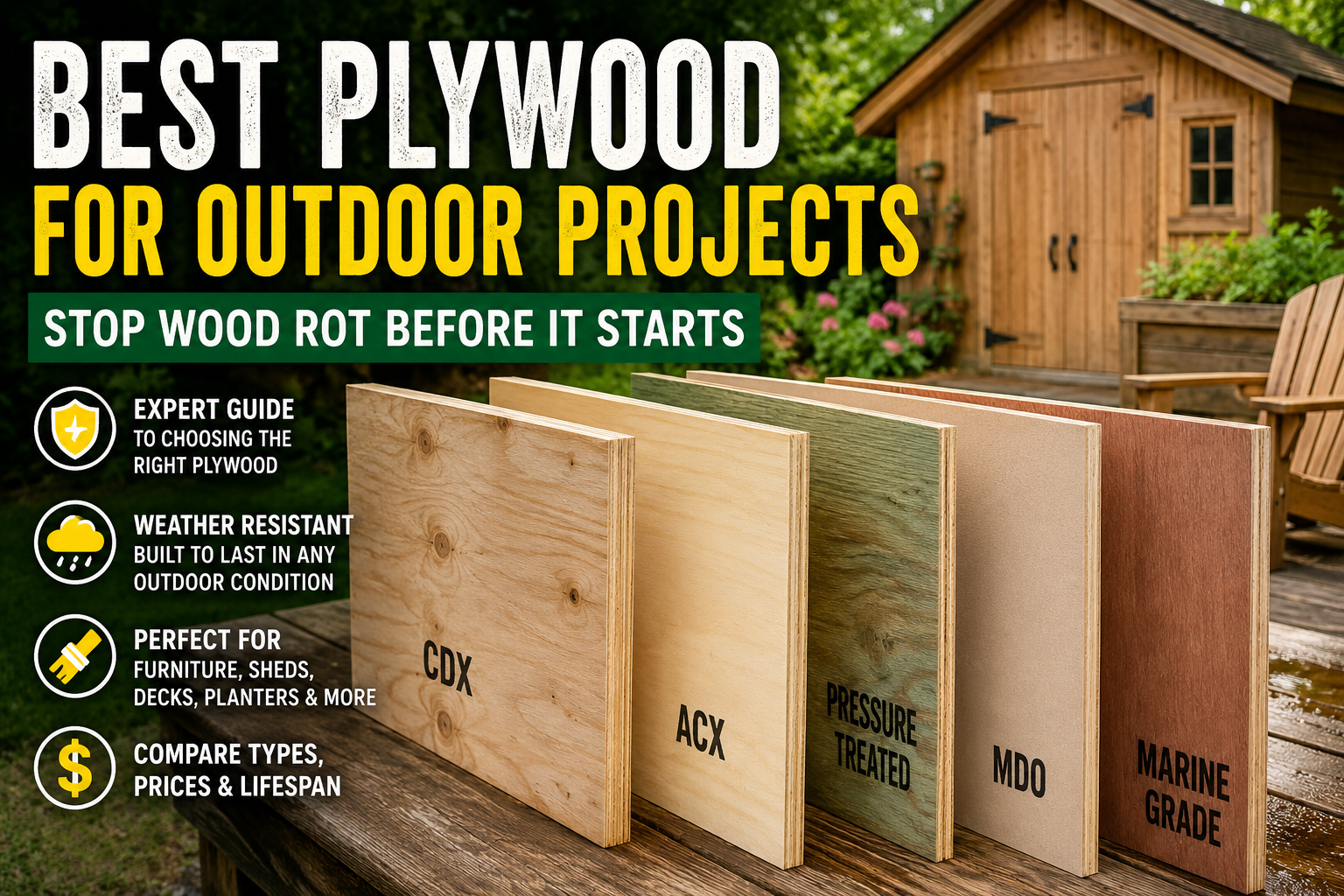
If you are heading down to the local lumberyard or big-box store to pick up sheets for a backyard deck, outdoor patio furniture, or a garden storage shed, making a blind choice can be an expensive mistake. The sign on the rack might say “Exterior,” but that does not automatically mean it can survive a heavy downpour, high summer humidity, or direct contact with wet soil without rotting from the inside out within two seasons.
Choosing the best plywood for outdoor projects requires looking past marketing buzzwords and understanding exactly what goes into the grading stamp, the core construction, and the sheet’s structural limits.
After reviewing plywood specifications from APA-rated manufacturers, marine plywood standards, and common outdoor construction practices, the recommendations below reflect the materials most commonly used by professional builders and experienced DIYers.
Our Top Recommendation
If most DIY homeowners are building outdoor furniture, planter boxes, sheds, or general backyard projects, ACX plywood offers the best balance of durability, appearance, and cost. Marine plywood performs better but costs significantly more, while pressure-treated plywood is better reserved for structural or ground-contact applications.
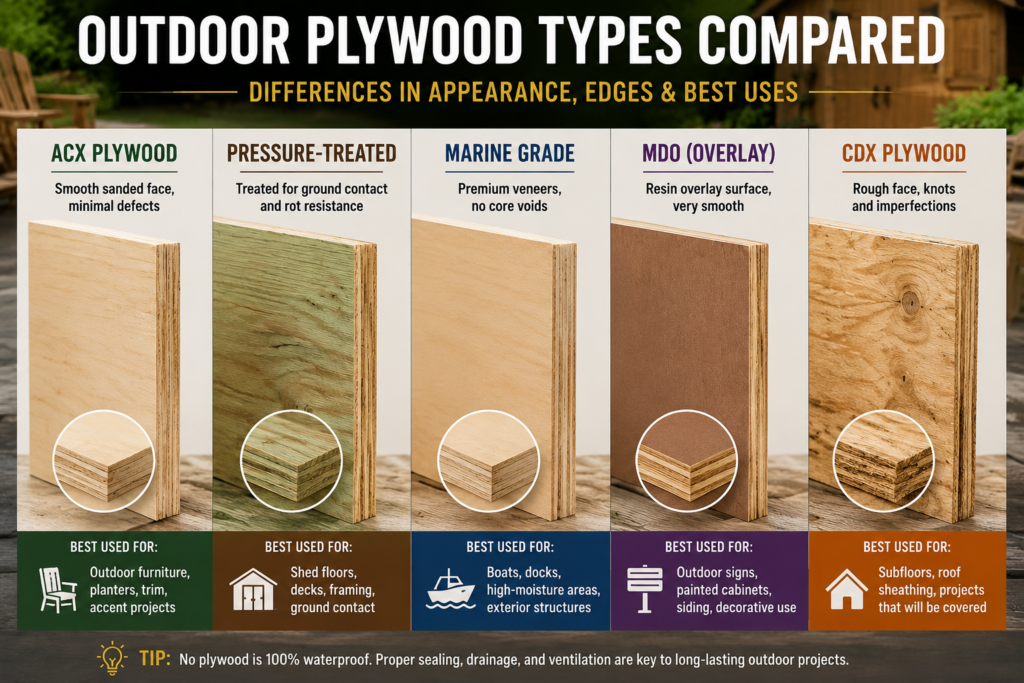
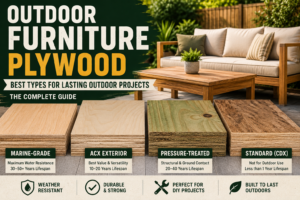
For most homeowners, the best plywood for outdoor projects is ACX plywood. It combines exterior-grade waterproof glue, a smooth paint-ready face, good durability, and a reasonable price. For ground-contact projects, use pressure-treated plywood, while marine plywood is best reserved for boats, docks, and extreme moisture exposure.
For those looking to grab their materials and get straight to building, here is a quick recommendation breakdown of which exterior panel suits specific backyard structures.
Project Type
Best Material Choice
Why It Fits the Project
Outdoor Furniture
ACX Plywood
Pre-sanded smooth face accepts paint and stain beautifully.
Planter Boxes
ACX + food-safe finish
Safe for edible plants; lacks harsh chemical treatment.
Shed Floor
Pressure-Treated Plywood
Extreme defense against rot where wood meets joists.
Shed Walls
T1-11 Siding or ACX
Designed for vertical siding applications and weather shedding.
Docks & Boats
Marine Grade Plywood
Zero core voids prevent internal water collection and rot.
Outdoor Signs
MDO (Medium Density Overlay)
Resin-infused face completely hides wood grain for crisp lines.
Budget Projects
CDX Plywood
Affordable option, but must be completely covered or clad.
The Master Outdoor Plywood Guide
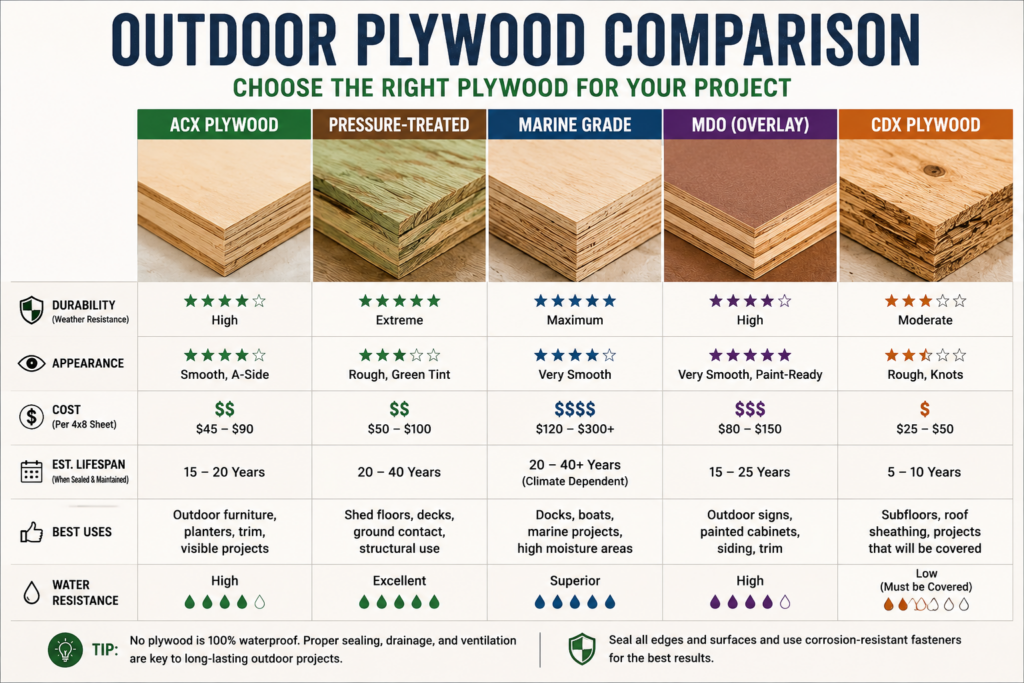
Before spending money on materials, evaluate how your choice will handle the elements. Based on how these products are manufactured and how they typically perform in outdoor applications, CDX typically shows the fastest deterioration when left in direct contact with wet soil, while marine plywood generally provides the best long-term resistance to delamination (layer separation).
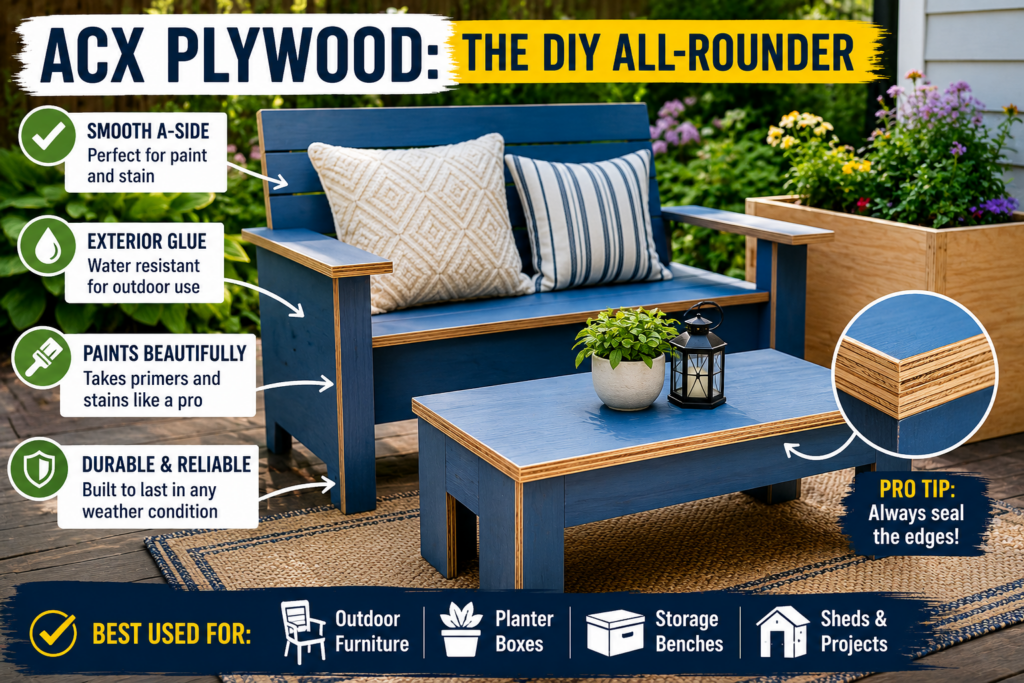
If your project is visible—like an outdoor dining table, a custom storage bench, or Adirondack chairs—ACX is an ideal sweet spot. The letters indicate the quality of the veneers used. The “A” means the front face is sanded ultra-smooth and is completely free of open knot holes or splits. The “C” means the back face has minor cosmetic flaws, patch plugs, and small, tight knots, which you can easily hide on the interior or underside of your build. The “X” indicates it uses waterproof exterior-grade adhesive.
Why it works: Because the front face is pre-sanded and clean, it takes outdoor paints, primers, and exterior wood stains flawlessly without requiring hours of heavy machine sanding. Popular examples include exterior-rated ACX panels available from major home improvement stores or regional lumberyards.
The Mistake to Avoid: Never leave the factory-cut edges raw. Water travels through the end grain of plywood like water through a pack of drinking straws. If you leave the edges unsealed, capillary action will draw moisture deep into the panel, rendering the high-quality face veneer useless.
2. Pressure-Treated Plywood: Built for Ground Contact
During the manufacturing process, these softwood sheets (usually Southern Yellow Pine) are loaded into a massive cylinder that forces liquid chemical preservatives deep into the wood cells under intense pressure. This chemical barrier prevents fungal rot, mold, termites, and wood-boring bugs from consuming the organic fibers.
Why it works: If your plywood needs to touch dirt, concrete, or structural framing near the ground—such as the floor of a garden tool shed or the underside of a deck—pressure-treated sheets are your only viable option.
The Big Regret: Do not use pressure-treated plywood for dining surfaces, cutting boards, or vegetable planter boxes without first verifying the type of chemical treatment. Modern copper-based treatments, such as copper azole (CA) or micronized copper azole (MCA), are standard, but they can still leach into soil or food. Furthermore, treated plywood is sold soaking wet from the factory. If you cut it and paint it immediately, you will regret it when the wood warps, twists, cups, and splits as it dries over the next month, completely ruining your hard work.
3. Marine-Grade Plywood: The Indestructible Option
Many novice builders assume marine plywood is packed with waterproof chemicals. It isn’t. Instead, marine-grade sheets (typically Okoume, Meranti, or premium Douglas Fir) are built to flawless physical and structural standards under strict guidelines such as BS 1088.
Why it works: Every single layer consists of premium, knot-free hardwood veneers. There are absolutely zero internal gaps, core voids, or air pockets. If water manages to get past your exterior finish, it cannot find an internal pocket to pool inside, which prevents the internal rot that destroys lesser grades of wood.
The Cost Difference: Marine ply can easily cost three to four times as much as a standard sheet of ACX. Unless you are building a boat hull or a floating dock, or living in a coastal swamp with extreme humidity, saving money by using a well-sealed ACX sheet is usually the smarter, more economical move.
4. MDO (Medium Density Overlay): The Painter’s Dream
MDO features a high-quality exterior plywood core topped with a weather-resistant, resin-impregnated fiber overlay pressed onto the face under high heat.
Why it works: The paper-like resin face completely eliminates telegraphing wood grain, knots, and checking. It is designed specifically to accept paint beautifully and resist moisture penetration for decades. It is the exact material used for highway road signs and commercial outdoor billboards.
The Cost Difference: MDO is more expensive than ACX and pressure-treated sheets, but it saves you massive amounts of time and money on grain fillers, heavy priming, and sanding.
Essential Prep & Fabrication Techniques
No matter which exterior sheet you choose, your outdoor project will fail prematurely without proper edge sealing, water management, and structural fastening.
To maximize your material investment and ensure your project lasts for decades, check out resources on properly sealing plywood edges for outdoor use to prevent layer separation.
Before assembling your project, treat every single cut edge as a vulnerability. Coat the edges with a dedicated exterior wood sealer, a high-quality exterior primer, or a thin layer of clear marine epoxy. This encapsulates the wood fibers and blocks water from wicking inward.
The Fastener Failure
Never use standard interior drywall screws or zinc-plated wood screws on outdoor projects. The corrosive chemicals found in pressure-treated wood, as well as the natural tannic acids present in hardwoods, will eat right through standard metals. Always opt for stainless steel screws or high-quality ceramic-coated exterior fasteners. If you use the wrong screws, they will snap under structural stress, leaving ugly black rust streak marks running down the face of your beautifully painted project.
For structural projects like shed roofs, workshop subflooring, or detached garage walls where cosmetics don’t matter, look into how CDX plywood vs OSB sheets hold up under long-term structural loads.
Buying Guide: Decoding the Lumberyard Stamp
When you walk into a lumberyard, don’t just rely on the color-coded paint on the edge of the sheet. Look for the official APA (Engineered Wood Association) stamp printed directly on the back of the panel. This stamp is the legal certification of the panel’s construction.
Exposure Rating: Look for the word “EXTERIOR.” This means the panel is manufactured with waterproof exterior-grade adhesive and is designed for applications where the wood will be permanently exposed to weather and moisture. If it says “EXPOSURE 1,” it means it uses waterproof exterior-grade adhesive, but the inner veneers are not designed to handle permanent exposure without a protective cladding or roofing material over them.
Veneer Grade: The two letters (like A-C, C-D, or B-C) indicate the quality of the face and back plies. For outdoor projects where appearance matters, never go below a “B” grade on the visible side. To learn more, check out guides on understanding plywood grades and certifications.
Span Rating: If you are building a structure like a shed floor or roof deck, look for numbers like 32/16. This indicates the maximum allowable support spacing (in inches) for roofing (the first number) or subflooring (the second number).
What About Non-Toxic Outdoor Finishes?
If your outdoor project happens to be a vegetable planter box or a backyard garden bed, the finishing step requires care. Standard exterior paints are packed with chemical biocides to stop mold. For these specific builds, opt for plant-safe, non-toxic barriers such as Pure Tung Oil or organic milk paint, sealed with hemp oil, to keep your soil pure.
Frequently Asked Questions
Can Exterior Plywood Get Wet?
Yes, exterior plywood is manufactured with a waterproof, exterior-grade adhesive (typically phenolic resin) that will not break down when exposed to water. However, while the adhesive itself is waterproof, the raw wood plies can still absorb water, swell, and eventually rot if left unsealed. Permanent moisture exposure requires proper sealing, painting, or chemical pressure treatment.
Is Marine Plywood Waterproof?
The adhesive holding marine plywood together is a waterproof exterior-grade adhesive, but the wood fibers themselves are not inherently waterproof. Marine plywood is unique because it is made from high-quality hardwood veneers with absolutely no internal gaps or voids. This physical perfection prevents water from pooling within the core, making it highly rot-resistant when properly coated with a marine sealant or epoxy.
Can Pressure-Treated Plywood Be Painted?
Yes, but you cannot paint it right away. Pressure-treated plywood is saturated with liquid chemicals during manufacturing and is usually sold soaking wet. If you paint it immediately, the escaping moisture will cause the paint layer to bubble, crack, and peel. You must let the wood dry completely—often taking anywhere from several weeks to a month—until water no longer beads on the surface before applying an exterior primer and paint.
What Is the Cheapest Outdoor Plywood?
CDX plywood is the most affordable plywood rated for exterior use. The “X” indicates it uses waterproof exterior-grade adhesive. However, because the face veneers are rough (C and D grades) and contain open knot holes, they are intended for use as a structural utility subfloor or sheathing layer that remains completely hidden behind siding, roofing shingle underlayment, or protective trim.
Standard OSB (Oriented Strand Board) should not be left exposed to the weather. While some advanced, premium subfloor OSB panels feature resin systems that resist moisture during construction delays, standard commodity OSB edges expand rapidly when exposed to water. For permanent outdoor exposure or visible projects, exterior-rated plywood options like ACX or Marine grade are far superior choices.
Conclusion
Choosing the best plywood for outdoor projects comes down to matching the material to the environment. For most homeowners, ACX plywood provides the best balance of appearance, durability, and cost. Pressure-treated plywood remains the top choice for structural and ground-contact applications, while marine plywood is worth the premium only when maximum moisture resistance is required. Regardless of the panel you choose, proper edge sealing, drainage, and corrosion-resistant fasteners will have a greater impact on longevity than the plywood grade alone.
Outdoor Furniture Plywood: Best Types Guide by Admin June 9, 2026 DIY If you are planning to build a sleek patio sofa, a sturdy Adirondack chair, or a backyard dining table, your choice of sheet goods will…