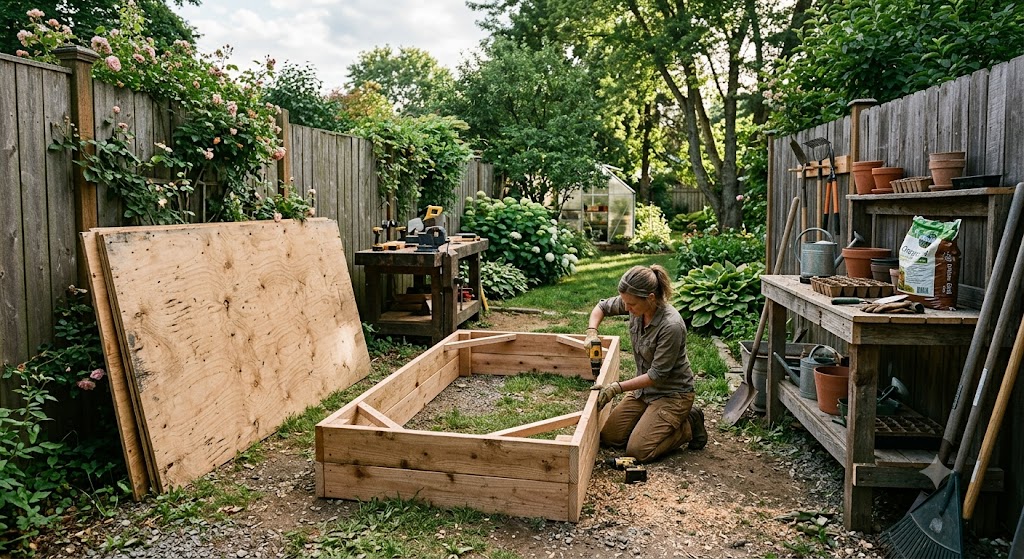
I’ve rebuilt enough outdoor projects over the years to learn one painful lesson the hard way: cheap plywood rarely survives outside.
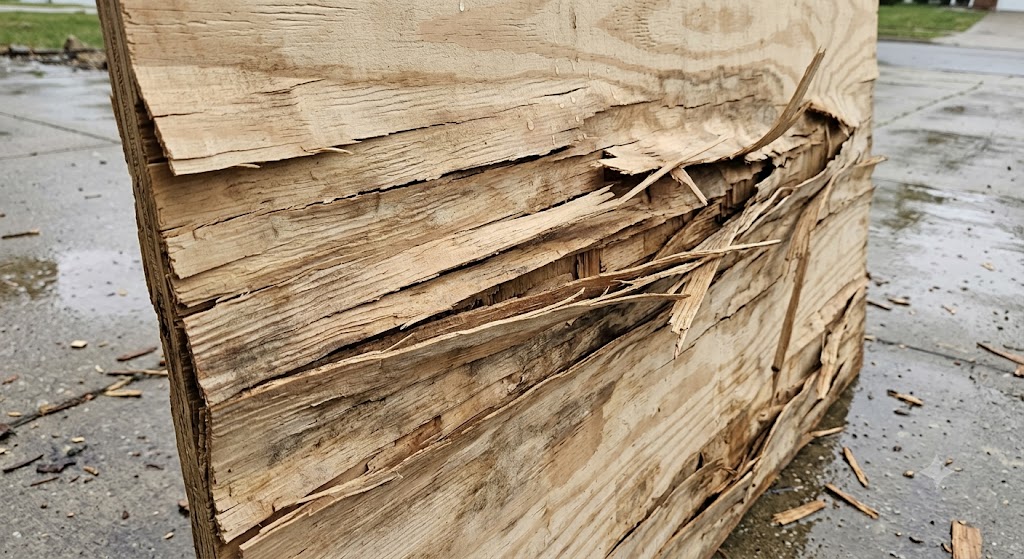
There is nothing worse than spending an entire weekend building a beautiful potting bench or tool organizer, only to watch the edges peel, split, and warp into a bowl shape after a single season of rain and morning dew.
If you are standing in the lumber aisle trying to figure out which sheet of wood will actually survive your backyard elements, this guide is for you. We are going to look at exactly what works, what rots, how much you should expect to spend, and how to prep your wood so your hard work lasts for decades.
The Quick Answer:
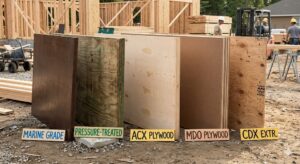
For most everyday garden builds, your best bet is exterior-grade ACX plywood because it has a smooth, paintable face and uses completely waterproof glue. Use marine-grade plywood if your project is high-end and completely uncovered, and save pressure-treated plywood for the structural framing and skids that sit directly on wet ground or gravel.
Quick Reference: Best Plywood for Specific Garden Projects
Project
Best Plywood Choice
Minimum Recommended Thickness
Why This Specific Sheet?
Raised Beds
Marine-Grade (or Untreated ACX with a safe plastic liner)
3/4-inch
Safe for soil, strong enough to hold back heavy, wet dirt without bowing out.
Potting Benches
ACX Exterior
3/4-inch (Top), 1/2-inch (Shelves)
Gives you a perfectly smooth, beautiful work surface that takes paint or stain easily.
Shed Walls
ACX Exterior
1/2-inch
Holds up beautifully against driving rain and provides a smooth surface for painting or siding.
Shed Roof
CDX Exterior
5/8-inch
Saves you cash under the shingles while providing great structural support.
Pergolas
Marine-Grade
3/4-inch
Open frameworks get hit by sun and rain from every angle. You need zero core voids here.
Gazebos
ACX Exterior (Ceiling), CDX (Roof)
1/2-inch
Creates a gorgeous, knot-free view when you look up from the inside.
Outdoor Cabinets
Exterior Birch or ACX Exterior
1/2-inch (Boxes), 3/4-inch (Doors)
Holds crisp edges and tight joints for doors and hinges without warping.
Compost Bins
Pressure-Treated
3/4-inch
Handles constant heat, high moisture, and active wood-eating microbes.
Plywood for Garden Structures: At-a-Glance Comparison
Plywood Type
Best For
Moisture Resistance
Price Range (per 4×8 sheet)
Rot & Bug Resistance
Risk of Layers Peeling
Lifespan (When Sealed)
Marine-Grade
Pergolas, clear-coated furniture, high-end builds
🌟🌟🌟🌟🌟 (Excellent)
$90 – $140
High
Extremely Low
20+ Years
ACX Exterior
Painted shed walls, siding, potting benches
🌟🌟🌟🌟 (High)
$45 – $75
Moderate
Low
10–15 Years
CDX Exterior
Shed roof sheathing, hidden subfloors
🌟🌟🌟 (Moderate)
$30 – $50
Low
Moderate
10 Years
Pressure-Treated
Planter bases, framing joists, ground skids
🌟🌟🌟🌟🌟 (Rot Proof)
$55 – $85
Outstanding
Moderate
20+ Years
Exterior Birch
Shop organizers, interlocking joints
🌟🌟🌟 (Moderate)
$65 – $100
Low
Moderate
7–12 Years
Standard OSB
Worksite hoarding, temporary covers
🌟 (Poor)
$15 – $30
None
Very High
2–5 Years
1. Why Standard Plywood Falls Apart Outside
Interior plywood is held together by cheap glue that literally dissolves when it gets wet. Once rain or humidity gets inside the wood, the plies—the thin layers of wood pressed together to make the sheet—start to unglue and peel apart. This is called delamination, and once it starts, your project is as good as dead.
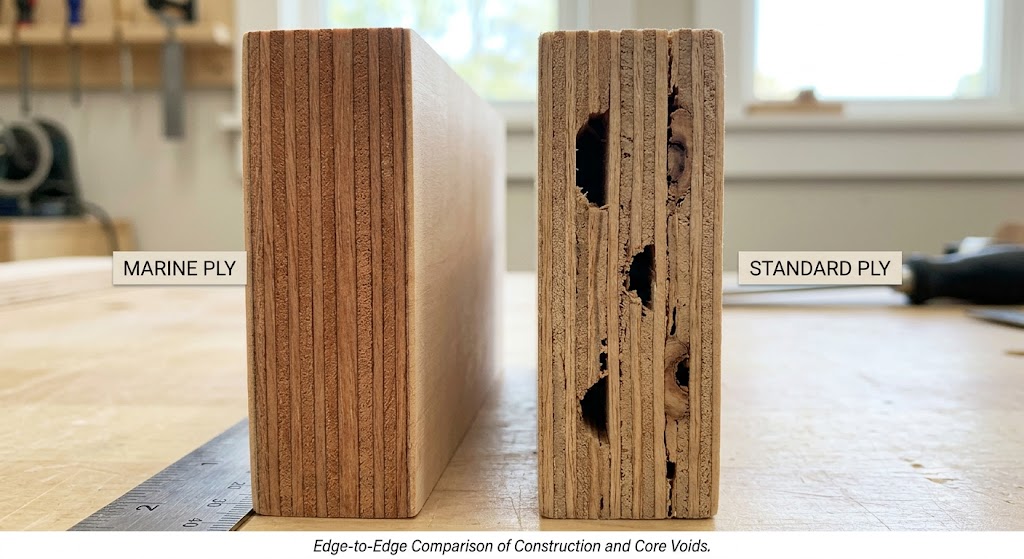
On top of that, cheap interior sheets are full of “core voids.” These are hidden air pockets within the sheet’s middle layers. Outside, these pockets act like tiny underground water reservoirs, trapping moisture that breeds wood rot from the inside out.
To build something that lasts, you need sheets built with 100% waterproof glue and tight, solid middle layers. Understanding the fundamental structural differences between sheet goods is the first step; see our comprehensive breakdown on the core types of plywood available today.
🧪 My 48-Hour Bucket Test
A while back, I wanted to see just how fast cheap glue gives up. I took a scrap piece of standard $35 cabinet-grade interior birch and a scrap of $55 exterior-grade ACX plywood, and dropped them both into a five-gallon bucket of water.
After 48 Hours: The interior cabinet plywood had swollen up like a sponge, and I could literally peel the top layer off with my bare hands.
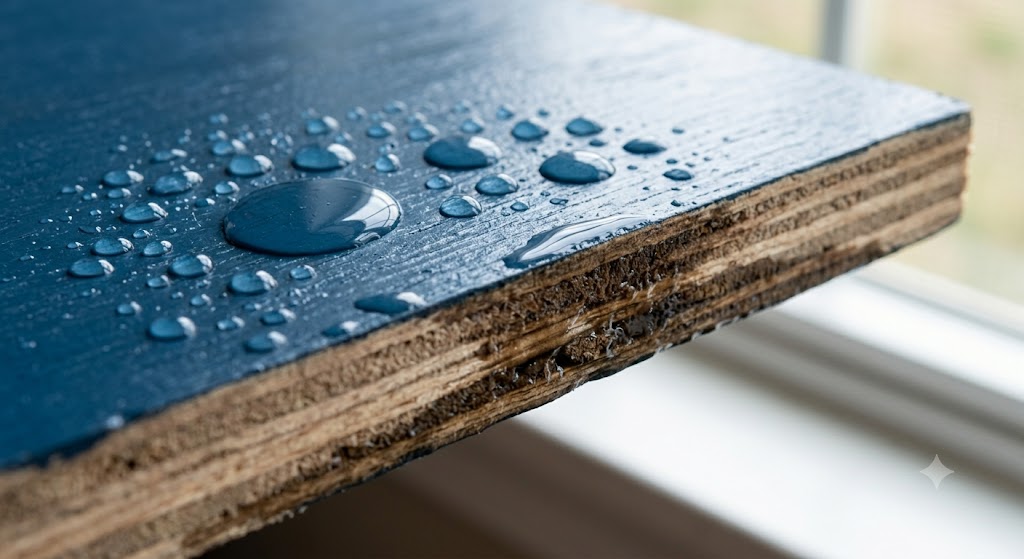
The Exterior Piece: The ACX sheet remained completely tight and flat, with no layer coming loose.
The lesson? Always look at the grading stamp on the back of the wood before you buy it.
2. Real-World Cost Example: What Does a DIY Build Actually Cost?
When budgeting a project, remember that the sheet of wood is only part of the equation. Cutting corners on hardware or finish to save twenty bucks usually results in structural failure down the road. Keep a close eye on market trends by tracking our real-time index on plywood prices before shopping.
Let’s look at a realistic baseline for a standard backyard project:
The Potting Bench Budget Breakdown
A typical 4’x8′ potting bench project requires roughly:
One sheet of 3/4-inch ACX plywood: $70
One box of quality exterior screws: $12
Exterior wood primer: $18
Premium exterior paint or spar urethane: $25
Total Project Cost: Around $125
While this might seem higher than buying a cheap, mass-produced plastic or thin cedar bench online, a custom-built, properly sealed plywood bench will easily outlast them by a decade.
3. The Best Plywood Types for Outdoor Work
Exterior-Grade Plywood (ACX vs. CDX)
This is the workhorse of the backyard DIYer. The letters indicate how nice the front and back of the sheet look, while the “X” representsExposure. That X means the layers are glued together with a completely waterproof phenolic glue that won’t give up in the rain. Learn more about structural designations in our deep dive on exterior plywood.
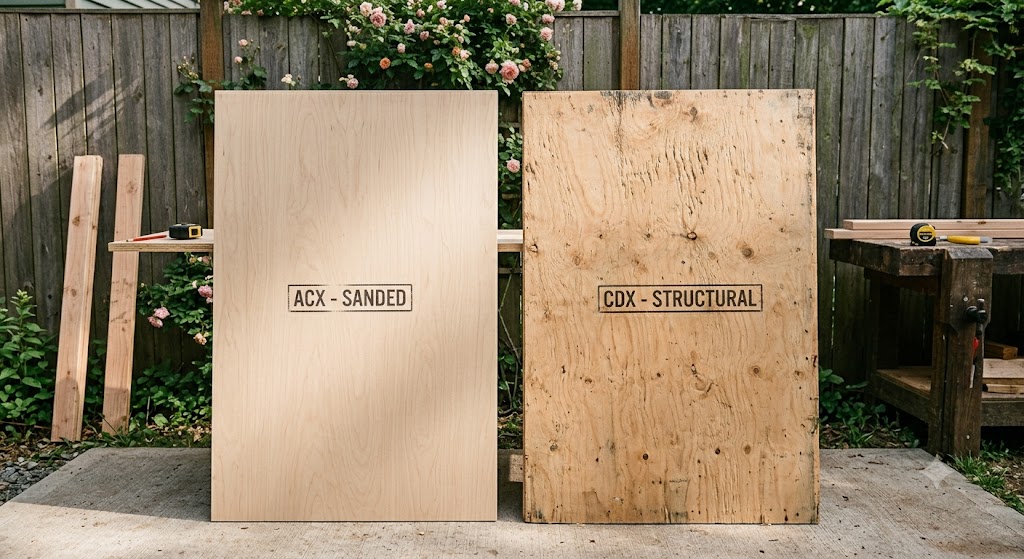
ACX: The front face (“A”) is fully sanded, smooth, and free of open knot holes. It looks great under a fresh coat of exterior paint or solid stain.
CDX: This stuff is rough, unsanded, and full of knots and patches. It’s meant to be hidden. If you’re building a backyard workshop and need a tough foundation, see our guide on picking the right plywood for shed floor layouts.
Marine-Grade Plywood
Marine-grade is the absolute best wood you can buy, but it will cost you. It isn’t treated with chemicals; instead, it’s made from premium, high-density hardwoods (usually Douglas Fir or Okoume) with no hidden air pockets.
Because there are no gaps inside the sheet, water can’t get trapped, which stops internal rot before it can start. When you’re building a heavy-duty workbench or structural frame, stepping up to thick 3/4 plywood sheets will give you a rock-solid project that won’t flex or sag. To find out if this premium wood makes sense for your budget, read our detailed guide on marine plywood.
Pressure-Treated (PT) Plywood
This wood is loaded into massive pressure tanks that force chemical preservatives deep into the wood grain. It is virtually immune to bugs, termites, and fungal rot. For a complete look at how this wood is treated and how to handle it safely, check out our guide on pressure-treated plywood.
⚠️ Warning: Keep Treated Wood Away from Your Food
Never use pressure-treated plywood to line the inside of an edible vegetable bed or herb box. While today’s copper-based treatments are much safer than the old arsenic formulas from years ago, those chemicals can still leach into the damp soil and get pulled up into the roots of your tomatoes or lettuce.
4. Raised Beds, Pergolas, and the OSB Debate
Building Raised Garden Beds
If you want to use plywood for planter boxes, you need to consider moisture management.
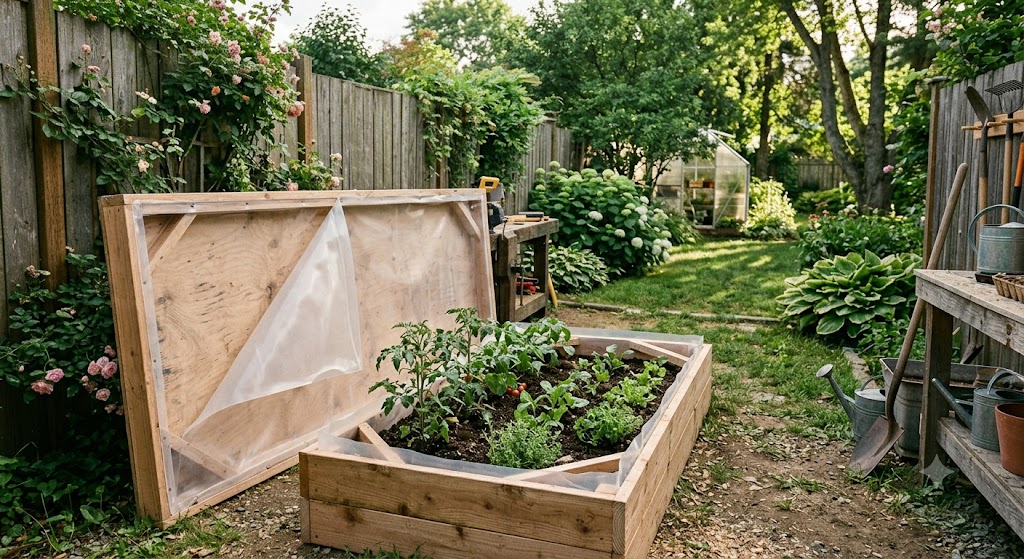
For Vegetables and Herbs: Use Marine-grade or untreated ACX exterior plywood, but line the entire inside with a heavy-duty, food-safe pond liner or 6-mil plastic sheeting. This keeps the wet soil from constantly touching the wood, protecting your crops from chemical contact and keeping the wood dry so it lasts years longer.
For Flowers and Shrubs:Pressure-treated plywood is fine here since you aren’t eating anything out of the bed. It’s still smart to line it with landscape fabric to keep the wet soil from resting directly against the wood grain.
Plywood for Pergolas and Gazebos
Pergolas and gazebos get blasted by intense midday sun and driving rain from every direction.
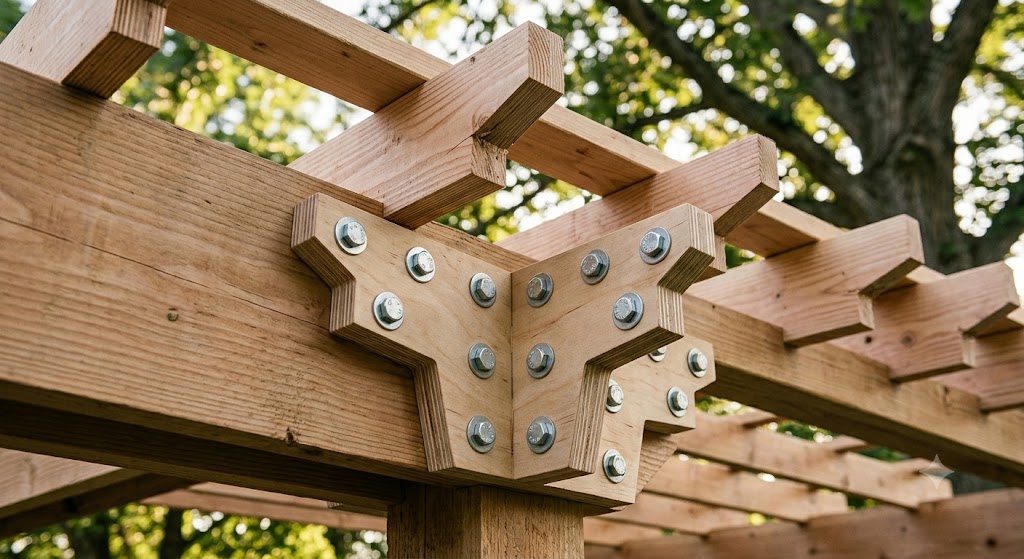
Brackets and Support Nodes: Use Marine-grade plywood for the heavy load-bearing structural brackets, rafter tails, and support gussets. Its gap-free core means it won’t split or crack when high winds start pulling at the roof structure.
Roof Decking: For the flat roof sheathing beneath your shingles or metal roofing panels, save money by using 5/8-inch or 3/4-inch CDX exterior plywood. For more help on sizing your wood so your roof doesn’t sag under winter snow, see our article on plywood thickness.
Exterior Plywood vs. OSB (Oriented Strand Board)
OSB is made by pressing thousands of tiny wood flakes together with wax and glue. It is cheap and popular for building houses, but it performs terribly when exposed to the open air in a garden.
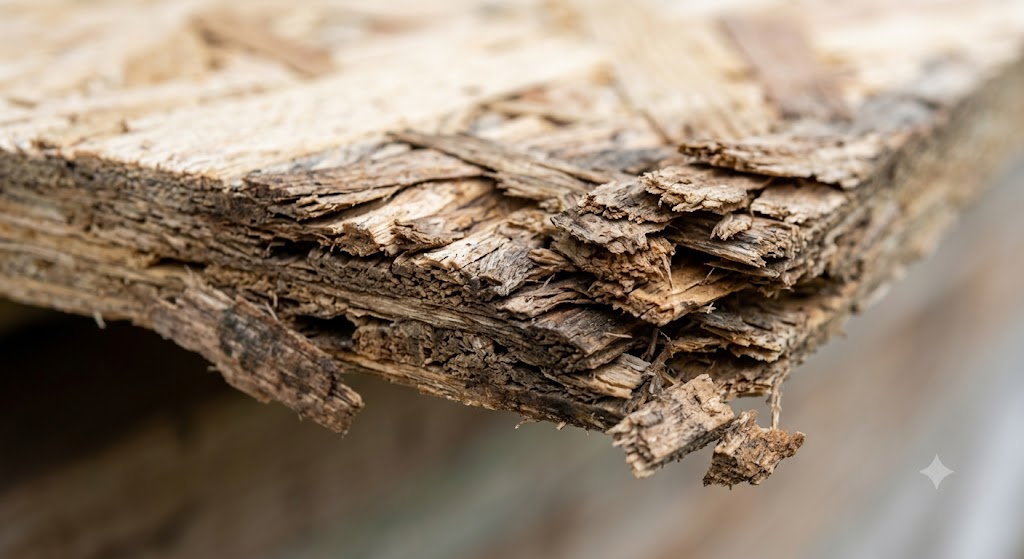
The Moisture Problem: When OSB gets wet, the edges swell rapidly and never shrink back, causing the panel to flake apart. Plywood handles getting wet and drying out much more uniformly, keeping its flat shape.
Holding Power: Plywood generally retains fasteners better than OSB after repeated wet-dry cycles. For open, unheated garden structures, always choose exterior plywood over OSB.
5. 5 Garden Structures You Can Build With One Sheet of Plywood
You don’t need a massive budget to build great things for your yard. If you map out your cuts carefully, a single 4×8-foot sheet of 3/4-inch exterior plywood can yield some incredible projects:
1. The Ultimate Garden Potting Bench
By slicing a single sheet, you can cut out a 2×4-foot main work surface, a lower storage shelf for heavy pots, two solid side support panels, and a back splashboard to keep dirt from falling behind the table.
2. Double-Bin Modular Composter
Cut your sheet into four equal 2×4-foot sections. Use three sections for the back and sides, and cut the fourth section into removable slats that slide into front tracks. This lets you adjust the front height as your compost pile grows.
3. Covered Mobile Tool Cart
A single sheet can be cut into a base panel, two tall side walls with custom tool slots, a sloped roof to shed rainwater, and interior shelves. Pop a pair of cheap lawnmower wheels on the bottom, and you can roll your tools right out to your garden beds.
Slice a 3/4-inch sheet lengthwise into three equal panels (roughly 16 inches wide by 8 feet tall). Use a jigsaw to cut decorative geometric patterns or lattice slats into the wood, join them with exterior-grade hinges, and you have a beautiful, movable privacy screen to hide trash cans or AC units.
5. Twin Backyard Nesting Boxes & Supply Crate
With one sheet of 1/2-inch or 3/4-inch exterior wood, you can build two spacious, weather-tight bird nesting boxes or bat houses, with enough material left over to construct a heavy-duty storage crate for your outdoor hoses, sprinklers, and soil bags.
6. Huge Mistakes I See Homeowners Make
When working on backyard DIY builds, avoiding structural failure comes down to bypassing a few incredibly common missteps.
1. Buying Interior Plywood by Accident
This happens constantly. A sheet of birch or sande plywood looks smooth, clean, and beautiful on the rack. It’s sitting right next to the rough exterior plywood, and it’s cheaper. Homeowners assume a good coat of paint will protect it. It won’t. Within months, the internal glue will fail, and the layers will bubble and peel. Always check for the “Exterior” or “Exposure 1” stamp.
2. Not Sealing Cut Edges
Plywood edges act exactly like a bundle of tiny drinking straws, soaking up water up to ten times faster than the flat front face of the board.
The biggest mistake I see folks make is putting three coats of paint on the top of a bench but leaving the bottom cut edges completely raw. Every single cut edge must be sealed with exterior wood filler, sanded smooth, and coated with an external wood sealer or a coat of waterproof exterior glue before you assemble your project.
😬 Regret: Skipping the Edge Seal
“I built a gorgeous custom potting bench out of ACX plywood. I painted the top surface until it looked like a mirror but skipped sealing the cut edges along the bottom rim. After three months of morning dew and rainwater puddling on the deck, the bottom layers split apart and swelled up like cardboard. I had to rip the top off and rebuild the whole thing.” — Dave K., Oregon DIYer
3. Using Drywall Screws
The chemicals inside pressure-treated wood and the natural acids inside exterior hardwoods will eat standard black drywall screws for breakfast. Within a year, those screws will rust through, your joints will fail, and you’ll have ugly black rust streaks running down your clean wood. Always use hot-dip galvanized, ceramic-coated, or stainless-steel screws.
4. Setting Plywood Directly on Soil
Setting raw, or even exterior-grade, plywood directly onto wet grass or dirt is an open invitation to moisture and subterranean termites. It creates a capillary straw that sucks ground moisture straight up into the structure. Always lift your garden sheds and structures off the ground using concrete deck blocks or a solid gravel pad. If you want some tips on how to break down your sheets cleanly without tearing up the nice face veneers, check out our guide on how to cut plywood.
5. Not Repainting Every Few Years
Outdoor structures are not “set it and forget it.” The sun’s UV rays bake wood surfaces, causing minute cracks in paint finishes. Once water gets behind that paint, it traps moisture against the wood. Expect to inspect your garden builds every spring and apply a fresh topcoat every 3 to 5 years.
7. Step-by-Step: How to Weatherproof Plywood for the Outdoors
If you want your project to survive hot summers and freezing winters, take the time to seal it properly using this simple four-step method:
Step 1: Sand and Clean
Sand down the entire surface of your plywood with 120-grit sandpaper to open the pores in the wood. Wipe away every bit of fine sawdust using a tack cloth or a rag dampened with a little bit of mineral spirits.
Step 2: Seal the Edges
Rub a liberal amount of exterior wood glue or a specialized exterior edge sealer straight into every cut edge. Let it soak deeply into the end grain. Once it dries completely, give it a light sanding to knock down any rough drips.
Step 3: Use an Oil-Based Exterior Primer
Coat all sides of your panel with a high-quality, oil-based exterior primer. Avoid water-based latex primers on raw wood here—the water inside the primer can actually cause the wood grain to swell and roughen up before you even get to your paint.
Step 4: Apply Your Final Topcoat
Finish your structure with two coats of premium exterior acrylic latex paint, a high-quality solid exterior stain, or an anti-UV marine spar varnish. Plan on throwing a fresh topcoat every 3 to 5 years to keep the wood protected.
🛒 Backyard Buyer’s Guide: Where to Shop
Where you buy your wood depends on your budget and what kind of project you’re tackling:
Home Depot & Lowe’s: Best for quick, budget-friendly projects. They always stock standard 1/2-inch and 3/4-inch CDX and pressure-treated sheets, and usually have a decent rack of ACX. Just take your time sorting through the pile to find the straightest, cleanest sheets.
Local Lumber Yards: This is where you go for high-quality builds. Their wood is stored flat, out of the elements, and they carry premium exterior sheets with much cleaner core layers than the big-box stores.
Marine Suppliers & Specialty Hardwood Dealers: If you need genuine, void-free Marine-grade plywood (like Okoume or high-end Douglas Fir) for a premium pergola or outdoor kitchen, skip the standard box stores entirely and head straight to a dedicated marine supplier or a specialty hardwood yard.
Frequently Asked Questions (FAQ)
Can I use regular plywood outside if I paint it well?
No. Regular interior plywood uses glue that dissolves in moisture. Even if you paint the surface beautifully, humidity and seasonal temperature changes will pull moisture through screw holes and small cracks. Once water gets inside, the layers will unglue and rot out. Always start with an exterior or marine-grade sheet.
Is ACX plywood actually waterproof?
The glue holding the layers together in ACX plywood is 100% waterproof and will not break down in the rain. However, the wood layers themselves can still absorb water, swell, and rot if they aren’t painted or sealed. “Waterproof” means the glue won’t let go, but you still need to protect the wood fibers.
What thickness of plywood do I need for a garden shed roof?
If your shed rafters are spaced 16 inches on-center, use a minimum thickness of 1/2-inch exterior plywood (such as CDX). If you live somewhere with heavy winter snow loads, or if your rafters are spaced 24 inches on center, step up to 5/8-inch or 3/4-inch sheets to keep the roof from sagging between supports.
Is Marine-grade plywood safe for raised vegetable beds?
Yes. Marine plywood is perfectly safe for vegetable gardens because it isn’t treated with chemical bug killers or heavy metals. Its durability comes purely from high-quality wood and waterproof glue. To make the wood last as long as possible against wet dirt, line the inside walls with a sheet of safe plastic.
How do I stop plywood edges from splitting when driving screws?
Plywood edges will split wide open if you try to force a screw directly into them. Always pre-drill a pilot hole using a drill bit that matches the inner thickness of your screw shank. Keep your screws at least 2 inches away from any corner, and use a countersink bit so the screw heads sit completely flush without crushing the wood plies.
Should I buy Marine plywood or ACX for an outdoor potting bench?
If you plan on painting your potting bench, ACX exterior plywood is awesome because it’s smooth and easy on your wallet. If you want to leave the wood natural with a clear coat, or if the bench is going to sit out in heavy weather completely uncovered, spend the extra cash on marine-grade plywood for its solid, rot-resistant core.
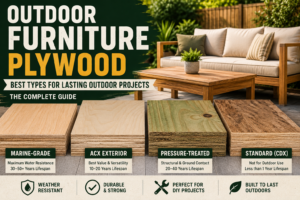
Outdoor Furniture Plywood: Best Types Guide by Admin June 9, 2026 DIY If you are planning to build a sleek patio sofa, a sturdy Adirondack chair, or a backyard dining table, your choice of sheet goods will…
Fluted Wood Panels: Costs, Types & Mistakes to Avoid by Admin April 12, 2026 DIY Fluted wood panels are decorative wall panels featuring vertical grooves that add texture, depth, and a high-end modern look to interiors. Commonly used for accent…