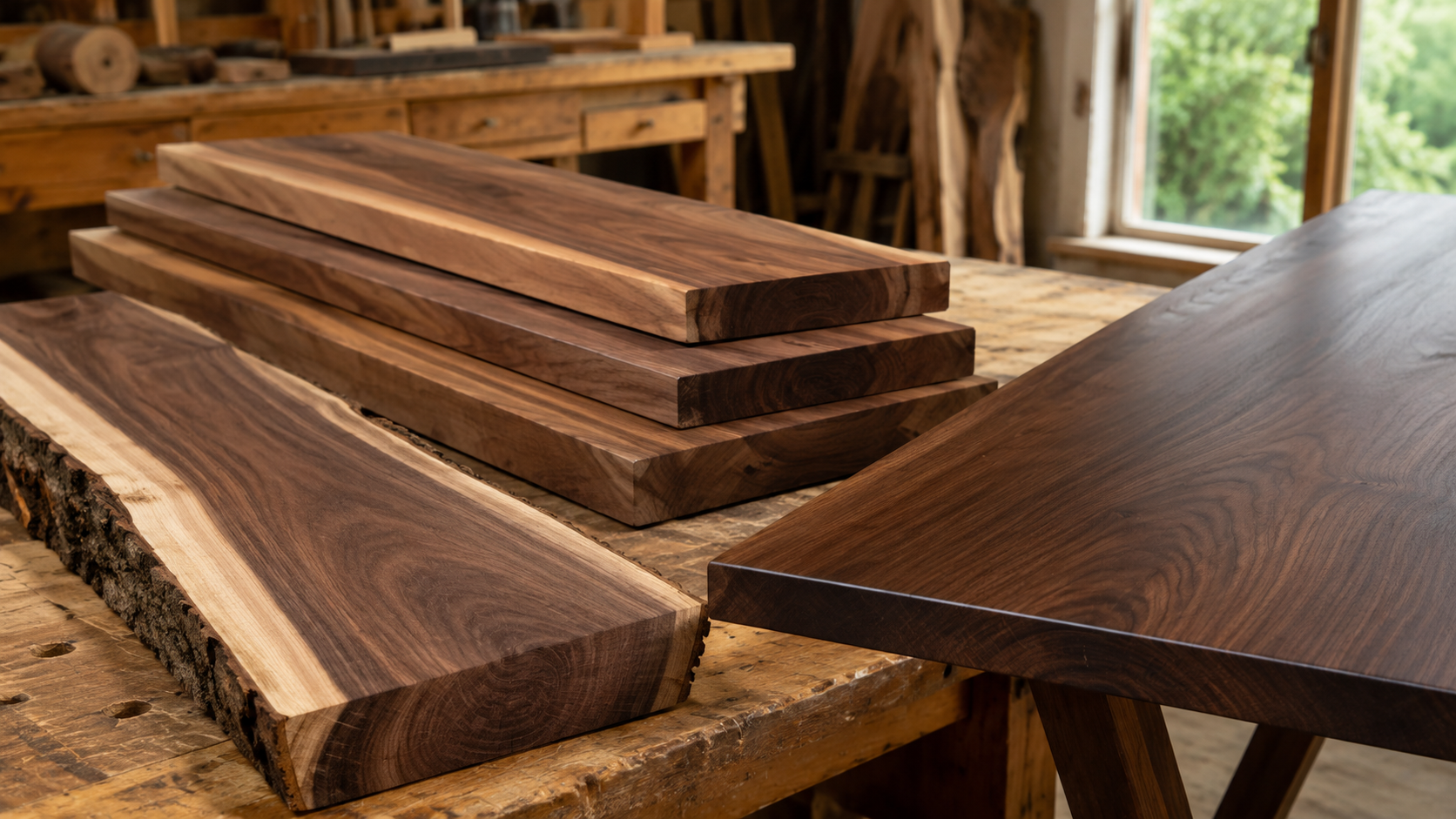
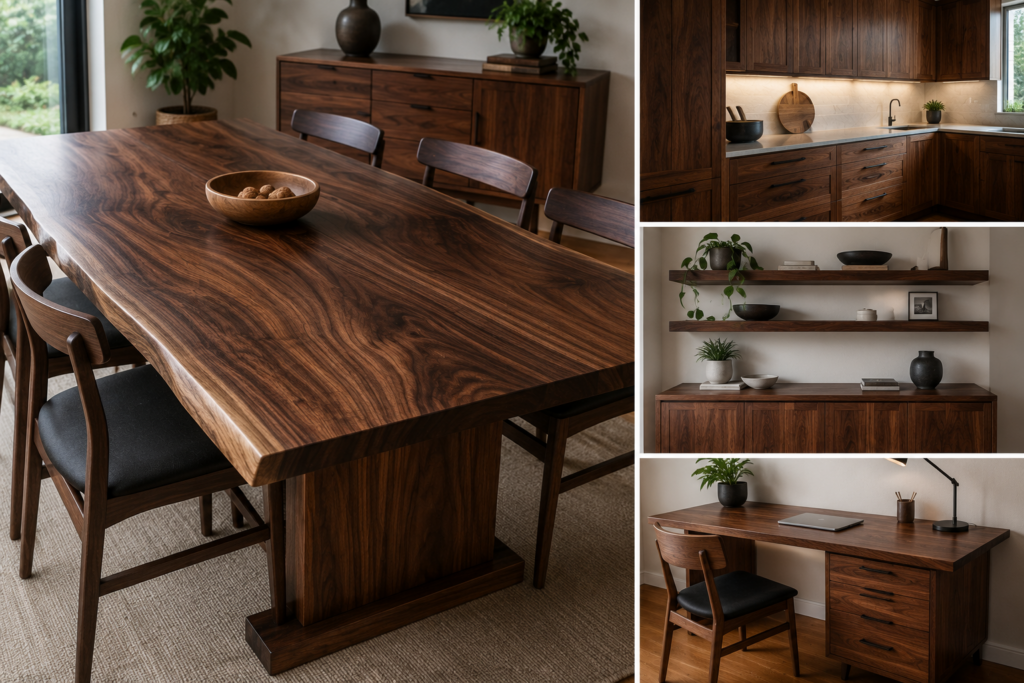
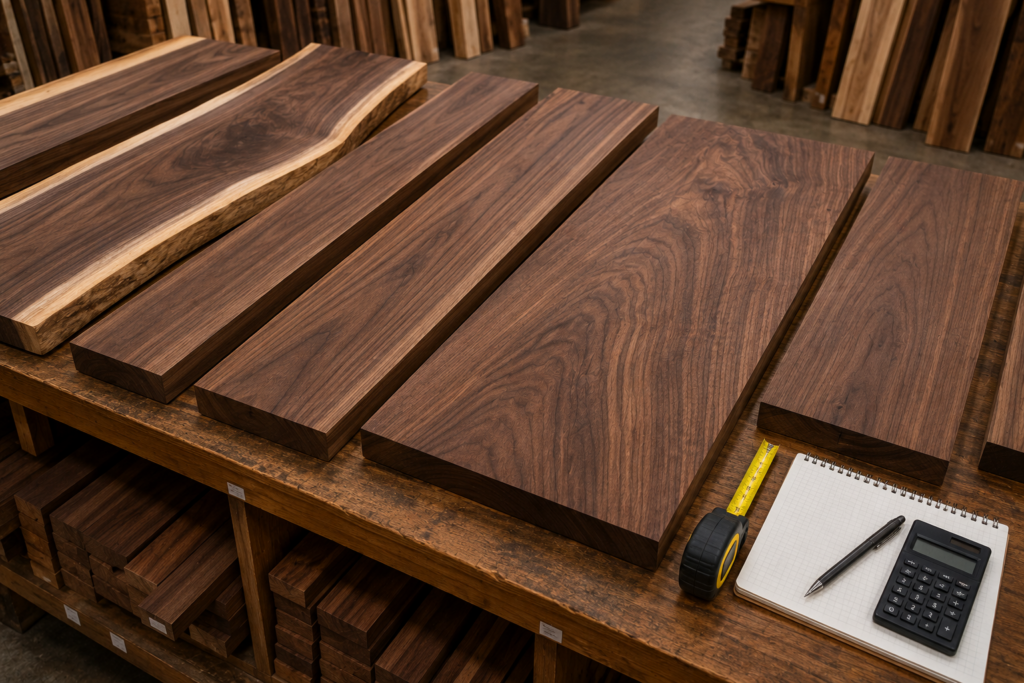
Black walnut wood comes from the American Black Walnut tree (Juglans nigra), and it’s the premium dark hardwood most people picture when they hear “walnut.” The heartwood ranges from rich chocolate brown to purplish gray, it machines cleanly, stays dimensionally stable, and needs no stain to look expensive. The trade-off is price — solid black walnut typically runs $8 to $15 per board foot depending on grade, thickness, and region, making it one of the most expensive domestic hardwoods you can buy.
If you’re deciding whether the wood fits your project and budget, our full breakdown of whether walnut wood is worth it covers finishing and long-term care in more depth. This article focuses on the species itself: what black walnut actually is, how hard and workable it is, what it costs, and how to buy it without overpaying.
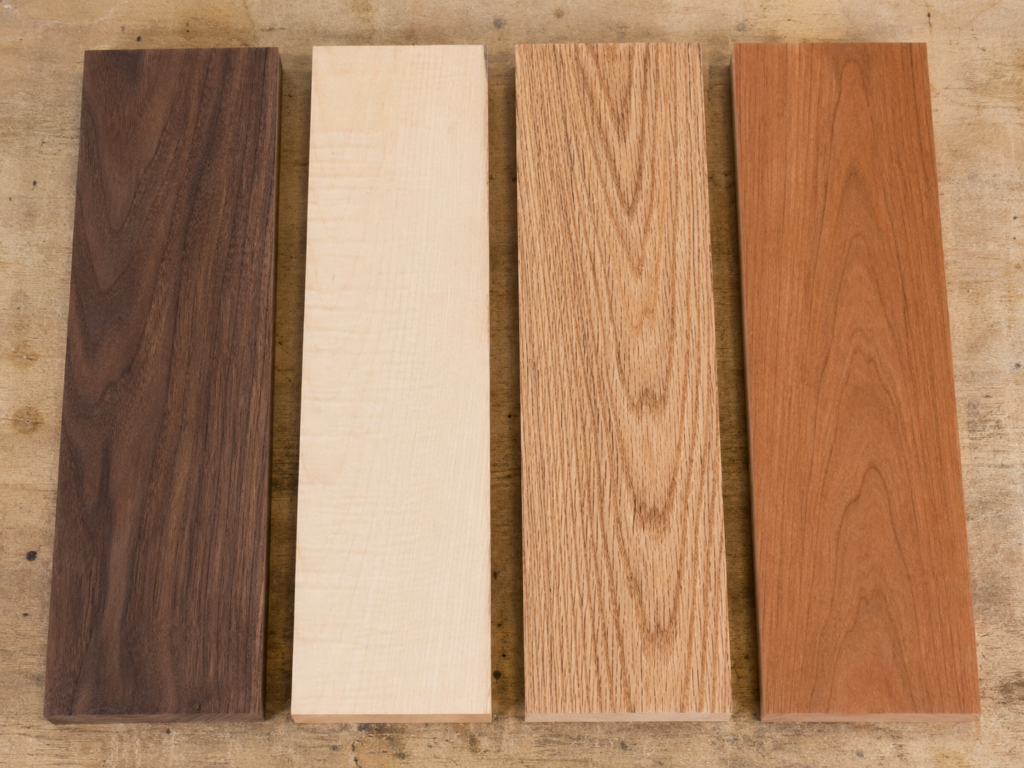
Quick Comparison With Other Hardwoods
Property
Black Walnut
Hard Maple
Red Oak
Cherry
Janka hardness
1,010 lbf
1,450 lbf
1,290 lbf
950 lbf
Color
Chocolate brown to purplish gray
Pale cream
Pinkish tan
Reddish brown, darkens with age
Grain
Mostly straight, moderately open
Fine, closed
Coarse, open
Fine, closed
Workability
Excellent — cuts and sands cleanly
Prone to burning
Good, can tear out
Excellent
Stability
Very good
Moderate
Moderate
Good
Typical price (solid, per bd ft)
$8–$15
$5–$8
$4–$7
$6–$10
Stain needed?
No — natural color is the selling point
Usually
Usually
No
Prices vary by lumberyard, region, and grade — treat these as ballpark ranges, not quotes.
What Is Black Walnut Wood?
Black walnut is a hardwood harvested from Juglans nigra, a tree native to the eastern and central United States. Mature trees reach 100 to 150 feet, and the commercial heart of the industry sits in the central states — Missouri, Indiana, Ohio, and Iowa produce much of the country’s supply.
Two things make the species commercially unusual:
Heartwood vs Sapwood Contrast
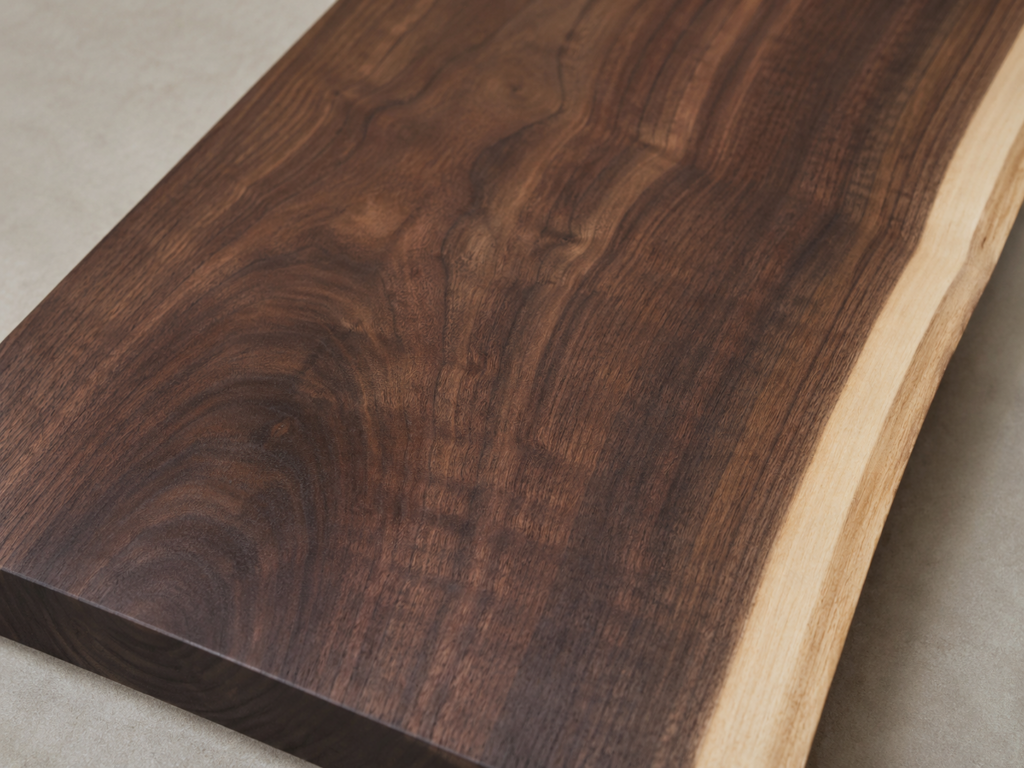
The heartwood — the inner, older wood — carries the famous deep brown color, sometimes with purple, gray, or smoky undertones. The sapwood is nearly white to pale yellow. That contrast used to be considered a defect; mills steamed the lumber to blend the sapwood darker. Today, many furniture makers deliberately keep the light streaks for tabletops, headboards, and shelving because the two-tone look reads as natural and modern.
It Lightens With Age
Most hardwoods darken over time. Black walnut does the opposite — it slowly lightens and warms toward a golden brown over the years, especially with sun exposure. Cherry darkens dramatically; walnut mellows. If you’re mixing species in one piece of furniture, plan for that drift.
❌ Mistake to avoid: Don’t assume “walnut” at a lumberyard means Black Walnut. English walnut, Claro walnut, and imported “Peruvian walnut” (a different genus entirely) all get sold under the walnut name. If the tag doesn’t say Juglans nigra or “American Black Walnut,” ask before you pay Black Walnut prices.
Janka Hardness and Workability
Black walnut scores about 1,010 lbf on the Janka hardness scale. That puts it in a sweet spot:
Hard enough for dining tables, desks, flooring, and daily-use furniture
Soft enough that it doesn’t burn on the table saw the way hard maple does, and it doesn’t chew through blades and bits
It also holds screws well, glues without fuss, and takes hand planes and chisels cleanly thanks to its mostly straight grain. Among premium domestic hardwoods, it’s arguably the easiest one to work with — which is part of why it commands the price it does.
A few shop notes from experience: use a sharp, high tooth-count blade for crosscuts, because the open grain can chip out on the exit side of the cut. Standard PVA glue bonds it reliably with no special prep. Sanding to 180 or 220 grit is plenty — going finer starts to burnish the surface and can make oil absorb unevenly. And run dust collection every time; the fine dust is the part of this species you don’t want to breathe.
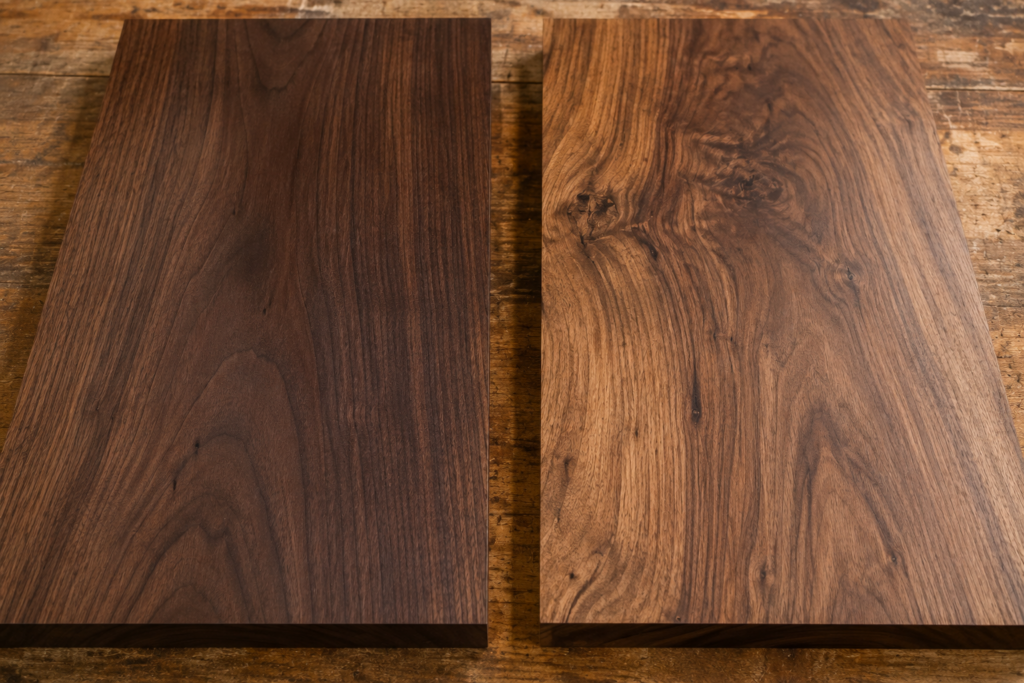
Black Walnut vs English Walnut
Both are true walnuts (genus Juglans), but they’re different woods with different jobs:
American Species (Juglans nigra)
Native to North America
Darker, more uniform brown heartwood
The standard for American furniture, cabinetry, and gun stocks
Grown primarily for timber; the nuts are a secondary crop
English Species (Juglans regia)
Grown mainly in California and Europe
Lighter brown with more dramatic streaking and figure
Most trees are orchard trees grown for the nuts you buy at the grocery store
Lumber is scarcer and often sold as figured stock for high-end gunstocks and veneer
For a typical furniture or cabinetry project in the U.S., Black Walnut is what you’ll find, what you’ll afford, and what you should use.
Lookalike Species to Watch For
Beyond English walnut, two other names show up on lumber racks and furniture listings:
Claro (Juglans hindsii)
A California native, often the rootstock under grafted English walnut orchard trees. When those orchards are pulled, the logs get milled. Claro tends to show wilder color — reds, golds, and dramatic marbling — and it’s sold mostly as slabs and gunstock blanks at premium prices. Beautiful, but it’s not the uniform brown most furniture plans assume.
Tropical “Walnut”
Boards labeled Peruvian walnut usually come from Central or South American Juglans species. Peruvian walnut is generally darker and slightly softer than American black walnut, but characteristics vary by species and source. Check the botanical name rather than relying only on the word “walnut.”
The retail-furniture version of this trap is “walnut finish” — stained alder, birch, or rubberwood with none of the real species’ grain or durability. On lumber, check the species name. On furniture, check the materials list.
What Black Walnut Wood Is Used For
Black walnut has been the prestige American hardwood for over a century. Its most common uses:
Furniture and Tabletops
Dining tables, desks, mid-century-style credenzas, and bed frames. The color depth means a simple design still looks intentional — the wood does the decorating. Even wall-mounted pieces benefit: a walnut face on a DIY floating deskturns a simple weekend build into something that looks like designer furniture.
Cabinetry and Millwork
Kitchen cabinets, built-ins, wall paneling, and architectural trim in higher-end homes and offices. Where budget matters, shops often build the boxes from cheaper material and use walnut only on visible faces — the same logic behind walnut plywood, which gives you the real veneer face over a stable engineered core at a fraction of the solid-wood cost. If you like the look of exposed layered edges instead of solid banding, a premium multi-ply panel like ApplePly pairs well with walnut faces in modern builds.
Black walnut has been the traditional gunstock wood for generations because it combines dimensional stability, good shock resistance, clean machining, and an attractive finish.
Flooring, Turning, and Instruments
Walnut flooring wears well and hides scratches better than pale woods. Turners and luthiers prize it for bowls, clock cases, and guitar bodies.
❌ Mistake to avoid: Black walnut heartwood has some natural decay resistance, but its high cost makes it a poor value for most outdoor projects. The lighter sapwood is considerably less durable, and any exterior walnut still requires proper construction, sealing, and ongoing maintenance.
Figured Grain: Curly, Crotch, and Burl
Most black walnut is straight-grained, but figured boards trade in a different price bracket entirely:
Curly (fiddleback): Rippled bands that shimmer under finish. Prized for guitar backs, box lids, and drawer fronts.
Crotch: Cut from where the trunk forks into major limbs, producing feathered, flame-like patterns. The classic choice for high-end gunstock blanks and bookmatched veneer.
Burl: Swirling, knotted growths milled into turning blanks and statement tabletops. Expect to pay by the piece, not the board foot.
Figured stock is where prices detach from the ranges above — a single exceptional crotch blank can cost more than an entire straight-grained board. If a listing shows heavy figure at ordinary prices, look closely: it may be a photo of one board sold as representative of a stack that isn’t.
Cost per Board Foot
Expect roughly $8 to $15 per board foot for solid 4/4 (1-inch) FAS-grade black walnut at most hardwood dealers, with thicker stock (8/4 and up), wide boards, and figured lumber climbing well beyond that. Live-edge slabs are a separate market entirely and can run into the hundreds or thousands per slab.
Ways to get the look for less:
Lower grades: #1 Common walnut costs meaningfully less than FAS and works fine when you’re cutting around knots for smaller parts.
Sapwood-included boards: Boards with heavy white sapwood are often discounted. If you like the two-tone look — or you’re painting edges — that’s free money.
Walnut plywood: For casework and large panels, a walnut-veneer sheet delivers the same face at a fraction of the solid-lumber cost. If you’re new to engineered panels, our guide to the different types of plywood explains veneer grades and core options before you buy.
Local sawmills: In walnut country, small mills and urban-lumber operations sometimes sell rough-sawn walnut far below retail. You’ll need to mill it yourself.
❌ Mistake to avoid: Don’t buy walnut by the “board” at big-box pricing without doing the board-foot math. Small dimensioned walnut pieces at retail stores often work out to two or three times the per-board-foot price of a hardwood dealer.
Supply and Sustainability
Part of the price is simple biology. Black walnut grows slowly — a tree typically needs 60 to 80 years to reach good sawlog size — and unlike pine, it isn’t grown on large plantations. Most commercial supply still comes from natural hardwood forests and scattered farm woodlots, so harvest volumes can’t scale up quickly when demand rises.
Demand keeps rising anyway. The best veneer-quality logs command strong export prices, and the live-edge slab trend has pulled even mid-grade logs into higher-value markets. The species also faces pressure from thousand cankers disease, a beetle-carried fungal disease that has killed walnut trees in parts of the West and prompted quarantines on moving raw walnut material in some states.
For buyers, the practical takeaways are straightforward: domestic black walnut from managed U.S. forests is generally considered a responsible choice, FSC-certified stock is available if certification matters for your project, and urban or salvage lumber — yard trees milled locally instead of chipped — is an increasingly good source of character-grade boards.
Is Black Walnut Toxic?
Worth knowing before you work with it:
Wood dust: Walnut dust is a known sensitizer and respiratory irritant. Wear a dust mask when sanding and use dust collection — this is one species where people commonly develop reactions over time.
Juglone: The tree’s roots, leaves, and hulls produce juglone, a compound which can affect some sensitive plants growing near walnut trees. It’s a tree-and-shavings issue, not a finished-furniture issue.
Horses: Never use black walnut shavings as animal bedding — even small amounts can cause laminitis in horses.
Finished surfaces: A sealed, finished black walnut table or cutting board is considered safe for normal household use.
How to Buy Without Overpaying
Buy from a hardwood dealer, not a big-box store. Selection, grading, and per-board-foot pricing are all better.
Know your grade. FAS for show surfaces; #1 Common when you’re cutting smaller parts anyway.
Check for steaming. Steamed walnut is more uniform but slightly muted; unsteamed (air-dried) walnut keeps richer color variation. Ask which you’re buying.
Measure moisture. Kiln-dried stock at 6–8% moisture content is ready for interior furniture. Air-dried slabs may need months of acclimation.
Buy 10–15% extra. Walnut’s color varies board to board; extra stock lets you match grain and color across a project instead of settling for a mismatched panel.
The Bottom Line
Black walnut earns its price. It’s hard enough for real furniture, easier to machine than maple or oak, stable when humidity shifts, and delivers a finished color no stain can convincingly fake. Use solid black walnut where hands and eyes will land — tabletops, drawer fronts, edges — and lean on walnut plywood for large panels and casework. Buy the right grade for the job, protect your lungs from the dust, and the wood will do the rest.
Frequently Asked Questions
What is black walnut wood?
Black walnut is a premium North American hardwood from the Juglans nigra tree, known for its chocolate-brown heartwood, straight grain, and excellent workability. It’s the standard “walnut” used in American furniture, cabinetry, and gun stocks.
How hard is black walnut?
Black walnut rates about 1,010 lbf on the Janka hardness scale — hard enough for furniture and flooring, but softer than hard maple or red oak, which makes it easier to cut, sand, and shape.
How much does it cost per board foot?
Solid FAS-grade black walnut typically costs $8 to $15 per board foot, with thicker, wider, or figured boards costing more. Prices vary by region and dealer, so compare a hardwood dealer’s board-foot price against big-box retail before buying.
No. Black walnut (Juglans nigra) is the darker North American timber species, while English walnut (Juglans regia) is lighter, more figured, and grown mostly in orchards for nuts. Most walnut lumber sold in the U.S. is black walnut.
Is it toxic to work with?
Finished black walnut furniture is safe for household use, but the sanding dust is a respiratory irritant, and the shavings should never be used as horse bedding. Wear a dust mask and use dust collection when machining it.
Does the color change over time?
Yes — but unlike cherry, which darkens, black walnut slowly lightens and warms toward a golden brown as it ages, especially with sun exposure. Plan for that shift when matching it with other woods.
ApplePly Plywood Review: Pros, Cons & Where to Buy It by Admin March 31, 2025 Hardwood When I first started woodworking, plywood was just the budget-friendly go-to for garage shelves or workshop benches. But as I began taking on more serious…