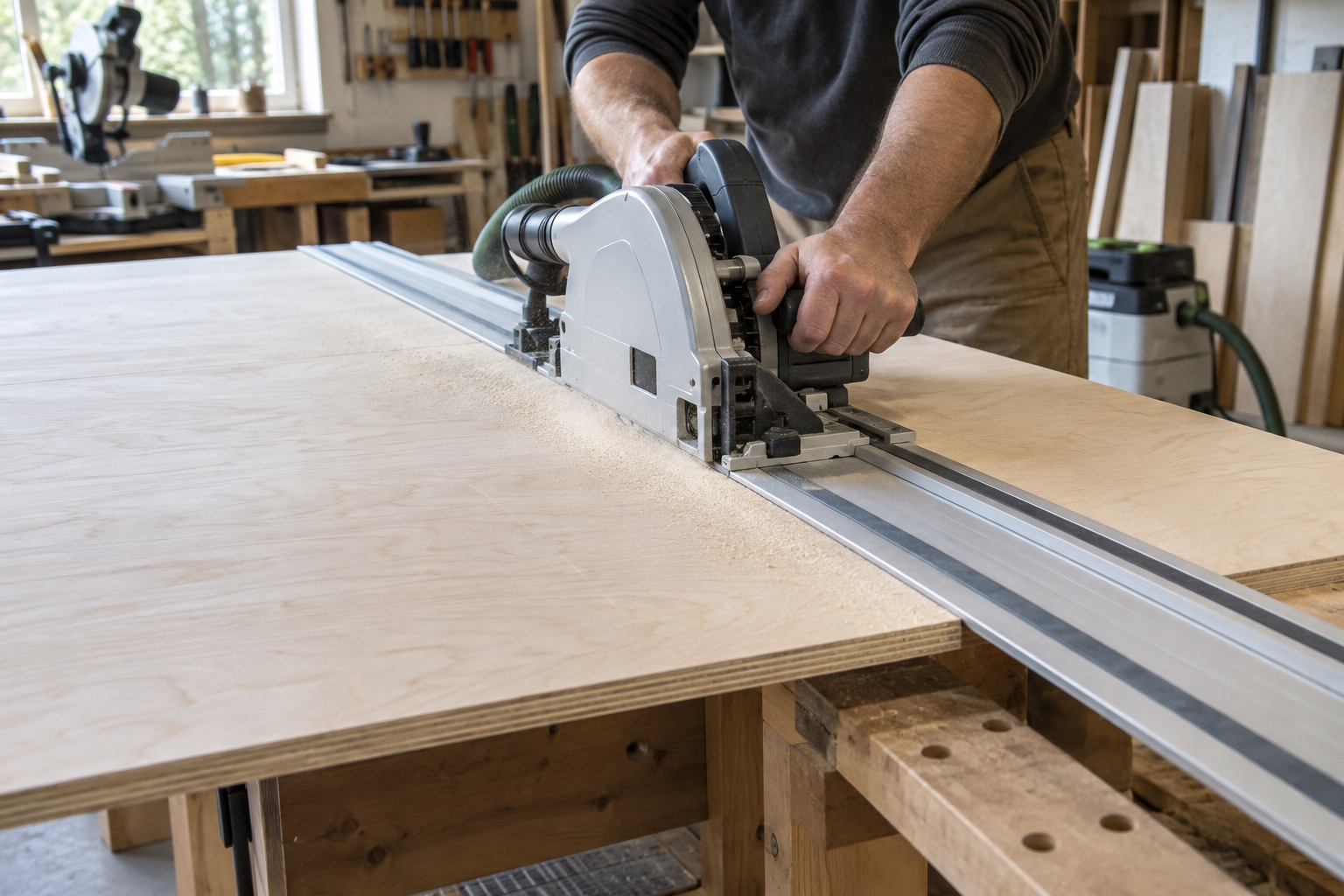
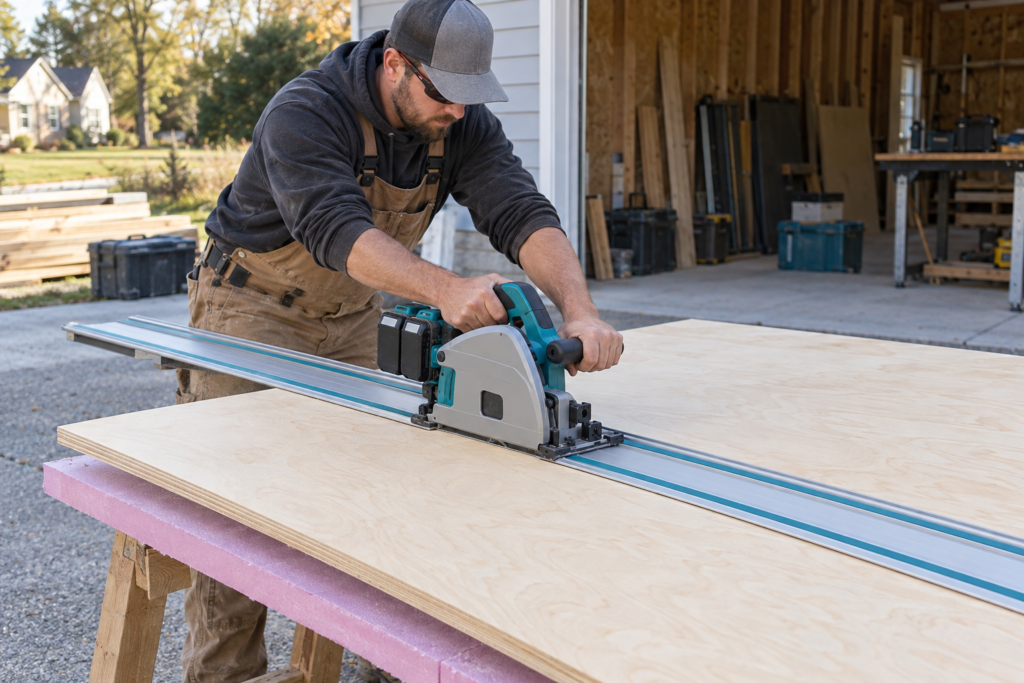
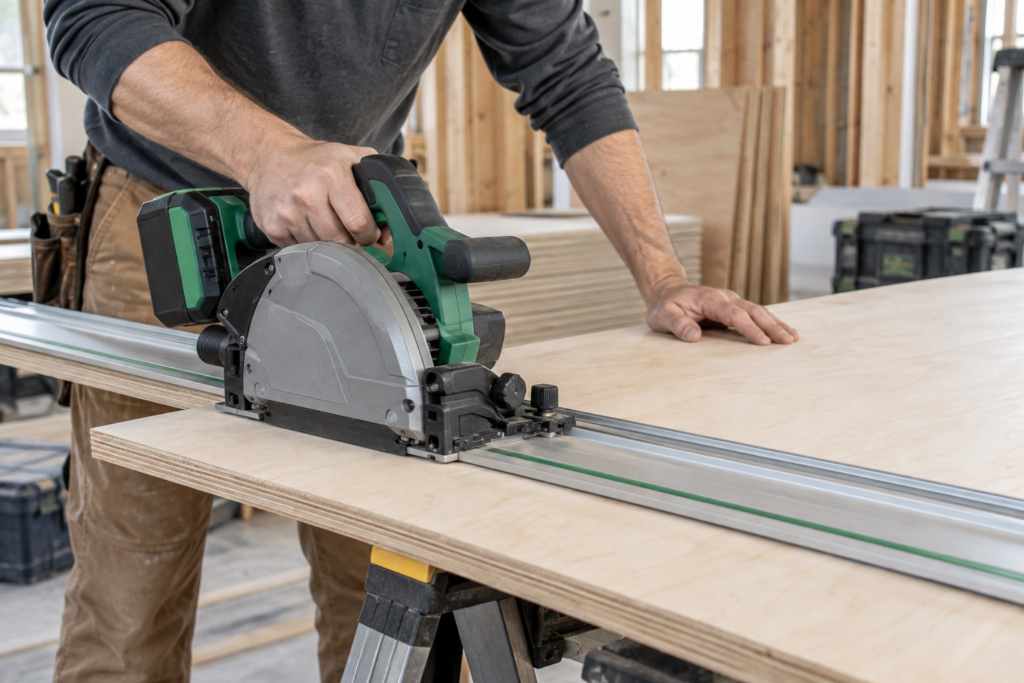
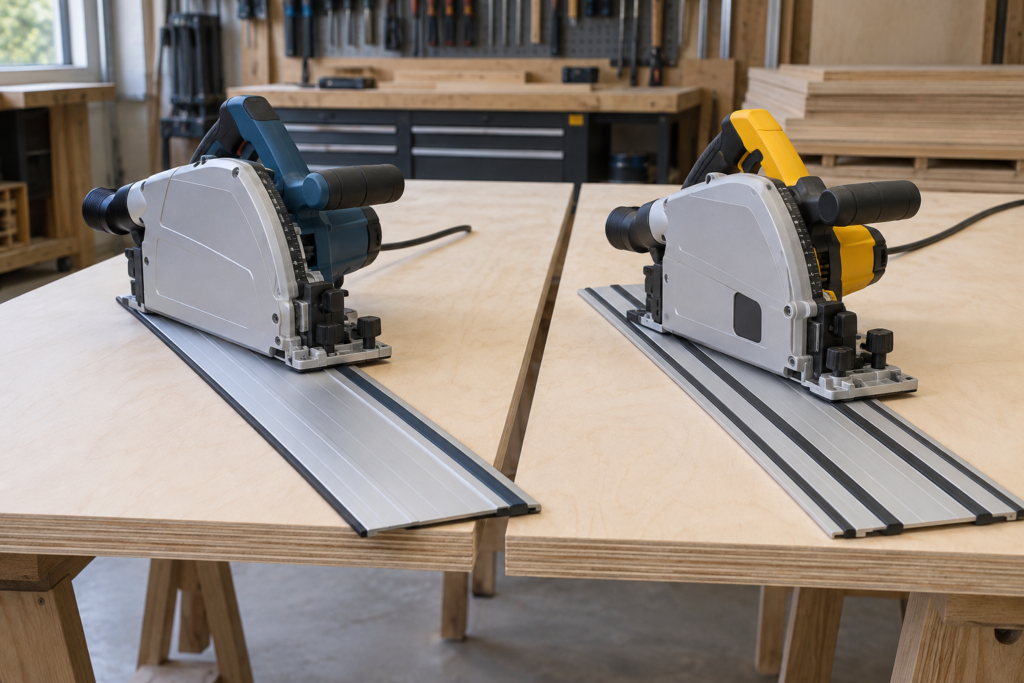
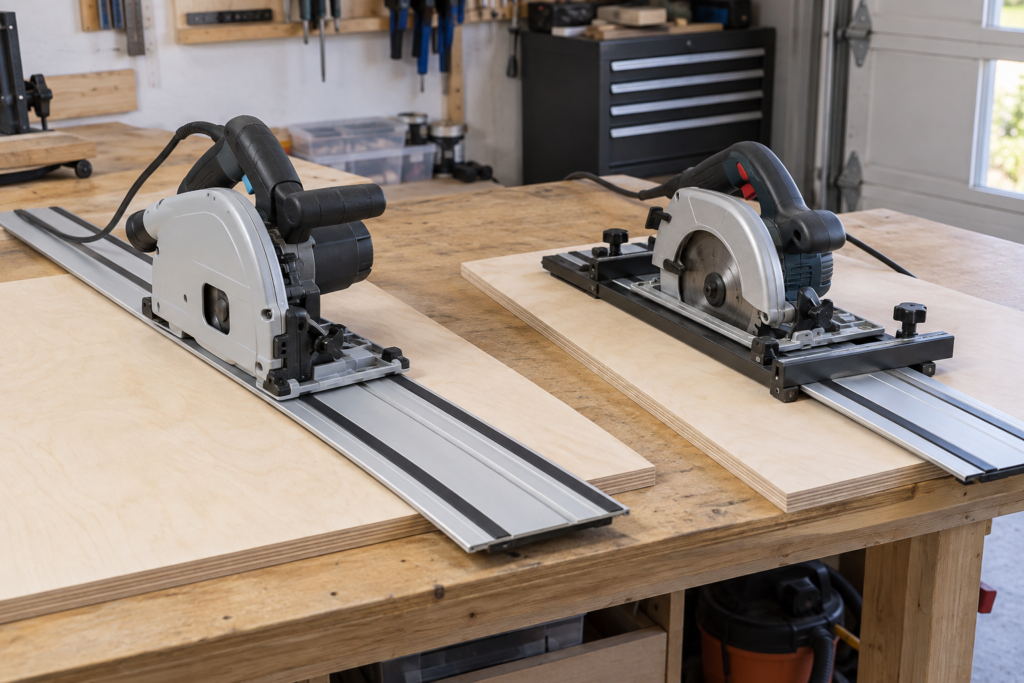
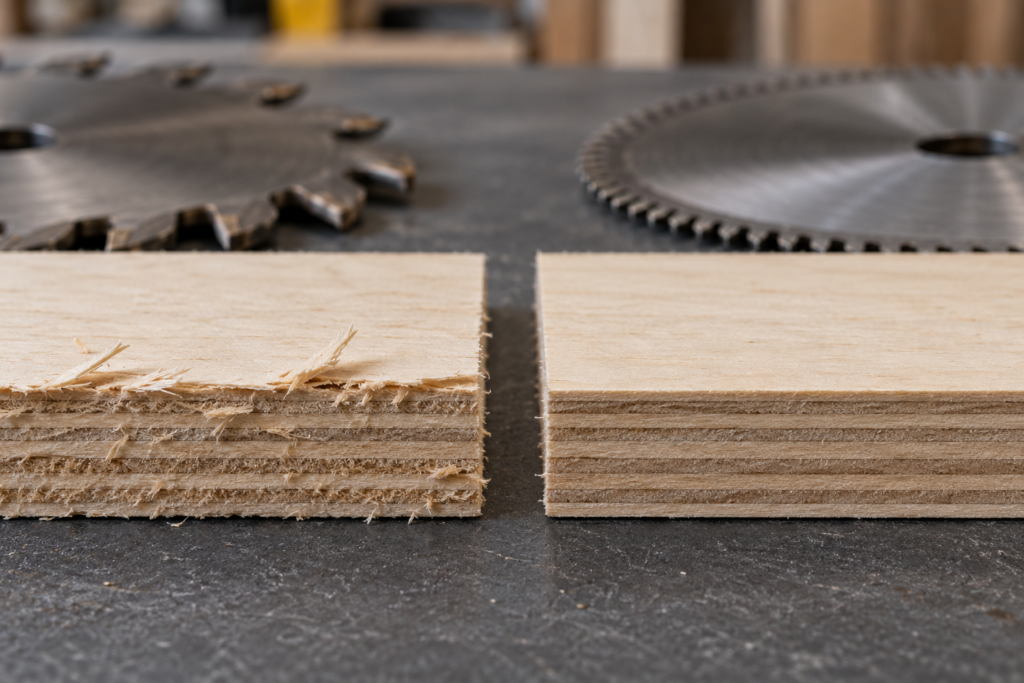
If you have ever tried to rip a full sheet of plywood with a circular saw and a straightedge, you already know the two problems that follow you around the shop: the blade wanders off the line, and the top veneer chips out along the cut. On cabinet-grade birch or a sheet of melamine, that tear-out turns expensive material into scrap.
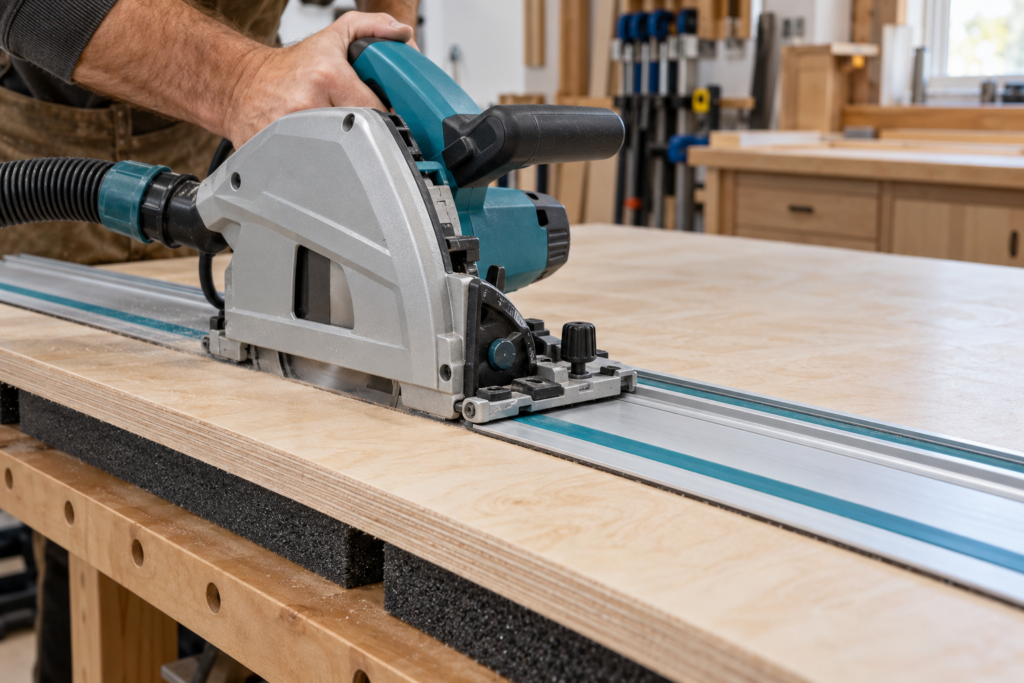
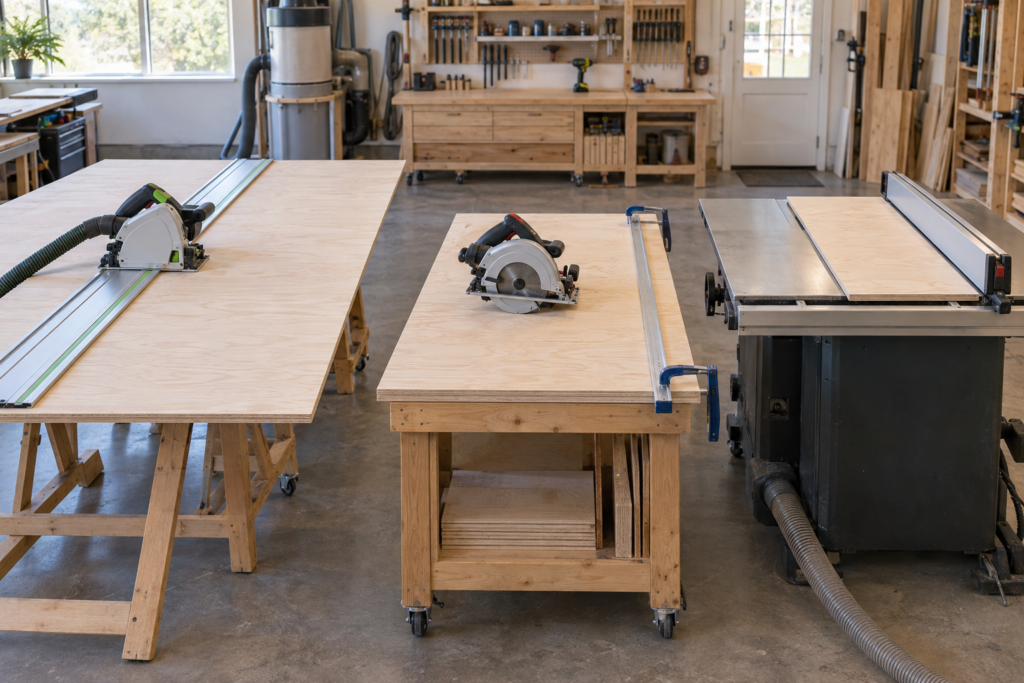
A track saw solves both problems. The saw rides in a channel on an aluminum guide rail, so it physically cannot drift, and a rubber splinter strip along the rail supports the veneer right at the cut line. The result is a straight, glue-ready edge that rivals a table saw — in a tool you can carry to the sheet instead of wrestling the sheet across a table.
This guide covers the best track saws for plywood in 2026, from a roughly $100 budget plunge saw to the professional Festool system, plus the buying criteria that actually matter when you are breaking down sheet goods.
As an Amazon Associate, ThePlywood.com earns from qualifying purchases.
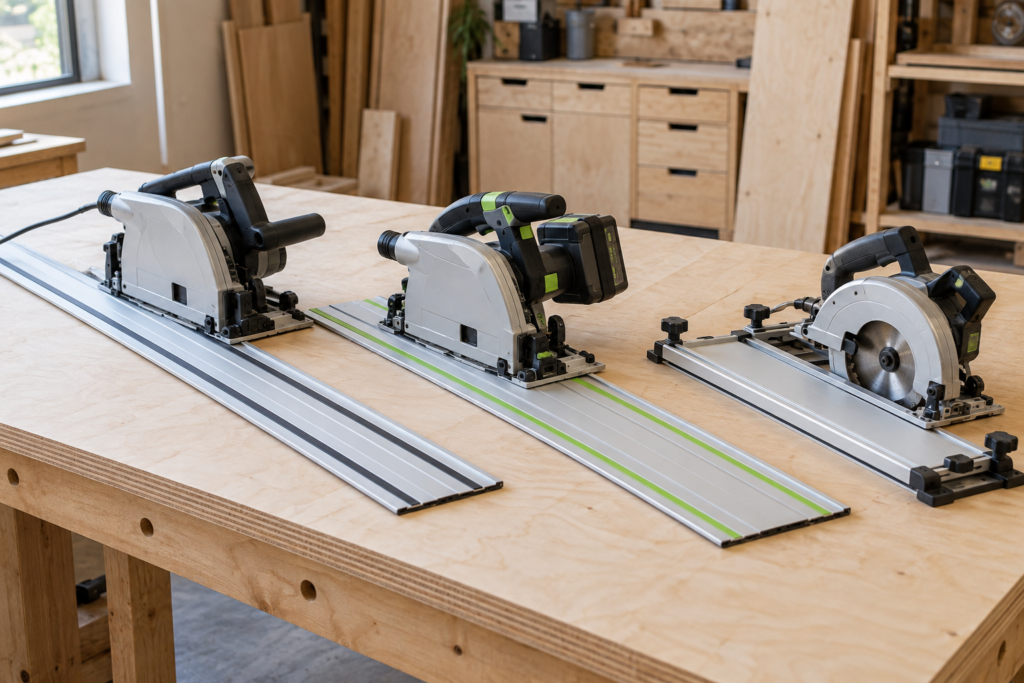
Best Track Saws for Plywood at a Glance
Best overall value:Makita SP6000J1 — near-benchmark cut quality with a rail and case included
Best premium pick:Festool TS 55 F — the system most cabinet shops build around
Best cordless:Makita XPS01PTJ — 36V of untethered power for on-site sheet breakdown
Best value cordless:Metabo HPT C3606DPA — light, capable, and cross-brand rail compatible
Best corded power:Bosch GKT13-225L — a strong motor with Festool-compatible rails
Best for DeWalt owners:DeWalt DWS520K — solid corded performer on the DeWalt platform
Best budget:WEN CT1065 — a real plunge track saw for occasional sheet work
Cut depths are manufacturer figures and vary slightly by rail thickness and blade. Prices move constantly, so check the current price before buying.
Makita SP6000J1: Best Overall Value
The Makita SP6000J1 is the track saw most people cutting plywood should look at first. It pairs a 12-amp motor with a 6-1/2-inch blade and ships with a 55-inch guide rail and a stackable carrying case in the box — a meaningful point, because some competing saws are sold rail-separate.
For plywood specifically, the appeal is clean edges. Makita rates the saw for splinter-free cuts, and the variable speed dial lets you slow the blade for veneered panels and melamine, where too much speed encourages chip-out. The rail rides in the same channel profile the wider accessory market is built around, so Festool-compatible clamps, connectors, and parallel guides fit it.
Why it works for plywood: near-premium cut quality, included rail, and speed control for delicate face veneers.
Watch-outs: the included rail is short of a full 4×8 rip; add a longer rail or a second connectable rail for full-sheet crosscuts.
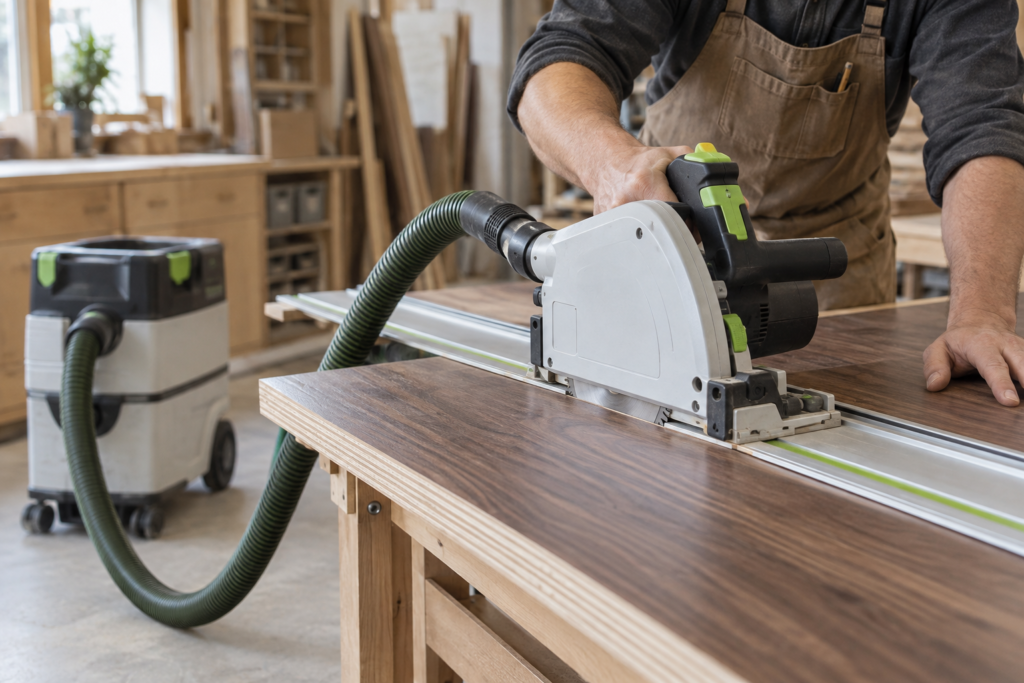
The Festool TS 55 is the saw the rest of the category is measured against. Its plunge action is smooth, its dust collection is among the best available when paired with a Festool extractor, and the guide-rail profile it introduced has become the industry reference other brands build to.
Where it earns its price on plywood is repeatability and dust capture. A built-in depth stop lets you take a shallow scoring pass before the full plunge, which knocks down tear-out on veneered plywood and melamine without a separate scoring tool. Note that some Festool kits ship without a rail, so confirm what a given kit includes before you buy.
Why it works for plywood: class-leading dust collection, a scoring-cut function that protects face veneers, and a deep accessory ecosystem.
Watch-outs: it is the most expensive route into a track saw, and the full benefit assumes buying into the Festool rail and extractor system.
Dragging a cord across a 4×8 sheet is the one recurring annoyance of a corded track saw, and the Makita XPS01PTJ removes it. It runs two 18V LXT batteries in series to deliver 36V of corded-class power, so if you already own Makita’s 18V platform you get a full-size track saw on the same batteries as your drills and impact drivers.
For plywood breakdown on a job site or driveway, that untethered freedom matters more than it sounds — no cord to snag on the sheet, no extension run to manage. Cut quality and dust collection track closely with Makita’s corded saw.
Why it works for plywood: corded-class cutting power with no cord, on a battery platform many shops already own.
Watch-outs: the kit is heavy with two batteries installed, which can add fatigue over a long day of overhead or repetitive cuts.
The Metabo HPT C3606DPA is the value play in the cordless category. It delivers 36V performance in a lighter package than the Makita — reported around 9.7 pounds — and its rail is compatible with Makita and Festool guide systems, so you are not locked into a proprietary track.
That light weight is a genuine plywood advantage on long rip cuts and any work above waist height, where a heavier cordless saw wears on your arms. It is a strong choice for someone who wants cordless freedom without stepping up to the premium tier.
Why it works for plywood: light for a 36V saw, cross-brand rail compatibility, and a friendlier price than the flagship cordless options.
Watch-outs: the broader accessory support and dust collection are a step behind Makita and Festool.
The Bosch GKT13-225L is built for people who cut a lot of sheet goods and want a strong corded motor without buying into the Festool price ladder. It runs a 13-amp motor with variable speed (roughly 3,600 to 6,250 rpm) and a bevel range that reaches past 45 degrees, and it rides Festool-compatible rails.
For plywood, the higher speed range and the torque of the corded motor mean it holds its cutting speed through 3/4-inch hardwood ply and dense MDF without bogging, which is where clean edges come from.
Why it works for plywood: strong, consistent corded power and Festool rail compatibility at a lower entry point than Festool itself.
Watch-outs: the rail is typically sold separately, so factor that into the total cost.
If you already run DeWalt tools, the corded DWS520K is a capable, professional-grade track saw. Its 12-amp motor and fine-tooth blade handle plywood, MDF, and laminates with minimal tear-out, and the plunge action and depth control are well regarded.
One thing to know before you commit to the DeWalt platform: its guide rail uses a proprietary double-edged profile that is not compatible with Festool or Makita accessories. That is fine if you stay within DeWalt’s own rails and clamps, but it limits third-party expansion later. DeWalt’s cordless track saw availability has been inconsistent, so if you want cordless on this platform, confirm the current model is in stock rather than assuming.
Not everyone breaking down plywood needs a $600 saw. The WEN CT1065 is a real plunge track saw — it makes true plunge cuts off a rail — at a price around $100, which makes it a reasonable entry point for occasional sheet work or a first track saw.
The cut quality and dust collection do not match the premium tier, and the rail system is WEN’s own rather than the Festool-compatible standard. But for a hobbyist cutting cabinet parts on weekends, it delivers the core benefit: a straight, guided cut through plywood that a circular saw and a clamped straightedge struggle to match.
Why it works for plywood: an affordable way to get guided, splinter-reduced cuts.
Watch-outs: proprietary rail, and a step down in dust collection and refinement — better suited to occasional than daily use.
Kreg Adaptive Cutting System: Best Circular-Saw Upgrade
If you already own a good circular saw, a guide system can get you most of the way to track-saw accuracy for less money. The Kreg Adaptive Cutting System combines a plunge saw with a guide track and support components, and Kreg’s Accu-Cut line offers a simpler track that clamps a standard circular saw to a rail.
For a plywood-focused shop, a guide system earns its place when your cuts are straight rips and crosscuts rather than mid-panel plunges, and when budget matters more than the last few percent of edge quality. It is also a sensible stepping stone before committing to a full dedicated track saw.
Why it works for plywood: guided, repeatable cuts using a saw you may already own.
Watch-outs: setup and precision depend more on the system and your technique than a purpose-built plunge saw does.
Not every spec on the box matters for sheet goods. These are the ones that do.
Cut Depth
Most 6-1/2-inch track saws cut roughly 2-1/8 to 2-3/16 inches deep at 90 degrees, which clears standard 3/4-inch plywood with room to spare and handles stacked sheets or thicker stock. Depth drops at a bevel, typically to around 1-9/16 inches at 45 degrees. Unless you routinely cut thick hardwood or stacked panels, standard depth is plenty for plywood. A newer class of 60 mm saws exists for thicker material if you need it.
Blade and Tooth Count
Edge quality on plywood comes largely from the blade. A higher tooth count — a 48-tooth blade or finer — leaves a cleaner edge on veneered faces than the lower-tooth general-purpose blade some saws ship with. Keeping a dedicated fine-tooth blade for cabinet-grade plywood and melamine is one of the cheapest upgrades you can make to cut quality. For more on matching material to method, see [internal link: cutting plywood without chipping guide].
Rail Compatibility
The Festool rail profile has become the effective industry standard, and Makita, Bosch, Metabo HPT, and Milwaukee rails generally interchange with it and with Festool accessories such as parallel guides and connectors. DeWalt is the main exception, using a proprietary profile. If you expect to add rails, clamps, or guides over time, staying on the Festool-compatible standard keeps your options open.
Dust Collection
Plywood breakdown throws a lot of fine dust. A good dust port paired with a shop vacuum or extractor keeps your cut line visible and your shop breathable. This is an area where the premium saws, and Festool in particular, pull ahead — dust capture is noticeably better when the saw is matched to a capable extractor.
Splinter Guard and Scoring
The rubber splinter strip along the rail edge supports the top veneer right at the blade, which is the main defense against tear-out. Saws that also offer a shallow scoring pass before the full plunge give veneered plywood and melamine an extra layer of protection. For a delicate face veneer, a light scoring cut followed by the full-depth cut produces the cleanest edge.
Riving Knife and Kickback Control
A riving knife rides in the kerf behind the blade and helps keep the cut from pinching closed and binding, which is the main cause of track-saw kickback. Some 2026 models add electronic kickback detection that cuts the motor if the saw suddenly binds. On long rips through a large sheet, where a pinch is most likely, these features are worth having.
Track Saw vs. Circular Saw vs. Table Saw for Plywood
A circular saw with a clamped straightedge can cut straight, but the cut is only as good as your ability to hold the saw against the guide — any drift shows in the edge. A track saw removes that variable because the saw cannot leave the rail, so results are consistent cut to cut.
A table saw is excellent for repeat rips of narrower stock, but breaking down a full 4×8 sheet on one is awkward and often unsafe to do alone. A track saw lets one person break a full sheet down to manageable panels safely, then move to the table saw for final sizing if needed. For most small shops cutting plywood, the two tools complement each other rather than compete. If you are weighing the broader question of sizing sheet goods, see [internal link: how to cut plywood sheets guide].
FAQ
What is the best track saw for plywood? For most woodworkers, the Makita SP6000J1 offers the best balance of cut quality, included rail and case, and price. If budget is no object and you want the deepest accessory ecosystem, the Festool TS 55 is the benchmark; for occasional use, the WEN CT1065 delivers guided cuts at a much lower price.
Do I need a special blade to cut plywood with a track saw? A higher-tooth-count blade — 48 teeth or finer — produces a cleaner edge on plywood, especially on veneered faces, than a lower-tooth general-purpose blade. Many woodworkers keep a dedicated fine-tooth blade for cabinet-grade plywood and melamine.
Can a track saw cut a full sheet of plywood? Yes. With a long enough rail, or two rails connected end to end, a track saw can rip or crosscut a full 4×8 sheet in a single guided pass, which is one of its main advantages over a table saw for one-person work.
How do I stop tear-out when cutting plywood? Use the rail’s splinter strip to support the top veneer, choose a fine-tooth blade, and where the saw allows it, take a shallow scoring pass before the full-depth cut. Slowing the blade speed on delicate veneers and melamine also helps.
Are track saw rails interchangeable between brands? Often, but not always. Makita, Bosch, Metabo HPT, and Milwaukee rails generally interchange with the Festool-standard profile and its accessories. DeWalt uses a proprietary rail that is not cross-compatible, so confirm compatibility before mixing brands.
Is a track saw better than a table saw for plywood? They serve different roles. A track saw is better for safely breaking down full sheets solo and for cutting in tight spaces; a table saw is better for repeat rips of narrower stock. Many shops use a track saw to break sheets down, then a table saw for final sizing.
The Bottom Line
For most people cutting plywood, the Makita SP6000J1 is the sensible pick — near-premium edge quality with a rail and case in the box. Step up to the Festool TS 55 if you want the best dust collection and the deepest system, go cordless with the Makita XPS01PTJ or the lighter Metabo HPT C3606DPA if a cord is the thing you hate most, and start with the WEN CT1065 or a Kreg guide system if you are cost-conscious or already own a circular saw.
Whichever you choose, pair it with a fine-tooth blade and a long enough rail, and you will get glue-ready plywood edges that a circular saw and straightedge can rarely match.
Prices and availability change frequently — check current pricing before purchasing.
Related Posts:
Best Coping Saw: Reviews, Buying Guide & Top Picks by Admin June 11, 2026 DIY A coping saw is a thin-bladed, C-frame handsaw used to cut tight curves, cope joints, and intricate shapes in wood, trim, and plastic. It's one…
Best Plyo Box : Foam vs Wood + Top Picks by Admin April 13, 2026 DIY What Is the Best Plyo Box for Home Gyms? The best plyo box for most home gyms in 2026 is a heavy foam box with…