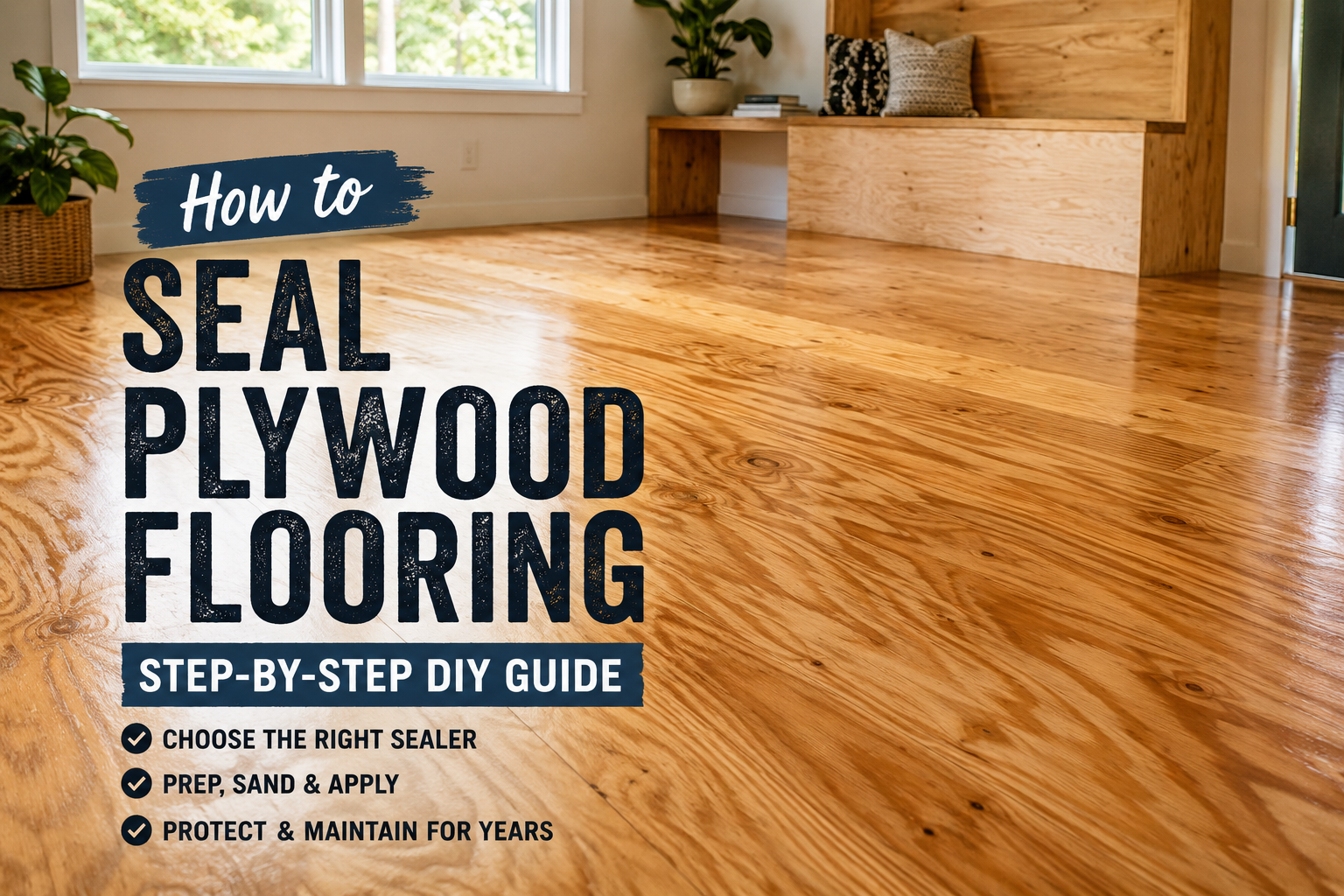
Learning how to seal plywood flooring properly is the difference between a durable floor that lasts for years and one that quickly warps, stains, and absorbs moisture. While plywood flooring is one of the most budget-friendly structural options available, its longevity entirely depends on your choice of finish and application technique.
When done right, sealing plywood flooring transforms an ordinary subfloor or utility material into a highly resilient, beautifully finished architectural feature. This guide will walk you through the ultimate process for protecting your floors, selecting the right products, and maintaining them for the long haul.
Best Plywood Types for Flooring
Before sealing your floor, it is vital to ensure you are starting with a wood grade that can take a smooth finish. For detailed guidance on sourcing materials, refer to the structural guidelines provided by APA – The Engineered Wood Association, which outlines performance standards for wood panels.
The Best Way to Seal Plywood Flooring: Product Breakdown
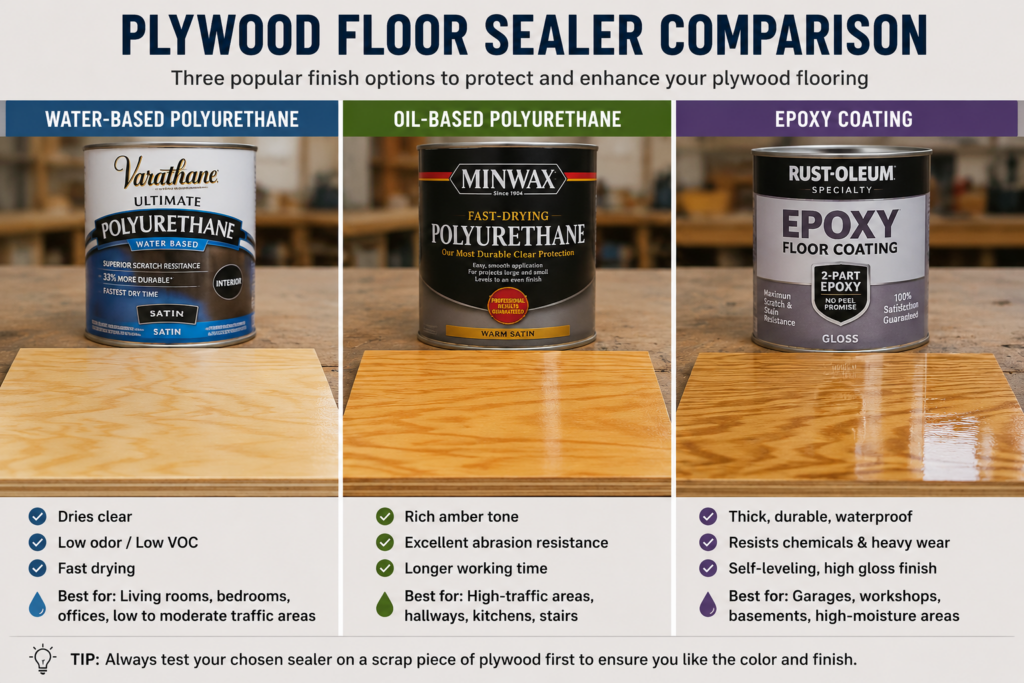
Selecting the correct topcoat is essential to achieving a long-lasting, waterproof plywood flooring setup. Not all plywood performs equally well as a finished floor. If you’re still choosing materials, see our guide to the best plywood for flooring to ensure your subfloor or top planks can handle the finish. Different sealers offer distinct visual finishes and levels of protection, which significantly affect how to seal plywood flooring successfully so it withstands foot traffic and accidental spills.
Water-Based Polyurethane: The most popular modern choice for interior living spaces. It dries exceptionally fast, emits low odors (fewer volatile organic compounds, or VOCs), and dries completely clear. It is ideal for preserving the natural, pale tone of birch or maple plywood without yellowing over time.
Oil-Based Polyurethane: The traditional heavy hitter for high-traffic zones. Oil-based poly penetrates deep into the wood fibers, leaving a hard, amber-toned protective layer. While highly durable, it emits strong odors during application and features a significantly longer drying window.
Epoxy Coating: Best reserved for heavy utility areas, workshops, or high-moisture zones. Epoxy creates a thick, self-leveling plastic barrier over the wood. It provides unparalleled waterproofing capabilities but strips away the natural tactile feel of bare timber.
Best Sealer by Situation
Situation
Recommended Finish
Living Room
Water-Based Poly
Workshop / Garage
Epoxy
High-Traffic Hallway
Oil-Based Poly
Modern Light Wood Floor
Water-Based Poly
Rustic Farmhouse Look
Oil-Based Poly
Sealer Performance & Coverage Metrics
Understanding product coverage rates and curing behaviors ensures you purchase the right amount of material and avoid costly floor damage from moving furniture back into the room too early.
Cure Time vs. Drying Time
Many DIYers confuse “dry to the touch” with “fully cured.” While you can walk on a dry floor in socks, the chemical hardening process takes much longer.
Sealer Type
Dry Time
Recoat Window
Full Cure Time
Water-Based Polyurethane
2–4 hours
4 hours
7 days
Oil-Based Polyurethane
8–12 hours
24 hours
30 days
Epoxy Coating
12 hours
24 hours
7 days
Material Coverage Estimator
Plywood is highly absorbent and will aggressively soak up your first layer of finish. Use this coverage matrix to properly calculate your shopping list metrics:
Product Type
Estimated Coverage (per Gallon)
Primary Structural Benefit
Water-Based Poly
400–500 sq. ft.
Low odor, non-yellowing, fast turnaround
Oil-Based Poly
350–450 sq. ft.
Rich amber tone, maximum abrasion resistance
Epoxy
100–200 sq. ft.
Thick, self-leveling, ultra-waterproof barrier
How to Seal Plywood Flooring Step-by-Step
Transforming bare plywood into a sleek, functional floor requires patience and strict adherence to correct preparation principles. Skipping mechanical steps like sanding will compromise sealer adhesion, leading to rough textures or flaking topcoats in high-traffic areas later.
1. Prep and Sand the Surface: Requires a random orbital sander.
Plywood has a slick, manufactured sheen that repels sealers if left untreated. Begin by sanding the entire floor with 120-grit sandpaper using a random orbital sander. This opens the wood pores so the sealer can penetrate deeply and bond with the fibers. For your final pass, switch to 220-grit sandpaper to create a perfectly smooth surface.
2. Fill the Seams and Flaws:1-2 hours dry time.
Inspect the floor for any voids, knots, or recessed nail heads. Use a high-quality, paintable wood filler to pack these gaps tightly. If you are going for a seamless look, fill the joints between the plywood sheets as well. Allow the filler to dry completely according to the package directions, then sand those areas flush with 220-grit paper.
3. The Zero-Dust Clean: Critical for a smooth finish.
Any dust left behind will get permanently trapped in your topcoat, creating a gritty texture. Vacuum the floor thoroughly with a hard-surface attachment. Follow this up by wiping down the entire floor with a tack cloth or a microfiber cloth lightly dampened with mineral spirits (for oil-based finishes) or water (for water-based finishes). Let the floor dry completely.
4. Seal the Edges and Perimeter: Do this first for each coat.
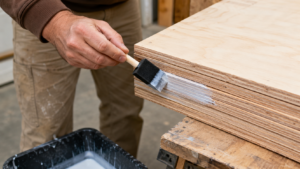
Using a high-quality 2.5-inch angled sash brush, “cut in” around the perimeter of the room and along the baseboards. Pay special attention to the exposed edges of the plywood near thresholds; raw edges absorb moisture rapidly and need a heavy, deliberate coat of sealer to prevent future warping.
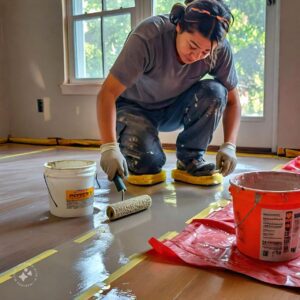
Pour your sealer into a paint tray. Using a short-nap roller (1/4-inch or 3/8-inch) or a microfiber applicator pad, roll the sealer onto the floor in long, even strokes, working with the grain of the wood. Always work from the furthest corner back toward the exit door. Do not roll over areas that have already begun to dry, or you will create visible lap marks.
6. The Recoat Window & Between-Coat Sanding: Varies by product type.
Let the first coat dry. Water-based poly requires 2 to 4 hours, while oil-based poly needs a full 24 hours. Once dry, lightly hand-sand the entire floor with 320-grit sandpaper or a maroon buffing pad. This removes “grain raise” (tiny wood fibers that stand up when wet) and creates a mechanical bond for the next layer. Vacuum and wipe away dust again.
7. Build the Wear Layer: Minimum 3 coats recommended.
Repeat the application and light sanding process for the second coat. For a high-traffic flooring surface, a third coat is mandatory. Do not sand after your final coat. Once the last layer is down, respect the cure timeline: wait at least 24 hours for light foot traffic (in socks), and a full 7 to 30 days before moving heavy furniture or rugs back into the space.
Critical Application Tip: Never shake your can of polyurethane before or during application. Shaking introduces micro-bubbles into the liquid that get permanently trapped as the finish dries, leaving your floor covered in tiny, abrasive bumps. Always stir the mixture gently with a flat stir stick.
How Many Coats Do You Need When Learning How to Seal Plywood Flooring?
When configuring your project workflow, the magic number is almost always three coats.
The first coat functions primarily as a primer—the porous face grain absorbs it unevenly, leaving patchiness behind. The second coat fills the remaining micro-fissures and begins constructing a uniform visual film. The third coat establishes the actual structural wear layer, delivering the depth and physical protection required to withstand dropping keys, shuffling shoes, or moving chairs. This multi-layer method is the industry-standard approach for anyone learning how to seal plywood flooring for long-term residential use.
Maintaining Sealed Plywood Flooring
Getting a beautiful finish is only half the battle; preserving it ensures your hard work stands the test of time. For projects in moisture-prone rooms, our waterproof plywood guide explains which panels provide the best long-term durability underneath your protective coatings.
Daily Cleaning Control: Avoid wet-mopping or puddling water. Use a damp microfiber mop alongside a pH-neutral wood cleaner. Excess moisture can still manage to slip into unsealed seams between planks if left standing.
Scratch Mitigation: Place heavy-duty felt protective pads under all furniture legs, couches, and tables. Keep your pet’s nails clipped regularly to avoid micro-abrasions in the clear topcoat.
Air Circulation & Rugs: Employ breathable area rugs in high-traffic entry areas. Avoid heavy rubber-backed mats, which can trap ambient humidity underneath and permanently discolor your cured finish.
The Maintenance Refresh: Plan to lightly buff and apply a fresh single coat of polyurethane every 3 to 5 years in high-traffic pathways to prevent walking entirely through the finish down to bare timber. Understanding these rules is a critical step in mastering the art of sealing plywood flooring for decades of heavy use.
Testing Your Seal: The Water Bead Test
Before declaring your project a complete success, you should verify the structural integrity of your wear layer. Pour a few drops of water onto a high-traffic section of the floor. If the water tightly beads up on the surface, your sealer is intact and performing perfectly. If the water flattens out or begins to darken the wood fiber within two minutes, your floor lacks adequate protection and requires an immediate additional coat of polyurethane.
Cost to Seal Plywood Flooring
Budgeting for materials depends heavily on your project’s surface area and the product tier you choose.
Product
Average Cost (per Gallon)
Water-Based Polyurethane
$45–$75
Oil-Based Polyurethane
$35–$65
Epoxy Floor Coating
$80–$180
For most standard rooms, expect to spend roughly $0.40–$1.25 per square foot, depending on the finish selected, factoring in the required three coats and basic sanding supplies.
Frequently Asked Questions
Can you use plywood as finished flooring?
Yes. When properly sanded, filled, stained, and protected, high-grade structural plywood (such as ACX or Baltic Birch) makes an incredibly stylish, modern, and budget-friendly wide-plank or seamless floor.
What is the best sealer for plywood floors?
For standard residential traffic and everyday moisture protection, a premium polyurethane is the gold standard. Choose a water-based formula to retain natural wood color or an oil-based formula for a traditional, warm amber sheen.
Is plywood flooring waterproof after sealing?
It becomes highly water-resistant, easily repelling normal spills, damp mopping, and pet tracking if wiped up promptly. However, topical sealers do not make natural wood 100% waterproof against standing floods or plumbing failures.
No, this is highly discouraged. Modern factory plywood frequently leaves behind a slick, compacted mill glaze. Sanding breaks this layer open, creating the necessary profile for your topcoat to chemically and mechanically anchor itself without peeling off down the line.
How long does sealed plywood flooring last?
With three properly applied coats of polyurethane and normal maintenance, sealed plywood flooring typically lasts 7 to 10 years before requiring a maintenance recoat.
Conclusion
If you follow the proper preparation, edge sealing, and topcoat application process, sealing plywoodflooring is a straightforward, highly rewarding DIY project. A properly finished and waterproofed plywood flooring installation can reliably last 7 to 10 years before requiring a comprehensive maintenance refresh, keeping daily scratches, heavy foot traffic, and household spills completely at bay. A properly finished and sealed plywood floor can provide years of service while maintaining the natural beauty of the wood grain.
To ensure your layout project is built on the right foundation, consider checking out this instructional walkthrough on How To Protect Plywood Floors DIY, which covers the critical importance of protecting subfloor layers from moisture-induced delamination before laying your finishes.
Related Posts:
How to Seal Exterior Plywood: Edges, Primer & Sealers by Admin August 18, 2026 DIY To seal exterior plywood, seal all four edges first with the same primer you're using on the faces (or a paintable water-repellent preservative if you're…