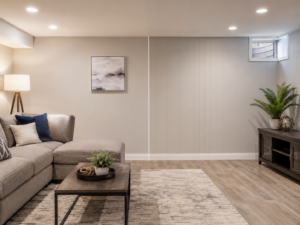
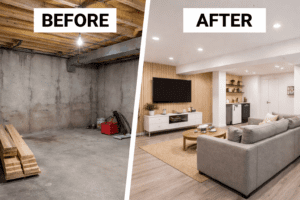
Comparing basement flooring options requires more attention to moisture than choosing flooring for an above-grade room. That slab sits directly on soil, and soil can continually supply moisture to a below-grade slab, so the floor you choose has to hold up to moisture pushing from underneath.
Below is every realistic basement flooring option, ranked by how it handles moisture, with honest installed-cost ranges and the mistakes that cost people the most money.
Quick answer: what is the best flooring for a basement?
For most below-grade basements, rigid-core luxury vinyl plank (SPC) is the strongest all-around choice. The plank itself is waterproof, it installs as a floating floor over minor slab imperfections, and it lands in the mid price range at roughly $4 to $10 per square foot installed. That said, a waterproof plank is not a free pass: SPC still comes with manufacturer requirements for slab moisture limits, flatness, vapor control, and underlayment, and ignoring them may invalidate warranty coverage. Tile and epoxy can be highly durable but cost more and are harder to install. Solid hardwood and standard laminate are poor fits below grade.
⚠️ Warning: read this before you shop for flooring. Excess slab moisture can damage flooring systems, adhesives, coatings, and materials beneath otherwise waterproof flooring. “Waterproof” describes the flooring material, not the moisture moving through the concrete under it. A waterproof floor installed over a wet slab can still trap moisture against the concrete and grow mold underneath the flooring, where you won’t see it until it smells. Deal with moisture first, floor second. Every option below assumes you’ve handled that.
Basement flooring options ranked by moisture resistance
Here’s the honest hierarchy, from “shrugs off standing water” to “poor fit below grade.”
Epoxy coating – bonds to the slab and cures waterproof, but sensitive to slab moisture during and after curing
Porcelain or ceramic tile – waterproof surface, though grout and thinset need a dry, sound, prepped slab
Rubber tile / rolled rubber – waterproof material, warm, common in gyms and playrooms
Polished or stained concrete – you keep the slab as the finished floor; moisture performance depends on the sealer and the slab
WPC vinyl (wood-plastic composite core) – often warranted as waterproof, but confirm the specific product’s rating rather than assuming
Engineered wood – handles humidity far better than solid wood, but not standing water
Carpet tile with moisture-resistant backing – warm, but only over a proven-dry slab
Laminate – higher-risk below grade; the fiberboard core swells when it absorbs water, so only consider a product specifically approved for below-grade use
Solid hardwood – not recommended below grade; it cups, gaps, and warps with slab moisture
The first six are the ones to shortlist for a real, damp, working basement. The bottom two are the ones people install anyway and regret.
Basement flooring cost comparison
These approximate national installed-cost ranges include materials and labor. Actual prices vary by location, product quality, slab preparation and project size, so use them as budgeting estimates rather than contractor quotes.
Flooring
Installed cost per square foot
Water resistance
DIY-friendly
Sheet vinyl
$2–$6
Waterproof material
Moderate
Rigid-core LVP/SPC
$4–$10
Waterproof plank
Yes
Vinyl tile (LVT)
$2–$6
Waterproof material
Yes
Polished or stained concrete
$3–$7
Depends on sealer and slab
No
Epoxy coating
$3–$12
Waterproof when cured; vapor-sensitive
Moderate
Ceramic or porcelain tile
$4–$10+
Waterproof surface; preparation matters
Difficult
Rubber tile or rolled rubber
$4–$12
Waterproof material
Yes
Engineered wood
$4–$12
Not suitable for standing water
Moderate
Carpet or carpet tile
$1.50–$8
Requires a tested, dry slab
Yes for tiles
For an 800-square-foot basement, that’s roughly $1,600 to $8,000 depending on which row you pick, before any moisture mitigation. Moisture control and slab prep are usually the line items that move the total the most.
The one mistake that ruins basement floors
❌ The #1 mistake: installing the floor before proving the slab is dry.
This is the single most expensive error, and it’s the one nearly everyone makes because a dry-looking slab feels like a green light. Concrete is porous. Moisture moves through it as invisible vapor, driven up from the soil, even when the surface reads dry to the touch and hasn’t seen a leak in years.
Lay a waterproof floor over that slab and the vapor has nowhere to go. It condenses on the back of the flooring, lifts glue-down products, and feeds mold in the dark gap between the floor and the concrete. By the time you notice, usually a musty smell or a soft spot, you’re tearing out a floor you paid to install once.
Flooring manufacturers publish a maximum slab moisture limit for exactly this reason. Install over a slab above that limit and two things happen: the floor may fail early, and the resulting damage may not be covered by the warranty. Before you buy anything, get clear on what your slab is doing and how to control it with a proper basement slab moisture and vapor-control check.
The real test: how to check basement moisture yourself
🧪 Run this before you spend a dollar on flooring.
You don’t need a contractor for a first read on your slab. The plastic-sheet method is a recognized preliminary screening test based on ASTM D4263, and it costs almost nothing:
Tape a 2-foot square of clear 6-mil plastic sheeting flat to the bare concrete, sealing all four edges with tape so it’s airtight.
Leave the plastic sealed in place for at least 16 hours, then inspect it for condensation or darkened concrete.
Condensation on the underside of the plastic, or a darkened patch of concrete beneath it, means moisture is actively moving up through the slab.
Two things to understand about this test. It’s an indication of moisture, not proof that the slab is dry enough for a specific flooring product, which is exactly how ASTM describes it. And a clean, dry result is reassuring but not a number.
Use the concrete moisture-test method required by the flooring manufacturer. Depending on the product, that may be ASTM F1869, ASTM F2170, or another specified method.
This article contains affiliate links. If you purchase through these links, we may earn a commission at no additional cost to you.
You can run the preliminary plastic-sheet screening with 6-mil poly sheeting and suitable tape. Quantitative calcium-chloride testing requires a dedicated concrete moisture test kit and careful adherence to its instructions.
Waterproof vs. water-resistant: the difference that matters below grade
These two words get used interchangeably in showrooms, and the gap between them is where basements go wrong.
Waterproof describes flooring material that won’t absorb water or swell, such as SPC vinyl, sheet vinyl, cured epoxy, tile, and rubber. Standing water on top won’t destroy it.
Water-resistant describes material that shrugs off spills and humidity for a while but breaks down under real water exposure. Engineered wood lives here.
One caution: “waterproof” is a claim about the material, not about the finished floor over a wet slab, and product ratings vary. WPC vinyl, for example, is often warranted as waterproof, but you should confirm the rating on the specific product rather than assume it from the core type.
For a basement, default to waterproof material. A finished basement can flood from a failed water heater, a backed-up floor drain, or a heavy storm, and water-resistant flooring treats those events as a countdown. The one exception worth its price is engineered wood in a dry, tested, dehumidified basement where you want the look of real wood and accept the risk.
The regret people describe most often
😬 The regret: “I saved money on the floor and spent it twice.”
The most common version starts with laminate, chosen because it looks like hardwood and costs less than tile. It photographs beautifully for a year. Then a humidity swing works into the fiberboard core, the plank edges swell and chip, and the floor has to come out, because laminate can’t be spot-repaired once the core is compromised. Below grade, that’s a real risk unless the specific product is rated for it.
The second common regret is skipping the subfloor. Floating vinyl straight onto cold, bare concrete saves a step, then leaves you with a floor that’s cold underfoot year-round and telegraphs every low spot in the slab. A subfloor can help, but only the right kind: raised dimpled-panel systems create an air and drainage gap that lets incidental moisture dry, while a conventional plywood-and-sleeper buildup can trap moisture and decay if it’s built without proper vapor control and clearance. Before the finish floor goes down, plan how to build a basement subfloor over concrete.
Best basement flooring by situation
Different basements have different problems. Match the floor to yours.
Damp basement with a history of moisture
Go with sheet vinyl, SPC rigid-core plank, or epoxy over a properly mitigated slab. All three are waterproof as materials and forgiving. Note that epoxy in particular is sensitive to slab moisture: vapor drive or hydrostatic pressure can cause blistering, whitening, or delamination, so the slab has to be tested and prepped before coating. Pair the finished floor with a basement dehumidifier sized for the space so the room stays under 50% relative humidity.
Basement that occasionally floods (floor drain, sump zone)
Skip anything with a seam or a core that can trap water. Sealed concrete, epoxy, or loose-lay sheet vinyl you can pull and dry are the sane choices. Sealed concrete’s water performance depends entirely on the sealer holding up, so choose the product for your actual moisture load and never glue anything down over a flood-prone slab.
Finished basement living space or bedroom
This is where SPC plank over a raised subfloor shines: waterproof plank, warmer underfoot, quiet, and it looks like the rest of the house. Carpet tile with a moisture-resistant backing is a comfortable secondary option over a proven-dry slab, because you can lift and replace a single damaged tile instead of the whole room.
Home gym, playroom, or workshop
Rubber tile is purpose-built for this: waterproof, cushioned, and nearly indestructible. It installs without adhesive and pulls up if the slab ever gets wet — look for interlocking rubber floor tiles.
Tile over the slab
Porcelain and ceramic give you a waterproof surface, but tile is unforgiving of a slab that moves or holds moisture. The slab has to be flat, sound, moisture-tested, and often isolated with an uncoupling or crack-isolation membrane. The same prep discipline covered in preparing a subfloor for tile applies over a basement slab.
What flooring is best for a basement that gets damp? Waterproof flooring over a moisture-mitigated slab: sheet vinyl, rigid-core SPC vinyl plank, or epoxy. All three handle surface water differently but still require a properly tested and prepared slab — none of them will save you if the slab moisture isn’t handled first.
Can I put laminate flooring in a basement? It’s a higher-risk choice. Standard laminate has a fiberboard core that swells when it absorbs moisture, and basements have constant vapor drive from the slab. Only consider a laminate specifically approved for below-grade use, or choose waterproof vinyl instead for a similar wood look.
Do I need a subfloor in my basement? For comfort and moisture safety it usually helps, but the type matters. A raised dimpled-panel system creates an air and drainage gap that lets incidental moisture dry, while a poorly built plywood-and-sleeper buildup can trap moisture. Floating vinyl straight on bare concrete works but stays cold and telegraphs low spots.
How do I test if my basement slab is too wet for flooring? Start with the plastic-sheet screening method (ASTM D4263): tape a 2-foot square of 6-mil plastic to the bare slab, wait, and check for condensation underneath. That only indicates moisture. For a definitive result, use the moisture-test method the flooring manufacturer requires — that may be ASTM F1869, ASTM F2170, or another specified method.
Is vinyl plank really waterproof in a basement? Rigid-core SPC vinyl plank is waterproof as a material; it won’t absorb water or swell. But that says nothing about the slab underneath. Moisture can still collect between the plank and the concrete, so slab moisture control comes first, and the manufacturer’s slab-moisture spec still applies.
What’s the cheapest basement flooring that still handles moisture? Sheet vinyl is the cheapest waterproof option at roughly $2 to $6 per square foot installed. Sealed or stained concrete can be cheaper if you already have a sound slab, though its moisture performance depends on the sealer and the slab condition.
Best Basement Wall Systems: 7 Options Compared by Admin August 27, 2026 DIY The best basement wall systems do more than cover bare concrete. A properly designed wall assembly must control moisture, reduce condensation, insulate the foundation, provide…