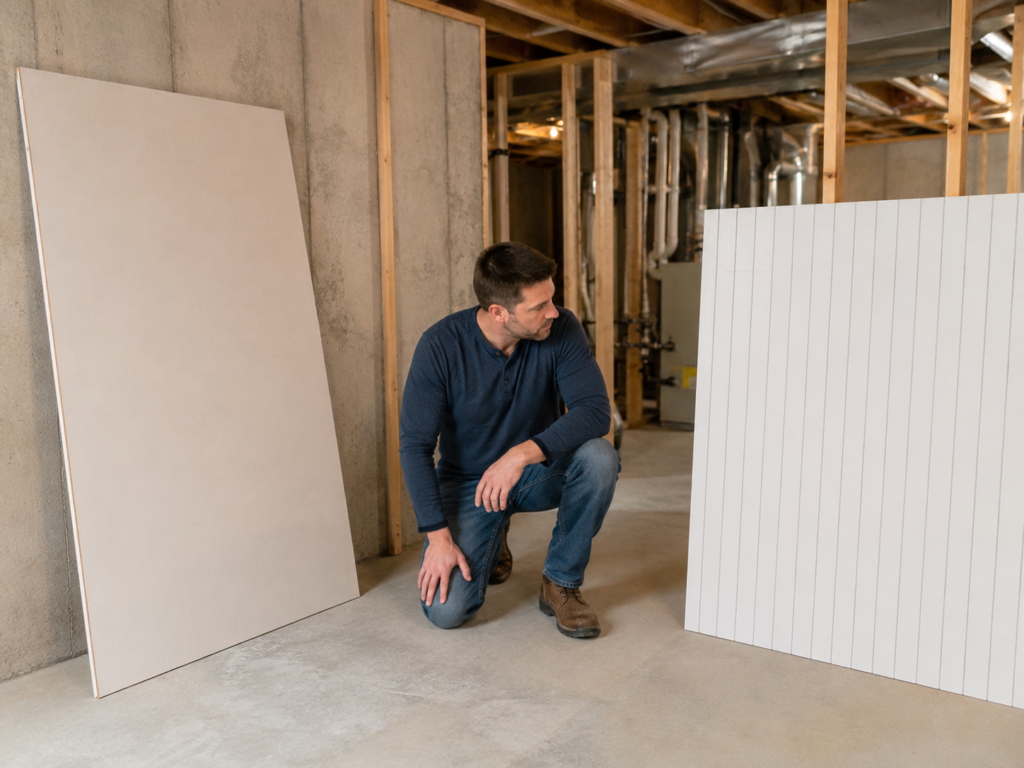
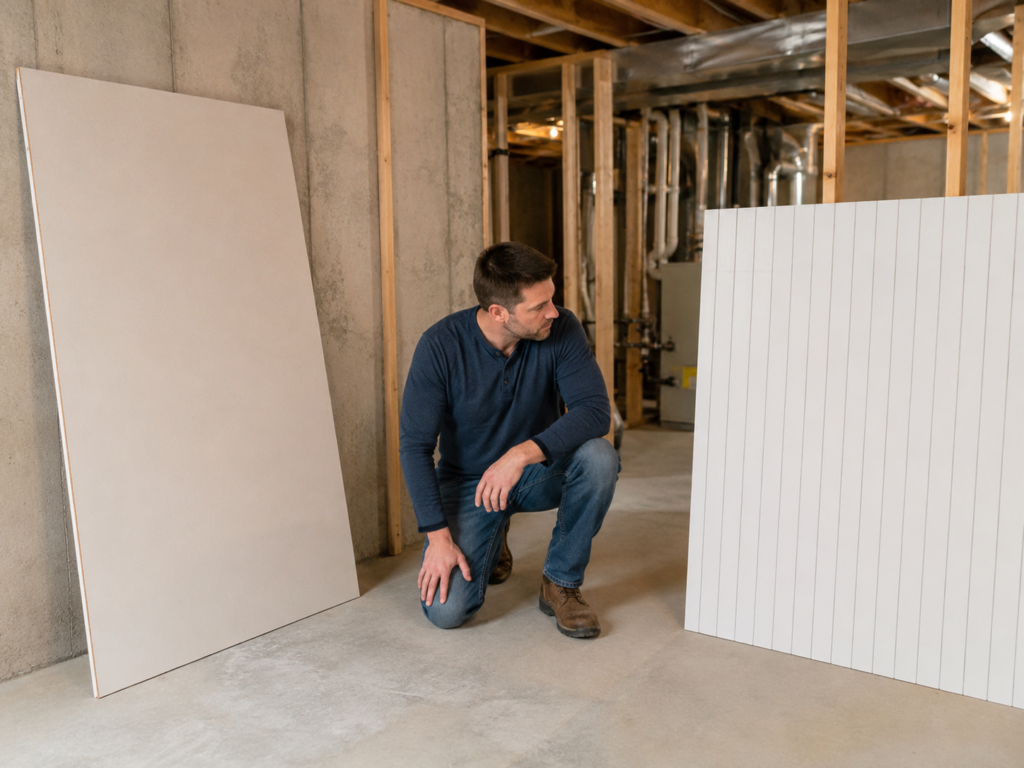
Finishing a basement usually comes down to one wall decision: basement wall panels vs drywall. Drywall is cheaper, smoother, and easier to customize, but it performs poorly when basement moisture becomes a problem. Basement wall panels cost more, but many are built from inorganic, moisture-resistant materials that are better suited for below-grade spaces.
For a dry basement, drywall can be the better value. For a damp basement, a musty basement, or any basement with past seepage, wall panels are usually the safer long-term choice.
Factor
Drywall
Basement Wall Panels
Upfront cost
Lower
Higher
Moisture resistance
Poor to moderate
Strong
Flood recovery
Often requires tear-out
Often removable/dryable
Appearance
Best finished look
More limited
DIY difficulty
Moderate to hard
Easier if DIY system
Repair access
Poor
Better
Best for
Dry basements
Damp or questionable basements
Quick Answer: Are Basement Wall Panels Better Than Drywall?
Basement wall panels are better than drywall if your basement has any moisture history, musty odor, efflorescence, seepage, or past flooding. They cost more upfront, but they reduce the risk of mold, hidden wall damage, and future demolition.
Drywall is better if your basement is truly dry, properly drained, and you want the cleanest finished look for the lowest upfront cost. The safest drywall approach is not standard drywall over fiberglass batts. It is rigid foam against the foundation, moisture-safe framing details, and paperless or mold-resistant drywall where appropriate.
The Core Difference Between Wall Panels and Drywall
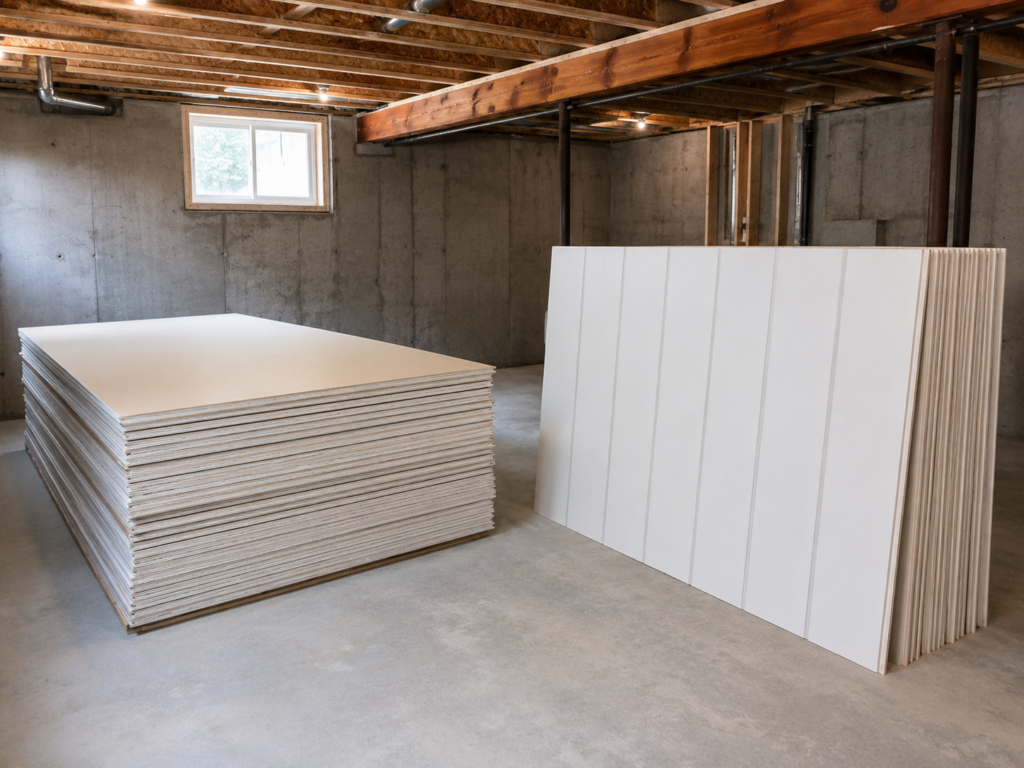
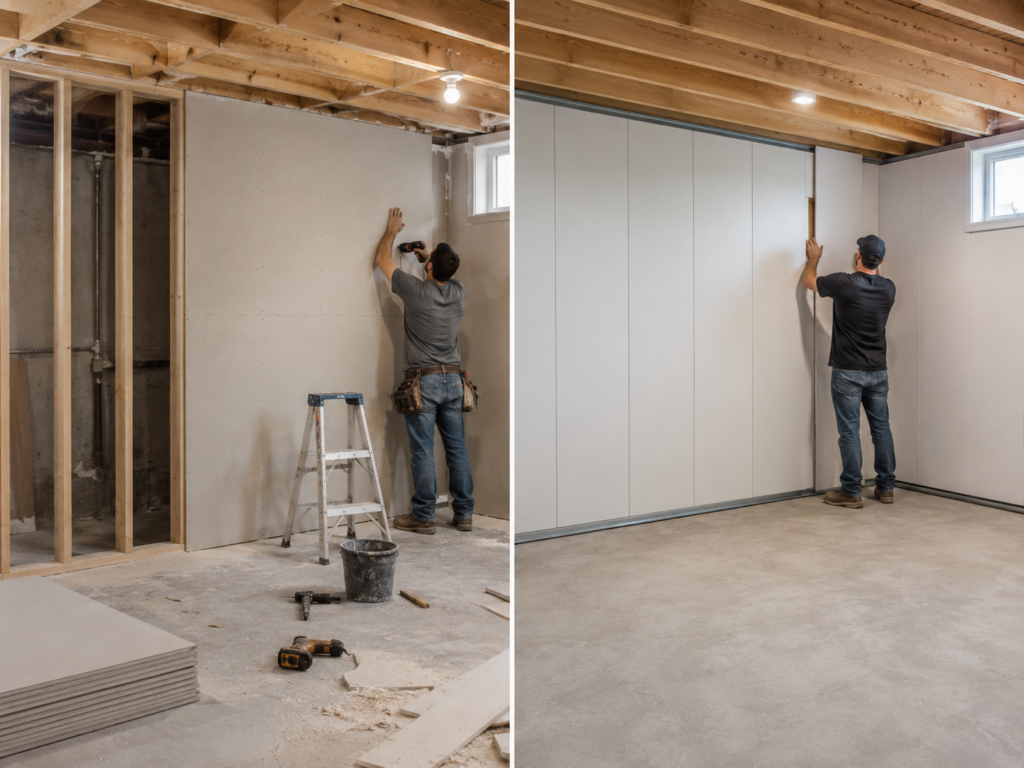
Drywall (gypsum board) is a paper-faced panel with a gypsum core, screwed to wood or steel framing, then taped, mudded, sanded, primed, and painted. It’s cheap per sheet and infinitely customizable, but the paper facing — along with dust and organic debris that collect on it — gives mold something to grow on the moment it stays wet. The gypsum core itself mainly holds moisture and loses strength, which is why EPA guidance treats porous materials like drywall as difficult or impossible to fully clean once mold takes hold.
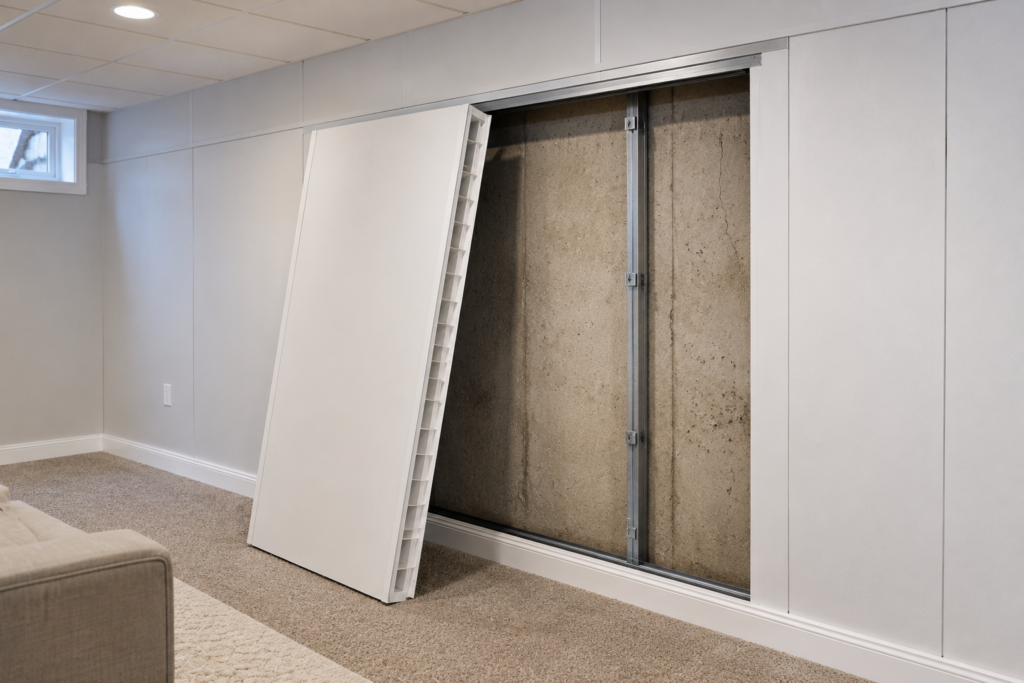
Basement wall panels are engineered systems designed specifically for below-grade conditions. Most are made from inorganic materials — expanded polystyrene (EPS) foam cores, PVC facings, magnesium oxide board, or cement-based skins — that don’t absorb water and don’t support mold growth. Many basement finishing systems include integrated insulation and a built-in air gap that lets the foundation wall breathe behind the finished surface.
That single difference — organic vs. inorganic materials — drives almost every other comparison in this article.
Moisture Resistance: The Deciding Factor for Most Basements
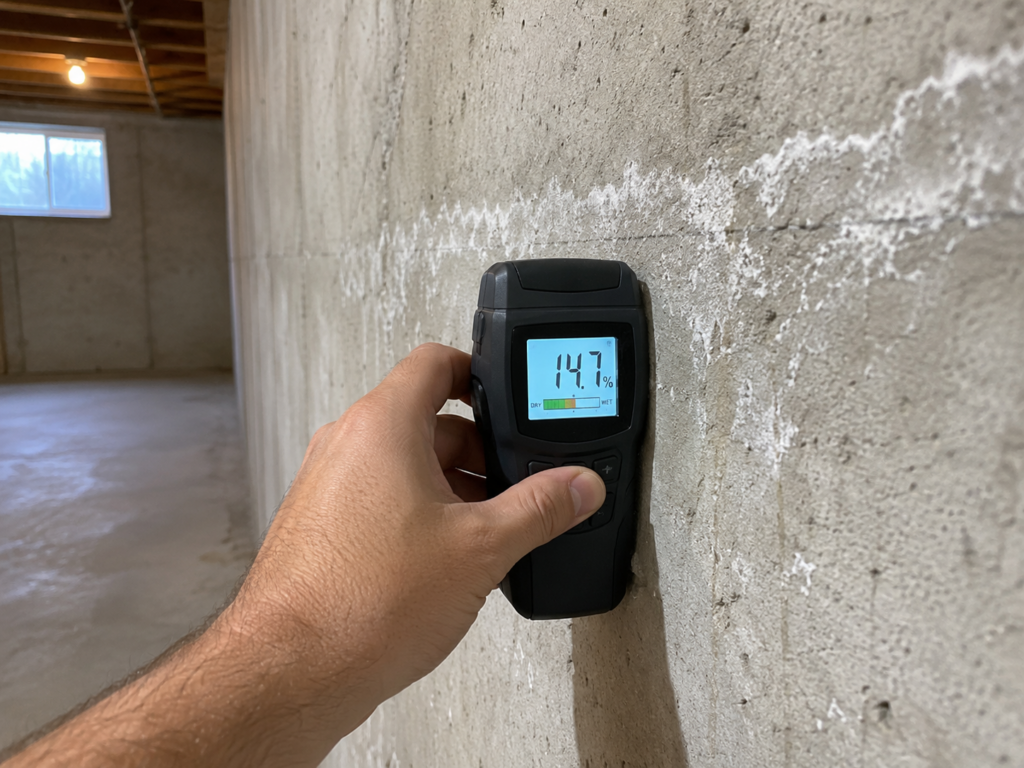
Basements are below grade, which means the concrete foundation is in constant contact with soil moisture. Even a basement that has never visibly flooded is moving water vapor through the concrete every day. Before choosing either wall system, check the actual moisture level of your foundation walls — a moisture meter takes the guesswork out of this, and readings taken after a heavy rain tell you far more than readings taken during a dry week.
How Drywall Handles Basement Moisture
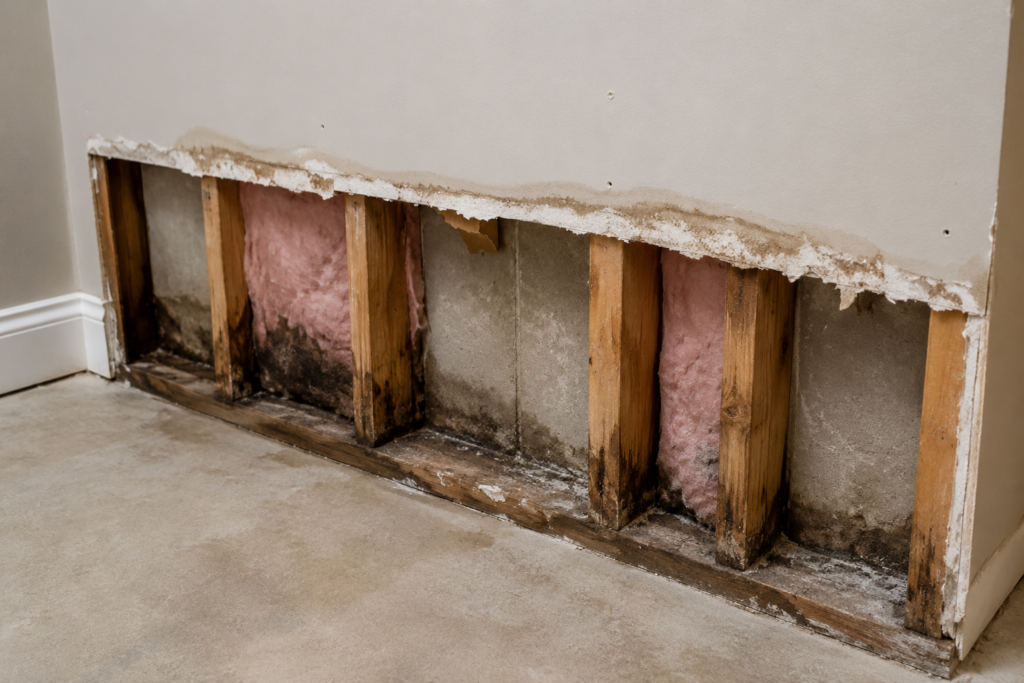
Standard drywall in a basement handles moisture poorly. The paper facing wicks water upward from even minor floor seepage, and mold can establish itself inside the wall cavity long before you see staining on the surface. Mold-resistant drywall and paperless drywall perform better in a basement, but they slow the problem rather than solve it. If your basement floods even once, drywall that has wicked water typically needs to be cut out and replaced — usually the bottom two feet, minimum.
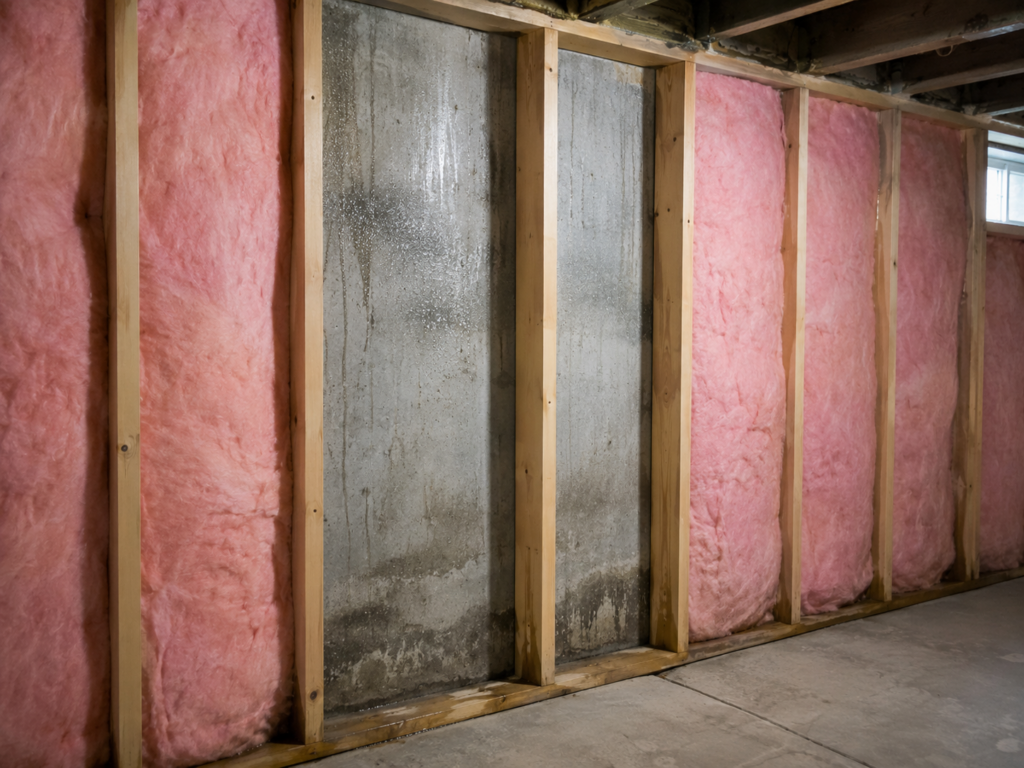
The bigger risk hides behind the drywall: fiberglass batt insulation against a cold foundation wall traps condensation, and the wood framing sits in that damp cavity. This is the classic recipe for the hidden damage that eventually shows up as rotted rim joist repair jobs. Pairing drywall with a proper basement vapor barrier and rigid foam insulation instead of batts dramatically reduces this risk — but it adds cost and steps that many finished-basement projects skip.
How Wall Panels Handle Basement Moisture
Purpose-built waterproof basement wall panels are essentially immune to the same conditions. EPS foam and PVC don’t absorb water, don’t support mold, and don’t lose R-value when damp. If a basement with panel walls takes on an inch of water, the typical fix is drying the floor — not demolition. Systems with an air gap behind the panel also allow incidental foundation seepage to drain down to the perimeter without ever touching the finished surface.
For basements with any moisture history — efflorescence on the walls, a musty smell, past seepage — panels aren’t just the better option; drywall is arguably the wrong one.
When Drywall Is a Bad Idea in a Basement
Drywall is a poor choice when the basement has active seepage, recurring humidity, visible efflorescence, a musty smell, previous flooding, or foundation cracks that have not been repaired. Under those conditions, drywall can hide the problem rather than solve it.
The most dangerous setup is standard drywall over wood framing with fiberglass insulation directly against a cold concrete wall. That assembly can trap condensation inside the wall cavity, where the homeowner cannot see it. Building Science guidance favors foam-based basement insulation strategies that keep moisture-sensitive framing and paper-faced gypsum away from the concrete or masonry foundation wall.
If you still want drywall, use a moisture-managed wall assembly: rigid foam against the foundation, air sealing, treated or steel framing where appropriate, and a drywall product that matches the basement’s risk level.
Cost Comparison: Upfront vs. Lifetime
Drywall Costs
Drywall wins decisively on upfront material cost. Expect roughly $2.00–$3.50 per square foot installed for hung, taped, and painted drywall, plus framing and insulation. A typical 1,000-square-foot basement perimeter might run $4,000–$8,000 all-in for framed, insulated, finished drywall walls.
Wall Panel Costs
Panel systems run substantially higher — commonly $7–$18 per square foot installed depending on the brand and whether it’s a DIY-friendly product or a dealer-installed basement finishing system like Owens Corning’s. The same 1,000-square-foot basement could cost $10,000–$25,000 in panels.
The Lifetime Math
The gap narrows when you price in risk. One flood event that forces a drywall tear-out, mold remediation, and rebuild can erase the entire savings in a single afternoon. Panels also bundle insulation into the product, eliminating a separate line item. If your basement is bone-dry and has a working perimeter drain and sump, drywall’s upfront savings are real. If there’s any doubt, the panel premium is cheap insurance.
Installation: DIY Difficulty and Timeline
Installing Drywall
Drywall requires framing first — either a full 2×4 stud wall or furring strips over rigid foam. Then hanging, taping, three coats of mud, sanding, priming, and painting. It’s dusty, slow, and the finishing stage is genuinely skill-dependent; bad taping is visible forever. A competent DIYer can do a basement over several weekends, but most homeowners hire out at least the finishing.
If you frame with wood, keep the bottom plate off the slab with a sill gasket and use pressure-treated lumber at the floor. Untreated pine sitting on damp concrete slowly wicks up moisture, then decays where you can’t see it until the damage is structural.
Most panel systems install faster and cleaner. Many attach directly to the foundation with tracks or adhesive, skipping framing entirely, and there’s no mud, no sanding, and no dust. Interlocking tongue-and-groove panels go up at a pace of a room per day. The tradeoff is less flexibility: cutting panels around windows, ducts, and electrical requires the manufacturer’s methods, and some dealer-installed systems don’t allow DIY at all.
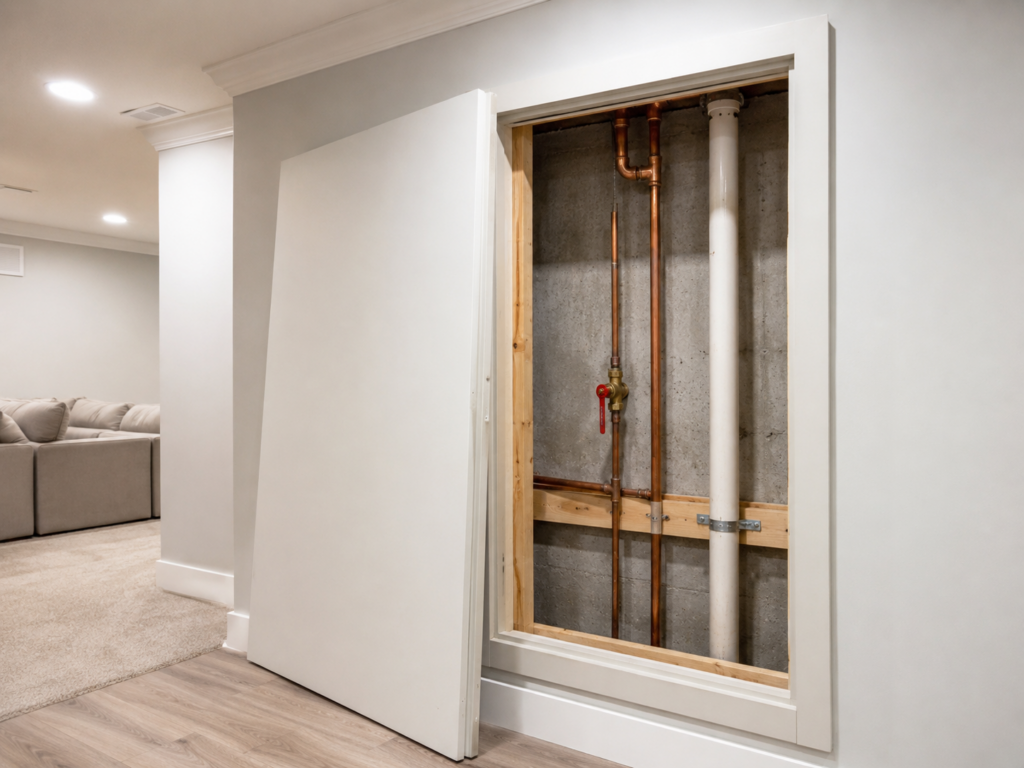
One practical note: panel systems handle wiring through pre-cut chases or removable sections, while drywall gives an electrician a completely open wall cavity. If your basement plan involves a lot of outlets, lighting circuits, or a media wall, rough-in is simpler with framed drywall.
Repairability and Access
This is an underrated category where panels quietly win. Basements hide the house’s critical infrastructure — main water shutoff, cleanouts, foundation walls you may someday need to inspect or waterproof. Drywall entombs all of it. Any plumbing leak, foundation crack repair, or electrical change means cutting holes and re-finishing.
Most panel systems are removable and reinstallable. Unscrew the trim, pop the panel, do the work, put it back. No patching, no repainting, no color-matching five-year-old paint.
Drywall counters with easy cosmetic repair: a doorknob hole or dent is a $10 patch-and-paint fix anyone can do. A cracked or damaged proprietary panel means ordering a replacement from the manufacturer — assuming the product line still exists.
Appearance and Resale Value
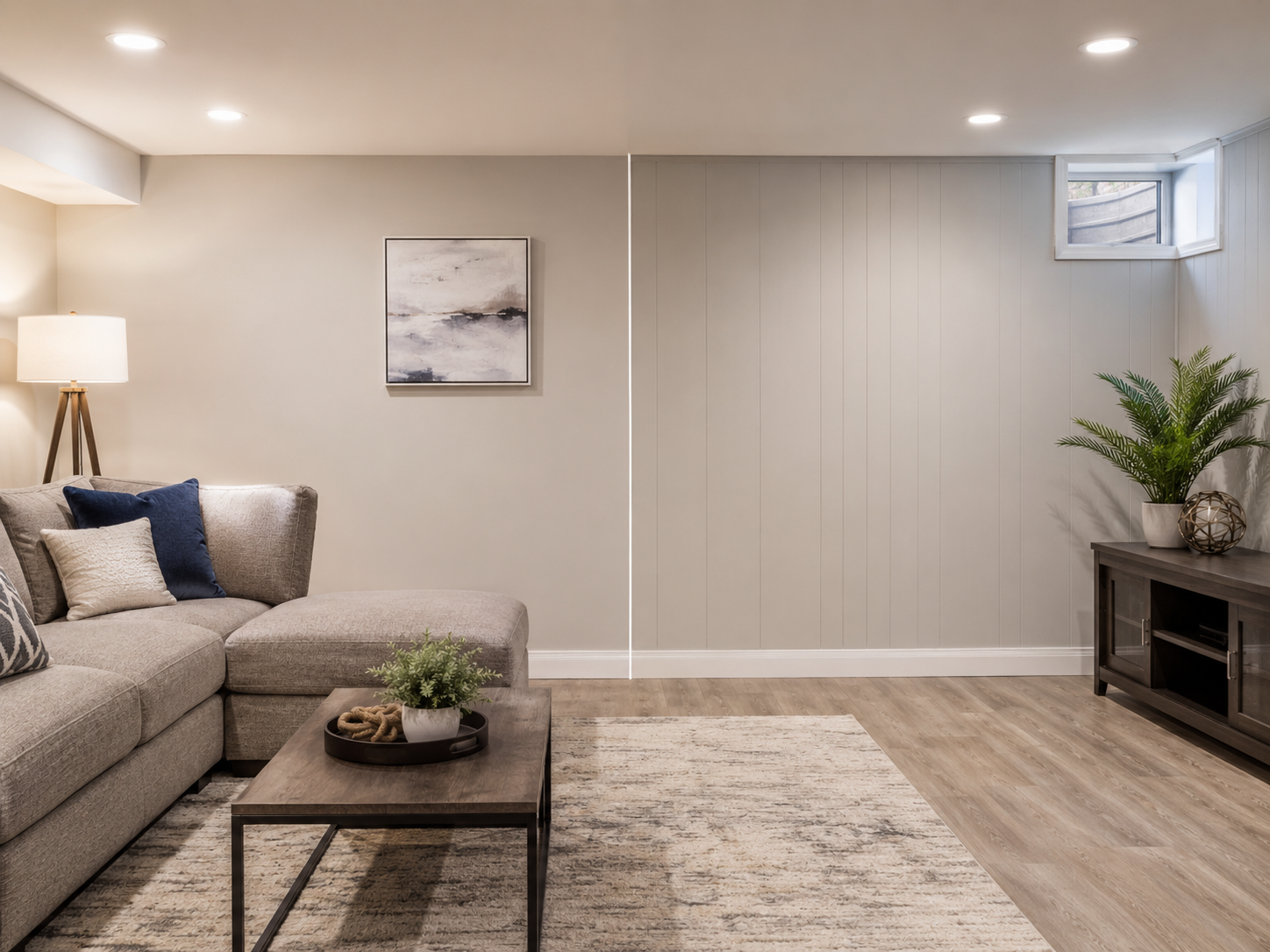
Drywall wins on looks, full stop. It delivers the seamless, painted, “upstairs” finish that buyers expect, takes any color, and accepts trim, wainscoting, and built-ins without compromise. A drywalled basement reads as finished living space to an appraiser and to buyers.
Panels have improved, but most still look like panels — visible seams on a grid, a limited palette of off-whites and neutrals, and a slightly commercial character. Some buyers recognize premium systems and value the moisture engineering; others just see “not drywall.” If maximum resale polish in a dry basement is the goal, drywall has the edge. If the basement has a moisture story the buyer’s inspector will find anyway, documented moisture-proof panels can actually become a selling point.
Insulation and Comfort
Panels typically include EPS foam with R-values around R-11 to R-13 built into the product, applied continuously across the wall with no thermal bridging through studs. That continuous insulation, directly against the foundation, is exactly what building science recommends for below-grade applications.
Drywall’s insulation performance depends entirely on what you put behind it. Fiberglass batts between studs against bare concrete is the risky, outdated approach. Rigid foam against the foundation with framing in front matches or beats panel R-values — it just has to be specified and done correctly. If you’re going the drywall route, the assembly behind the wall matters as much as the drywall itself, the same way choosing the best plywood for a subfloor matters more than the flooring that goes over it.
Which Should You Choose?
Choose basement wall panels if:
Your basement has any moisture history — seepage, efflorescence, humidity, or a past flood
You want the fastest, cleanest installation with no framing, mudding, or dust
Future access to foundation walls and plumbing matters to you
You’re willing to pay 2–3x more upfront for near-zero moisture risk
Choose drywall if:
Your basement is verifiably dry with proper exterior drainage and a working sump system
Budget is the primary constraint
You want a seamless, fully customizable, paint-grade finish
You’re pairing it with rigid foam insulation and a correct vapor management strategy — not bare batts against concrete
The hybrid approach deserves mention: many builders use rigid foam against the foundation, steel or treated framing, and moisture-resistant paperless drywall. It costs more than standard drywall, less than panel systems, and captures most of the moisture protection while keeping the drywall finish. For many basements, this is the sweet spot.
Frequently Asked Questions
Are basement wall panels worth it?
Yes, basement wall panels are worth it when moisture risk is real. They cost more upfront than drywall, but they can prevent expensive tear-outs after seepage, flooding, or hidden mold problems.
Is drywall okay in a basement?
Drywall is okay in a basement only when the basement is dry and the wall assembly is built correctly. Standard drywall with fiberglass batts against concrete is a risky setup.
What is the cheapest way to finish basement walls?
Drywall is usually the cheapest finished-wall option, especially if you already have framing in place. Painted concrete, fabric panels, plywood, and basic wall paneling can also be cheaper, but they may not create the same finished living-space appearance.
Which basement wall material is best for moisture resistance?
Inorganic materials are best for moisture. EPS foam panels, PVC-faced panels, cement board, magnesium oxide board, and other non-paper-faced systems usually handle basement dampness better than standard drywall.
Do basement wall panels look as good as drywall?
Usually no. Drywall gives the cleanest finished look because it creates a seamless painted surface. Basement panels are more moisture-safe, but some systems have visible seams or a more commercial appearance.
Can you replace drywall with wall panels in a basement?
Yes. Many homeowners replace basement drywall with wall panels after water damage, mold, or repeated moisture problems. The old drywall and wet insulation should be removed first, and the moisture source should be corrected before installing any new wall system.
Final Thoughts
The drywall vs. panel decision is really a moisture decision wearing a budget costume. Verify your basement’s actual conditions first — check walls with a moisture meter after wet weather, look for efflorescence, and confirm your drainage works. A dry basement makes drywall a smart, economical choice. A questionable one makes panels the cheaper option over a ten-year horizon, no matter what the per-square-foot math says today.