Building a backyard shed is an excellent investment, but its longevity hinges entirely on the materials you choose. Select the right wood, and your shed will easily withstand decades of heavy lawnmowers, torrential rains, and winter snow loads. Make the wrong choice, and you’ll be dealing with sagging floors, rotting walls, and structural failure within just a few years.
Among all the available building materials, plywood remains the gold standard for shed construction. However, walking down the lumber aisle can be overwhelming. With options ranging from CDX and ACX to pressure-treated and T1-11, how do you know which type belongs where?
This comprehensive guide breaks down the best plywood for sheds, analyzing every structural component—floors, walls, siding, and roofs—so you can build a structure that lasts a lifetime.
What is the Best Plywood for a Shed?
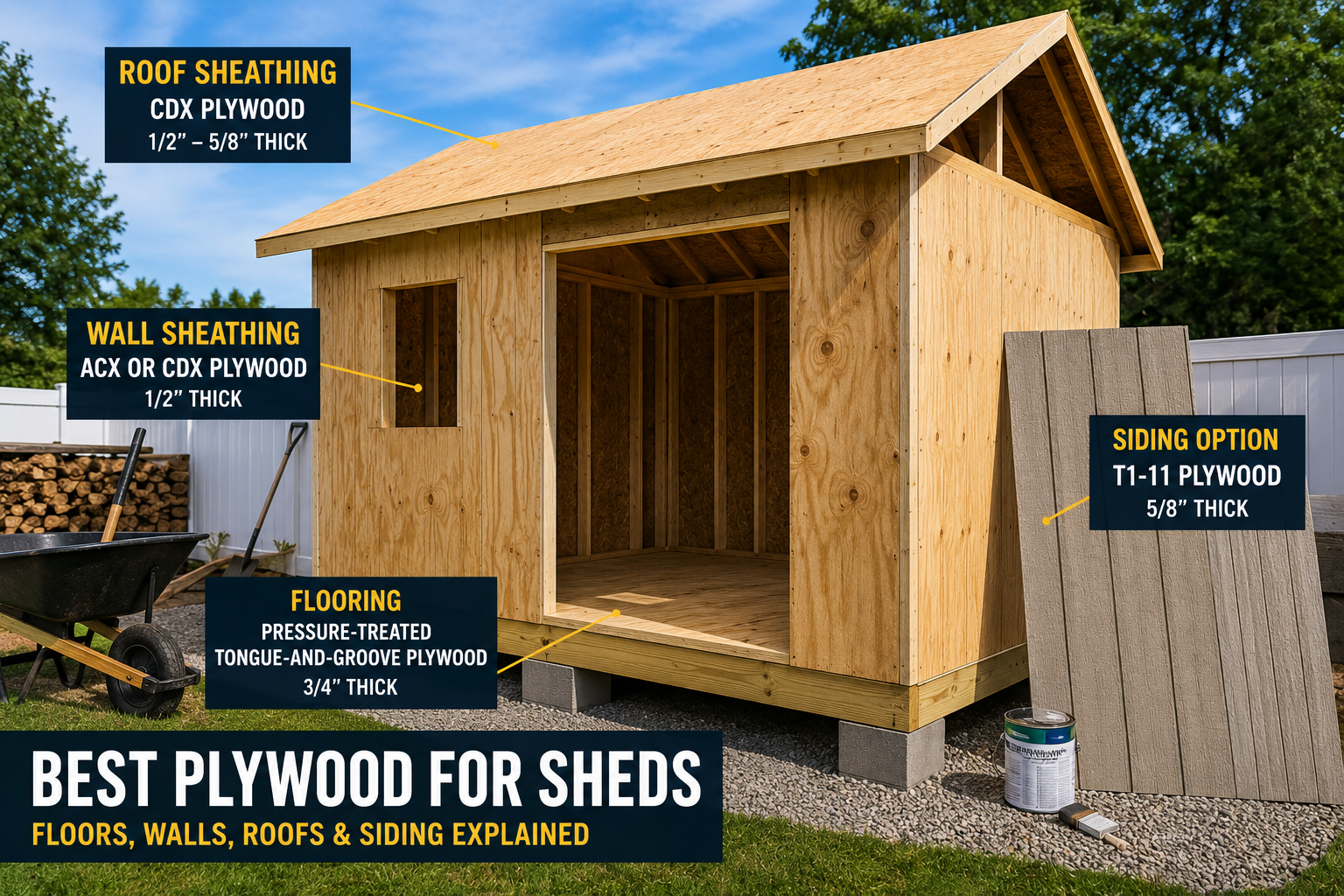
The best plywood for a shed floor is 3/4-inch pressure-treated tongue-and-groove plywood. For walls, use 1/2-inch exterior-rated plywood or T1-11 siding. For roofs, 1/2-inch to 5/8-inch CDX plywood is the industry standard.
Quick-Reference Material Selection
Shed Part
Best Plywood
Thickness
Floor
Pressure-Treated T&G
3/4″
Walls
ACX or CDX
1/2″
Siding
T1-11
5/8″
Roof
CDX
1/2″ – 5/8″
Why Most Shed Failures Start With Moisture
Understanding the environmental threats your shed faces clarifies why picking the right plywood grade is so vital. The vast majority of structural shed failures are not caused by physical weight or wear and tear; they are caused by water damage.
Sheds face distinct moisture threats at every level:
Ground Moisture: Damp air and soil moisture evaporate directly beneath the shed floor, creating a constant high-humidity trap that attacks unprotected subfloors.
Splash-Back Rain: Rainwater dripping from the roof edges hits the ground and splashes dirt and water back up against the bottom 6 to 12 inches of your shed walls, accelerating rot in standard panels.
Roof Leaks: Even minor shingle or flashing failures allow water to pool on the roof decking, leading to immediate delamination if non-exterior glues are present.
Poor Ventilation: Green wood, wet tools, or stored mowers generate internal humidity. Without a resilient material on the inside faces, trapped dampness triggers mold and rot from the inside out.
Choosing specific, purpose-rated plywood panels prevents these localized moisture issues from turning into structural disasters.
Understanding Plywood Grades and Ratings
Before diving into specific shed components, it is crucial to understand how plywood is graded. Plywood is categorized by two primary systems: letter grades (A, B, C, and D), which indicate the quality of the veneer face, and exposure ratings (Exterior vs. Exposure 1).
A-Grade: Smooth, sanded, and virtually knot-free. Excellent for painting or staining.
B-Grade: Solid surface with minor flaws or neat repairs (patches).
C-Grade: Contains visible knots up to 1.5 inches and minor splits.
D-Grade: Unregistered knots and larger defects. Typically used for backings or where hidden.
Additionally, our comprehensive Plywood Types Explained guide highlights the importance of the exposure rating. Exterior plywood is manufactured with 100% waterproof glue and is designed to handle permanent exposure to the elements. Exposure 1 plywood (often seen on CDX) uses waterproof glue but is only meant to handle moisture during construction delays before being covered by roofing or siding.
The Ultimate Base: Best Plywood for Shed Floors
The shed floor bears the brunt of the abuse. Whether you are parking a heavy riding lawnmower, storing heavy-duty shelving units, or setting up a woodworking shop, the floor requires maximum structural integrity and moisture resistance.
Because the underside of a shed floor sits just inches above the ground, it is constantly exposed to rising earth moisture and trapped humidity. Therefore, standard plywood will quickly delaminate and rot.
The Verdict: 3/4-Inch Pressure-Treated Tongue-and-Groove
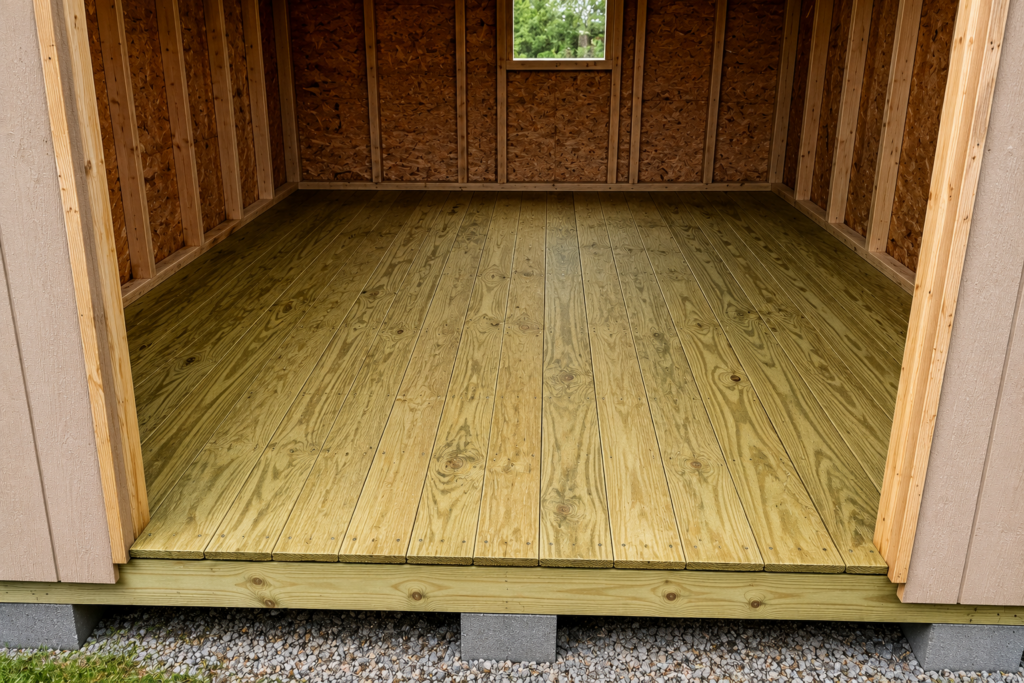
For a premium, long-lasting build, 3/4-inch pressure-treated tongue-and-groove (T&G) plywood is the undisputed champion.
The pressure-treated plywood shed floor prevents fungal decay and wood-boring insects from compromising the foundation. The “tongue-and-groove” profile means the edges of the plywood sheets interlock. This distributes heavy wheel loads across multiple panels, preventing the edges from flexing or sagging between floor joists.
If you are on a tight budget, you can use 3/4-inch CDX or standard Exposure 1 subfloor plywood, but you must paint the underside with a high-quality exterior primer and moisture barrier before installation. However, investing in factory-treated shed floor plywood is always the safer bet.
Installation Tips for Shed Floors
Leave a Gap: Even pressure-treated wood expands. Leave a 1/8-inch gap between panels to allow for natural movement.
Fastener Choice: Always use hot-dip galvanized or stainless-steel screws. The chemicals used in pressure-treated wood will corrode standard framing nails.
Standing Tall: Best Plywood for Shed Walls and Siding
Shed walls serve a dual purpose: they provide racking strength (preventing the shed from tilting or collapsing sideways under wind loads) and act as the backdrop for your exterior finish.
When choosing plywood for shed walls, you need to decide whether you want the structural sheathing covered with vinyl/wood siding or an all-in-one product that serves as both the sheathing and the finished siding.
Option 1: 1/2-Inch Exterior Plywood (Sheathing + Separate Siding)
If you plan to wrap your shed in vinyl siding, metal panels, or cedar shingles, your best option is 1/2-inch CDX or ACX exterior-grade plywood.
This provides a rock-solid structural shear wall. Refer to our Exterior Plywood Guide for a deep dive into how these grades handle structural loads. Once nailed to the studs, this layer is wrapped in house wrap (like Tyvek) and covered with your siding of choice.
Option 2: T1-11 Plywood (All-in-One Siding)
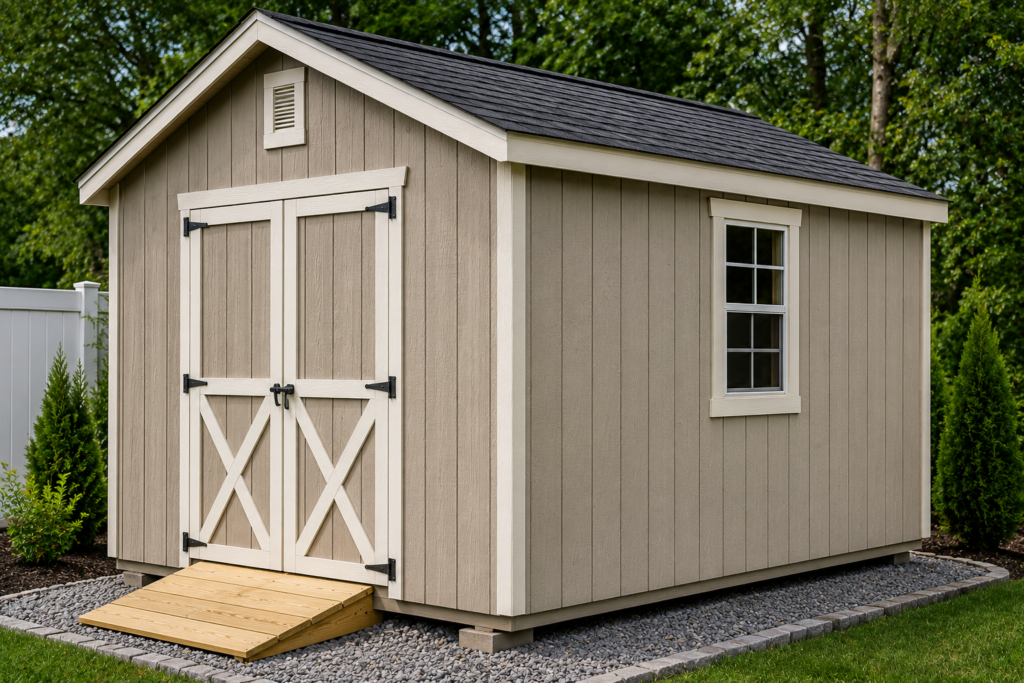
If you want to save time and material costs, T1-11 siding is the industry favorite. T1-11 is a structural plywood panel featuring vertical grooves scored into the face, mimicking the look of traditional vertical board-and-batten siding.
T1-11 is typically available in 1/2-inch and 5/8-inch thicknesses. It is rated for permanent exterior exposure, but it must be stained or painted to prevent moisture absorption. It serves as both your structural wall sheathing and your final exterior siding, cutting your installation time in half.
Weather Protection: Best Plywood for a Shed Roof
The roof of your shed takes the brunt of the sun’s UV rays, heavy rains, and snow accumulation. A sagging roofline not only looks unprofessional but also leads to water pooling and catastrophic leaks.
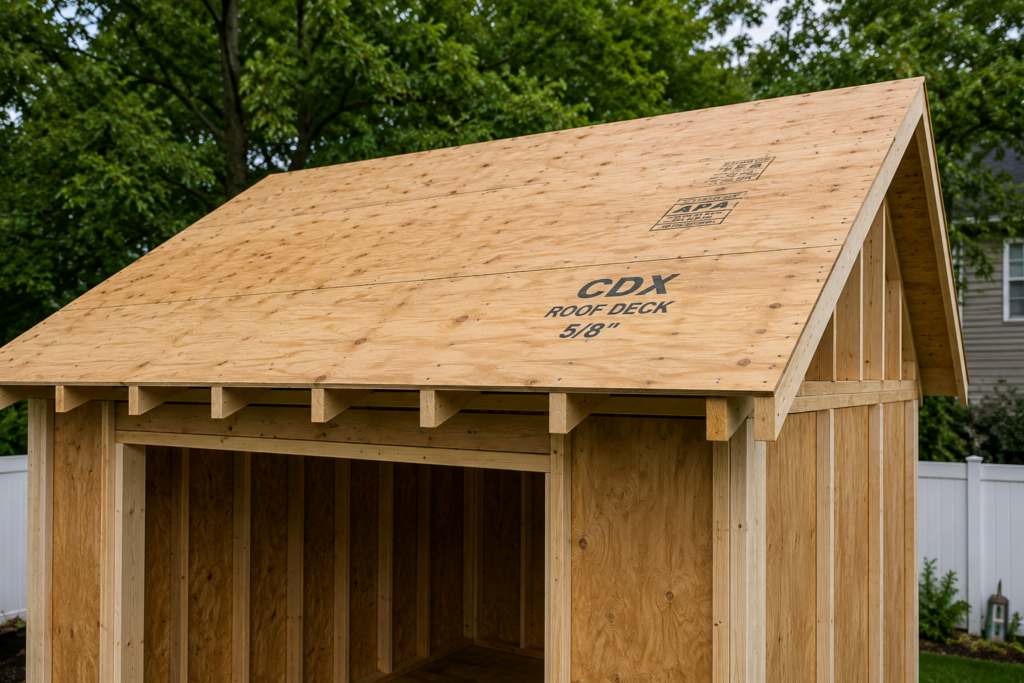
The undisputed industry standard for shed roof decking is 1/2-inch CDX plywood. If you live in an area prone to heavy snow loads, upgrading to 5/8-inch CDX plywood offers excellent insurance against sagging between rafters.
The “C” and “D” faces mean the plywood will have visible knots and imperfections, which do not matter since the wood will be completely hidden under roofing felt (or synthetic underlayment) and shingles. The “X” denotes exposure, meaning the glue can withstand moisture during the building phase without delaminating.
For more details on why this specific grade works so well under shingles, check out our dedicated guide on CDX Plywood.
Why Avoid Thinner Options?
Some builders try to save money by using 3/8-inch plywood for the roof. Do not do this. Thinner plywood will flex under the weight of a person installing shingles and will eventually sag between the rafters, ruining the look and integrity of your roofline.
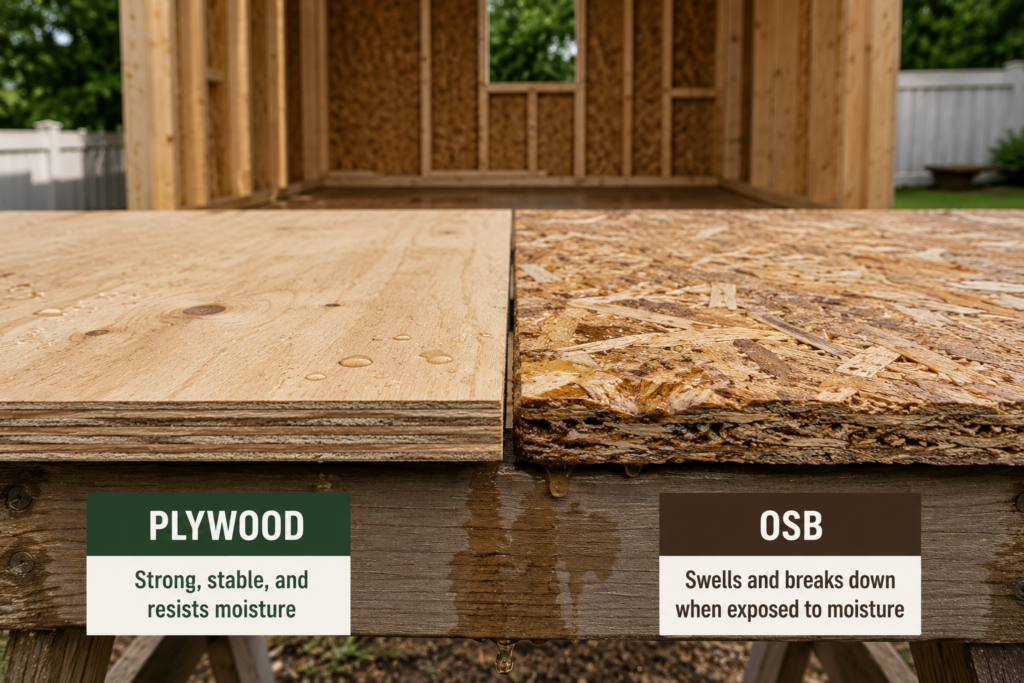
The Great Debate: OSB vs. Plywood for Sheds
You cannot talk about shed construction without addressing Oriented Strand Board (OSB). OSB is made by compressing wood strands with adhesive resins under immense pressure. It is often cheaper than plywood, leading many budget-conscious builders to consider it.
Feature
Plywood
Oriented Strand Board (OSB)
Moisture Resistance
Excellent; swells evenly and shrinks back to size when dried.
Poor; edges swell permanently when exposed to water.
Structural Stiffness
Higher cross-grain strength; less likely to sag over time.
Slightly more pliable; prone to sagging if spans are wide.
Weight
Lighter and easier to handle during solo builds.
Heavier and denser than standard plywood.
Cost
Moderately higher investment.
Highly budget-friendly.
While OSB is perfectly acceptable for the roof decking and wall sheathing of a shed—provided it is immediately covered with a waterproof barrier—it should never be used for a shed floor or left exposed as siding. When OSB gets wet, its edges swell permanently, causing the material to flake, weaken, and eventually rot.
Plywood handles moisture cycling much better, making it the superior choice for high-moisture exterior environments. For a deeper look at water-resistant alternatives, check out our breakdown of Waterproof Plywood Types.
How Much Does Shed Plywood Cost?
Lumber prices can fluctuate based on market conditions, your geographic location, and current supply chains. However, having a general baseline helps you budget your shed build accurately.
The table below breaks down current typical retail prices for the standard plywood choices discussed in this guide:
Plywood Prices and Estimations
Plywood Type
Standard Thickness
Typical Price Per 4×8′ Sheet
Best Used For
CDX
1/2″
$25 – $45
Shed Roof & Wall Sheathing
ACX
1/2″
$40 – $65
Premium Walls / Siding Underlayment
T1-11
5/8″
$45 – $80
All-in-One Shed Siding
Pressure-Treated (PT) T&G
3/4″
$60 – $100
Heavy-Duty Shed Floors
Pro-Tip: When planning your budget using our Plywood Prices index, always include a 10% material waste factor to account for miscuts and custom-angled roof pitches.
Frequently Asked Questions (FAQ)
Can I use plywood instead of OSB for a shed?
Yes. In fact, many builders prefer plywood because it handles repeated wetting and drying cycles better than OSB and is less likely to suffer permanent edge swelling.
What thickness plywood should I use for a shed floor?
You should use at least 5/8-inch plywood, but 3/4-inch tongue-and-groove plywood is highly recommended. The extra thickness prevents the floor from flexing under heavy loads such as lawn mowers, toolboxes, or ATVs.
Is OSB or plywood better for sheds?
Plywood is generally better for sheds due to its superior moisture resistance and rigidity. OSB can be safely used for wall sheathing and roof decking if covered immediately with weather barriers, but plywood should always be chosen for the floor and exterior siding.
Can I use pressure-treated plywood for shed walls?
While you can, it is generally unnecessary and highly inefficient. Pressure-treated plywood is prone to warping and bowing as it dries out, making it difficult to install clean exterior siding. Instead, use standard 1/2-inch exterior plywood or T1-11 siding, and protect it with paint or stain.
What is the best plywood for a shed roof?
The industry standard is 1/2-inch to 5/8-inch CDX plywood. It offers the perfect balance of strength, weight, and affordability, providing an excellent nailing base for felt paper and shingles.
Yes. Because a shed foundation sits close to the ground, damp air and moisture will get trapped beneath the structure. Standard plywood will absorb this moisture, leading to mold, rot, and structural failure. Pressure-treated wood contains chemical preservatives that prevent this decay.
Is T1-11 good for shed siding?
Yes, T1-11 is one of the best and most popular materials for shed siding. It combines structural wood sheathing and an attractive, paintable vertical siding pattern into one single sheet, saving both labor and material costs.
Final Verdict
For most sheds, use 3/4-inch pressure-treated tongue-and-groove plywood for floors, 1/2-inch exterior plywood or T1-11 for walls, and 1/2-inch to 5/8-inch CDX for roofs. Spending a little more on the right plywood during construction can add years to your shed’s life and prevent costly repairs later.
Related Posts:
Best Plywood for Bathroom Walls, Subfloors & Vanities by Amy Reed November 24, 2025 Installing Plywood is ideal for bathrooms because of its strength, moisture resistance, and adaptability to any residential construction project. Choosing the best plywood for bathrooms depends…