Wood Hardener vs Epoxy Consolidant: What’s the Difference?
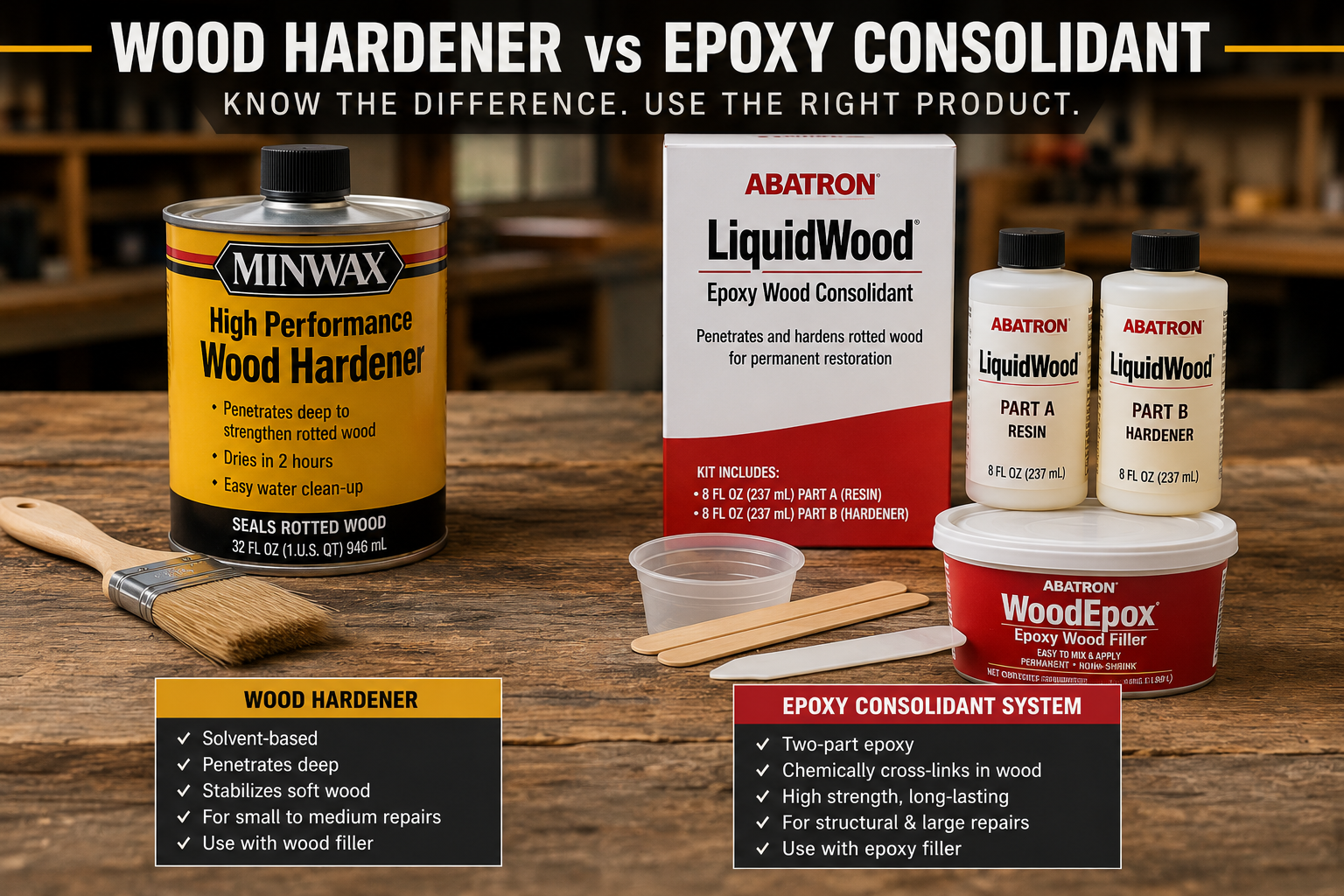
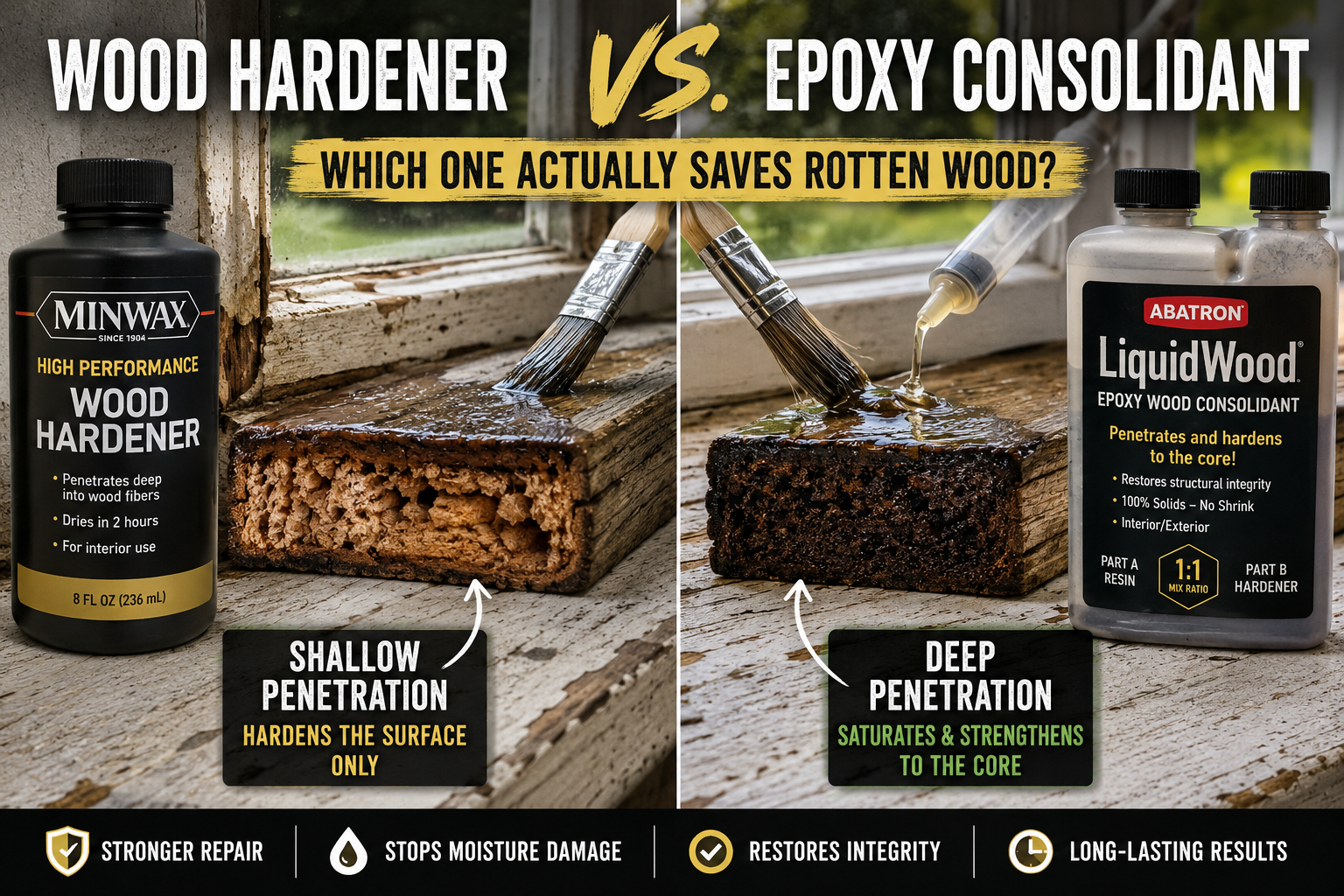
Wood hardener and epoxy consolidant systems side by side for rot repair comparison

Most people buying wood hardener and epoxy consolidant assume they’re buying the same product in different bottles. They’re not. Using one when you need the other is one of the most common reasons rot repairs fail within a few years — the wood looks fine on the surface, the repair holds for a season or … Read more
Categories DIY

Best Epoxy Wood Filler: Top Picks for Rot Repair

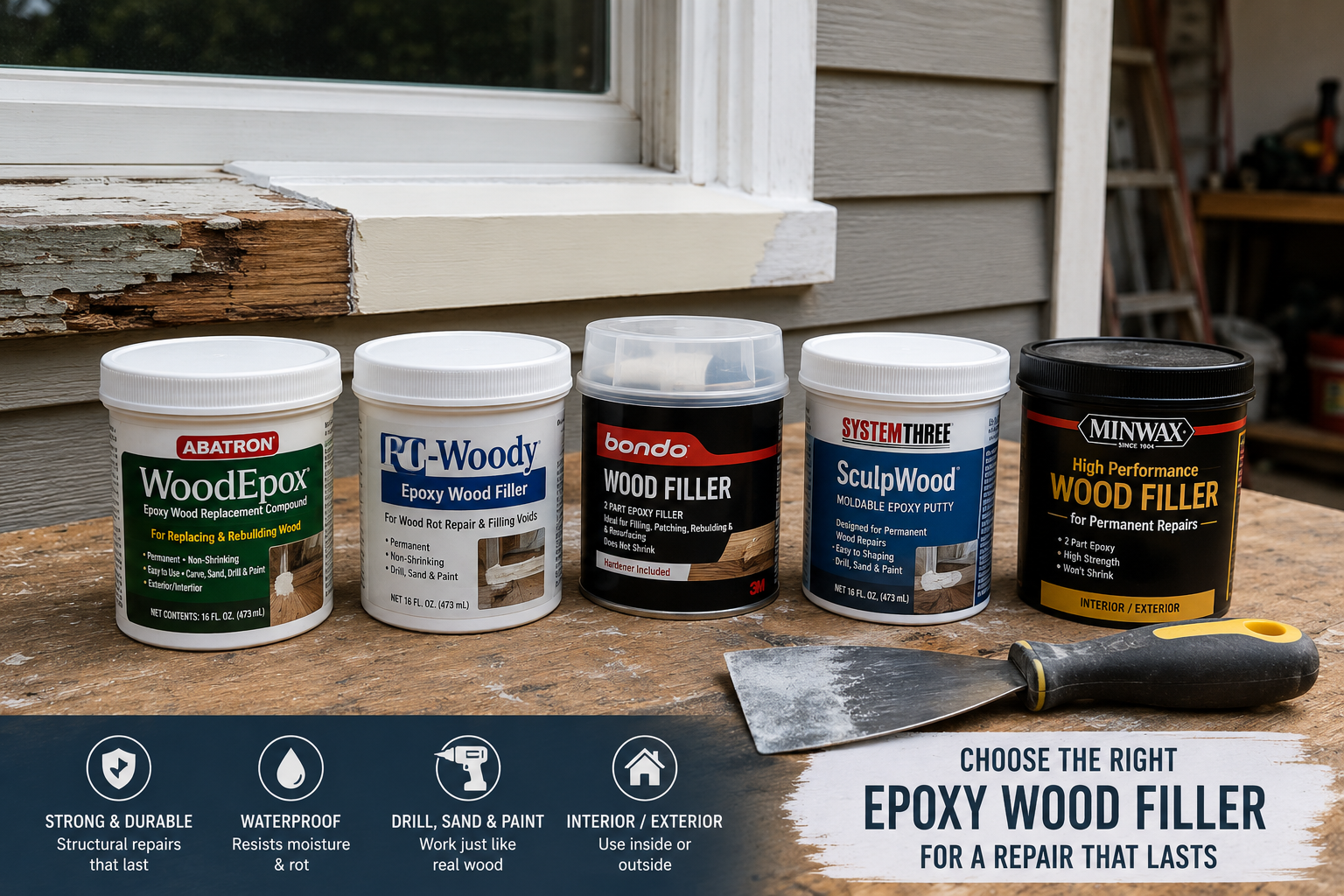
Best epoxy wood filler products compared for rot repair and structural wood repairs

Not all epoxy wood fillers are the same product. The one that works well on a painted window sill is not the one you want on a rotted rim joist. The one that’s easy to sand smooth on trim is not the one rated for load-bearing repairs. Picking the wrong product doesn’t always fail immediately … Read more

Categories DIY

Wood Hardener vs. Epoxy Consolidant: The Ultimate Wood Restoration Guide

Wood hardener and epoxy consolidant used on rotted window sill repair

When you encounter punky, rotted wood on a vintage window sill, a porch column, or a timber framing member, your immediate instinct is to save it rather than rip it out. However, choosing the wrong stabilization method is a recipe for total failure. The debate between standard water- or solvent-based wood hardeners and professional-grade, two-part … Read more

Categories DIY

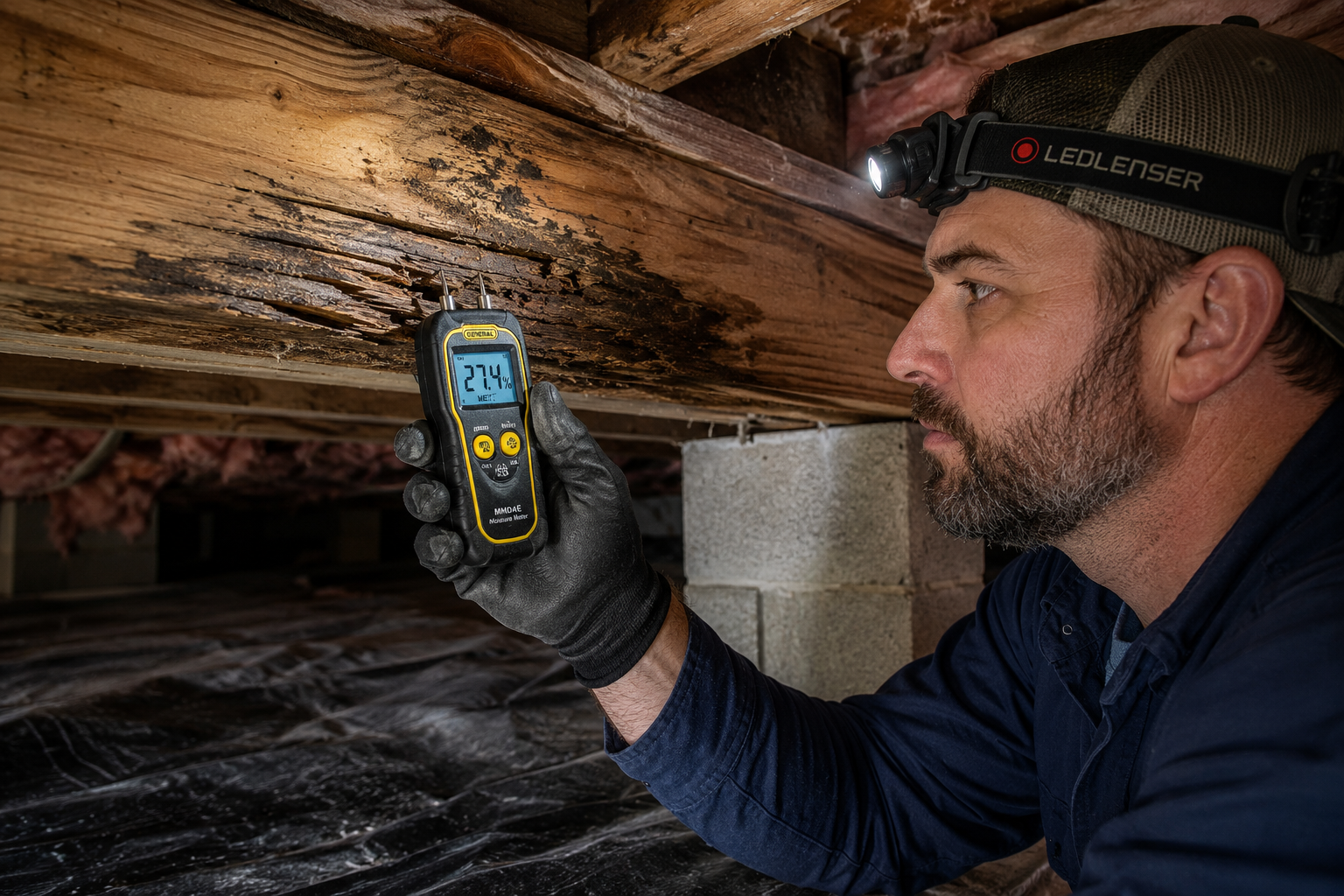
Best Moisture Meter for Wood Rot: Top Picks and How to Use One

Using a moisture meter to check wood moisture levels in a crawlspace joist for signs of rot generate the image

In rot repair work, the tool matters less than most buyers think and more than most sellers admit. A $20 pin meter from Amazon does a legitimate job on softwood framing. A $250 Protimeter does a better job in harder situations. What separates a useful reading from a misleading one — after reviewing contractor recommendations … Read more