Plywood is ideal for bathrooms because of its strength, moisture resistance, and adaptability to any residential construction project. Choosing the best plywood for bathrooms depends on what you’re building, how strong you need the surface to be, and the finish you’d like to achieve.
You can use plywood to build a bathroom vanity, construct decorative wall paneling around a tub, and use it as subflooring to strengthen the floor to withstand everything a bathroom holds (like people, a water-filled tub, a vanity, and heavy floor tiles).
Keep reading to learn which plywood is best for bathroom floors (including subfloors), walls, and vanities.
Can I Use Plywood For Bathrooms?
Yes, plywood can be used for bathrooms, provided you choose the right plywood type. You can use plywood to build bathroom cabinets, decorative wall panels, and subfloors. The best plywood for a bathroom is one that can withstand moisture.
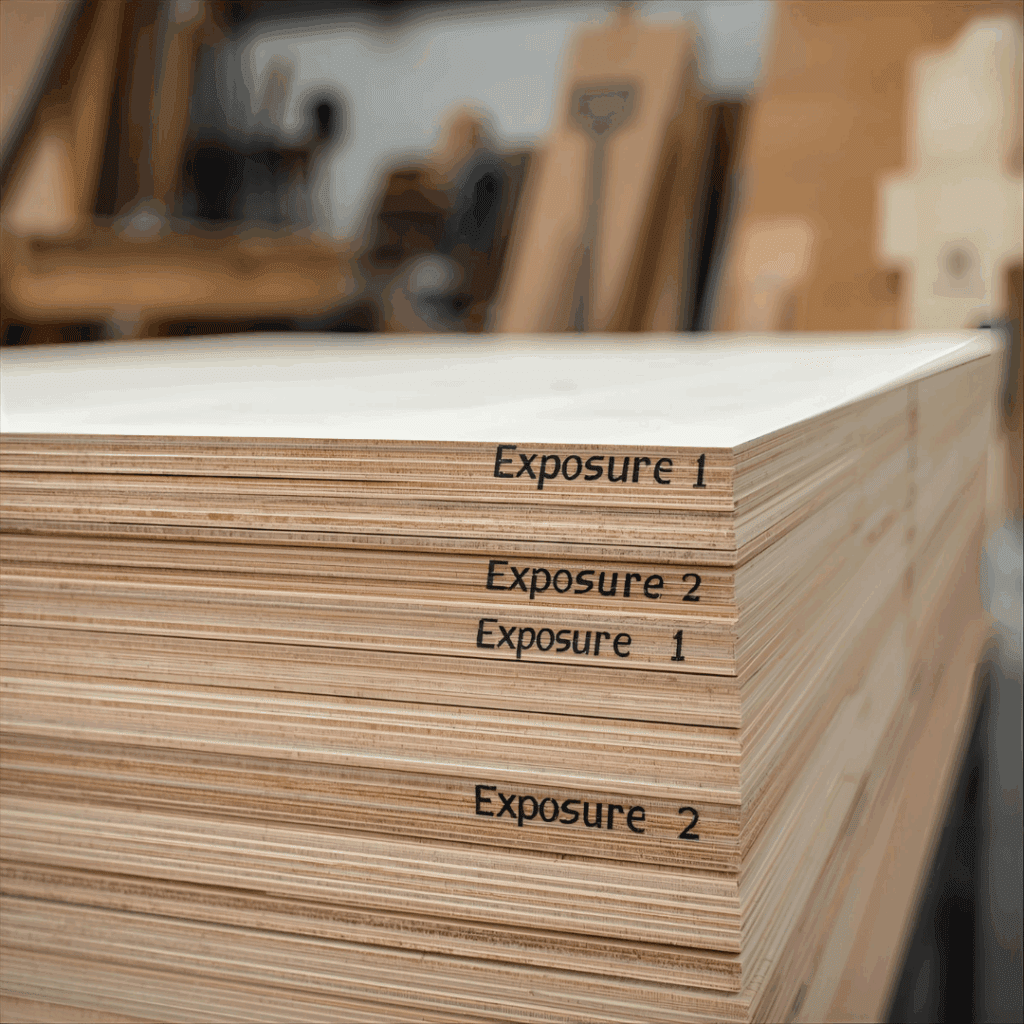
Bathrooms are humid, and water frequently drips onto cabinets during daily use, so you should use plywood rated Exposure 2 (suitable for interiors where slight moisture is expected). Exposure 1 plywood is also fully waterproof (thanks to the glue used to bond the plies), but it may be too waterproof for most bathroom projects.
Neither of these plywood types can be used externally, as they cannot withstand all weather. Exterior or pressure-treated plywood should be used for any outdoor projects where deep, permanent, and routine water exposure is expected.
Is Plywood Waterproof For Bathrooms?
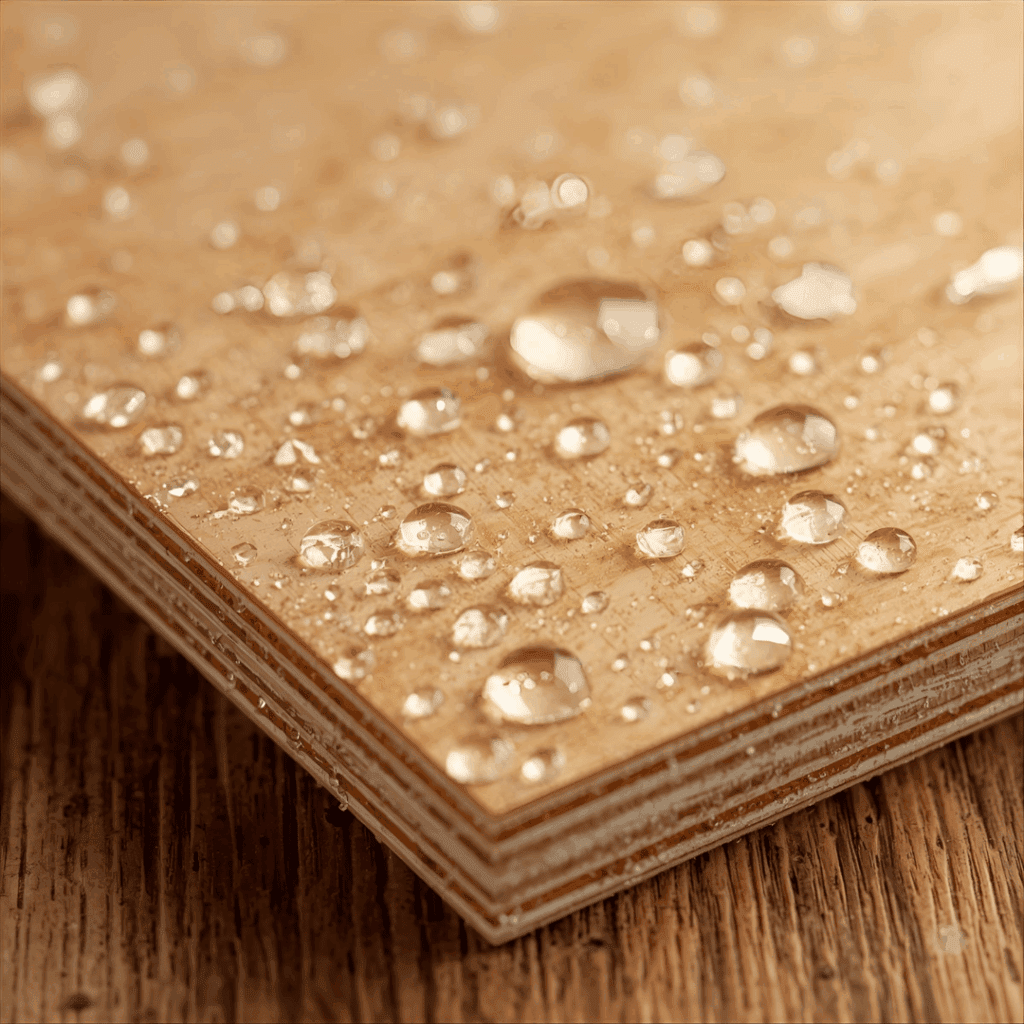
All plywood is somewhat waterproof, but you need to choose plywood suitable for prolonged moisture exposure for use in the bathroom. This is because standard plywood, even high-grade plywood, is not fully waterproof and will not withstand humidity or daily exposure to drips. Moisture-resistant plywood is widely available, but may be termed differently in stores.
For general use in the bathroom, choose either Marine Plywood graded as Water Boiled Proof (WBF), Hardwood Plywood made with waterproof glue/resin, or waterproof plywood with a Birch core. Look for plywood labeled as waterproof, Exposure 1, Exposure 2, or pressure-treated when finding the best plywood for bathrooms.
Plywood used in bathroom woodworking projects, like wall paneling, vanities, or cabinets, is only as waterproof as its finish. While waterproof plywood alone will withstand the humidity and won’t become wet and warped, using an unsuitable paint, stain, varnish, or lacquer to finish your handiwork will lead to surface-level peeling, staining, or fading. When finishing plywood, always choose a finish that’s suitable for bathrooms.
Can I Use Plywood On Bathroom Walls?
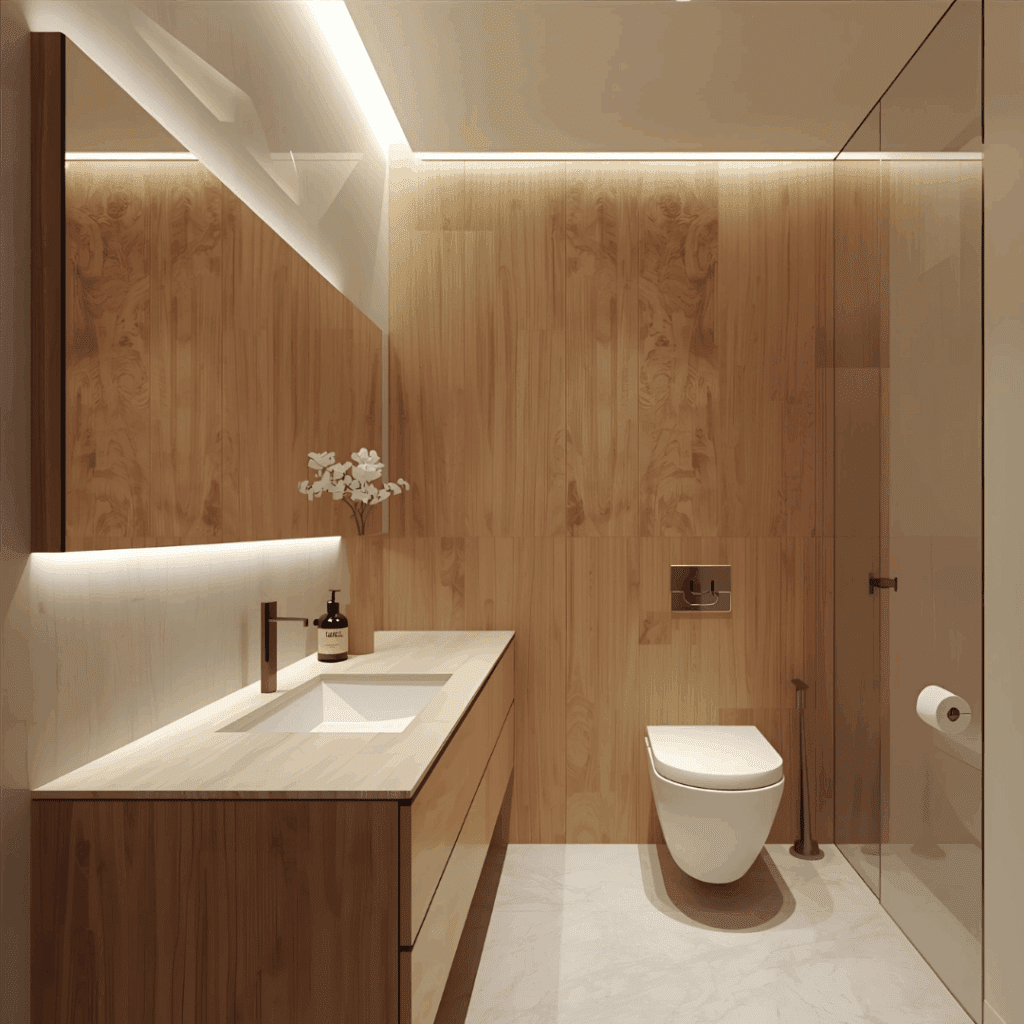
Yes, waterproof plywood can be used on bathroom walls. Most people use plywood to create decorative wall panels or as wall supports before tiling. Tiles are one of many materials that stick to plywood, provided the wall is suitably prepared beforehand.
Using plywood as wall supports or a substrate to provide structural strength in a bathroom needs careful consideration. Tiles only stick to plywood if specific grades are used. The texture, moisture level, porosity, chemical treatment, and flexibility of the plywood impact how well the adhesive sticks. You’ll need to either use plywood tiles that stick to plywood, use a primer/sealer, or purchase a suitable adhesive if you plan to tile over plywood walls.
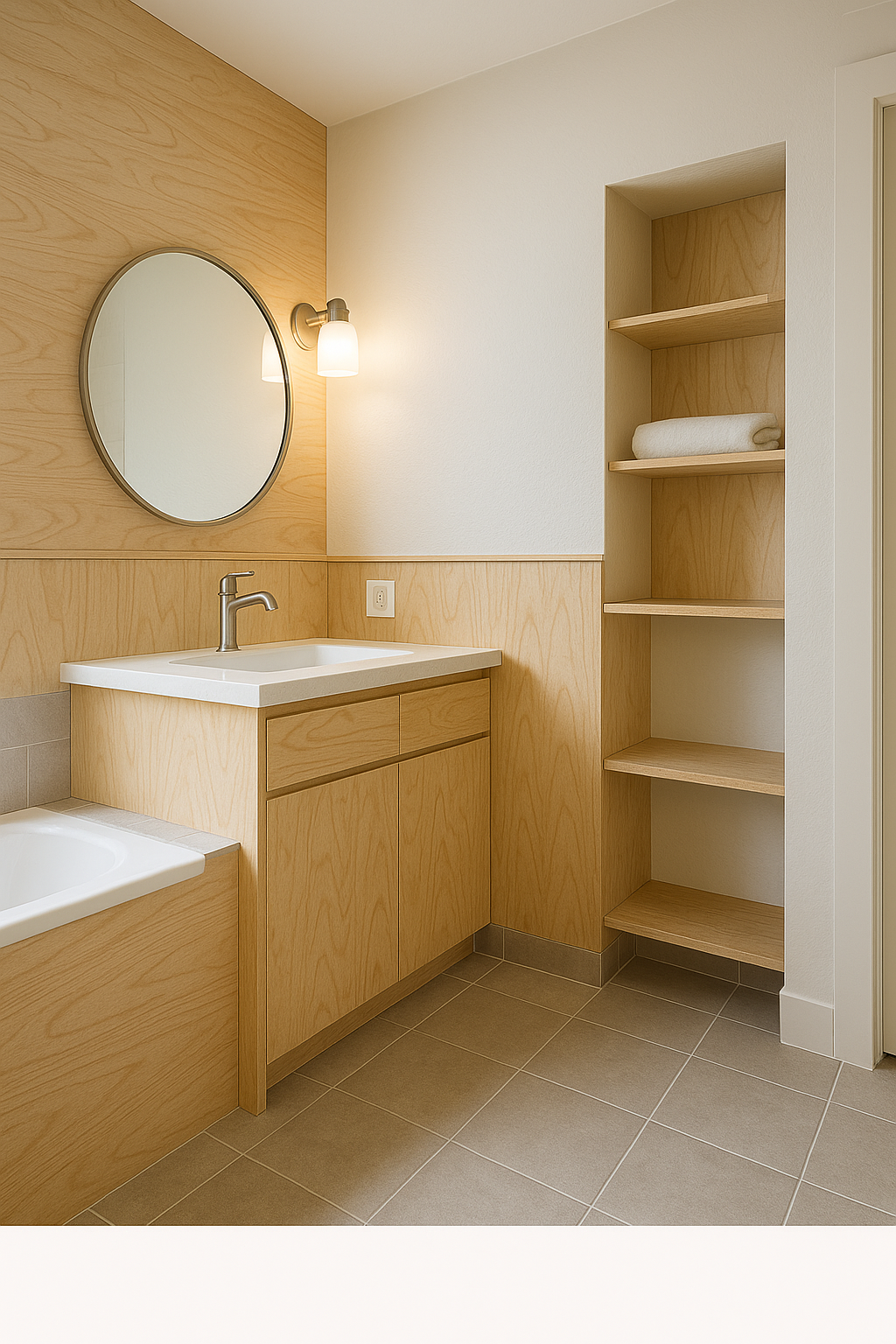
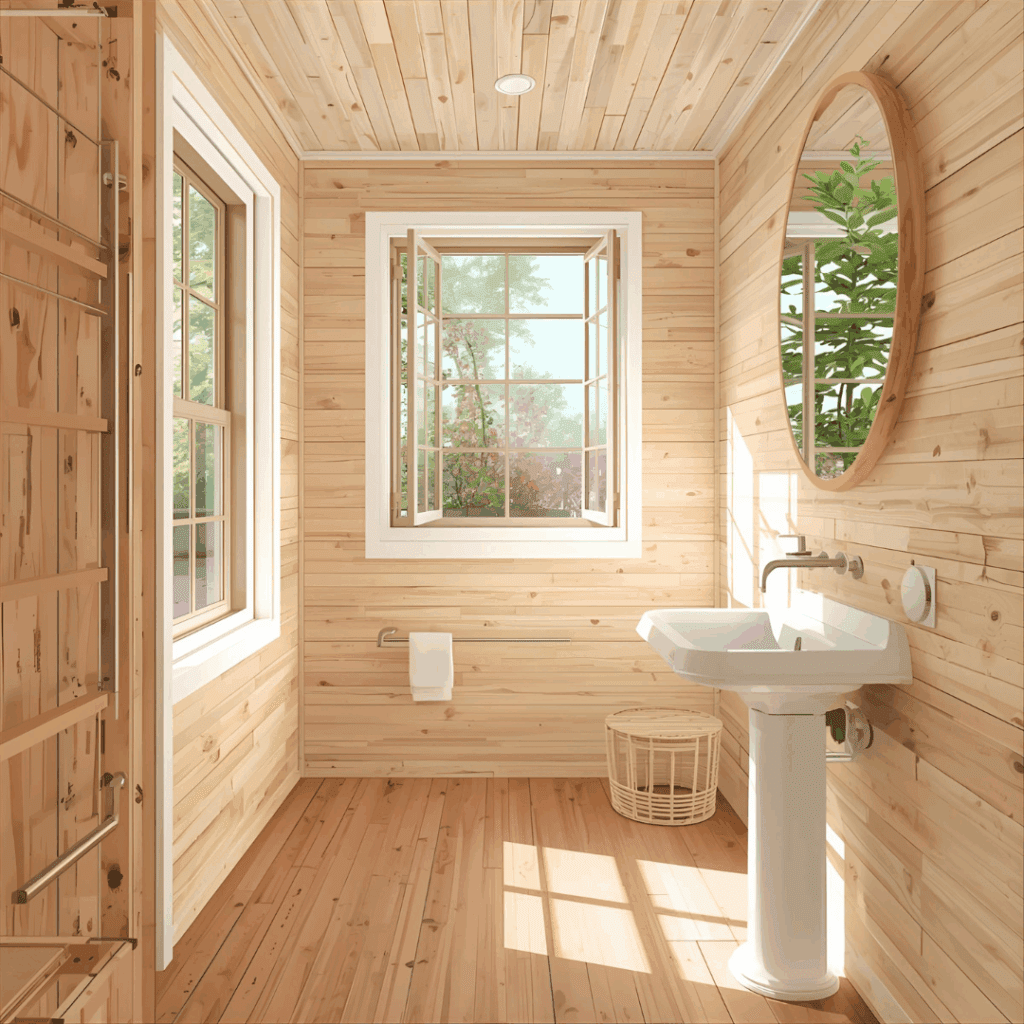
Using plywood as decorative wall paneling, like shiplap or wainscoting, is much easier. You can use any plywood with some moisture resistance for bathroom wall panels, particularly if the paneling will be shaped around a bath, sink, or vanity. You should also ensure the finish you apply is waterproof to prevent peeling, flaking, or fading.
Can I Use Plywood For Bathroom Vanities?
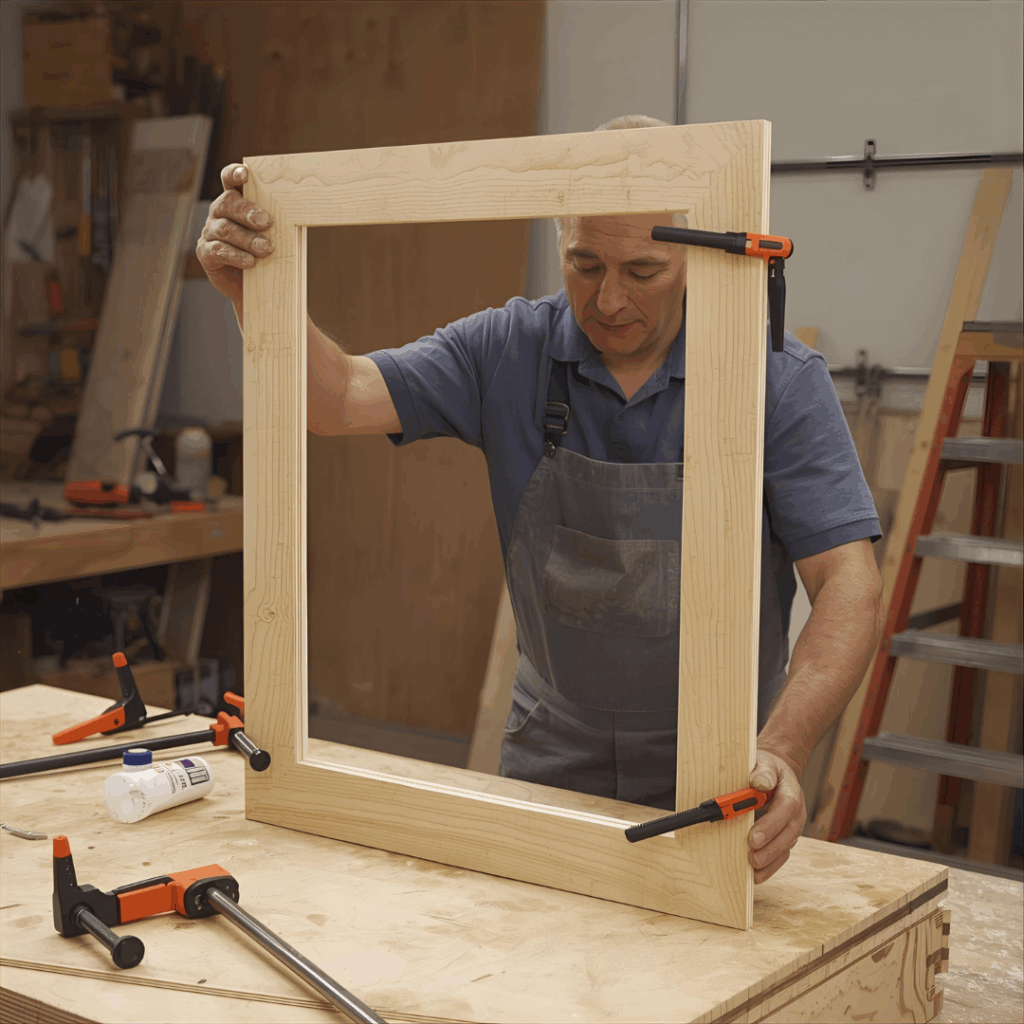
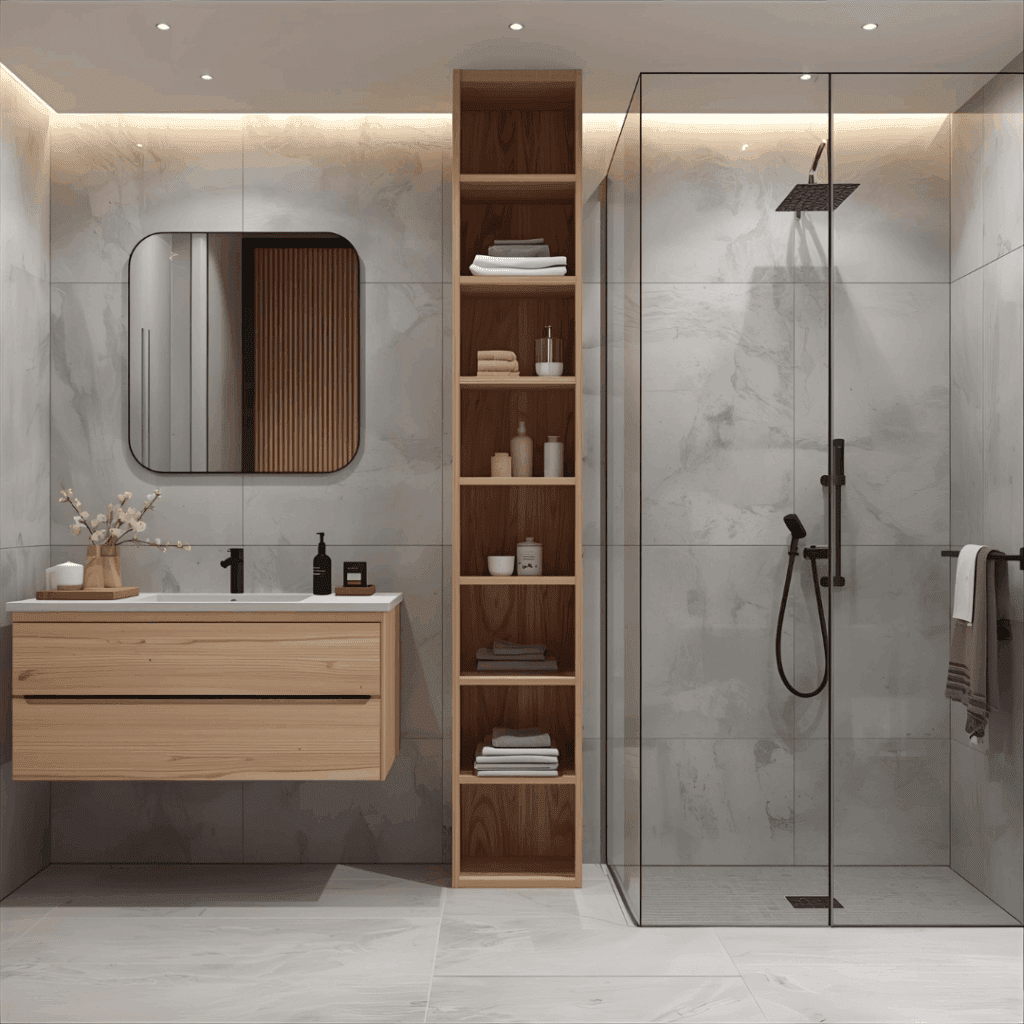
Plywood can be used for bathroom vanities and cabinets. It’s ideal for bathrooms because it’s strong, sturdy, and moisture-resistant. You can use plywood for the shelves, drawers, and doors.
Typically, softwood plywood (affordable and widely available) can be used for the two sides, the bottom, and the back. For the doors, close-grained hardwood (also known as Cabinet Grade Plywood) can be used. However, if you plan to paint the vanity, you can use a mildly water-resistant softwood for the doors to save on costs.
When building a basic bathroom cabinet from plywood, you’ll need to construct large boxes and subdivide them into compartments (shelves and drawers). Please read our guide on creating a basic cabinet from plywood to learn more.
Is Plywood Good For a Bathroom Floor?
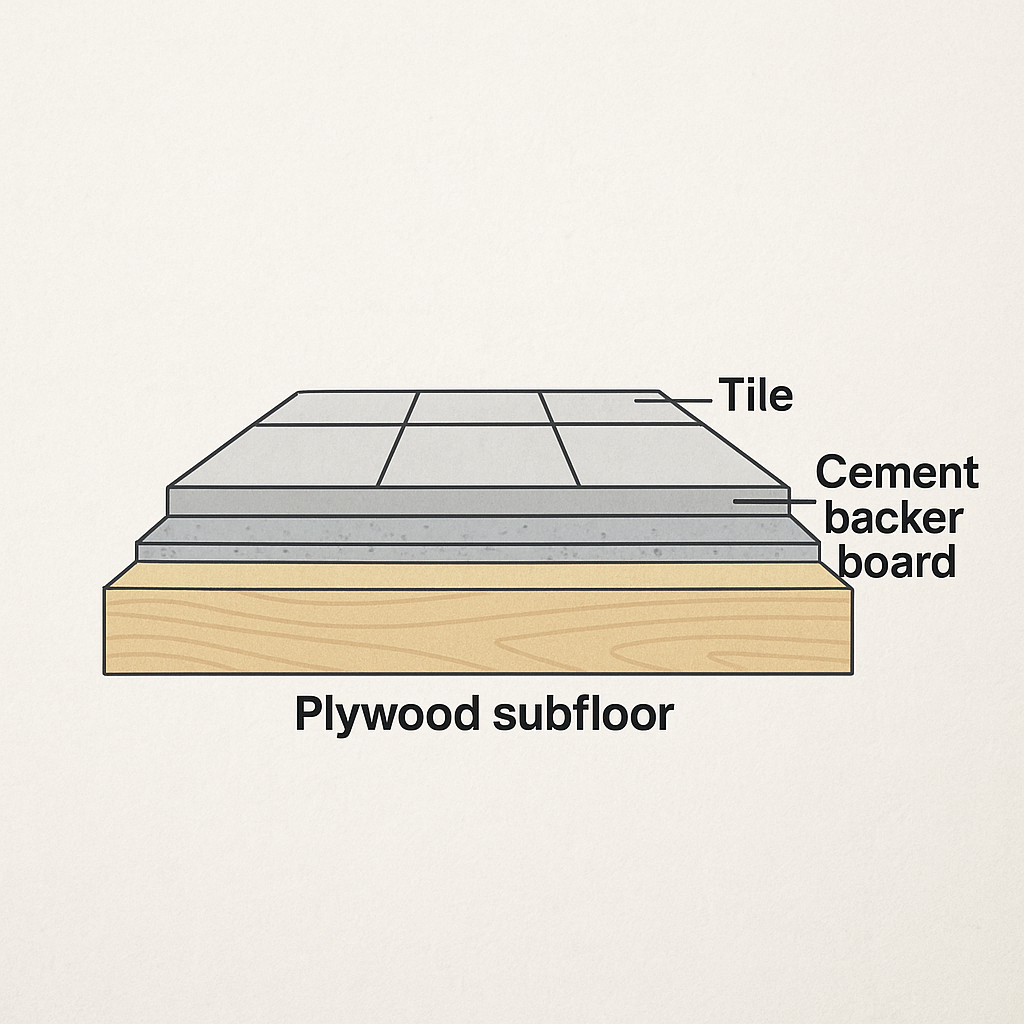
Yes, you can use certain types of plywood for bathroom subfloors. However, you should not use it as visible flooring for bathrooms. Because plywood isn’t completely moisture-resistant, it’s best to install an underlayment of concrete backer board to protect the plywood subfloor from moisture, then an overlay, like tiles.
What Plywood Should I Use For Bathroom Floors?
Bathroom subfloors need to be strong, waterproof, and contain minimal knots and voids. When using plywood for a bathroom subfloor, select Exterior or moisture-resistant plywood. These can withstand the daily humidity from showering and bathing.
The type of plywood you need depends on what you’re laying on top of the subfloor. Most people lay tiles (made from ceramic, porcelain, or stone), hardwood flooring, or laminate in bathrooms. Tiles only stick to certain types of plywood, so check which types stick to plywood before starting your subfloor.
If you’re laying ceramic, porcelain, or laminate tiles over a bathroom subfloor, AC plywood with a cement backer board is best. This underfloor will prevent plywood from warping or bending, minimizing the risk of tile cracking. Learn more about how to prepare a plywood subfloor for tiling.
When laying hardwood flooring over a plywood subfloor, CDX plywood with AC grade is best. Plywood with tongue-and-groove fastenings is also recommended under hardwood flooring. This ensures the flooring is flat, strong, and doesn’t squeak.
Laying stone tiles atop plywood flooring requires a strong base. This is because natural stone is heavier than other flooring overlays. The best type of plywood is tongue-and-groove plywood. Depending on the stone’s weight, you should consider reinforcing the subfloor with two layers of plywood and a required underlayment.
How Thick Should Plywood Be For Bathroom Floors?
Choosing the right plywood thickness is important for bathrooms. You’ll need to consider the maximum weight your subfloor must support. You’ll need to ensure your floor is strong enough to withstand a water-filled tub, daily household use, and the weight of the overlay. For example, if you’re laying heavy ceramic, porcelain, or stone tiles.
Here’s an overview of the best plywood for bathroom floors, including different overlays and the thickness you should choose.
19/32 inch overlaid with 15/32 inch plywood, with a 1/3 inch gap between each
Closing Summary: Things to Remember
As you can see, plywood is versatile for residential bathroom construction. You can use it to build a vanity (complex or basic), as a subfloor, as wall paneling, or as structural support for floors. Choosing the best plywood for bathrooms is the most critical step in planning your woodworking project.
Remember, the most critical things to remember when using plywood in bathrooms are:
Not all plywood is waterproof and suitable for bathrooms
Plywood can be treated to become moisture-resistant or purchased with waterproof glue that prevents warping and breakage when wet.
When using plywood in bathrooms, ensure you finish it with a similarly waterproof coating, such as a moisture-resistant paint, wax, stain, lacquer, or varnish.
You’ll need to use different plywood for bathroom floors, depending on what you plan on using for the overlay.y
The weight and thickness of the plywood must be tailored to your bathroom’s specific requirements to ensure it meets the maximum weight capacity.
Provided you plan your woodworking project suitably and use the right type, using plywood in the bathroom is ideal for its reliability, strength, and affordability.
FAQ
1. Can I use regular plywood in a bathroom?
You can, but it needs help. Standard plywood doesn’t love humidity, so you’ll have to seal it really well. Most people skip the hassle and go straight for moisture-resistant plywood since it holds up better over time.
2. What kind of plywood works best on bathroom walls?
Anything that’s rated for light moisture is usually fine for wall paneling. If you’re planning to tile over it, choose a nicer grade like AC and make sure you prep it with the right primer or backer board.
3. Can plywood sit behind shower tiles?
Not directly. The area inside a shower stays too wet. You can use plywood as a base layer, but it always needs a waterproof barrier or a cement board on top of it.
4. Do I need marine plywood for bathroom projects?
Most of the time, no. Marine plywood is great, but it’s usually overkill for a vanity or wall panels. Moisture-resistant AC or hardwood plywood is more than enough for everyday bathroom conditions.
5. Should bathroom plywood be sealed?
Yes — absolutely. Even plywood that’s made for damp areas needs a waterproof finish. A good varnish, polyurethane, or enamel paint keeps it from swelling or discoloring.
6. What thickness of plywood should I use for a bathroom floor?
For tile or laminate, people usually go with ¾-inch AC plywood. Hardwood can sit on ⅝–¾-inch CDX. Stone tile is heavy, so that often needs two layers of plywood for extra strength.
7. Can I leave plywood exposed as the bathroom floor?
It’s not a great idea. Bathrooms are too wet, and plywood just won’t hold up as the finished surface. It needs tile, vinyl, or some kind of waterproof flooring on top.
8. Will plywood warp in a bathroom?
It can, but only if it’s the wrong grade or left unfinished. When you use moisture-resistant plywood and seal it properly, it stays flat and solid.
Yes. MDF absorbs moisture fast and puffs up like a sponge. Plywood handles humidity much better, especially in a room where steam is a daily thing.
10. Can I build a bathroom vanity out of plywood?
Definitely. Plywood is strong and easy to work with. Softwood plywood works for the box, while cabinet-grade or hardwood plywood looks nicer on doors and drawer fronts.
11. What plywood grade works best under tile?
AC plywood is the go-to choice, but it still needs a cement backer board on top so the tile has a firm, stable surface to grab onto.
12. Do I need a vapor barrier on top of plywood in a bathroom?
Most builders add one, especially under tile. It protects the plywood from moisture that slips through grout lines or tiny cracks.