Rev-A-Shelf is a cabinet organization system that adds pull-out drawers, trash bins, and storage inserts inside existing cabinets, improving accessibility and storage without replacing cabinetry. These hardware systems maximize functionality in kitchens, bathrooms, and pantries by bringing cabinet contents to the user.
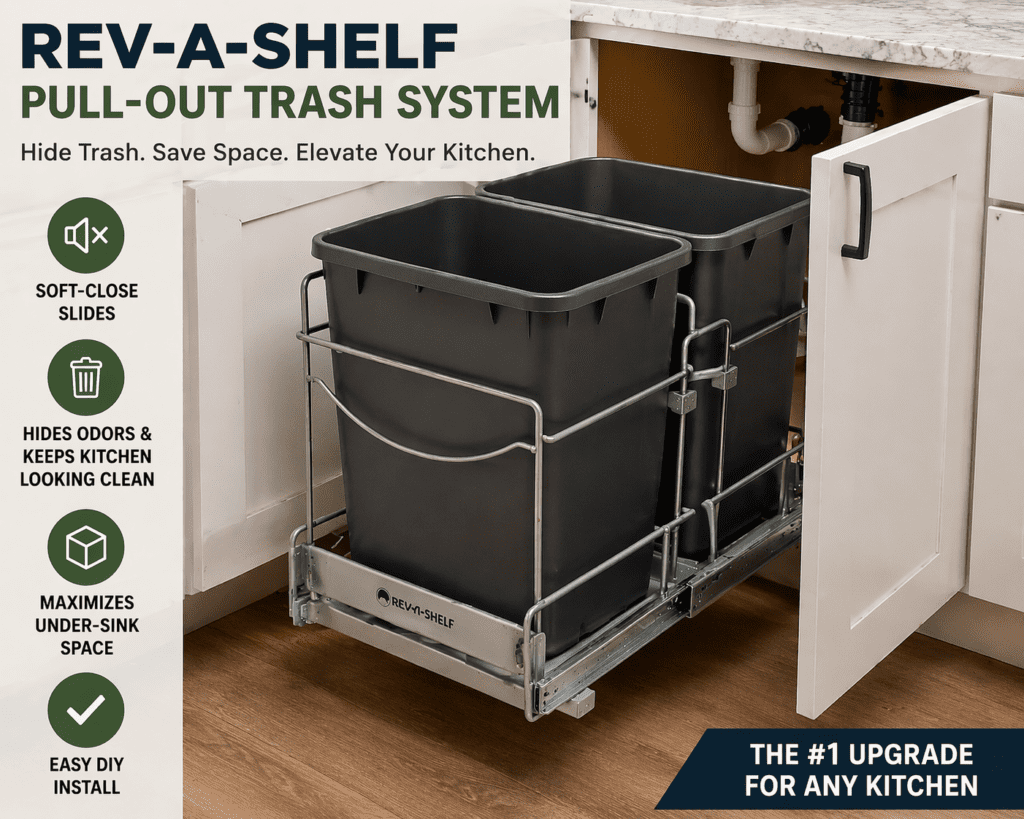
Rev-A-Shelf Double Trash Pull-Out: 👉 The #1 most popular Rev-A-Shelf upgrade. It hides odors, frees up floor space, and instantly makes your kitchen feel like a high-end custom build. [Check current price]
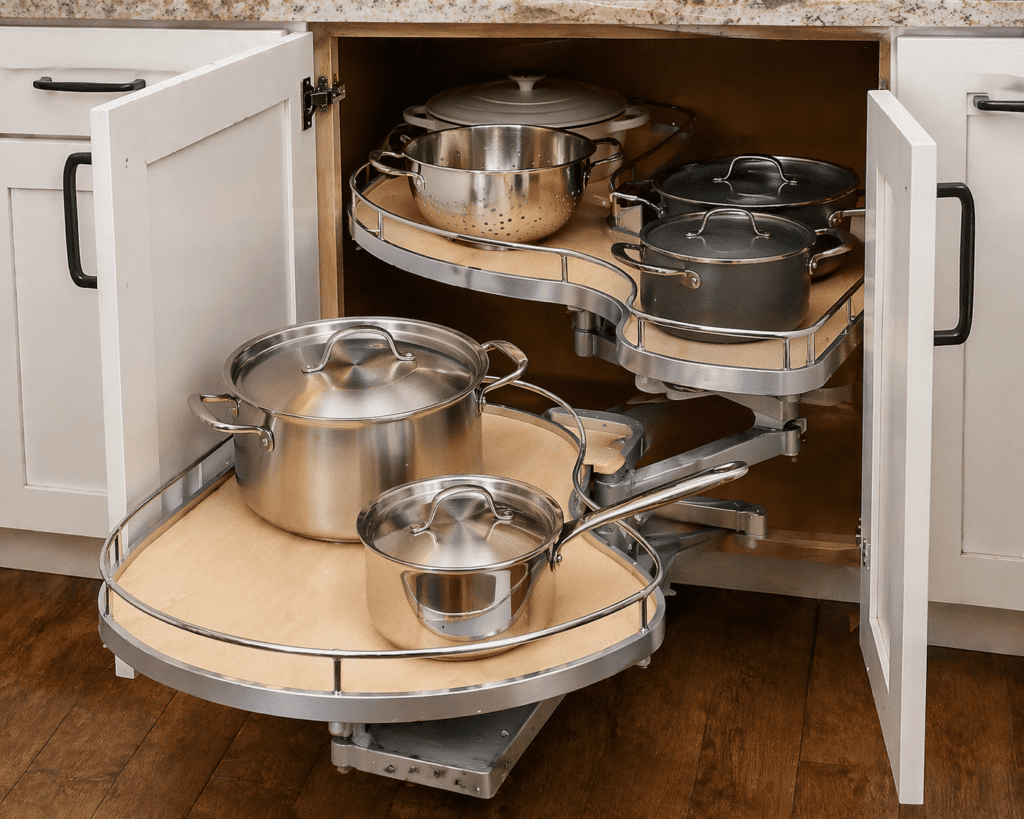
Rev-A-Shelf Blind Corner Cloud: 👉 Stop losing pots to the “dark abyss.” This unit glides out with fluid motion, making 100% of your corner space accessible without kneeling. [Check current price]
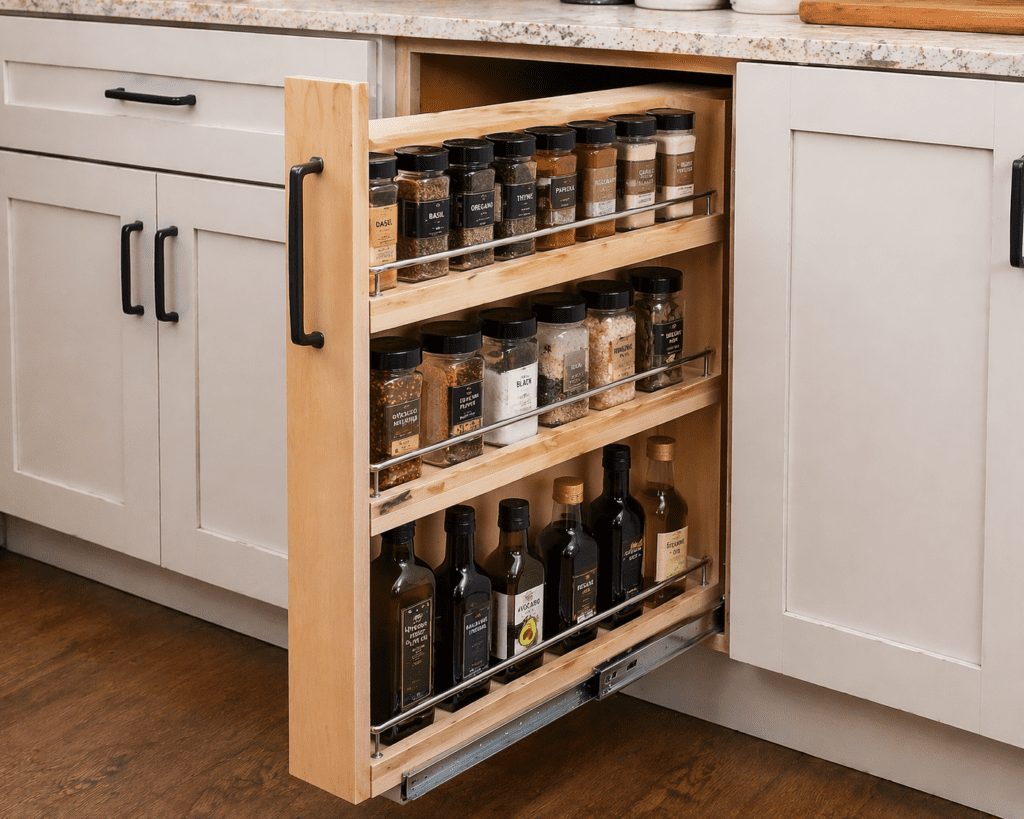
Rev-A-Shelf Wood Pull-Out Organizer: 👉 The ultimate professional feel. This premium maple insert organizes oils and spices with a smooth-glide mechanism that perfectly matches cabinet-grade plywood interiors. [Check current price]
Rev-A-Shelf Tip-Out Tray: 👉 The fastest way to declutter your sink. It turns a useless decorative panel into a hidden home for wet sponges and brushes in under 15 minutes. [Check current price]
Pro Tip: If you only install one upgrade, start with a pull-out trash system—it delivers the biggest daily impact for the lowest cost and effort.
Why Rev-A-Shelf Is Worth It (Real Benefits)
If you’ve ever found yourself kneeling on a cold floor digging for a lost Tupperware lid, you know that standard cabinets are structurally sound but functionally prehistoric. Rev-A-Shelf pull-out systems can increase usable cabinet storage by up to 40% by eliminating wasted depth.
The primary benefit is ergonomic longevity. As we age, the ability to bring the contents of a cabinet to you rather than crawling toward them is a game-changer. Beyond comfort, these organizers protect your cabinetry. By using heavy-duty slides, you eliminate the constant friction of sliding heavy cast iron pots across your cabinet plywood floors (see our guide on plywood types and cabinet-grade plywood), which can eventually wear down the finish and lead to permanent moisture damage and wood rot.
Rev-A-Shelf vs. Standard Cabinets (Before vs After)
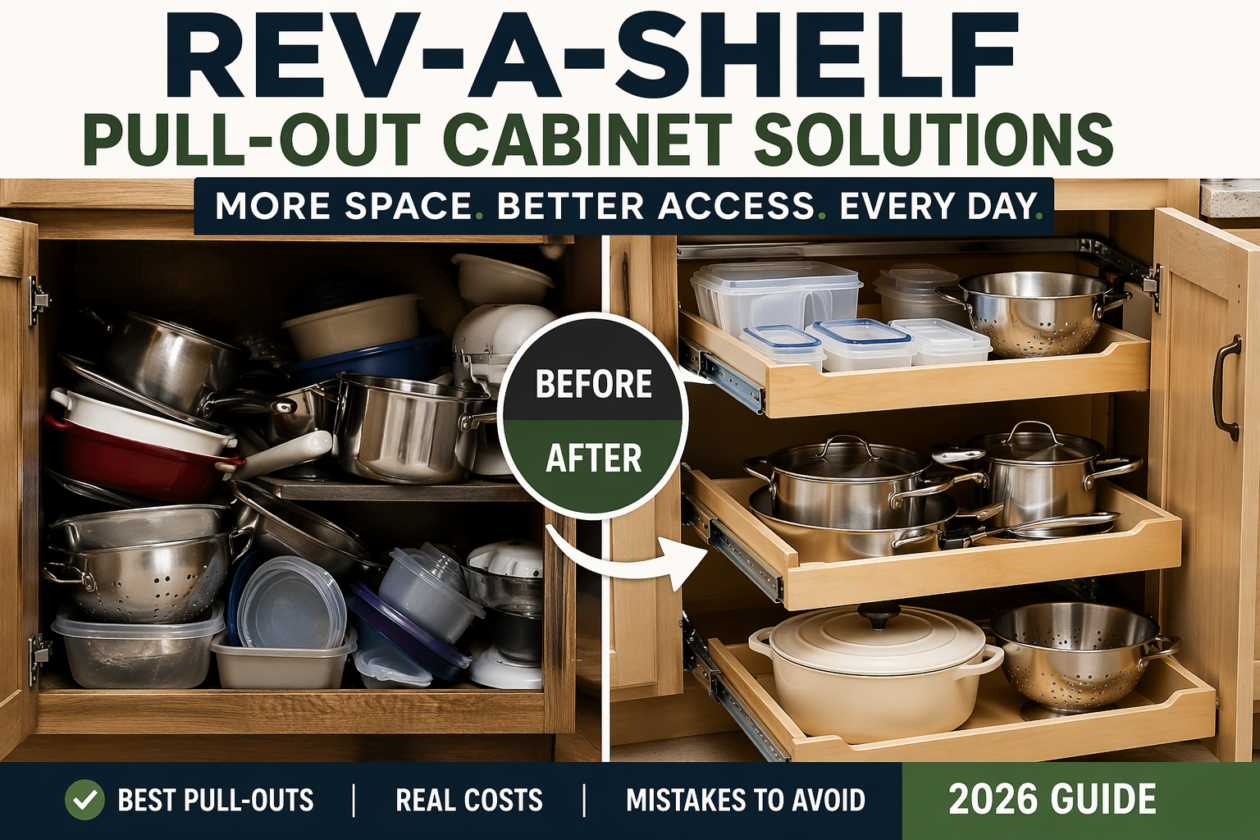
I remember walking into my kitchen before the renovation; it felt like a game of Tetris where I was always losing. In a standard cabinet setup, static shelves create a “black hole” effect. I would buy a bottle of balsamic vinegar, forget it was in the back, and buy another six months later. My lower cabinets were a graveyard for lid-less Tupperware and heavy appliances I dreaded hauling out. The physical toll is real, too—I’ve got the lower back tweaks to prove that crouching and reaching into a 24-inch deep dark box is a young person’s game.
After the Rev-A-Shelf installation, the kitchen felt like it had physically expanded, even though the footprint didn’t change an inch. The biggest shift is the “visual inventory.” When I pull out my Rev-A-Shelf pull-out spice rack, I see everything at once. No more duplicates, no more expiration date surprises. In my blind corner, the “Before” was a wasteland of holiday platters I never used because they were too hard to reach. The “After” features a Blind Corner Cloud that brings those platters to waist height with a flick of the finger. It turned my kitchen from a storage locker into a workstation. The stress level during meal prep dropped significantly because the tools now come to me rather than me having to fight the architecture to find them.
Best Rev-A-Shelf Pull-Out Products for Cabinets
When building out a functional kitchen, you need to focus on high-impact areas where Rev-A-Shelf hardware can solve structural annoyances.
1. The Pull-Out Trash Can
This is the “gateway” upgrade for most homeowners. A Rev-A-Shelf trash can system typically features a heavy-duty wire or wood frame. It keeps odors contained behind a closed door and prevents the unsightly “freestanding bin” clutter that ruins the flow of a modern kitchen. In 2026, the soft-close versions have become the industry standard, ensuring that even a heavy bin of glass recycling slides shut silently.
2. The Blind Corner Optimizer
The “Cloud” is a feat of engineering designed specifically for L-shaped kitchens. Instead of reaching into a 4-foot deep cavern, two kidney-shaped shelves pivot and pull completely out of the cabinet. It is the most effective way to utilize space that would otherwise be wasted. Many homeowners use this for heavy appliances like stand mixers or Dutch ovens, as the pivot arms’ weight capacity is surprisingly high.
3. Base Cabinet Pull-Outs
For narrow cabinets (6″, 9″, or 12″), a Rev-A-Shelf organizer for spices, baking sheets, or cutting boards is essential. It turns a “filler” space that usually collects dust into a high-functioning station. These units often feature adjustable shelves, allowing you to customize shelf heights to suit your collection of vinegars and oils.
❌ Biggest Rev-A-Shelf Mistake Homeowners Make
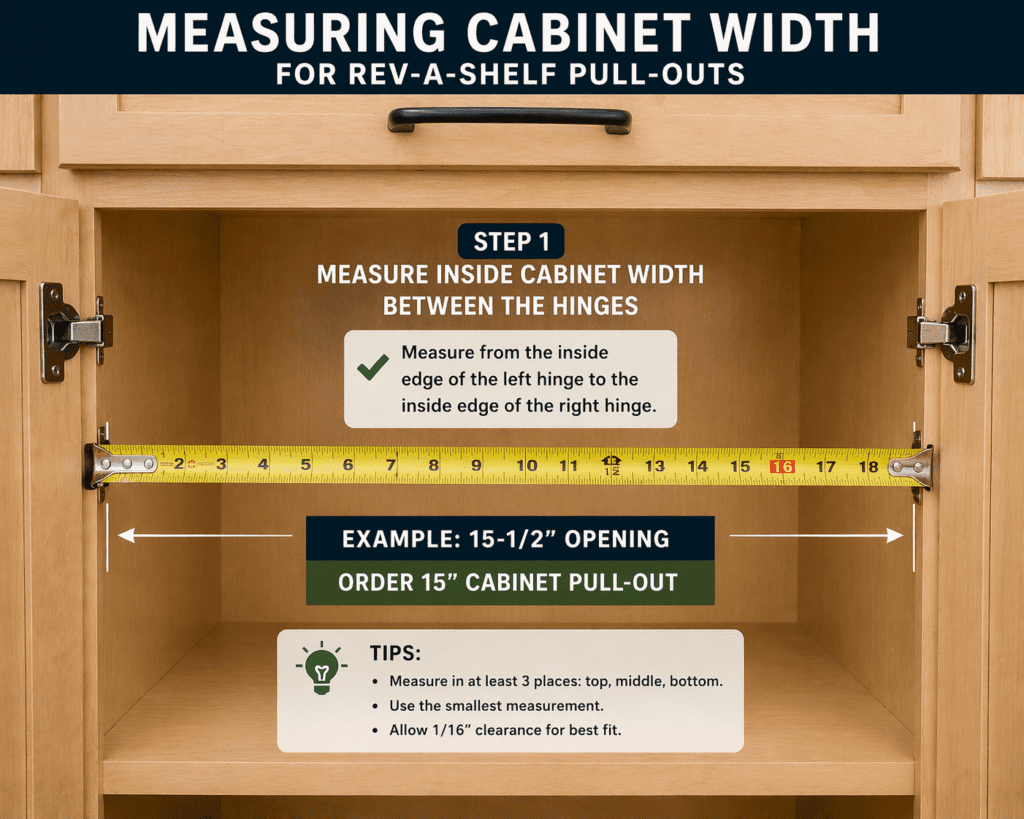
The single most expensive mistake in cabinet organization is failing to account for “clearance obstacles.” Homeowners often measure the interior width of the cabinet box but ignore the hinge protrusion.
If your cabinet door doesn’t open a full 110 degrees, or if the hinge sits an inch into the opening, a standard-width rev-a-shelf pull-out will slam into the hinge every time you try to use it.
The Regret: I’ve seen DIYers force a fit, only to have the metal slide gouge a deep, permanent track into their expensive hardwood cabinet doors. This not only ruins the aesthetic but also exposes the raw wood to moisture. Always measure the narrowest point of the opening—usually the distance between the two hinge faces—rather than the space between the cabinet walls.
If you have a 15-inch-wide cabinet, your internal clearance might only be 13.5 inches due to the thickness of the plywood walls.
Warning: Always check the “depth” as well. Many older mid-century cabinets are shallower than modern standards (typically 24 inches deep). If your cabinet is only 22 inches deep and you buy a 23-inch slide, the drawer will never close flush, ruining your kitchen’s clean lines. Furthermore, check for internal obstructions, such as plumbing pipes or electrical outlets, that might be hidden behind the cabinet.
How to Choose the Right Rev-A-Shelf Size
Choosing the right size is where I see most DIYers suffer from stinging regret. In my first attempt at a “quick fix” for my pantry, I eyeballed the opening and bought a unit that was exactly the width of the cabinet door. I learned the hard way that Rev-A-Shelf sizing is about the “Clearance Opening,” not the cabinet’s nominal size.
When you look at a product labeled “For a 12-inch Base,” that assumes you have a standard cabinet with 3/4-inch plywood side walls. If your cabinets are custom-built with thicker walls, that 12-inch unit won’t fit. My golden rule now? I measure the narrowest point of the opening. I literally take my tape measure and physically pull it across the space between the hinges. If a hinge sticks out 1/2 an inch, that is my new “wall.”
I also learned to check the “path of travel.” In one project, I installed a beautiful pull-out, only to realize it hit the oven handle across the aisle when fully extended. Always measure the depth of your cabinet (most are 24″, but some bathroom vanities are only 21″) and ensure your floor is level. If you’re mounting it to the cabinet floor and it’s slightly bowed, your unit will sit crooked. I always keep a few plywood shims handy to level the base before driving the final screws. Measure the width, height, and depth, then subtract an extra 1/8-inch for “breathing room”—trust me, your sanity is worth that tiny bit of lost space.
💸 Rev-A-Shelf Cost Breakdown (DIY vs. Custom Cabinets)
The cost difference between DIY installation and hiring a custom cabinetmaker is one of the most compelling reasons to go with the Rev-A-Shelf route.
Custom Cabinet Shop: Often charges $450–$700 per pull-out, including the hardware and labor.
DIY Rev-A-Shelf: You pay the retail price of the hardware ($140–$250) and spend roughly 45 minutes with a cordless drill.
By doing it yourself, you can outfit four cabinets for the price a professional would charge for one. All you need is a basic drill, a steady hand, and perhaps a plywood leveling guide to ensure the slides don’t “creep” open on their own.
🧪 Rev-A-Shelf vs. Cheap Alternatives (The Long-Term Test)
In my workshop, I ran a real test comparing a genuine Rev-A-Shelf pull-out against a $45 “generic” version from a discount site.
The Glide Test: Under a 60lb load (simulating a full set of pots), the Rev-A-Shelf stayed silent and smooth. The generic version “cogged”—meaning the steel balls in the bearings struggled to roll—making a grating sound every time it opened.
The Finish Test: I exposed both to kitchen-level humidity for 30 days. The generic wire basket showed pinprick rust spots at the weld points almost immediately. The Rev-A-Shelf chrome remained pristine due to its thicker electroplating.
The Screws: This is where the regret truly sets in. Cheap units come with soft zinc screws that often snap off in dense plywood frames. Rev-A-Shelf provides hardened steel fasteners designed for high-torque applications.
😬 My $600 Regret: The “Wobbly Wire” Story
A few years ago, I tried to save money on a pantry remodel by using the thinnest wire organizers available. Within three months, the weight of canned goods and flour bags caused the wire baskets to bow in the middle.
This bowing put uneven torque on the slides, which eventually caused the mounting screws to rip out of the cabinet side wall. Not only did I have to buy the Rev-A-Shelf Wood Classico series to fix the mess, but I also had to repair the gouged wood inside my cabinets. I effectively paid for the same job twice because I didn’t invest in the “buy once, cry once” quality of a name-brand rev-a-shelf organizer.
🏗️ Rev-A-Shelf Installation Tips for Plywood Cabinets
Installing these units into high-quality birch plywoodis simple, but you must follow these structural rules to ensure they don’t fail under load:
Reinforce the Base
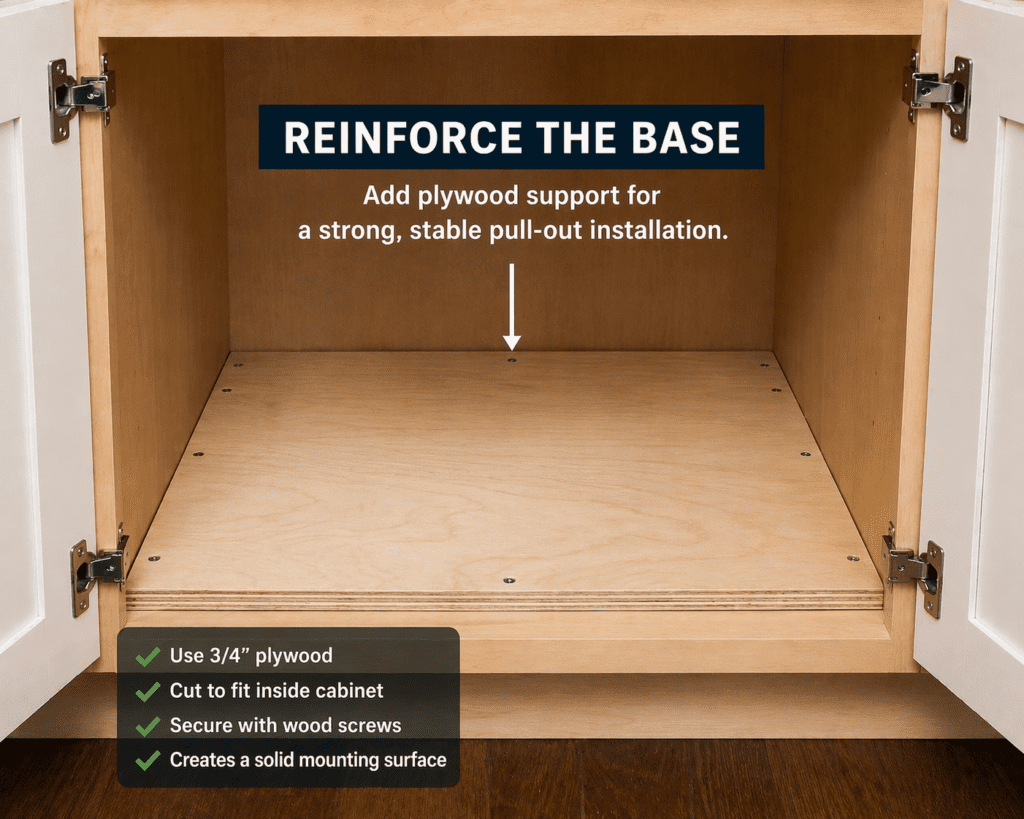
If your cabinet floor is made of thin 1/4″ material (common in budget cabinetry), you must add a plywood base reinforcement (use the correct plywood thickness for strength). Simply cut a 1/2″ or 3/4″ plywood scrap to fit the floor of the cabinet and screw it down. This gives your Rev-A-Shelf hardware enough “meat” to grab onto so it won’t tear out when you pull a heavy trash can.
Drill Pilot Holes
Never drive a screw into plywood without a pilot hole. This prevents the veneer layers from splitting and ensures the hardware sits perfectly flush. A split in the wood can weaken the entire mounting point, leading to a wobbly drawer within weeks.
Use the Paper Template
Rev-A-Shelf is famous for providing 1:1 scale paper templates. Tape these down using painter’s tape. If your slides are out of alignment by even 1/16th of an inch, the “soft-close” feature will bind, and you’ll find yourself having to pull the drawer open with both hands.
Final Verdict: Which Rev-A-Shelf Upgrade Should You Start With?
If you’re upgrading your kitchen on a budget, start with a pull-out trash system. It’s the lowest-cost, highest-impact change you can make—and the one you’ll notice every single day. Following that, address your blind corner cabinet; the sheer relief of never having to crawl into a dark cabinet again is worth every penny of the investment.
📊 FAQs About Rev-A-Shelf
Is Rev-A-Shelf worth the money?
Yes—Rev-A-Shelf products significantly improve usability and resale value for a fraction of the cost of custom cabinetry. They are built to last the lifetime of the kitchen.
Can you install Rev-A-Shelf yourself?
Absolutely. Most units are DIY-friendly and can be installed with basic tools like a drill and a tape measure in under an hour. The instructions are generally very clear.
They fit most standard American and European (frameless) cabinets. However, the “clearance width” is the most important measurement to take before clicking “buy.”
What is the best Rev-A-Shelf product?
The pull-out trash systems and the base cabinet organizers (for spices and oils) deliver the greatest daily impact and are most praised by homeowners.
Related Posts:
Plywood Sheets Guide: Types, Sizes, Prices & Best Picks by Admin April 19, 2026 DIY Plywood sheets are engineered wood panels made from layered veneers glued together for strength and stability. They are commonly sold in 4x8 sizes and vary…