I Thought Drywall Was Fine… Until I Had to Tear It Out
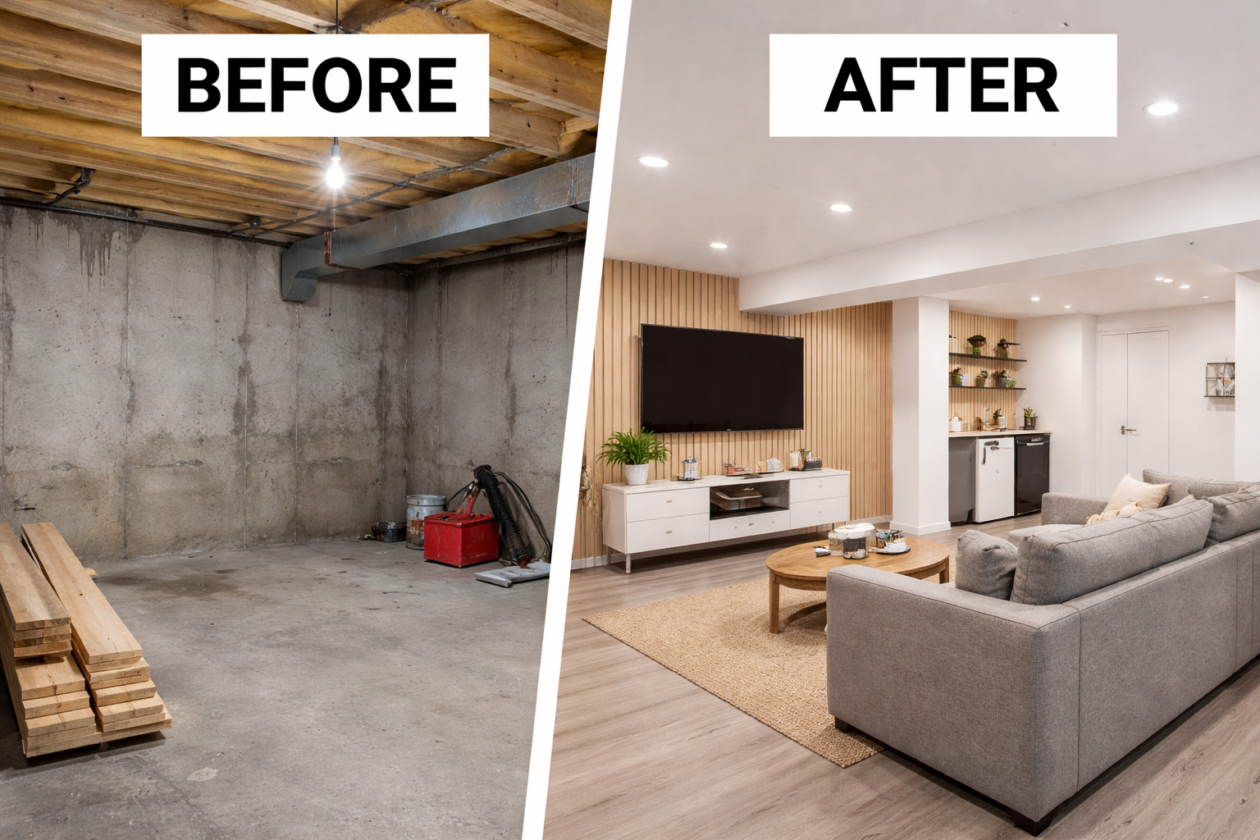
The first time I finished a basement, drywall felt like the obvious move.
It’s what everyone uses upstairs. It’s cheap. Easy to paint. Looks clean.
For a while, it even worked.
Then came the smell. Nothing strong—just that slightly damp, off smell you can’t quite place. A few weeks later, the bottom edge of one wall felt soft. Paint started bubbling in spots.
That’s when it clicked.
Basements don’t behave like the rest of the house.
They hold moisture differently. Even when everything looks dry, there’s often humidity or trapped moisture behind the walls. Drywall doesn’t tolerate that long-term. Most basement wall failures I’ve seen come down to moisture—not the material itself.
👉 Drywall is the default—but it’s rarely the best option in a basement.
If I were starting over today, I wouldn’t use drywall at all. Here’s exactly what I’d do differently if I were finishing a basement today,
⚡ Best Basement Wall Options (Quick Answer)
Quick Comparison
Material
Cost
Moisture Resistance
Difficulty
Best For
Plywood
Low
Medium
Easy
Budget builds
PVC Panels
Medium
High
Easy
Best overall
Cement Board
High
Very High
Hard
Wet basements
Wood Panels
Medium
Medium
Medium
Finished look
If you want to skip drywall, here’s what actually works:
Budget → Plywood
Best overall → PVC wall panels
Wet basements → Cement board
Best finished look → Wood slats or wall panels
Easiest install → Interlocking panel systems
👉 If there’s even a small chance of moisture, drywall is usually the wrong choice.
🚫 Why Drywall Fails in Basements
Drywall performs well in controlled environments. Basements aren’t one.
Here’s what usually happens over time:
Moisture gets absorbed into the bottom edge
Small cracks develop from foundation movement
Paint and joint compound begin to fail
Mold can develop behind the surface
The worst part is how slow it happens. You don’t see failure right away—it shows up after you’ve already finished the room.
That’s why many homeowners end up redoing basement walls within a couple of years.
🧠 What I Would Use Instead (Real Recommendation)
After going through it, my approach is simple:
If cost matters → Plywood
If moisture is a concern → PVC panels
If you want a finished space → Wall panels or wood slats
If it’s a workshop → Pegboard or slatwall
Drywall doesn’t compete with these once you factor in long-term durability.
🪵 Plywood Basement Walls (Best Budget Option)
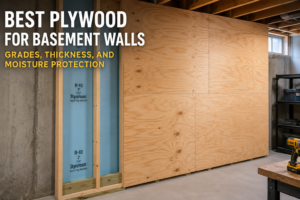
Plywood is one of the most practical materials for basement walls. If you’re planning basement walls without drywall, material choice matters more than anything else.
Why it works well:
Strong and impact-resistant
Easy to install with basic tools
Affordable compared to other finishes
Can be painted, stained, or sealed
It’s especially useful in utility spaces, workshops, or budget remodels.
Where people go wrong:
Using interior-grade plywood
Installing directly over damp concrete
Skipping sealing
If you want plywood to last, you need to treat it properly.
Best practices:
Use exterior-grade or treated plywood
Seal all sides before installation
Leave a small gap off the floor
Use proper fasteners into furring strips or framing
👉 Choosing the right thickness matters—see plywood thickness for different projects.
👉 Not all plywood performs the same—check types of plywood and their uses.
Done correctly, plywood can last for years without issues.
💧 Moisture Control (This Matters More Than the Material)
Most basement wall failures are caused by moisture—not material choice.
Common problems include:
No vapor barrier
Poor ventilation
Installing over damp surfaces
Ignoring minor leaks
If moisture isn’t controlled:
Wood materials will warp
Mold can develop
Finishes will deteriorate
👉 This is the step that determines whether your project lasts 1 year or 10+ years.
Before installing any wall system, make sure:
walls are dry
cracks are sealed
moisture sources are addressed
👉 Here’s how to properly install a moisture barrier in a basement.
🧱 PVC Wall Panels (Best Overall Option)
PVC panels are one of the safest and most reliable choices for basement walls.
Advantages:
Completely moisture-resistant
Easy to clean
No painting required
Fast installation
Downsides:
Higher upfront cost
Less natural appearance compared to wood
If your basement has any history of moisture, PVC is one of the few options you can install with confidence.
🧱 Cement Board (Best for Wet Basements)
Cement board is designed for high-moisture environments.
It’s commonly used in bathrooms and tile installations, but it works well in basements too.
Best use cases:
Damp or problem basements
Areas prone to water exposure
Utility or unfinished spaces
Trade-offs:
Heavier and harder to cut
More labor-intensive
Higher cost
It’s not the easiest material to work with, but it’s extremely durable.
🎨 Wood Slats & Wall Panels (Best Finished Look)
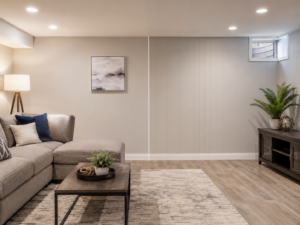
If your goal is to create a comfortable living space, this is where aesthetics matter.
Options include:
Wood slat walls
Decorative panel systems
Laminate wall panels
These materials:
install relatively quickly
create a finished appearance
make the basement feel like part of the home
They work best in basements where moisture is already under control.
Best Basement Wall Systems: 7 Options Compared by Admin August 27, 2026 DIY The best basement wall systems do more than cover bare concrete. A properly designed wall assembly must control moisture, reduce condensation, insulate the foundation, provide…