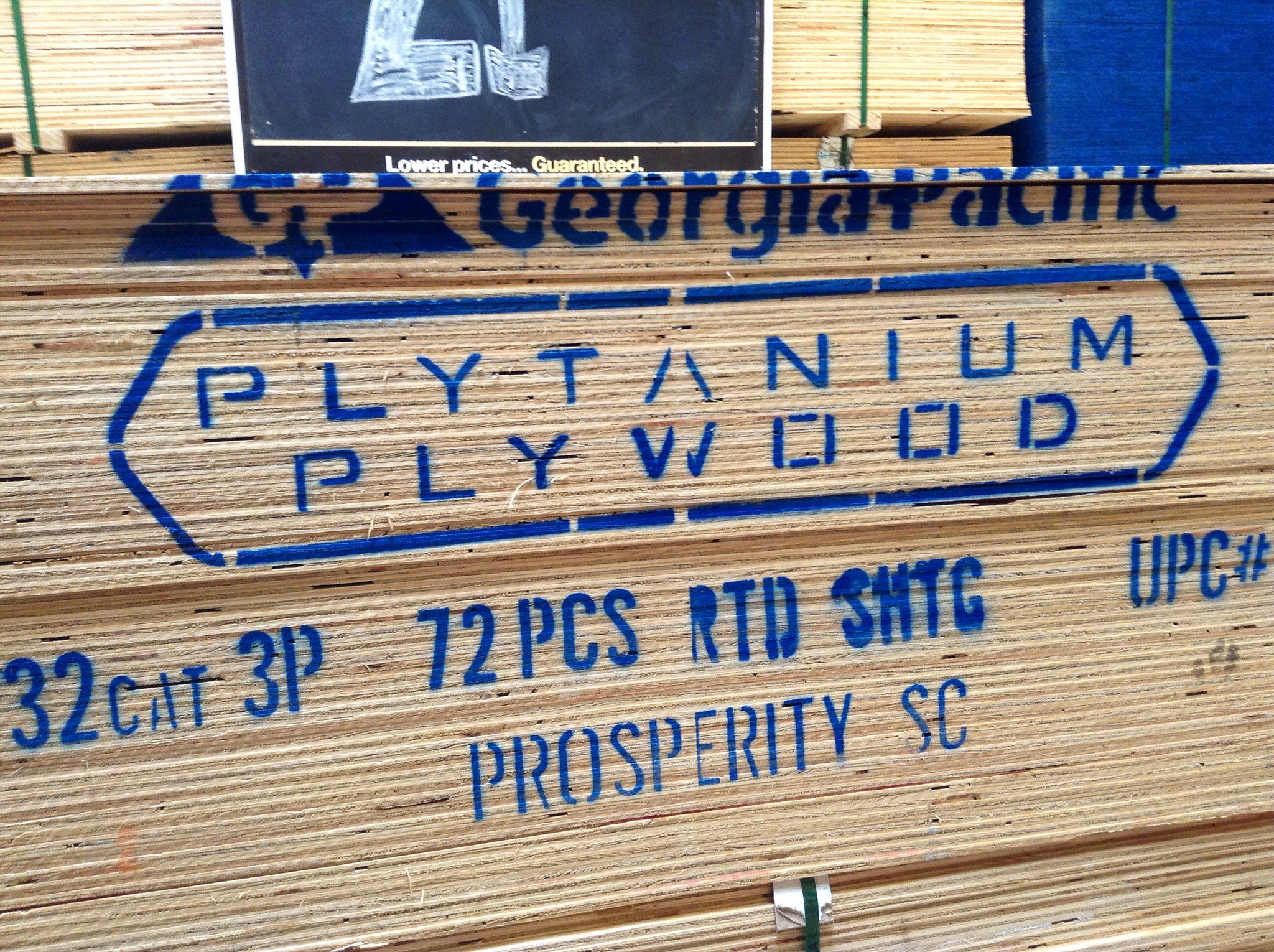
Plytanium is a proprietary brand of plywood manufactured by Georgia-Pacific. It is known for being a consistent, all-wood sanded plywood panel that resists delamination and provides a smoother surface than standard OSB, making it ideal for subflooring and exterior sheathing.
Most DIYers overpay for Plytanium—and often don’t even need it. While contractors swear by it for high-end builds, using it for a simple interior wall is a waste of your budget. Here is the hidden reason your subfloor might fail if you choose the wrong sheet, and how to master this premium material.
Quick Summary: What is Plytanium Plywood?
Plytanium® is a high-performance brand of 100% softwood plywood manufactured by Georgia-Pacific. Unlike commodity plywood, Plytanium is engineered for structural stiffness and surface uniformity. Its primary claim to fame is its proprietary resin system, which significantly reduces “edge swell”—the phenomenon where wood edges expand permanently after exposure to moisture.
Best Plytanium Sheets: Quick Picks for Your Project
Before you buy, ensure you are matching the panel to the task. Load-bearing requirements vary significantly; see our guide on plywood thickness for structural spans.
Best for High-End Subfloors:23/32″ Plytanium Sturd-I-Floor – The Gold Standard: Featuring tongue-and-groove edges, this panel eliminates “independent vertical movement” between sheets, which is the #1 cause of floor squeaks.
Best for Shop Cabinets:15/32″ Sanded Pine Panels – The Finish Choice: Features an “A-grade” face veneer that requires minimal prep before paint or clear coat. (See our best plywood for cabinets guide.
Best for Roof Sheathing:19/32″ Plytanium Sheathing – The Contractor’s Favorite: Lighter than OSB but vastly superior in nail-holding strength, ensuring shingles stay fastened during high winds.
Plytanium vs. CDX vs. OSB: What Should You Actually Buy?
Most people compare Plytanium only to OSB—but that’s incomplete. The real decision is between three materials: Plytanium, CDX plywood, and OSB.
Plytanium ranks at the top for consistency and moisture resistance. CDX plywood is a mid-tier option—it uses exterior glue like Plytanium, but the internal layers often contain more voids and lower-grade veneers. OSB (Oriented Strand Board) is the cheapest, made from compressed wood strands and wax-based adhesives.
In real-world use, the differences show up fast. CDX can warp slightly when exposed to moisture, while OSB swells aggressively at the edges. Plytanium maintains its shape far better, which is why contractors prefer it for subfloors and roofing. However, CDX is often the best “middle ground.” If you’re building a shed or garage and want something stronger than OSB without paying premium prices, CDX is usually the smart choice.
👉 Bottom line:
Plytanium → Best performance & durability for the primary home.
CDX → Best value balance for outbuildings and detached garages.
OSB → Cheapest option for dry, vertical interior framing.
The Manufacturing Science: The “Phenolic Bond” Advantage
Standard plywood relies on basic adhesives, but Plytanium uses heat-cured Phenolic Resins. In the Georgia-Pacific mill, these resins are cooked under extreme pressure. This creates a crystalline bond that is chemically incapable of reabsorbing water once it has set.
Furthermore, GP uses Ultrasonic Veneer Sorting. This ensures that the inner plies are free of large knotholes. When you drive a screw into Plytanium, you aren’t hitting an air pocket; you’re hitting solid wood. This is why it has superior “nail pull” resistance compared to cheap imports.
The Physics of Flex: Why Plytanium Prevents Floor Failure
The most expensive mistake a DIYer can make is ignoring vertical deflection. In engineering terms, we look at the “L/360” standard, which dictates how much a floor is allowed to bend under a load. If your subfloor has too much “give,” your expensive porcelain tile will crack at the grout lines, and your hardwood floors will begin to “crackle” as the staples rub against the wood.
This is where Plytanium earns its price tag. Unlike OSB, which is composed of multi-directional wood flakes, Plytanium consists of long, continuous veneers of Southern Yellow Pine. This specific wood species has a naturally high “Modulus of Elasticity,” meaning it is incredibly stiff for its weight. When you walk across a subfloor made of 23/32″ Plytanium, the load is distributed across the entire sheet’s internal grain structure.
In contrast, OSB relies on the resin bond between small strands. Over 10 or 15 years, those internal bonds can fatigue, leading to a “spongy” feel in high-traffic areas like hallways or kitchen islands. By choosing Plytanium, you are essentially buying a higher resistance to fatigue.
This “stiffness-over-time” is the primary reason why professional floor installers refuse to warranty tile jobs over OSB subfloors. They know that even if the OSB is dry today, its inherent flex will eventually destroy the bond of the thin-set mortar. If you are planning on installing large-format tile or natural stone, the extra $20 per sheet for Plytanium is actually a form of insurance against a $5,000 floor failure.
Structural Resilience: Shear Strength and Disaster Engineering
In 2026, building codes in hurricane-prone and seismic zones will become stricter. Plytanium is often specified in Shear Wall designs because of its superior mechanical properties.
Racking Resistance: Plywood resists “racking” (the house leaning or tilting during high wind) better than OSB because its alternating layers of long-grain veneers act as a rigid diaphragm.
Nail Pull-Through: In a high-wind event, the most common roof failure is shingles or sheathing pulling right over the heads of the nails. Because Plytanium is a natural wood laminate, the wood fibers “clamp” down on nail shanks far more effectively than the glue-and-chip structure of OSB.
Puncture Strength: Plytanium sheathing is significantly harder to puncture. This is critical for roof protection against hailstorms or wind-borne debris striking the building during a storm.
When Plytanium Is a Complete Waste of Money
This is where most DIYers go wrong. Plytanium is marketed as “premium,” but there are many situations in which it offers no real benefit.
If you’re installing plywood behind drywall on interior walls, you won’t gain any structural or moisture advantage. OSB performs the same once covered and costs 40% less. Another common mistake is using Plytanium for temporary builds—like workbenches, jigs, or quick outdoor structures. In these cases, you’re paying for engineering you’ll never use.
Even for flooring, if your house is fully enclosed and climate-controlled during installation, OSB performs nearly the same at a much lower cost.
👉 The rule:
If moisture exposure is low → Skip Plytanium.
If exposure risk exists (Roof/Subfloor) → Pay for it.
💰 Real Plytanium Cost Breakdown (2026): What You’ll Actually Pay
Most articles throw out vague “$40–$60 per sheet” numbers. That’s not how real projects work. Here’s what you’ll actually spend in 2026.
🧱 Cost Per Sheet (Realistic Ranges)
23/32″ Sturd-I-Floor (Subfloor grade): $42–$55
19/32″ Roof Sheathing: $38–$48
15/32″ Sanded (Cabinets): $45–$65
DryPly Premium: +$5 to $10 per sheet
👉 Northeast pricing (your area) typically sits on the higher end due to freight costs.
🏠 Real Project Cost Examples
Standard Bedroom (10×12) Subfloor
Sheets needed: ~4
Cost: $180 – $220
With adhesive + fasteners: ~$250 total
Living Room (16×20) Subfloor
Sheets needed: ~10–12
Cost: $500 – $650
Full install materials: ~$700–$850
Roof Sheathing (Small Shed 10×12)
Sheets needed: ~5–6
Cost: $220 – $300
⚠️ Where Most People Waste Money
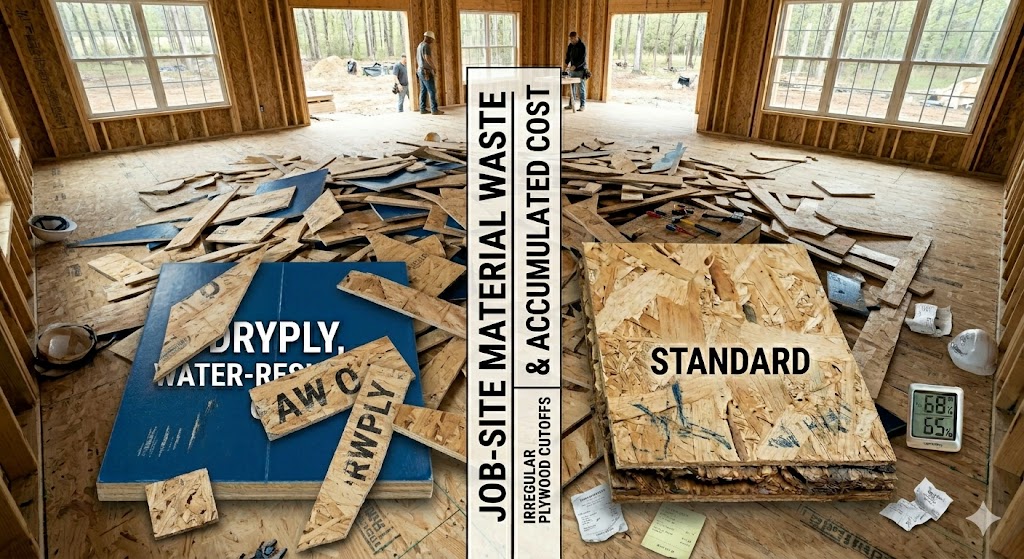
1. Overbuying “just in case.” Plywood waste adds up fast. Buying 3–4 extra sheets “for safety” can cost you $150+ you’ll never use.
2. Paying retail instead of contractor pricing Local lumber yards often beat big-box stores—especially if you ask for:
Bulk pricing (10+ sheets)
Contractor discount tiers
3. Using premium where it doesn’t matter Using Plytanium for:
Interior walls
Temporary builds
Workshop surfaces
…is just burning money. OSB or CDX performs the same in those cases.
🧠 Cost Optimization Rule (Simple but Effective)
Subfloor / Roof (exposed risk): Buy Plytanium or DryPly
Interior / Low risk: Use CDX or OSB
High-end finish work: Use sanded plywood
👉 This one decision alone can save $300–$800 per project without sacrificing performance.
💡 Pro Tip (Most People Miss This)
If you’re doing a full room, ask for “unit pricing” (bunk pricing) at the lumber yard.
30+ sheets = discounted rate
Savings: ~$3–$5 per sheet
Total savings: $100–$150+ on larger jobs
Structural Engineering: Load Tables and Span Ratings
Don’t guess on your floor joist spacing. Using the wrong plywood weight or thickness can cause structural sagging.
Joist Spacing (On Center)
Recommended Plytanium Grade
Load Capacity (Lbs/Sq Ft)
16 Inches
19/32″ Sturd-I-Floor
100 PSF (Residential Standard)
20 Inches
23/32″ Sturd-I-Floor
100 PSF (Custom Build Stiffness)
24 Inches
7/8″ or 1-1/8″
Heavy Duty / Commercial Grade
Understanding the Stamp: Look for the “Span Rating” (e.g., 48/24). The first number is the maximum spacing for roof rafters; the second is the maximum spacing for floor joists. These ratings are certified by the APA (Engineered Wood Association).
Plytanium vs. OSB Table
Feature
Plytanium (Plywood)
OSB (Oriented Strand Board)
Moisture Resistance
High (Dries quickly)
Medium (Edges can swell)
Surface Finish
Sanded / Smooth
Rough / Textured
Weight
Lighter
Heavier
Decoding the APA Stamp: The “Hidden” Engineering Data
Most DIYers ignore the ink stamp on the back of the board, but for a contractor, it’s the legal “ID card” for the build.
Mill Number: This tells you exactly which Georgia-Pacific plant manufactured the sheet.
Exposure 1 Rating: This doesn’t mean “waterproof.” It means the glue is designed to withstand moisture during construction delays (rain, snow, humidity) without losing structural integrity.
Thickness Value: You’ll see the decimal (e.g., 0.703 in.). In a high-end tile install, that thousandth of an inch matters for floor transitions.
🔵 Plytanium vs. DryPly: Is the Upgrade Actually Worth It?
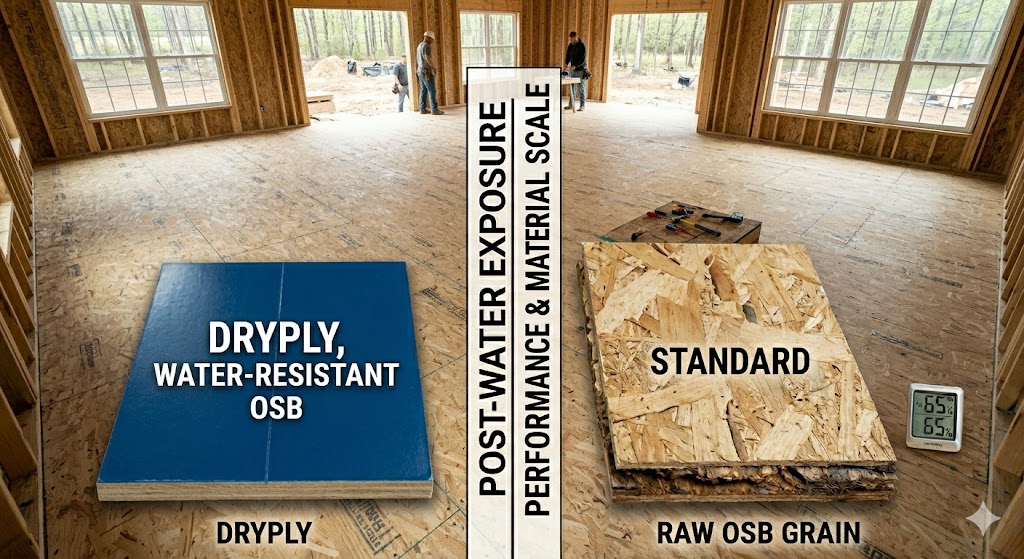
At first glance, DryPly just looks like Plytanium with blue paint—but it’s more than that.
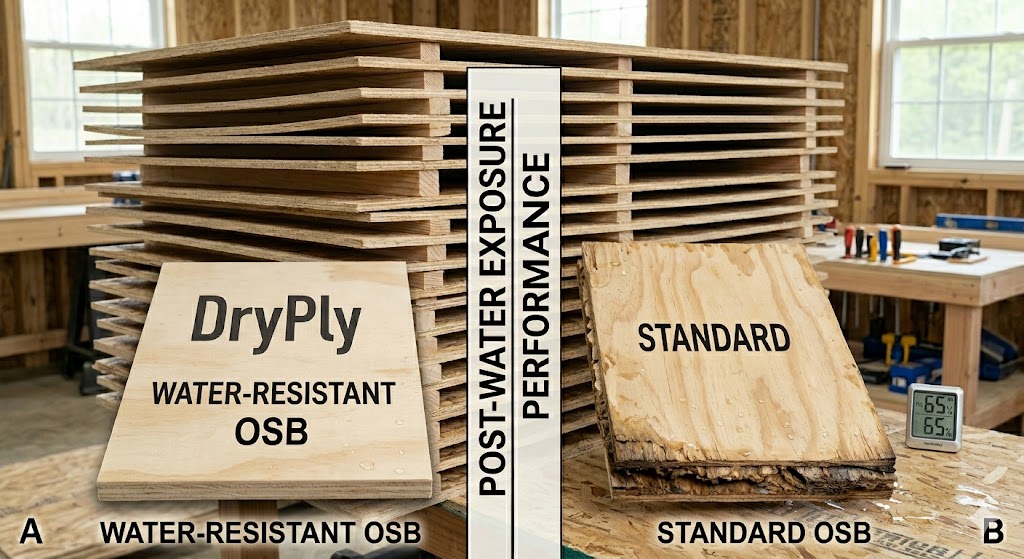
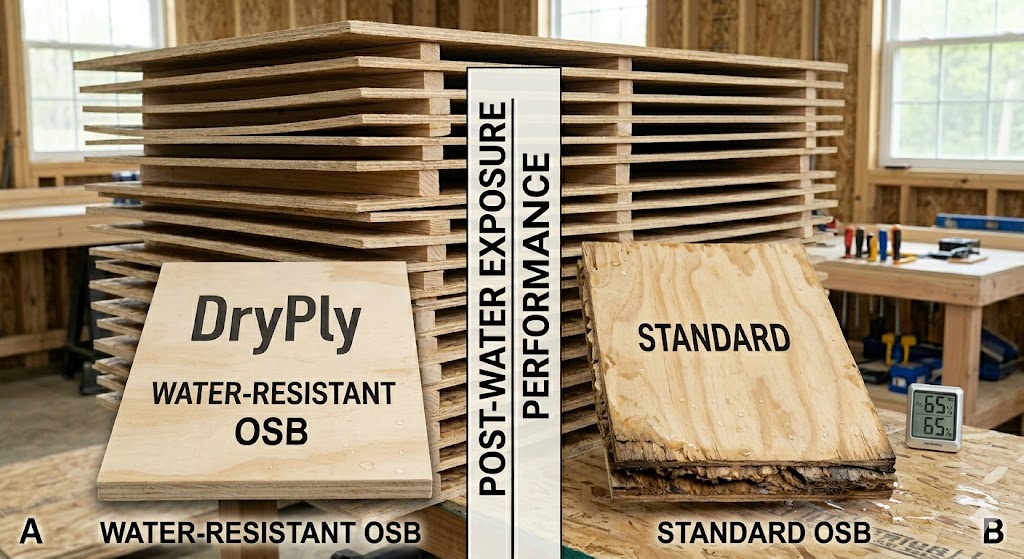
DryPly is coated with a water-repellent barrier that reduces moisture absorption by up to 40%. This matters during construction delays, where exposed subfloors can sit in rain for days or even weeks.
Where DryPly is worth it:
Northeast (New Jersey, New York, Pennsylvania)
Pacific Northwest (Washington, Oregon)
Any build during rainy seasons
Projects where the roof won’t be installed immediately
In these conditions, standard plywood can absorb moisture, swell slightly, and create uneven surfaces before the structure is even finished. DryPly minimizes that risk.
Where DryPly is NOT worth it:
Dry climates (Arizona, Nevada, inland California)
Fast builds where the structure is covered within days
Interior projects with no exposure risk
👉 The real decision rule: If your subfloor might get wet before it gets covered → buy DryPly. If it stays dry → standard Plytanium performs the same for less money.
DryPly® vs. Standard Plytanium: Is the Blue Tint Worth It?
You may see a version of Plytanium with a blue surface tint called DryPly.
The Difference: DryPly has an extra water-repellent coating applied at the factory.
The Verdict: If you are building in the Pacific Northwest or during a rainy season in the East, buy the DryPly. It absorbs 40% less water than standard Plytanium.
How Long Does Plytanium Actually Last?
When properly installed, Plytanium can last 30–50+ years. The key factor is not the plywood itself, but exposure conditions. Inside a finished home, Plytanium will easily last the lifetime of the structure. Outdoors, lifespan depends on protection. If used as sheathing and covered quickly with siding or roofing, it performs exceptionally well.
In most cases, buyers will never see your subfloor—but they will feel it. A properly installed Plytanium subfloor creates a stiffer floor and fewer squeaks. While Plytanium itself doesn’t directly increase resale value as countertops do, it contributes to the perception of building quality.
Advanced Field Manual: Preventing Failure
1. The Acclimation Protocol
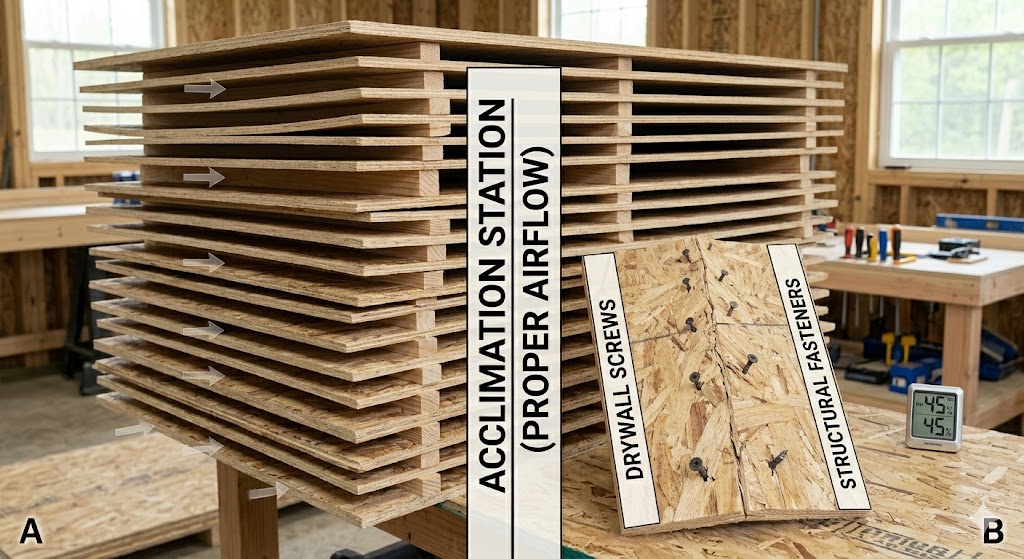
90% of subfloor buckling is caused by installing “wet” wood in a “dry” house. Stack your sheets in the room for 48-72 hours before fastening. Use “stickers” (strips of wood) between sheets to allow airflow.
2. The 1/8-Inch “Breathable” Gap
Always leave a 1/8-inch gap at all joints. Use a 10d nail as a temporary spacer. If you butt them tight, the floor will eventually “peak” at the seams during the summer.
3. Specialized Fastener Engineering
To maximize the strength of Plytanium, use Structural Wood Screws or Ring-Shank Nails.
Why Ring-Shank? The small “rings” on the nail shank bite into the Southern Pine fibers, providing massive “withdrawal resistance” and preventing the subfloor from lifting and squeaking.
⚠️ The 3 DIY Mistakes That Ruin Plytanium Floors (Most People Do All 3)
If your subfloor fails, it’s almost never the plywood—it’s the install.
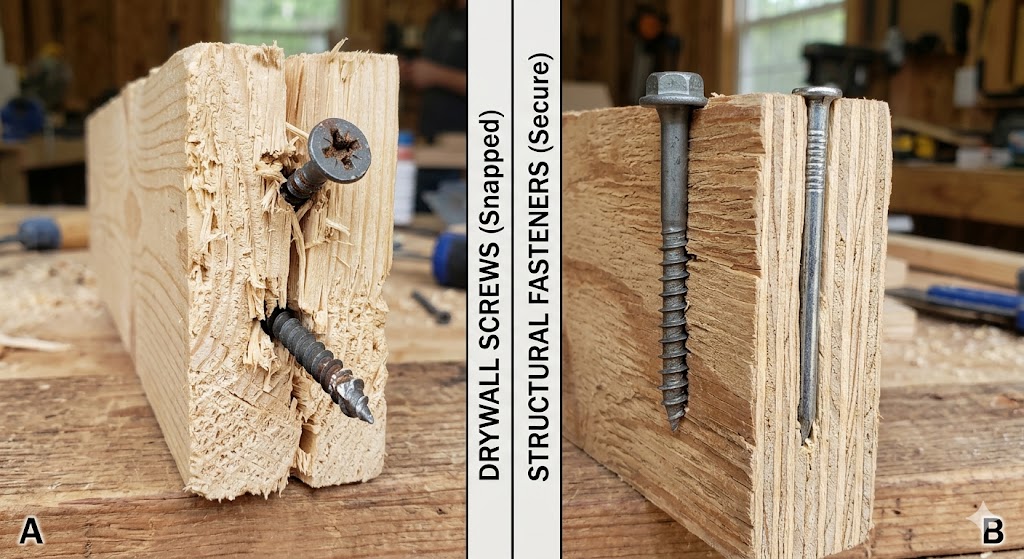
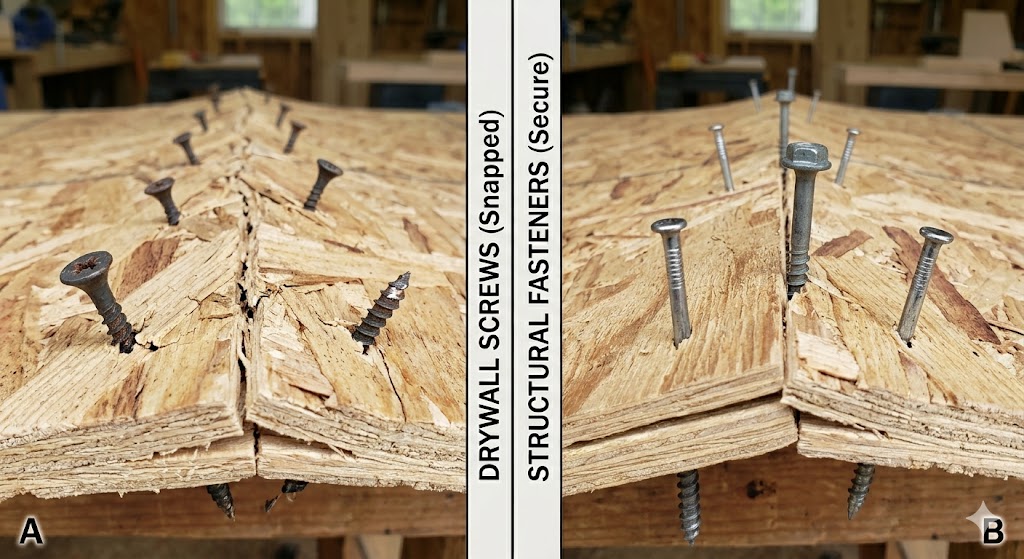
1. Using the Wrong Fasteners Drywall screws are the biggest mistake. They’re brittle and snap under shear stress as the floor moves. That’s when you get squeaks and loose panels. 👉 Use ring-shank nails or #8/#10 structural wood screws—they flex with the wood and lock into the fibers.
2. Skipping the Expansion Gap
Wood expands. If you install sheets tight edge-to-edge, they will push against each other when humidity rises. Result? Your floor “peaks” at the seams, creating ridges under tile, vinyl, or hardwood. 👉 Always leave a 1/8-inch gap (use a nail as a spacer for consistency).
3. Installing Wet Sheets
Plywood straight from the yard often holds moisture. If you install it immediately in a dry home, it will shrink—leading to gaps, squeaks, and movement. 👉 Let sheets acclimate indoors for 48–72 hours before installation.
👉 Bottom line: Fasteners hold it together. Gaps let it breathe. Acclimation keeps it stable. Miss one—and your floor will remind you.
The Economics of Waste: Saving $100+ Per Project
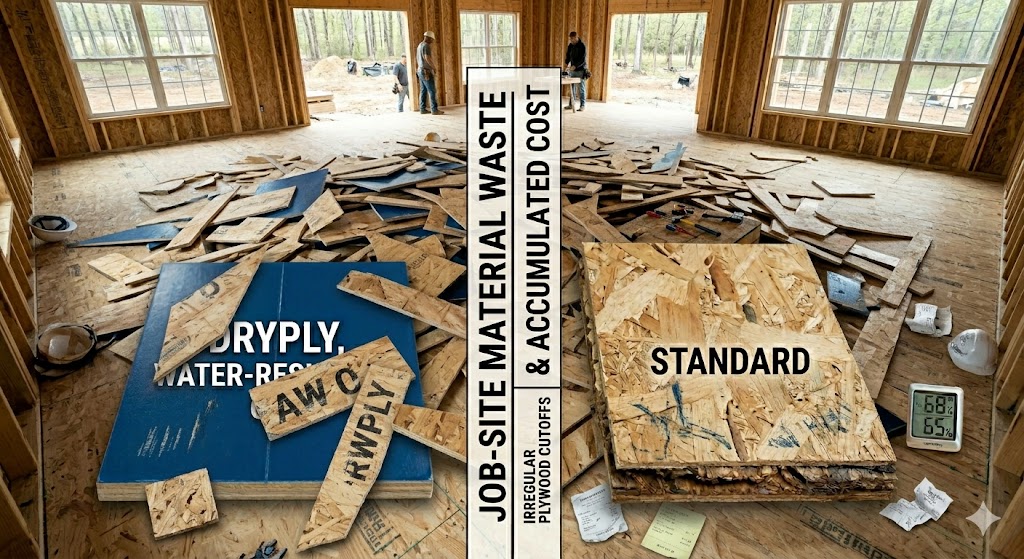
Plytanium is too expensive to waste. Your goal should be less than 10% scrap.
The Grain Direction Rule: Plywood is strongest when the grain of the face veneer runs perpendicular to the joists. If you rotate a sheet to “make it fit,” you sacrifice up to 40% of its stiffness.
Ripping Safety: When ripping 4×8 sheets, use an outfeed table or a track saw. A single “kickback” can ruin a $50 sheet instantly.
Technical Troubleshooting: Solving Common Issues
“My Sanded Panel is Blotchy”
Southern Yellow Pine is resinous. If you stain it without a wood conditioner first, the grain will absorb color unevenly.
Do not hit the tongue directly with a hammer! Use a “beater block” (a scrap of 2×4) to protect the profile while you drive the sheets together.
Environmental Health and 2026 Air Quality Audit
Georgia-Pacific uses NAUF (No Added Urea Formaldehyde) glues.
VOC Safety: Safe for nurseries and kitchens.
Sustainability: SFI certified. GP managed forests plant 3 trees for every 1 harvested.
Why “Real Wood” Subfloors are Trending in 2026
In 2026, we’ve seen a shift away from OSB in custom homes. Homebuyers are more educated. Seeing a branded Plytanium subfloor signals a “quality-first” build. Even though it’s hidden, mentioning “Plytanium Plywood Construction” in a real estate listing is a subtle way to signal value.
Frequently Asked Questions (Snippet Targets)
Is Plytanium stronger than regular plywood?
Yes. Stricter quality controls mean fewer internal voids and more consistent stiffness across the board.
Furniture Grade Plywood (2026): Cost & What to Buy by Admin April 10, 2026 Hardwood Furniture-grade plywood is a high-quality engineered wood made with smooth hardwood veneers, minimal voids, and strong core layers. It is specifically designed for cabinets, furniture,…