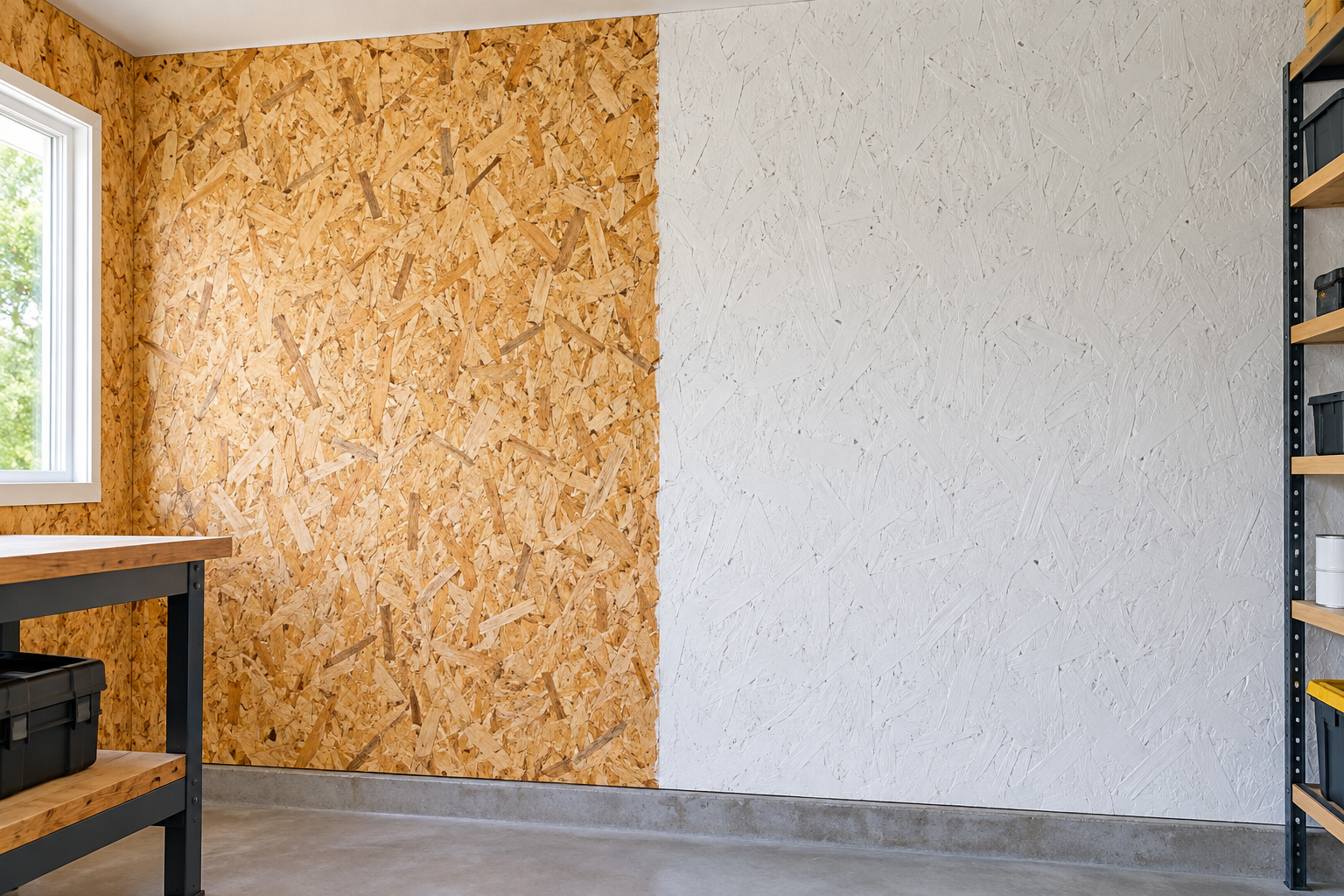
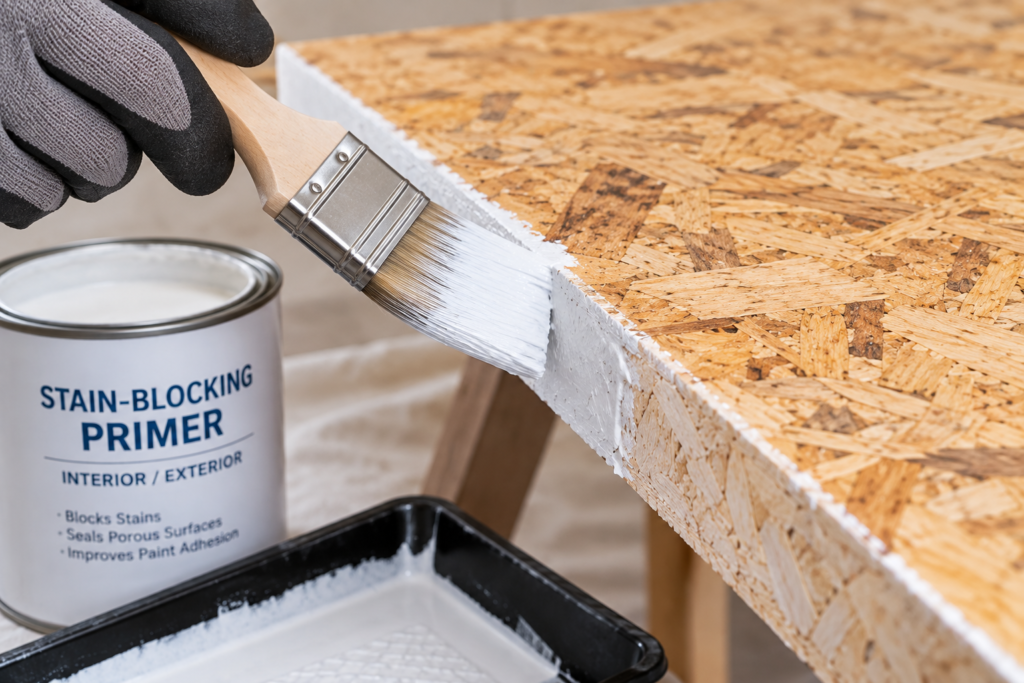
To paint OSB, clean the panel, test a scrap for surface wax, prime with a stain-blocking primer that’s compatible with your topcoat, and finish with acrylic latex paint. Outdoors, APA Technical Note N300B limits standard Exposure 1 OSB to protected spots where only the underside is exposed, like an open soffit. There it calls for an acrylic latex system with primer on every edge. Below you’ll find a primer-and-paint chart by location, the prep that decides whether the paint holds, and the jobs where painting OSB is the wrong move.
Quick answer
Indoor walls and ceilings: stain-blocking primer plus acrylic latex paint, any sheen.
Floors: a floor-rated paint plus the primer its label specifies. Several popular all-purpose primers are labeled not for floors.
Open soffits: acrylic latex stain-blocking primer, all-acrylic topcoat, every edge primed.
Exterior walls sheathed with Exposure 1 OSB: don’t paint it as your finished siding. Wrap it and side it.
OSB Primer and Paint Chart by Location
Where the OSB is
Primer
Topcoat
Edges
Source
Interior walls, ceilings (dry rooms)
Stain-blocking primer compatible with the topcoat
Acrylic latex, flat to gloss
Prime if cut or exposed
APA N300B
Bathroom, kitchen, laundry
Stain-blocking primer compatible with the topcoat
Acrylic latex only; avoid gloss in high humidity
Seal all edges with a compatible sealer
APA N300B
Interior floors
The primer the floor paint’s label calls for
Floor-rated paint (porch and floor type)
Fill seams; level raised joints only after full drying
Paint maker’s instructions
Open soffits (underside exposure)
Acrylic latex stain-blocking primer
All-acrylic latex house paint
Every edge primed, including cuts
APA N300B
Exterior walls, Exposure 1 sheathing
Not a paint job
Cover with water-resistive barrier and siding
—
APA N300B
OSB-based siding (e.g., LP SmartSide)
Factory primed; prime field-cut edges
100% acrylic exterior paint, two coats
Paint all exposed edges; no back-priming
LP finishing instructions
Elastomeric coatings
Only over Exterior-rated panels
—
—
APA N300B
What Changes the Answer
Surface wax
Some mills add wax to OSB faces to slow moisture, and the amount varies by manufacturer. APA notes that a waxy face can interfere with how a finish goes on and how it looks. That’s why the sample test below matters more on OSB than on plywood.
Moisture and edges
APA warns that OSB in high-moisture conditions can swell at the edges, individual strands can swell unevenly, and the finish may crack or chips may lift. Paint slows water down. It doesn’t make OSB waterproof. Our guide on whether OSB can get wet covers what swelling looks like and when a panel needs replacing.
The panel’s rating
An Exposure 1 stamp describes the glue bond. The panel can handle construction delays, but it isn’t rated for permanent weather exposure. That bond rating says nothing about rot resistance. A painted Exposure 1 panel is still not a siding panel. For how OSB compares with plywood in general, see our OSB pros and cons guide.
Let the panels acclimate. West Fraser suggests spreading panels out for 24–48 hours so they adjust to the room’s humidity, and leaving its specified 1/8-inch gap at panel edges when you install.
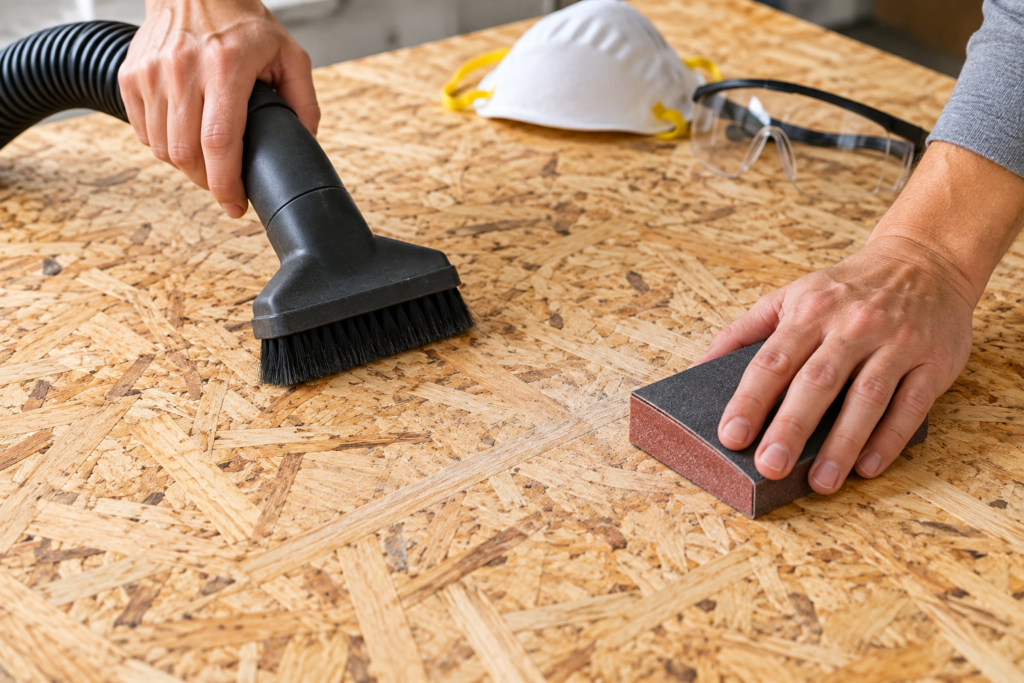
Clean the surface. A rag snags on OSB. West Fraser recommends a vacuum with a brush attachment.
Test a sample. See the test box below.
Scuff the faces lightly, not the panel edges. West Fraser says a light sanding smooths the face but warns that sanding edges can compromise the board. A medium paper, around 120 grit, is a reasonable starting point. Wear a dust mask. Floors have one exception for raised joints, covered in the floor section below.
Fill only if you want a smoother look. For large gaps, West Fraser suggests a polyester resin-based filler, alternating coats and sanding. APA notes that opaque finishes still let the strand texture show, so expect texture unless you fill heavily.
Prime the faces and every edge. West Fraser says nail lines and grade stamps are harder to cover and recommends asking your paint dealer for a sealer to use as the prime coat. Spot-prime those areas first.
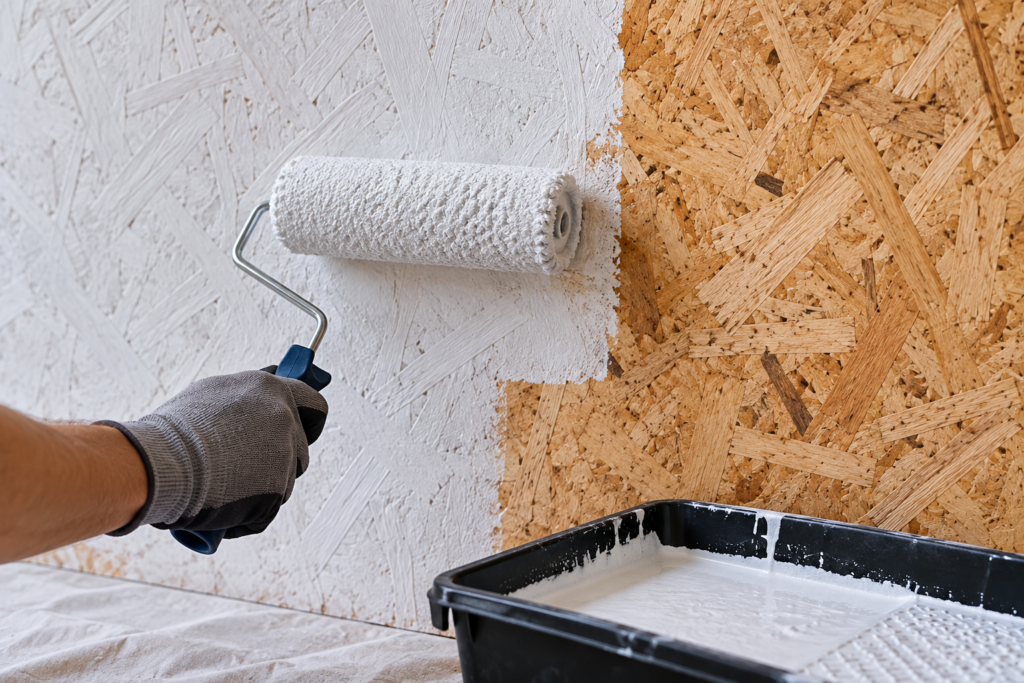
Apply two topcoats with a roller. West Fraser notes a roller takes longer than a sprayer but covers better on OSB’s uneven, absorbent surface.
🧪 The test APA tells you to run: Before you commit to the whole wall, prime and paint a representative offcut from the same stack, then let it dry fully. APA recommends trying the finish on a sample first. Look for beading, a washed-out look, or blotchy bleed-through. Any of those points to surface wax, and you should change primers before you’re 30 sheets in.
Painting OSB Walls
For dry rooms like garages, workshops, basements and closets, APA says finish choice is mostly about the look you want. A stain-blocking primer under acrylic latex is the reliable default. Higher gloss is easier to wipe clean, but APA advises against gloss paint in high-humidity areas.
In bathrooms, kitchens and laundry rooms, APA treats humidity much like outdoor exposure. It says to use acrylic latex systems only and to protect panel edges with a sealer compatible with the paint. APA also warns that this kind of paint tends to stick to itself, so painted OSB shouldn’t be used for shelving or cabinets where humidity runs high. Our main guide to painting plywood covers brush and roller technique, which works the same on OSB.
⚠️ Warning: APA notes that the solvents in oil-based solid-color stains can dissolve surface wax and cause bleed-through and mottled color. On OSB that may be waxed, a water-thinned system is the safer default.
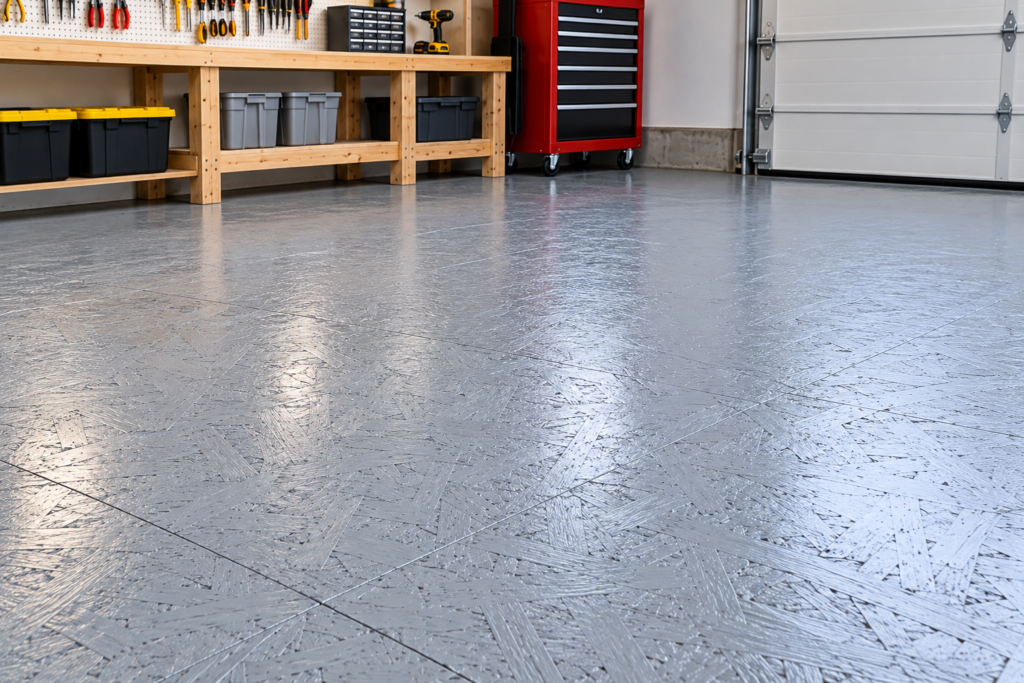
Painting OSB Floors
A painted OSB floor is a wear surface, so it will need recoats. APA’s performance expectations for finished OSB assume no drastic moisture changes and no physical abuse, and foot traffic is physical abuse.
Level raised joints only when the floor is fully dry. If earlier wetting left slightly raised joints between subfloor panels, sand them flush only after the panels are completely dry, and only as far as the panel manufacturer’s guidance allows. Sanding while the panel is still damp removes material that may have settled back on its own. If the swelling is severe or the panel feels soft, sanding is the wrong fix. See our guide on whether OSB can get wet for when to replace instead.
Read the primer label before you buy. Zinsser’s data sheets for Bulls Eye 1-2-3 and Cover Stain, and KILZ’s page for KILZ Klear, all say not for floors. Use the system the floor paint itself specifies. For example, KILZ’s Porch & Patio Floor Paint instructions name a specific KILZ primer for new wood. KILZ also says this paint isn’t for floors that see car tires, so it’s not a garage floor solution.
Separate drying, use and cleaning. Under standard conditions, KILZ lists these times for its Porch & Patio Floor Paint:
Cooler or more humid conditions stretch every one of those times. Other floor paints have their own schedules, so follow your product’s label. Our painted floors guide covers patterns and colors.
Painting OSB Outside: Soffits, Sheds and Siding
Open soffits are the one outdoor use APA describes for Exposure 1 OSB. Use a top-quality acrylic latex stain-blocking primer and an all-acrylic latex topcoat. Prime every edge, including any you cut later. APA notes this is easiest to do while the panels are still stacked.
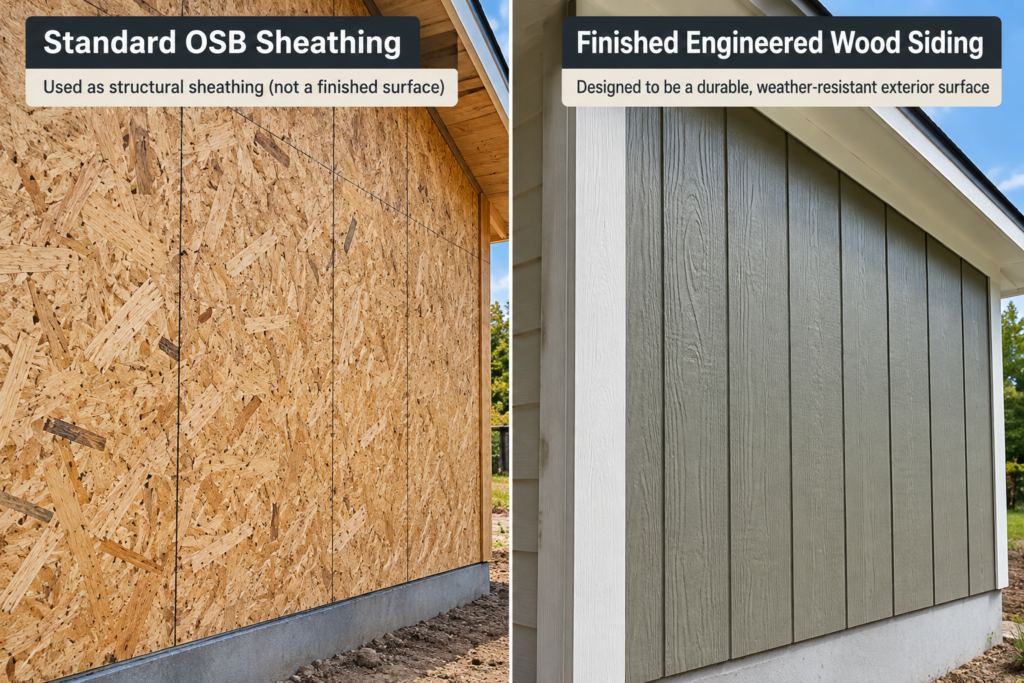
Shed and garage walls sheathed with standard OSB should get a water-resistive barrier and siding, not paint alone. APA says Exposure 1 sheathing isn’t intended for permanent direct weather exposure.
OSB-based siding is a different product. LP SmartSide comes factory primed. LP’s application instructions call for a finish coat as soon as possible and within 180 days, and recommend high-quality acrylic latex paint made for wood and engineered wood. LP’s exterior paint guidance requires exposed edges to be primed and painted and says not to prime the back side. Our T1-11 vs LP SmartSide comparison covers which panel fits which building.
💸 Cost difference: Paint costs less up front than wrap and siding. What paint can’t change is the panel’s rating. Exposure 1 OSB isn’t intended for permanent direct weather, and APA warns that wet OSB can swell at the edges and lose chips under the finish. If that happens, the fix is usually replacing panels, not just repainting. Weigh that risk, plus your local prices for replacement panels and labor, against the cost of wrap and siding before you choose.
Primer and Paint Picks
Zinsser Bulls Eye 1-2-3: water-based stain-blocking primer for interior and exterior walls, ceilings and soffits. Not rated for floors.
Zinsser Cor Stain: oil-based primer for spot-priming grade stamps and ink marks before the full coat. Test first on waxy panels, and don’t use it on floors.
KILZ Porch & Patio Floor Paint: 100% acrylic floor paint for interior and exterior floors. Not for surfaces that see car tires.
As the finished face of an exterior wall made from Exposure 1 sheathing. Side it instead.
Under elastomeric coatings, unless the anel is Exterior-rated. APA restricts high-performance elastomerics to Exterior panels.
On garage floors that see car tires, where some floor paints, such as KILZ Porch & Patio, are not rated for that use.
On shelving or cabinets in humid rooms, where APA says painted OSB tends to stick to itself.
When you need a smooth, furniture-grade finish. The texture shows through opaque paint, so sanded plywood is the better starting panel.
Common Mistakes When Painting OSB
❌ Mistake 1: Painting Exposure 1 sheathing as siding. It isn’t rated for permanent weather, so edges swell and chips lift.
❌ Mistake 2: Skipping the sample test. Surface wax can cause beading or a blotchy finish across the whole wall.
❌ Mistake 3: Using a wall primer on a floor. Several common primers are labeled not for floors, and the system can wear through or peel early under traffic.
❌ Mistake 4: Leaving cut edges raw, or sanding damp floor joints. APA calls for primer on every edge outdoors and edge protection in humid rooms. Sanding before the floor is fully dry removes material you may not need to lose.
❌ Mistake 5: Gloss paint in a bathroom. APA advises against gloss in high humidity.
❌ Mistake 6: Confusing “dry” with “ready.” Floor paint can feel dry within the hour. KILZ still says to wait 72 hours before normal use and 4 weeks before washing with detergent.
😬 Regret: The most avoidable regret on this topic is priming a whole garage with the wrong system, then finding peeling at the stamps and seams a season later. One test board would have caught it.
FAQ
Do you need to prime OSB before painting? Yes, in most cases. APA recommends a stain-blocking primer compatible with the topcoat for opaque finishes, and an acrylic latex stain-blocking primer for soffits. OSB is absorbent, and grade stamps and nail lines bleed through without a primer.
Can you use latex paint on OSB? Yes. Acrylic latex is APA’s choice for high-humidity rooms and open soffits. APA prefers water-thinned solid-color finishes over oil-based ones on panels that may have surface wax.
Does paint make OSB waterproof? No. Paint slows water down, but APA notes that OSB in high-moisture conditions can still swell at the edges and lose chips under the finish.
How long before you can walk on a painted OSB floor? Check your paint’s label. KILZ Porch & Patio Floor Paint is dry to touch in 1 hour and ready for normal use after 72 hours under standard conditions. KILZ says to wait 4 weeks before washing it with detergent.
Can you paint OSB for outdoor use? Only in protected spots. APA allows Exposure 1 OSB for uses like open soffits, where only the underside is exposed, with an acrylic latex system and all edges primed. For walls, use siding or a siding-rated panel.
Can you stain OSB instead of painting it? Yes. APA notes semitransparent stains let the strand pattern show, but wax can block oil-based stain and leave a washed-out look. On waxy panels APA suggests a water-thinned stain, and test it first.
Bottom Line
To paint OSB, clean it, test a sample for wax, use a compatible stain-blocking primer on the faces and every edge, and finish with acrylic latex. Indoors that holds up well. Floors need a floor-rated system and real cure time before use. Outside, standard OSB should only be painted where it’s protected from direct weather. Everywhere else, side it.
Best Paint for Exterior Plywood: What Actually Lasts Outdoors by Admin August 27, 2026 DIY The best paint for exterior plywood is a high-quality 100% acrylic latex exterior paint applied over an exterior-rated primer. Just as important, every exposed plywood edge…