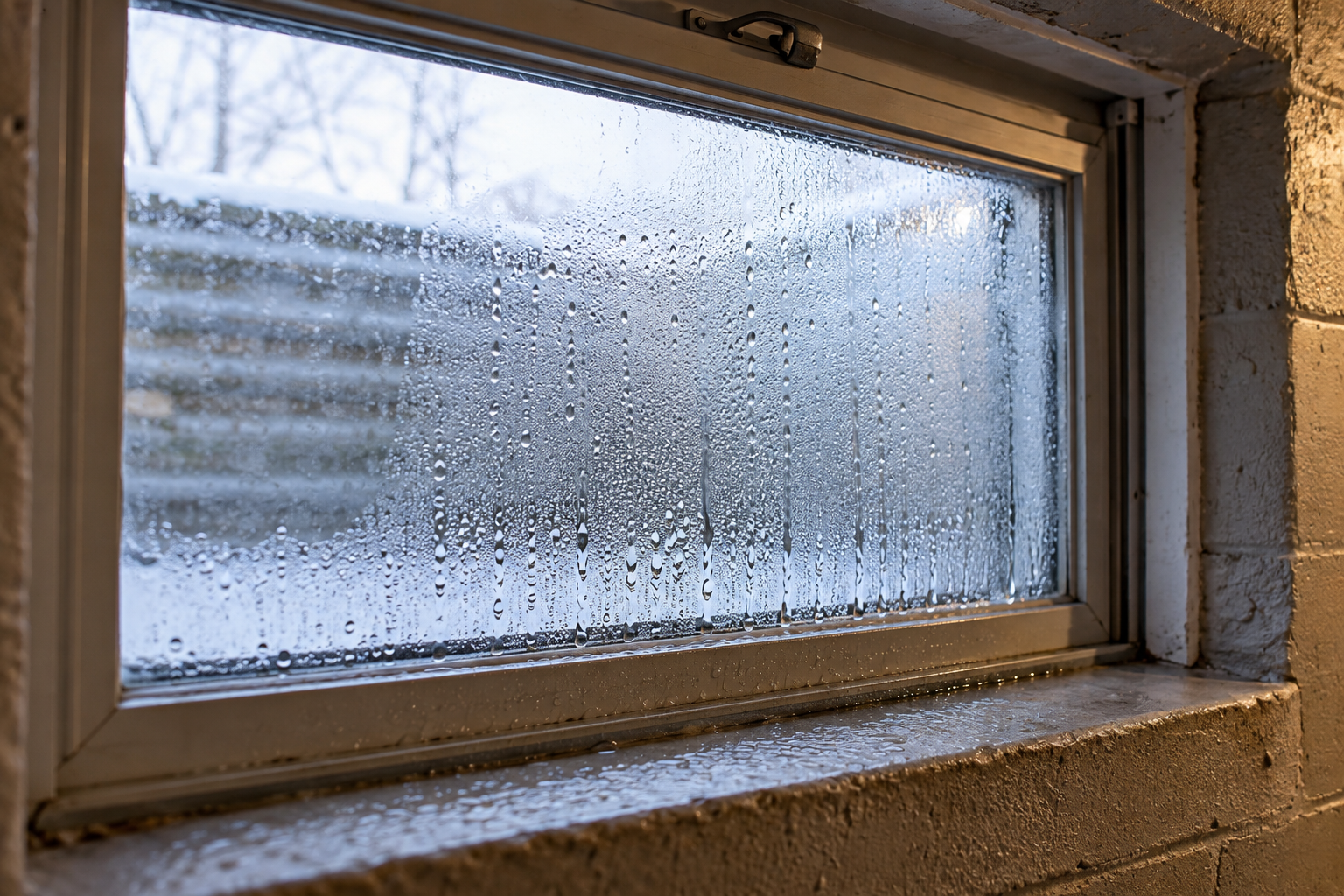
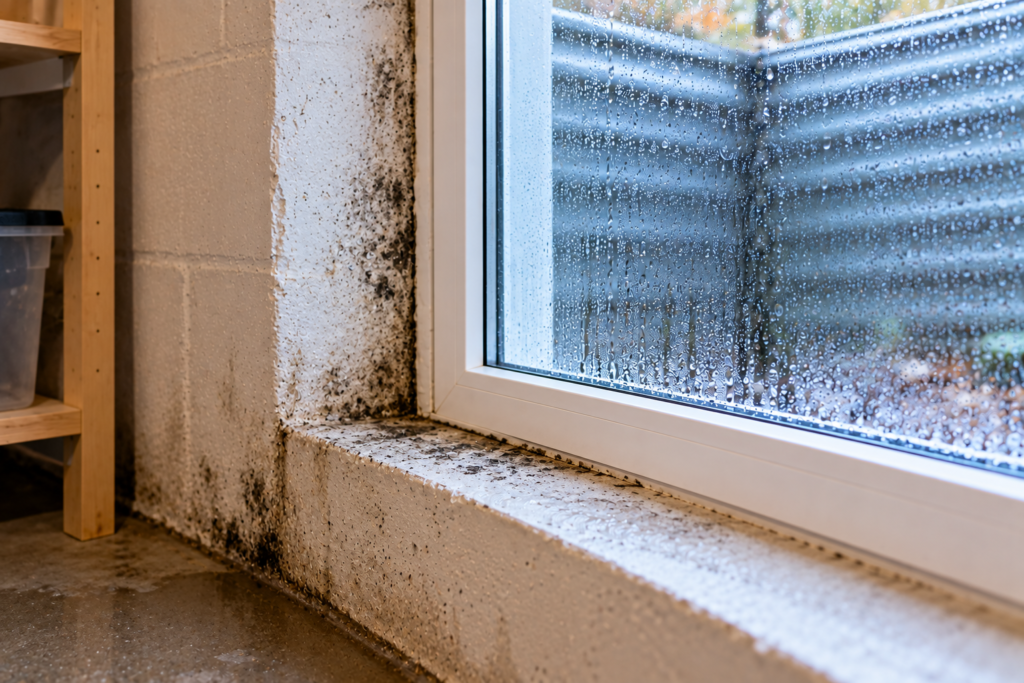
Basement window condensation forms when humid indoor air touches glass or a frame that is colder than the air’s dew point. Basements are prone to it. The windows sit in cold foundation walls, the glass is often single-pane or set in a metal frame, and the air below grade tends to run damp.
The fixes, roughly in order of payoff:
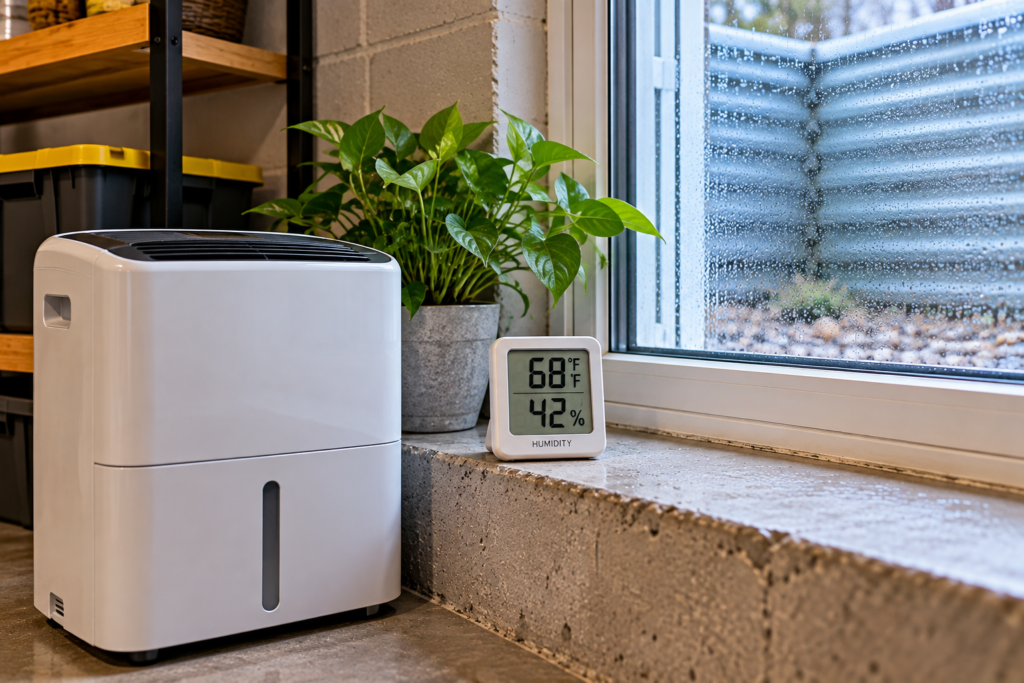
Measure the humidity first. A cheap hygrometer tells you whether you have an air problem or a window problem.
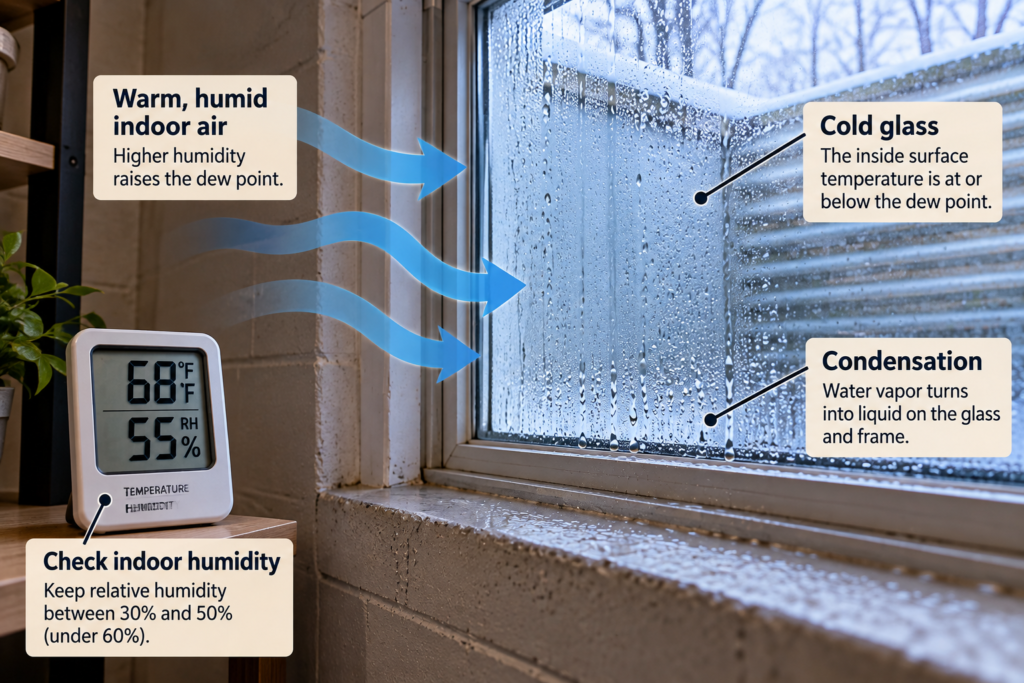
Bring indoor humidity down. The EPA recommends keeping indoor relative humidity below 60%, ideally between 30% and 50%. In most basements, that means a dehumidifier with a drain hose.
Remove the moisture sources. Vent the dryer outdoors, cover the sump pit, and stop hanging laundry downstairs.
Warm the glass and seal the frame. Air-sealing, window insulation film, or an interior storm panel can raise the inside surface temperature.
Replace the window last. New glass helps when the window is the weak point, but it won’t fix high humidity.
If the water is between the panes, the seal on the glass unit has failed. That is a window repair, not a humidity problem.
What Causes Basement Window Condensation
Air holds a certain amount of water vapor, and the dew point is the temperature at which that vapor turns back into liquid. When the inside surface of the glass or frame is at or below the dew point of the room air, water collects on it.
Here’s an illustration. Air at 68°F and 50% relative humidity has a dew point of roughly 48°F. If you raise the humidity to 60%, the dew point climbs to about 54°F. On a cold day, the inside of a single-pane basement window can easily drop below either number. That is why there are two ways to stop condensation: lower the humidity, or raise the temperature of the surface.
High Indoor Humidity
This is the most common cause. Moisture can come from the slab and foundation walls, an open sump pit, a clothes dryer vented indoors or venting poorly, laundry hung to dry, a basement bathroom without an exhaust fan, firewood, aquariums, or a humidifier running upstairs. When the air carries more water, the dew point rises and condensation starts on warmer surfaces.
Cold Glass and Metal Frames
Older basement hopper windows are often single-pane glass in steel or aluminum frames. Metal conducts heat well, so the frame can get colder than the glass. If the water shows up on the frame and the bottom corners first, this is often why.
Air Leaks Around the Frame
Gaps between the window frame and the foundation opening let cold outdoor air chill the frame and the surrounding trim. They also let warm indoor air reach cold surfaces deeper in the opening. Many basement windows were set in a rough opening with little or no air-sealing.
Poor Air Circulation at the Window
Basement windows usually sit high in a deep opening in a thick wall. Blinds, curtains, shelving, or furniture in front of the window trap a pocket of air against the glass. That air cools, and condensation follows. A basement without a supply register or return nearby makes this worse.
Humid Summer Air
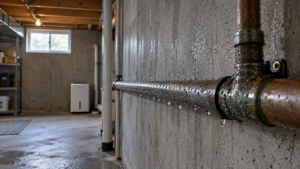
In summer, the pattern can flip. Warm, humid outdoor air can condense on the outside of basement glass, because the glass is cooled by the basement behind it. Opening basement windows on muggy days lets that same air in, where it can condense on cool walls, pipes and floors.
A New or Recently Wet Basement
New concrete releases moisture as it dries. A basement that recently flooded or had a leak will also put extra moisture into the air for a while. Condensation during that period can fade once the materials dry out. If it doesn’t, look for an ongoing moisture source.
Basement Window Condensation: Inside, Outside or Between the Panes?
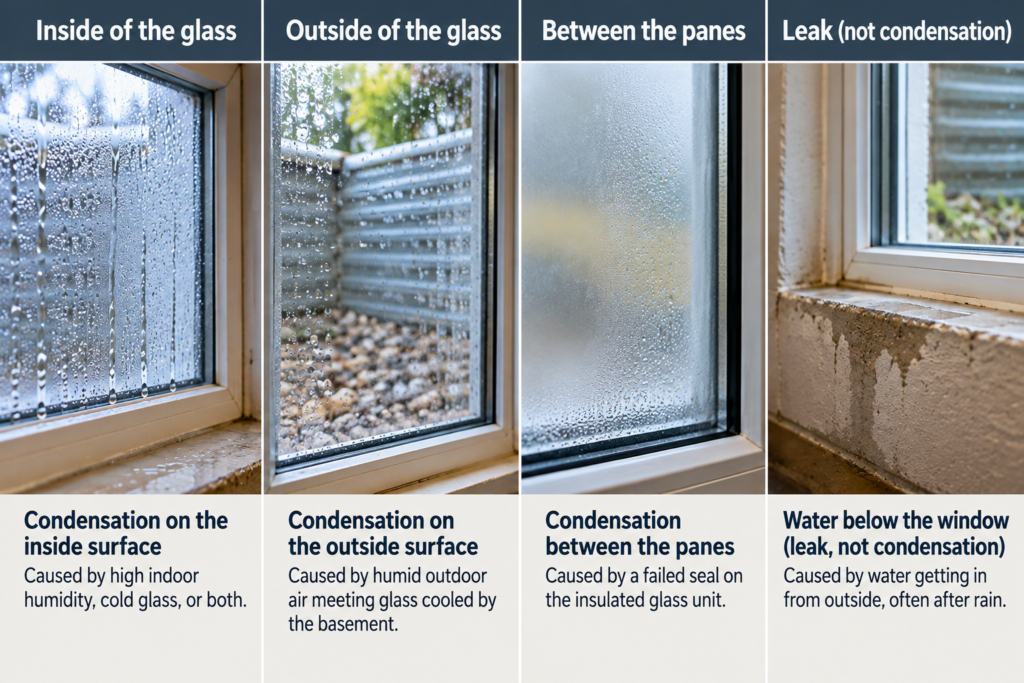
Where the water forms tells you the most about the cause.
Where the water is
Most likely cause
Usual season
First fix
DIY?
Inside surface of the glass
High indoor humidity, cold glass, or both
Fall through spring
Measure humidity, then dehumidify
Yes
Inside frame and bottom corners only
Cold metal frame, air leaks
Cold months
Air-seal the frame, add film or an interior storm panel
Yes
Outside surface of the glass
Humid outdoor air meeting glass cooled by the basement
Summer
Usually harmless; keep the window well drained
Yes
Between the panes
Failed seal on the insulated glass unit
Any
Replace the glass unit or sash
Usually pro
Wall or sill below the window, often after rain
A leak, not condensation
After storms
Window well drainage, flashing, sealing
Depends
The Real Test: Find Your Cause in a Week
Before you buy anything, spend a week finding out what’s actually going on.
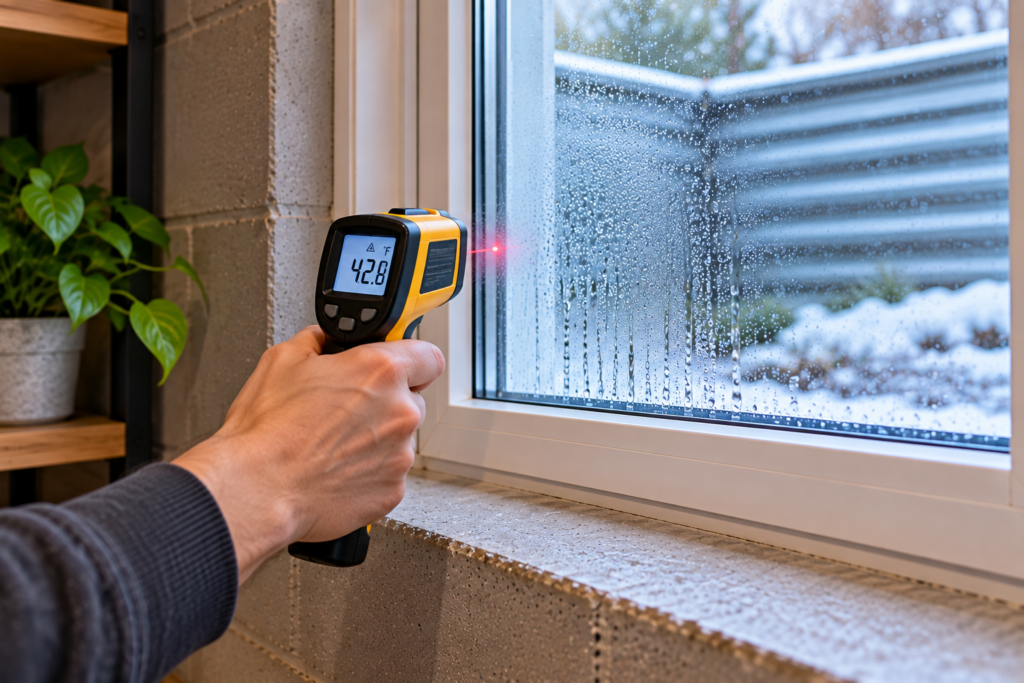
Put a digital hygrometer near the window. Check the reading morning and evening for several days, and write down the outdoor temperature too.
Wipe the glass dry and watch. Note how long the moisture takes to come back and which surface it forms on: the inside, the outside, or between the panes.
Feel around the frame on a cold or windy day. If you feel a draft at the edges, you have air leaks to seal.
Rule out leaks. If the wet area grows after rain and starts at the wall or sill rather than the glass, you’re dealing with water getting in, not condensation.
If the humidity is consistently above 60%, start with the air. If the humidity is in the 30% to 50% range and the glass still sweats, the window is the weak point. For a broader check of the basement walls and slab, run the tests in our basement moisture test guide, which separates condensation on concrete from moisture coming through it.
How to Stop Basement Window Condensation
Work through these in order. Each step is cheaper than the next, and the early steps often make the later ones unnecessary.
1. Get Indoor Humidity Under Control
Run a dehumidifier sized for the space, and set it to keep the room below 60% (ideally 30% to 50%), following EPA guidance. Use a drain hose to a floor drain or a condensate pump, so the dehumidifier keeps running when no one empties the bucket. Recheck the hygrometer after a couple of weeks of steady running.
2. Cut Moisture at the Source
A dehumidifier fights moisture; removing the sources stops it from arriving in the first place.
Make sure the dryer vents fully outdoors, with no disconnected or crushed duct.
Put a sealed lid on the sump pit.
Run the bathroom exhaust fan during and after showers, and confirm it vents outside rather than into the joist space.
Move laundry drying and firewood storage out of the basement.
If water is moving through the walls or slab, deal with that as well. Our basement vapor retarder guide explains which assemblies help with that and which ones trap moisture.
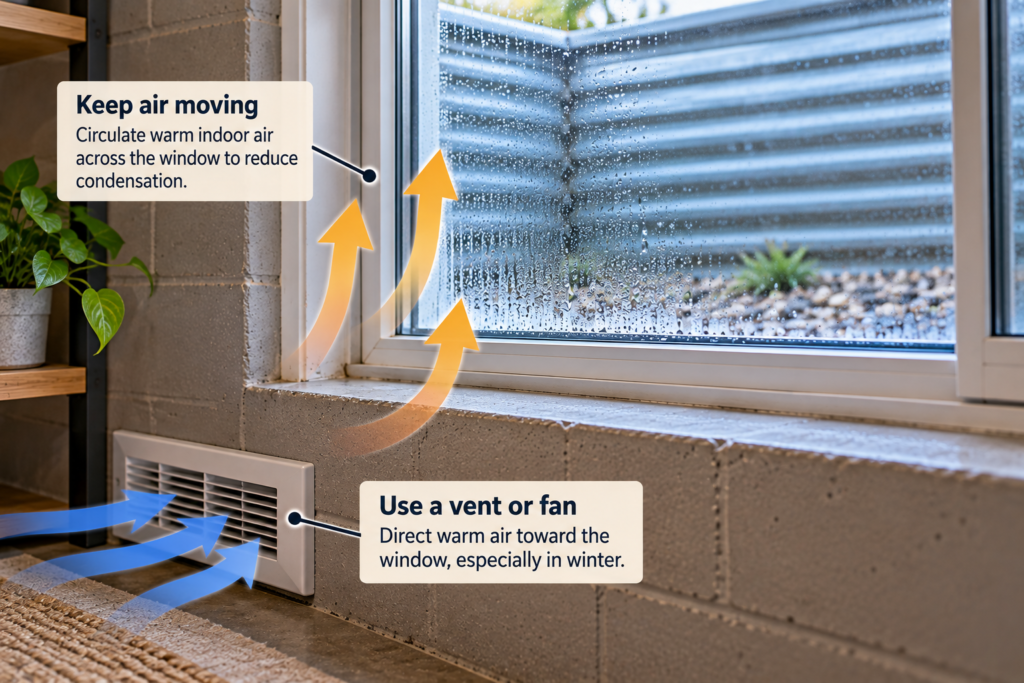
3. Keep Air Moving Across the Glass
Open the blinds or curtains during the day, especially in winter. Pull furniture and shelving away from the window wall. A small fan aimed at a problem window, or an open supply register nearby, keeps the glass from sitting in a pocket of cold, stagnant air.
4. Warm Up the Glass and Seal the Frame
Raising the inside surface temperature works no matter how humid the room is.
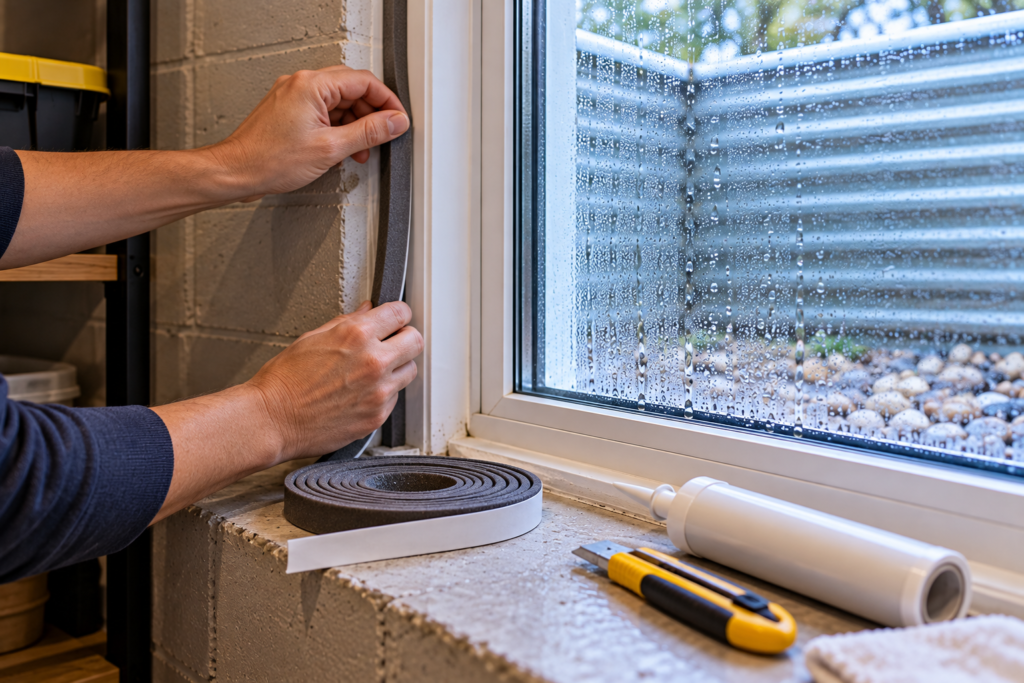
Air-seal the frame. From inside, remove the trim, then fill the gap between the frame and the opening with low-expansion foam rated for windows and doors. Caulk the interior joints.
Add window insulation film or an interior storm panel. These create an air space that keeps the room-side surface warmer. They work best when they’re sealed all the way around. Take shrink film down in spring and check for trapped moisture.
Insulate the opening. If the walls around the window are uninsulated concrete, the whole opening stays cold. Our basement wall insulation guide covers interior options.
Egress note: If this window is the basement’s emergency escape opening, don’t add anything that keeps it from opening easily. Use film or a removable panel that comes off quickly, or treat a different window instead.
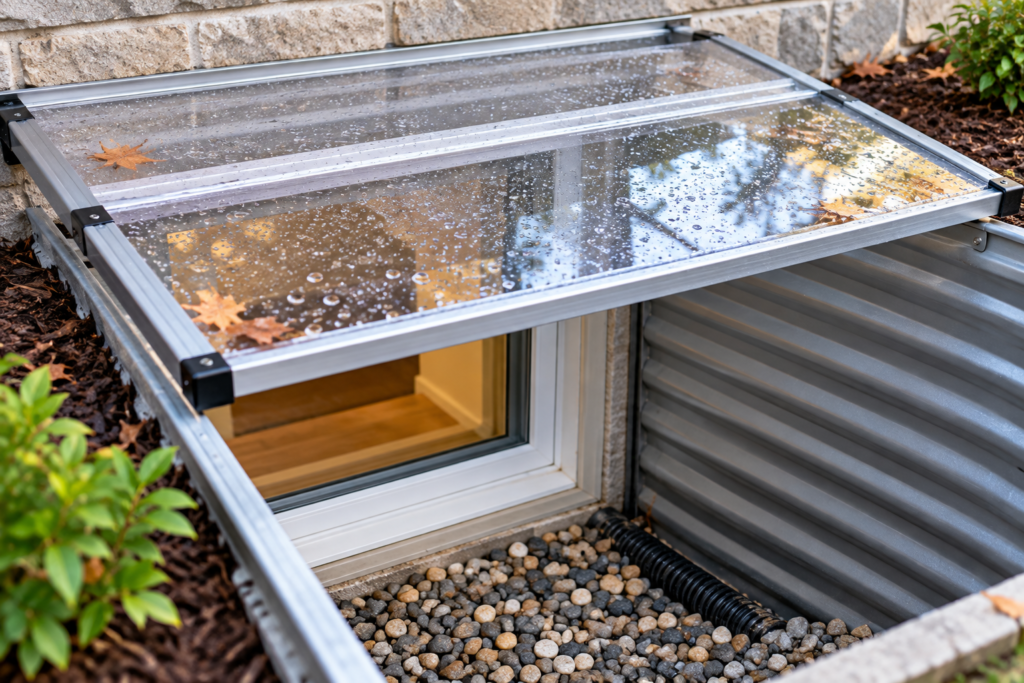
A window well full of leaves, standing water, or soil holds moisture against the glass and frame, and it can turn into a leak. Clean it out, and make sure the bottom drains. The IRC generally requires area wells serving emergency escape and rescue openings to drain to the foundation drainage system, with an exception for qualifying well-drained soils. Local code requirements and adopted IRC editions vary, so check with your building department. A clear, sloped well cover keeps out rain and debris while still letting in light.
6. Replace the Window When the Glass Is the Problem
If the humidity is in range and the window still sweats, the window itself may be the limit. Upgrading from single-pane glass in a metal frame to an insulated glass unit in a vinyl or fiberglass frame usually raises the inside surface temperature considerably.
When comparing replacement windows, check the NFRC performance information. NFRC condensation ratings use a 1-to-100 scale, with higher numbers indicating better resistance to interior condensation. NFRC has transitioned from its older Condensation Resistance (CR) rating to the newer Condensation Index (CI), so the terminology you see may depend on the product and certification information. Condensation ratings are useful for comparing windows, but actual condensation also depends on indoor humidity, outdoor temperature, installation, and surrounding construction.
Also, a lower U-factor doesn’t always guarantee better condensation resistance. Frame design, glazing configuration, spacers, and glass-edge temperatures also matter.
Winter vs. Summer Basement Window Condensation
The EPA’s mold prevention guidance gives a simple rule: increase ventilation when the outdoor air is cold and dry, and dehumidify when it is warm and humid.
Winter: Condensation forms on the inside, because indoor air meets glass chilled by outdoor air. Controlling humidity, air-sealing, and warming the glass are the main fixes. Briefly airing out the basement on a cold, dry day can also help.
Summer: Keep basement windows closed on humid days and let the dehumidifier do the work. Condensation on the outside of the glass is usually harmless as long as the window well drains.
What Condensation Does to Sills, Trim and Walls
Occasional fog that clears by midday is usually just a sign to watch the humidity. Water that runs down the glass every day and sits on the sill is a different matter. Over a season, it can:
Peel paint and stain the drywall returns and trim below the window
Feed mold on the sill, the trim, and the backs of blinds
Soften wood sills, interior extension jambs, and the wood bucks that frame many basement window openings
If the sill feels soft when you probe it with a screwdriver, it’s past cleaning. Our rotted window sill repair guide walks through epoxy repairs and when to splice in new wood. For wood that sits against the foundation, preservative-treated lumber or plywood resists decay fungi, but it does not stop mold from growing on its surface. Humidity control still matters.
The Mistake That Makes It Worse
Caulking the exterior weep holes. Many vinyl and aluminum windows have small slots along the bottom of the frame on the outside. These let water that gets into the frame drain back out. When people see water at the bottom of a basement window, they sometimes seal everything, including those slots. That can trap water inside the frame. Seal the gap between the frame and the wall, and leave the weep holes open.
The other common mistake is opening basement windows on a hot, humid day to “air it out.” This often adds moisture rather than removing it.
Regret Check: Don’t Buy New Windows First
The most expensive regret here is replacing windows when the real cause is humidity. If the basement sits at 65% to 70% relative humidity, even good new windows can fog at the edges on the coldest days. Mold can also keep growing on cold walls and in corners, because the windows weren’t the only cold surface. Measure first. If a dehumidifier gets the room into the 30% to 50% range and the condensation stops, the windows weren’t your problem.
Cost Difference: Fix the Air Before the Glass
Replacing several basement windows can cost substantially more than diagnosing the moisture problem first. A hygrometer, dehumidifier, sump cover, and window-insulation materials may address condensation throughout the basement rather than only at the glass. Replacement makes sense once you’ve proved the air is under control and the window is still the weak point.
Warning Signs It’s Not Condensation
Fog or droplets between the panes. The seal on the glass unit has failed, and the unit needs repair or replacement.
Water that appears after rain, especially below the sill. This points to a window well drainage problem, failed flashing, or a gap around the frame.
Mold on drywall away from the window, plus a musty smell. The basement has a broader moisture problem. Mold-damaged drywall and insulation generally need to come out, not just get wiped down.
Ice on the inside of the glass. The surface is well below freezing, and the humidity is high for that temperature. Treat both.
Tools and Products
As an Amazon Associate, we earn from qualifying purchases.
Checks sills and trim for moisture before you paint or repair
FAQ
Why do my basement windows have condensation? Humid indoor air touches glass or a frame that is colder than the air’s dew point. Basement windows sit in cold foundation walls and are often single-pane or set in metal frames, so they reach the dew point sooner than other windows in the house.
Is condensation on basement windows normal? Light fog on the coldest mornings that clears quickly is common. Water that runs down the glass every day, pools on the sill, or comes with a musty smell points to high humidity or a cold window that needs attention.
What humidity should a basement be to stop window condensation? The EPA recommends keeping indoor relative humidity below 60%, ideally between 30% and 50%. Very cold glass can still sweat within that range, so you may also need to warm the glass with air-sealing, film, or better windows.
Will a dehumidifier stop basement window condensation? Often, yes, when the cause is high humidity. If the room stays between 30% and 50% and the glass still sweats, the window itself is the problem.
Why is there condensation on the outside of my basement windows? In summer, warm, humid outdoor air meets glass cooled by the basement behind it. This is usually harmless, but make sure the window well drains so water doesn’t collect against the frame.
What does condensation between window panes mean? The seal on the insulated glass unit has failed. This isn’t a humidity problem, and lowering the humidity won’t fix it. The glass unit or sash needs repair or replacement.
Related Posts:
How to Stop Basement Condensation: 6 Effective Fixes by Admin September 14, 2026 DIY A basement that sweats isn't always a basement that leaks. Beads of water on the walls, a damp film across the concrete floor, dripping pipes,…