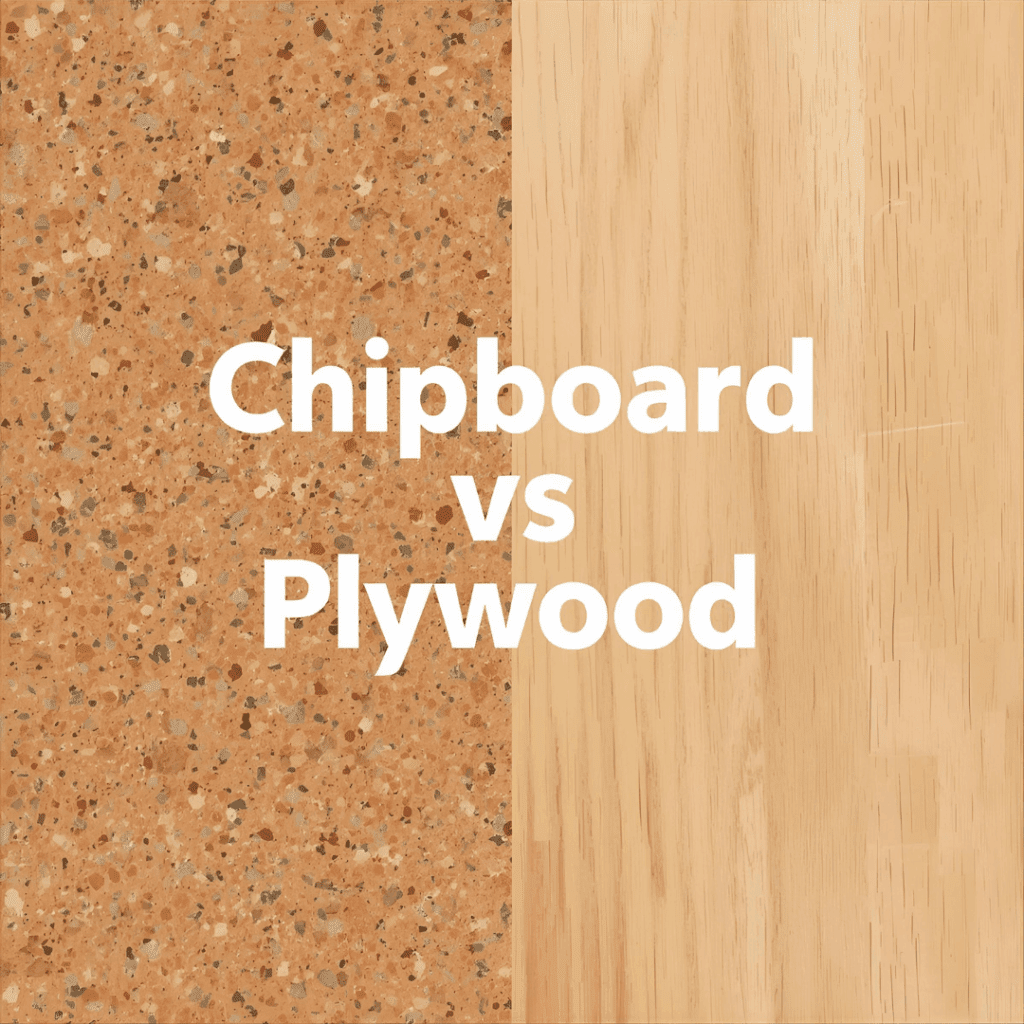
Plywood is a term used to describe all types of wood for residential construction projects, but, despite the different types available, it’s not the same as chipboard. Both chipboard and plywood use various materials and undergo different construction processes. This impacts the core density, load-bearing capacity, appearance, moisture resistance, and overall finish.
Choosing the best material depends on what you’re building, the purpose you need it to serve, where it’s going, and how you want to finish it. Your budget should inform your decision on which material to use. Still, it’s important to remember that chipboard will never perform as well as plywood for specific projects, and vice versa.
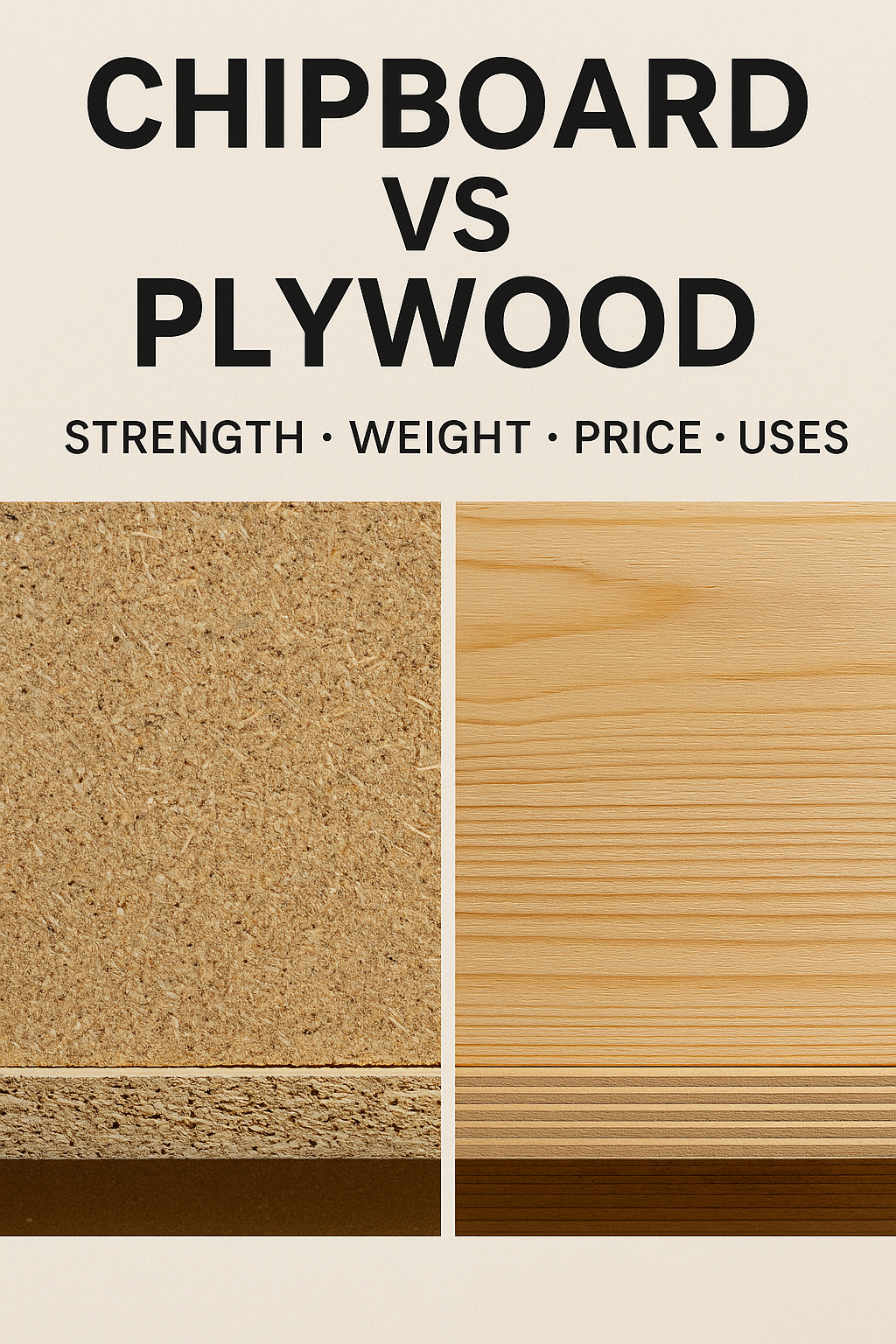
Please keep reading to learn the benefits of chipboard vs plywood in terms of strength, weight, price, and its primary uses to help you decide which one you need.
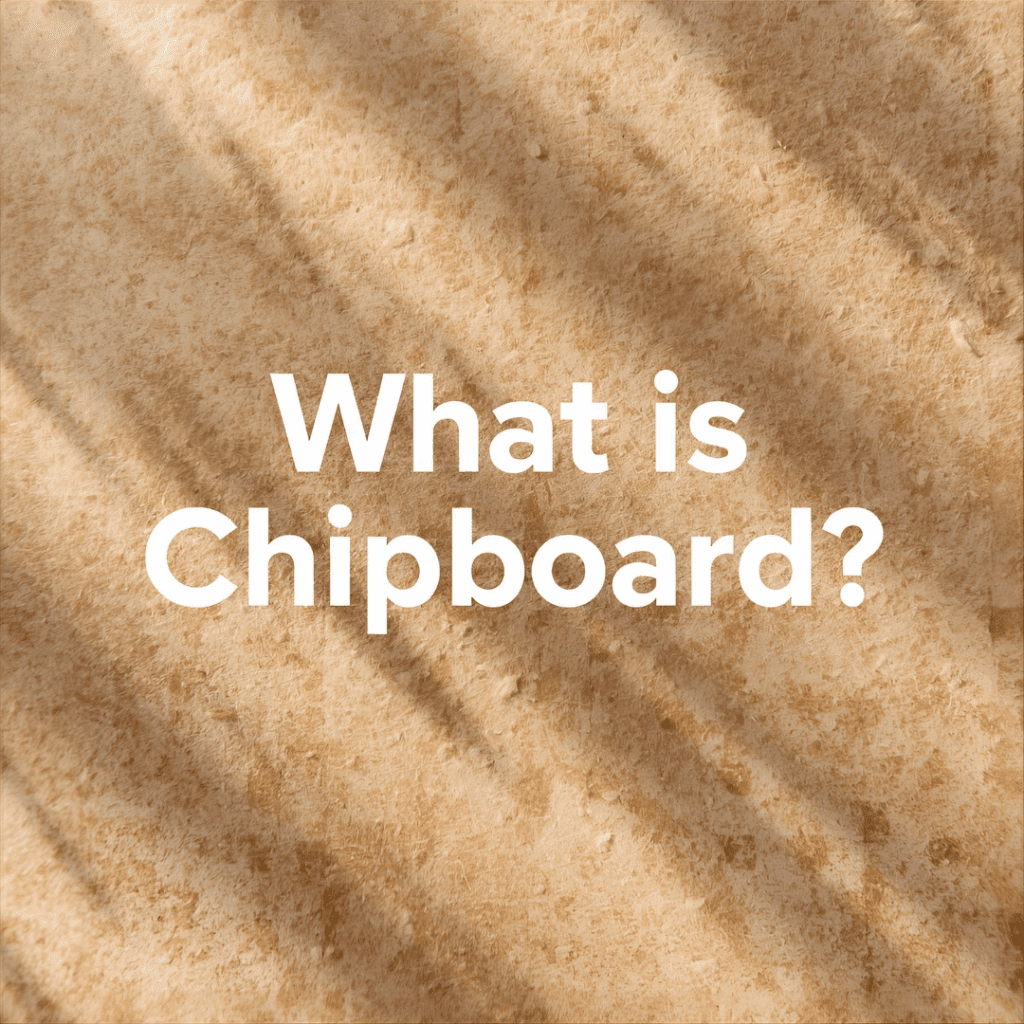
What is Chipboard?
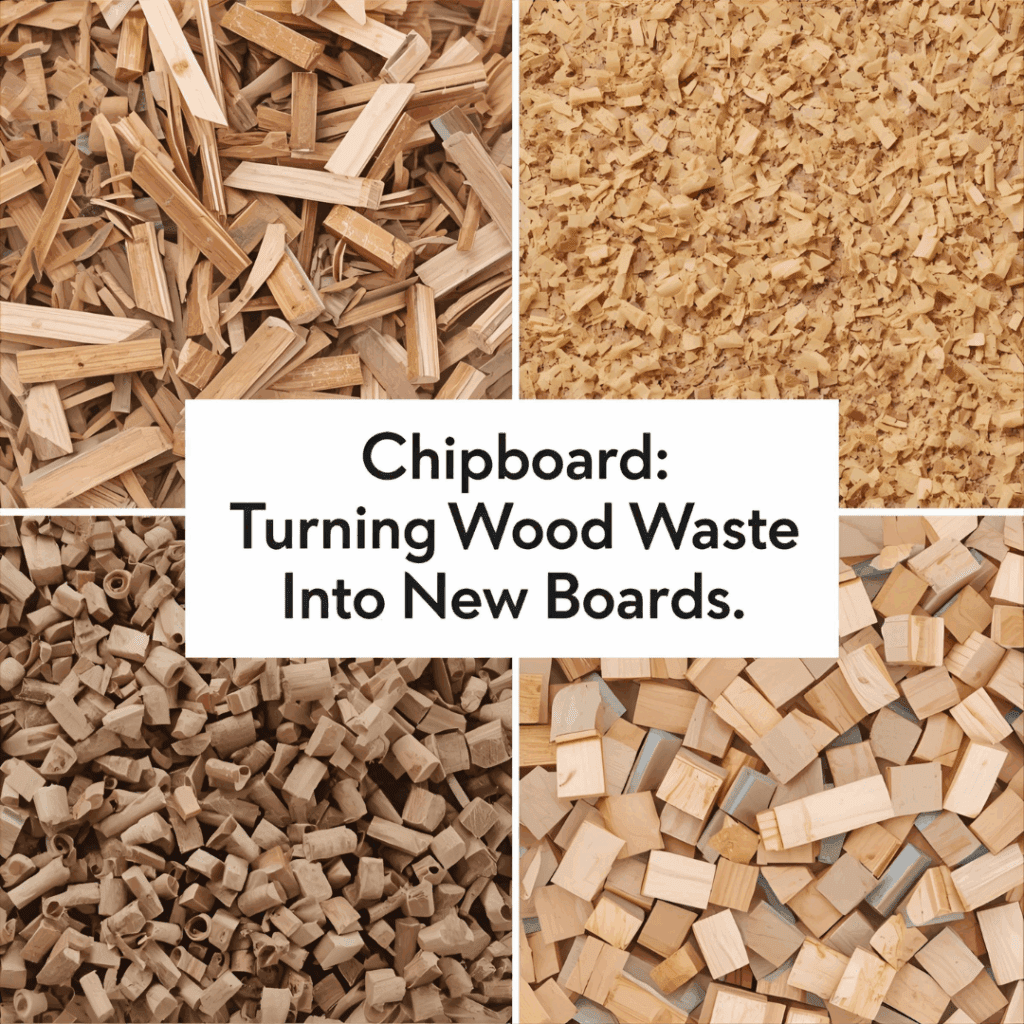
Chipboard (also known as particle board) is a type of reconstituted wood made from chips, sawdust, and shavings that are compressed with resin before being formed into lightweight boards. It’s one of the cheapest, most widely available wooden boards you can use for all manners of construction, including flooring, workbenches, cabinets, wall bases, and countertops.
Generally, chipboard isn’t suitable for exterior construction because it doesn’t withstand moisture well. It can only be used outdoors if it won’t be permanently exposed to moisture. For example, it’s being used for the interior walls, flooring, or workbenches in a shed. It can be protected with an acrylic sealant to make it more suitable for exterior use, but it still won’t be the best material for all-weather use.
What is Plywood?
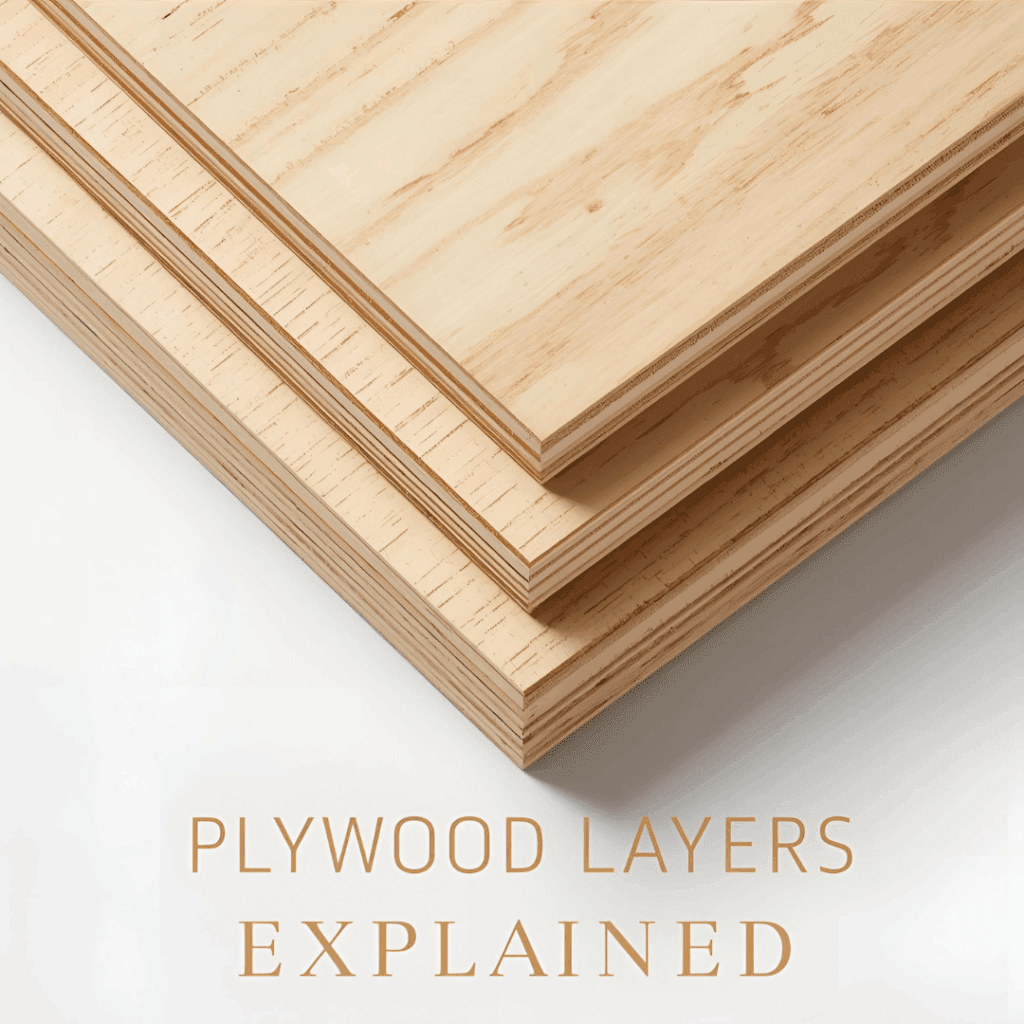
Plywood is a type of wooden board made from multiple milled wood plies that have been compressed together with an adhesive. It’s strong, affordable, lightweight, and naturally weatherproof. Plywood is used in all construction projects that require strong materials, includingsubfloors, wall supports, roofing, cabinets, shelving, furniture, and wall panels.
The adhesive used to bond the plies together directly impacts how weatherproof plywood is. Normal, cheaper plywood can withstand some moisture, but won’t do well with permanent exposure to water or humidity. Plywood with damp-proof glue is fully waterproof and can be used for interior or exterior construction.
What’s the Difference? Chipboard vs Plywood Overview
Both products are strong and affordable, but the main differences between chipboard and plywood are their overall functionality and primary uses.
Question
Chipboard
Plywood
What’s It Made Of?
Compressed chips, sawdust, and wood shavings
Multiple compressed boards of thin, milled wood veneers
Is It Strong?
Not as strong as plywood
Stronger than chipboard
Is It Waterproof?
Yes, but only when treated or if using Exterior or high-exposure plywood
Yes, especially when treated or when using a fully waterproof plywood type
Can It Be Used Outside?
No
No, plywood costs only marginally more than chipboard
Is It Expensive?
No, but chipboard is slightly cheaper than plywood
How to Tell the Difference Between Chipboard and Plywood
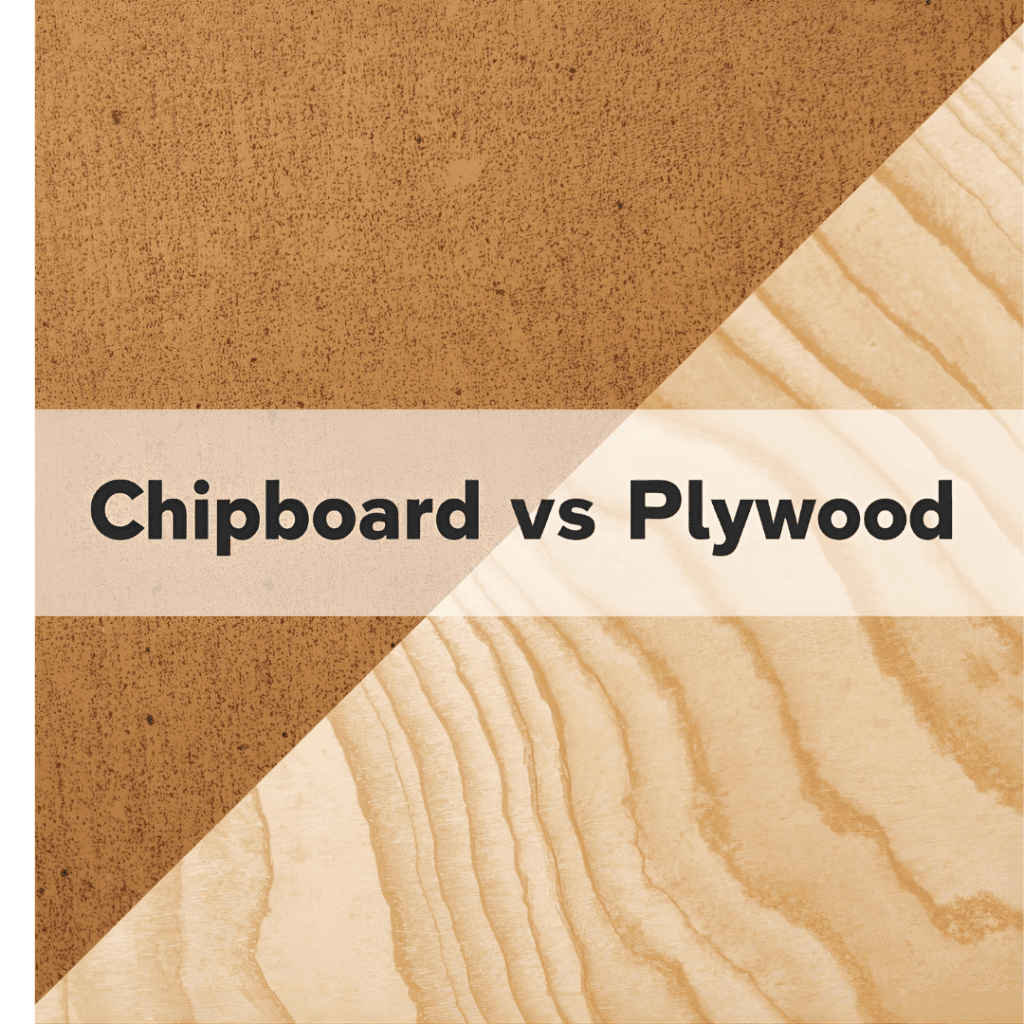
If you’ve ever stood in the lumber aisle staring at two boards and wondering which one’s which, you’re not alone. The quickest way to tell is to look closely at the surface. Chipboard looks rough and speckled—kind of like someone glued a bunch of tiny wood crumbs together. You can see the shavings and flakes mixed all through it. Plywood looks cleaner. Along the edge, you’ll notice stacked layers that run in different directions. Those thin sheets, or plies, are the giveaway.
Give each board a little tap. Chipboard makes a dull, heavy thud. Plywood sounds lighter and sharper, almost like it’s hollow. You’ll feel the weight difference, too. Chipboard is heavier and feels solid in your hands, while plywood is usually easier to lift. If you cut them, it’s even more apparent—plywood gives off long curls of sawdust, but chipboard turns into fine powder.
Once you’ve handled both, it’s hard to mix them up again. Chipboard looks man-made and dense. Plywood looks like real wood, because it is. When you can spot those details, you’ll never grab the wrong sheet again.
When Should I Use Plywood Over Chipboard?
Plywood is best used for residential construction projects that require a strong, moisture-resistant build. Plywood comes in variable grades, styles, and exposure levels. Because plywood is more waterproof than chipboard, it’s better for areas of the home with high humidity, like kitchens and bathrooms. Certain plywood types can be used for heavy moisture exposure in the home and exterior (all-weather) use.
When considering plywood vs chipboard, it’s best to use plywood over chipboard when building:
Chipboard is affordable and can be used for almost any non-load-bearing construction. Being made from recycled wood shavings bonded together with resin, it isn’t as strong or damp-proof as plywood. Its design also isn’t considered uniform (with its mismatched woodchip patterns), so it requires finishing and painting to look nice. However, its makeup benefits by creating a high core density, making it ideal for projects that require acoustic resonance.
Because of its versatility, low price tag, and sturdy material, chipboard is better used over plywood for:
Wall bases
Countertops
Flooring protection
Underlayment
Workbenches
Speaker cabinets
Shed interiors
Headboards
Interior cupboards
Structural sheathing
Beam webs or centers
Pros & Cons of Chipboard vs Plywood
Both chipboard and plywood have similar pros and cons. Choosing the best material for your projects depends entirely on what you need from your build.
Pros of Chipboard
When comparing chipboard vs plywood, chipboard is:
Cheaper
Lighter
Denser (in terms of its core)
Smoother than most low-grade plywood
A natural insect repellent
Made from recycled materials, making it a less resource-intensive woodworking product to manufacture
Cons of Chipboard
However, chipboard isn’t suitable for all projects over plywood because it:
It is not waterproof and can warp, bend, expand, and break when wet
Doesn’t hold nails and screws well
It isn’t as strong as plywood
Can discolor and turn grey when exposed to moisture
It’s tricky to paint and requires multiple coats due to the way it soaks up moisture
It is slightly heavier than plywood
Pros of Plywood
On the flip side, comparing plywood vs chipboard, plywood:
Withstands moisture better
Securely grips screws and nails without causing breakage
It is stronger, more rigid, and holds more weight overall
Comes in different weights, thicknesses, types, and grades
It is often slightly lighter than chipboard, depending on the weight
It can have knots in the wood (only found in low-grade plywood), which can make cutting and drilling harder
Has a higher environmental impact during construction, making it less environmentally friendly
Is Plywood Stronger Than Chipboard?
Plywood is overall stronger than chipboard. When plywood is constructed, multiple layers of thin veneers are tightly compressed and glued together. This gives it a higher weight capacity compared with chipboard.
Chipboard is strong and can be used for projects that require some load. However, since it’s made from sawdust, chips, and shavings glued together or bonded with resin, it has a high core density and low weight-bearing capacity.
Which Weighs More: Chipboard vs Plywood?
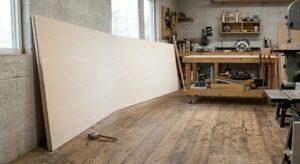
Plywood sheets are considerably lighter than chipboard. This is due to its lower core density compared with chipboard, which has a higher density. Being lighter, plywood is easier to carry and maneuver than chipboard.
But just because it’s lighter, it doesn’t mean it isn’t stronger. Plywood has a higher strength-to-weight ratio, meaning an individual sheet is stronger than a single chipboard panel of the same weight.
However, plywood is only as strong as its support. The sheets need to be properly supported to avoid sagging and bowing. The heavier the plywood, the stronger the supporting structure needs to be.
Which is Cheaper: Chipboard vs Plywood?
Chipboard is significantly cheaper than plywood. Because it is made from recycled scrap materials (including sawdust, woodchips, and shavings), the manufacturing process is more affordable than sourcing and bonding more expensive surface veneer sheets used in plywood.
Chipboard comes in variable thicknesses and weights, which affect price, but it doesn’t have higher-quality grades like plywood does. High-grade plywood is smooth, firm, and offers a clean finish to cabinets or shelves.
Plywood is still considered affordable, but, naturally, the higher grade of plywood you choose, the more expensive it will be, especially when compared with chipboard.
Which is Better for Flooring?
Plywood is better for flooring, including subfloors, than chipboard. Chipboard doesn’t withstand heavy loads as well as plywood and can bow, bend, and warp under excessive pressure. Plywood is stronger and resists moisture better, so it won’t be easily damaged from spilled water or household leaks.
Which is Better for Roofing?
Plywood is better for roofing compared with particle board (also known as chipboard). It can withstand a heavier load and resists moisture better than chipboard does, rather than drawing it in. It’s also lighter, which makes construction, maneuvering, and hoisting easier.
Which is Better for Cabinets?
Both chipboard and plywood can be used for cabinets. The best material for your project depends on what you’re building, how much work you want to put into achieving a nice finish, and where your cabinets will be situated.
It’s better to construct bathroom and kitchen cabinets with plywood because the panels can withstand humidity better. Heavy load-bearing cabinets are also better made from plywood.
Both materials can be finished nicely, but it depends on how much work you’d like to do. Chipboard is smooth, sleek, and can be painted, stained, or lacquered to achieve a nice finish, but it requires some effort. Plywood is significantly easier to finish, especially if you’re using a high-grade.
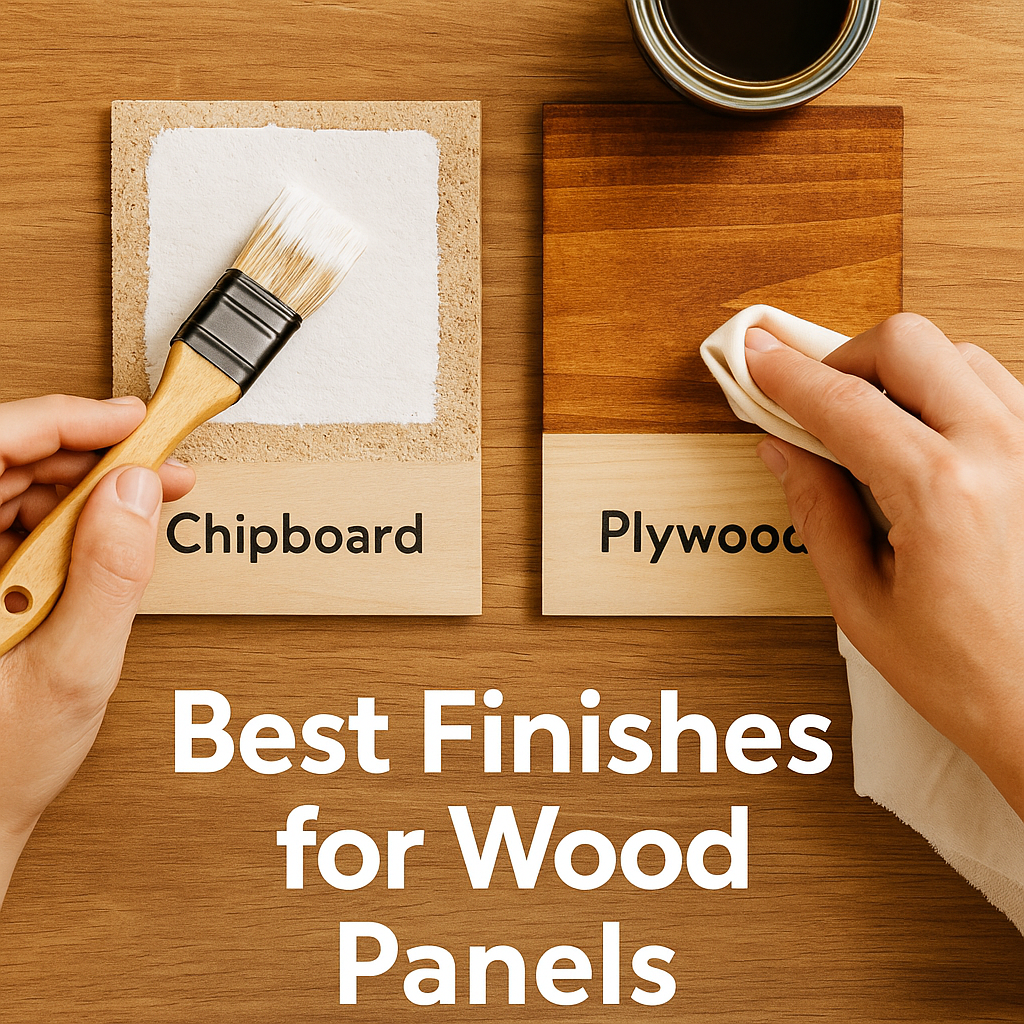
Best Finishes for Chipboard and Plywood Projects
Chipboard and plywood might look similar from a distance, but when it comes to finishing, they behave entirely differently. Chipboard acts like a sponge—it soaks up anything you brush on it. That’s why the first step is always sealing. A coat of acrylic primer or a shellac-based sealer keeps the surface from absorbing your paint or stain. Once that dries, you can paint it like you normally would. Two or three thin coats usually do the trick. Skip the primer, though, and you’ll end up with a patchy, rough mess that no amount of sanding will fix. If you’re using chipboard for something like shelves or a countertop, add a clear topcoat or even a thin laminate sheet to keep moisture out.
Plywood, on the other hand, is a lot more forgiving. Its grain takes stain evenly, and the color pops right away. A few passes with fine sandpaper between coats makes it feel silky smooth. If you’re painting instead of staining, use a wood primer first so the color spreads evenly without blotches. When you’re done, plywood always looks clean and finished—even if you’re working on a tight budget. Both materials can turn out great; you have to treat them the way they want to be treated.
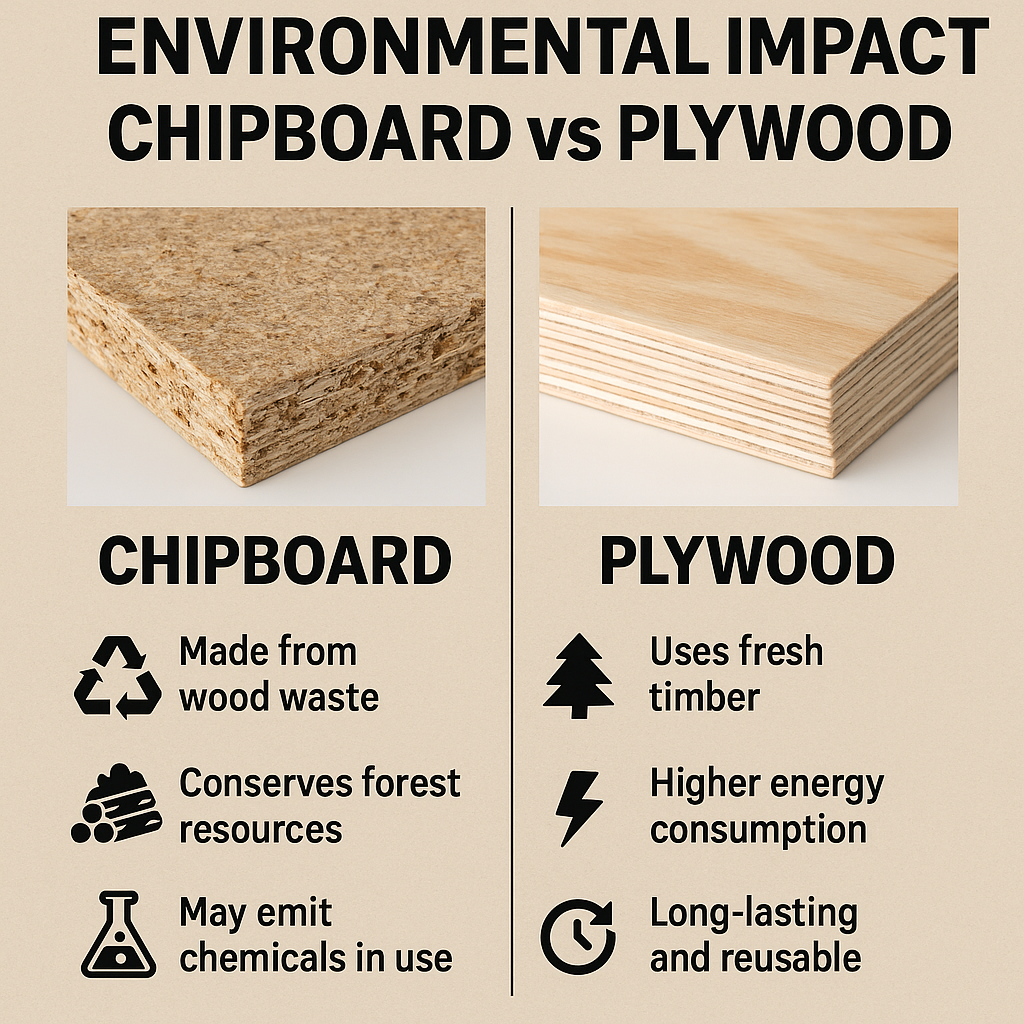
If you care about where your materials come from, chipboard is the more eco-friendly option right out of the gate. Most of it starts as leftovers — sawdust, shavings, and small scraps from other wood products that would usually get tossed out. Instead of wasting all that, manufacturers press it together with resin to make usable boards. That gives the material a second life and helps keep wood waste out of landfills. The one downside is the glue. Some chipboard uses resins that give off a slight odor or contains chemicals you don’t really want in your house. The fix is simple: look for boards labeled low-VOC or FSC-certified.
Plywood is a different story. It’s made by peeling thin sheets from full logs, which means fresh trees are part of the process. It takes more energy to make, but it also lasts longer. A good sheet of plywood can outlive the project it was built for—and be reused again and again. So, chipboard wins on recycling, and plywood wins on longevity. Either way, buying responsibly sourced wood and using every scrap you can is what really makes the difference.
Conclusion: Chipboard vs Plywood, Which is Best?
Ultimately, whether chipboard or plywood is better depends on your woodworking project. Chipboard is cheap, light, and better suited for various low-budget projects around the house. Plywood is significantly stronger, and it can be reinforced, treated, or stained to suit any residential construction project. It can be used indoors or outdoors and finishes nicely.
Aspen Plywood: Pros, Cons, Weight & Uses by Admin June 4, 2026 Hardwood If you are weighing your options for lightweight interior builds or looking for an alternative to heavy hardwoods, Aspen Plywood might have crossed your radar.…