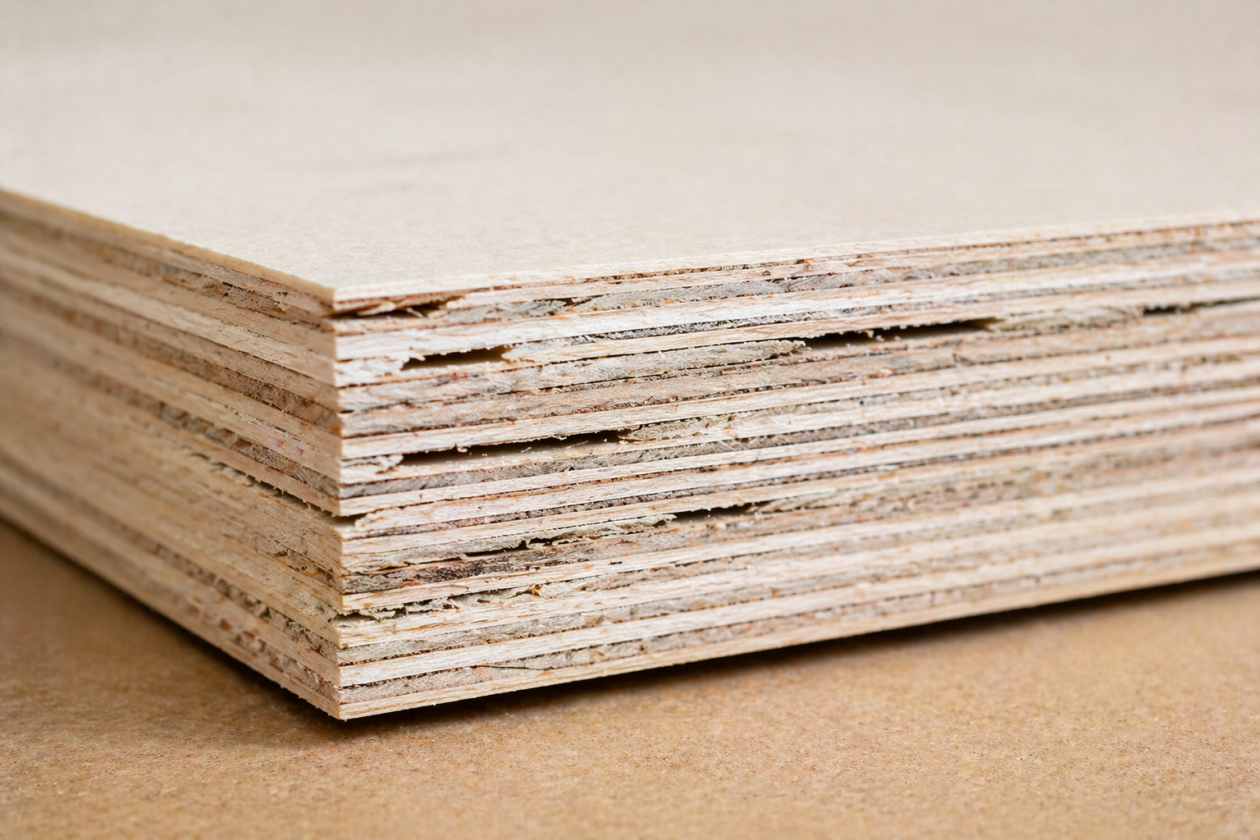
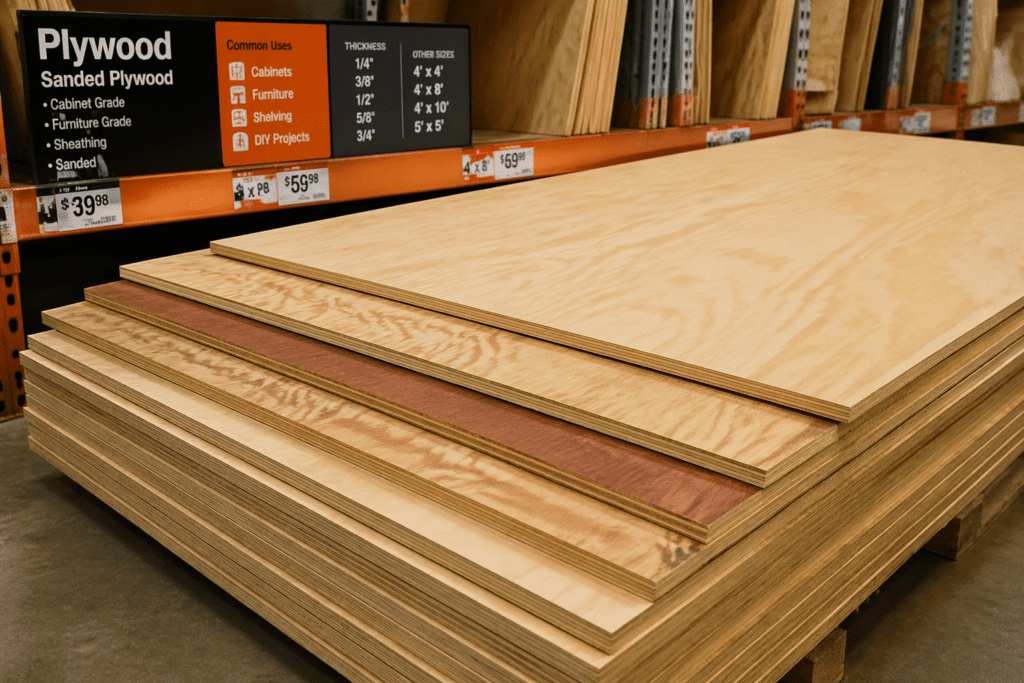
Plywood sheets are engineered wood panels made from layered veneers glued together for strength and stability. They are commonly sold in 4×8 sizes and vary by thickness, grade, and core type. Choosing the right plywood sheet depends on your project, whether it’s furniture, subflooring, or exterior construction.
Choosing the right plywood sheets can be the difference between a family heirloom and a warped piece of junk that ends up in a landfill within two years. Most DIYers and even some contractors make the same expensive mistakes because they don’t understand that not all “3/4-inch” sheets are created equal—especially when you compare different [[Plywood Grades]] and core types.
In this exhaustive 2026 guide, I’m breaking down everything from the hidden cost differences to the real-world tests you should perform before the delivery truck leaves your driveway.
At its core, a plywood sheet is a “wood sandwich.” Manufacturers take thin layers of wood veneer (plies) and glue them together, rotating the grain of each layer 90 degrees. This “cross-graining” is what gives plywood its strength and prevents it from expanding and contracting like solid wood.
I remember my first “big” project—a media console. I bought the cheapest 4×8 plywood sheets I could find, thinking paint would hide the quality issues. Mistake. Within a month, the top panel bowed so badly my TV looked like it was on a seesaw. I didn’t understand that the “voids” in the inner layers were a structural disaster waiting to happen. Before you commit, make sure you understand the various Types of Plywood available for your specific build.
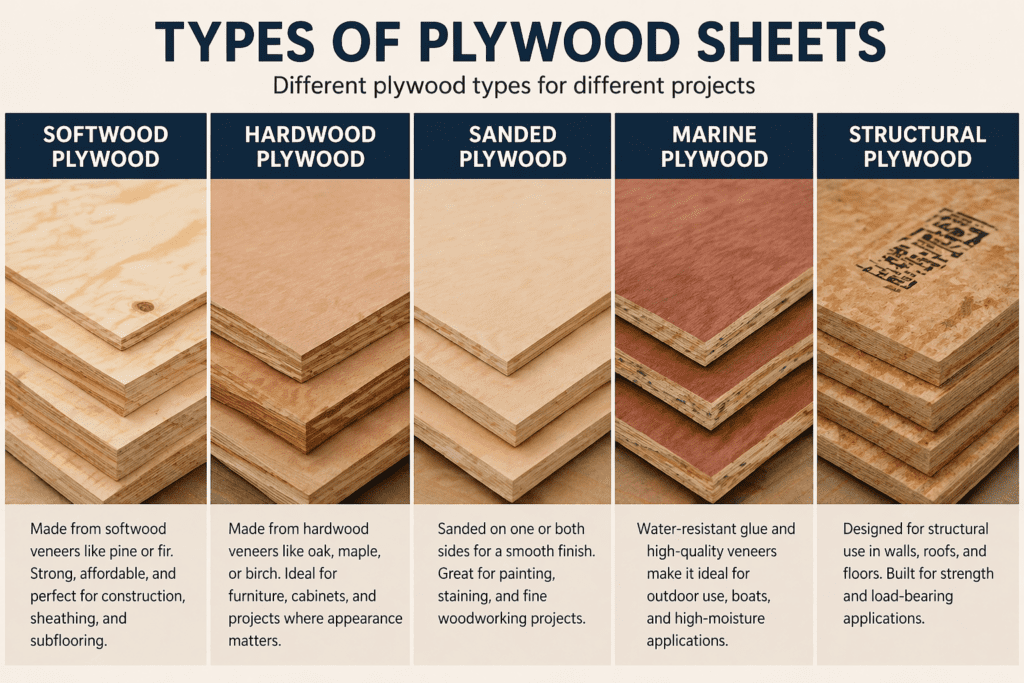
Types of Plywood Sheets Explained
When you walk into a lumber yard, the sheer variety of types of plywood sheets can be paralyzing. Here is the breakdown:
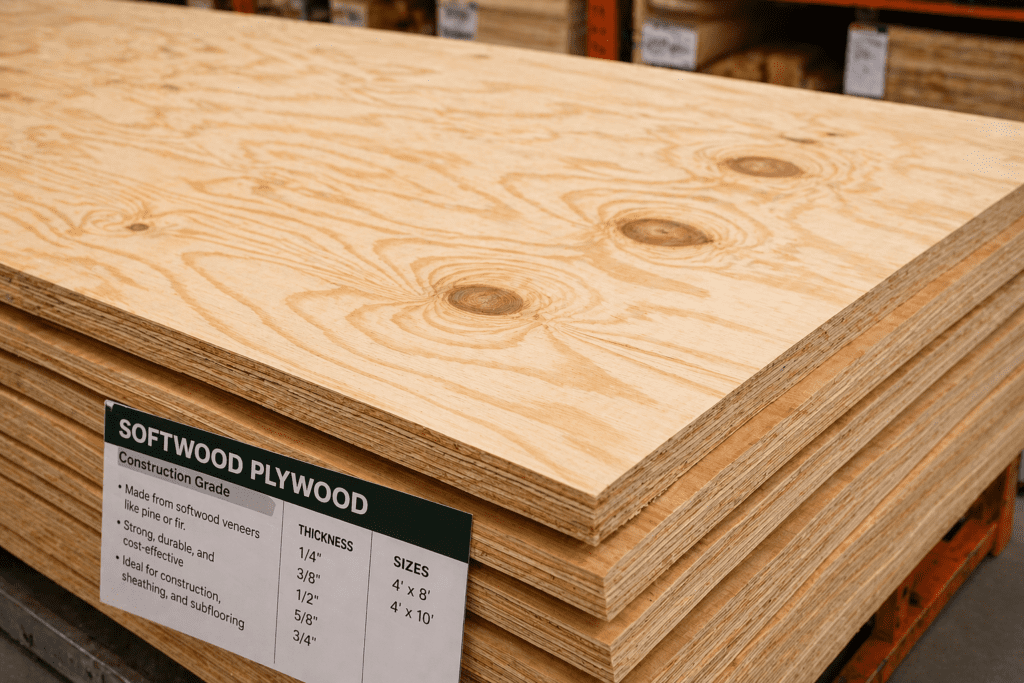
Softwood Plywood: Usually Pine or Fir. Great for framing, but the regret kicks in when you try to stain it; it often turns out splotchy.
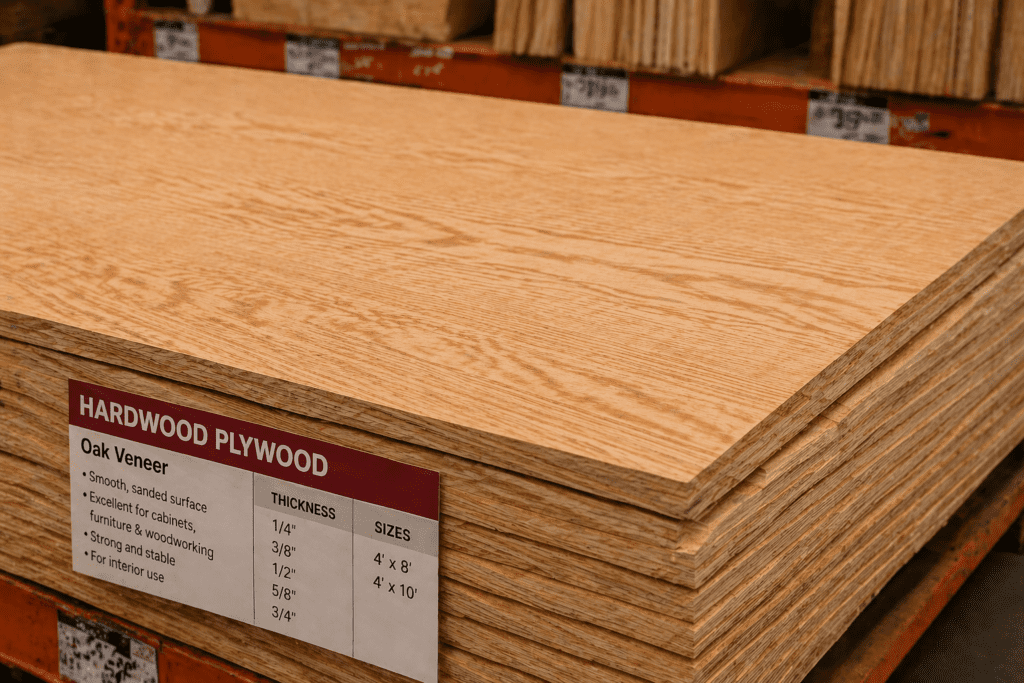
Hardwood Plywood Sheets: These have faces of Oak, Walnut, or Maple. These are your best plywood sheets for furniture.
MDO (Medium Density Overlay): This is the secret weapon for signs and outdoor painted furniture. It has a perfectly smooth resin-fiber face.
Cabinet Grade Plywood Sheets: Often featuring an MDF or particleboard core for extreme flatness, perfect for kitchen builds.
⚖️ Plywood Sheets vs Solid Wood: What’s Actually Better?
Many beginners assume solid wood is superior, but that’s not how modern building works.
Stability
Plywood sheets are engineered to resist:
warping
expansion
seasonal movement
Solid wood, on the other hand, can shrink or expand significantly depending on humidity.
Strength
Plywood → stronger across large surfaces
Solid wood → stronger in thick, load-bearing beams
Cost
Plywood sheets → predictable, lower cost
Solid wood → expensive, especially hardwoods
When to Choose Each
Use plywood when:
building cabinets
making furniture panels
working with large flat surfaces
Use solid wood when:
making table legs
structural beams
decorative trim
👉 Most professional shops use both, not one or the other.
🧠 Project Match: What Plywood Sheet Should YOU Use?
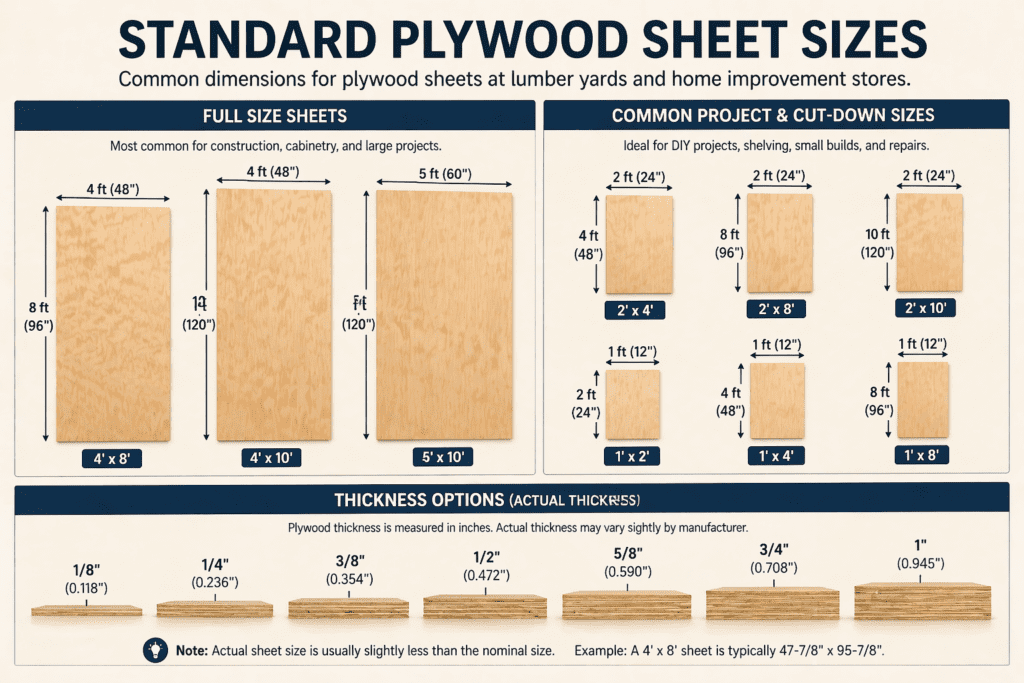
Standard plywood sheets 4×8 are the industry norm, but the “nominal” thickness is a lie. A 3/4″ sheet is actually closer to 23/32″. If you build your joints for exactly 0.75 inches, your shelves will rattle. You must check the actual Plywood Thickness with a set of calipers before cutting.
🔍 How Many Plywood Sheets Do You Actually Need?
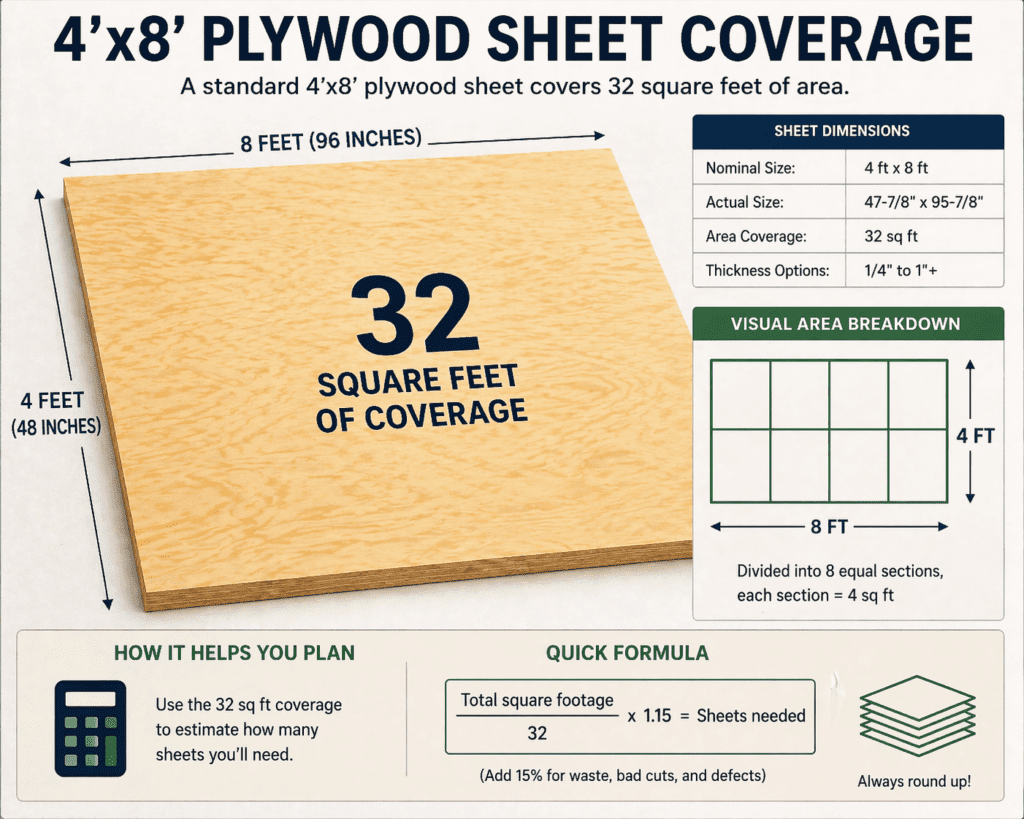
One of the most common mistakes is underestimating material. A standard plywood sheet covers 32 square feet (4×8), but real-world cuts reduce usable space.
For example, if you’re building a simple cabinet:
1 sheet → sides + shelves
1 sheet → doors + backing + mistakes
👉 Realistically, most projects require 10–20% extra for:
bad cuts
grain matching
defects near edges
Quick Estimate Formula:
Total square footage ÷ 32 × 1.15 = sheets needed
Example:
120 sq ft project
120 ÷ 32 = 3.75 → round to 4
4 × 1.15 = 5 sheets total
👉 Always round up. Running out mid-project leads to:
This is especially noticeable when buying plywood sheets from different batches.
⚠️ When NOT to Use Plywood Sheets
Most guides skip this, but this is where people lose money. Plywood is a miracle material, but it isn’t magic.
❌ Don’t use plywood for long unsupported spans: Even 3/4″ plywood sheets will sag over time if the span is over 30 inches without a middle support or a “stiffener.”
❌ Don’t use cheap plywood for visible furniture: If you see “BC” grade, it means there are plugs and patches. These will telegraph through your finish and look like “ghost eyes” on your furniture.
❌ Don’t use interior plywood outdoors (even covered): The humidity in the air is enough to dissolve the glue in standard interior sheets. It WILL delaminate, often within the first year.
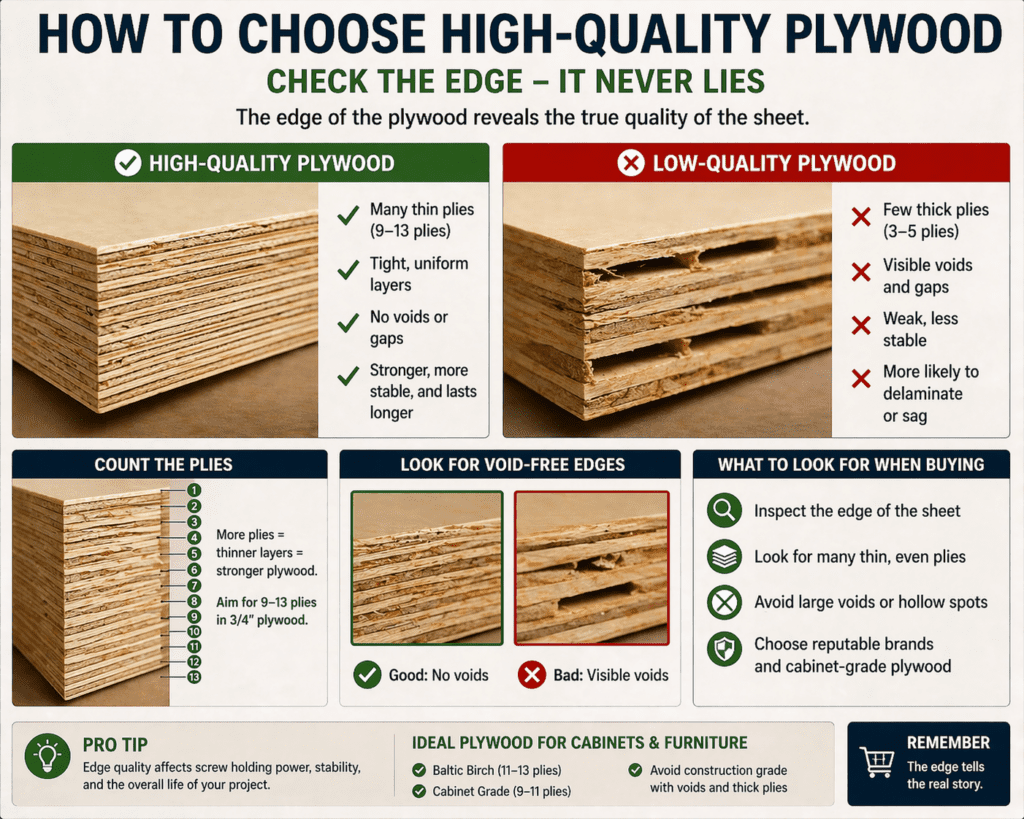
❌ Don’t use low-ply sheets for shelving: If a sheet only has 3 or 5 layers but is 3/4″ thick, those layers are too thick to be stable. They will bow faster than you think.
🛠 Deep Dive: Plywood Manufacturing & Core Types
Understanding how plywood sheets are made explains why they behave as they do. The process involves debarking logs, peeling them into continuous veneer ribbons, and then “alternating” the grain.
The Core Conflict: Veneer vs. MDF vs. Particleboard
Most people think “all wood” (veneer core) is better, but that’s a common mistake.
Veneer Core: Strongest and lightest. Best for things you need to move. However, it is the most prone to warping.
MDF Core:Real Test: I used MDF core for my shop cabinets because it stays perfectly flat. It’s heavy as a lead brick, but for doors and drawer fronts, the stability is worth the weight.
Particleboard Core: The cheapest option. Warning: Screws will pull out of this easily. Avoid high-traffic furniture.
🧠 Pro Insight: What Most People Get Wrong
Most DIYers assume “more expensive = better,” but the real difference is core type + ply count. A $90 sheet with 11 plies will outperform a $120 sheet with 5 plies every time.
🛒 Best Plywood Sheets You Can Actually Buy (2026 Picks)
Good for: Jigs, high-end furniture, exposed-edge designs.
Why: Zero voids, extremely stable, and the “multi-ply” edge is a design feature in itself.
👉 Micro-Conversion: If you’re building anything that needs to last more than a year, avoid the cheapest sheet in the stack. The extra $40 upfront saves hours of frustration and replacement costs later.
🛠 Advanced Cutting: No More Splinters
The #1 regret DIYers face when working with expensive plywood sheets is “tear-out.” This is when the saw blade pulls the wood fibers up, leaving a jagged edge.
The Zero-Clearance Method: Use a sacrificial piece of foam insulation board underneath your cut. By supporting the fibers right where the blade exits, you virtually eliminate splintering.
The Blue Tape Trick: Applying high-quality painter’s tape along your cut line compresses the wood fibers. It’s a 30-second fix that saves a $100 sheet.
Blade Selection: Don’t use the “General Purpose” blade. For cabinet-grade plywood sheets, you need a high-tooth-count blade (60-80 teeth).
🪵 Proper Storage: Preventing the “Potato Chip.”
I’ve lost hundreds of dollars by leaning plywood sheets against a garage wall. Within 48 hours, they bow.
Store Flat: The absolute best way to store plywood is horizontally on a flat surface.
Off the Concrete: Concrete is like a sponge. If you lay your sheets directly on a garage floor, the bottom sheet will suck up moisture and rot. Use a few 2×4 “stickers” to keep them elevated.
Avoid Vertical Leaning: If you must store them vertically, make sure they are almost perfectly upright (90 degrees). A shallow angle creates a permanent “bow.”
Plywood sheet prices in 2026 are rising slightly due to fuel and logistics costs.
Thickness
Typical Price Range (4×8 Sheet)
Best Use
1/4″
$25 – $40
Back panels
1/2″
$45 – $75
Drawer boxes
3/4″ (Pine)
$55 – $85
Shop projects
3/4″ (Hardwood)
$95 – $160
High-end furniture
💸 What Plywood Sheets Actually Cost Per Project
Small cabinet project → $90–$200
Shelving unit → $120–$300
Full kitchen build → $600–$1,500
👉 Most people underestimate total cost because they only price one sheet. Always factor in a 10% waste margin for cutting errors.
📍 Where to Buy Plywood Sheets (Avoid This Mistake)
Big Box Stores (Home Depot / Lowe’s)
✔ Convenient and easy returns.
❌ Lower quality control; sheets are often warped or have thin veneers.
Local Lumber Yards (Best Option)
✔ Better sheets, fewer voids, and stored in climate-controlled environments.
✔ Access to Baltic Birch & “shop-grade” deals.
Online Suppliers
✔ Access to specialty materials like Teak.
❌ Expensive shipping; you can’t hand-pick your sheets.
How to Choose High-Quality Plywood Sheets
How to tell good quality plywood sheets? It’s all about the edges and the weight.
Count the Plies: More layers = more stability. A 13-ply sheet is the gold standard for 3/4″ material.
Check for Voids: Look at the cut edge. Are there holes? Those are “voids” that cause “blowouts” when you drive a screw. This is highly dependent on your chosen [[Plywood Core Types]].
The “Scent” Test: If it smells strongly of chemicals, walk away. Modern, high-quality sheets are usually NAUF (No Added Urea Formaldehyde).
🧪 Real Test: The “Drop and Tap” Method
Before you buy:
The Tap: Rap your knuckles across the center. If it sounds “hollow,” there are internal voids.
The Drop: Lift one corner 2 inches and drop it. A high-quality sheet sounds like a solid “clack.” A dull “thud” suggests poor bonding.
🌎 Are Plywood Sheets Environmentally Friendly?
Modern plywood sheets are often made using:
fast-growing trees
sustainable forestry practices
Look for:
FSC certification
NAUF (no added formaldehyde)
👉 High-quality plywood is often more sustainable than solid hardwood harvesting.
❓ Plywood Sheets FAQ
Is plywood stronger than solid wood? Yes, in dimensional stability. It won’t shrink 1/4 inch across its width like a solid oak board will in winter.
What is the best plywood sheet thickness? 3/4″ for carcasses; 1/2″ for drawers; 1/4″ for backing.
Why is Baltic Birch so expensive? Triple the plies, zero voids, and superior glue.
🧠 Quick Buyer Decision Table
If You Are Building…
Buy This
Why
Kitchen Cabinets
Maple or Birch
Smooth, paint-ready, stable
Garage Shelves
3/4″ CDX or Pine
Cheap and strong
Furniture
Baltic Birch
Zero voids, premium finish
Outdoor Projects
Marine Grade
Waterproof glue, long lifespan
Budget Projects
CDX
Lowest cost, structural use
🧱 Final Verdict: Which Plywood Should You Buy?
If you want cheap and structural → go with CDX
If you want clean and strong → choose Maple or Birch
If you want zero regret → buy Baltic Birch and don’t look back
👉 The biggest mistake isn’t overpaying—it’s rebuilding the same project twice because you bought a “potato chip” sheet. Invest in quality plywood sheets from the start.
Related Posts:
Drawer Boxes & Slides Explained: Best Types & Sizes by Admin May 19, 2026 DIY Drawer boxes are the structural containers that hold drawer contents, while drawer slides are the mechanical tracks that allow the drawer to open and close…
Rev-A-Shelf Cabinets: Best Pull-Outs & Prices by Admin April 18, 2026 DIY What is Rev-A-Shelf? Rev-A-Shelf is a cabinet organization system that adds pull-out drawers, trash bins, and storage inserts inside existing cabinets, improving accessibility and storage…
Best Coping Saw: Reviews, Buying Guide & Top Picks by Admin June 11, 2026 DIY A coping saw is a thin-bladed, C-frame handsaw used to cut tight curves, cope joints, and intricate shapes in wood, trim, and plastic. It's one…