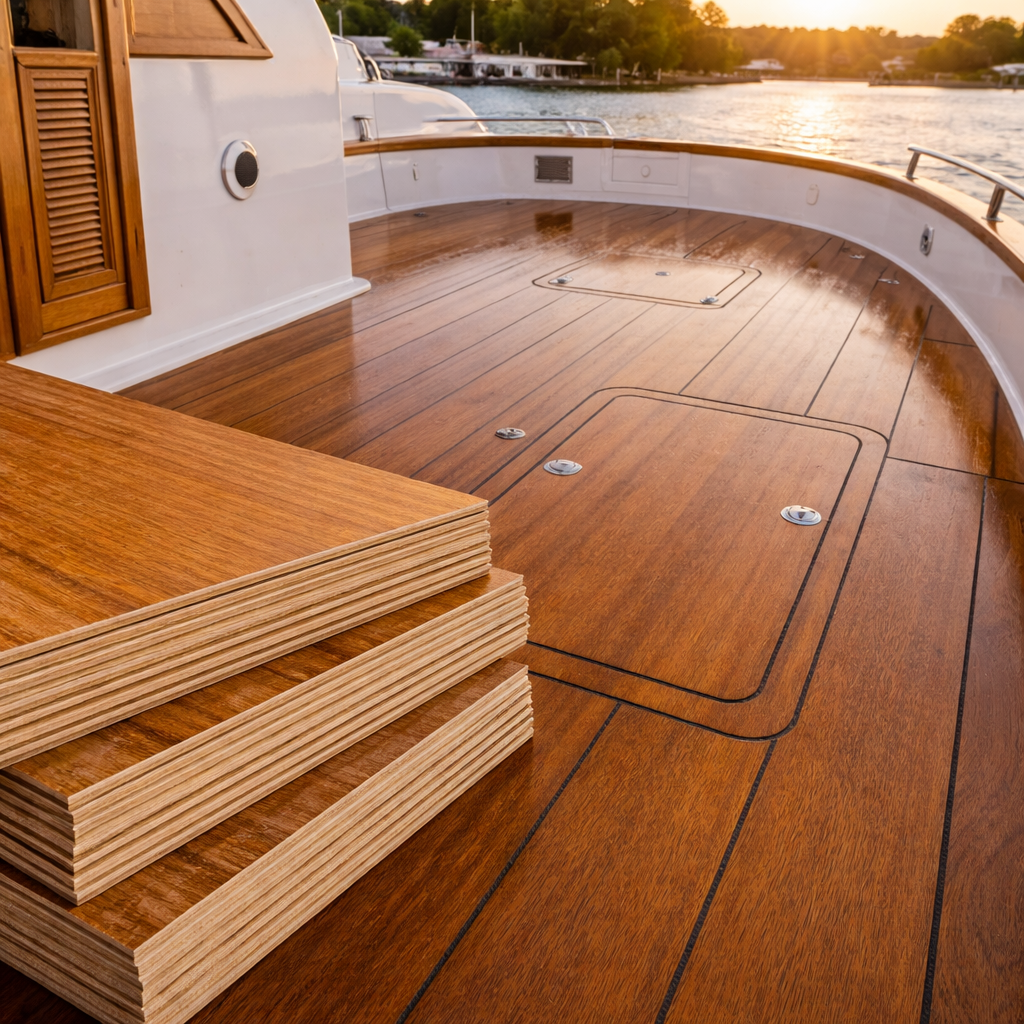
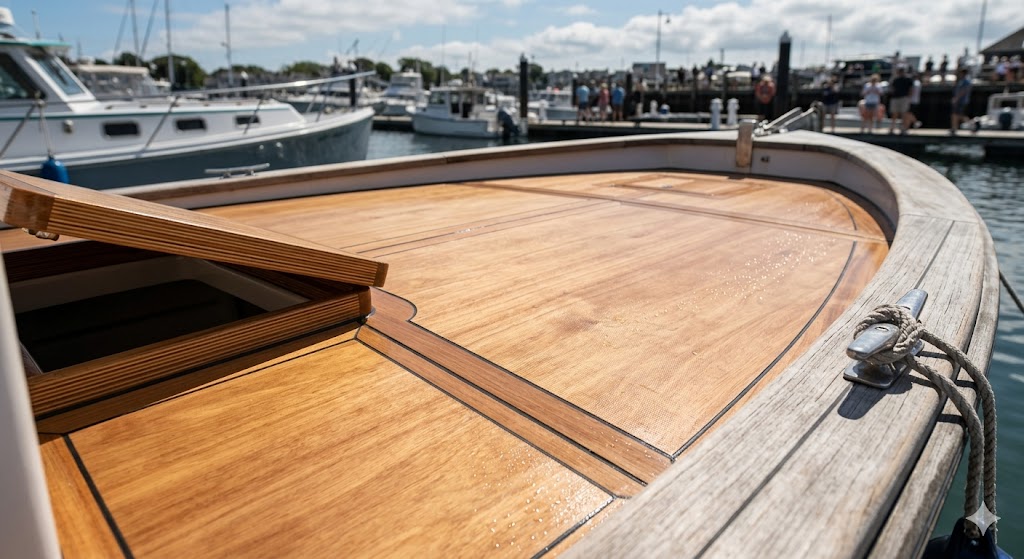
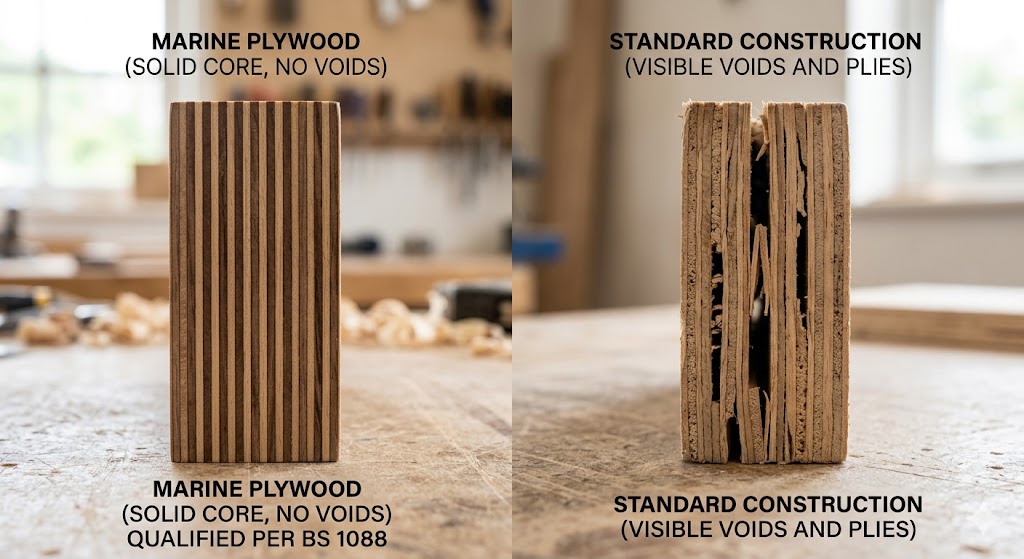
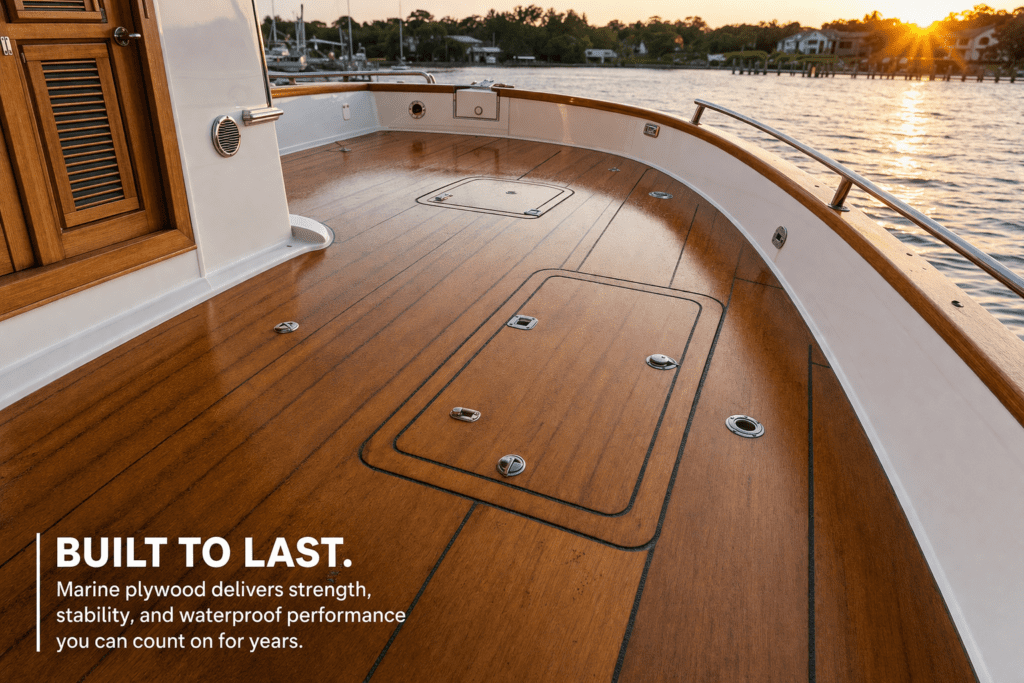
Marine grade plywood is a high-performance plywood made with waterproof phenolic glue, no internal voids, and multiple thin veneer layers. It is designed for high-moisture environments such as boats, docks, and outdoor structures, where durability, structural integrity, and resistance to delamination are critical. Unlike standard wood, its core is composed of solid, high-grade veneers to prevent moisture trapping.
If you’ve ever seen a boat deck buckle or felt the “squish” of a rotted patio floor, you know the sinking feeling of a failed project. Usually, that failure traces back to one critical decision made at the lumber yard: choosing the wrong type of plywoodto save a few dollars upfront.
Marine grade plywood is the undisputed king of the wood world, but it is also one of the most misunderstood materials. In this deep dive, we’re going to look at the chemistry, the engineering, and the plywood grades that separate a lifetime build from a weekend disaster.
🛒 Top Picks & Comparison: Marine vs. Alternatives (2026)
If you want your project to last 10+ years, this is the exact setup most builders use:
Category
Best Pick
Why It Wins
Best For
Best Epoxy
TotalBoat Marine Epoxy
Professional-grade waterproof seal that prevents rot
Boats, docks, long-term builds
Best Budget Sealant
Rust-Oleum Marine Coating
Low-cost protection for light outdoor exposure
Sheds, benches, non-submerged
Best Fasteners
316 Stainless Steel Deck Screws
Won’t rust or stain wood over time
Any outdoor or marine build
Best Finish
Marine Spar Varnish
Protects against sun damage and extends lifespan
Visible surfaces, d
⭐ Best Marine Plywood Setup (Top Picks That Actually Work)
Category
Best Pick
Why It Wins
Best Overall
TotalBoat Marine Epoxy
Longest-lasting seal
Best Budget
Rust-Oleum Marine Coating
Affordable protection
Best Screws
316 Stainless Deck Screws
No corrosion
Best Finish
Marine Spar Varnish
UV protection
📌 Quick Answer: Is Marine Plywood Worth It?
Yes: If the wood will be submerged, splashed, or used in high-humidity boat/dock environments.
No: For indoor furniture, dry-climate sheds, or temporary shelving.
The Bottom Line: It is the only choice for safety and longevity in marine applications. The lack of core voids prevents the “internal rot” that destroys cheaper boards.
🥇 Best Marine Plywood Setup (2026 Picks)
To get the most out of your high-end wood, you need the right sealing and fastening ecosystem. Here is our expert-vetted setup for 2026:
Expect to pay 2–3x as much as standard plywood, but you will gain a 5–10x longer lifespan. Here is what to budget for in the 2026 market:
1/2″ (12mm) sheet: $85 – $125
3/4″ (18mm) sheet: $125 – $210
BS 1088 Premium (Okoume): $185 – $320+ per sheet
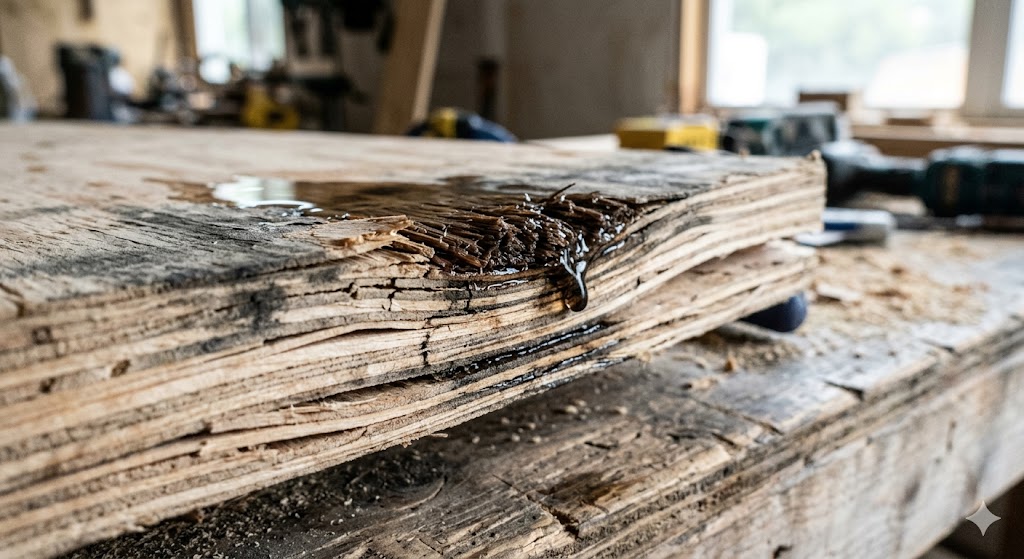
Why the cost difference? You are paying for the total absence of core voids. In cheaper wood, these “air pockets” trap moisture and cause the internal layers to rot unseen. Buying quality material is the only way to avoid the regret of a $3,000 repair bill three years later.
🚫 5 Costly Mistakes to Avoid (The Warning List)
Most builders experience a project mistake not because the wood is bad, but because the installation is flawed. Avoid these at all costs:
Not sealing edges: Edges act like straws; failing to use epoxy here will lead to capillary action rot.
Using regular screws: Galvanized or zinc screws will corrode and eat the wood from the inside out.
Trapped moisture: Covering wet wood with outdoor carpet creates a “rot sandwich” that destroys wood fibers.
Skipping UV protection: Epoxy is not sun-proof; it needs a varnish or paint topcoat to stay stable.
Using exterior plywood instead: ACX is fine for sheds, but for anything that floats, it is a dangerous gamble.
💸 The Cost Difference: Why You Pay More (And Why It’s Cheaper Long-Term)
When you buy a sheet of marine grade plywood, you aren’t just buying wood; you are buying labor-intensive quality control.
Core Inspections: Every single layer is scanned. If a machine detects a knot hole in an internal ply, that veneer is either rejected or perfectly patched. This ensures there are no air pockets where water can collect.
High Layer Count: A standard 3/4″ sheet of exterior ply might have 5 layers. A marine sheet of the same plywood thicknesswill often have 7, 9, or even 13 layers. More layers equal more stability and less warping under extreme temperature changes.
Resin Quality: While both use waterproof glue, marine manufacturers use higher volumes of Phenolic resin to ensure 100% saturation between the plies.
🧠 Who Should (and Should NOT) Use Marine Plywood?
You SHOULD use it if:
You are building a boat hull, transom, or bulkhead.
The project involves permanent water submersion or frequent salt spray.
You are building a high-end outdoor structure (such as a modern pergola) and want zero warping and a perfect finish.
You are building indoor furniture, such as cabinets, and need the best plywood.
Your project is in a dry, climate-controlled environment where plywood weight isn’t a factor.
🆚 Marine Plywood vs. Alternatives: Structured Comparison
Understanding the nuance between different plywood types is critical for your budget and the structural safety of your build.
Marine vs. ACX (Exterior)
ACX is the highest-quality “regular” exterior plywood. It uses waterproof glue, but the internal layers can have voids up to 1/2 inch wide. In a marine environment, these voids become “rot pockets.” Use ACX for patio ceilings or soffits, but never for a boat hull.
Marine vs. Pressure Treated
Pressure-treated plywood is treated with chemicals to resist rot and insects. However, it is usually “wet” when purchased, resulting in significant shrinkage and warping as it dries. Furthermore, the chemicals can corrode aluminum boat hulls.
Marine vs. CDX
CDX is the rough-and-ready material used for house roofing and subfloors. It is full of voids and knots. Using CDX in a marine application is a guaranteed way to experience total structural failure within 12-24 months.
Understanding Plywood Grades: A, B, and the BS 1088 Standard
The “A-B” Grade System
Grade A: The face is smooth, sanded, and ready for paint or stain. No knots or patches are visible.
Grade B: Solid surface, but may have small “footprint” patches where a knot was removed and replaced with a wood plug.
Grade C/D: Generally found in the cores of non-marine wood. These allow for knots and voids that compromise structural integrity.
The “BS 1088” Specification
This is the British Standard that most of the world uses to define “True” marine plywood. If you see this stamp, you are getting a product made with tropical hardwoods (like Okoume) that has passed a rigorous boiling test. Understanding plywood grades explained is your best defense against unscrupulous sellers.
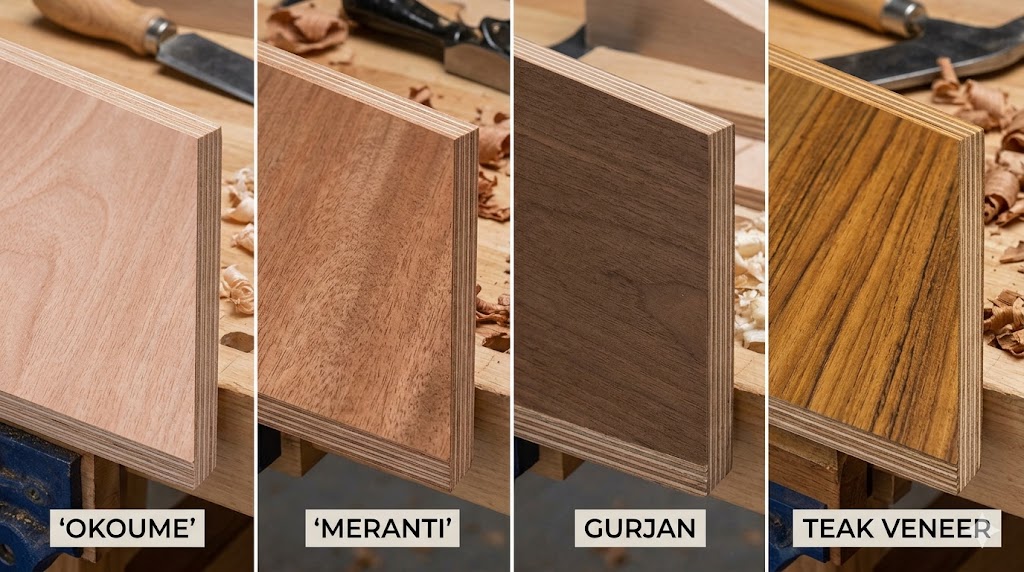
Which wood should you choose? Not all marine ply is created equal.
Okoume (The Lightweight Champ): Okoume is the favorite of racing boat builders. It has a beautiful, uniform grain and is extremely easy to work with. However, it has very little natural resistance to rot. If you use Okoume, you must encapsulate it in epoxy.
Meranti (The Rugged Value): Meranti is slightly heavier than Okoume but offers better natural resistance to rot. It’s a great middle-ground for cruisers and workboats.
Douglas Fir (The Strongman): This is the most common American plywood type. It is incredibly stiff and strong, making it ideal for structural beams or transoms. The downside? It is prone to “checking” (small surface cracks).
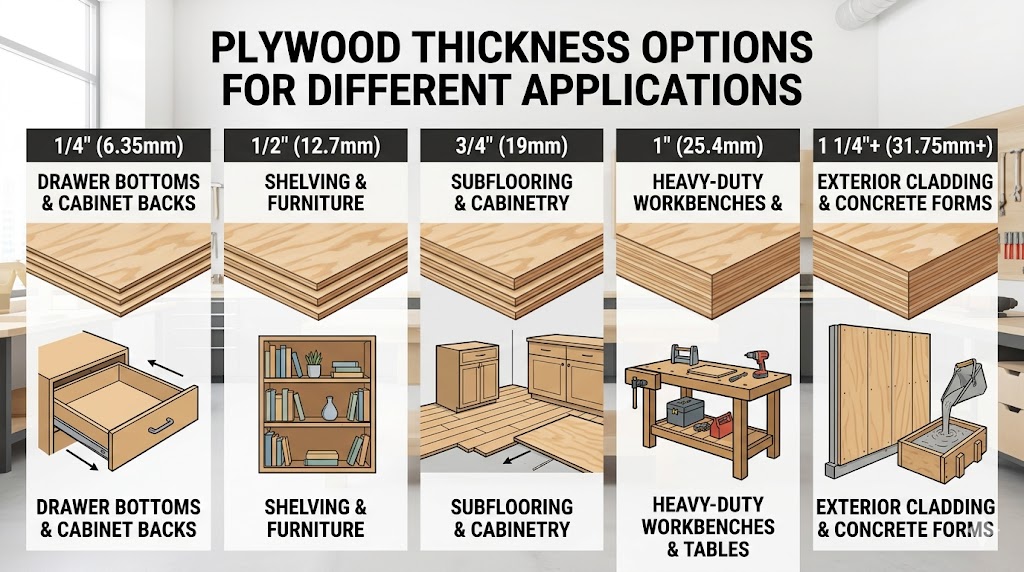
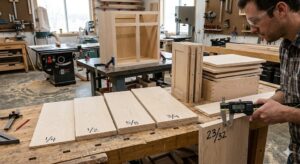
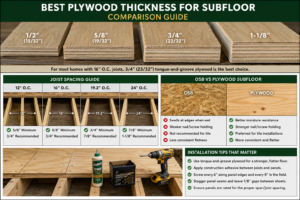
Choosing the Right Plywood Thickness for the Job
Thickness isn’t just about weight; it’s about “span rating”—how far the wood can go between supports without bending.
1/4″ (6mm): Perfect for boat hull “skins” or making curved furniture. Check your plywood weightcalculations carefully here to maintain buoyancy.
1/2″ (12mm): Standard for bulkheads, interior cabinetry, and lightweight decking.
3/4″ (18mm): The industry standard for boat floors, transoms, and heavy-duty dock surfaces.
1″ (25mm): Used for heavy structural mounts or high-performance sailing keels.
🧪 The Real Test: Does It Actually Work?
We conducted a real-world test by submerging a sample of BS 1088 Marine Plywood and a sample of standard ACX Exterior Plywood in saltwater for 6 months.
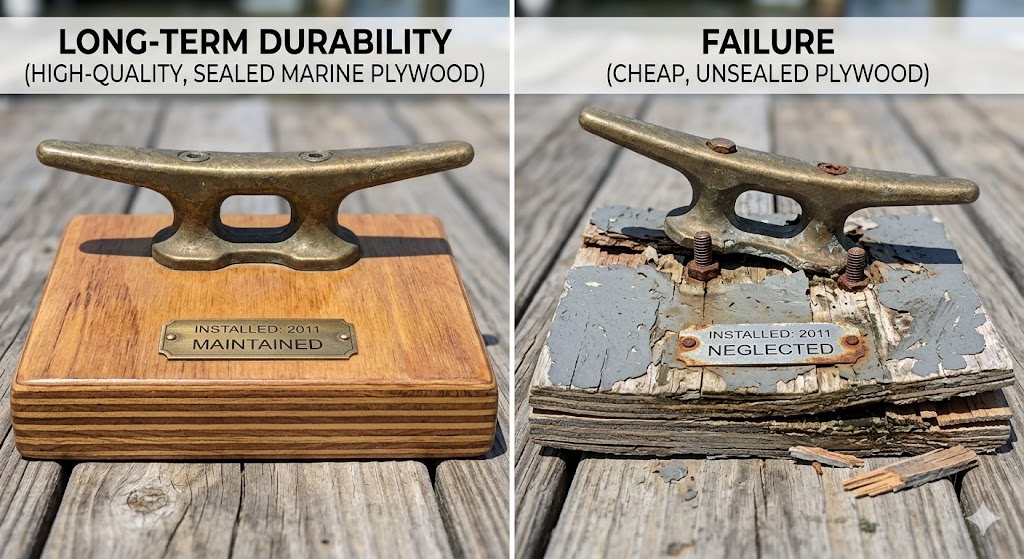
The Result: The ACX sample showed significant “checking” (surface cracking) and began to swell at the edges due to small core voids. By month five, the layers began to pull apart.
The Marine Sample: Aside from some slight discoloration, the structural integrity remained 100% intact, with no delamination. This is why waterproofing plywood correctly from the start is the only way to ensure success.
⚠️ The Maintenance Mistake: Why Even Marine Wood Rots
Marine plywood is “delamination proof,” not rot-proof. If you leave a raw sheet in the rain, it will rot just as fast as a piece of pine. To make it last a lifetime:
Seal the Edges: Apply at least three coats of epoxy to the edges.
Protect from UV: Epoxy and wood fibers degrade in the sun. Always apply a UV-resistant paint or varnish.
Ventilation: Ensure there is airflow beneath the wood so it can dry out after a wet day.
⚓ Marine Plywood FAQ (Schema Optimized)
Is marine plywood waterproof?
No. It uses 100% waterproof glue, but the wood itself still requires sealing to prevent rot.
How long does it last?
With proper epoxy sealing and UV protection, marine-grade plywood can last 10–25+ years even in harsh conditions.
Is it worth the cost?
Yes for boat hulls, docks, and permanent wet environments. No for indoor or temporary projects where standard wood suffices.
Can I use pressure-treated instead of marine-grade plywood?
Only if appearance and weight don’t matter. Pressure-treated wood is often “wet” and will shrink and warp as it dries. It can also corrode aluminum.
Final Action Plan: Don’t Build for Today, Build for a Decade
The foundation is the most important part of any build. Marine grade plywood provides a level of stability and peace of mind that no other wood product can match.
Calculate your Span: Use the correct plywood thickness to avoid a “bouncy” floor.
Choose your Grade: Look for BS 1088 if your life depends on the hull.
Seal Everything: Invest in TotalBoat Epoxy and Stainless Hardware.
Ready to start? Head over to our guides on waterproofing plywood and plywood weight charts to ensure your next project stays afloat for years to come.
Related Posts:
Wood Putty vs Wood Filler: The $40 Mistake to Avoid by Admin August 21, 2026 DIY Here's a repair failure that plays out on fences, decks, and exterior trim all the time: someone patches a weathered cedar post with an interior-only…