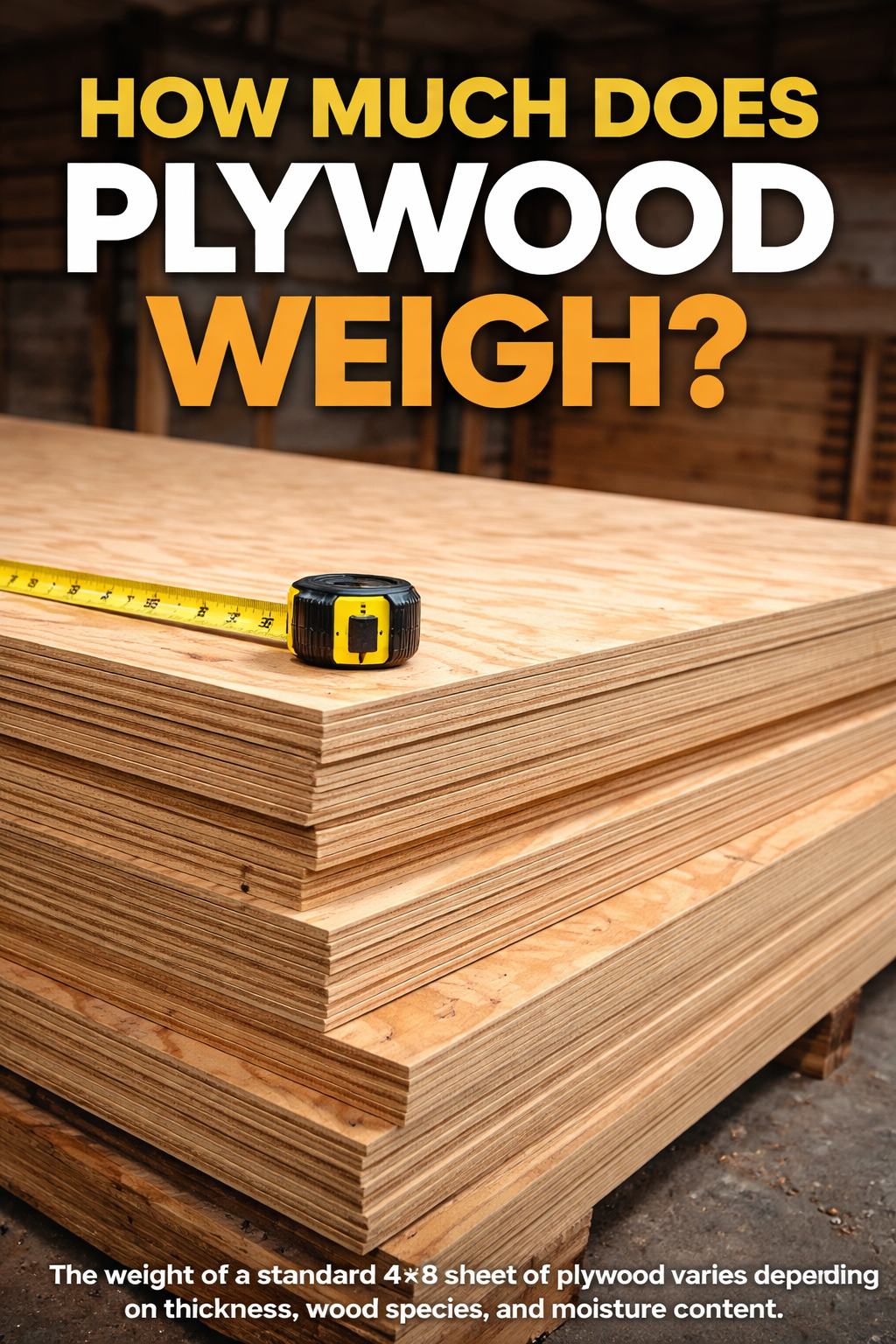
Plywood weight depends mainly on thickness, wood species, and moisture content.
As a general rule, plywood weighs about 2.5 to 3 pounds per square foot for every inch of thickness. Because a standard sheet measures 4×8 feet (32 square feet), the total weight of a sheet can vary significantly depending on the material used.
For example, a typical 3/4-inch sheet of softwood plywood weighs between 60 and 70 pounds. Thinner panels weigh less, but even lighter sheets can still feel awkward to handle because of their large size.
If you’ve ever tried carrying a full sheet through a doorway or loading one into a truck by yourself, you already know the challenge isn’t just the weight — it’s the size, balance, and stiffness of the panel.
Understanding plywood weight helps builders plan for safe lifting, structural loads, transportation, and hardware strength when working on cabinets, shelving, flooring, framing, and other DIY projects.
Plywood weight refers to the total mass of a sheet of plywood, which depends primarily on panel thickness, wood species, and moisture content. Because a standard sheet measures 4×8 feet, even small changes in thickness can significantly increase the panel’s total weight. Builders and DIY homeowners often need to estimate the weight of plywood before purchasing materials to plan transportation, lifting safety, structural loads, and hardware strength when installing cabinets, shelving, flooring, or framing.
Quick Answer: How Much Does Plywood Weigh?
A standard 4×8 sheet of plywood typically weighs between 20 and 70 pounds, depending on thickness and wood type.
For example:
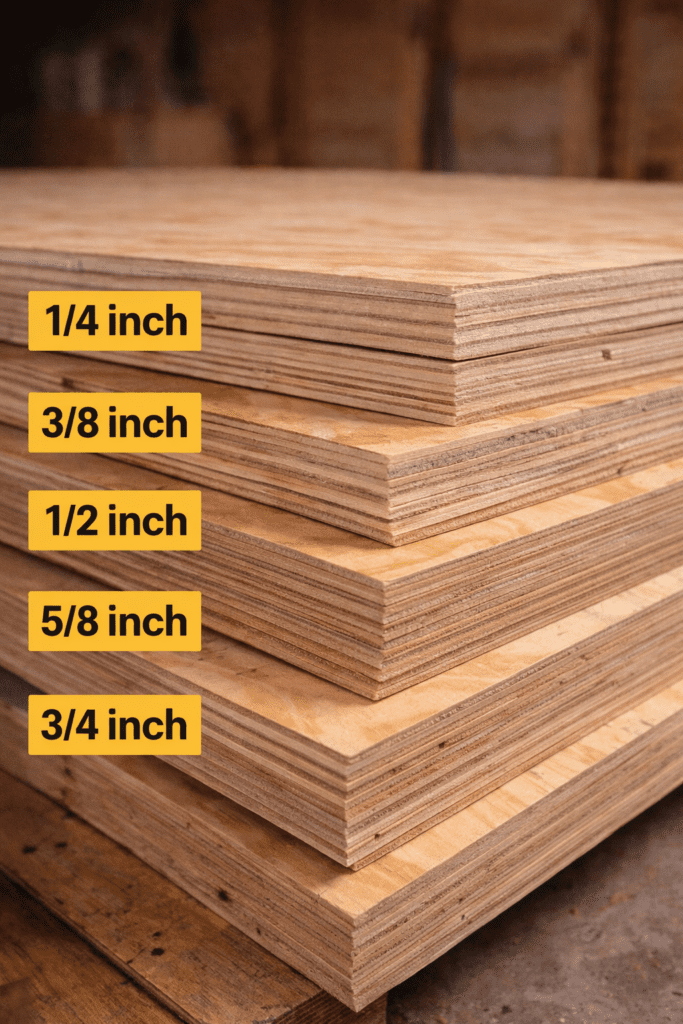
1/4-inch plywood: about 20 lbs
1/2-inch plywood: about 40 lbs
3/4-inch plywood: about 60–70 lbs
The table below shows the typical weight of common plywood sheets, which helps builders estimate lifting requirements, transportation weight, and structural load planning.
Plywood Weight Chart (4×8 Sheets)
The weight of plywood increases with thickness because thicker panels contain more wood fibers and adhesive layers.
Below are the typical weights for common plywood sheets.
Plywood Thickness
Average Weight (4×8 Sheet)
1/4 inch plywood
~20 lbs
3/8 inch plywood
~30 lbs
1/2 inch plywood
~40 lbs
5/8 inch plywood
~50–55 lbs
3/4 inch plywood
~60–70 lbs
1 inch plywood
~80–90 lbs
Softwood construction plywood is usually the lightest type. Hardwood plywood, MDF, and HDF sheets can weigh significantly more because they contain denser wood fibers and heavier resin binders.
These numbers are averages — actual weight varies slightly between manufacturers depending on core species and adhesive formulas.
Plywood Weight Chart: Thickness & Species Comparison
Plywood Thickness
Softwood (Pine/Fir)
Hardwood (Birch/Oak)
MDF / Particle Board
1/4″
22 lbs
25 lbs
28 lbs
1/2″
43 lbs
48 lbs
55 lbs
3/4″
61 lbs
70 lbs
82 lbs
What Determines Plywood Weight?
Three main factors determine how heavy a sheet of plywood will be.
1. Thickness
Thickness has the largest impact on weight.
Because plywood sheets are large, even small increases in thickness add significant weight.
For example:
1/4-inch sheet: about 20 pounds
1/2-inch sheet: about 40 pounds
3/4-inch sheet: about 60–70 pounds
Doubling the thickness roughly doubles the weight.
This is why cabinet-grade plywood often feels noticeably heavier than thin paneling used for decorative walls.
2. Wood Species
Different wood species have different densities, which affects panel weight.
Furniture-grade hardwood plywood usually weighs more than construction plywood because hardwood veneers are denser.
3. Moisture Content
Wood naturally absorbs moisture from the environment.
If plywood is stored in humid conditions or exposed to rain on a job site, it can absorb moisture and gain weight.
In extreme cases, this can add several pounds per sheet, especially with thicker panels.
Moisture also affects structural performance, which is why builders try to keep plywood dry and properly stored before installation.
Why Full Plywood Sheets Feel So Heavy
A full plywood sheet often feels heavier than expected — even when the actual weight isn’t extreme.
The reason is the panel’s size and shape.
A standard sheet contains 32 square feet of material, which creates several challenges:
The panel is difficult to balance while carrying
Doorways and staircases make maneuvering harder
Wind can catch large panels outdoors
Even experienced builders sometimes struggle to carry a full sheet alone.
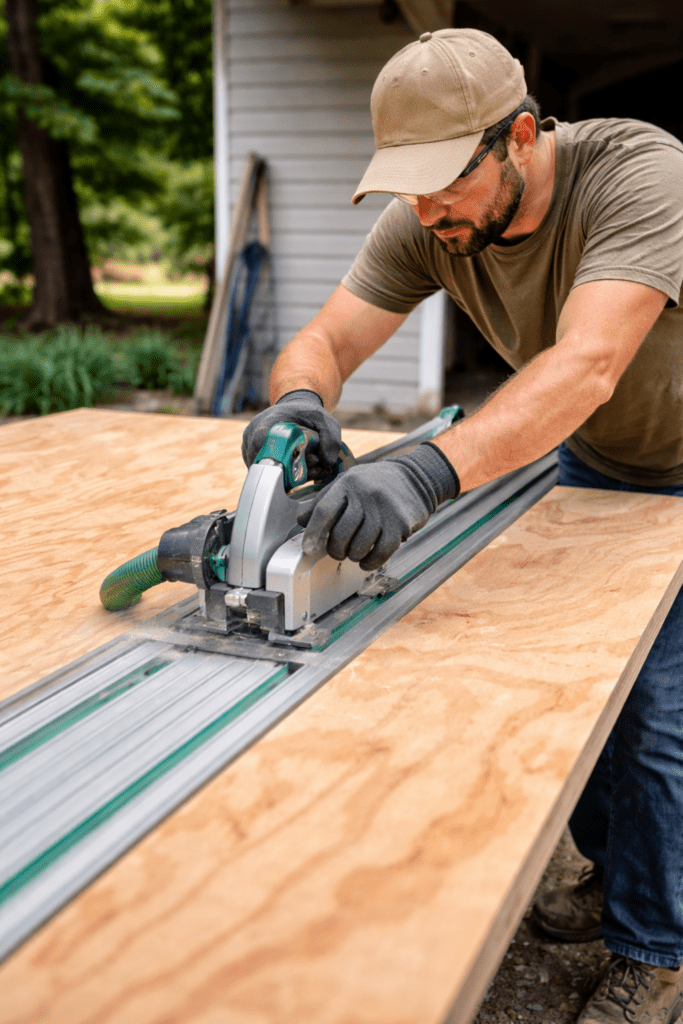
Because of this, many woodworkers prefer to cut sheets into smaller pieces outside using a track saw or circular saw, then bring the smaller panels into the shop.
This simple technique reduces lifting strain and prevents damage to walls and door frames.
Planning Projects With Plywood Weight in Mind
Plywood weight isn’t just about lifting a sheet.
It also affects project design, installation methods, and long-term durability.
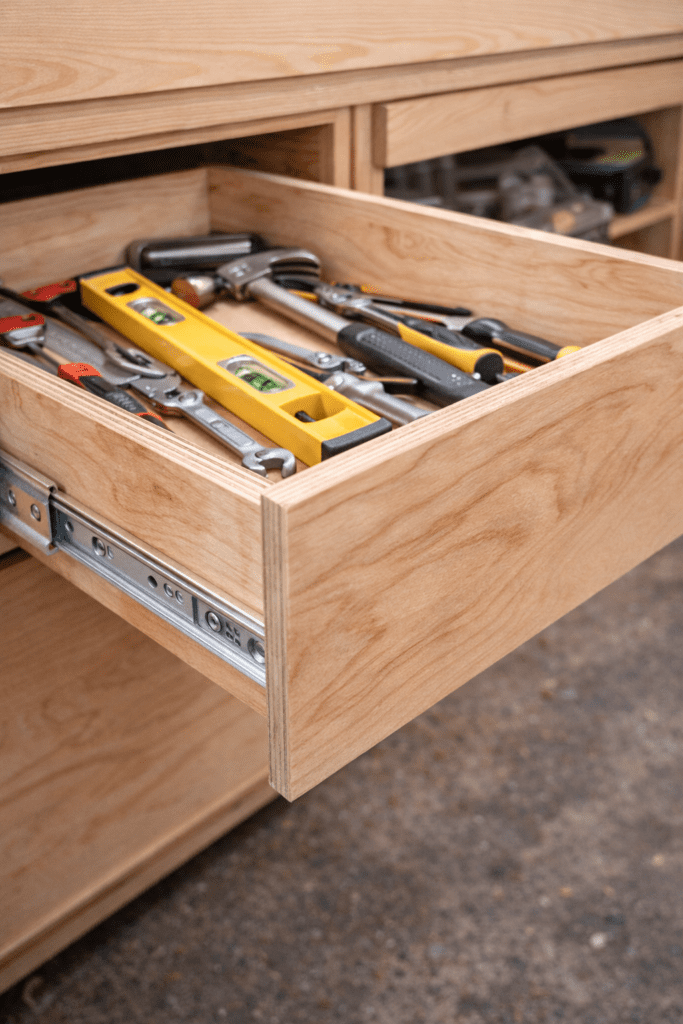
For example, when building cabinets, heavier hardwood plywood can sometimes cause drawer slides to sag if the hardware isn’t rated for the load.
I ran into this once while installing a long cabinet run in a garage workshop.
The cabinet boxes were built from dense maple plywood, and they felt incredibly solid once assembled. But after loading the drawers with tools, the standard drawer slides started to flex slightly.
Switching to industrial-rated drawer slides solved the problem immediately.
The same concept applies to shelving.
If plywood shelves are mounted on the wall, you must ensure the studs, anchors, and brackets can support both the shelf weight and whatever items will sit on top.
Shelf depth also matters.
A deeper shelf creates more leverage on fasteners, increasing the risk of sagging.
Why Is Plywood So Heavy?
Plywood is often heavier than people expect because of its manufacturing process.
Two major factors contribute to the weight.
Core Veneer Layers
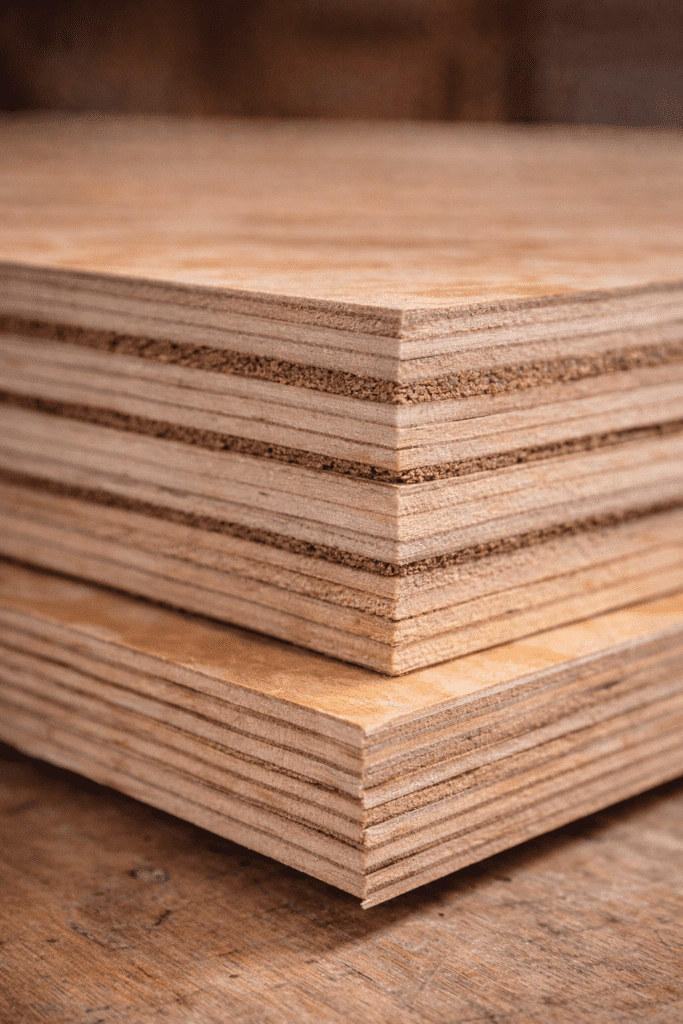
Plywood is built from multiple layers of thin wood veneers.
These layers are stacked with alternating grain direction to create strength and stability.
Depending on the panel type, the core veneers may use different species than the face veneer, and some of these inner layers can be surprisingly dense.
Adhesives and Resin
Strong adhesives hold plywood together under heat and pressure.
These resins add weight to the panel and can make plywood feel heavier than solid wood of the same thickness.
Manufacturing methods vary by mill, which is why two sheets that look identical may weigh noticeably differently.
Many people assume heavier plywood automatically means stronger plywood.
That isn’t always true.
Sometimes extra weight comes from resin and adhesives rather than wood fibers.
Actual structural strength depends more on:
wood species
veneer orientation
overall thickness
proper support in the final structure
A well-supported sheet of moderate weight often performs better than a heavier panel installed without reinforcement.
Handling Heavy Plywood Sheets Safely
A full 4×8 sheet of 3/4-inch plywood can weigh around 70 pounds.
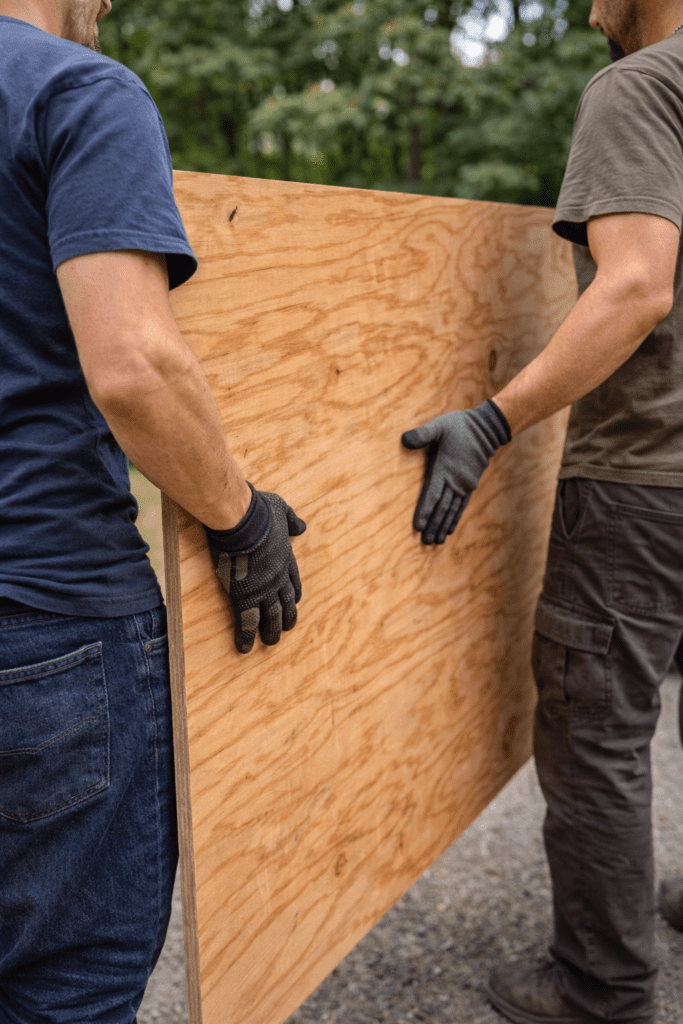
While that might not sound extreme, the awkward shape makes it difficult to carry safely.
Improper lifting is one of the most common causes of injuries during DIY construction projects.
Whenever possible:
Lift with two people
Use carts or dollies
Break sheets into smaller pieces first
Professional builders rarely carry full sheets long distances unless absolutely necessary.
Plywood Weight Comparison (Common Materials)
Different sheet materials can vary dramatically in weight.
Below is a comparison of common 1/2-inch sheet goods.
Material
Weight (4×8 Sheet, 1/2″)
Softwood Plywood
~40 lbs
Hardwood Plywood (Birch Core)
~65 lbs
Hardwood Plywood (Poplar Core)
~52 lbs
OSB
~56 lbs
MDF (Light)
~60 lbs
MDF (Heavy)
~75 lbs
HDF
~82 lbs
Fiberboard products are often much heavier than plywood, which is why MDF furniture can feel extremely solid — but also much harder to move.
Hardwood Plywood Density Variation
Hardwood plywood weight varies widely depending on the core species.
Typical density ranges include:
Birch core: 650–700 kg/m³
Poplar core: 500–530 kg/m³
Because birch is denser, birch plywood often feels noticeably heavier than poplar-core panels of the same thickness.
This difference becomes obvious when lifting multiple sheets at once.
Hardboard Weight Reference
Hardboard products are extremely dense compared to plywood.
Hardboard Type
Thickness
Weight
Standard Hardboard
1/8 inch
~20 lbs
Standard Hardboard
1/4 inch
~38 lbs
Tempered Hardboard
1/8 inch
~22 lbs
Tempered Hardboard
1/4 inch
~40 lbs
These materials are strong and durable, but can be difficult to handle due to their density.
Does Heavier Plywood Mean Stronger Plywood?
Not necessarily.
Weight alone isn’t a reliable indicator of strength.
The real factors that determine plywood performance include:
panel thickness
veneer quality
core construction
structural support in the project
A properly supported sheet of moderate weight often performs better than a heavier panel installed without reinforcement.
A Simple Trick to Strengthen Plywood Shelves
One of the easiest ways to reinforce plywood shelving is by attaching a 1×2 or 1×4 strip along the front edge.
This strip acts as a stiffening beam, dramatically reducing sagging.
For longer shelves, adding reinforcement to both the front and back edges distributes weight more evenly.
This small upgrade can make inexpensive plywood shelving feel surprisingly strong.
Transporting Plywood Sheets Safely
Transporting full sheets requires careful planning.
A single 3/4-inch sheet weighs about 60–70 pounds, and multiple sheets can quickly exceed the payload capacity of a small vehicle.
When transporting plywood:
Support sheets evenly to prevent bending
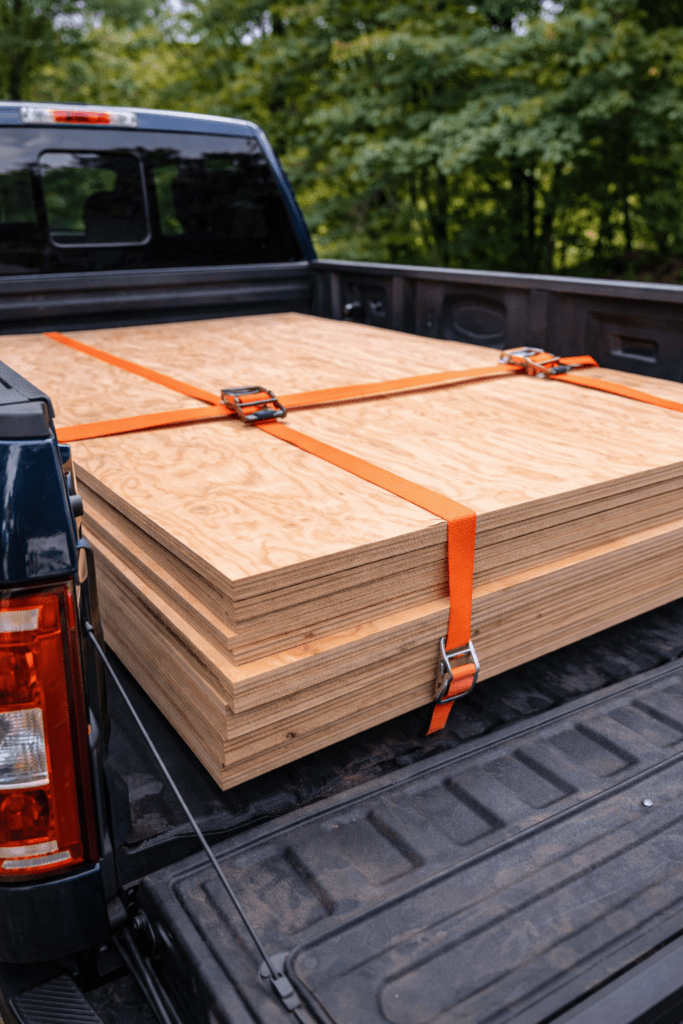
Use roof racks or a pickup truck bed when possible
Secure panels with ratchet straps
Avoid standing sheets vertically
Protect the edges from damage
Professional contractors often carry sheet goods on flat racks because even slight bending during transport can weaken plywood panels.
Related Plywood Guides
If you’re planning a project with plywood, it’s helpful to understand how weight relates to other factors such as strength, cost, and construction type. For example, choosing the correct plywood thickness ensures shelves, cabinets, or subfloors won’t sag over time. It’s also worth reviewing the different types of plywood, since softwood construction panels, hardwood plywood, and specialty boards can vary significantly in density and performance. Finally, before buying large quantities of material, checking current plywood prices can help you plan your budget and choose the most cost-effective sheet for your project.
FAQ: Common Questions About Plywood Weight
How heavy is a 3/4-inch sheet of plywood?
A standard 4×8 sheet of 3/4-inch softwood plywood weighs about 60–70 pounds. Hardwood plywood sheets may weigh slightly more depending on the wood species used in the core and face veneers.
What’s the lightest type of plywood?
Softwood construction plywood is usually the lightest option. A 1/4-inch sheet typically weighs around 20 pounds, making it much easier to carry and install for wall paneling, crafts, and decorative projects.
Does heavier plywood mean stronger plywood?
No. Weight alone does not determine strength.
Plywood strength depends on:
veneer orientation
wood species
panel thickness
structural support in the project
In many cases, a properly supported panel will perform better than a heavier sheet installed without reinforcement.
How heavy is MDF compared to plywood?
MDF and other fiberboard panels are typically much heavier than plywood because they contain dense wood fibers and resin binders.
This density makes fiberboard durable but significantly harder to move and install.
Why does plywood weight vary between manufacturers?
Different manufacturers use different:
wood species
veneer thickness
adhesive formulas
core construction methods
Because of this, two sheets of the same thickness can weigh slightly differently depending on where they were produced.
Final Takeaway: Understanding Plywood Weight
Knowing how much plywood weighs helps you plan projects more safely and efficiently.
Weight affects:
lifting and transportation
shelf load capacity
cabinet hardware strength
framing and structural support
vehicle payload limits when transporting sheets
For most projects, a 3/4-inch 4×8 plywood sheet weighing about 60–70 pounds is the common benchmark.
But the exact weight always depends on panel thickness, wood species, and moisture content.
Understanding these factors allows builders, contractors, and DIY homeowners to choose the right sheet material while avoiding lifting injuries, sagging shelves, or structural problems.