Plywood can be bent using several woodworking techniques, including kerf cutting, laminating thin sheets, steam bending, soaking, heat bending, and using flexible plywood (bendy ply). Each method allows builders to create curved shapes for furniture, cabinetry, architectural panels, boat hulls, and decorative woodworking projects.
The best bending method depends on three main factors:
• the radius of the curve • the thickness of the plywood • the structural strength required
Thin plywood sheets, such as 1/8-inch or 1/4-inch plywood, bend easily, while thicker panels usually require kerf cuts or laminated layers to achieve tight curves without cracking.
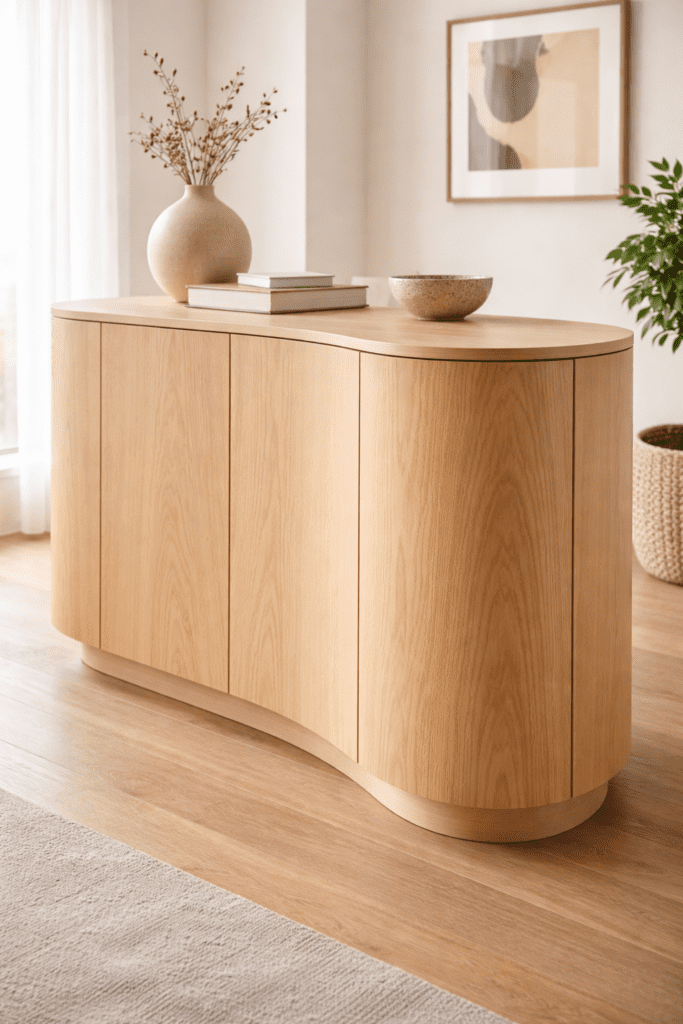
Bending plywood allows builders and DIYers to create arched furniture, curved cabinets, rounded walls, boat hulls, decorative panels, and architectural features that would be impossible with rigid boards.
In this guide, we’ll walk through the most reliable ways to bend plywood, which tools work best, and how to avoid the most common mistakes.
Why Plywood Can Bend
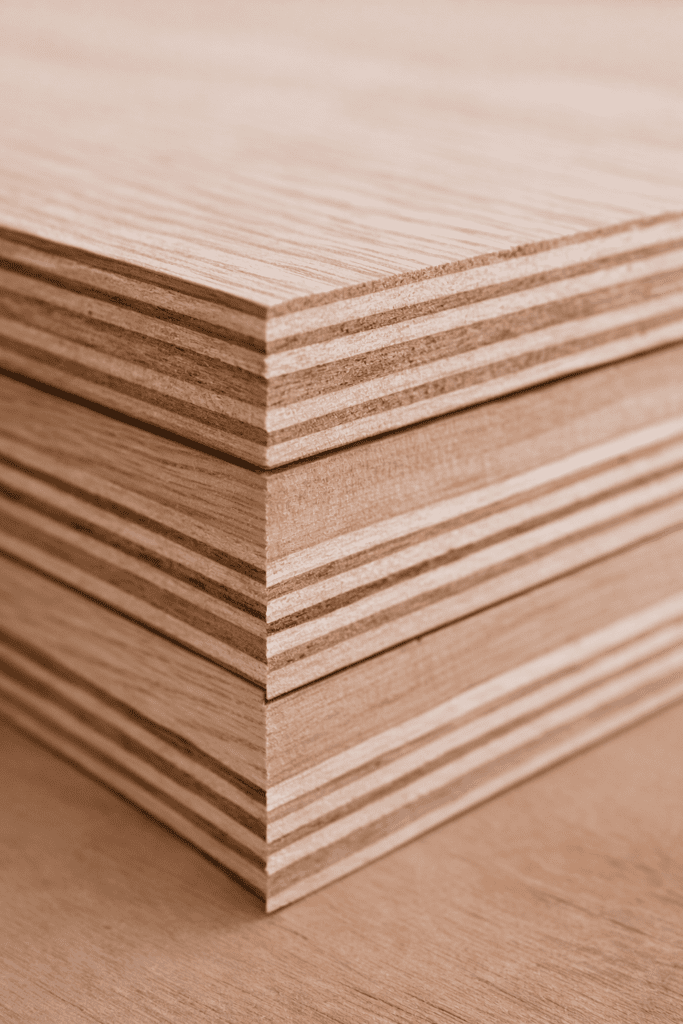
Unlike solid-wood boards, plywood is made from multiple thin veneer layers glued together with alternating grain directions.
This layered construction gives plywood strength and flexibility, allowing it to bend slightly when subjected to pressure, heat, or moisture.
However, plywood bending still has limits.
Several factors influence how easily plywood can bend:
Thickness
Wood species
Glue type
Moisture content
Grain orientation of the veneers
These characteristics vary significantly between plywood types. Construction plywood, hardwood plywood, marine plywood, and specialty panels all behave slightly differently when bent. If you’re not sure which panel will flex the best, it’s worth reviewing the different types of plywood and how they’re used in real projects before starting a curved build.
Thinner panels bend much more easily than thicker sheets.
Thin sheets such as 1/8″, 1/4″, and 3/8″ plywood bend much easier than thicker panels, while thicker sheets usually require additional techniques like kerf cutting or laminating to achieve tight curves. If you’re unsure which thickness works best for a specific project, it helps to review a full plywood thickness guide that explains span ratings, load capacity, and common panel sizes before choosing your material.
Plywood Bend Difficulty by Thickness
Plywood Thickness
Bend Difficulty
1/8 inch
Very Easy
1/4 inch
Easy
3/8 inch
Moderate
1/2 inch
Difficult
3/4 inch
Very Difficult
Thicker plywood often requires kerf-cutting or laminating to achieve tight curves without cracking.
Minimum Bend Radius for Plywood
Every sheet of plywood has a minimum bend radius, which is the tightest curve the panel can form without cracking or delaminating.
The thicker the plywood, the larger the radius required.
General bending limits:
Plywood Thickness
Approximate Minimum Radius
1/8 inch
12–16 inches
1/4 inch
24–36 inches
3/8 inch
48 inches or more
1/2 inch
Usually requires kerf cuts
3/4 inch
Must be kerfed or laminated
Trying to force plywood into a tighter radius than recommended will usually cause:
For tight curves, woodworkers typically switch to laminated layers or flexible plywood.
Method 1: Kerf Cutting (Most Common DIY Method)
Kerf cutting is the most common technique used by DIY builders when bending thicker plywood sheets.
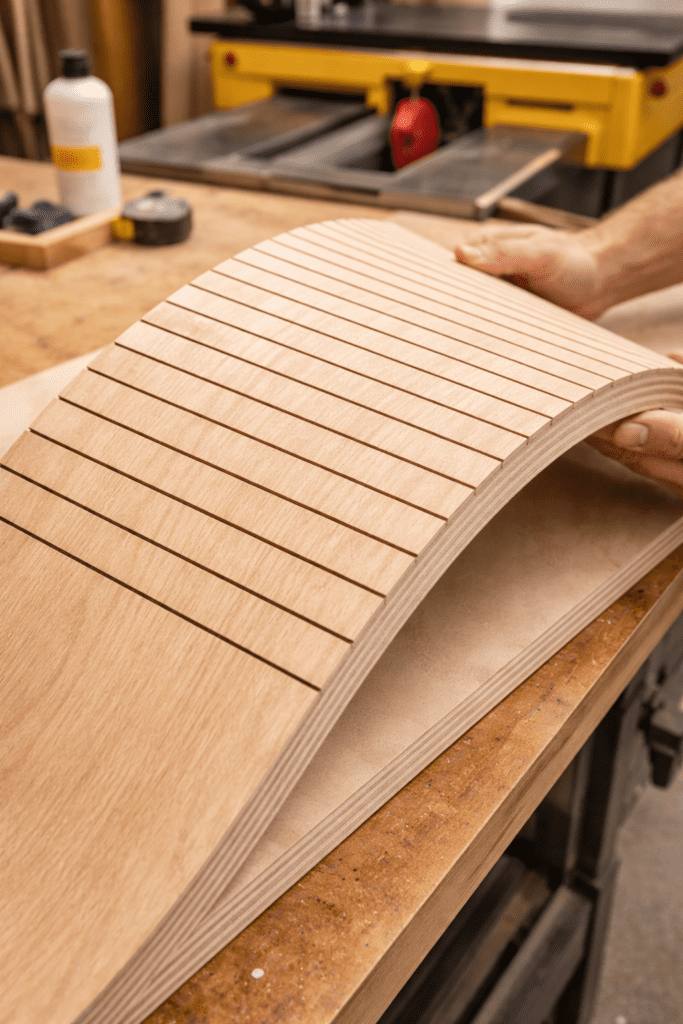
Kerf cutting removes material from the back side of the plywood, allowing the panel to compress and form a smooth curve without breaking the front veneer.
Instead of forcing the plywood to bend naturally, parallel cuts are made on the backside of the panel, allowing the material to flex.
How Kerf Cutting Works
Each saw cut removes a small portion of wood fiber, creating space for the plywood to compress when bent.
Tools Required
Table saw
Circular saw with guide
Measuring tape
Pencil
Steps
Mark lines across the backside of the plywood every 1/2 inch to 1 inch.
Cut grooves about two-thirds of the way through the plywood thickness.
Leave the front veneer intact.
Slowly bend the plywood into position.
Glue and fasten the panel to a curved frame.
Best Uses
Curved cabinet fronts
Rounded wall panels
Archways
Furniture pieces
Kerf Spacing Guide
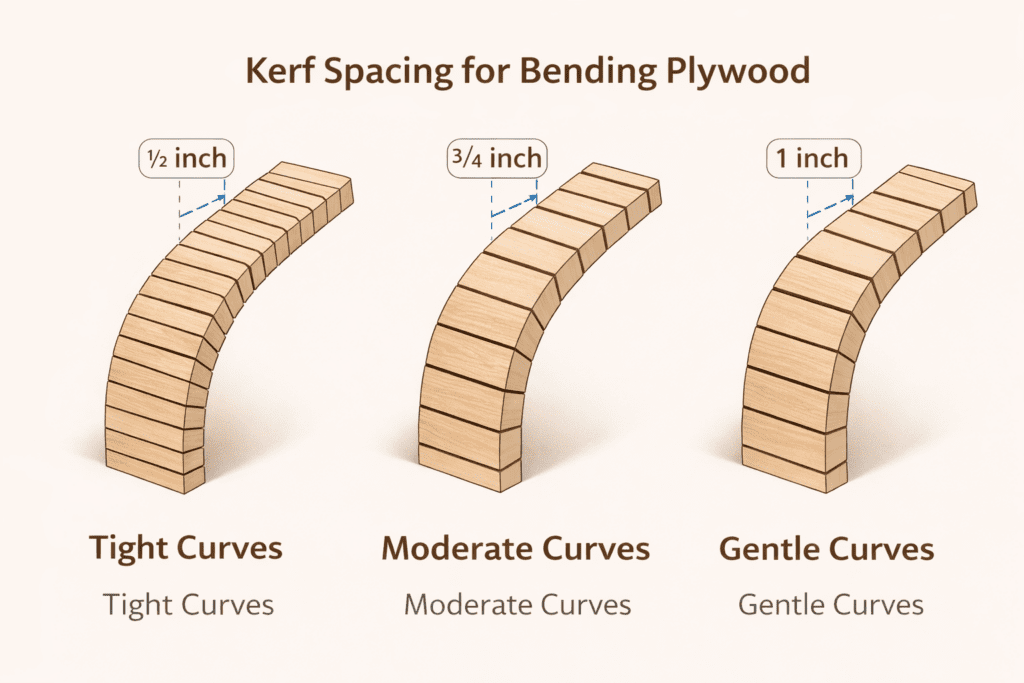
The spacing of kerf cuts determines how smoothly the plywood will bend.
Kerf Spacing
Bend Result
1/2 inch spacing
tight curves
3/4 inch spacing
moderate curves
1 inch spacing
gentle curves
The closer the kerf cuts are spaced, the smoother the bend becomes.
However, cutting too deeply can weaken the plywood panel, so most builders cut about two-thirds of the plywood thickness.
Kerf cutting works very well, but the grooves will be visible on the backside, so the panel is usually covered with veneer or another surface layer.
Kerf cutting works particularly well on standard construction plywood, but the results depend on the panel’s quality and the number of veneer layers. Higher-grade panels usually bend more predictably because the veneers are more uniform. If you’re not familiar with plywood grading systems, this guide on how plywood grades affect strength, appearance, and durability explains what to look for when buying panels.
Method 2: Laminating Thin Plywood Layers
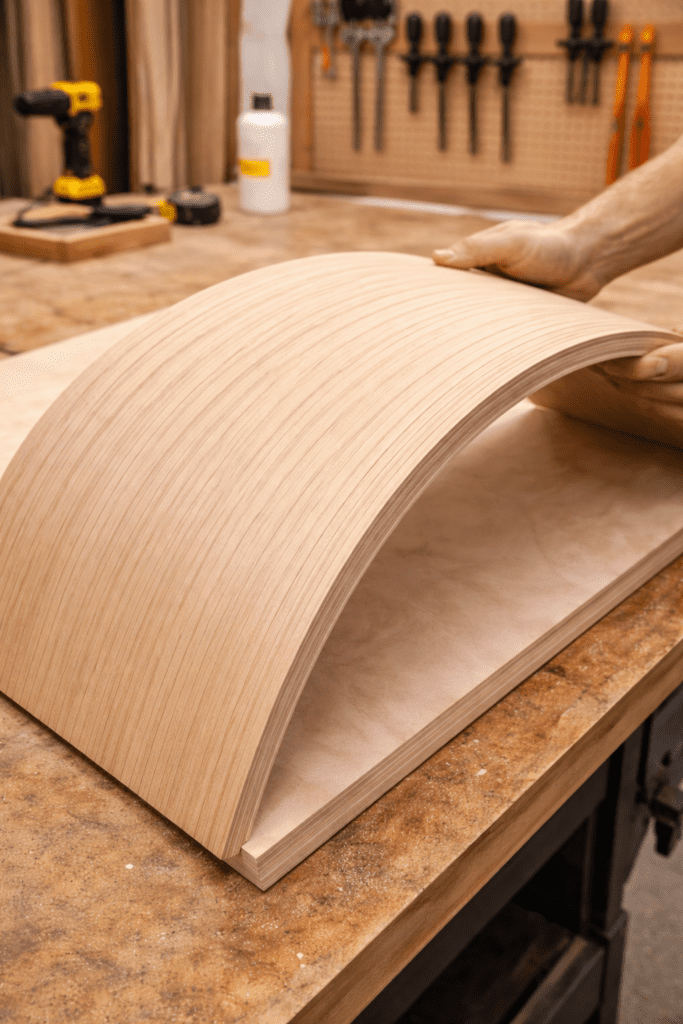
Laminating thin plywood sheets together is one of the strongest and cleanest methods for creating curved plywood structures.
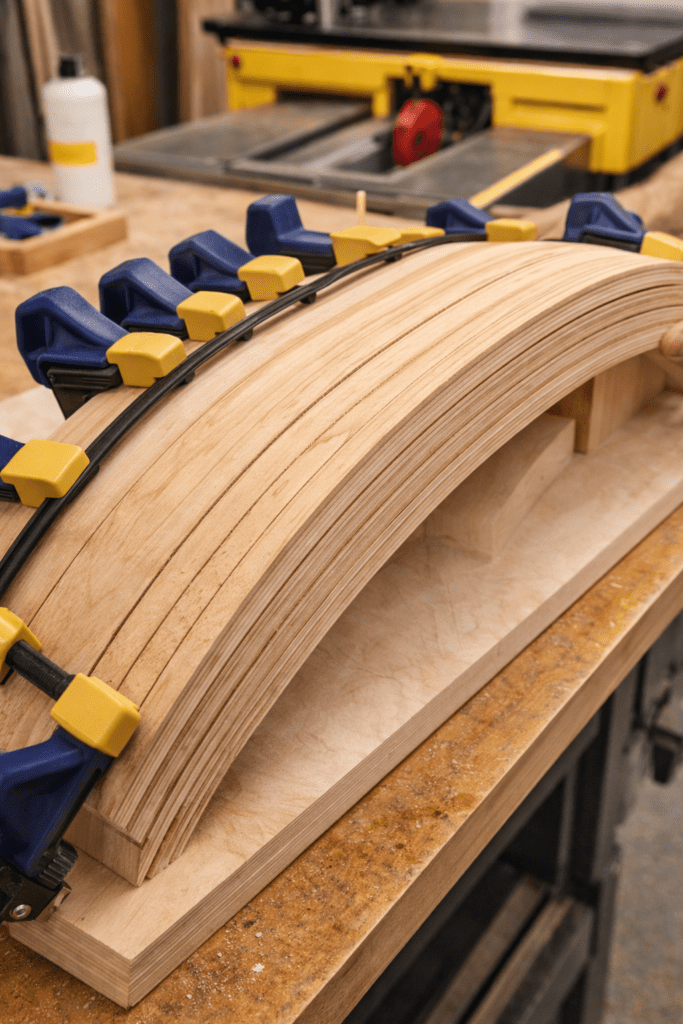
Instead of bending a single thick sheet, several thin sheets are glued and clamped to a mold.
Once the glue cures, the plywood permanently holds the curved shape.
Steps
Build a curved form or mold.
Cut thin plywood sheets (typically 1/8-inch or 1/4-inch).
Apply wood glue between layers.
Clamp the sheets tightly onto the mold.
Allow glue to cure for 24 hours.
Advantages
Extremely strong
Smooth curves
No visible kerf cuts
Professional furniture quality
This technique is commonly used in:
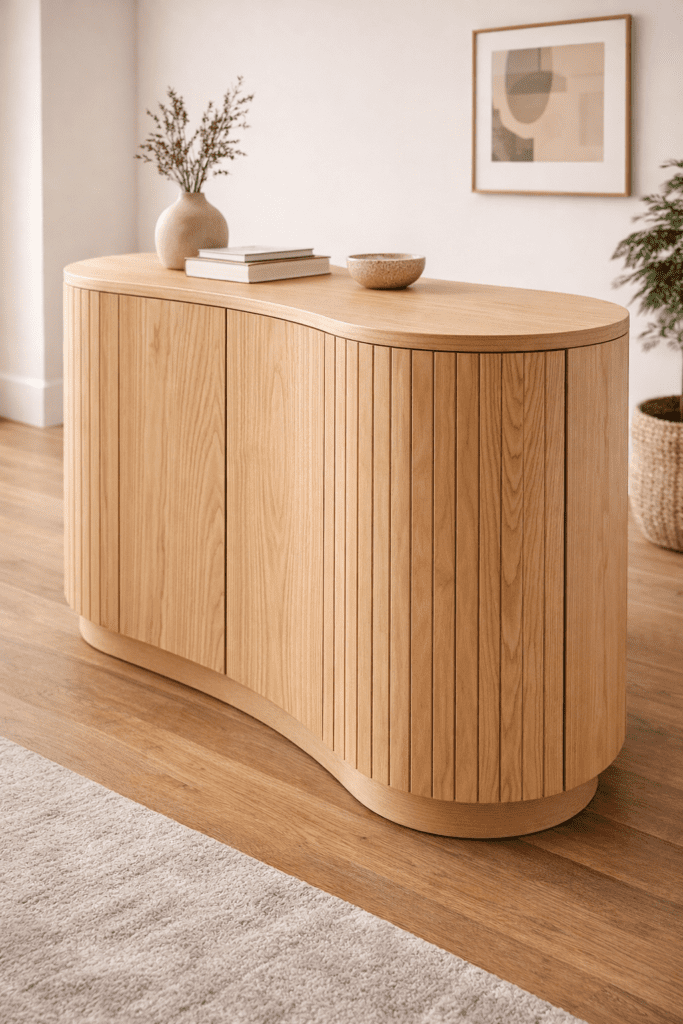
Designer furniture
Curved cabinet doors
Boat construction
Architectural millwork
Many professional cabinetmakers rely on laminated plywood for curved furniture and architectural millwork because it produces extremely strong shapes without visible seams. The same technique is often used in cabinet construction, which is why choosing the right panel matters. If you’re planning cabinetry projects, it helps to review which plywood works best for cabinets and built-in furniture before selecting materials.
Method 3: Steam Bending
Steam bending softens wood fibers, allowing plywood to bend without cracking.
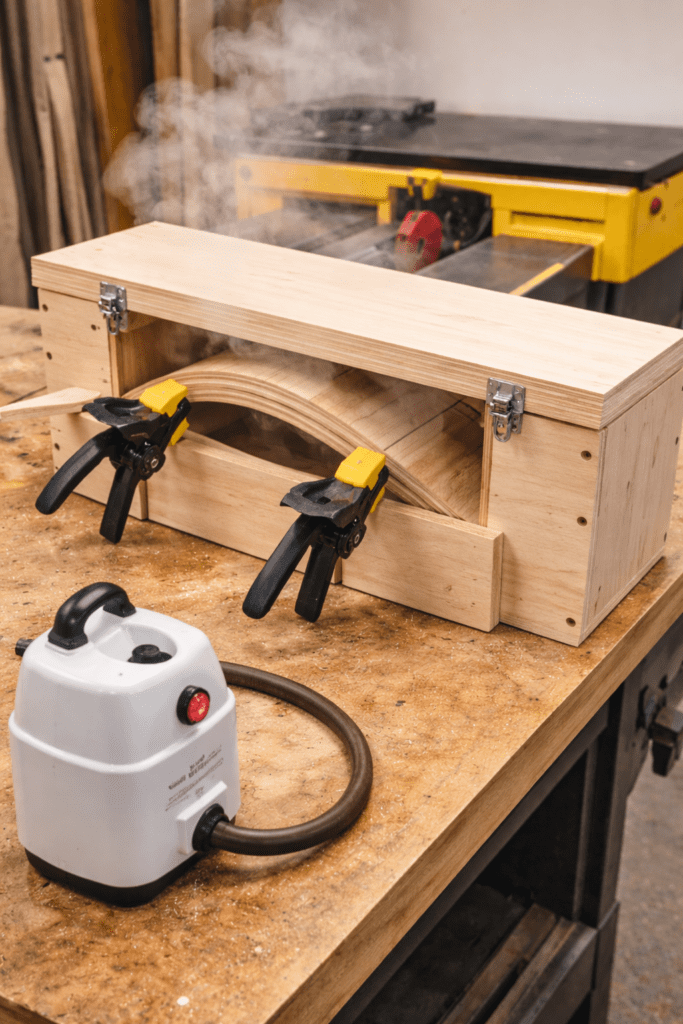
Woodworkers place plywood inside a steam box, where hot steam penetrates the fibers and temporarily increases flexibility.
Basic Process
Build a steam box.
Steam the plywood for 30–60 minutes.
Remove it and quickly bend it around a mold.
Clamp the panel until it dries.
Steam bending works best with:
Thin plywood sheets
Flexible veneers
Projects requiring tight curves
However, some plywood adhesives do not tolerate steam well, so results may vary by plywood type.
Method 4: Soaking Plywood in Water
Soaking plywood in water is a simpler alternative to steam bending.
Water softens the wood fibers, allowing the panel to bend more easily.
Process
Submerge the plywood sheet in water for 2–4 hours.
Remove it and bend slowly around a form.
Clamp securely.
Allow the plywood to dry completely.
This method works best with thin plywood sheets and is usually suitable for decorative or light-duty projects.
Method 5: Heat Bending
Heat can soften both the wood fibers and glue layers, allowing plywood to bend more easily.
Woodworkers often use heat guns or heating blankets to gradually warm the plywood while applying pressure.
Steps
Apply heat evenly along the bend line.
Slowly apply pressure to the plywood.
Clamp the panel into a curved form.
Best Uses
Small curve adjustments
Gentle bends
Furniture repair projects
Heat-bending is usually used when only a slight curve is needed.
Method 6: Flexible Plywood (Bendy Ply)
Flexible plywood — often called bendy ply — is manufactured specifically to bend easily.
The veneer layers are arranged so the sheet can curve dramatically without cracking.
Common Flexible Plywood Sizes
Thickness
Typical Use
1/8 inch
Decorative panels
1/4 inch
Curved cabinets
3/8 inch
Architectural features
Flexible plywood is widely used in:
Modern furniture
Curved walls
Display fixtures
Architectural panels
Because the plywood is designed to bend, it can create extremely tight curves without kerf cuts or steaming.
Flexible plywood is manufactured with the veneer grain oriented to allow the sheet to bend dramatically in one direction. Because the panel is designed for bending, it can create curves that would normally require kerf cutting or steam bending.
However, flexible plywood is not structural, so it usually needs a frame or secondary panel behind it for support.
Choosing the Right Method to Bend Plywood
The best plywood bending technique depends on the project.
Project Type
Best Method
Curved cabinet panels
Kerf cutting
Furniture curves
Laminating
Boat building
Steam bending
Decorative panels
Flexible plywood
Light DIY projects
Soaking
Common Mistakes When Bending Plywood
Many DIYers crack plywood by rushing the bending process.
Avoid these common mistakes.
Using Plywood That Is Too Thick
Standard 3/4-inch plywood rarely bends naturally. It usually requires kerf cutting or laminating.
Applying Uneven Pressure
Plywood should always be bent gradually and evenly to prevent splitting.
Not Using a Form
Curved shapes require a mold or frame to hold the plywood in position while it dries.
Skipping Clamps
Clamps keep the plywood securely in place while the glue cures or the material dries.
Many bending failures happen simply because the plywood is too thick for the intended curve. Builders sometimes try to force a tight bend with 3/4-inch panels, which almost always results in cracking or delamination. Understanding how panel thickness affects strength and flexibility can prevent this problem, which is why many woodworkers review the recommended plywood thickness for different types of projectsbefore starting curved builds.
Real Projects That Use Bent Plywood
Curved plywood appears in many woodworking and construction projects.
Examples include:
Curved kitchen cabinets
Barrel-style furniture
Skateboard ramps
Boat hulls
Arched doorways
Spiral stair railings
Modern architecture also uses curved plywood for decorative walls, acoustic panels, and sculptural designs.
Curved plywood construction is widely used in cabinetry, boat building, furniture making, and architectural design. Many of these applications rely on specific plywood types designed for strength and stability. If you’re comparing materials for future projects, it can also help to understand how plywood types differ in durability, cost, and structural performance.
Tools Used to Bend Plywood
These tools make bending plywood significantly easier.
Professional woodworkers often combine laminating and molds to create perfectly smooth curves.
Safety Tips When Bending Plywood
Bending plywood often involves cutting tools, heat, and heavy clamping pressure, so safety should always be considered.
Basic safety tips include:
• Wear eye protection when making kerf cuts • Use push sticks when cutting plywood on a table saw • Keep hands clear of kerf blades and circular saws • Clamp plywood securely before bending • Avoid overheating plywood when using heat guns
Working slowly and controlling the bending pressure helps prevent both material damage and personal injury.
Frequently Asked Questions
What is the easiest way to bend plywood?
The easiest way to bend plywood is kerf cutting, in which small cuts are made on the back side of the sheet to allow it to flex. This method works well for thicker plywood panels used in cabinets or wall features.
Can 3/4 inch plywood be bent?
Yes, but 3/4 inch plywood rarely bends naturally. Most builders use kerf cuts or laminating thin layers to achieve curved shapes without cracking.
Thin plywood sheets, such as 1/8-inch or 1/4-inch, bend the easiest. Flexible plywood (bendy ply) is specifically manufactured to bend dramatically without splitting.
Does water help bend plywood?
Yes. Water softens the wood fibers, making plywood more flexible. However, soaking works best on thin sheets and gentle curves.
Why Curved Plywood Is Popular in Modern Design
Curved plywood has become increasingly popular in modern architecture and furniture design because it allows smooth, organic shapes that are difficult to achieve with solid lumber. Designers often combine laminated plywood with molds to create flowing surfaces used in acoustic panels, sculptural furniture, curved cabinetry, and architectural wall systems.
Final Thoughts
Bending plywood opens the door to creative woodworking designs that flat panels simply cannot achieve.
Whether you’re building a curved cabinet, a modern furniture piece, an architectural wall, or a boat component, choosing the right bending technique is the key to success.
For most DIY builders, kerf cutting or laminating thin sheets offers the best balance of simplicity, strength, and professional results.
Once you understand how plywood responds to pressure, heat, and moisture, creating smooth curves becomes much easier.