I found my first rotted fascia board the way most homeowners do — by accident, with a screwdriver, poking at something that “looked a little soft.” It wasn’t soft. It was wet sawdust wearing a coat of paint. That five-minute poke turned into a Saturday I hadn’t planned on, and that Saturday taught me more about fascia rot than any YouTube video ever could.
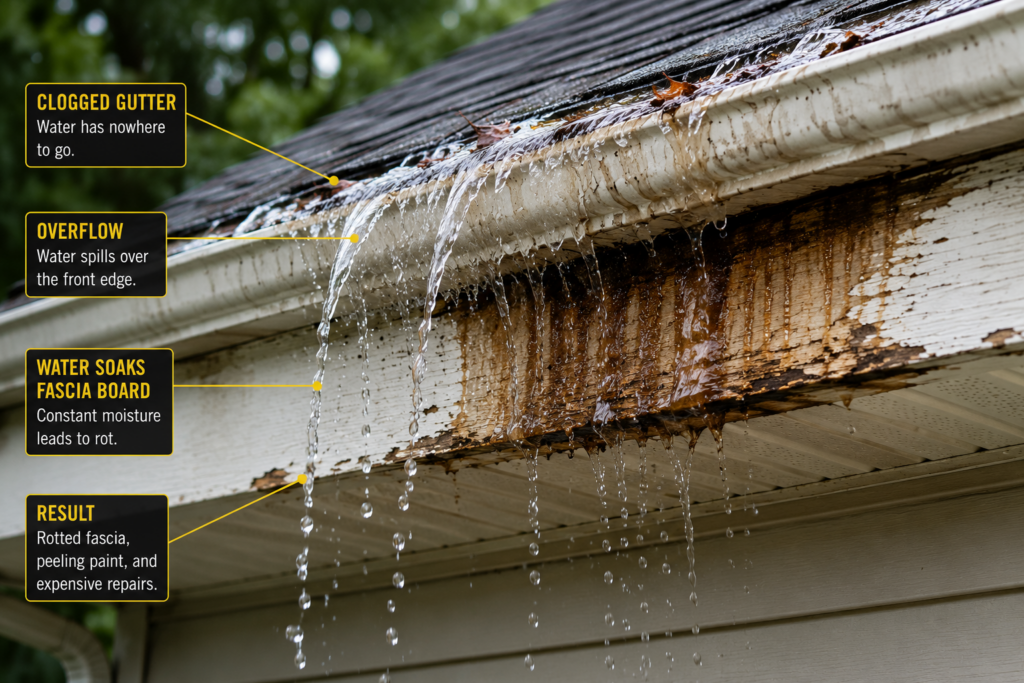
In most homes, fascia failure starts with gutters, not the wood itself. That’s the single most important thing to understand before you grab a screwdriver and start poking at your roofline.
If you’re standing at the bottom of a ladder right now staring up at a stained, sagging, or spongy board under your roofline, this guide will walk you through exactly what’s going on, what it’ll cost to fix, and how to do it right the first time — without paying a contractor $800 to do what you can knock out in an afternoon.
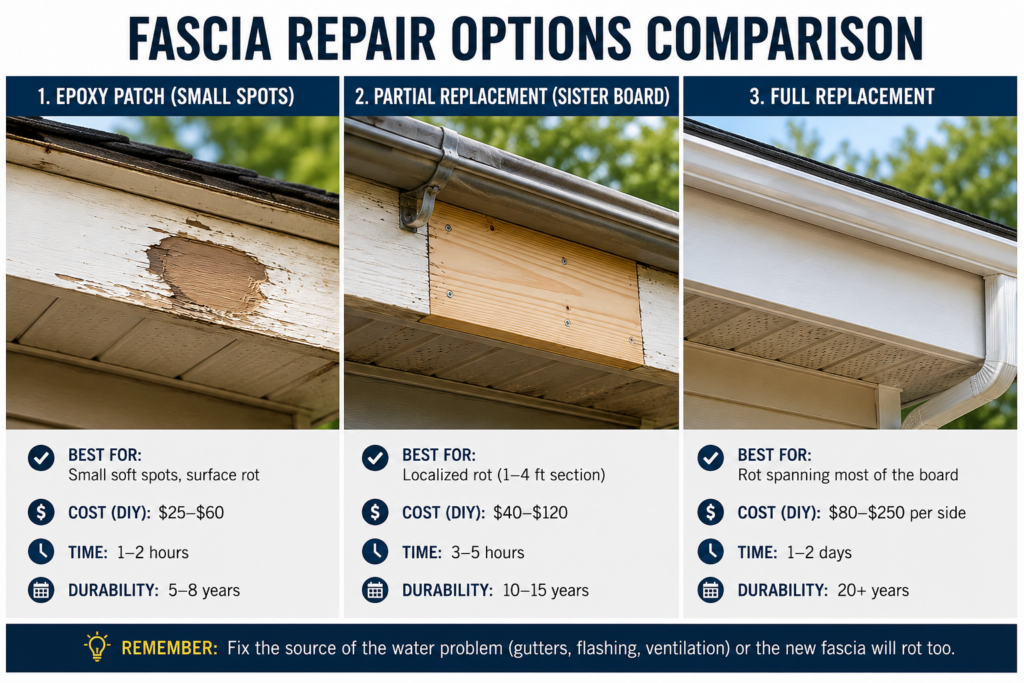
Quick Comparison: Fascia Repair Options
Repair Method
Best For
Cost (DIY)
Time
Durability
Epoxy Wood Filler Patch
Small soft spots, surface rot
$25–$60
1–2 hours
5–8 years
Sister Board / Partial Replacement
Localized rot (1–4 ft section)
$40–$120
3–5 hours
10–15 years
Full Fascia Board Replacement
Rot spanning most of the board
$80–$250 per side
1–2 days
20+ years
Ignore It
Nobody, ever
Free now, expensive later
N/A
Until your soffit caves in
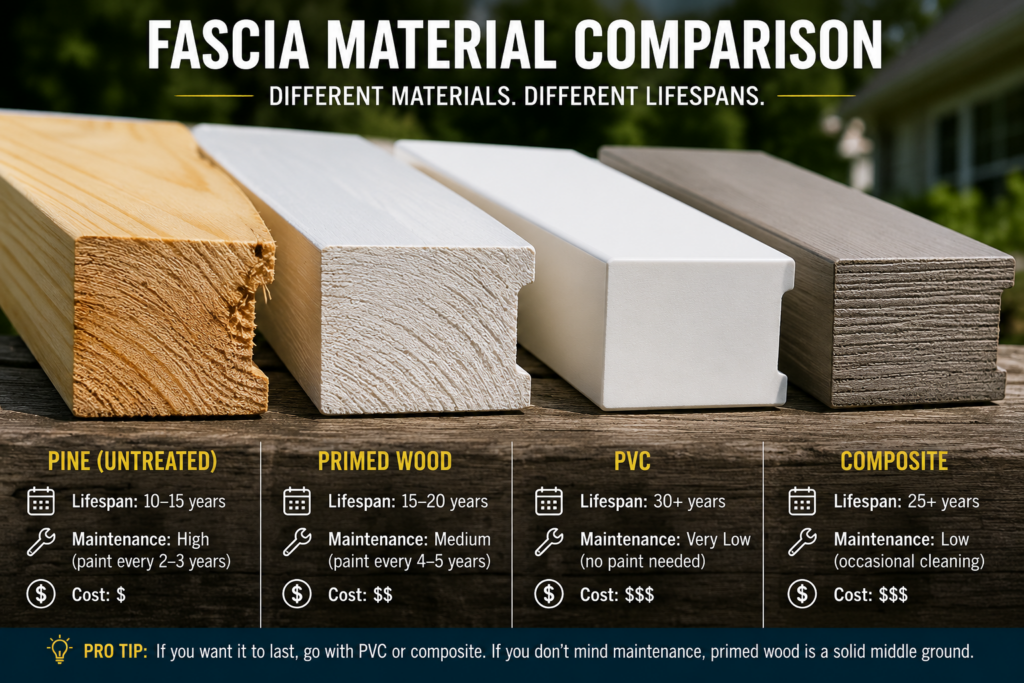
Best Fascia Material Comparison
If you’re replacing rather than patching, material choice matters more than most people think:
Material
Lifespan
Maintenance
Cost
Pine
10–15 years
High
$
Primed Wood
15–20 years
Medium
$$
PVC
30+ years
Very Low
$$$
Composite
25+ years
Low
$$$
What Fascia Actually Does (And Why It Rots First)
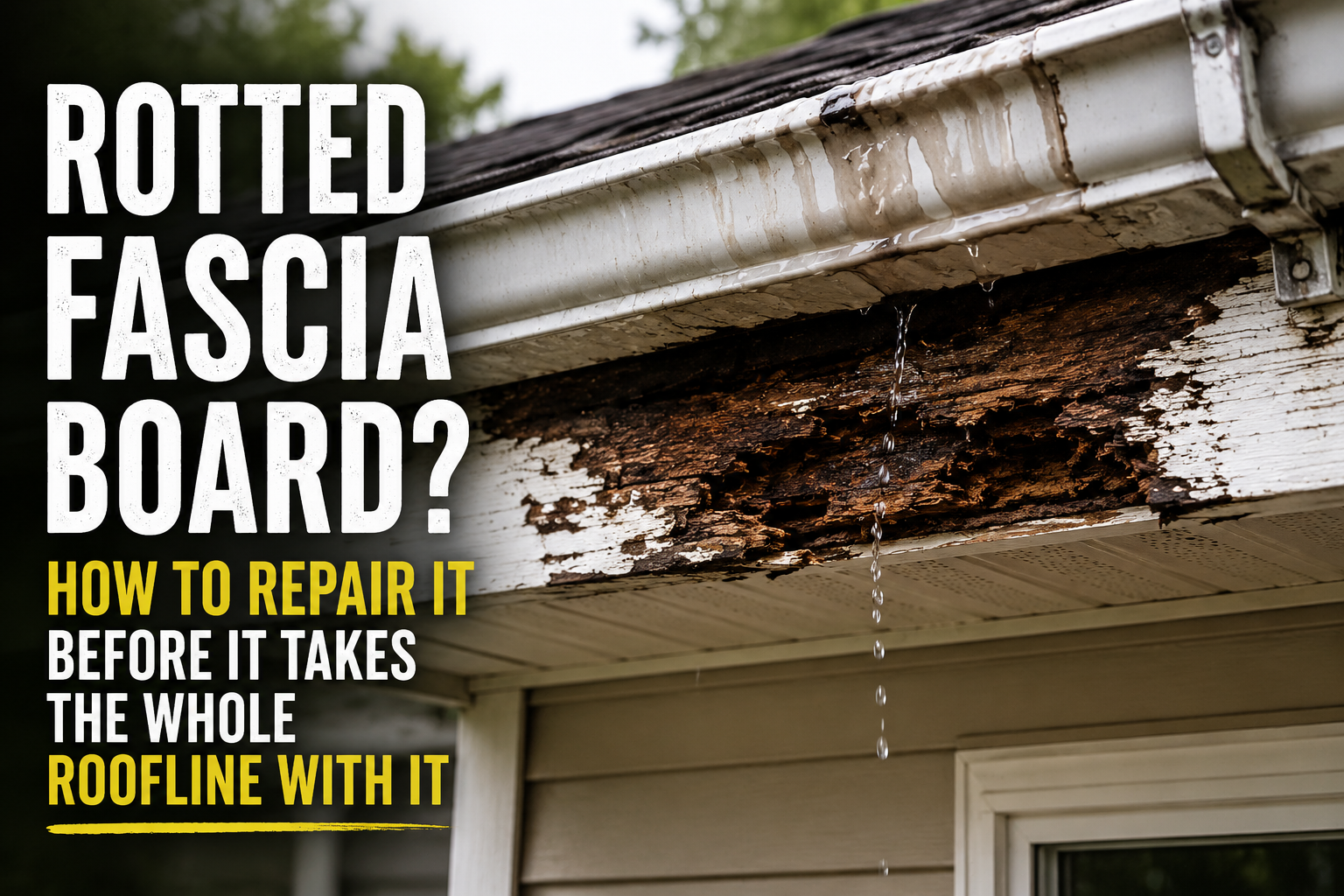
The fascia board is the trim that runs along the edge of your roofline, right behind the gutters. It’s the unsung structural piece that holds your gutters in place and caps off the ends of your roof rafters. Because it sits directly under the gutter line, it’s also the first thing to take a beating every time water overflows, backs up, or just sits in a clogged gutter for three seasons in a row — which is why most gutter problems eventually show up as fascia problems if they go unaddressed long enough.
Most fascia is still cut from solid pine or fir, which is why it loses the fight with moisture so much faster than PVC and composite exterior trim used in many newer builds. Solid wood soaks up water like a sponge, and once moisture gets trapped behind paint or caulk, it has nowhere to go.
According to the Insurance Information Institute, water damage and freezing account for roughly 22.6% of all home insurance claims, with an average claim cost exceeding $15,000 — and exterior wood components like fascia and trim are exactly the kind of slow, unnoticed entry point that turns a $60 repair into a five-figure claim.
The Usual Suspects Behind Fascia Rot
Clogged or overflowing gutters dumping water straight onto the board
Missing or cracked drip edge flashing
Paint that’s older than your last roof
Poor attic ventilation pushing moist air out through the soffit and fascia
Ice dams in colder climates backing water up under the shingles
❌ The Mistake I Made the First Time
My mistake wasn’t skipping the repair — it was patching over rot I hadn’t fully removed. I scraped the loose, crumbly stuff off the surface, slapped some exterior filler over it, painted it, and called it done. Eighteen months later, the same spot was worse because I’d sealed moisture inside the board instead of removing it. Surface treatment on deep rot is basically gift-wrapping a problem for next year’s you.
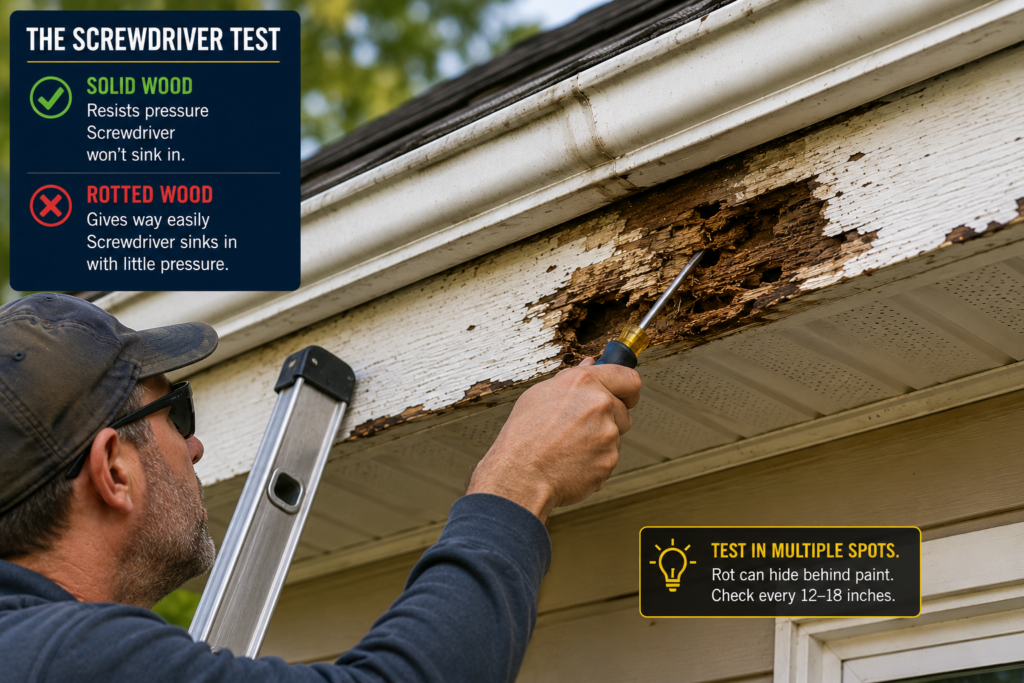
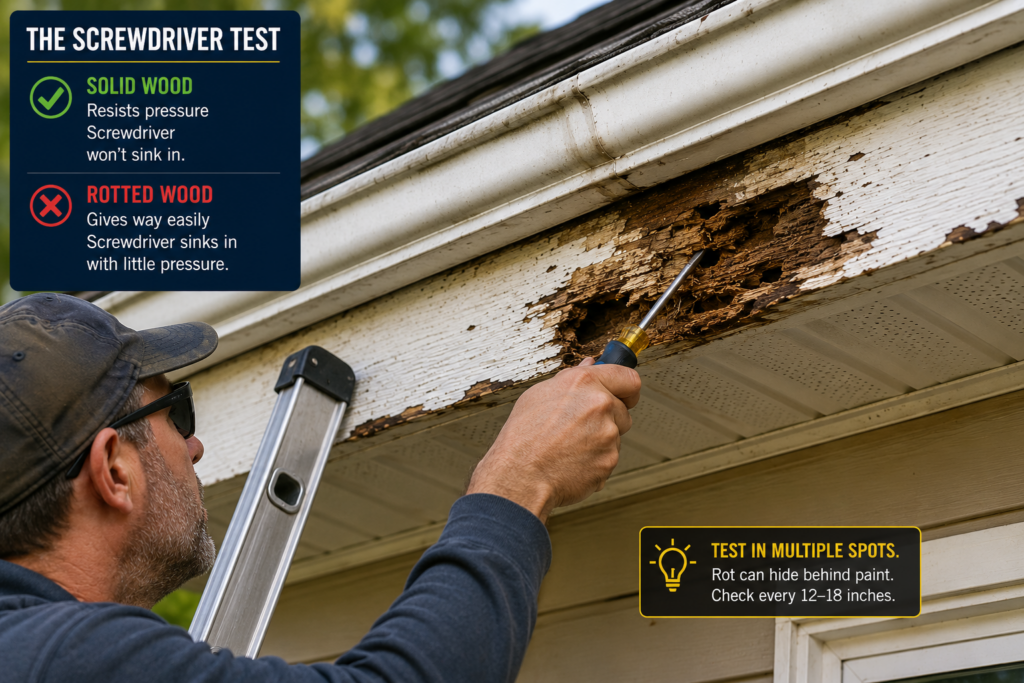
If a screwdriver sinks more than a quarter-inch into the wood without resistance, that’s not a surface patch job anymore — that section needs to come out. If you catch it earlier than I did, a proper wood hardener application before filling can actually save a board that’s only beginning to soften.
How to Tell If It’s Rot (And How Bad)
Visual Signs
Dark staining or streaking running down the fascia or siding below it
Paint that’s bubbling, peeling, or cracked in a straight line along the board
Visible gaps where the fascia has pulled away from the gutter bracket
The Screwdriver Test
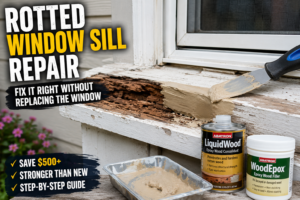
Press a screwdriver or pocketknife firmly into the board at a few spots. Solid wood resists. Rotted wood gives way with little to no pressure, sometimes crumbling like wet cardboard. This is the same go/no-go test I use on rotted window sills — if it sinks in easily, you’re past the point of paint and caulk.
🧪 The Real Test: Epoxy Patch vs. Full Replacement
I ran this comparison on my own garage a few years back, because I had rot on both sides of the same roofline and wanted to see which approach actually held up. One side got an epoxy consolidant and filler patch. The other side got a full board swap with PVC trim instead of wood.
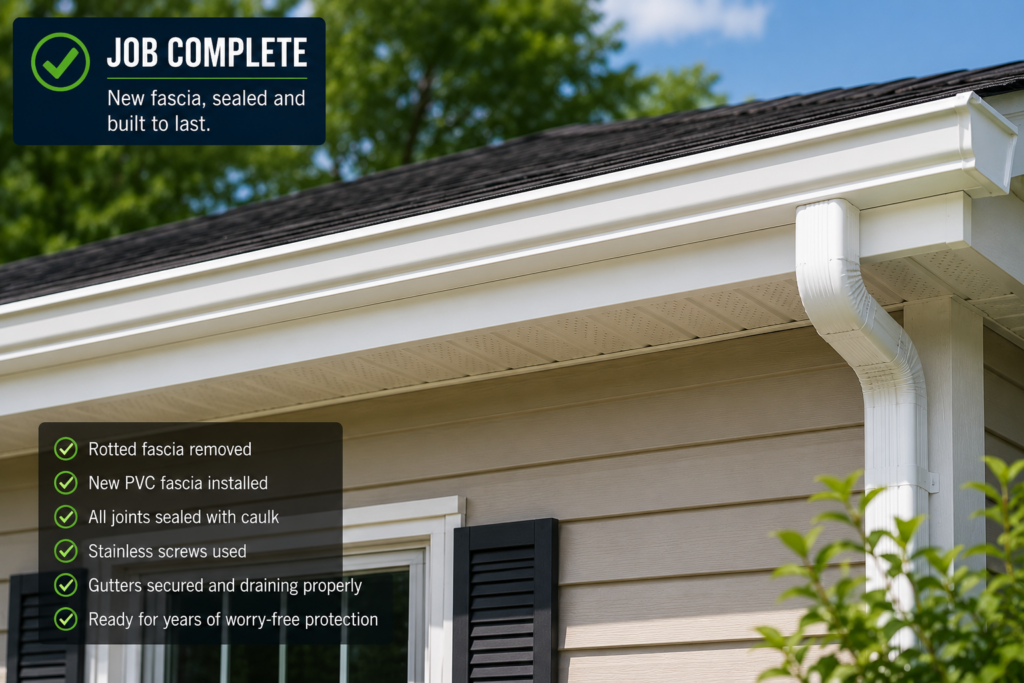
Three winters later: the epoxy side is holding, but it needed a touch-up repaint and a small recaulk at the seam. The PVC replacement side has needed zero maintenance — no paint, no caulk, nothing. If you’ve got rot in more than one or two isolated spots, replacing them with a moisture-resistant material will save you from repeat work down the line, even though it costs more up front.
What You’ll Need
Before climbing the ladder, get your materials together so you’re not making three trips up and down:
Pry bar and hammer
Reciprocating saw or circular saw
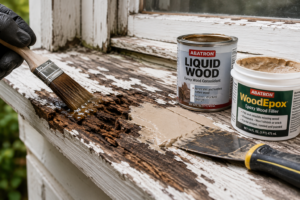
Exterior wood filler or epoxy consolidant (for small repairs)
Replacement fascia board (wood, PVC, or composite)
Galvanized or stainless exterior screws/nails
Exterior-grade primer and paint, or pre-finished PVC trim
Caulk rated for exterior trim joints
A lot of these are products I keep stocked from past projects, so I’ve linked what I actually use below rather than guessing at brands.
Unclip or unscrew the gutter hanger along the rotted section. You don’t need to remove the whole gutter run, just enough to expose the board you’re working on.
Step 2 — Cut Out the Rotted Section
Using a reciprocating saw, cut just past the rotted area on both sides, ideally landing your cuts over a rafter tail so the new piece has something solid to fasten into. Don’t try to save more of the old board than you have to — rot spreads further into “good-looking” wood than it appears.
Step 3 — Check the Rafter Tails Underneath
This is the step people skip and regret. If water has been sitting on the fascia long enough to rot it, there’s a real chance the rafter tail or roof sheathing behind it is soft too. Press your screwdriver into the exposed rafter end. If it’s solid, you’re fine to proceed. If it’s soft, that needs to be addressed before the new fascia goes on, or you’re just screwing a new board into mush.
Step 4 — Cut and Fit the Replacement
Measure twice, cut your new fascia board to length, and dry-fit it before fastening. Leave a small gap (1/8″) at butt joints for expansion, which you’ll seal with caulk after.
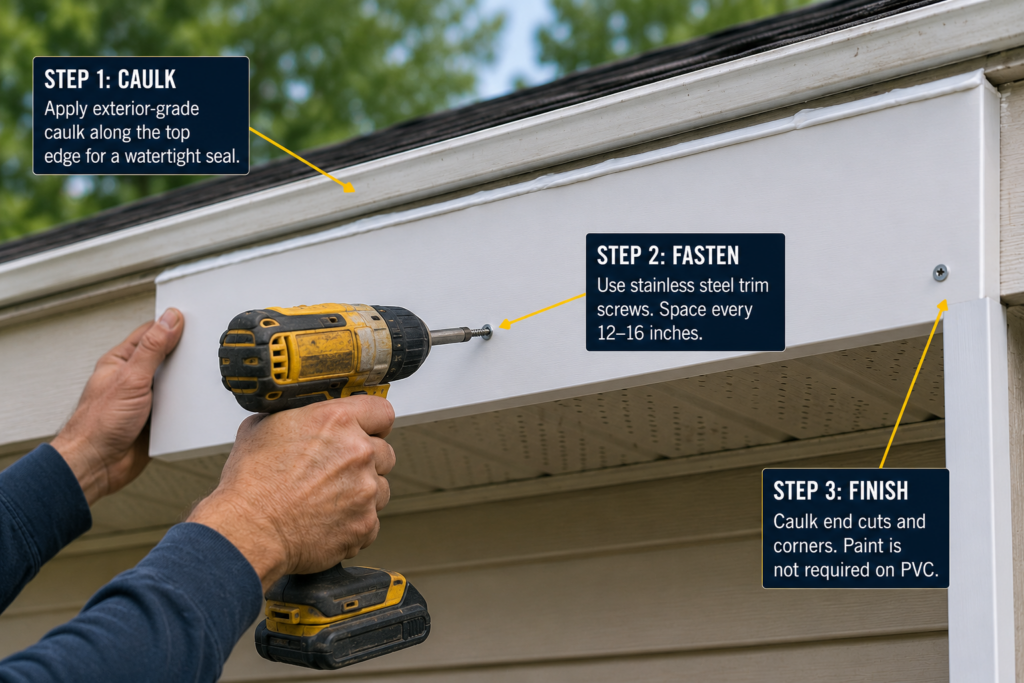
Step 5 — Fasten and Seal
Use corrosion-resistant screws or nails driven into solid rafter tails, not just into the sub-fascia. Caulk all seams and the top edge where the board meets the roof deck — this is the single most important caulk line on the whole repair, since it’s the first line of defense against the next round of water intrusion.
Step 6 — Prime, Paint, or Skip It Entirely
If you went with wood, prime all six sides before installation (yes, including the back you won’t see — that’s where rot starts next time) and paint after installation. If you used PVC or pre-primed composite, you can skip this step almost entirely, which is one reason I’ve shifted toward composite trim on anything below the gutter line.
💸 The Real Cost Difference
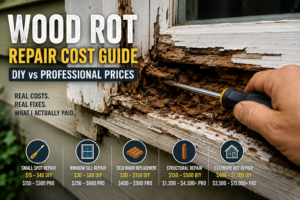
Here’s the math that actually matters, based on a typical 10-foot fascia run. For a broader sense of how this stacks up against other rot repairs around the house, our wood rot repair cost guide breaks down pricing by component:
DIY epoxy patch: $25–$60 in materials, a few hours of your Saturday
DIY sister/partial replacement: $50–$120 in materials, half a day
DIY full replacement with PVC: $150–$300 in materials, a full day
Contractor full replacement: $700–$1,400 for the same 10-foot run, labor included
The gap between DIY and contractor pricing on fascia work is one of the widest I’ve seen in exterior trim repair, mostly because the labor is mostly ladder time and cutting, not specialized skill. If you’re comfortable on a ladder and can run a saw straight, this is a genuinely good DIY candidate.
⚠️ Warning: Don’t Skip the Ladder Safety Basics
Fascia work happens at roofline height, often two stories up, and almost always near a gutter edge that’s slightly slippery from algae or moisture. Use a stabilizer bar on your ladder; never lean it against the gutter (it’ll bend or pop the hangers); and don’t work alone if you’re above one story. More fascia repairs go sideways from a fall than from a bad caulk joint.
😬 The Regret: Ignoring “Just a Little Soft Spot”
I’ve talked to more than one homeowner who noticed a soft spot, decided it was “fine for now,” and came back a year later to find the rot had spread into the soffit, the sub-fascia, and in one case, the bottom of the roof decking itself. What would’ve been a $60 epoxy patch turned into a $1,200 roofline repair. Fascia rot doesn’t stay contained — wood rot spreads along moisture paths, and your roofline has plenty of them.
DIY or Call a Pro?
DIY makes sense if:
The rot is isolated to one or two short sections
You’re comfortable working safely on a ladder
The rafter tails underneath are still solid
Call a pro if:
Rot spans most of the fascia run on multiple sides of the house
The rafter tails or roof decking are also compromised
You’re not equipped to safely work above one story
FAQ: Rotted Fascia Board Repair
Can I just paint over rotted fascia? No. Paint seals moisture in rather than out once wood is already rotted, and it does nothing to restore structural integrity. Paint is prevention, not repair.
How do I know if it’s the fascia or the soffit that’s rotted? Fascia is the vertical board right behind the gutter; soffit is the horizontal panel underneath the roof overhang. They often rot together since water travels between them, so check both when you find rot in either.
What’s the best material to replace fascia with? PVC or composite fascia resists moisture indefinitely and never needs repainting, making it the lower-maintenance long-term choice, though primed wood fascia is cheaper upfront and easier to match to existing trim.
How long does fascia repair take? A single epoxy patch can be done in an afternoon. A full board replacement on one side of a house typically takes a full day for a reasonably handy DIYer.
Will homeowners insurance cover fascia rot? Usually not, since rot is classified as a maintenance issue rather than sudden damage, unless it resulted from a covered event, such as a storm-damaged gutter.
Best Wood Hardener for Rotted Wood by Admin June 25, 2026 DIY The best wood hardener for rotted wood depends on the severity of the damage. For light surface rot, a single-part penetrating wood hardener is usually…