When we bought this house, I barely noticed the faint square in the hallway closet ceiling—a drafty little scuttle hole that served as our only attic access. It wasn’t until I heard scratching during a windstorm and went looking for attic access that I discovered the loose panel and climbed up with a flashlight.
What I found was drafty, dirty, and honestly kind of sad-looking. It looked like no one had been up there in decades, and the insulation was crumbling in spots. That was the moment I decided to make a new access panel—something functional, properly sealed, and not an eyesore.
This isn’t just a how-to—it’s everything I wish someone had told me before I started. If you’ve got an attic you rarely use, or you’ve been dealing with an old drafty opening that barely qualifies as “access,” this guide is for you.
What’s a Scuttle Hole, Anyway?
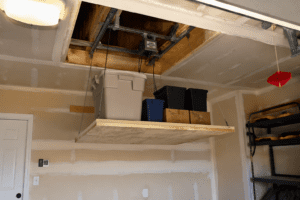
A scuttle hole is the simplest kind of attic access point—a no-frills ceiling cutout covered with a removable panel. There’s no attached ladder or mechanical hardware. You just pop the lid off or slide it to the side and climb through with a step ladder. They’re common in older homes, especially where full staircases or attic ladders wouldn’t fit.
Because of how basic they are, scuttle holes often go unnoticed—until you need them. The problem is, most builders didn’t prioritize making them functional or airtight. That’s why many homeowners, myself included, decide to redo them entirely.
Before I considered cutting into our ceiling, I had to determine what kind of attic entry would make the most sense. There are three main types, and I’ve had experience with all of them—some more pleasant than others.
Scuttle Hole – This is the simplest form of attic access. It’s a framed opening in your ceiling with a removable panel. No stairs, no hinges, no bells or whistles. I had one growing up and always remembered how cold air used to sneak through it during the winter.
Pull-Down Ladder – These are great if you need frequent access to your attic. You pull a cord and the ladder unfolds right out of the ceiling. We had one in a rental once, and I’ll admit—it spoiled me. The only downside? It took up a decent chunk of ceiling real estate and needed a lot of clearance.
Permanent Staircase – If you’re turning your attic into a usable space like a bedroom, office, or studio, then a real staircase is the way to go. It’s a big commitment, though—it affects your floor plan, may require permits, and will probably need professional help to install.
In our case, since the attic was only used for light storage and the occasional inspection, I decided to stick with a scuttle hole. It kept the ceiling clean, avoided any bulky ladders, and fit right into the closet without stealing any living space.
When I first started planning this project, I assumed the standard building code opening—22 inches by 30 inches—would be plenty. It wasn’t. The first time I tried to maneuver a large plastic bin through that narrow opening, I ended up jamming my wrist, tipping the bin sideways, and knocking over the ladder. That was enough of a warning sign.
I learned the hard way that a few extra inches in both width and length make a huge difference—not just for comfort, but for safety and practicality. I eventually widened my scuttle hole to 24″ by 36″, and I haven’t regretted it once. Carrying things in and out became a one-person job, rather than a comedy sketch.
Here’s a quick trick that helped me figure out my ideal size: I grabbed a large moving box, held it up to the ceiling, and tried to fit it through an outline I taped off. It wouldn’t go. So I made the box the size I needed the opening to be and worked backward from there.
And don’t forget—your ladder needs to fit under that opening with enough room to shift a little as you climb. I once borrowed a ladder from a friend that was technically tall enough, but the angle forced me into the drywall. That was not a good day.
That attic access panel had annoyed me since we moved in. You know the kind—flimsy, uneven, and somehow always looking like it was ready to fall on your head. After too many close calls climbing up there for holiday bins, I decided to reclaim my Saturday and do something about it.
I’m no contractor, just a guy with a few tools and a stubborn streak. But this job turned out to be way more doable than I expected—and more rewarding, too.
Locating the Joists – First, I needed to figure out exactly where the ceiling joists ran. I used a stud finder and tapped in a few small finishing nails to double-check. It felt like overkill, but I didn’t want to cut into the wrong place and end up with a hole I couldn’t undo. Once I had them mapped, I ran painter’s tape along the outside edges as a visual guide.
Planning the Opening – I used a tape measure and pencil to sketch out the dimensions of the new scuttle hole. The old one had been tiny—barely big enough for me to squeeze through. I laid out something larger, then mocked it up with a cardboard template. That little trick helped me visualize the space and avoid sizing mistakes. I squared everything with a framing square to make sure I wasn’t drawing a parallelogram.
Cutting Into the Ceiling – This was the most nerve-wracking part. I grabbed my drywall saw and started slowly cutting along the lines. I kept the shop vac nearby to catch debris and wore goggles—worth it. As soon as the square dropped out, I got my first real sense of what the finished access would look like.
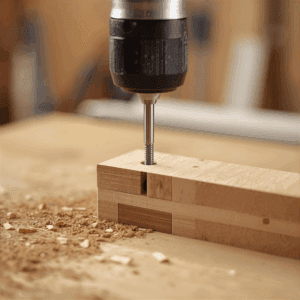
Building the Frame – Next, I cut 2x4s to fit snugly between the joists, creating a frame that would support the new cover. I used deck screws and predrilled every hole to avoid splitting the wood. The added support made a huge difference—it gave me a solid structure to work with, and the hatch cover would have something dependable to rest on.
Making the Hatch Cover – I grabbed a piece of 3/4-inch plywood and cut it to match the dimensions of the new opening. After some sanding around the edges, I tested the fit. It slid in perfectly. I didn’t need to force it, and it didn’t wobble. That felt like a big win. I considered adding insulation to the top of it, but left that for another day.
Trimming and Finishing – To make the opening look intentional, I added 1×2 MDF boards around the edge. I mitered each corner and glued them in place with a few brad nails to secure them while the glue dried. Caulking the seams took time, but it smoothed everything out beautifully. It already looked a hundred times better than what had been there.
Paint and Detail Work – Two coats of ceiling-white paint pulled it all together. The MDF trim blended into the ceiling like it had always been part of the house. Even up close, it didn’t scream DIY—it just looked finished.
By the end of the weekend, I had a new scuttle hole that worked and looked great. No more wobbling, no more ugly seams, and no more feeling like I was climbing into a crawlspace in a horror movie. Just a clean, functional upgrade.
There were a few moments during this build where I muttered, “Well, I won’t do that again.” So here’s a list of lessons I wish someone had told me before I started:
Ceilings are never as flat as they look. I found out the hard way that even with good measurements, small dips and bulges can throw your frame off. I ended up shaving down one corner of the hatch just to get it to sit flush.
Mark everything. I mean everything. I labeled the front of the plywood panel, marked which edge faced the hallway, and even wrote notes on the ceiling joists with a pencil. Future me will thank past me when I go back up there.
MDF makes your work look polished. I wasn’t planning on using MDF for trim, but after seeing how clean it looked once painted, I’m glad I did. It’s cheap, smooth, and hides imperfections really well.
Dry-fitting saves headaches. Before I glued or nailed anything, I dry-fitted every piece. Trim, hatch, support frame—you name it. Those five minutes of testing probably saved me two hours of undoing.
Caulk is your best friend. At first, I didn’t think I needed to caulk the seams, but the difference it made was wild. Everything just blended. Without it, it looked… amateur. With it, clean and intentional.
Take a before-and-after photo. Not only does it feel great to see the transformation, but it helps you see how far you’ve come—especially if the process felt a little clumsy at times.
So if you’re diving into your attic access project, learn from my stumbles. A little extra care makes a big difference in the final look—and in your sanity.
As a Conclusion, I want to say…
I started scribbling notes on the wood—marking which side was up, where to cut, and what to double-check—because stepping away, even for a few minutes, could mean forgetting something important. I went through more caulk than I expected, and I discovered that MDF is far more forgiving than it looks.
If you’ve been staring at a similar spot in your home, waiting for motivation—this is it. Don’t wait until you feel ready. Just start. You’ll mess up. You’ll learn. And one day soon, you’ll look at that space and see your effort staring back at you. And that feels pretty good.