I’ll be honest—the first time I bought Luan plywood, I thought it was a mistake. I needed something thin and cheap for a quick flooring job, and the guy at the hardware store pointed me toward a pile of reddish sheets that felt more like thick cardboard than wood.
I wasn’t expecting much. But after cutting it down, stapling it in, and laying vinyl over the top? Smooth finish. No weird bumps. It worked.
That’s kind of the thing with Luan. It’s not impressive at first glance. It’s light, thin, and you’re not building a house with it. But if you’re redoing a floor, backing cabinets, or slapping together a quick panel wall, it’s weirdly perfect.
So if you’ve ever wondered what luan is good for, and when to use it (or avoid it), I’ll share what I’ve figured out the hard way—without the fluff.
Stuff I’ve Used Luan Plywood For
Okay, so Luan’s not strong. We’ve covered that. But it’s useful in a bunch of ways, especially when you just need something flat, light, and not fussy.
I’ve tossed Luan over some pretty sketchy subfloors. Staples, seams tight, and done. Suddenly, it doesn’t feel like you’re walking on gravel. Doesn’t fix major problems, but it’ll hide little dips or gaps, especially before putting down peel-and-stick tile or those budget planks you buy in bulk.
As long as it stays dry? You’re good. Wet? You’re ripping it all out next month.
Inside Cabinets, Behind Stuff
No one sees behind your cabinets. Luan’s perfect for that. I’ve cut it to size with a jigsaw on the driveway and slapped it on with a few brads. Drawer bottoms, too—light stuff only. Toss in some napkins or tape rolls and call it a day.
Wall Panels, Random Projects, and Last-Minute Fixes
I had a buddy cover an entire wall in luan strips to fake shiplap. Looked great once it was painted. I’ve done similar stuff—it makes a space look cleaner without spending much. Luan also works for crafts or theater backdrops. Easy to cut, cheap enough to mess up.
How Luan Compares to Other Plywood
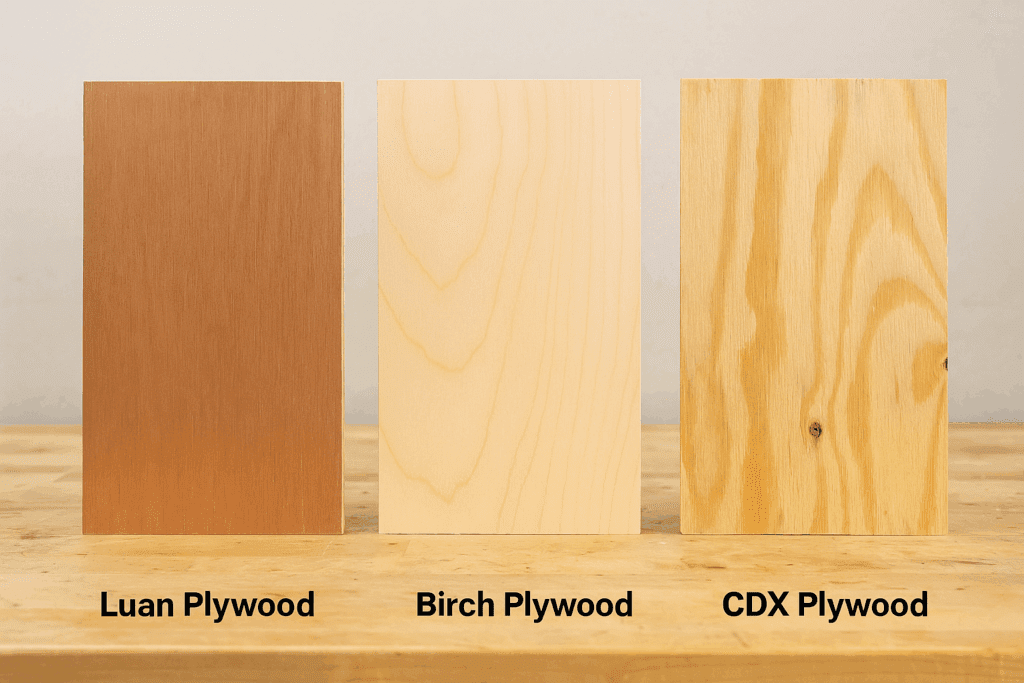
If you’re trying to decide between luan, birch, or CDX plywood, here’s the plain truth from someone who’s used all three—sometimes on the same project.
Luan’s the lightest. It’s not strong. At all. But it’s smooth, easy to cut, and super cheap. You don’t use it for structure—you use it when you need a clean face or a quick fix.
Birch is the clean pro stuff. It looks great, handles weight, and takes stains like a dream. But yeah, you’ll feel it in your wallet. I save birch for cabinets, shelves, anything I want to look nice and last a while.
CDX? That’s the bruiser. It’s rough, splintery, and usually has knots the size of a baseball—but it’ll take a beating. I use it for subfloors, roof decking, and anything that’s going to get hidden or walked on.
If I had to rank them:
Strength? Birch > CDX > Luan
Looks? Birch and luan are smooth. CDX is a mess.
Outdoors? Only CDX belongs out there. Maybe birch if it’s sealed.
Price? Luan is the cheapest. By far.
Luan? Yeah, I’ve Used It.
I didn’t even know what it was at first. Grabbed a sheet because it was cheap and light and I was in a hurry. Thought maybe I could use it as a back panel for a closet I was throwing together.
Turns out… not bad. Not great. Just… useful.
It’s thin. Bends more than you’d expect. I wouldn’t build anything heavy with it—did that once, shelf bowed in a week. Never again. But if you need a smooth face for something no one will sit on, Luan does the job.
I’ve cut it with a jigsaw, a dull circular saw, even scored it with a utility knife once because I was too lazy to set up. It’s forgiving. Doesn’t chip too much unless you push too fast.
I used it under some peel-and-stick tile in a rental kitchen a while back. Cleaned the subfloor, stapled it down, laid the tile—looked good. Still does, far as I know. Luan won’t save your life, but it saves you money. And sometimes that’s the point.
Quick Fix with Luan That Worked
So a while back, my buddy had this janky corner in his house, trying to turn it into a desk setup. Walls were trash. Like, leftover glue, random screw holes, part of it was soft. I told him not to drywall it. Too much work.
We picked up some luan. Cut it into strips right there in the driveway. Didn’t even measure right. Just used a scrap as a spacer, shot it up with a nail gun. Threw some paint on it, gray maybe? Whatever we had.
Looked solid. Like fake shiplap, but nobody cared. Cost almost nothing. He still uses that room. People ask him if he paid someone to do it. We just laugh.
Where Luan Makes Sense
There’s a time and place for Luan. You’re not framing a house with it or building a deck. That’s just asking for disappointment. But if you’re working indoors, doing something low-key, and trying to keep costs down, it makes a lot of sense.
I’ve used it for:
Cabinet backs (the stuff no one sees)
Drawer bottoms
Closet paneling
Fake wainscoting
Quick ceiling patch once, when I was in a jam
It cuts easily. Doesn’t make a mess. If it gets dinged, who cares? Replace it. Costs what… twelve bucks a sheet, give or take?
And Where It Doesn’t
Moisture. End of story.
I used it once for a small bathroom underlayment. Thought I was clever. Fast-forward six months—a tiny leak under the toilet. Luan started puffing like a croissant. Vinyl tile buckled. The whole thing had to come out.
The same goes for outdoor use. It might look fine for a few weeks, but then the layers start separating, edges curl up, and you’ll regret it. Doesn’t matter how many coats of sealer you use—if it’s humid or wet, luan’s toast.
Also, don’t expect it to hold weight. If you’re even thinking about sitting, standing, or stacking anything heavy on it, pick a different material.
Mistakes I’ve Made with Luan (So You Don’t Have To)
One time, I tried to use luan as the top layer of a DIY workbench. Thought I could get a smooth finish over some OSB. Looked great for about two weeks… until I dropped a drill on it. Dented like foam. And the edge chipped off. Should’ve just gone with something thicker from the start.
I’ve also tried staining it without sanding or conditioning—don’t do that. Looks blotchy and weird. Almost like the color gets sucked in unevenly. Lesson learned.
And if you ever try to lean a luan sheet against a garage wall for more than a day? You’ll come back to a perfect arc. It warps like crazy unless it’s flat.
Cutting and Fastening Luan Plywood (What Works)
If I’m being lazy, I’ll just score it with a knife and snap it. Works fine for smaller stuff. For anything bigger, I grab a fine-tooth plywood blade and run it through the table saw. A circular saw also works if you don’t care about perfect edges.
One trick? Lay painter’s tape over the cut line before you cut. Helps keep the fibers from tearing up. Not fancy, just effective.
As for fastening, narrow crown staples are the move. I space them every 4–6 inches when I’m doing underlayment. Nails work, sure, but they’re slower, and they don’t pull it as tight. I rarely bother with glue unless I’m doing something crafty.
Can You Paint or Stain Luan?
Yes, but be smart about it.
It’ll paint better than stain. I usually hit it with 180-grit sandpaper first, roll on a basic primer, then go from there. Rust-Oleum works great. You could probably use whatever’s in the basement.
If you’re staining, condition it first. That’s not optional. I skipped that once, and the sheet looked like it had acne. Weird patches; grain sucked up the stain in spots, while other parts remained pale. Not great.
Polyurethane finishes okay if you’re going for that woodgrain look, but honestly, I just paint it most of the time. It’s Luan. Not walnut.
When to Skip It
If it’s a high-traffic area, skip Luan.
If it’s anywhere near water, skip Luan.
If you want it to last more than a few years in a rough environment, skip it.
But for quick fixes, hidden surfaces, or any project where “good enough” is good enough? It’s hard to beat for the price.
Tools I Use with Luan (Nothing Fancy)
I’ve worked with Luan plywood using all sorts of tools—some good, some cheap, some just lying around. But here’s what’s still in my garage that works.
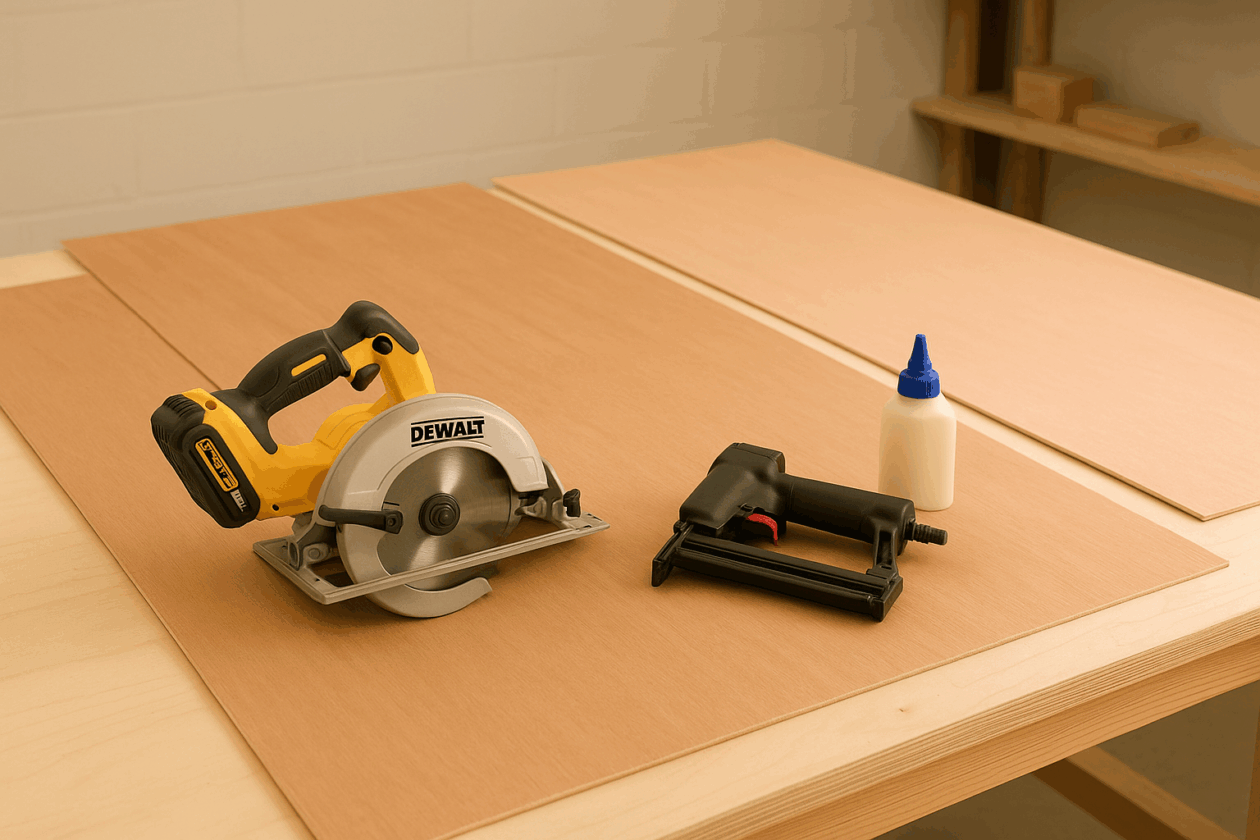
The circular saw I keep is a DEWALT 20V. Battery-powered, light enough to use one-handed if I need to. Cuts clean if I use the right blade. I’ve had it for years. Doesn’t complain.
For fastening? Stapler. Always. I’ve got a Surebonder that’s been through plenty of subfloor installs. Staples sit flat, no fuss. Nails pop up. Glue’s overkill. Staples win.
I once tried staining luan without prepping the surface—never again. Now I use a little can of Minwax conditioner. Cheap insurance. Makes the stain go on even instead of looking like spilled coffee.
Painted luan a few times too—Rust-Oleum Painter’s Touchwas what I grabbed off the shelf. Covered well. Didn’t chip. Good enough.
Not saying this is the best gear in the world. Just saying it’s worked for me.
Final Take
Luan’s not exciting. No one brags about using it. But I keep a few sheets on hand at all times. It’s light, it’s cheap, and for small jobs, it just works.
You don’t need a cabinet shop or a full tool setup to utilize it. Heck, I’ve built stuff with Luan plywood and a box cutter. It’s that kind of material.
So if you’re on the fence, try a sheet. Worst case? You’re out ten bucks. Best case? You patch a problem, save money, and move on.
That’s a win in my book.
Related Posts:
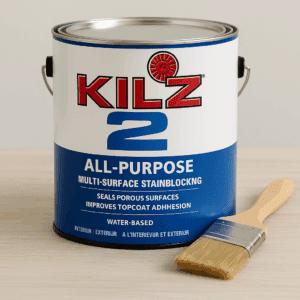
Is Kilz 2 Good Enough as a Final Coat? by Admin May 29, 2025 Finish Kilz 2 is one of the most popular water-based primers on the market. It’s known for its versatility, fast drying time, and low odor. It…
Is Epoxy Resin Good For Table Tops? by Amy Reed February 28, 2023 Finish Epoxy resin comes in a wide range of colors, shapes, and thicknesses, allowing you to create a table that complements the rest of your décor.…