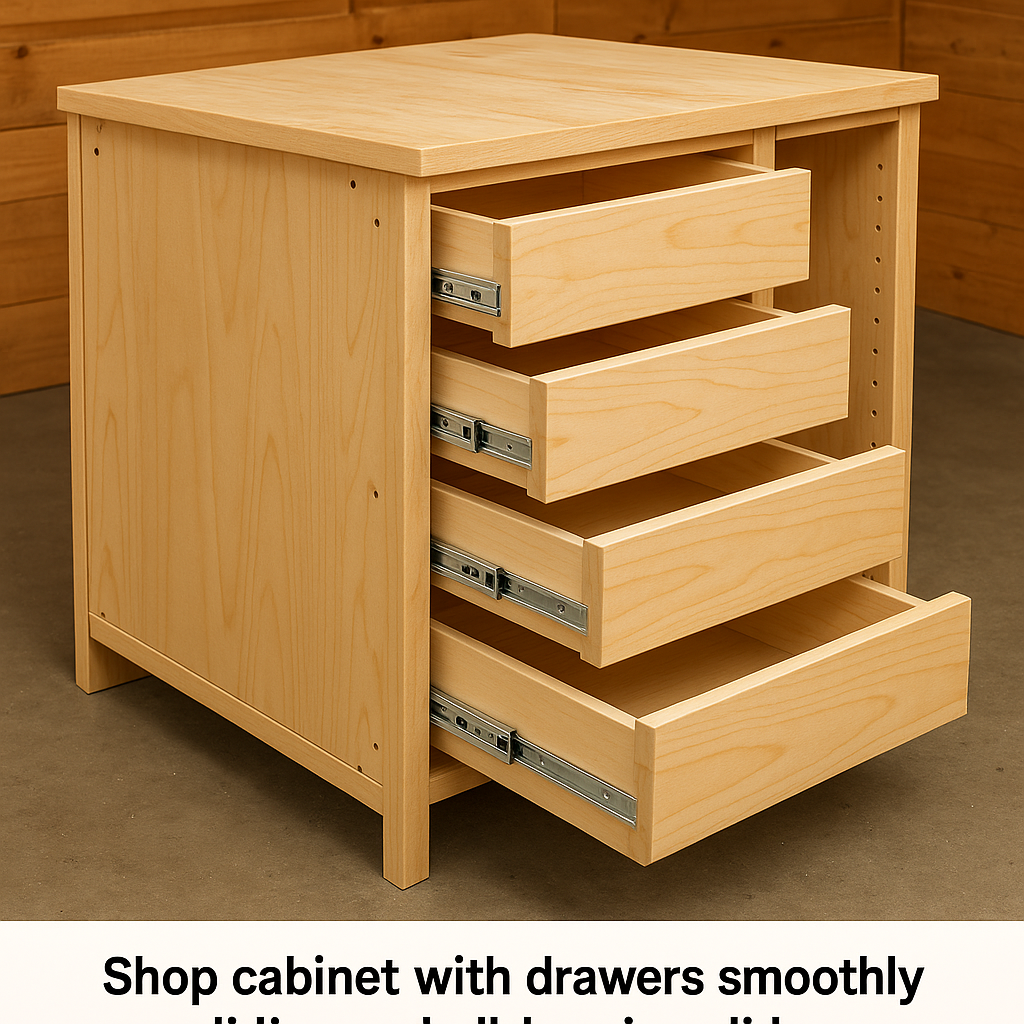
When you think about it, drawer slides don’t get nearly enough credit. They’re just strips of hardware, but without them a drawer is basically useless—scraping across wood, making a racket, and wearing out long before it should. A decent pair of slides makes all the difference: they provide a smooth glide, prevent sticking, and have the strength to hold up under weight without sagging.
I learned this the hard way. Early on, I picked up the cheapest slides I could find because I figured, “Hardware is hardware.” Big mistake. Those drawers jammed halfway, clattered when I closed them, and gave the whole project a wobbly, homemade feel. Eventually, I upgraded to better ball-bearing slides and later tried soft-close versions. That’s when it clicked—slides aren’t just hardware, they’re what make a project feel solid, almost like something you’d find in a custom kitchen.
Types of Drawer Slides: Side-Mount, Undermount & More
If you’ve ever tried to build a cabinet and skipped thinking about the slides, you probably learned the same lesson I did—the hard way. Slides aren’t all the same. Some are cheap and clunky, others glide like butter. The right choice depends on the project and how much abuse that drawer is going to take.
Side-Mount Drawer Slides: Affordable Strength for Cabinets & Shops
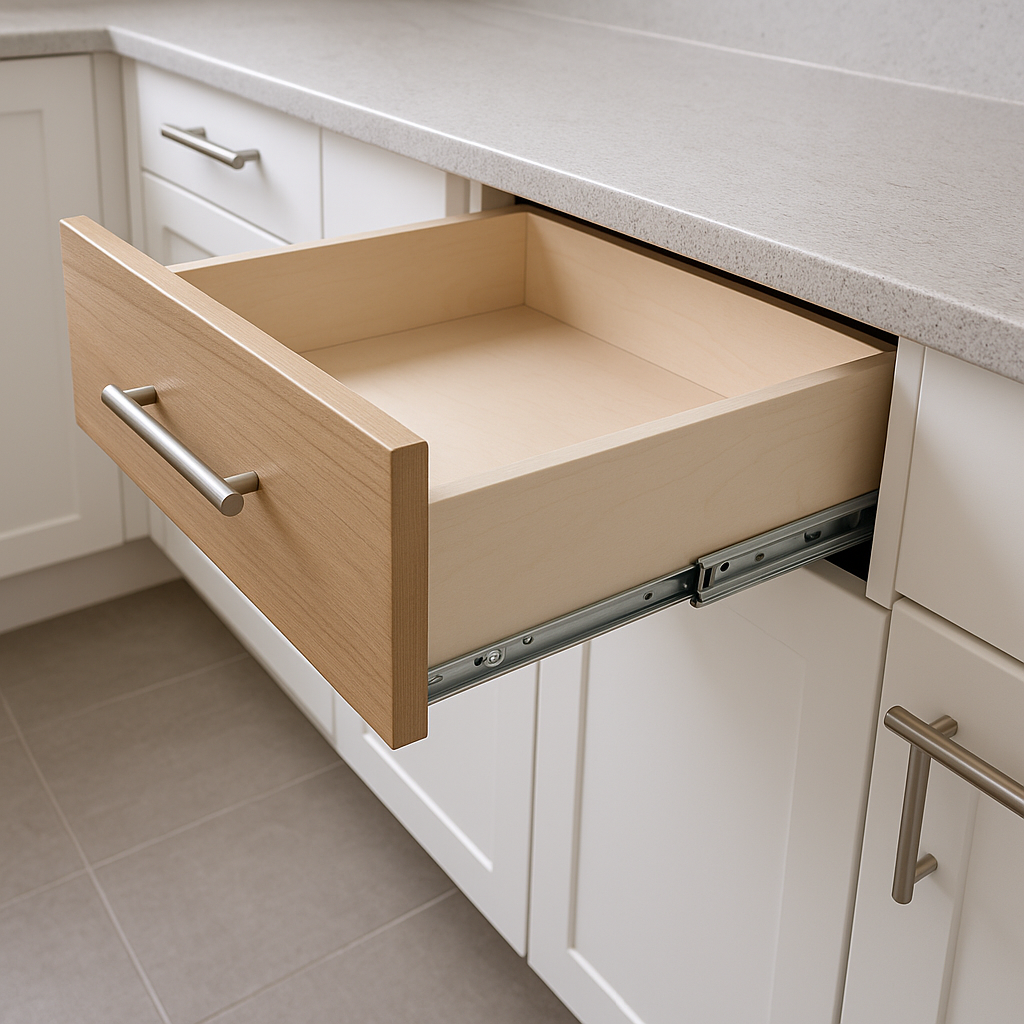
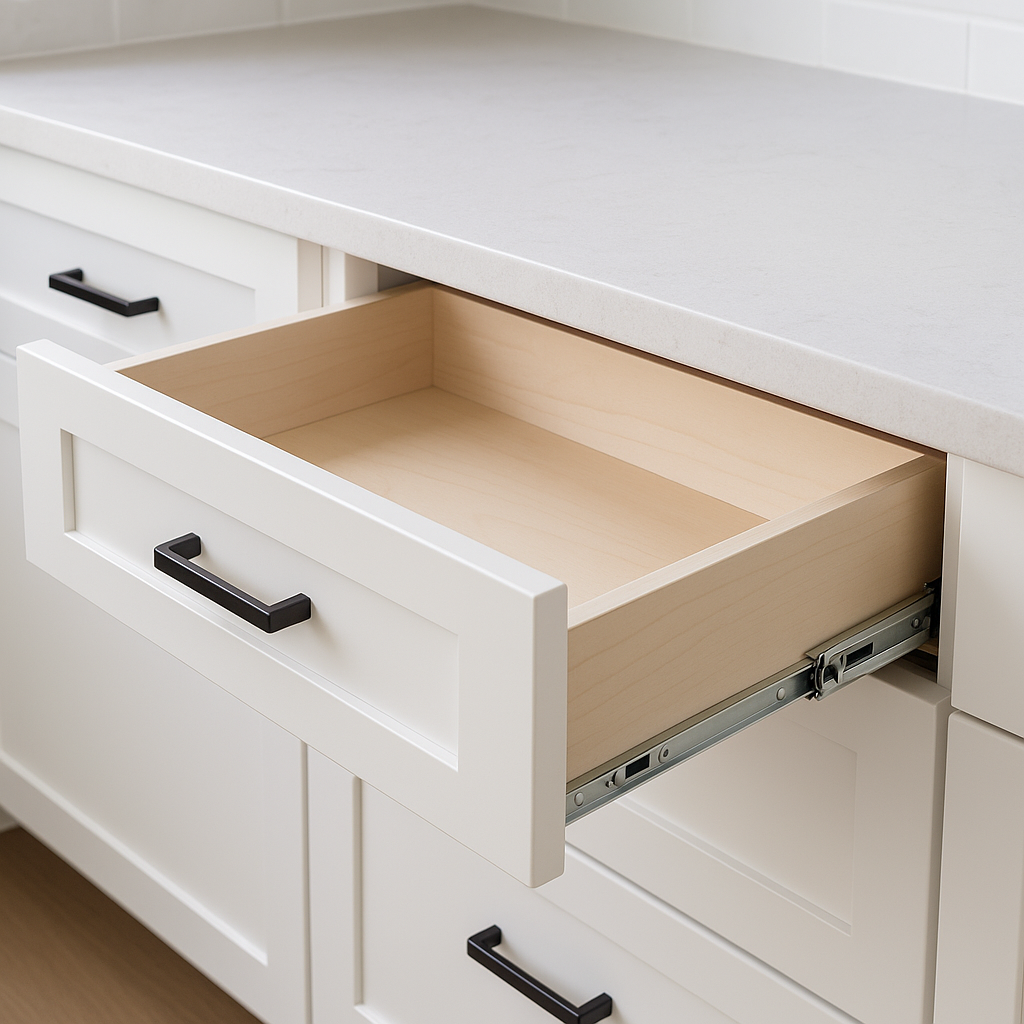
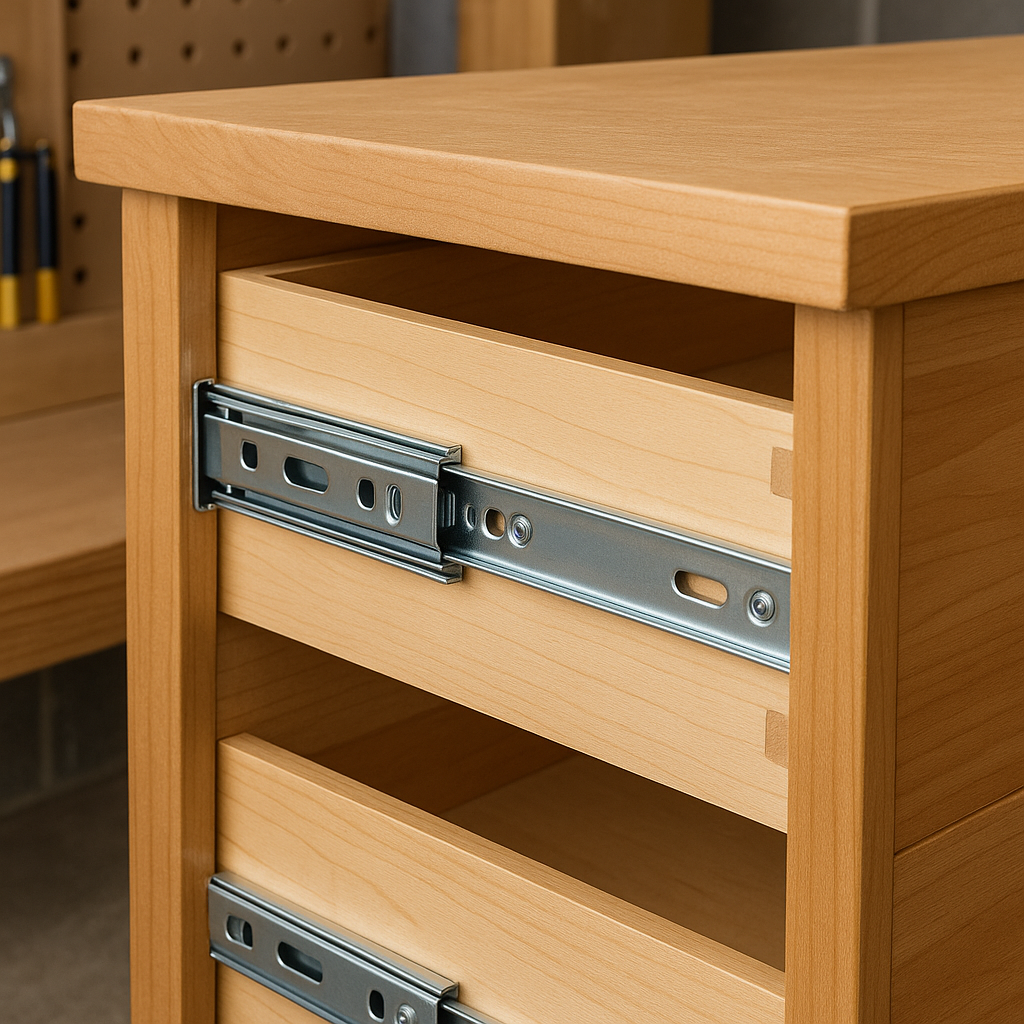
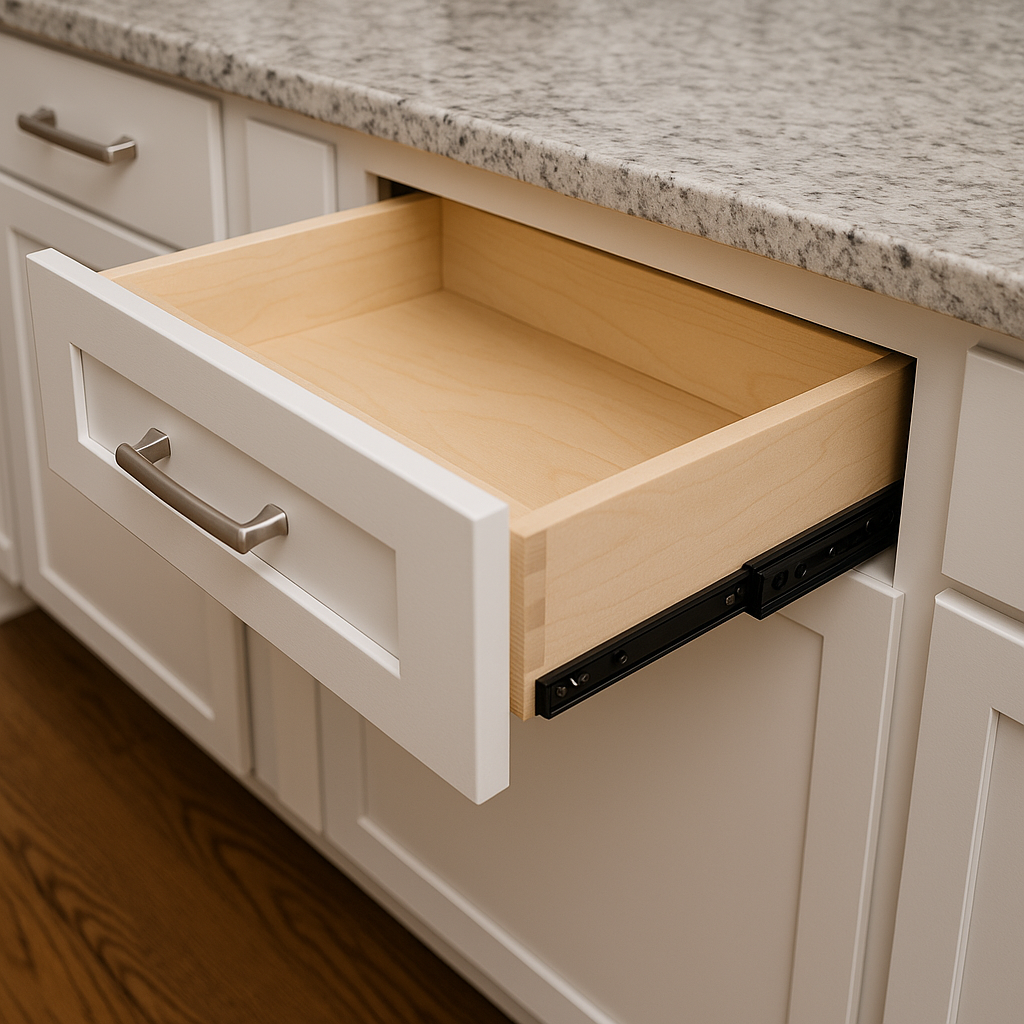
These sit on both sides of the drawer. You can see them when the drawer is open, which doesn’t bother me in a workshop but would in a kitchen. They’re strong, affordable, and easy to put in. I use them for tool storage because they’ll hold a lot of weight without complaining.
Undermount Drawer Slides: Sleek Hidden Hardware for Kitchens
These hide underneath the drawer. You don’t see the hardware, just a clean look. They cost more, and you have to be precise when installing them—being off even a millimeter can throw them off. But when they’re done right? Smooth, quiet, and they make a kitchen feel high-end. I put them in a friend’s kitchen once, and she kept opening drawers just to watch them shut softly.
A single track runs along the bottom of the drawer. They’re simple to line up and invisible from the sides, but they can’t hold much weight. Perfect for a nightstand or a kid’s desk. I used one for my son’s desk drawer, and it’s been fine for paper and crayons.
Ball-Bearing vs Roller Drawer Slides: Which Works Best?
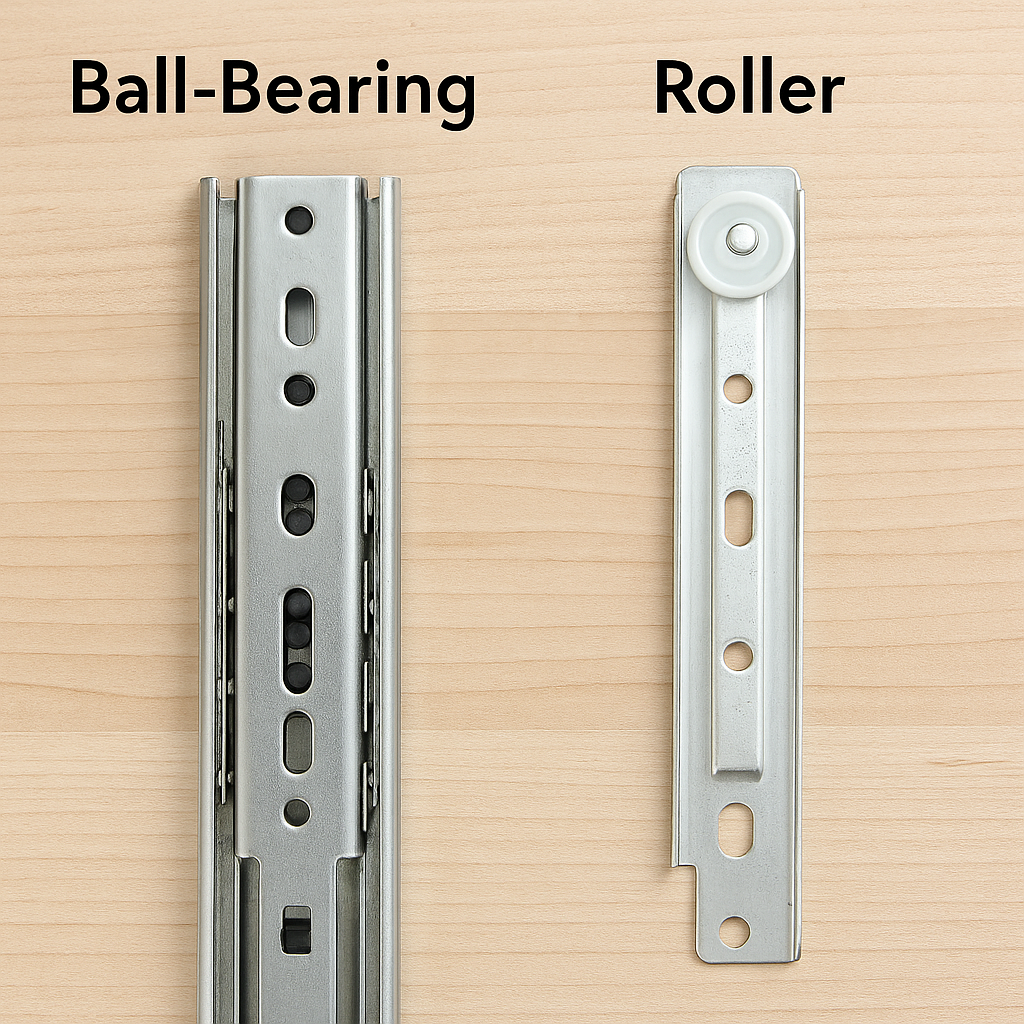
Ball-bearing slides are the heavy lifters—smooth and reliable, even when the drawer’s loaded down. Roller slides are cheaper and okay for light furniture, but I’ve had them fail under weight. After one cracked on me, I swore them off for anything heavier than clothes.
How to Choose Drawer Slides: Length, Capacity & Features That Matter
When shopping, don’t just grab the first set you see. Here are the specs that matter:
Extension – ¾ extension vs. full extension. Full-extension slides let you reach items in the very back.
Mounting Style – Side, undermount, or center.
Finish – Zinc-plated or stainless steel for rust resistance.
Soft-Close Feature – Worth the extra cost in kitchens and bedrooms.
How to Install Drawer Slides: DIY Step-by-Step Guide
Drawer slides look simple until you mess one up. I’ve had a drawer jam just because I was off by the width of a nickel. Once you’ve had to yank a drawer back out and redo it from scratch, you stop rushing and measure twice.
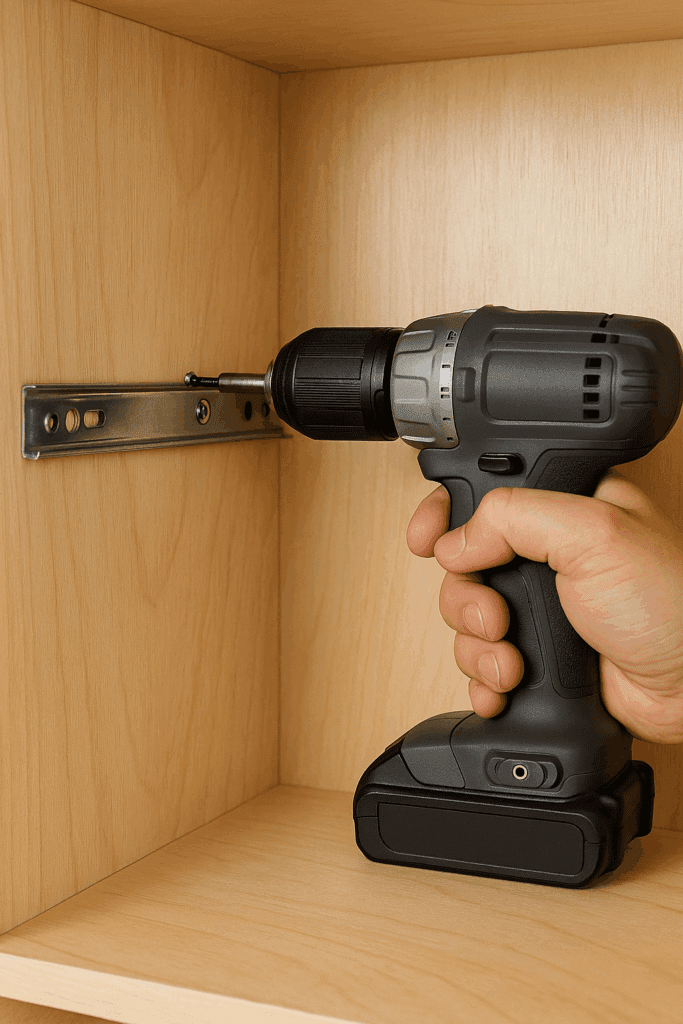
I don’t use anything fancy for this. A drill, tape measure, square, level, a pencil that’s usually hiding under a pile of clamps, and some screws. The real trick? A couple of scrap blocks cut to the right height. They’re ugly, but they keep everything lined up.
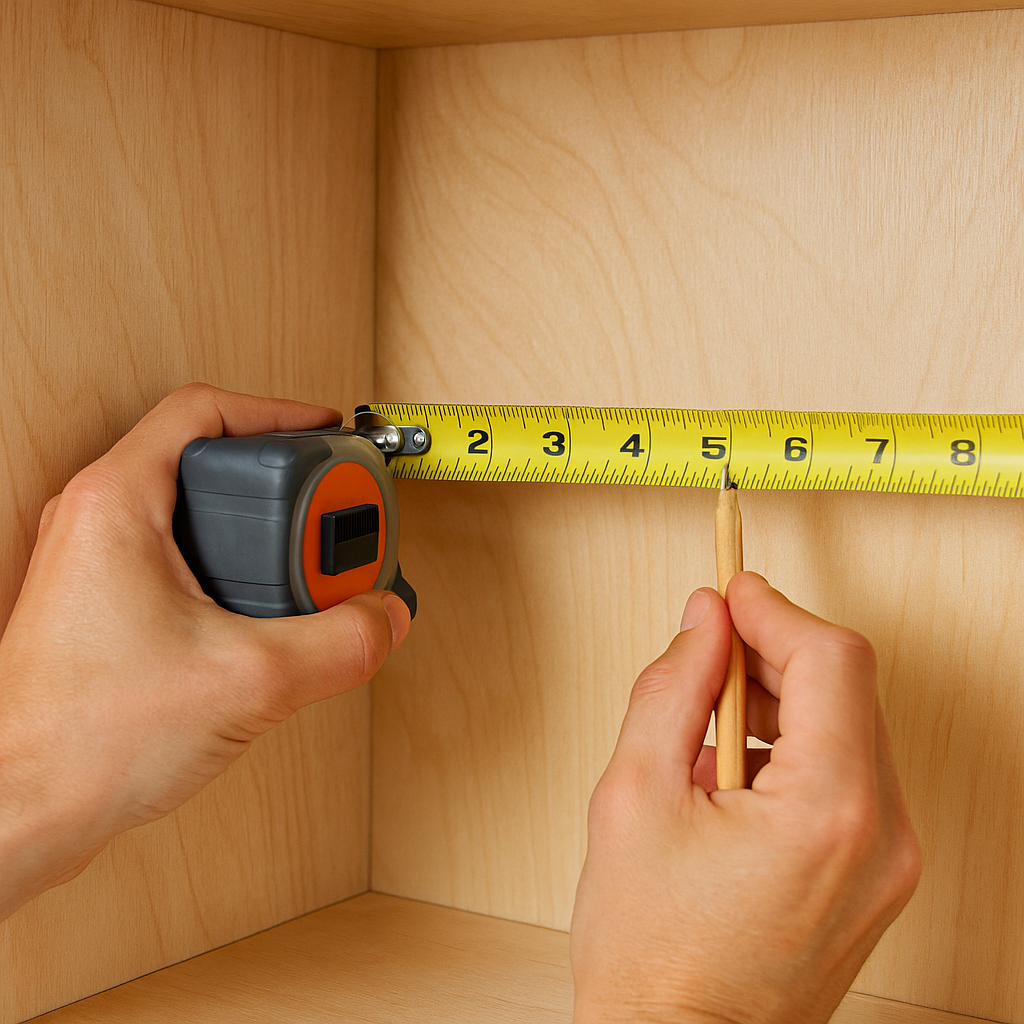
Step 1 – Mark it Out
Don’t waste time measuring both sides a hundred times. I just set the spacer block in, run a pencil line, and call it good. Fast and foolproof.
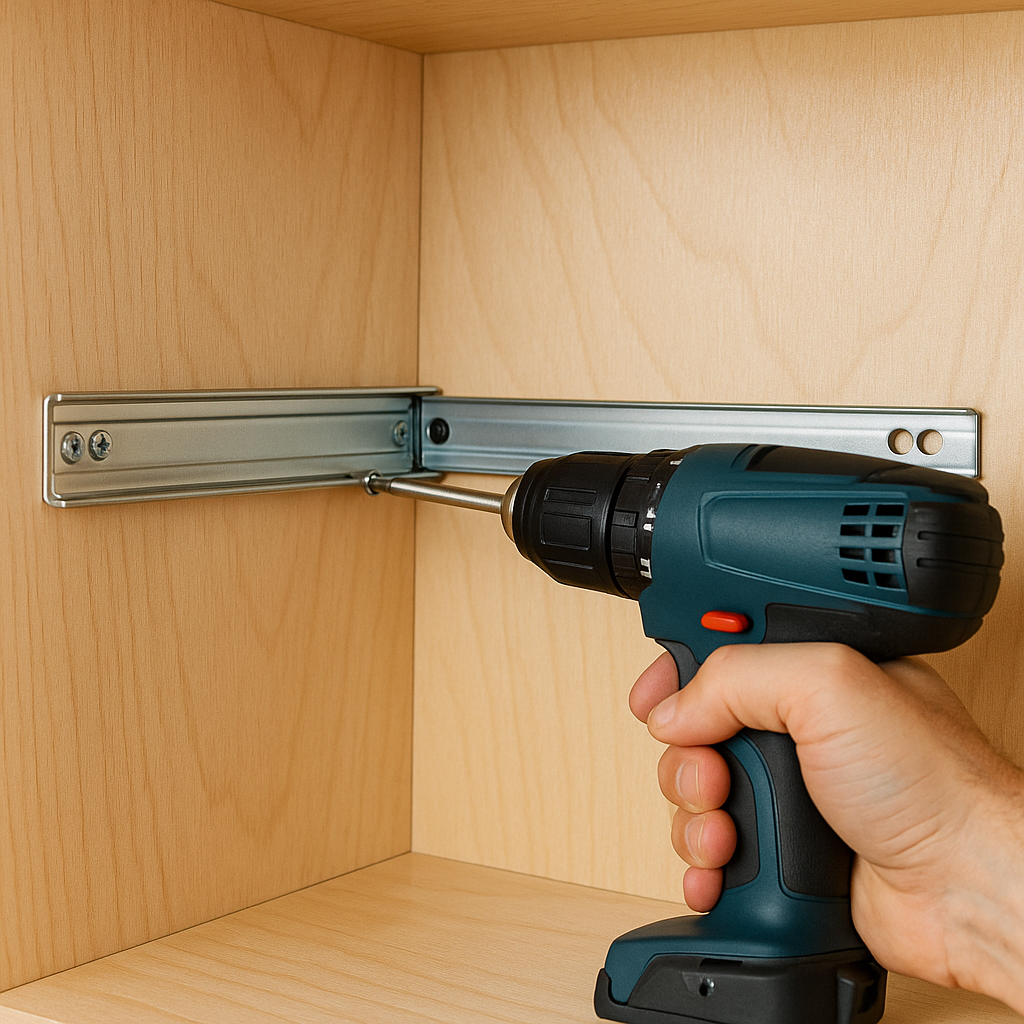
Step 2 – Cabinet Rail First
This is the fixed piece that sits inside the box. Use the level. I tried eyeballing it once and ended up with drawers that scraped every time. Thought I could cheat. Nope.
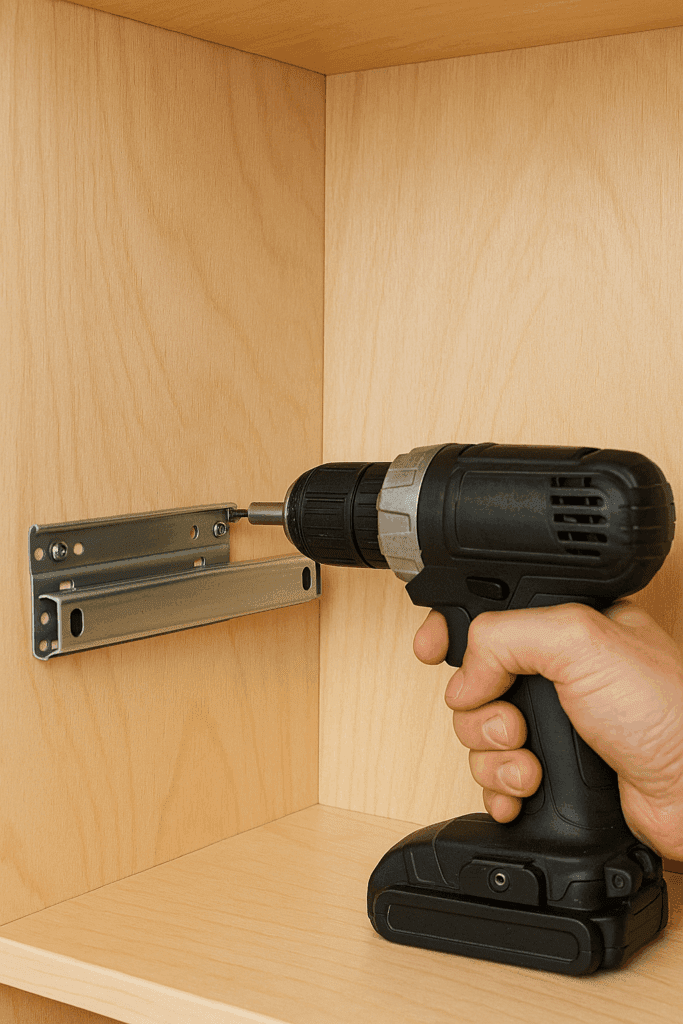
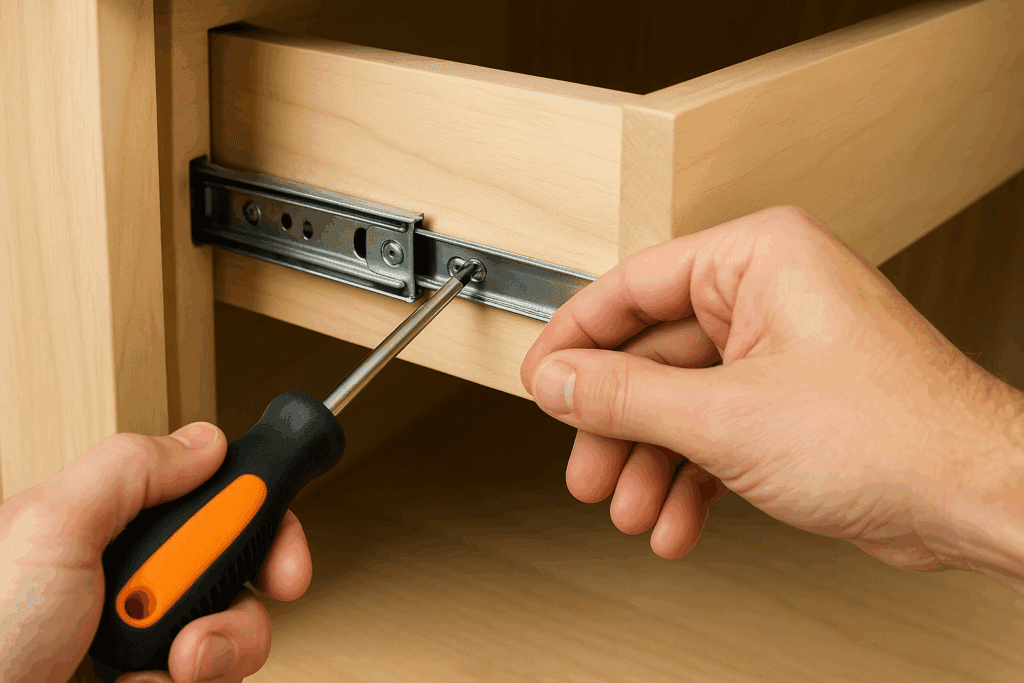
Step 3 – Drawer Rail
Line it up, mark the holes, drill your pilots. Trust me—skip the pilot holes and the screw will wander, the slide will tilt, and you’ll be redoing it. Been there.
Step 4 – Put It Together
Slide the rails together. Sometimes they glide in smoothly. Sometimes they fight. Don’t muscle it. Run it in and out a couple of times until it settles.
Step 5 – Test (and Swear a Little)
This is where you’ll know if you nailed it. Open, close, repeat. If it binds, back off a screw, tap the slide over a hair, and try again. It’s amazing how a tiny shift changes everything.
👉 Pro tip: cut one spacer block and keep it handy. I’ve built entire banks of drawers using the same beat-up block. Way faster than pulling out the tape every five minutes.
Even the best slides can act up. I’ve had brand-new ones give me trouble, so don’t panic if yours aren’t running smoothly. Most fixes are simple once you know what to look for.
The drawer won’t close all the way This one drives people crazy. Most of the time, it’s not broken—it’s just a little out of alignment. Loosen the screws, bump the slide a hair, and retighten. I had one drawer in my shop that refused to close; it turned out a tiny wood chip had dropped into the track. Cleaned it out, and suddenly it worked like new.
Drawer sagging If your drawer is full of heavy junk (think tools, pans, or paper files), standard slides will bow. That sagging front is the hardware saying, “Nope, too much weight.” The only real solution is to swap in heavy-duty slides.
Drawer sticks or grinds Usually, it just needs lube. Forget grease—it turns into a dirt magnet. A quick spray of silicone on the ball bearings, then running the drawer back and forth, usually fixes it. If it still drags, check for screws sticking out or rails that got bent during installation.
Best Budget Drawer Slides: Top Mid-Range Options for DIY Projects
Not every project calls for top-dollar hardware. Sometimes you just want a drawer that glides smoothly and doesn’t slam shut every time the kids raid the snack drawer. That’s where a couple of budget-friendly slide brands shine.
The first is Lontan Soft-Close Side-Mount Slides. I’ve used these on smaller kitchen projects, and for the price, they’re hard to beat. They install with basic tools—no weird tricks, no specialty jigs—and the soft-close works like a charm. The first time I tried them, I kept closing the drawer just to hear it catch and glide back in. Smooth, quiet, reliable. They may not be Blum-level fancy, but they give a kitchen or dresser that “custom feel” without costing a fortune.
Then there’s the Liberty Ball-Bearing Side-Mount Slides. These are my go-to when I’m building garage cabinets or workbench drawers. They’re not flashy—no soft-close, no hidden undermount system—but they hold up. I loaded one set down with a drawer full of heavy sockets and clamps, and it still opened like it was brand new. They’re the kind of slides you install and forget about, which is exactly what I want in the shop.
Both of these are side-mount styles, which means you’ll see the hardware when the drawer is open. In a utility cabinet or workshop, that doesn’t bother me one bit. Side-mounts are easy to line up, easy to adjust, and they’re tougher under heavy weight compared to the bargain undermount slides you see on flat-pack furniture.
Best Drawer Slide Brands: Lontan, Blum, Liberty & Accuride
Lontan Soft-Close Side-Mount Slides – A solid budget-friendly option that still feels smooth and reliable.
They’re simple to install, making them a favorite for DIYers upgrading kitchen drawers without breaking the bank.
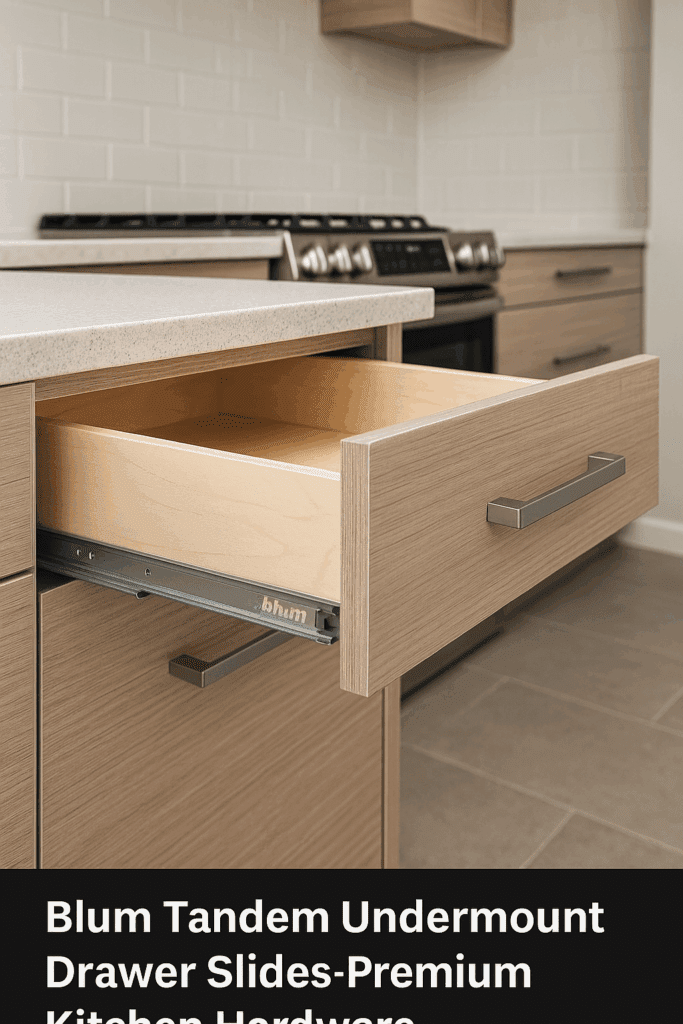
Blum Tandem Undermount Slides – These are the gold standard if you want a high-end finish. Blum slides practically disappear under the drawer, and the soft-close motion is flawless. I’ve used them in custom cabinets, and clients always notice the difference.
Liberty Ball-Bearing Side-Mount Slides – A dependable pick for garage cabinets, workbenches, or any utility project. They’re not flashy, but they’ll hold up well under everyday use.
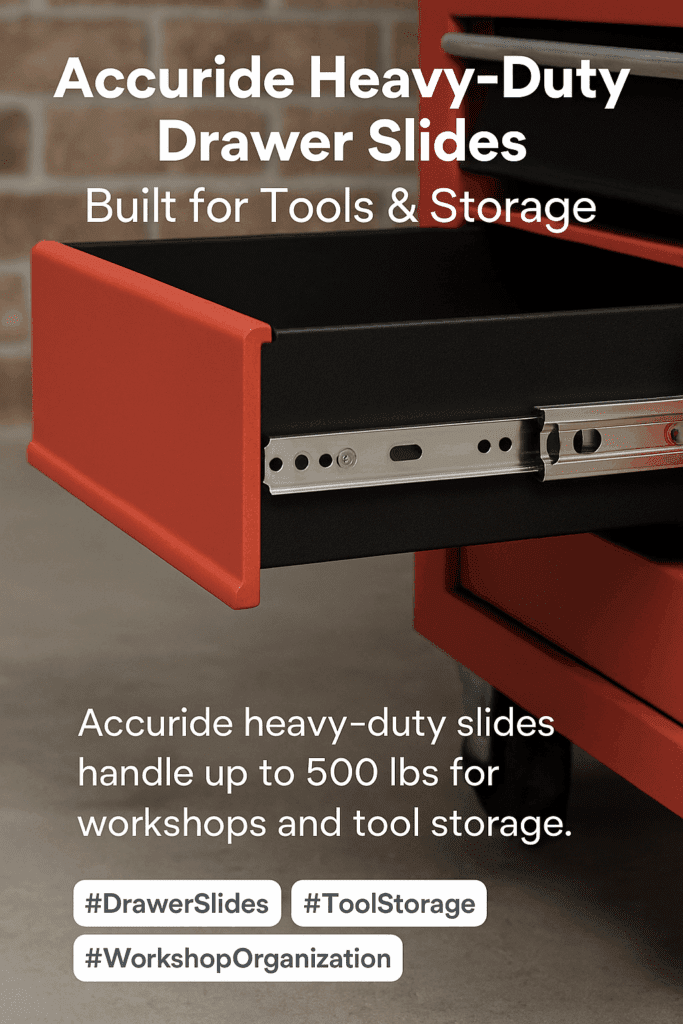
Accuride Heavy-Duty Slides – Built for serious weight, some models can handle up to 500 lbs. Perfect for tool chests, pull-out shelves, or storage that needs to carry the heavy stuff without sagging.
Best Heavy-Duty Drawer Slides: Premium Picks for Kitchens & Workshops
There are times you want drawers that just feel fancy, and then there are times you need them to survive serious abuse. I’ve found two brands that stand out on those opposite ends—Blum and Accuride.
Let’s talk about Blum Tandem Undermount Slides first.
These are the kind of slides that make people say “wow” when they pull a drawer open. Since they mount underneath, you don’t see any hardware. It’s just a clean look and a smooth, soft-close motion that feels high-end. I put them in a custom kitchen once, and the homeowners couldn’t stop playing with them—open, close, open again. I get it. They’re that smooth. The catch? They aren’t cheap, and you can’t fudge the install.
Now, on the heavy-duty side of things, there’s Accuride. These aren’t for show. These are for weight—lots of it. Some of their slides are rated up to 500 pounds, which is wild. Perfect for a shop, a tool chest, or even a pull-out workbench. I built one with Accuride slides, and it held everything I piled on top without sagging an inch. Another thing I like? They’re usually full-extension. That means you can pull the drawer completely out and reach whatever’s buried in the back. No more fishing around.
What I respect most about Accuride is that they last. I’ve had cheap slides fail after a year or two under heavy loads.
So here’s the deal: if you’re chasing looks and buttery motion, grab Blum. If you need strength and reliability, Accuride’s your best friend. Between the two, you’ve got both ends of the spectrum covered.