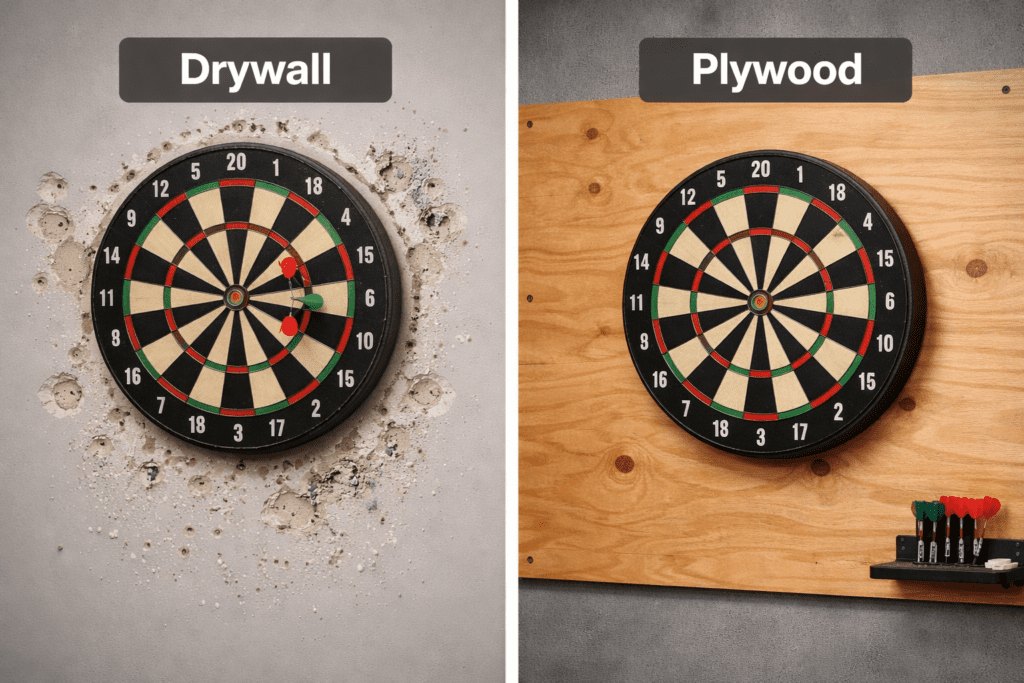
Most dart wall ideas you see online look fine at first, but a lot of them don’t survive real use. I learned that the hard way. I mounted my first dartboard straight into drywall and didn’t think twice about it. It was okay only for a while, then a few darts missed, and more later on.
The wall looked worse than the board over time. The wall was the problem, since the drywall isn’t meant to take repeated hits. The screws loosened, and the board tilted. Every time someone threw a dart a little wide, I could hear it bite into the wall behind it. That’s when I stopped looking at dartboards and started looking at what they were mounted on.
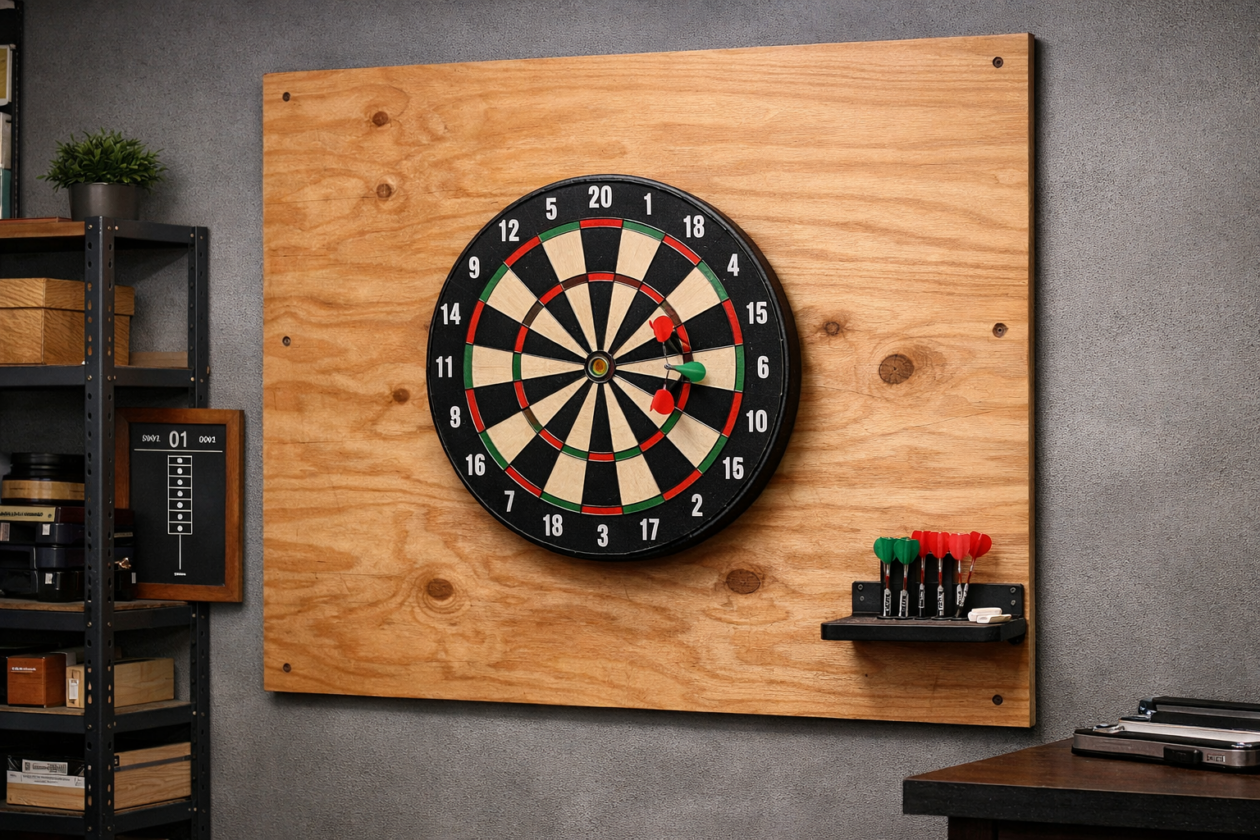
Switching to plywood behind the board changed everything. The wall stopped taking damage. The board stayed flat. I didn’t have to baby it anymore. Once the plywood was up, the setup no longer felt temporary and began to feel finished. It didn’t matter if the dartboard was in the garage, the basement, or a game room — the wall finally matched how often it was actually being used.
Why Plywood Is the Best Material for Dart Wall Ideas
Before diving into specific designs, it’s important to understand why plywood consistently outperforms drywall, MDF, and other materials in dartboard setups.
Plywood Stops Wall Damage Before It Starts
Steel-tip darts are unforgiving. Over time, even careful players will miss. Drywall crumbles, cracks, and sheds dust when hit repeatedly. Plywood absorbs impact without disintegrating, keeping the structure behind the board intact.
Secure Mounting for a Flat Dartboard
A dartboard must stay perfectly flat. Plywood holds screws firmly, preventing wobble and loosening over time. This improves play quality and reduces bounce-outs.
One Material, Endless Dart Wall Ideas
Plywood can be painted, stained, wrapped in cork, framed, routed, or trimmed. Whether you want rustic, modern, industrial, or minimalist dart wall ideas, plywood adapts easily.
A Finished Look, Not a Patch Job
A plywood dart wall looks intentional. It reads as a design feature, not a repair solution or afterthought.
Best Plywood Options for DIY Dart Wall Ideas
Best Overall Plywood for Dart Walls
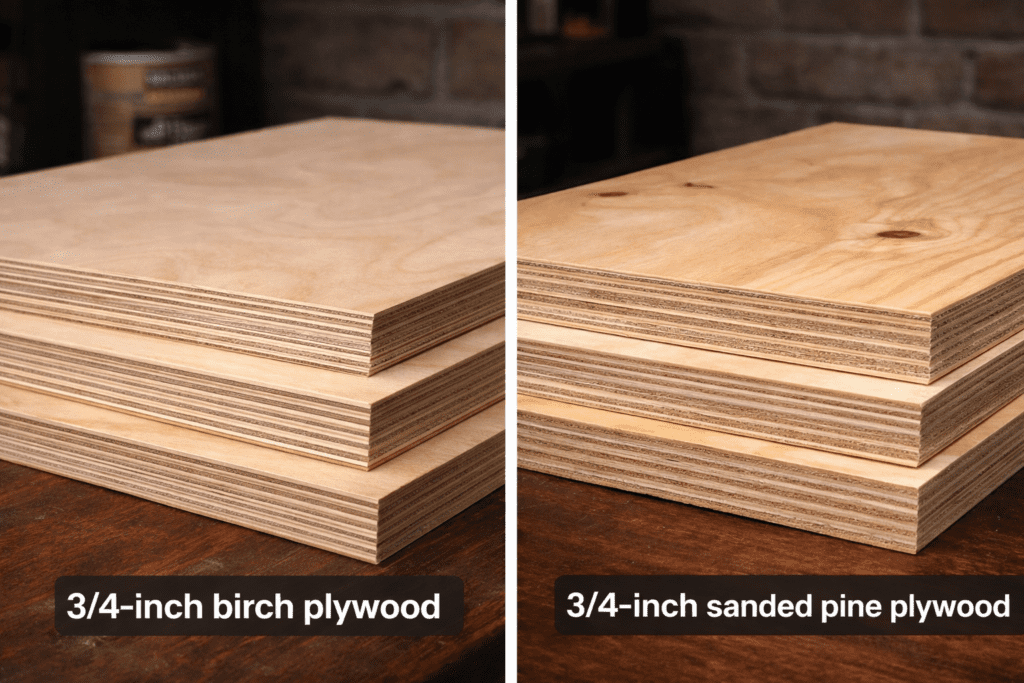
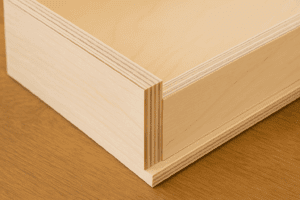
¾-inch birch or maple plywood This type holds up well over time and doesn’t start feeling soft around the mounting points.
Dense and durable The extra density helps absorb missed throws rather than transferring impact to the wall behind it.
Smooth surface for paint or stain A smoother face makes finishing easier and prevents the wall from looking rough or patched.
Clean edges for exposed installations This matters if the plywood will be visible without trim or framing around it.
Budget-Friendly Choice
¾-inch sanded pine plywood This is often the most practical option if the wall will be painted or covered later.
Affordable and easy to work with It cuts cleanly and is forgiving if you’re building the wall yourself.
Excellent when painted or covered Once finished, it’s hard to tell the difference between pine and more expensive plywood.
Slightly softer but still reliable While not as dense as hardwood plywood, it still handles normal dart impacts without issue.
Materials to Avoid
Thin plywood under ½ inch Thinner sheets flex too much and tend to loosen screws faster over time.
MDF (crumbles with repeated impact) MDF breaks down quickly when struck, creating dust rather than absorbing impact.
OSB (splinters and looks rough indoors) It’s structurally strong but doesn’t finish well and feels out of place in living spaces.
Dart Wall Ideas That Get the Size Right (This Matters More Than You Think)
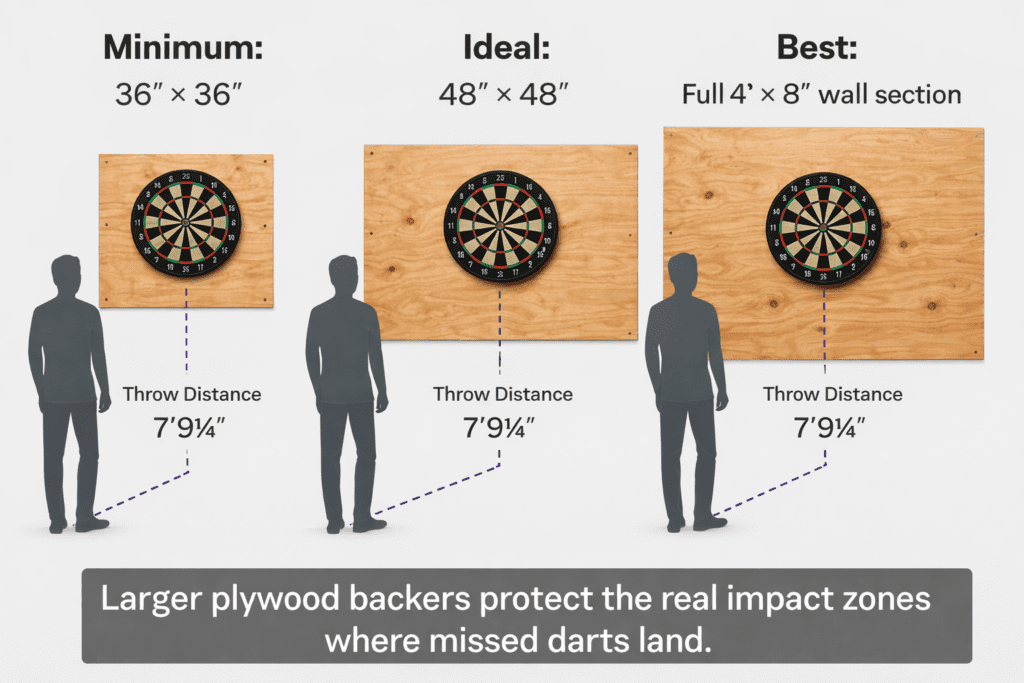
One of the most common mistakes in dart wall ideas is building the backer too small, which only becomes obvious after a few missed throws.
Recommended Plywood Sizes
Minimum: 36″ × 36″ This provides basic protection but leaves little margin for wide misses.
Ideal: 48″ × 48″ This size covers most real-world miss patterns without overwhelming the wall visually.
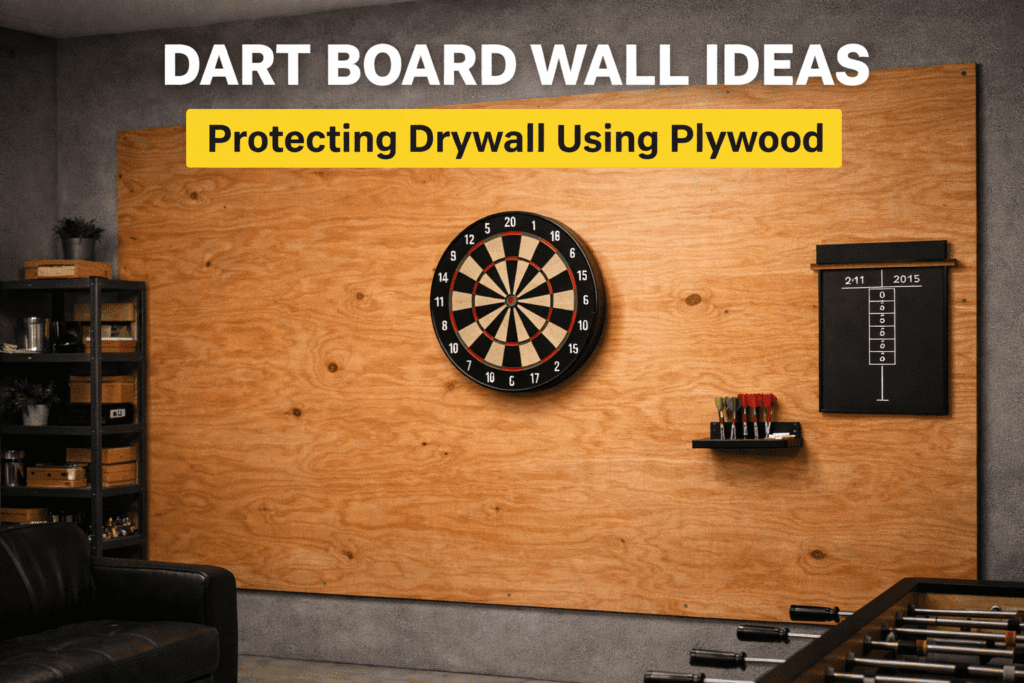
Best: Full 4′ × 8′ wall section A full panel creates a true feature wall and eliminates nearly all accidental damage.
Misses tend to land low and slightly to the throwing-hand side, especially as players get tired. A larger plywood area protects the real danger zones—not just the dartboard itself.
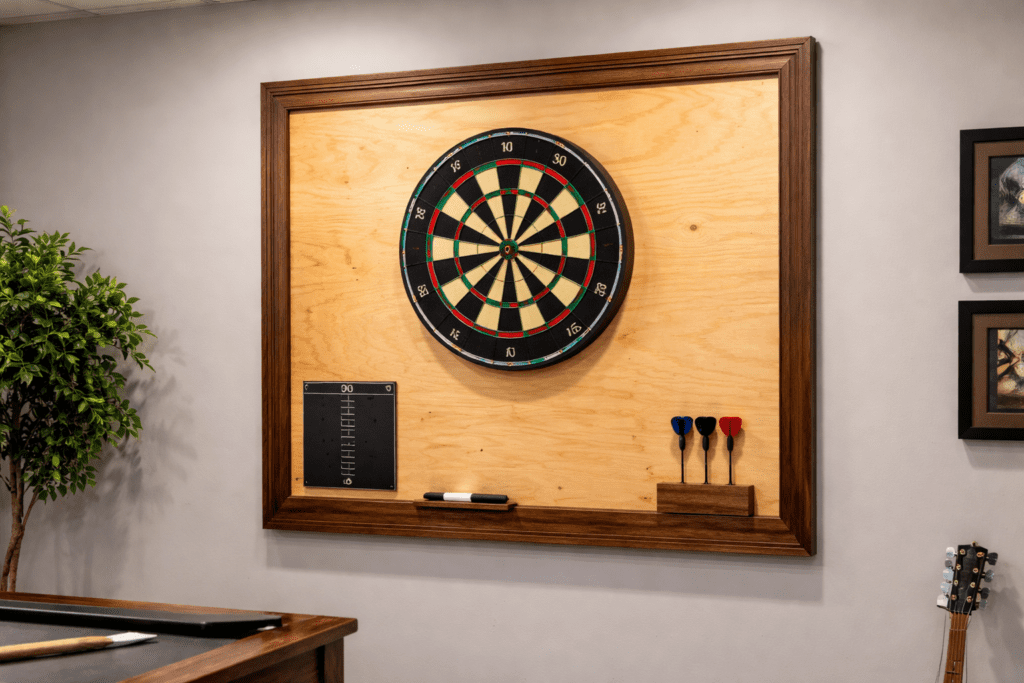
Classic Framed Plywood Dart Wall Ideas
This is one of the most popular and reliable designs.
How This Dart Wall Setup Works
Plywood panel mounted directly to studs
Dartboard centered precisely
Simple wood frame finishes the edges
Why This Design Works
Full wall protection
Clean, finished appearance
Easy weekend build
Finish Options
Natural stain with a black frame
Matte black panel with raw wood trim
Dark walnut for a pub-style feel
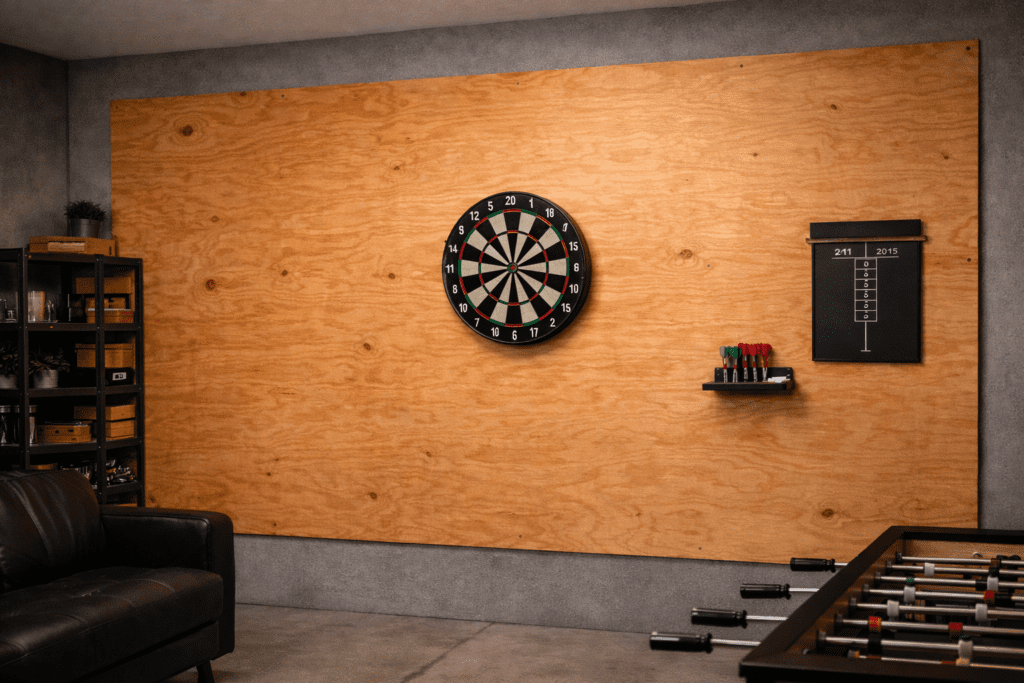
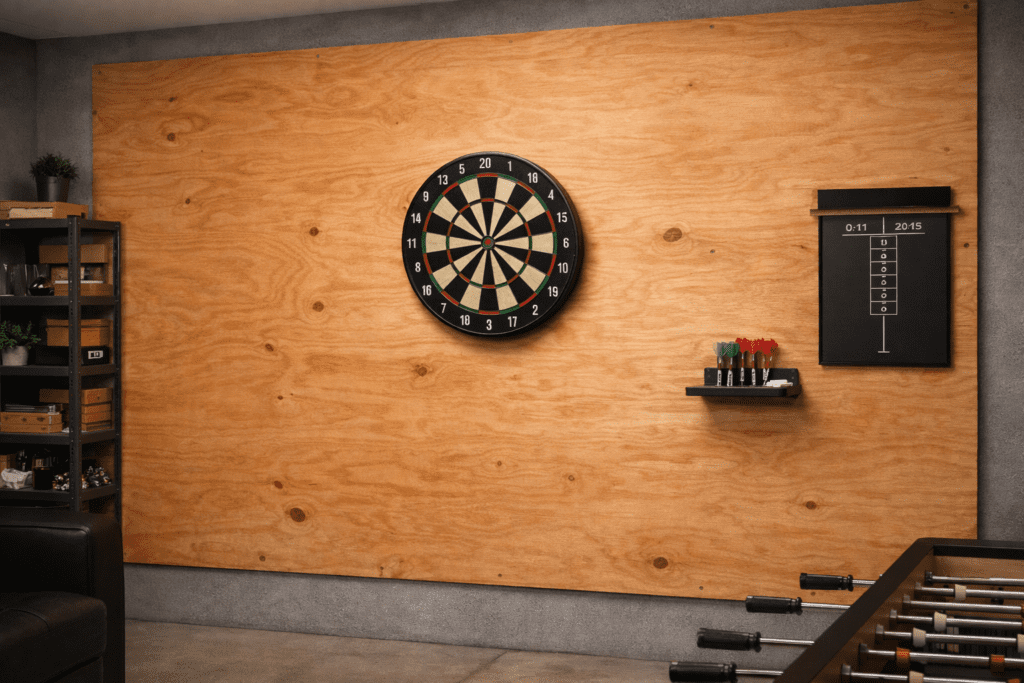
Full Feature Wall Dart Wall Ideas Using Plywood
If darts are a main attraction, a full plywood wall makes sense.
What Makes This Different
Instead of a single panel, plywood covers the entire wall section. The dartboard becomes a focal point instead of a mounted object.
Benefits of a Full Dart Wall
Maximum protection
No visual clutter
Built-in appearance
Orientation Tip
Horizontal sheets feel modern and wide
Vertical sheets feel classic and pub-like
Rustic Dart Wall Ideas Using Stained Plywood
Rustic dart wall ideas rely on texture and grain, not perfection.
How to Achieve the Look
Choose plywood with visible grain
Use dark or weathered stains
Lightly sand edges for character
Why Plywood Works Better Than Reclaimed Wood
Solid reclaimed lumber is expensive and uneven. Plywood delivers similar visual weight with far fewer problems.
Painted Dart Wall Ideas for Modern Game Rooms
Painted plywood is one of the most practical finishes for dart walls.
Best Paint Colors
Matte black (hides marks best)
Deep green (classic dart hall look)
Navy or charcoal for modern spaces
Painting Tips
Prime first
Avoid glossy finishes
Expect scuffs—they add character
Industrial Dart Wall Ideas With Plywood and Metal
Industrial-style dart wall ideas combine toughness with clean lines.
Common Design Elements
Exposed plywood
Black steel brackets
Visible fasteners
Metal scoreboards
The plywood softens the metal and keeps the space from feeling cold or unfinished.
Cork-Backed Dart Wall Ideas Using Plywood
Combining cork and plywood adds function without complexity.
How This Dart Wall Is Built
Plywood mounted to studs
Cork sheets attached on top
Dartboard mounted through cork into plywood
Benefits
Reduced noise
Easier dart removal
Fewer bounce-outs
Dart Wall Ideas With Built-In Scoring Areas
Integrating scoring keeps everything tidy.
Popular Options
Chalkboard paint around the board
Whiteboard inset panels
Routed score grooves
Pro Tip
Keep scoring areas outside the main dart impact zone.
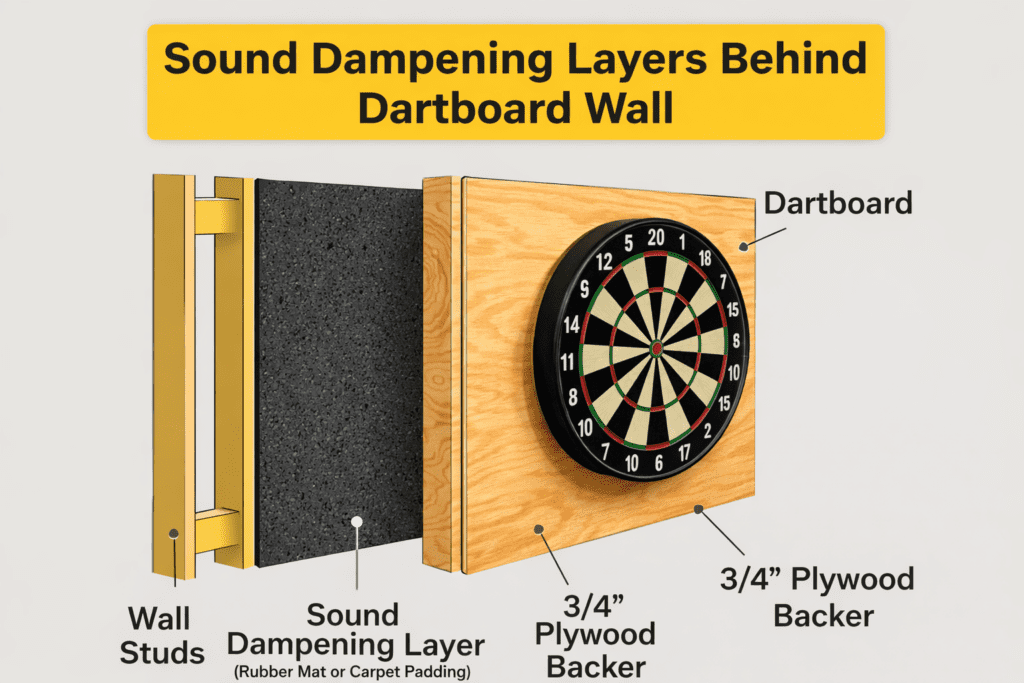
Sound-Reducing Dart Wall Ideas Using Layered Construction
Steel-tip darts can be loud, especially in finished homes.
This significantly reduces impact noise and vibration.
Proper Dartboard Mounting for Plywood Dart Walls
Even the best dart wall ideas fail if the board is mounted incorrectly.
Official Measurements
Bullseye height: 5’8″ from the floor
Throw distance: 7’9¼” from board face
Mounting Tips
Always hit studs
Use screws, not anchors
Shim behind the board if needed
Tighten firmly without crushing fibers
Safety Considerations for Dart Wall Ideas
Maintain at least 3 feet of clearance
Avoid mounting near doors or walkways
Keep children and pets out of throwing lanes
Check mounting hardware regularly
Cost Breakdown for Common Dart Wall Builds
Setup Type
Estimated Cost
Basic plywood backer
$40–$70
Framed dart wall
$80–$120
Feature wall
$150–$300
Cork overlay
+$40–$60
This is much cheaper than repeatedly repairing drywall.
Common Mistakes That Ruin Dart Wall Ideas
Using thin plywood Thin plywood flexes with repeated impacts, which leads to loose screws and a wall that starts feeling soft much sooner than expected.
Mounting without studs If the plywood isn’t anchored into studs, the whole setup relies on fasteners that slowly work loose as darts hit the wall.
Ignoring throw distance Even a well-built wall feels wrong to play on if the throw line is off, and players end up missing more simply because the setup isn’t regulation.
Going too small on the backer A backer that’s barely larger than the dartboard won’t protect the spots where misses actually land, which defeats the whole purpose of adding plywood.
Using glossy paint Glossy finishes show every scuff and impact mark, making the wall look worn out long before it actually is.
Advanced Dart Wall Ideas for Serious Players
For frequent or competitive play:
Modular replaceable panels
LED ring lighting
Integrated camera mounts
Built-in dart storage
Plywood makes upgrades easy without redoing the wall.
Many players eventually replace cabinets with plywood walls.
Long-Term Maintenance of Plywood Dart Walls
Monthly
Tighten screws
Rotate the dartboard
Wipe dust and chalk
Yearly
Light sanding if needed
Touch-up paint
Replace cork overlays
Maintenance is minimal and predictable.
Final Thoughts: Why the Best Dart Wall Ideas Start With Plywood
The strongest dart wall ideas aren’t about decorations or gimmicks—they’re about structure. Plywood provides protection, flexibility, longevity, and complete design freedom. Whether your style is rustic, modern, industrial, or removable, plywood turns a dartboard from a wall liability into a lasting feature.
If you’re already working with plywood, building a dart wall might be the most satisfying square footage you add to your space.
Frequently Asked Questions About Dart Wall Ideas
What is the best material to use behind a dartboard?
For most setups, plywood is the best option. It securely holds screws, withstands repeated dart impacts without crumbling, and protects the wall behind it. Drywall and MDF tend to break down much faster once darts start missing.
How thick should plywood be for a dart wall?
A ¾-inch sheet works best in real use. Thinner plywood can flex and loosen over time, especially if the dartboard gets a lot of play.
Can I mount a dartboard directly to drywall?
You can, but it usually doesn’t last. Even careful players miss, and drywall dents easily. Over time, the mounting screws loosen, and the wall starts to crumble.
Are removable dart walls actually stable?
Yes, if they’re built correctly. A plywood panel mounted on French cleats feels surprisingly solid once it’s up.
Bigger than most people think. A 48″ × 48″ plywood backer covers most real-world misses.
Do I need a cork behind the dartboard?
Cork isn’t required, but it helps. It reduces noise, makes dart removal easier, and reduces bounce-outs.
Is it okay to paint plywood behind a dartboard?
Absolutely. Painted plywood holds up well and is easy to touch up over time. Matte or satin finishes work better than glossy paint, which tends to show marks more clearly.
How do I reduce noise from steel-tip darts?
Adding a soft layer behind the plywood—such as rubber matting or carpet padding—makes a noticeable difference. It won’t make the wall silent, but it turns sharp impact noise into a dull thud that doesn’t travel as far.
Vinyl Shake Siding: Durable, Stylish & Low-Maintenance by Admin July 20, 2023 Installing Home maintenance can be challenging, especially when buying a used home from someone who hasn’t paid as much attention to their home as they should…