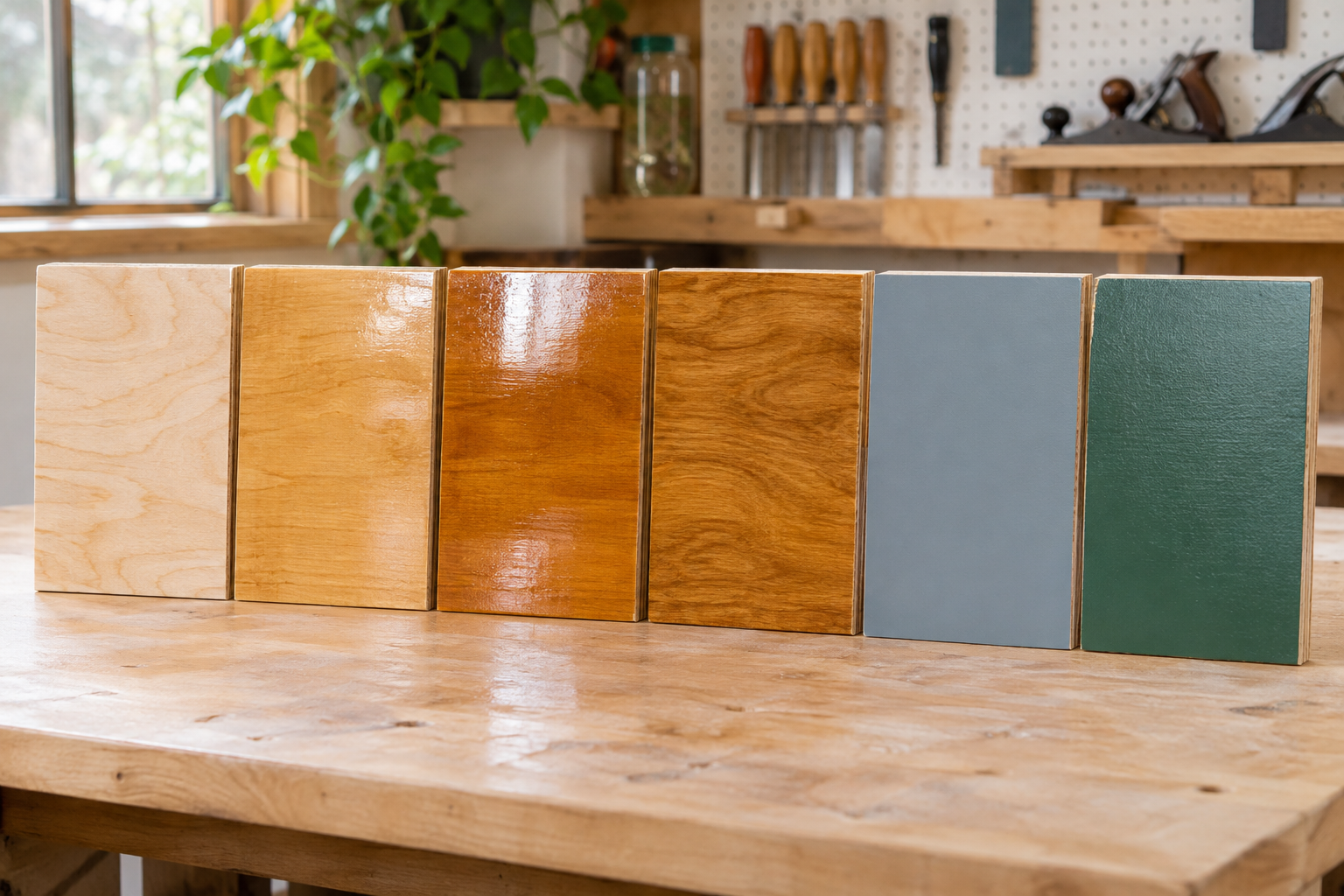
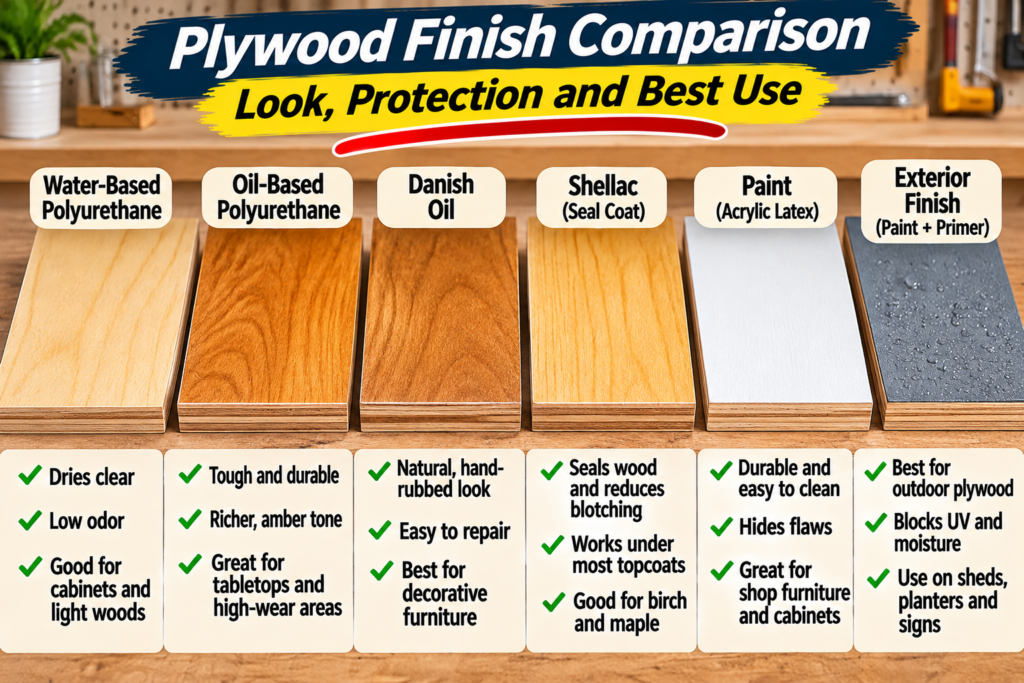
The best finish for plywood depends on where the piece will live. For indoor furniture and cabinets, use water-based or oil-based polyurethane. For shop furniture, use paint or Danish oil. For exposed outdoor plywood, exterior primer plus 100% acrylic latex paint is generally the most practical and durable option. Pick wrong and you’ll get blotchy stain on birch, a tacky oil top that never hardens, or an interior clear coat that peels outdoors within a season or two.
Affiliate disclosure: This article contains Amazon affiliate links. As an Amazon Associate, I earn from qualifying purchases. Buying through these links costs you nothing extra.
Quick answer
Cabinets, shelves, desks (indoor): Water-based polyurethane, usually 3 coats
Tabletops and high-wear surfaces: Oil-based or high-performance water-based polyurethane
Shop furniture, workbenches: Paint or boiled linseed oil
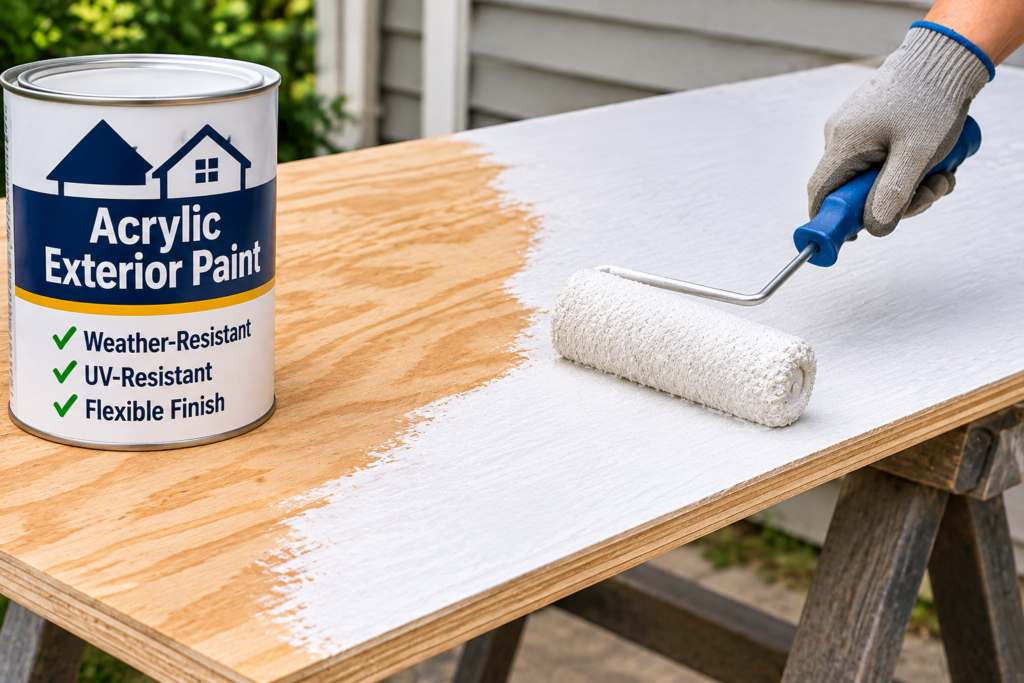
Outdoors: Exterior primer + 100% acrylic latex paint, all edges sealed
Avoid outdoors: Interior-rated clear finishes and wax
Plywood Finish Chart: Which Finish for Which Project
This chart is a general comparison based on typical product performance, not laboratory testing. Results vary by brand and formulation.
Project
Best finish
Durability
Look
Watch out for
Kitchen and bath cabinets
Water-based polyurethane
High
Clear, little amber tone
Raises grain on the first coat, so sand lightly
Tabletops, desks
Oil-based or high-performance water-based poly
Very high
Oil adds amber; water adds less
Oil-based dries slowly and has strong fumes
Bookshelves, built-ins
Water-based poly or paint
Medium–high
Clear or solid color
Edges need filling or banding
Decorative furniture
Danish oil, optional wax
Low–medium
Natural, satin
Needs re-oiling over time
Workbench tops
Boiled linseed oil or a poly/oil blend
Medium
Matte
BLO rags can self-ignite
Shop cabinets, storage
Latex paint over primer
Medium
Solid color
Skipping primer makes it blotchy
Floors
Floor-rated polyurethane
Very high
Clear
Only floor-rated products hold up to foot traffic
Outdoor (sheds, signs, planters)
Exterior primer + acrylic latex
High if maintained
Solid color
Unsealed edges soak up water
Toys, kids’ furniture
Water-based poly or paint labeled for toys
Medium
Clear or color
Must be fully cured before use
Warning: Interior-rated clear finishes on outdoor plywood are the most common regret. Sun breaks down the film and the wood surface under it, the plywood face checks (small cracks open up), and the finish starts peeling. Paint blocks UV far better. Exterior-rated clear finishes such as spar and marine varnish do exist, but on plywood they need regular maintenance, often a fresh coat every year or so.
Why Plywood Finishes Differently Than Solid Wood
Plywood isn’t just a flat board, and three things change how you finish it:
The face veneer is thin. Hardwood plywood faces can be a fraction of a millimeter thick. Aggressive power sanding, especially with coarse grits, can go straight through to the glue line, and there’s no fixing that except a patch or paint.
Birch and maple blotch. These dense, closed-grain faces soak up stain unevenly. Plan on a pre-stain conditioner or a thin seal coat if you’re staining them.
Edges drink finish. Exposed plies soak up far more finish than the face does, so they look darker and rougher. On outdoor pieces they are also where water gets in first.
The grade matters too. A furniture-grade face like furniture-grade plywood or cabinet-grade plywood takes clear finishes well. Construction sheathing (CDX, OSB) has patches and rough spots, so paint usually looks best.
Important: A finish doesn’t change what the plywood is. Paint protects the surface, but it can’t turn interior-grade plywood into exterior-grade plywood. For outdoor projects, start with a panel whose bond classification is rated for exterior use. Decay resistance is a separate question: an exterior glue bond doesn’t make the wood itself rot-resistant.
The Finishes, Ranked by Project Fit
Water-Based Polyurethane: Best for Cabinets and Light Woods
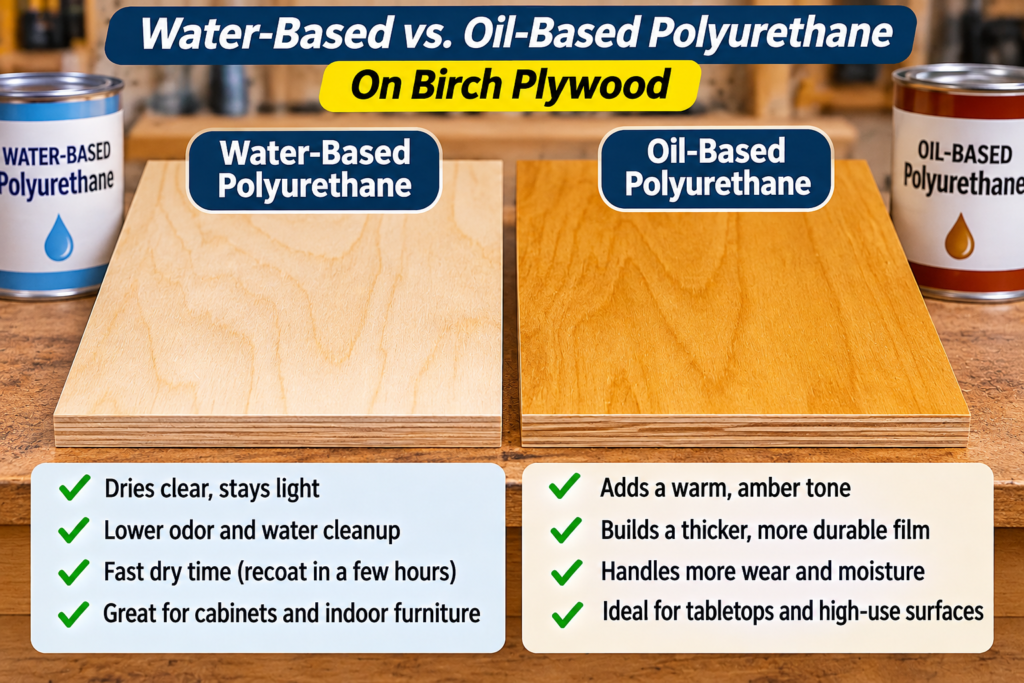
Water-based polyurethane generally dries clear and adds less amber coloration than oil-based polyurethane, making it a good choice for birch and maple. It dries fast enough for several coats in a day, cleans up with water, and has lower odor than oil-based finishes. Each coat is usually thinner than an oil-based coat, so cabinets typically need at least three.
How to apply: Sand the face to 180 grit and remove all dust. Many polyurethanes can go straight onto properly prepared bare plywood, so check the label. Lightly sand the raised grain after the first coat with 220–320 grit, then add more coats as the manufacturer directs.
Oil-Based Polyurethane: Best for Tabletops and High-Wear Surfaces
Oil-based poly traditionally offers excellent wear resistance and builds a thicker film per coat, although high-performance water-based products can provide comparable protection. It adds a noticeable amber tone, which looks good on oak, cherry and walnut but can make white birch look yellow. Each coat needs longer to dry, often overnight.
A seal coat is optional for most projects, but a thin coat of dewaxed shellac is useful when you’re staining blotch-prone birch or maple. It also helps seal knots and patches before paint and makes a good first coat under many topcoats. Check your topcoat’s label to make sure it can go over shellac. Full method here: how to apply a shellac finish to plywood.
Danish Oil: Best Natural Look
Danish oil is an oil and varnish blend that soaks into the wood rather than building a film on top. It brings out the grain and leaves a soft satin feel. Protection is light: it resists the occasional spill but not standing water or heavy wear. The upside is that scratches are easy to repair: just wipe on more oil.
Boiled Linseed Oil and Tung Oil: Best for Workbenches
Penetrating oils are good for shop surfaces you’ll scratch, glue and scrape. Damage stays local and re-oiling takes minutes. They don’t protect against water as well as a film finish.
Warning: Rags soaked in boiled linseed oil, Danish oil or other drying oils can heat up and catch fire on their own as they cure. Lay them flat outdoors to dry or keep them in a sealed metal can filled with water.
Skip plain mineral oil on furniture. It never cures, stays slightly oily, and wears off. It’s meant for cutting boards and utensils.
Paint: Best for Shop Furniture, Construction Plywood and Outdoors
Paint hides patches, plugs and grain, which makes it a good pick for sanded softwood plywood. On exposed outdoor plywood it’s generally the most practical and durable finish. Indoors, use a primer first, and a stain-blocking primer on knotty or patched faces. Outdoors, use an exterior primer and 100% acrylic latex topcoat, which stays flexible as plywood swells and shrinks. More on technique in our guide to painting plywood.
Paste wax adds a soft sheen and a slick feel over a cured finish, and it can hide fine scratches. It offers little protection on bare wood and makes later refinishing harder, because most finishes won’t stick over wax.
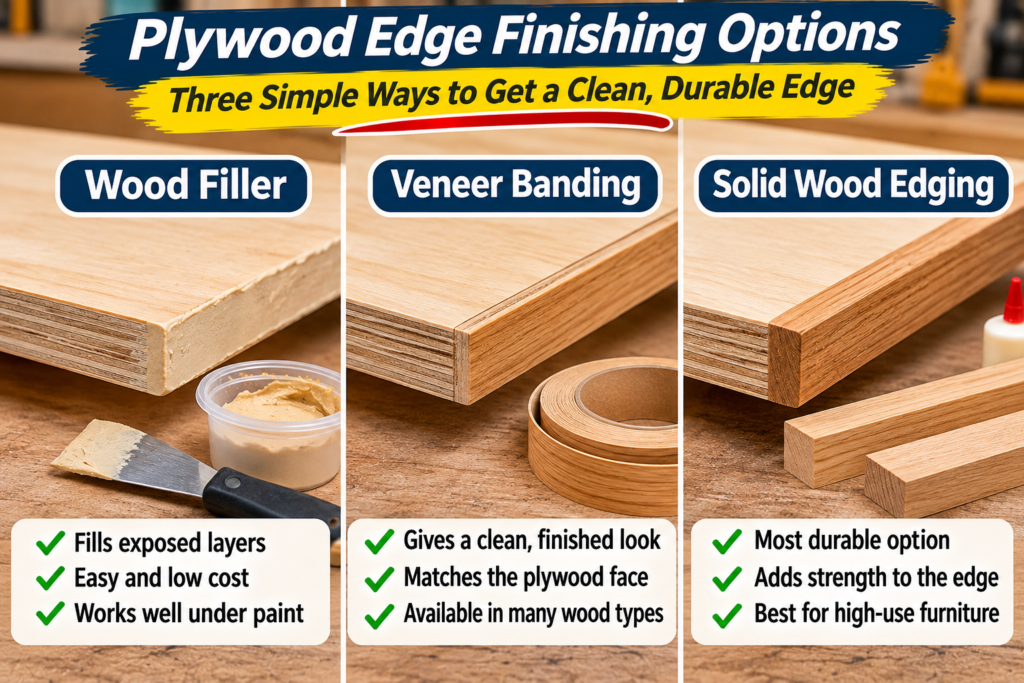
Deal with edges before the first coat goes on. You have three options:
Fill and sand: Wood filler pressed into the plies and sanded flush. It generally looks most consistent under paint. Stainable fillers exist, but they rarely match the face exactly under a clear finish.
Iron-on edge banding: A veneer strip that matches the face. It takes clear finish and stain like the face does.
Solid wood edging: A glued-on strip of hardwood. It’s the most durable option and the best one for shelves and tabletops that get bumped.
6 Plywood Finishing Mistakes (and What They Cost You)
Staining birch without a conditioner or seal coat.Result: blotchy dark patches that won’t sand out without risking the veneer. Usually the only fix is paint.
Sanding through the face veneer.Result: exposed glue lines and core that no finish hides. Start at 150–180 grit on factory-sanded hardwood plywood, sand by hand near edges, and keep the sander moving.
Using an interior clear finish outdoors.Result: peeling and graying within a season or two, plus face checks that let water reach the core. You’ll likely strip it and paint it anyway.
Leaving edges unsealed.Result: edges soak up water and swell, which leads to peeling finish and damaged edges on outdoor projects. Seal every edge, including the bottom edges you can’t see.
Recoating before the previous coat has dried.Result: soft, gummy film that stays tacky and wrinkles. Follow the label’s recoat time, and add extra time when it’s cold or humid.
Finishing over wax or oil residue.Result: fisheyes, poor sticking and peeling. Remove the wax thoroughly before you refinish. Clean the surface with mineral spirits (how to use mineral spirits on wood), repeat until the rag comes away clean, then sand lightly.
When Not to Finish Plywood Yourself
Prefinished plywood: Factory-finished panels for cabinet interiors already have a hard UV-cured coat. Most finishes won’t stick to it without scuff-sanding and a bonding primer, and you usually don’t need to add anything.
Phenolic-faced plywood: The resin face is the finish. Paint and clear coats don’t stick well to it.
Heavy-traffic floors: Unless you’re comfortable with floor-sanding equipment and floor-rated products, a plywood floor finish that fails means sanding the whole floor again.
Plywood Finishing FAQ
What is the best clear finish for plywood? For indoor pieces, water-based polyurethane is the best all-round clear finish. It adds less amber color than oil-based poly on light woods, dries fast and holds up well with enough coats. Oil-based polyurethane is a traditional choice for tabletops, and high-performance water-based products can offer comparable protection.
Do I need to seal plywood before finishing? Not always. Many polyurethanes can go directly onto properly sanded bare plywood, so check the product label. A pre-stain conditioner or thin dewaxed shellac coat is most useful when you’re staining birch, maple or other blotch-prone faces.
Can I use polyurethane on outdoor plywood? Interior polyurethane isn’t recommended outdoors, because UV light breaks it down and it cracks and peels. Exterior-rated clear finishes such as spar varnish are an option, but they need regular recoating. For exposed plywood, exterior primer and acrylic latex paint generally last longer with less upkeep.
How many coats of finish does plywood need? Always follow the manufacturer’s instructions first. As a general guide, plan on three coats of polyurethane for cabinets and furniture, three to four for tabletops, two to three wiped-on coats of Danish oil, and primer plus two coats of paint. Edges may need an extra coat because they absorb more.
What grit should I sand plywood to before finishing? Sand to 180 grit for polyurethane and paint, and to 180–220 for oil finishes. Factory-sanded hardwood plywood rarely needs anything coarser than 150, and coarse grits risk sanding through the thin face veneer.
Does painting interior plywood make it OK for outdoor use? No. Paint protects the surface, but it doesn’t change the glue bond inside the panel. For outdoor projects, use plywood rated for exterior exposure, then prime and paint it.
Bottom Line
Choose the finish by where the piece lives. Indoors, use polyurethane. In the shop, use paint or oil. For exposed outdoor plywood, use exterior-rated plywood with primer and acrylic latex paint. Seal the edges, and follow the product label for coats and recoat times. For the full sanding-to-topcoat process, see how to finish plywood, and browse more guides in our plywood finishing section.
Best Plywood for Outdoor Cabinets: Grade, Thickness & Finish by Admin September 28, 2026 DIY For most painted outdoor cabinets, Exterior-rated MDO (Medium Density Overlay) plywood is the best overall choice. A-C or B-C Exterior plywood is the budget alternative.…
How to Apply a Shellac Finish to Plywood by Amy Reed September 16, 2025 DIY Applying shellac to plywood is a traditional way to finish a woodworking project. Made from insect-secreted resin flakes dissolved in alcohol, it’s a non-toxic finish…