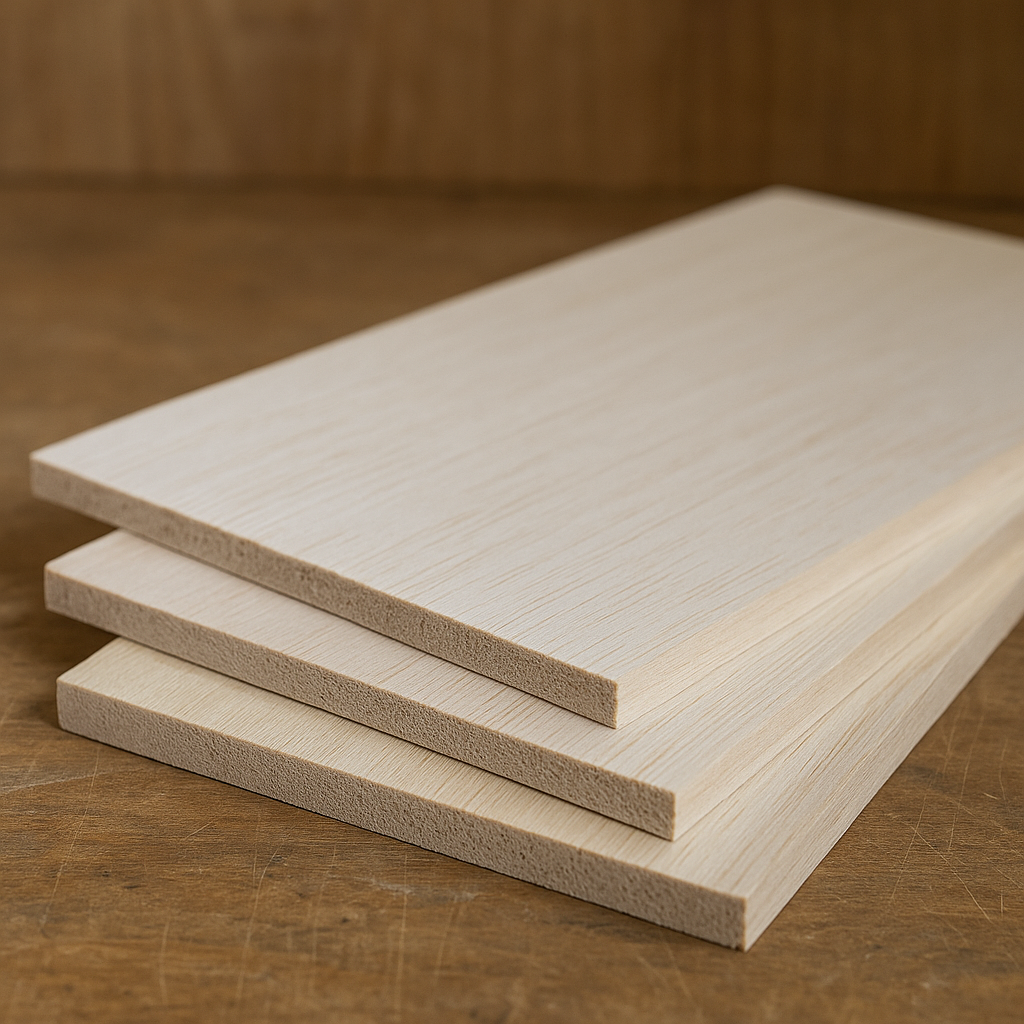
You’ve probably held balsa wood before—even if you didn’t know it. Feather-light and surprisingly firm, balsa is the wood of choice for model builders, movie set designers, and even marine engineers. It may not look impressive at first glance, but balsa plays a critical role in countless industries thanks to its rare combination of flexibility, strength, and low weight.
What Is Balsa Wood?
What makes balsa truly stand out is that it’s technically a hardwood, even though it behaves more like a soft, airy sponge. It comes from the Ochroma pyramidale tree, native to Central and South America, where it grows at an astonishing pace. In just five to seven years, a balsa tree can shoot up more than 90 feet, making it one of the fastest-growing commercial trees on the planet.
Why Balsa Breaks the Mold
The tree behind balsa wood isn’t your typical hardwood giant. In the warm, rain-soaked lowlands of Central and South America, the Ochroma pyramidale grows at a breakneck pace. Farmers have watched these trees shoot skyward in just a few seasons, some reaching over 80 feet tall in as little as five years. This fast growth is one reason balsa is so accessible, but what sets it apart is how light and workable the wood becomes once properly dried.
How It’s Harvested
There’s a reason people keep reaching for balsa, even with so many modern materials on the market. It’s easy to work with—no fancy tools required—and it won’t slow you down with weight or resistance. If you’ve ever cut into it with a hobby knife or glued together a quick mockup, you know how forgiving it is. Balsa may not be the toughest wood in the shop, but for many jobs, it doesn’t have to be.
You probably wouldn’t use balsa wood to build a house, but for many other jobs, it’s exactly what you need. Lightweight, easy to shape, and surprisingly durable when used right, balsa has carved out a place in dozens of industries. From detailed scale models to props that safely explode on stage, its strength lies in how well it serves precise, creative work.
A. Model Crafting
There’s a reason balsa wood fills the walls of hobby shops—it’s simply one of the easiest materials to work with when building scale models. Whether you’re making a model airplane, a miniature ship, or an architectural layout, balsa lets you work with accuracy without fighting your tools. You don’t need a scroll saw or industrial glue; just a hobby knife, some patience, and a steady hand.
This wood has been a favorite among hobbyists for a long time before the internet. Its soft texture allows for detailed carving, and it holds glue surprisingly well for such a light material. School projects, competition gliders, and professional prototypes alike rely on balsa because it delivers clean results without requiring expensive equipment.
Balsa wood earned its wings—literally—back in the days when speed and maneuverability could decide everything. During World War II, it became part of the de Havilland Mosquito, the British aircraft nicknamed “The Wooden Wonder.” Engineers discovered that by sandwiching lightweight balsa between sturdier layers of hardwood, they could create panels that were both strong and astonishingly light. That clever combination gave the Mosquito a real edge: it could fly fast, handle tight maneuvers, and surprise enemy aircraft without the drag of heavier materials.
On the water, balsa quietly does the same kind of work. Most boat owners and surfers will never actually see it because it’s often hidden inside, layered between sheets of fiberglass. But its role is critical. Balsa adds structure without weighing down the hull or board, helping everything stay buoyant and easy to control. It may not be the material you show off to your friends, but in the places that matter—where performance meets weight—it earns its keep.
In the world of props and practical effects, balsa wood quietly does a lot of heavy lifting. It’s lightweight, easy to disguise as other materials, and breaks in a way that’s safe for actors and stunt performers. From stage collapses to fight scenes, balsa is often what lets a dramatic moment land without anyone getting hurt.
Magicians appreciate it too. A seemingly solid object that falls apart at just the right time can elevate a trick, and balsa makes that possible. Because it’s so easy to shape and predict in performance, it’s become a behind-the-scenes favorite in both live shows and film.
Inside some handmade acoustic instruments, you might find strips of balsa working quietly to keep everything balanced. It’s not glamorous, but its low weight and surprising strength help reinforce fragile parts without affecting tone. Luthiers sometimes rely on it for bracing or lightweight support.
Fishermen have used balsa even longer. Before plastics took over the market, many lures were carved from blocks of balsa—painted, sealed, and tuned by hand. They float high, react to the subtlest rod movements, and have a swim action that’s hard to match with modern synthetics.
Some projects demand a bit more backbone than standard balsa offers. When lightweight isn’t enough, builders have a few tricks to make balsa stronger without giving up its natural advantages:
Laminating thin balsa sheets: Gluing layers together, often at alternating grain directions, adds stiffness while keeping weight low.
Using wood hardener: This liquid penetrates the soft fibers and reinforces them from the inside out—great for small parts or surfaces prone to dents.
Bonding with epoxy: A thin layer of epoxy between balsa and another material can create a lightweight yet durable sandwich panel for structural work.
Strengthening Balsa Wood for Tougher Jobs
Balsa is the kind of wood that punishes impatience. Push it, force it, or clamp it too hard, and you’ll end up with a crushed edge or a piece that snaps in two. I learned that the first time I tried to rush through cutting a wing for a model glider—it splintered right along the grain. Lesson learned: slow down and let the wood guide you.
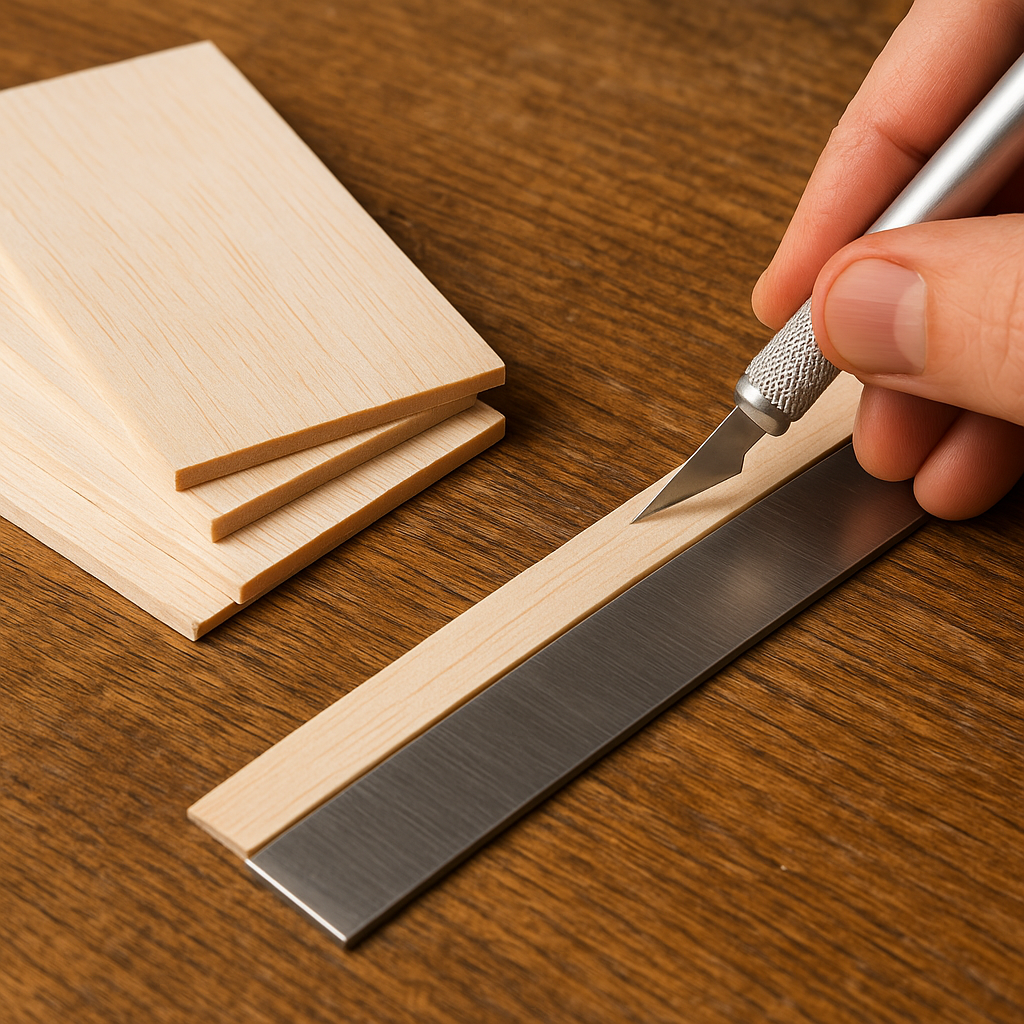
When I work with balsa now, I rarely touch power tools. A sharp hobby knife is my best friend. I make several light passes instead of one heavy cut, and it slices through cleanly every time. A metal ruler or straightedge helps keep things tidy. If you try to muscle through with a saw or heavy pressure, you’ll just chew it up.
Glue choice matters too. I keep three types on the bench:
PVA wood gluefor most joints, where I want a little working time.
Super glue for those quick fixes when I need an instant bond.
Epoxy when I’m reinforcing or laminating and need something rock-solid.
Even clamping requires a bit of care. I always slip a piece of scrap wood, foam, or folded paper towel between the clamp and the balsa. Without padding, you’re almost guaranteed to leave dents.
Handled patiently, balsa feels like a cooperative material. It bends to your creativity, letting you cut, shape, and assemble almost anything—so long as you treat it with respect instead of brute force.
Working with Balsa Wood: A Gentle Touch Goes Far
Working with balsa is more about finesse than force. Because it’s so soft, rough tools and heavy pressure can crush or split it. Instead, many experienced builders approach it like they would a delicate material—slow, precise, and with the right tools on hand.
Rather than using a saw, most people rely on hobby knives. A few light passes with a sharp blade can make cleaner cuts than any power tool. A metal straightedge helps keep those lines exact. When it comes to gluing, PVA works well for basic joints, super glue helps when time matters, and epoxy creates the strongest bond, especially for structural pieces.
Clamping? That takes extra care, too. Padding your clamps with scrap wood or foam keeps the soft surface from denting. With the right technique, balsa responds beautifully and lets you shape it into almost anything.
Scroll Saw Guide: Uses, Costs, Mistakes & Best Models by Admin June 10, 2026 DIY Whether you want to cut detailed fretwork, craft custom children's puzzles, or step up your DIY woodworking game, a scroll saw is an indispensable workshop…