Have you ever climbed into a hammock and thought, “This is great, but man, I wish I had more room to stretch”? That’s pretty much the idea behind a hanging bed. It gives you the gentle swing of a hammock but with the comfort—and space—of a mattress. No legs, no clunky frame. Just ropes or chains holding it up, so it feels like it’s floating.
The cool part is how it changes a space. Put one on the porch and suddenly that little corner turns into the best nap spot you’ll ever have. Set one up inside, and it instantly becomes the thing everyone notices first. Outdoors, it feels like you dragged home a slice of a beach resort. Indoors, it adds warmth, a bit of fun, and something different from the usual. It’s not just a bed—it’s an experience. And honestly, once you try it, you won’t stop going back.
What Is a Hanging Bed?
A hanging bed is pretty much what the name gives away—it’s a bed, or sometimes a daybed, that hangs from above. Instead of four legs planted on the floor, it’s suspended by ropes, chains, or even steel cables. The effect is simple but striking: the bed looks like it’s floating, and when you climb in, there’s a gentle sway you don’t get with ordinary furniture.
You’ll see them in all kinds of setups:
Indoors in bedrooms or lofts, where they act as a bold centerpiece.
Outdoors on porches or patios, catching breezes on summer afternoons.
Daybeds are piled with cushions for lounging, reading, or even an afternoon nap.
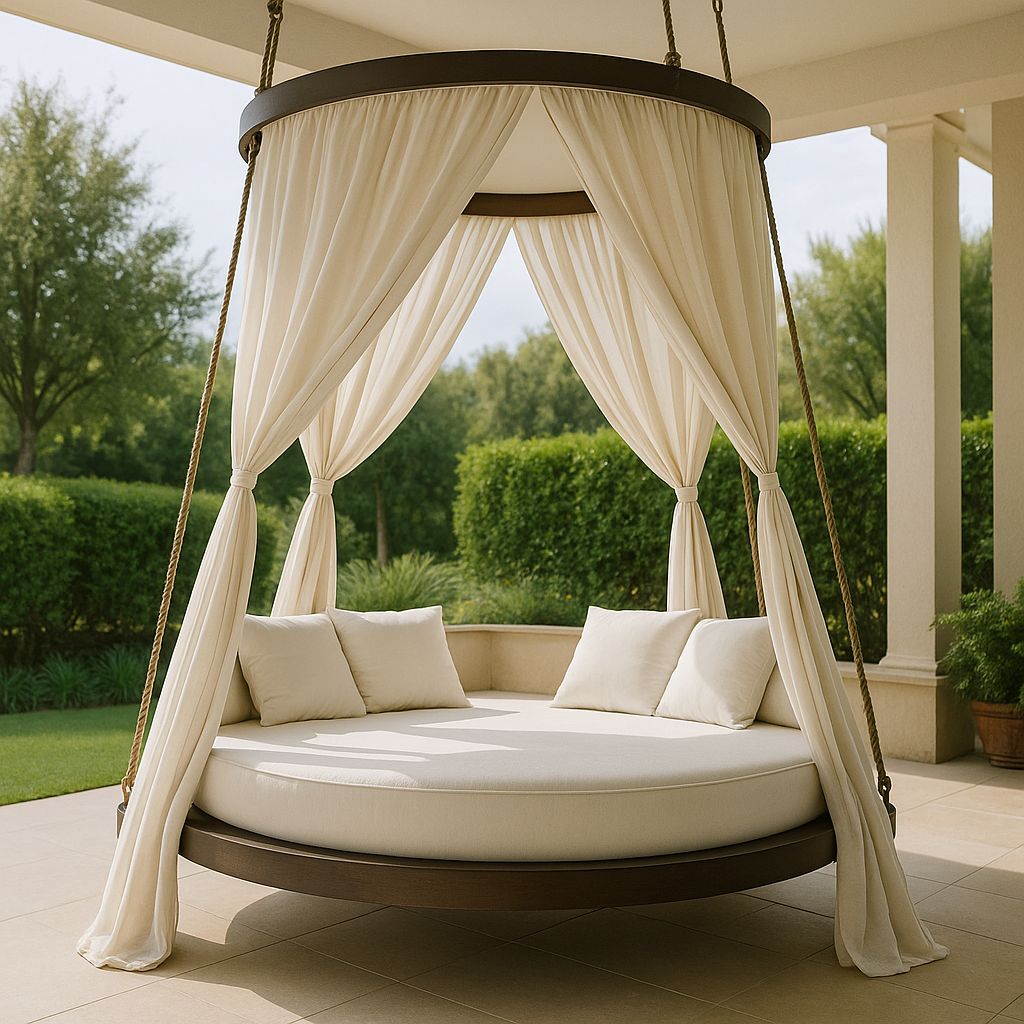
Luxury floating beds are designed with sleek frames that fit modern interiors.
Part of the charm is how flexible they are. Some are rustic, with chunky ropes and weathered wood that feel right at home on a Southern porch. Others are minimal and polished, designed to look like they belong in a boutique hotel suite. Either way, the floating feel makes them more than just a piece of furniture—it’s an experience.
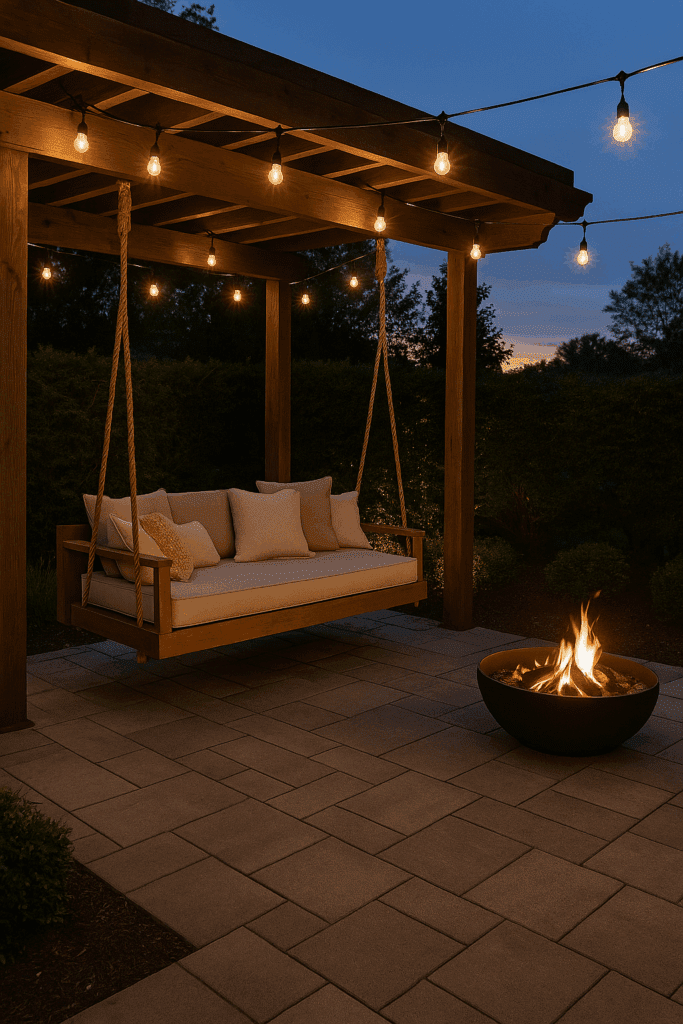
✨ Fun fact: Hanging beds may feel like a trendy modern invention, but their history goes back generations. In the American South, families built swing beds for porches, perfect for warm nights, storytelling, and slow conversations in the open air.
Benefits of a Hanging Bed
So why even bother with a hanging bed instead of a regular frame or hammock? For me, it came down to the feel. The sway is subtle but addicting — not the wild rocking of a hammock, but more like a quiet boat drifting at anchor. It’s the kind of motion that slows your heart rate without you noticing.
And then there’s the space. A hammock always left me feeling scrunched, like I had to pick a position and freeze. On a hanging bed, I can stretch out, roll over, toss on three pillows, and still not run out of room. Underneath, the floor stays clear — handy when you want storage or just don’t like clutter.
Of course, they just look good. Put one in a bedroom or porch, and people notice it before anything else. It doesn’t matter if it’s rustic ropes or sleek steel cables — the “floating” vibe grabs attention. And once you try it, you’ll understand why nobody wants to sit anywhere else.
Types of Hanging Beds
Indoor Hanging Bed
The first time I saw one, I stopped in the doorway. A bed hanging by ropes, no legs touching the floor — it looked like something out of a movie. The whole room felt lighter, almost like the floor had more space to breathe. A buddy of mine had one in his little studio. He strung fairy lights up the ropes, shoved storage boxes underneath, and somehow made it work. At night, it looked like it was floating in midair. Did it wobble when he rolled over? Yep. Did it squeak? All the time. But it had more charm than any regular frame I’ve ever owned.
Outdoor Hanging Bed
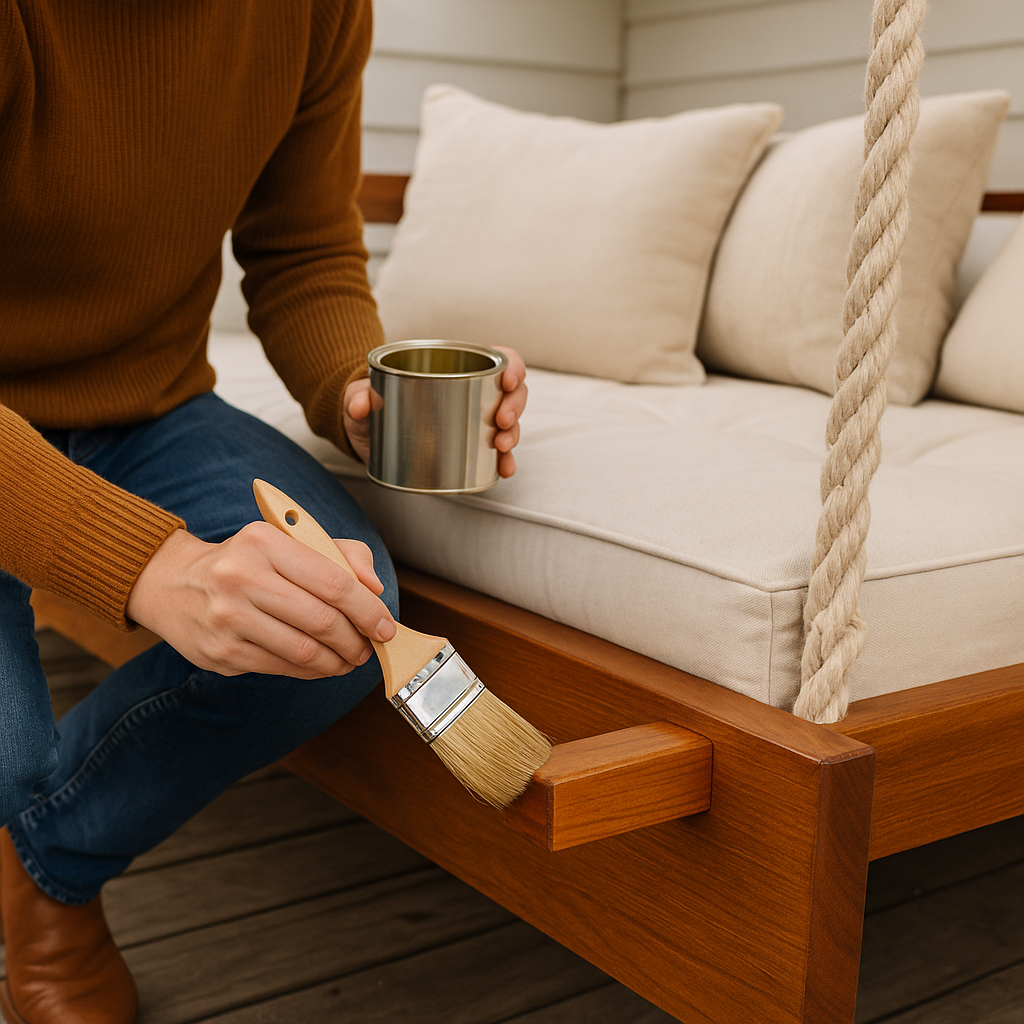
These are made for doing absolutely nothing. Thick ropes, fat cushions, the wood still smelling like stain in the sun. I stretched out on one at a friend’s lake place and nearly fell asleep before I even got comfortable. The breeze rocked me, kids piled on with sticky hands, the dog tried to claim a corner — the thing swayed but never gave way. That night, we dragged out our blankets, and with the stars overhead, it felt more like camping than furniture. I didn’t want to move.
Porch Swing Bed
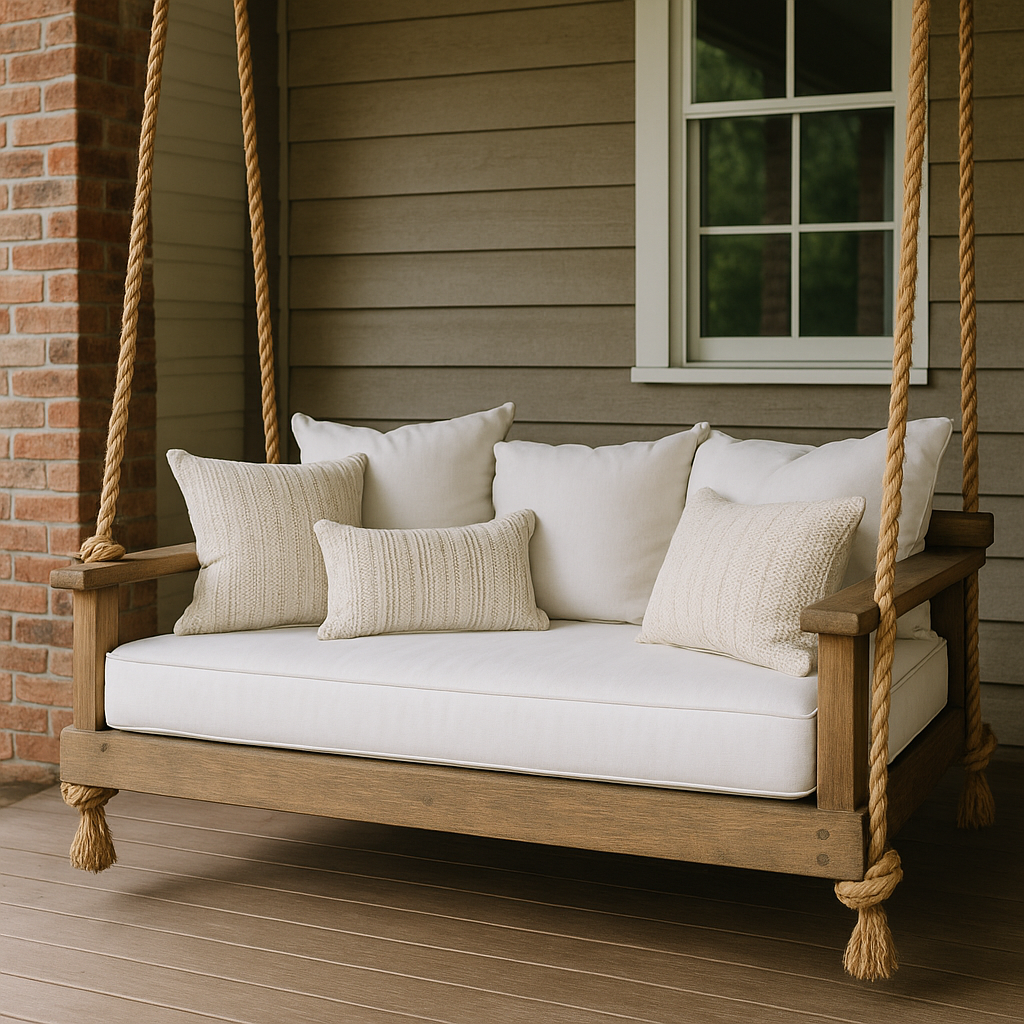
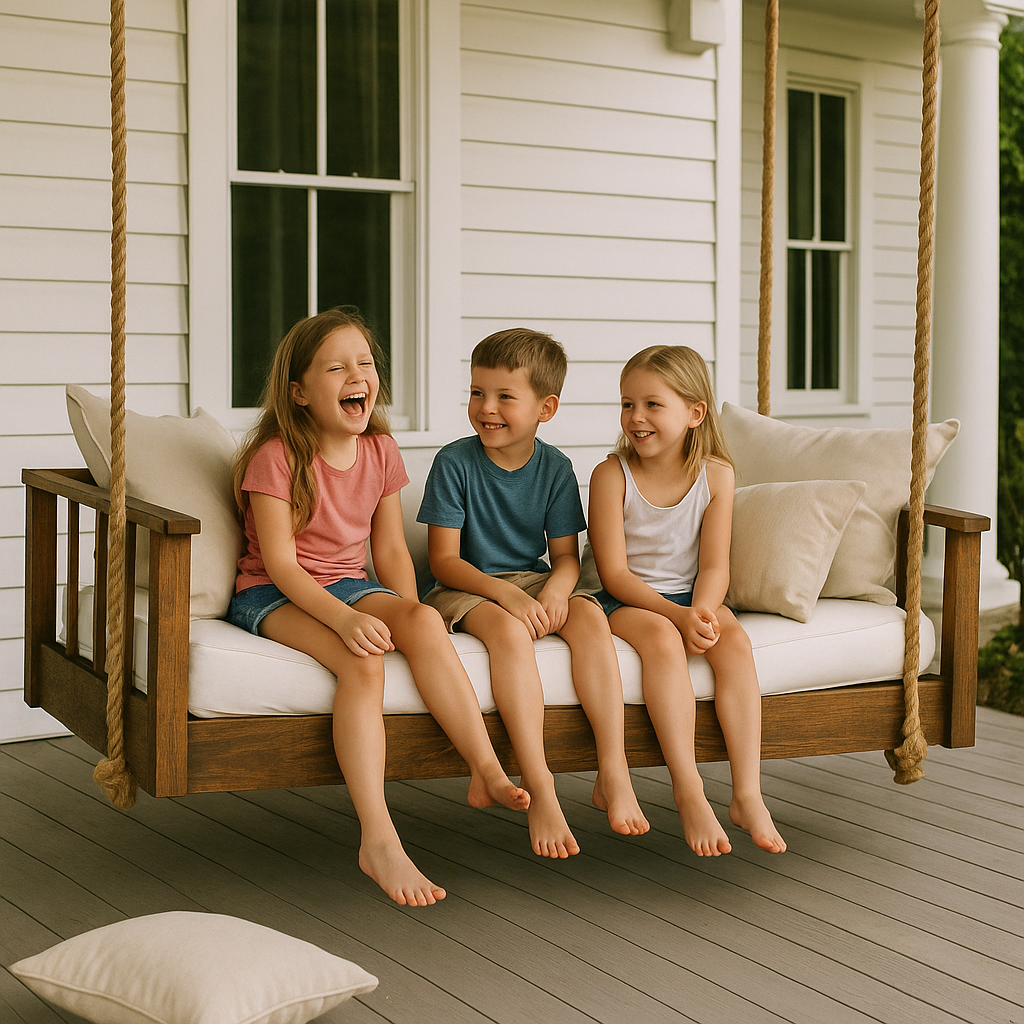
This one’s the classic. Rope, frame, mattress. No bells, no whistles. When I was a kid, my neighbor had one, and every summer night, three of us would cram onto it. Someone always slid off the edge, pillows hit the ground, and the rope left little pinches on our legs.
Nobody cared. We laughed, we rocked, and we talked until the mosquitoes chased us inside. You don’t remember the flaws, just the nights. That’s why they’re still around.
Hammock-Style Hanging Bed
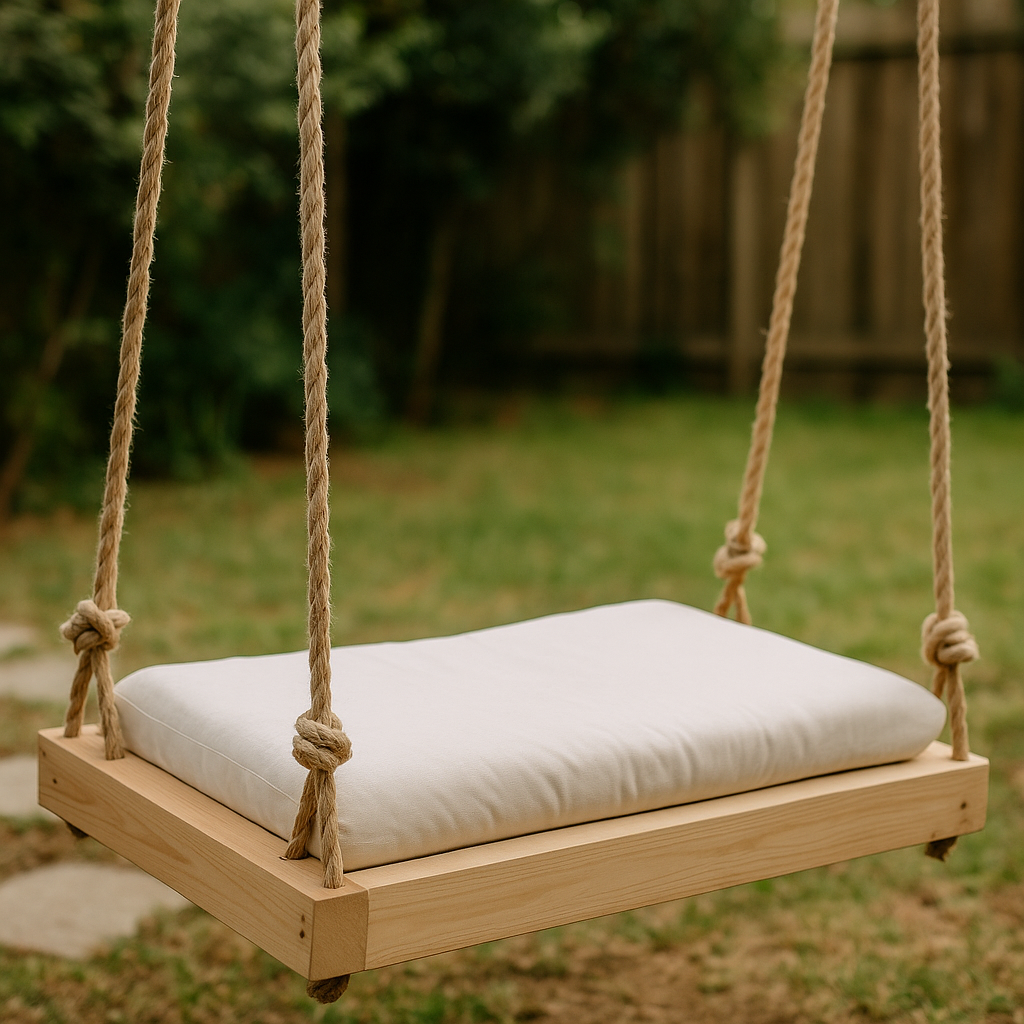
This is the DIY version — half hammock, half bed. I rigged one once using a climbing rope and scrap wood. Looked sketchy, but it held.
If you shifted too fast, it would tilt like a carnival ride, but that somehow made it part of the fun. Indoors, it felt quirky, almost out of place, but outdoors, it became the spot everyone fought over. Didn’t matter how rough it looked — that thing got more use than the actual patio chairs.
Luxury Hanging Bed Frames
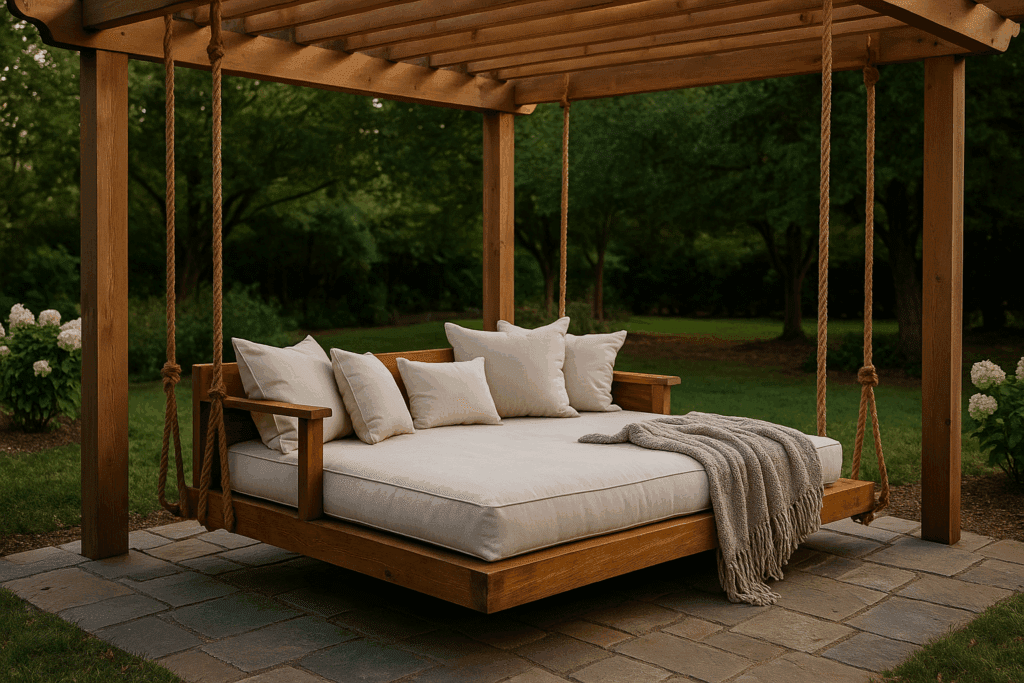
These are the show-offs. Huge round frames that spin, canopies that billow in the wind, designs that look stolen from a high-end resort. I saw one at a hotel once that rotated so slowly you barely noticed until you realized the view had changed. Some have pergola tops, some have built-in side tables. They don’t blend in at all — they make a statement.
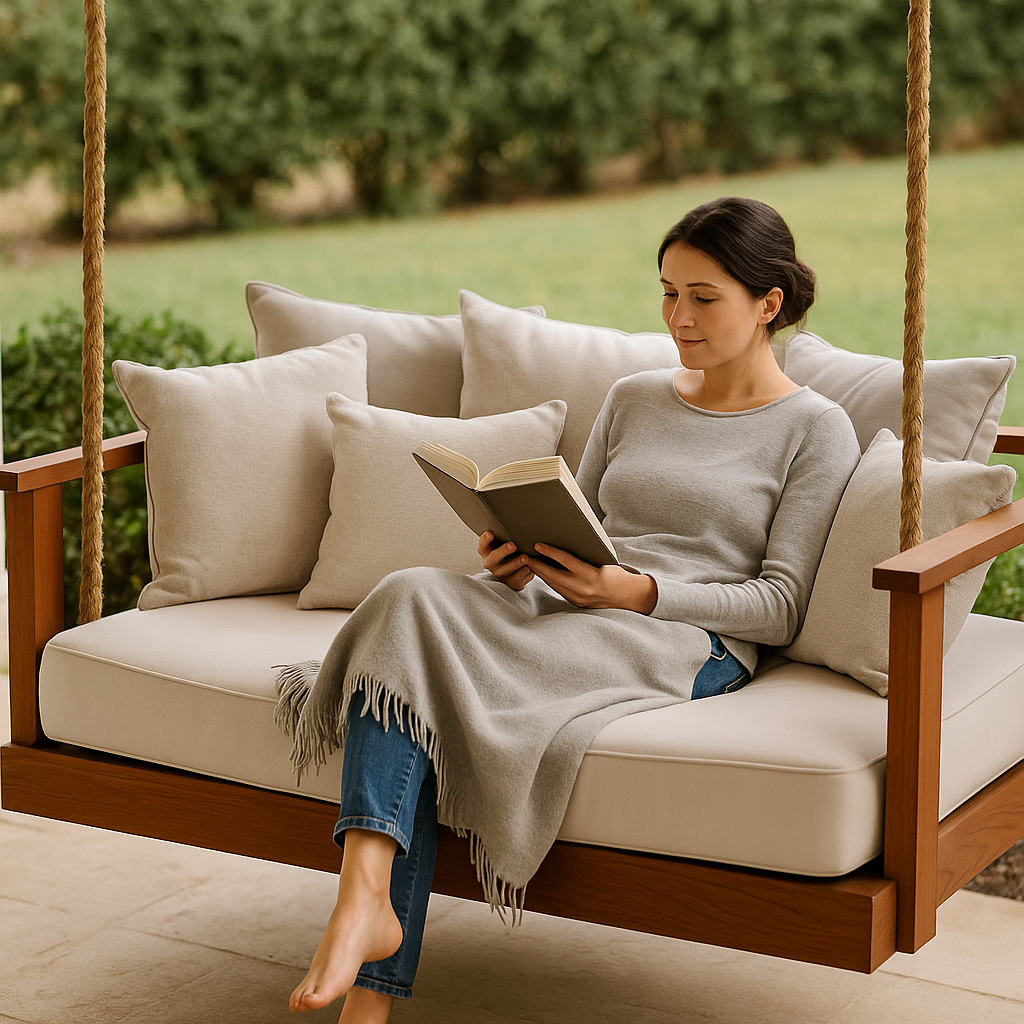
A hanging bed outside changes the whole mood of a backyard or porch. I remember the first time I tried one at a friend’s lake house — it felt like a cross between a hammock and a daybed, only steadier. On a summer afternoon, you can stretch out with a book and sway gently in the breeze.
Patio Retreats – Perfect for lazy weekends. Add a few oversized pillows, and it becomes the most fought-over spot in the house.
Garden Lounges – If you’ve got a shady tree or pergola, hang a bed there and throw on mosquito netting. Suddenly, you’ve got your outdoor nap nook.
Porch Swing Beds – A southern classic. I’ve seen these on wide porches where neighbors stop by, sit down, and never want to leave.
When it comes to fabric, go with something that can handle sun and rain. Sunbrella cushions or outdoor-rated canvas last for years without fading or getting musty.
Hanging Bed for Indoors
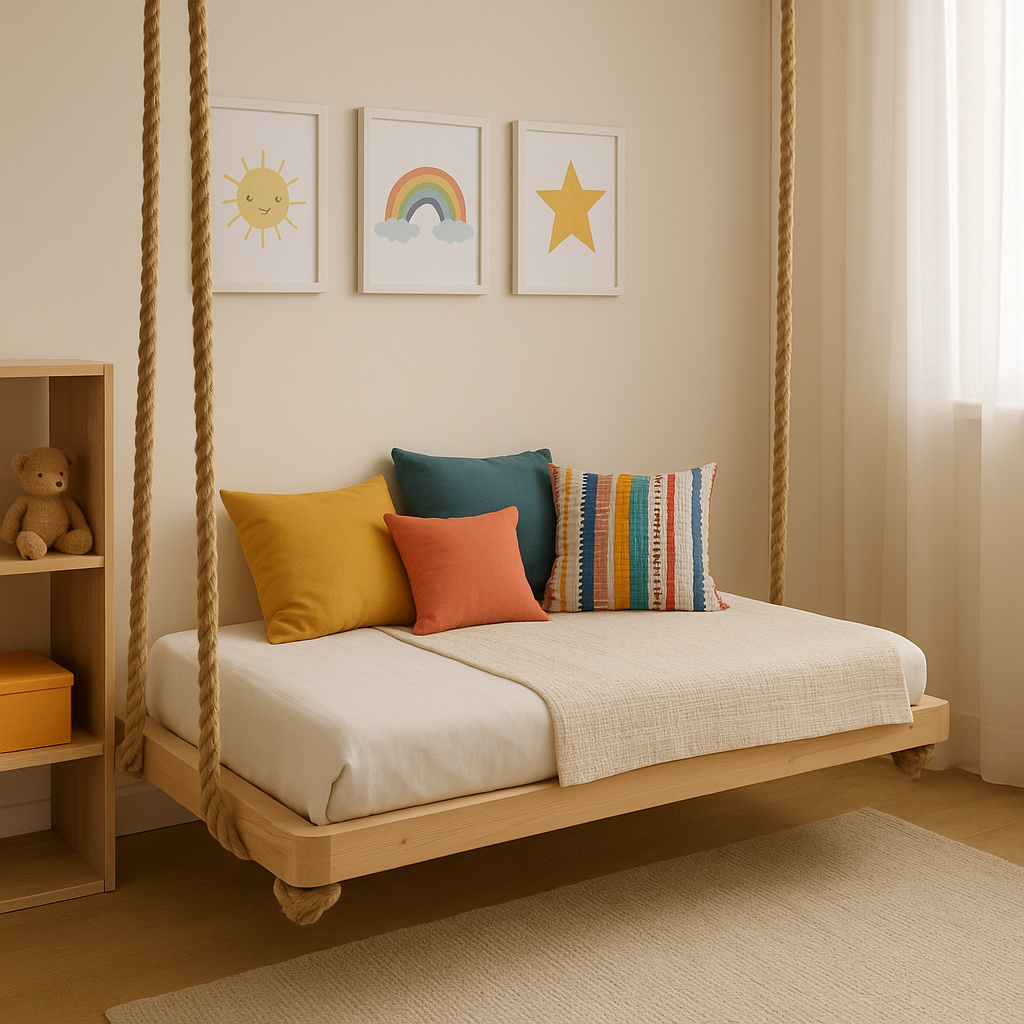
Bringing the idea inside gives a room a unique character. A hanging bed instantly feels lighter than a regular frame because it “floats” above the floor.
Minimalist Bedrooms – If you prefer clean lines and an uncluttered style, a floating bed draws the eye without weighing down the room.
Kids’ Rooms – My niece has one in her room, and bedtime became fun. We added soft ropes and a low height for safety, and now it’s her favorite reading corner too.
Luxury Lofts – In larger spaces, a custom-designed hanging frame looks like an art piece. Add dimmable lighting underneath, and it becomes a dramatic focal point.
One tip: make sure the ceiling joists are strong enough. I always double-check weight limits before installing, since a bed frame, mattress, and people can add up quickly. With the right support, though, a hanging bed indoors feels like a mix of cozy and adventurous — almost like camping, but with the comfort of your mattress.
How to Build and Safely Hang a DIY Bed Swing
When I first built my hanging bed, the hardest part wasn’t the construction — it was making sure it felt solid and safe enough to lie on. Here’s the process I followed, along with a few lessons learned along the way.
Materials You’ll Need
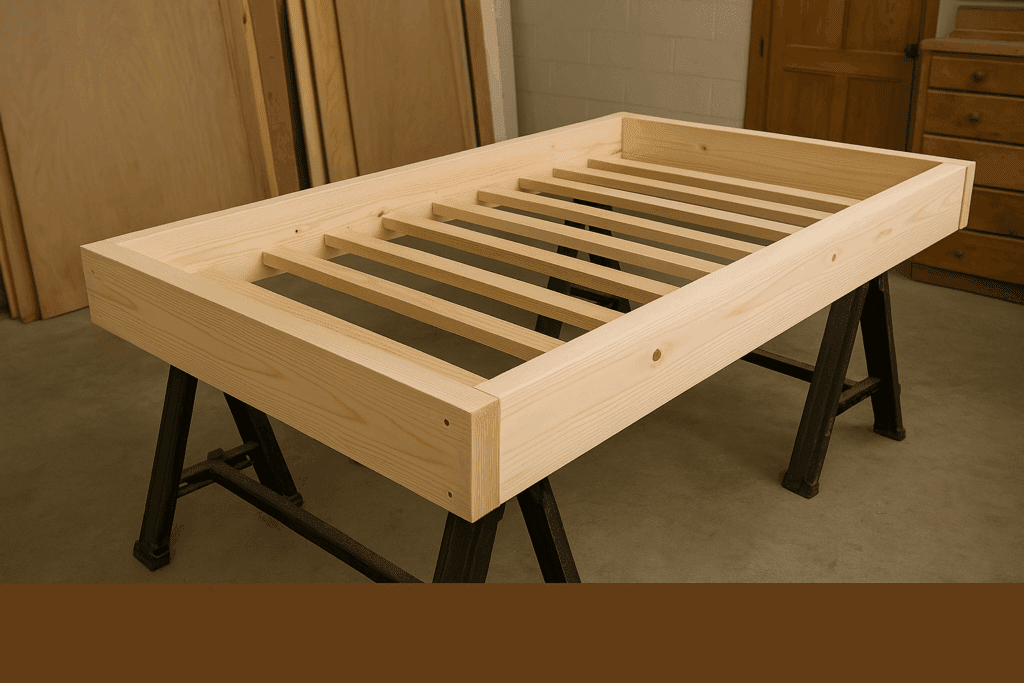
Solid wood planks (I used pine, but cedar works beautifully outdoors)
A comfortable mattress or thick cushion
Heavy-duty chains or marine-grade rope
Eye bolts, washers, and anchors rated for weight-bearing
Tools That Help
Power drill with masonry or wood bits (depending on where you’re mounting)
A circular saw or miter saw for clean cuts
A carpenter’s level to make sure the bed doesn’t tilt
Wrench or socket set for tightening hardware
Step-by-Step Guide
Build the Frame – Construct a simple rectangular frame large enough to hold your mattress. Add support slats across the bottom so the weight is evenly distributed.
Install Eye Bolts – Drill holes in the corners of the frame and insert heavy-duty eye bolts. Secure them with washers and nuts so they won’t loosen over time.
Attach Rope or Chain – Thread rope through the eye bolts and knot securely, or connect chain links using carabiners. Always double-check the weight rating.
Mount and Hang – Locate ceiling beams or porch joists strong enough to support the load. Drill pilot holes and install lag eye screws or anchors. Hang the ropes/chains and test with gradual weight before adding the mattress.
💡 Tip: Before committing, I sat on mine with just the frame hanging — no mattress. If it creaked or tilted, I adjusted the ropes until it felt steady. That step gave me confidence it would hold up for the long haul.
With the right prep, you’ll have a bed swing that feels both sturdy and relaxing — the kind of spot you’ll never want to leave.
Outdoor Care: Oil wood, cover cushions, protect from rain.
Indoor Care: Dust regularly, check anchors, and clean fabrics.
Seasonal Storage: Store cushions indoors during winter.
Hanging Bed vs Hammock vs Swing Bed
Feature
Hanging Bed
Hammock
Swing Bed
Comfort
✅ High
✅ Medium
✅ High
Style
✅ Modern
❌ Casual
✅ Classic
Durability
✅ Strong
❌ Limited
✅ Strong
Final Thoughts on Hanging Beds
Honestly, I didn’t even trust it the first time. I hung it up, sat down real slow, figured the bolts were gonna give. They didn’t. It squeaked, yeah, but it held. I remember just lying there, breeze coming in, kind of laughing to myself.
A couple of days later, the kids piled on with snacks and a blanket. Chaos. My wife claimed it the next morning for her coffee. And now I’m stuck sneaking my turn at night. Sometimes I just sit out there, the porch light buzzing, the ropes creaking, the dog curled underneath. Not perfect, but that’s what I like about it.
Related Posts:
DIY Wall Cabinet Guide: Building, Hanging & Dimensions by Admin September 26, 2025 Installing Wall Cabinets (or Upper Cabinets) are storage units mounted to wall studs above a countertop or work surface. Standard installation requires securing the cabinet through…
Wooden Katana( Full Guide) by Admin May 10, 2024 DIY A wooden katana is a practice sword made of wood, typically designed to resemble a traditional Japanese katana but without a sharp edge. It's commonly…