Stand in the plywood aisle long enough and you’ll see the same three grade designations over and over: ACX, BCX, and CDX. All three are softwood plywood grades manufactured with moisture-resistant exterior-type adhesive bonds, although their formal bond classifications differ.
All three are commonly sold in 4-by-8-foot sheets and several familiar construction thicknesses, although local availability varies. And yet ACX normally carries a substantial premium over CDX because of its higher-quality face veneer, with BCX generally falling somewhere between the two.
I’ve used all three grades for decades — CDX by the unit on framing jobs, BCX for sheds and shop fixtures, ACX whenever a painted surface had to look clean. The short version is this: the letters describe the two outer faces of the panel, and the price tracks almost entirely with how good those faces look. Face quality alone does not determine structural performance.
Panels with the same thickness, performance category, span rating, and structural designation may perform similarly even when their visible faces look very different — so compare the complete grade stamp, not just the letters. For ordinary covered roof sheathing, paying extra for an A-grade face usually provides no practical benefit. If you’re building a painted garage door panel out of CDX, you’ll spend the savings on wood filler and sanding discs.
In this guide, I’ll break down exactly what each designation means, where each grade earns its keep, and how to decide which one belongs in your cart.
Quick Answer
Choose CDX for covered roof or wall sheathing when the panel’s complete grade stamp matches the application. Choose BCX when one visible face will be painted but does not need a premium finish. Choose ACX when the plywood itself will remain visible and you want the smoothest paintable face.
The letters primarily describe face and back veneer quality. Always check the complete stamp for the bond classification, Performance Category, span rating, and intended use.
What the Letters in ACX, BCX, and CDX Mean
Softwood construction plywood in the United States is manufactured under Voluntary Product Standard PS 1, which is administered with APA – The Engineered Wood Association. That standard defines veneer grades and the formal bond classifications shown on certified panel stamps. If you want the full rundown of the lettering system beyond these three grades, I cover it in my guide to plywood grades explained.
The First Two Letters: Face and Back Veneer Grades
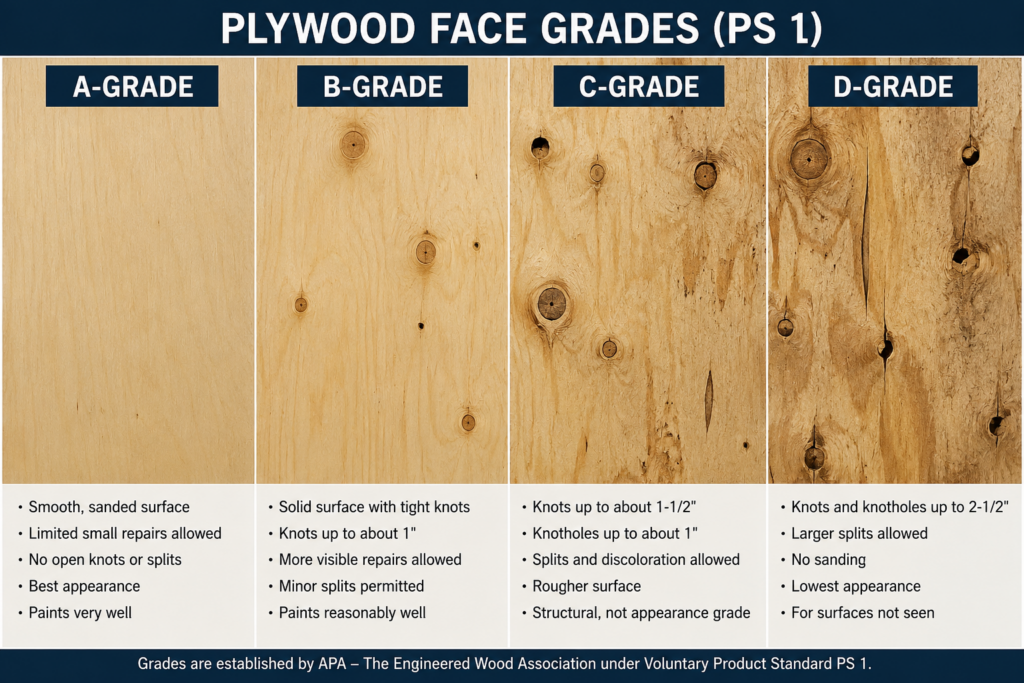
The first letter describes the face (front) veneer, and the second letter describes the back veneer. Under PS 1, the grades run from A down to D:
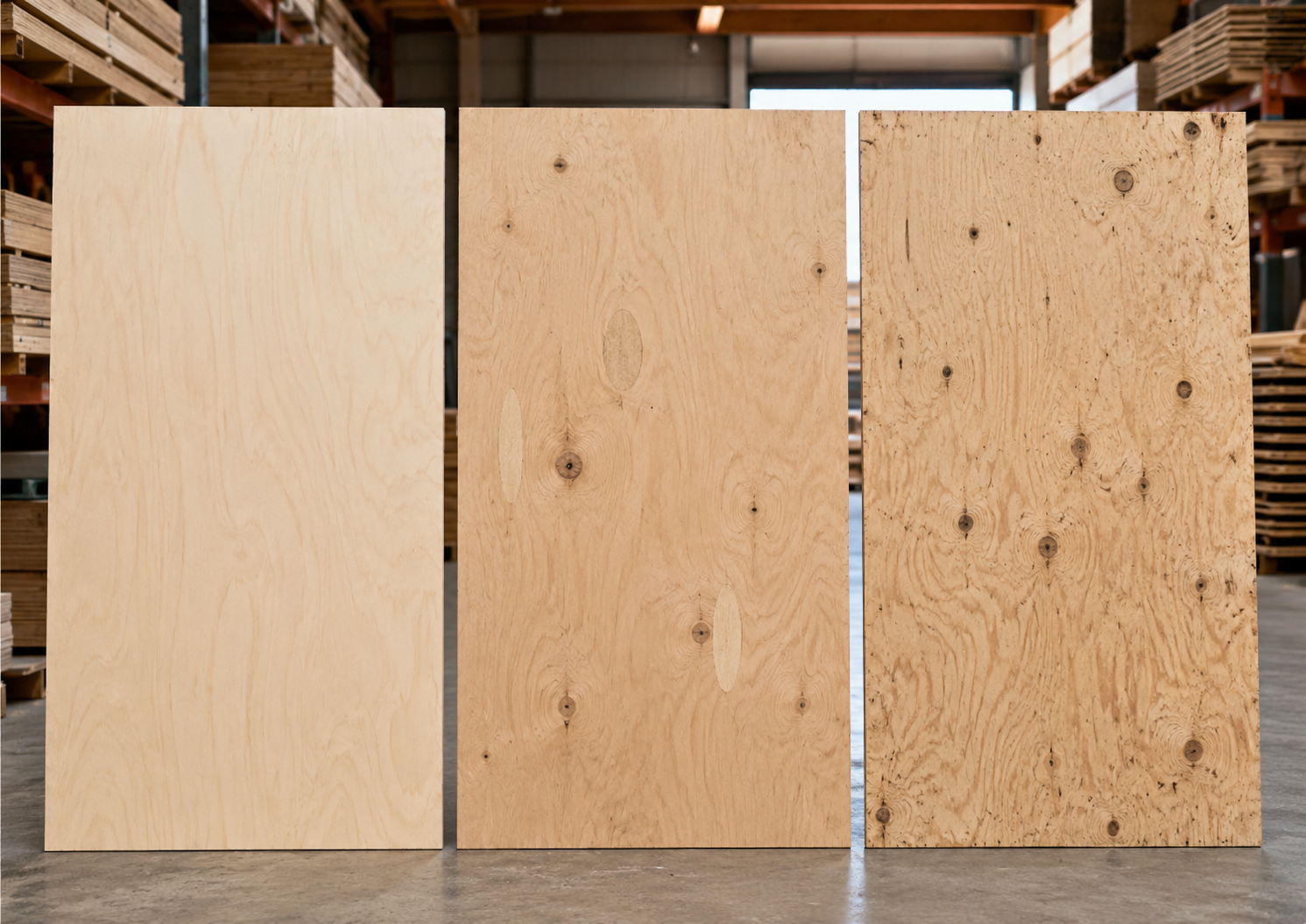
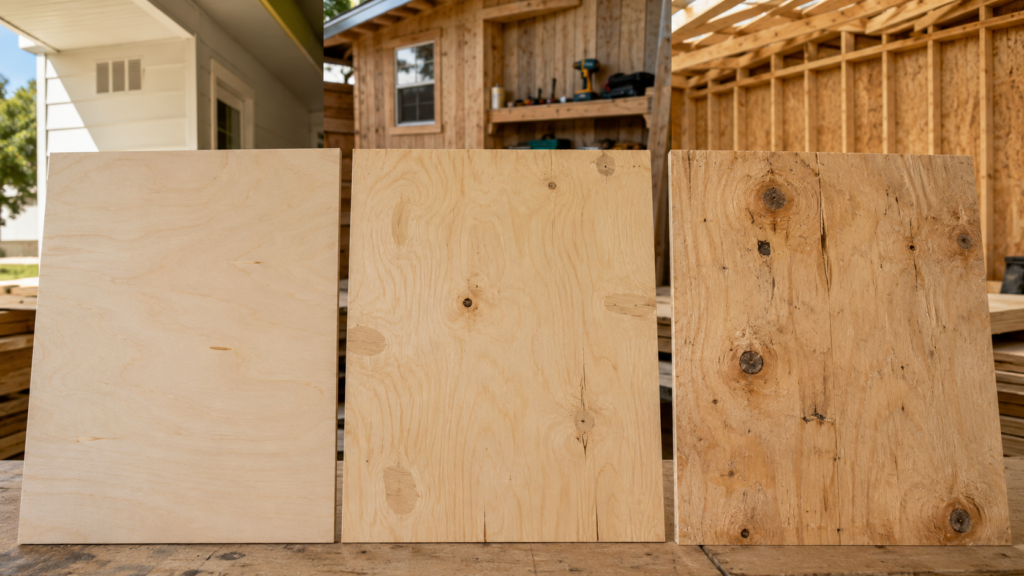
A-grade veneer is smooth, sanded, and paintable. The standard allows a limited number of neatly made repairs — typically small patches or synthetic filler — but no open knots or splits. It’s the best face you’ll find on construction plywood, though it’s still a construction-grade surface, not furniture-grade hardwood plywood.
B-grade veneer is also a solid, sanded surface, but the standard permits tight knots (generally up to about 1 inch across), more visible repairs, and minor splits. It paints reasonably well but shows more character than an A face.
C-grade veneer allows knots up to roughly 1-1/2 inches, knotholes up to about 1 inch (occasionally larger within limits), splits, and discoloration. It’s structurally sound but rough looking.
D-grade veneer is the bottom rung. Knots and knotholes up to about 2-1/2 inches are permitted, along with larger splits. D veneer is never sanded smooth and is intended for surfaces nobody will see.
So the three grades stack up like this:
ACX = A face, C back
BCX = B face, C back
CDX = C face, D back
Notice that ACX and BCX share the same C-grade back. Within the grade designation, the stated difference between A-C and B-C is the front-face veneer grade — but actual panels may also differ in species, construction, thickness, span rating, and other stamped characteristics. CDX drops both faces down a notch, which is why it’s typically the cheapest of the three.
What the X Really Means
ACX, BCX, and CDX are common retail and trade labels, but the actual APA grade stamp is more important than the final letter.
Under PS 1-22, structural plywood receives one of two bond classifications: Exposure 1 or Exterior — APA explains both Exterior and Exposure 1 bond classifications in its FAQ. Exposure 1 panels are intended to withstand moisture during construction or other temporary exposure, but they are not intended for permanent weather exposure. Exterior panels are manufactured for repeated wetting and drying or long-term exposure to weather.
D-grade veneer is permitted in Exposure 1 plywood but not in Exterior plywood. That is why C-D plywood — commonly called CDX — is normally classified Exposure 1. PS 1-certified A-C and B-C panels are listed as Exterior grades.
The practical rule is simple: do not rely only on the letters ACX, BCX, or CDX on a store label. Read the panel stamp and look specifically for “Exterior” or “Exposure 1.”
One more caveat: an Exterior bond classification addresses the durability of the adhesive bond, not the wood itself. Exterior-rated A-C or B-C plywood may be used in properly designed exterior applications, but it still requires appropriate flashing, drainage, edge protection, and a maintained finish. Exterior-rated glue does not make untreated wood decay-proof or suitable for ground contact. CDX in particular should always end up covered by roofing, siding, or flooring.
Panel grade: Identifies the veneer combination or intended product use, such as A-C, Rated Sheathing, or Rated Sturd-I-Floor.
Bond classification: Exterior is intended for long-term weather or moisture exposure. Exposure 1 is intended for construction delays and other temporary moisture exposure.
Performance Category: Identifies the panel’s nominal thickness category.
Span rating: On Rated Sheathing, a mark such as 32/16 indicates the maximum recommended support spacing for roof sheathing and subfloor use under the specified installation conditions.
Follow the complete stamp and installation instructions rather than choosing a panel from the ACX, BCX, or CDX trade name alone.
ACX Plywood: The Finish Grade of the Exterior Family
ACX gives you one genuinely nice face on an exterior-glued panel, which makes it the go-to when the plywood itself will be the visible, finished surface. I’ve written a full ACX plywood guide covering uses and costs in more depth, but here’s the summary.
The A face arrives sanded and ready for primer. Repairs are neat and small, so a coat of exterior primer and two topcoats will produce a surface that looks intentional rather than patched together. The C back goes against the framing where nobody sees it.
Where ACX makes sense:
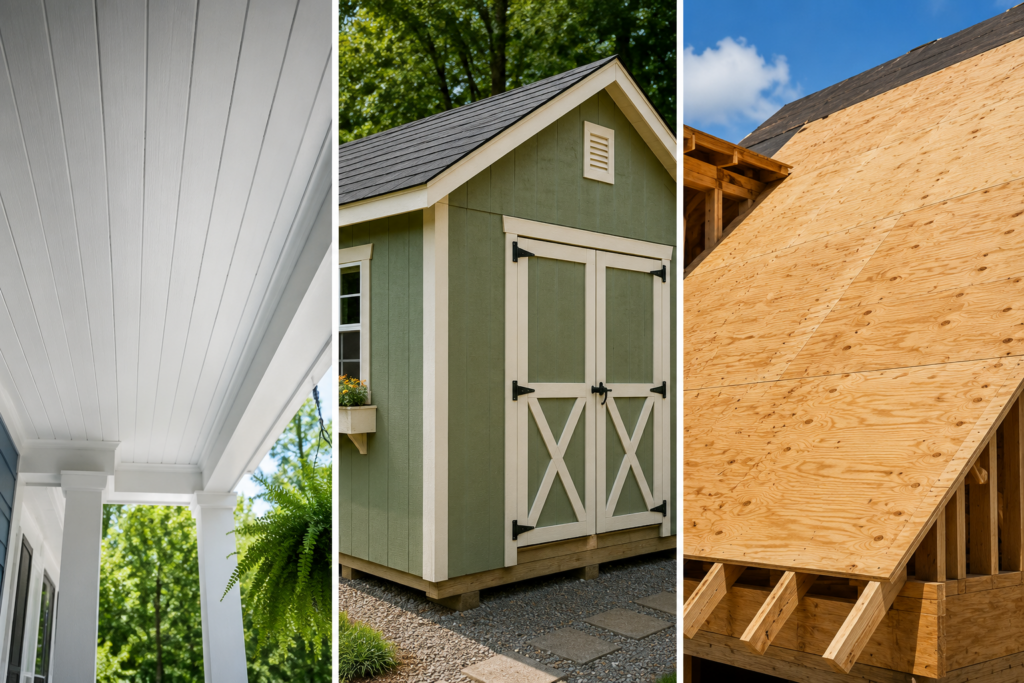
Painted exterior trim panels, gable ends, and porch ceilings
Soffits and eave boxing that will be painted
Shed and outbuilding siding where appearance matters
Outdoor furniture and shop fixtures that get paint or sealer, and planters only when the plywood is isolated from soil and standing moisture
Cabinet carcasses and utility built-ins in garages and damp-prone spaces
ACX can also work as a paintable finish over a properly insulated and framed basement wall assembly. It should not be installed directly against damp concrete or masonry simply because it carries an Exterior bond classification. The tradeoff is cost: ACX normally carries a substantial premium over CDX because of its higher-quality face veneer, though the size of that gap varies by thickness, region, species, retailer, and inventory — my plywood prices guidetracks dated examples of the ranges I’ve been seeing.
BCX Plywood: The Practical Middle Ground
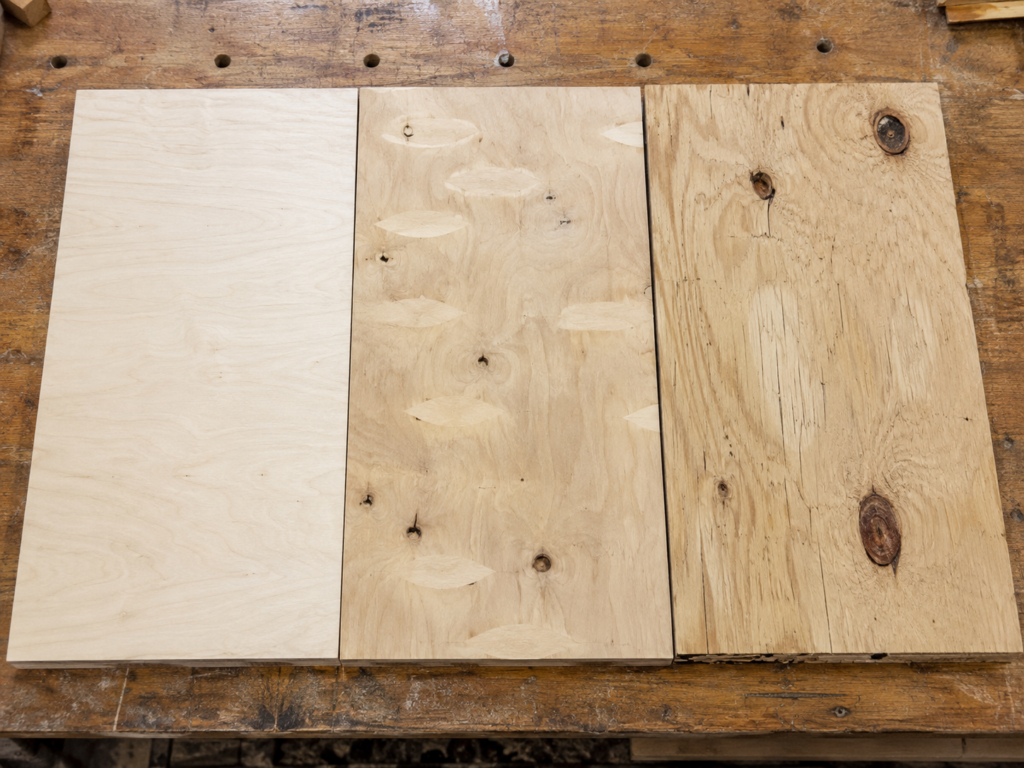
BCX is what I reach for when the panel will be seen but doesn’t need to be pretty. The B face is sanded and solid, but you’ll get tight knots and visible football-shaped patches. Under paint — especially a solid-color exterior paint with some body to it — a B face looks fine from a few feet away. Under clear finish or up close, the repairs show.
Where BCX makes sense:
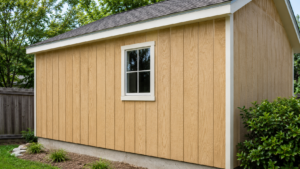
Shed floors, walls, and workbench tops
Painted gates and utility doors, and fences with the understanding that exposed plywood edges and repeated wetting can shorten service life even on Exterior-rated panels
Dog houses, coops, and outdoor storage boxes
Truck and trailer beds and side panels, when the panel is selected for the expected loads, abrasion, fastening, and weather exposure
Any project where you want one decent face without paying ACX money
BCX generally falls between ACX and CDX on price, although local availability can make the differences inconsistent — it’s worth pricing all three at your supplier before assuming the middle grade is the middle price. If your finish plan is exterior paint and your viewing distance is more than arm’s length, BCX usually delivers most of the result for less money. I compare it against its closest sibling in my BCX vs CCX plywood breakdown if you’re weighing that option too.
One caution: big-box BCX quality varies more than ACX. Check sheets for face splits and delaminated edges before loading them, and sight down the length for cupping — B-grade stock seems to get less careful handling in the racks.
CDX Plywood: The Structural Workhorse
C-D Exposure 1 plywood, commonly called CDX, is a traditional and widely available plywood sheathing option — typically the least expensive of these three grades, because the applications it’s designed for hide both faces completely. I go deeper on span ratings and installation in my full CDX plywood guide.
The C face is rough, knotty, and only touch-sanded at best. The D back can have open knotholes big enough to put two fingers through. None of that matters under shingles or behind housewrap — what matters is whether the complete panel stamp, including its grade, Performance Category, span rating, bond classification, and any structural designation, matches the application.
Where CDX makes sense:
Roof sheathing (matched to your rafter spacing via the span rating)
Wall sheathing behind housewrap and siding
Subflooring, when the panel carries the required span rating and is installed according to the stamp, code, and finish-floor manufacturer’s requirements (APA Rated Sturd-I-Floor is generally the more direct choice for single-layer floor systems)
Temporary construction uses: ramps, hoarding, concrete form backing
Rough shelving and storage platforms in unfinished spaces
Where CDX doesn’t make sense: anywhere that requires a smooth finished appearance or where the panel will remain permanently exposed to weather. Because it’s Exposure 1 rather than true Exterior, CDX left uncovered will eventually check, splinter, and degrade at the surface even though the glue lines hold. And trying to make a C face paint-ready means filling every knot and void by hand — I’ve done it, and the labor cost erases the material savings quickly.
Side-by-Side Comparison
ACX
BCX
CDX
Face veneer
A: sanded, smooth, minor neat repairs
B: sanded, tight knots to ~1″, visible patches
C: rough, knots to ~1-1/2″, splits allowed
Back veneer
C
C
D: open knotholes to ~2-1/2″
Bond classification under PS 1
Exterior
Exterior
Exposure 1
Permanent weather exposure
Suitable only when stamped Exterior and properly detailed, finished, and maintained
Suitable only when stamped Exterior and properly detailed, finished, and maintained
No — must be covered
Paintability
Excellent
Good under solid-color paint
Poor without heavy prep
Structural applications
Only as permitted by the complete grade stamp
Only as permitted by the complete grade stamp
Common for covered sheathing when properly rated
Relative cost
Highest
Middle
Lowest
How to Choose: Match the Grade to the Job
The decision comes down to two questions: will the face be seen, and will the panel be permanently exposed to weather?
Roof and Wall Sheathing
Use a properly rated sheathing panel — often C-D Exposure 1 plywood or Rated OSB. Because the faces will be covered, paying for an A- or B-grade face normally provides no practical benefit. Match the span rating, Performance Category, bond classification, and installation instructions to the application, and install panels with the strength axis oriented as the stamp and manufacturer’s directions require.
Subflooring
C-D Rated Sheathing may be used as a subfloor when its stamp and span rating permit it. For a single-layer floor system, APA Rated Sturd-I-Floor is generally the more direct product choice. Finish-floor requirements may still call for separate underlayment.
Painted Outdoor Projects You’ll See Up Close
ACX. Porch ceilings, entry soffits, painted panel doors, and furniture all sit within arm’s length of people’s eyes. The A face takes primer evenly and the small repairs disappear under paint.
Sheds, Fences, and Utility Builds
BCX. A painted shed wall viewed from ten feet away looks the same whether the face is A or B grade, and the savings across eight or ten sheets add up to real money.
Anything Left Bare Outdoors
Honestly, none of these should be assumed suitable for indefinite bare exposure. Even Exterior-rated ACX or BCX lasts longer when it is properly detailed, edge-sealed, finished, and maintained. Where decay resistance is required, use plywood pressure-treated for the specific exposure and application. Marine-grade plywood offers higher-quality veneers and tighter core construction, but it is not automatically decay-resistant and should not be treated as a substitute for preservative-treated plywood.
Frequently Asked Questions
Is CDX plywood waterproof? No. CDX is normally an Exposure 1 panel. Its adhesive bond is designed to tolerate temporary moisture during construction, but the complete panel is not waterproof and is not intended for permanent exposure to weather. CDX is meant to be covered.
Can I use BCX or ACX for roof sheathing? It can work if the panel’s stamp — span rating, performance category, and structural designation — matches the application. Economically, though, it usually provides no benefit because you would be paying a premium for face quality that gets buried under the roofing assembly on day one.
Why is ACX so much more expensive when the glue is the same? You’re paying for the A-grade face veneer, which requires clearer logs and more careful repair work at the mill. Veneer quality, not adhesive, drives most of the price spread between these grades.
Is BCX strong enough for a shed floor? Generally yes, in an appropriate panel for your joist spacing. A 23/32-inch Performance Category panel over joists 16 inches on center is common, but verify the panel’s span rating and the expected floor load before buying. Strength comes from the panel’s construction and span rating rather than the face letters.
Which side of CDX faces out? When the two faces differ, placing the better C face up on a floor or outward on a wall generally gives a cleaner nailing and inspection surface. However, the grade stamp, required strength-axis orientation, skid-resistant surface instructions, and manufacturer’s installation directions take priority. For floors and roofs, the strength axis normally runs perpendicular to the supports.
The Bottom Line
ACX, BCX, and CDX are common face-and-back veneer combinations used to describe structural plywood panels. When the thickness, span rating, performance category, panel construction, and structural designation match, their structural performance may be comparable — and the price difference is largely a face-veneer tax. Buy CDX when both faces disappear into the structure, BCX when one painted face needs to look decent from a distance, and ACX when the plywood itself is the finished, visible surface. Spend the money where eyes will land, and put the savings toward better fasteners, primer, and paint — those do more for the finished result than an A face nobody will ever see.
Related Posts:
Best Plywood for Exterior Siding: T1-11, ACX & BCX by Admin July 5, 2026 Repairs Choosing the best plywood for exterior siding comes down to one decision most people get backward: they shop by price first and exposure second. For…
ACX Plywood Guide: Uses, Benefits & Costs by Admin September 2, 2025 Grades If you’ve walked through the lumber aisle at your local home improvement store, you’ve probably seen stacks of plywood labeled ACX. At first glance, it…