Selecting the correct plywood thickness is one of the most important decisions in woodworking and construction. The thickness of the sheet determines how strong the panel will be, how much weight it can support, and whether it will remain stable over time.
What thickness of plywood should you use?
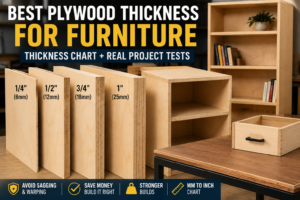
1/4 inch → backs, panels, decorative use
1/2 inch → walls, underlayment
3/4 inch → subfloors, cabinets, shelves
👉 For most projects, 3/4-inch plywood is the best choice because it prevents sagging and supports weight.
Understanding plywood thickness helps prevent common structural problems like sagging shelves, flexible cabinet boxes, and bouncy subfloors.
What Is Plywood Thickness?
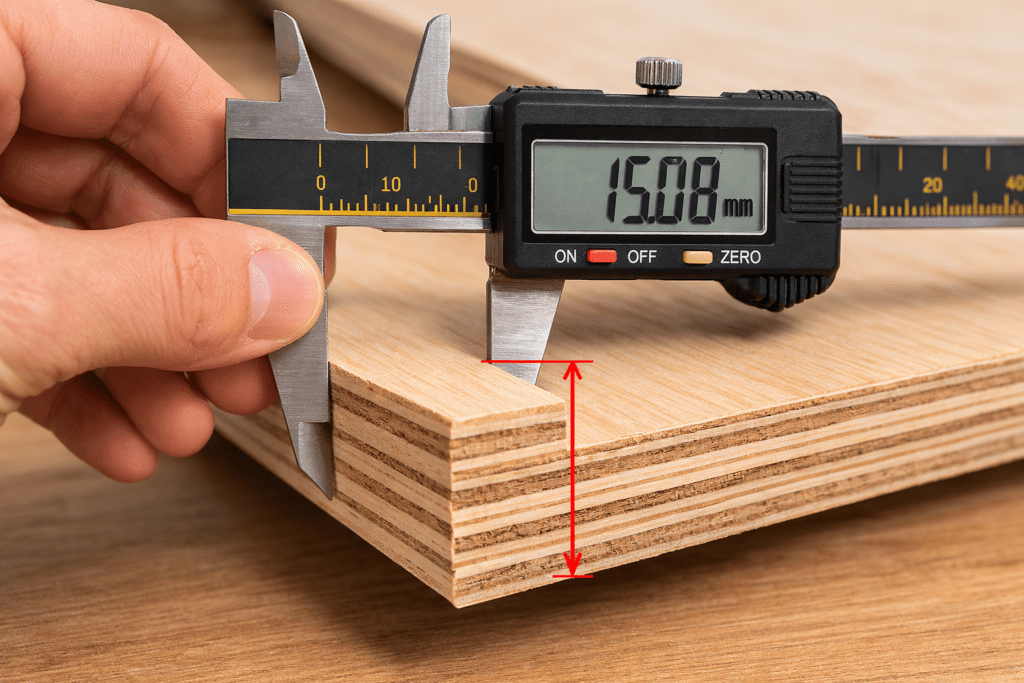
Plywood thickness refers to the combined thickness of all wood veneer layers that are glued together to form a structural sheet panel.
Each sheet of plywood is made from thin wood veneers arranged with alternating grain directions. This cross-laminated structure is what gives plywood its strength and stability.
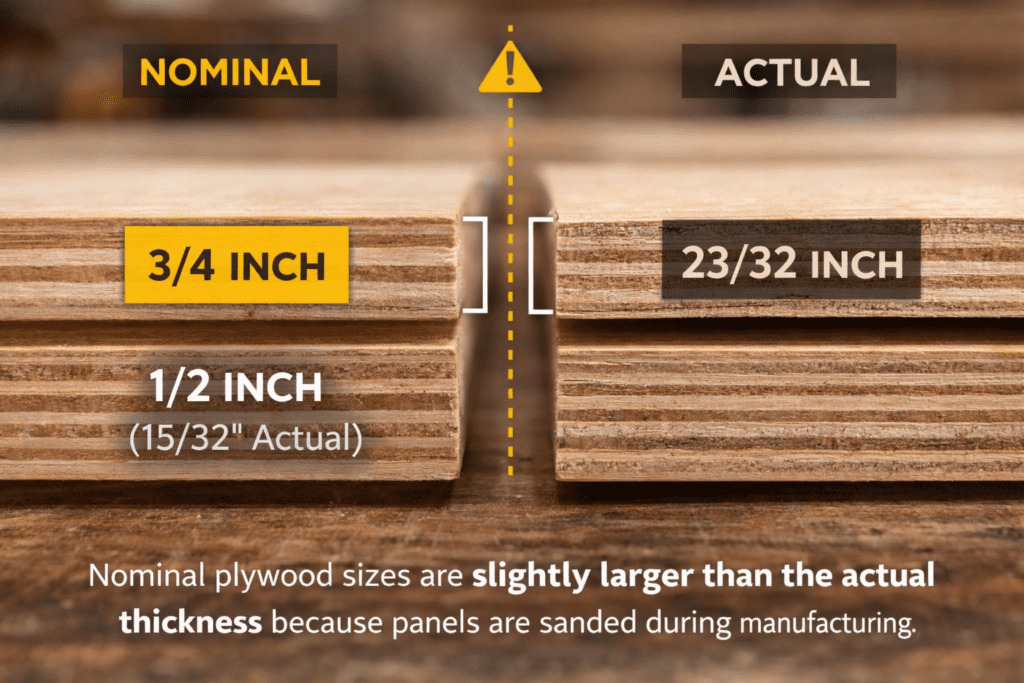
Because plywood is sanded during manufacturing, the actual thickness is slightly smaller than the nominal size.
For example:
Nominal Size
Actual Thickness
1/4 inch
7/32 inch
1/2 inch
15/32 inch
3/4 inch
23/32 inch
This difference becomes important when plywood is used for cabinetry or joinery. Builders working with cabinet boxes often refer to the tolerances outlined in the cabinet construction guide on ThePlywood.com, which explains how plywood sizing affects dado joints and panel fitting in cabinet frames.
Manufacturing standards for plywood panel dimensions are published by the APA – Engineered Wood Association, which maintains technical guidance on structural wood panels and span ratings (https://www.apawood.org).
Quick Answer: Most Common Plywood Thickness
The most common plywood thickness is 3/4 inch because it offers the best balance of strength, stiffness, and cost. It is widely used for cabinets, subfloors, and shelving.
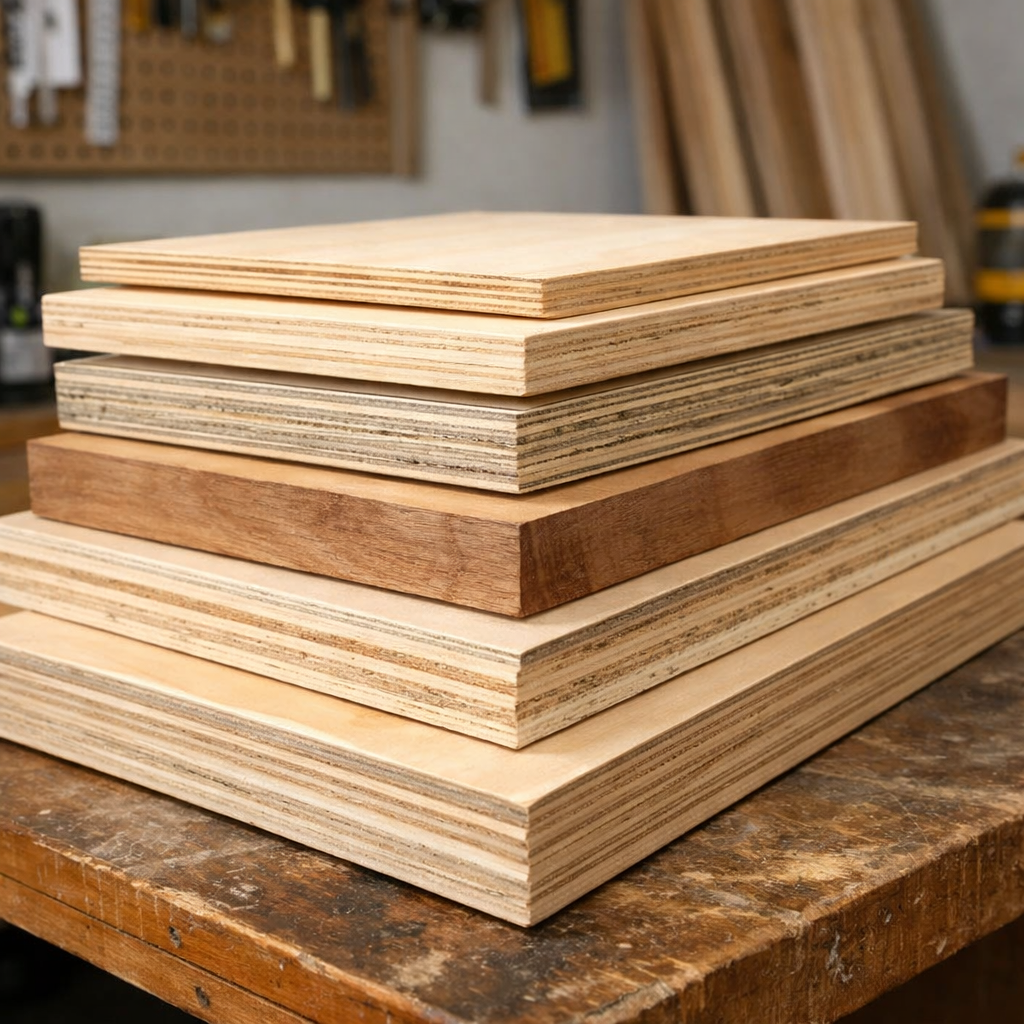
If you walk into almost any woodworking shop, stacks of 3/4-inch cabinet plywood will usually dominate the material rack because it performs reliably across many types of projects.
When choosing cabinet materials, many builders prefer Baltic birch plywood due to its high number of veneer layers and consistent internal structure. High-quality Baltic birch sheets are available from woodworking suppliers and online retailers, including Baltic Birch plywood sheets on Amazon (affiliate example).
What Happens If You Use the Wrong Plywood Thickness?
Choosing the wrong plywood thickness is one of the most common (and expensive) mistakes in DIY projects.
Here’s what typically goes wrong:
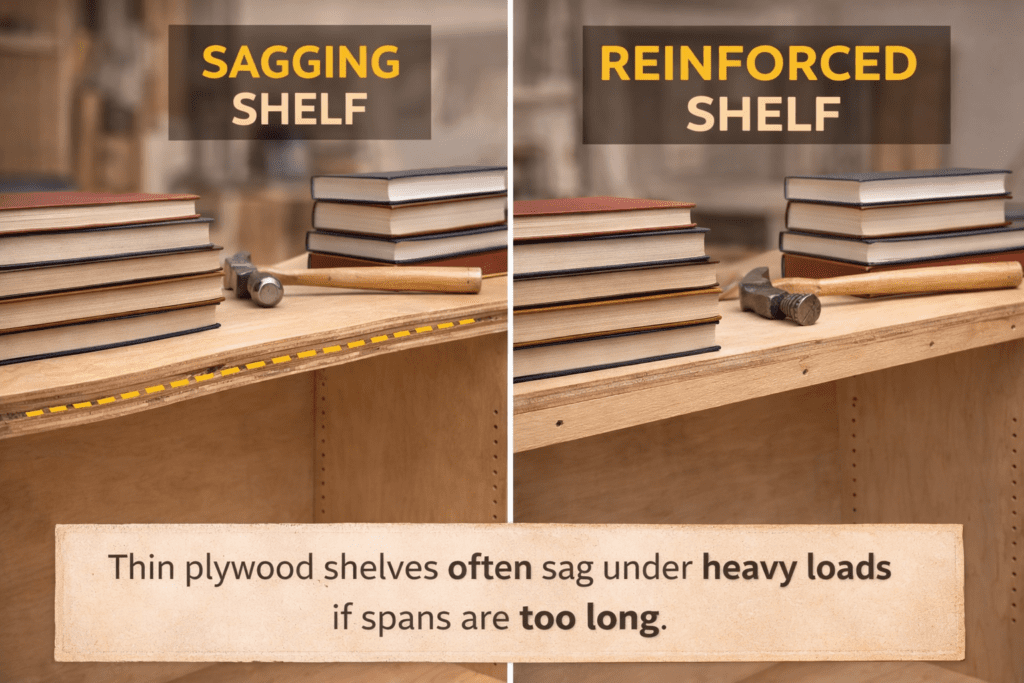
Sagging shelves Thin plywood bends over time, especially under books, tools, or kitchen items.
Soft or bouncy floors Undersized subfloor panels flex between joists, leading to movement and eventual cracks.
Cracked tile and grout Tile requires a rigid base—flexing plywood causes tiles to loosen or crack.
Weak cabinet boxes Thin panels can’t hold screws well, causing joints to loosen and cabinets to shift.
Premature project failure What looks fine on day one can fail months later as the material weakens under load.
👉 In most cases, using 3/4-inch plywood instead of thinner sheets prevents these problems entirely.
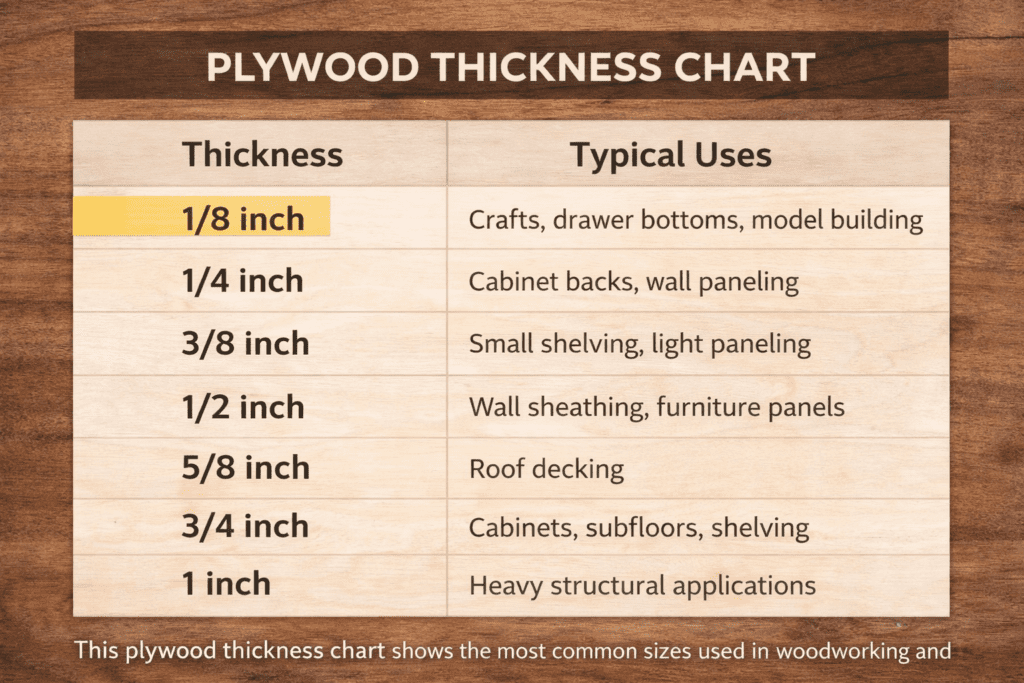
Standard Plywood Thickness Sizes
Plywood is produced in several standard thicknesses that match common construction needs.
Thickness
Typical Use
1/8 inch
crafts and model building
1/4 inch
cabinet backs and paneling
3/8 inch
light furniture panels
1/2 inch
wall sheathing
5/8 inch
roof decking
3/4 inch
cabinets and shelving
1 inch
heavy structural work
Understanding where these thicknesses are used becomes much easier when you look at real building scenarios such as subfloors, cabinets, roofing, and shelving.
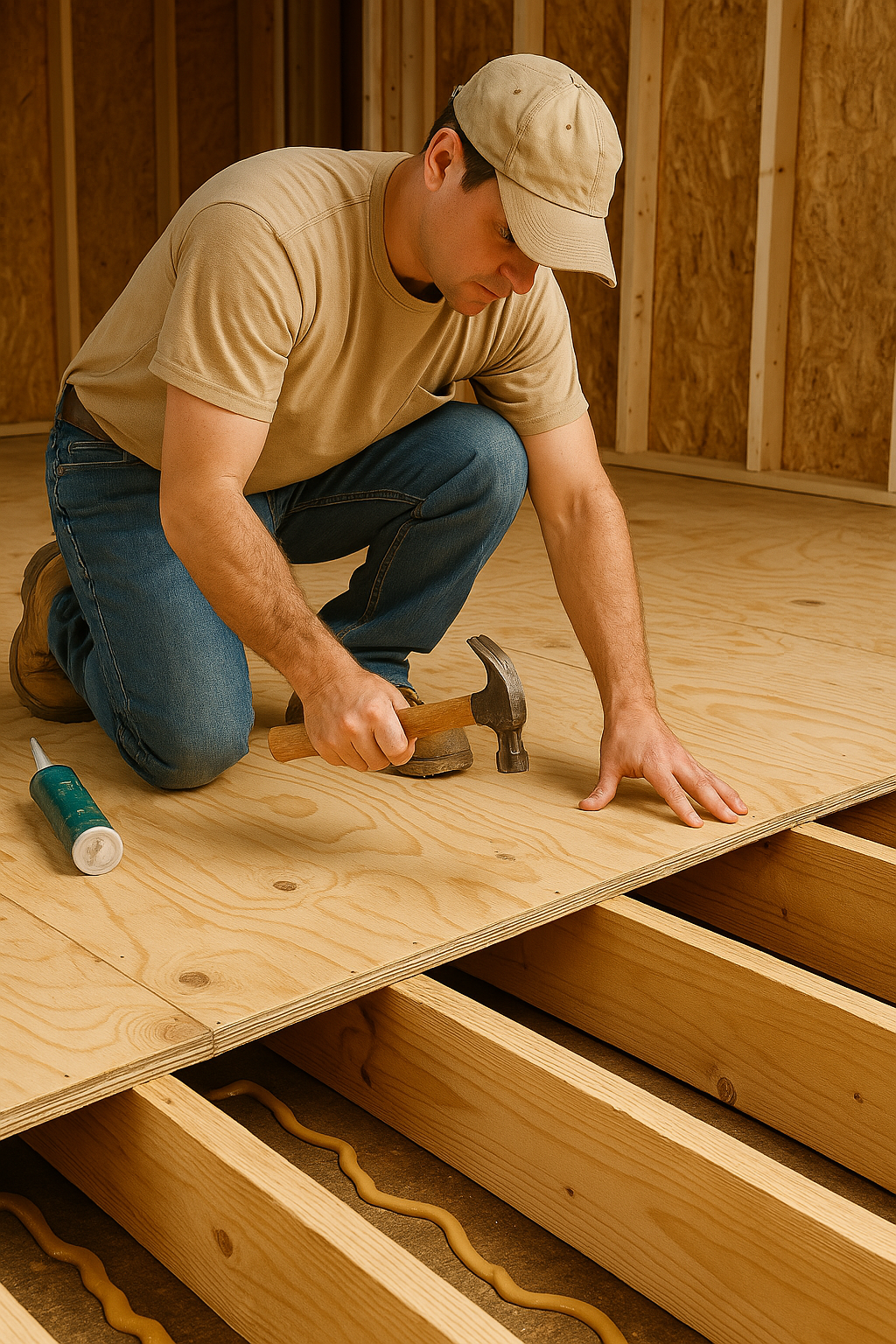
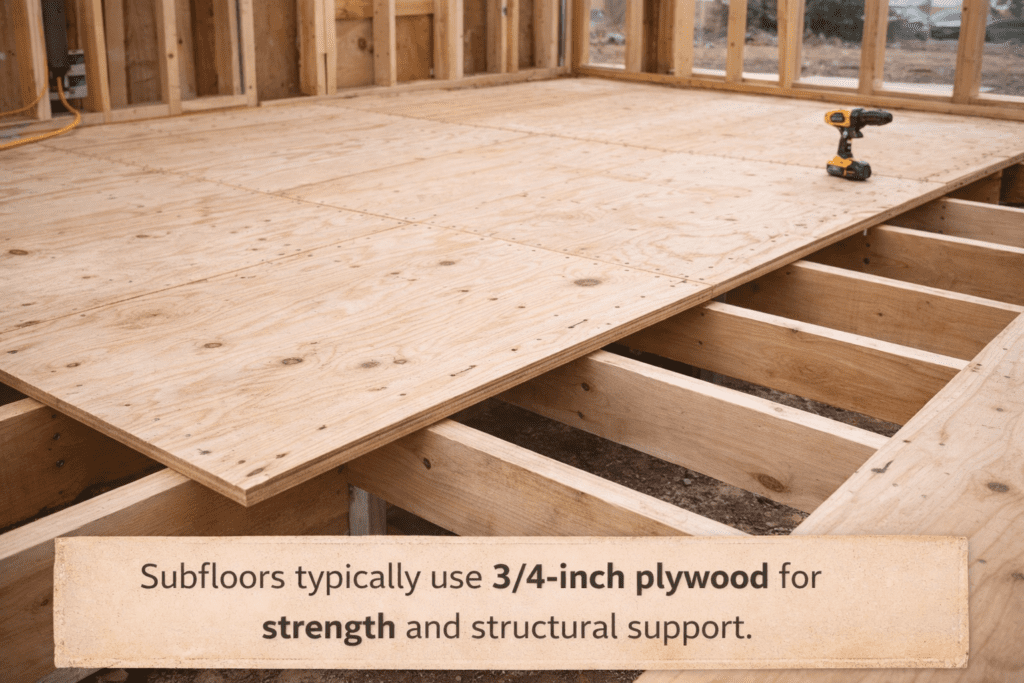
Plywood Thickness for Subfloors
Subfloors experience constant weight loads from furniture, appliances, and people walking across the floor.
Because of this, thickness is critical.
Most residential subfloor systems use 3/4-inch plywood installed over joists spaced 16 inches apart. Builders typically follow structural recommendations published by the APA Engineered Wood Association, which outlines span ratings for plywood and OSB floor systems.
When joists are spaced further apart, thicker panels may be necessary.
Joist Spacing
Recommended Thickness
16 inches
3/4 inch
19.2 inches
7/8 inch
24 inches
1 inch
Tile floors require even stronger subfloors because ceramic and stone tiles cannot flex without cracking. When installing tile, builders usually reinforce the floor with cement board or an uncoupling membrane after installing plywood. A detailed walkthrough can be found in the guide on preparing a subfloor for tile, which explains why improper plywood thickness often leads to cracked grout lines.
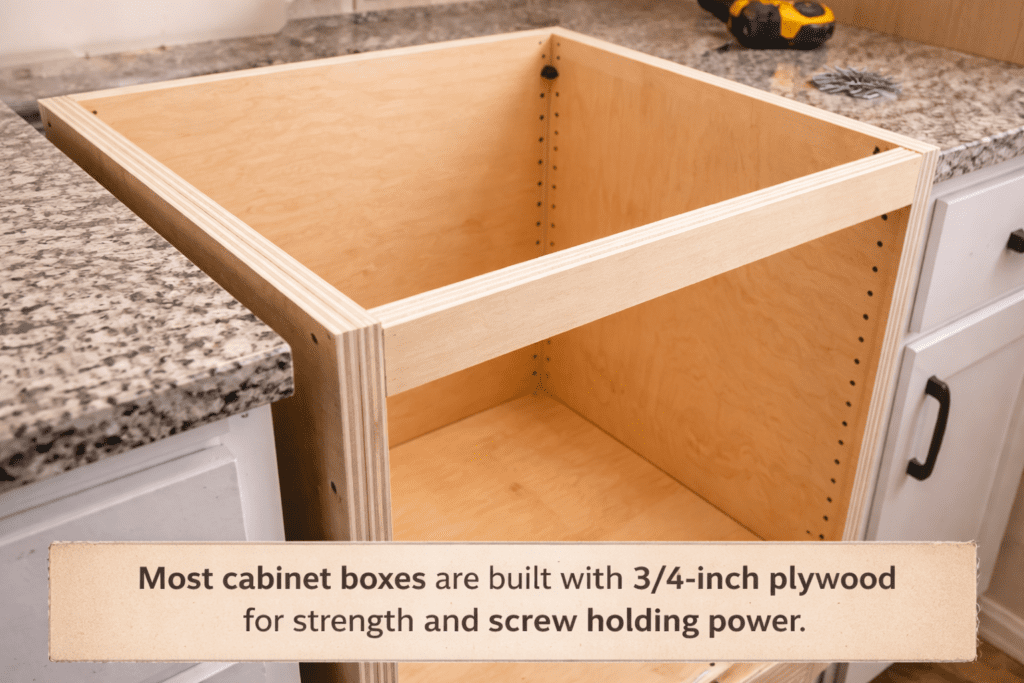
Plywood Thickness for Cabinets
Kitchen cabinets must support substantial loads, including dishes, cookware, and heavy stone countertops.
Most professional cabinet builders use:
3/4-inch plywood for cabinet boxes
1/2-inch plywood for cabinet backs
1/4-inch plywood for drawer bottoms
Thinner plywood often causes cabinet frames to flex, which can eventually loosen screws and joints. This is why many custom cabinet shops prefer multi-ply hardwood panels such as maple or birch plywood.
Pocket-hole joinery is commonly used when assembling plywood cabinet parts. Many woodworkers rely on tools like the Kreg Pocket Hole Jig system available on Amazon, which allows cabinet boxes to be assembled quickly and accurately.
More advanced cabinet construction techniques are explained in the article on cabinet-grade plywood materials, which breaks down plywood types commonly used in furniture and cabinetry.
Plywood Thickness for Shelving
Shelves are among the most common places where plywood thickness errors occur.
A thin shelf may look fine initially, but it will slowly bow under the weight of books or tools.
Typical shelf recommendations include:
Shelf Length
Minimum Thickness
24 inches
1/2 inch
36 inches
3/4 inch
48 inches
3/4 inch with support
Builders often strengthen shelves by attaching a hardwood strip to the front edge of the plywood. This dramatically increases stiffness and prevents sagging.
For additional ideas on improving plywood strength in furniture applications, the article comparing plywood weight and panel strength characteristics explains how density and veneer count influence load capacity.
Plywood Thickness for Roofing
Roof decking must support snow loads, roofing materials, and structural wind loads.
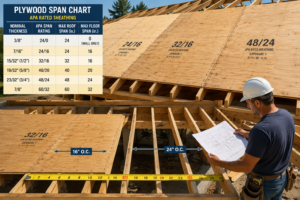
Most modern homes use 5/8-inch plywood or OSB for roof sheathing when rafters are spaced 24 inches apart.
Rafter Spacing
Thickness
16 inches
1/2 inch
24 inches
5/8 inch
Structural recommendations for roof decking are outlined in the International Residential Code (IRC) and in technical guidelines published by the APA Wood Association.
These standards ensure roof systems remain structurally sound during heavy storms and snow loads.
1/2 Inch vs 3/4 Inch Plywood
A common question among DIY builders is whether to use 1/2-inch or 3/4-inch plywoodfor a project.
Feature
1/2 inch
3/4 inch
Strength
moderate
high
Weight
lighter
heavier
Cost
lower
higher
Sag resistance
moderate
excellent
Typical use
paneling
cabinets, shelves
In general, 3/4-inch plywood is the safer choice for structural projects because it resists bending much better.
Several years ago, I built garage storage shelves using 1/2-inch plywood because it was cheaper and easier to handle.
The shelves looked fine initially. But after storing paint cans and tools for several months, the middle of the shelf developed a noticeable bow.
Eventually, I replaced the shelves using 3/4-inch plywood with hardwood front edging, and the sagging disappeared completely.
That project reinforced a simple lesson:
Choosing thicker plywood at the start usually prevents expensive repairs later.
Common Mistakes When Choosing Plywood Thickness
Builders frequently make the same mistakes when selecting plywood.
The most common problems include:
Choosing plywood based only on price
Thin plywood may save money upfront, but it often fails under load.
Ignoring span length
Longer spans require thicker panels.
Using construction plywood for furniture
Furniture projects should use cabinet-grade plywood rather than sheathing panels.
Forgetting edge support
Even thick plywood benefits from additional reinforcement along the front edge.
2026 Plywood Price Overview
Plywood prices fluctuate depending on lumber supply and housing demand.
Typical 4×8 sheet prices include:
Thickness
Price Range
1/4 inch
$18–$30
1/2 inch
$30–$45
3/4 inch
$45–$75
Baltic Birch
$80–$120
Premium hardwood plywood costs more due to higher veneer quality and a higher ply count.
A detailed breakdown of panel weights and handling considerations can be found in the guide on how much a 4×8 sheet of plywood weighs, which explains why thicker sheets can become difficult to move without proper tools.
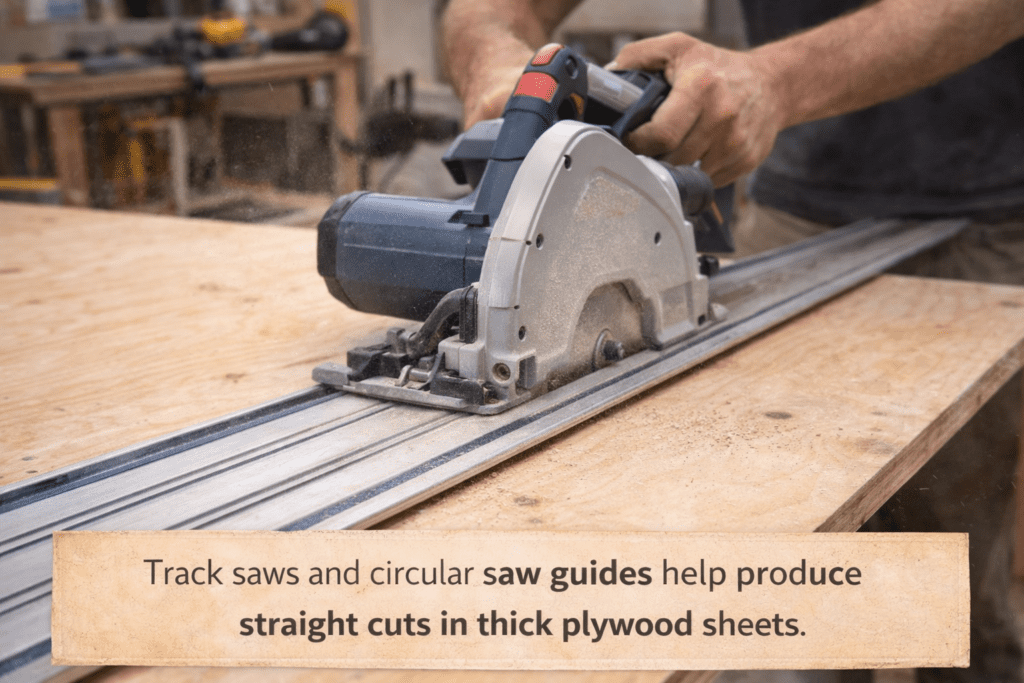
Large plywood sheets can be difficult to cut accurately without proper tools.
Many woodworkers use track saw systems or cutting guides to produce straight cuts.
Tools like the Kreg Rip-Cut circular saw guide available on Amazon help break down large plywood sheets while maintaining straight edges.
For professional accuracy, many builders prefer a track saw system such as the Makita track saw kit, which produces extremely clean plywood cuts and minimizes tear-out.
Frequently Asked Questions About Plywood Thickness
What thickness plywood should I use for most projects?
For most woodworking and home improvement projects, 3/4-inch plywood is the best all-around choice. It is strong enough for cabinets, shelves, workbenches, and many subfloor applications, yet widely available and easy to work with.
Is 1/2-inch plywood strong enough for shelves?
1/2-inch plywood can work for short shelves with light loads, but it often sags on longer spans. For shelves that hold books, tools, or kitchen items, 3/4-inch plywood is usually the better option.
What plywood thickness should I use for a subfloor?
For most residential floors with joists spaced 16 inches on center, builders typically use 3/4-inch plywood. Wider joist spacing or heavier loads may require thicker panels or additional layers.
What is the actual thickness of 3/4-inch plywood?
The actual thickness of most 3/4-inch plywood is about 23/32 inch. This slight difference occurs because plywood sheets are sanded during manufacturing.
Is thicker plywood always better?
Not always. Thicker plywood is stronger and stiffer, but it also costs more, weighs more, and can be harder to handle. The best plywood thickness depends on the span, load requirements, and project type.
What plywood thickness is best for cabinets?
Most cabinet builders use 3/4-inch plywood for cabinet boxes because it provides strong screw-holding power, resists flexing, and stays stable over time. Thinner plywood is usually reserved for cabinet backs or drawer bottoms.
What is the strongest plywood thickness available?
Standard plywood sheets typically reach a thickness of 1 inch, which provides maximum strength. However, most construction and woodworking projects use 3/4-inch plywood because it strikes a balance among strength, weight, and cost.
Can 1/2-inch plywood support weight?
Yes, 1/2-inch plywood can support weight, but it is best suited for lighter loads such as wall paneling, cabinet backs, or small furniture parts. Heavier loads usually require 3/4-inch plywood.
Final Thoughts
Understanding plywood thickness is essential for building durable furniture, strong cabinets, and reliable flooring systems.
Choosing the correct thickness improves:
structural strength
long-term durability
load capacity
project stability
For most projects, 3/4-inch plywood remains the most versatile and reliable option. It offers excellent rigidity, holds screws well, and performs consistently across a wide range of woodworking and construction applications.
When in doubt, choosing slightly thicker plywood often prevents problems later.