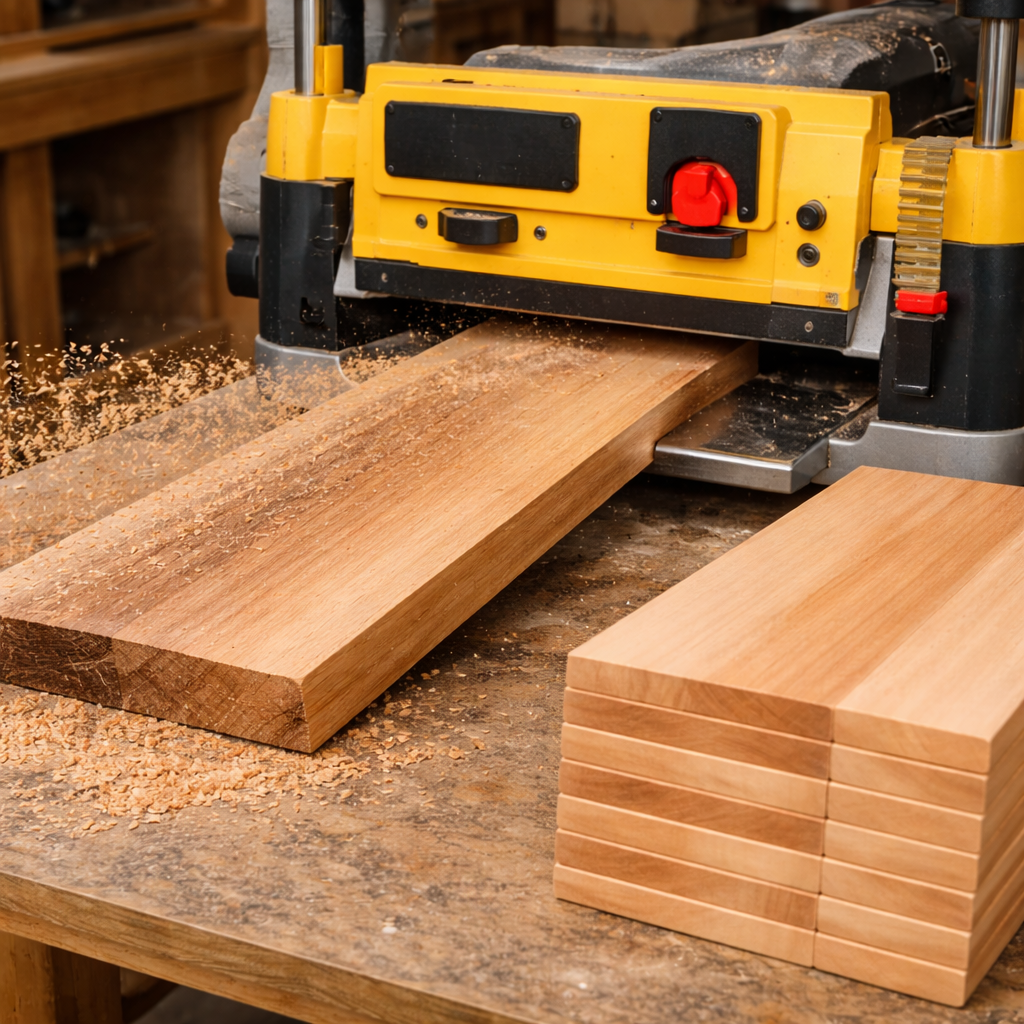
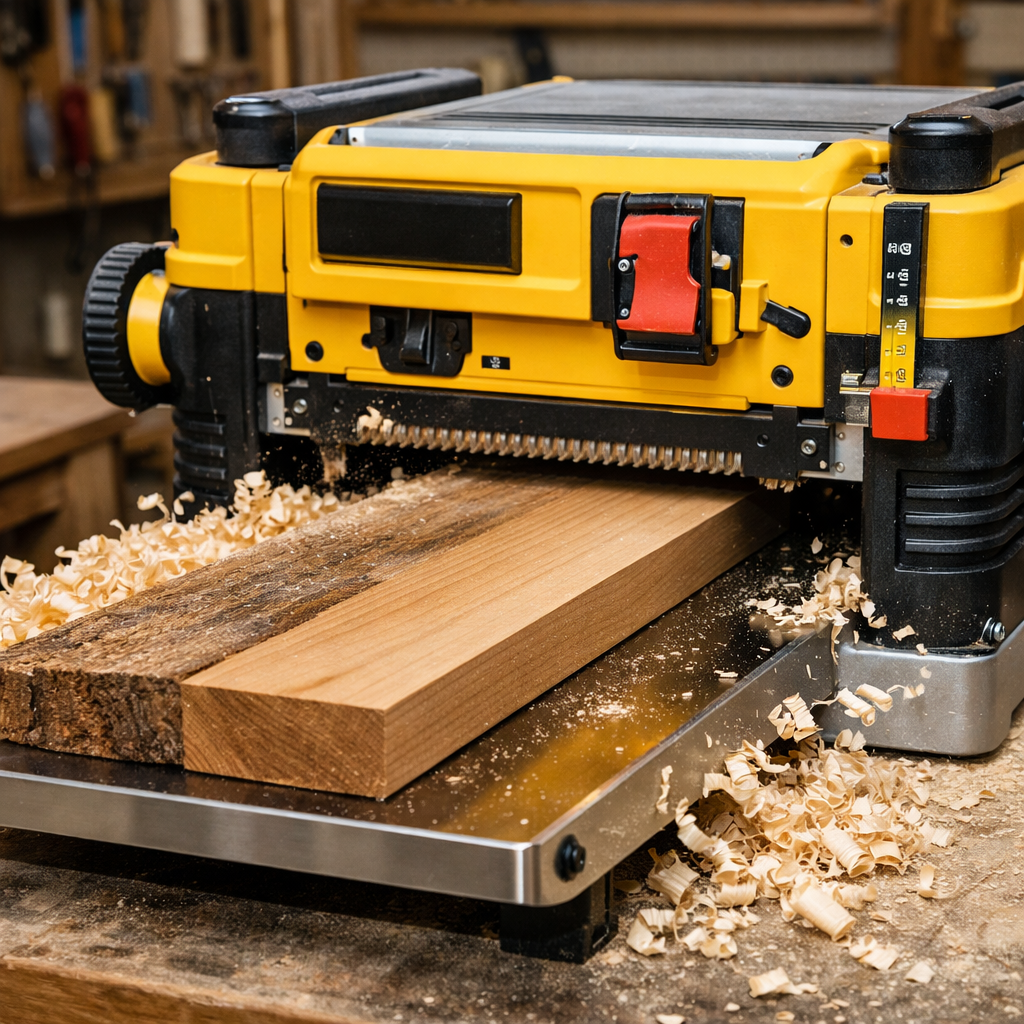
A wood planer is a woodworking machine that smooths rough lumber and makes boards a consistent thickness. It allows you to turn inexpensive rough wood into flat, usable material—often cutting your lumber costs in half while improving the quality of your projects.
Article Summary :
The Problem: Retail “S4S” lumber is marked up 50–100% and is rarely truly flat.
The Solution: A wood planer allows you to buy rough-sawn lumber and surface it to a professional standard.
The Warning: Planers do not remove warps or twists without a “planer sled.”
Top Pick: The DeWalt DW735X is the current industry gold standard for hobbyists and pros alike.
❌ Mistake Beginners Make: The “Floating Board” Fallacy
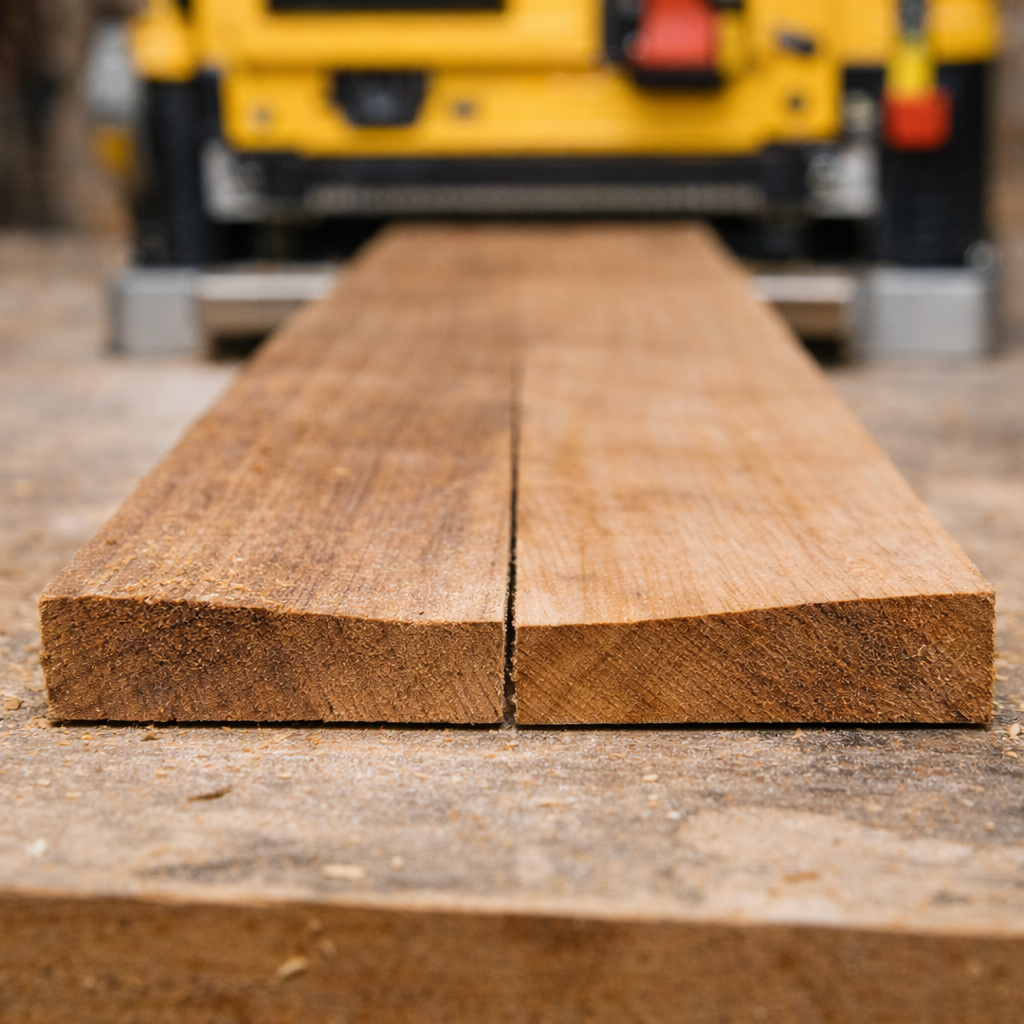
Most new woodworkers think a wood planer fixes warped boards. It doesn’t. This is the single biggest mistake that leads to “potato chip” furniture and massive buyer regret.
My Personal Fail: Early in my journey, I spent $150 on a beautiful piece of “cupped” Walnut for a coffee table. I ran it through my planer twenty times, thinking it would eventually come out flat. By the time I was done, I had a perfectly smooth, 1/4-inch thick piece of Walnut that was still shaped like a taco. I had turned a premium slab into expensive kindling because I didn’t understand that a planer follows the existing curve of the wood.
A thickness planer works by using high-pressure rollers to feed the wood past a spinning cutterhead. If your board is bowed, the rollers simply squash it flat against the metal bed. The blades cut a uniform layer off, but as soon as the board exits the machine, the internal tension causes it to spring back to its original warped shape.
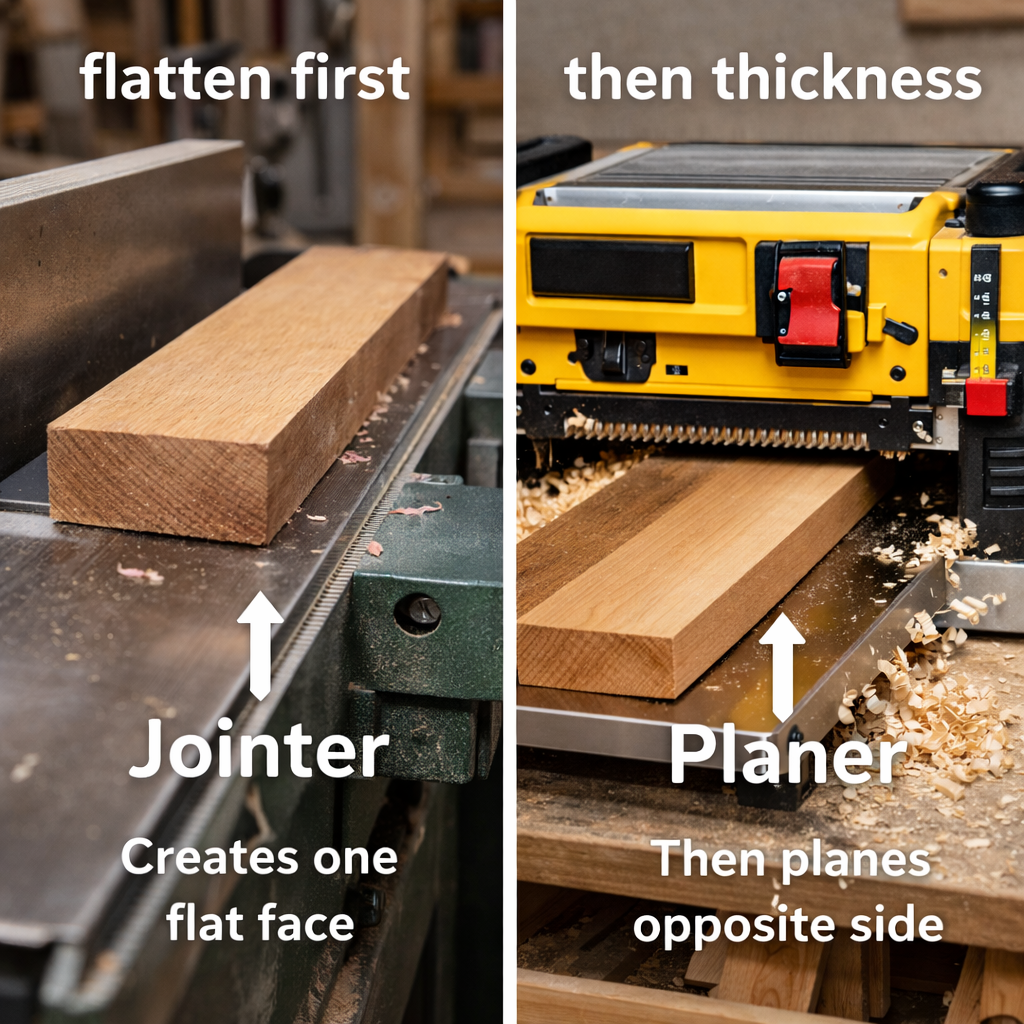
The Solution: You must use a jointerfirst to get one perfectly flat face. If you don’t own a jointer, you must build a “planer sled” (detailed below) to shim the board and prevent it from flexing under the rollers.
Check out our guide on how to flatten warped woodto understand the physics of wood movement before you start planing.
💸 The Cost Difference: Why a Planner Actually Saves You Money
Why bother owning a wood planer? Let’s look at the cold, hard math of a workshop budget in 2026.
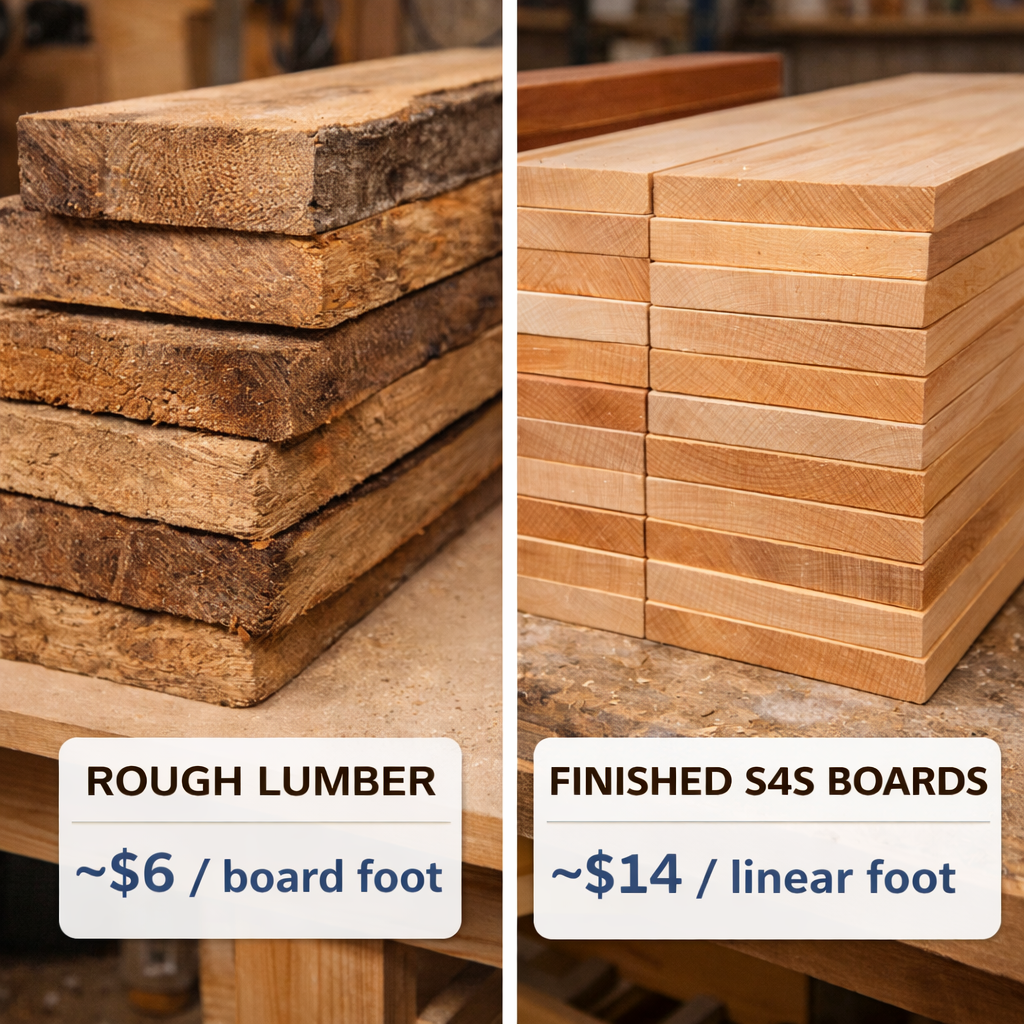
S4S (Surfaced on 4 Sides): At a big-box store or retail hardwood dealer, a 1×6 Walnut board might cost you $14.00 per linear foot.
Rough Sawn: At a local sawmill or wholesale yard, that same Walnut (before it’s been surfaced) might only be $6.00 per board foot.
Real-World Test: On a standard dining table project requiring 100 board feet of lumber, owning a wood planer can save you over $800 in material costs. The machine doesn’t just “smooth wood”; it is a financial investment. If you’re still buying pre-surfaced wood, you’re essentially paying a 100% “convenience tax” on every single board.
The most frustrating part of using a wood planer is snipe—that annoying, slightly deeper gouge at the first and last 2–3 inches of your board. It happens because the board is only held down by one roller as it enters or exits the machine, allowing the wood to “tip” into the cutterhead.
5 Ways to Eliminate Snipe:
Sacrificial “Leader” Boards: Feed a scrap piece of wood end-to-end with your “good” board. The machine snipes the scrap instead.
Lifting the Board: As you feed the wood in, slightly lift the tail end until the second roller catches it. Do the same as it exists.
Adjust the Tables: Raise the far ends of your infeed and outfeed tables by about 1/16″ above the planer bed.
Angle Your Feed: Feeding the board at a 15-degree angle can sometimes reduce the sudden “drop” that causes the snipe.
Use a Carriage Lock: If you have a DeWalt DW735X, use the lock handle to stabilize the cutterhead during the pass.
🧪 Real Test: Straight Knives vs. Helical Cutterheads
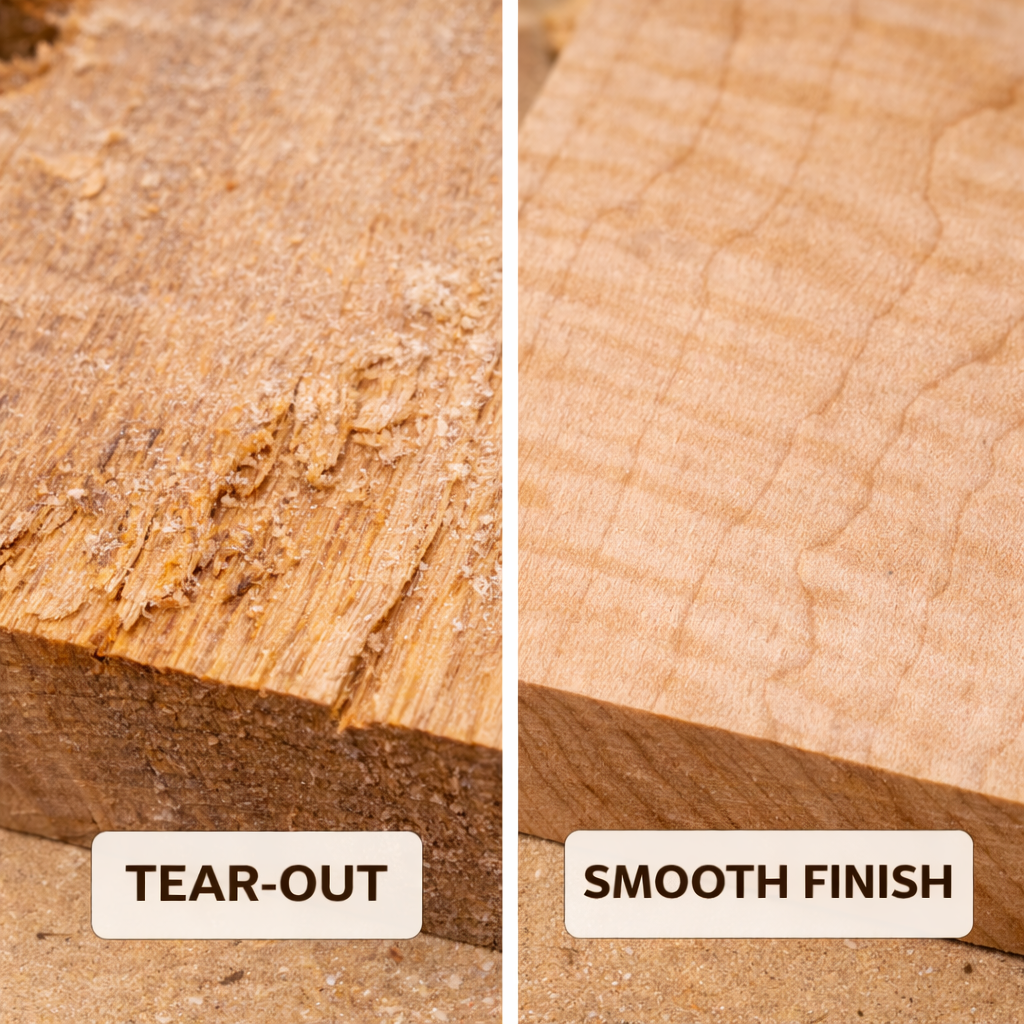
We ran a direct test on Curly Cherry. Straight knives produced significant “tear-out.” The Helical Head left a surface so smooth it looked pre-sanded. If you are working with high-quality veneers or solid cores like phenolic plywood, precision is everything.
🧪 Straight Knives vs. Helical Cutterheads
In our shop, we ran a direct test on a piece of highly figured Curly Cherry—a wood notorious for “tear-out.”
Straight Knives: Produced significant “tear-out” where the long blades caught the alternating grain and ripped chunks out of the surface. This required 30 minutes of aggressive sanding to fix.
Helical/Spiral Head: The small, staggered carbide inserts sheared the wood at an angle. The result was a surface so smooth it looked like it had already been sanded to 220 grit.
The Verdict: If your budget allows, always go for a helical or spiral cutterhead. They are 50% quieter, they don’t require tedious blade-setting, and if you hit a nail, you only have to rotate one $5 insert.
🛠️ DIY Guide: How to Build a Planer Sled for $10
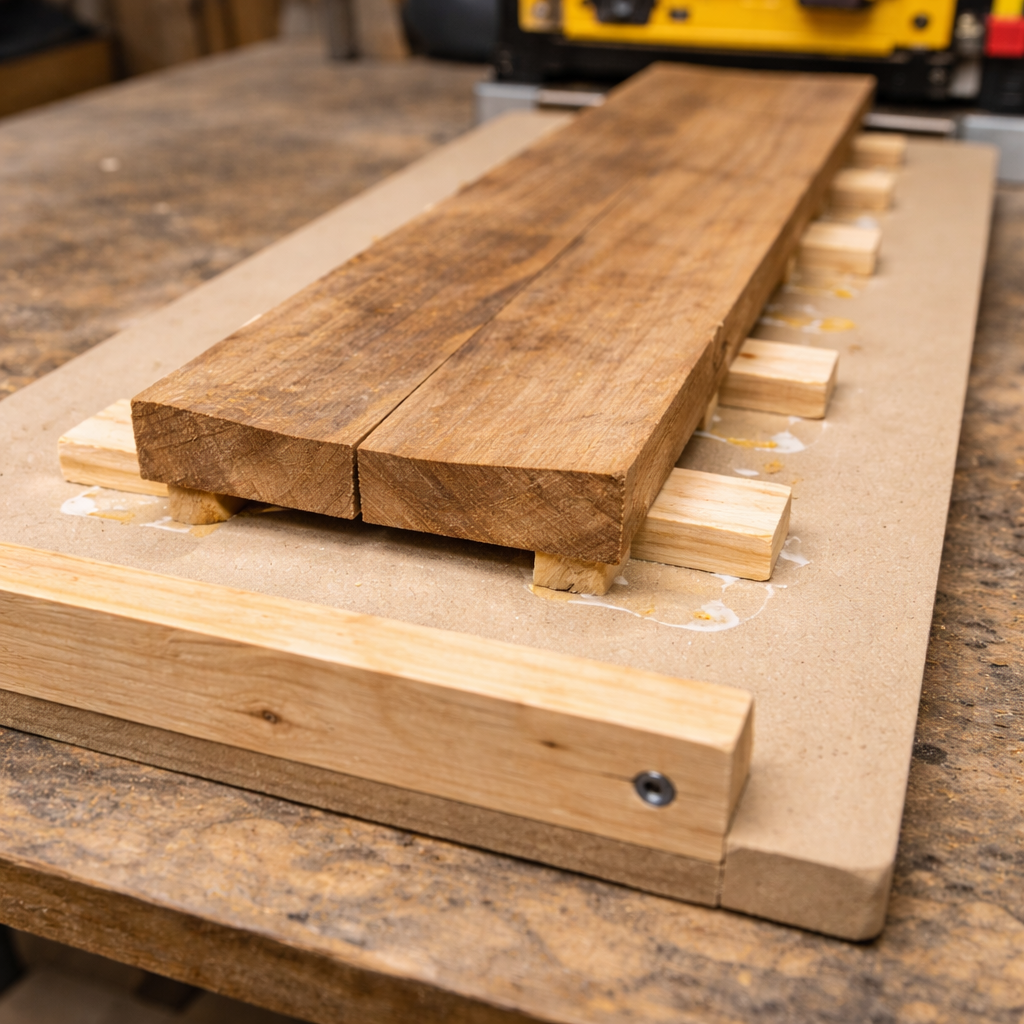
If you don’t have a jointer, this sled is your best friend. It allows you to flatten wide slabs that wouldn’t fit on a standard 6-inch jointer.
The Base: Use a piece of 3/4″ MDF or Melamine (it must be dead flat) about 12″ wide and 4 feet long.
The Stop: Screw a small wood strip across the front of the sled to prevent the board from sliding forward.
The Shimming: Place your warped board on the sled. Use plastic or wood shims to fill the gaps between the board and the sled so the board doesn’t rock.
Hot Glue: Secure the shims and the board to the sled with dots of hot glue (it’s easy to pop off later).
The Pass: Run the entire sled/board assembly through the planer. The top surface will now be perfectly flat!
🏗️Advanced Surfacing: How to Plane “Difficult” Exotic Hardwoods
Exotic and highly figured woods like Wenge or Quartersawn White Oak have interlocking grain patterns that behave like a minefield. This is where most experience regret: spending $200 on a slab only to have the planer “chew” the surface.
My Personal Fail: I once tried to plane a piece of highly figured African Mahogany with dull, straight knives. The blades caught the “ribbon” grain and literally blew a 2-inch chunk out of the center of the board. It sounded like a gunshot. Now, I never touch exotics without fresh blades and a “zero-cut” pass.
The Pro Strategy for Exotic Woods:
The Wetting Technique: For extremely stubborn grain, lightly wipe the board’s surface with a damp cloth or spray with mineral spirits. This softens the fibers just enough to allow the knives to shear them rather than shatter them.
The Skew Feed: Feed the board at a 10-15-degree angle. This creates a “shearing” action similar to a hand plane.
The Zero-Cut Pass: Run the board through a final time without lowering the cutterhead to remove the microscopic “fuzz” left by roller pressure.
If you aren’t sure which wood species to choose, see our breakdown of plywood types to see how different cores react to surfacing.
🌬️ The Silent Killer of Wood Planer Longevity
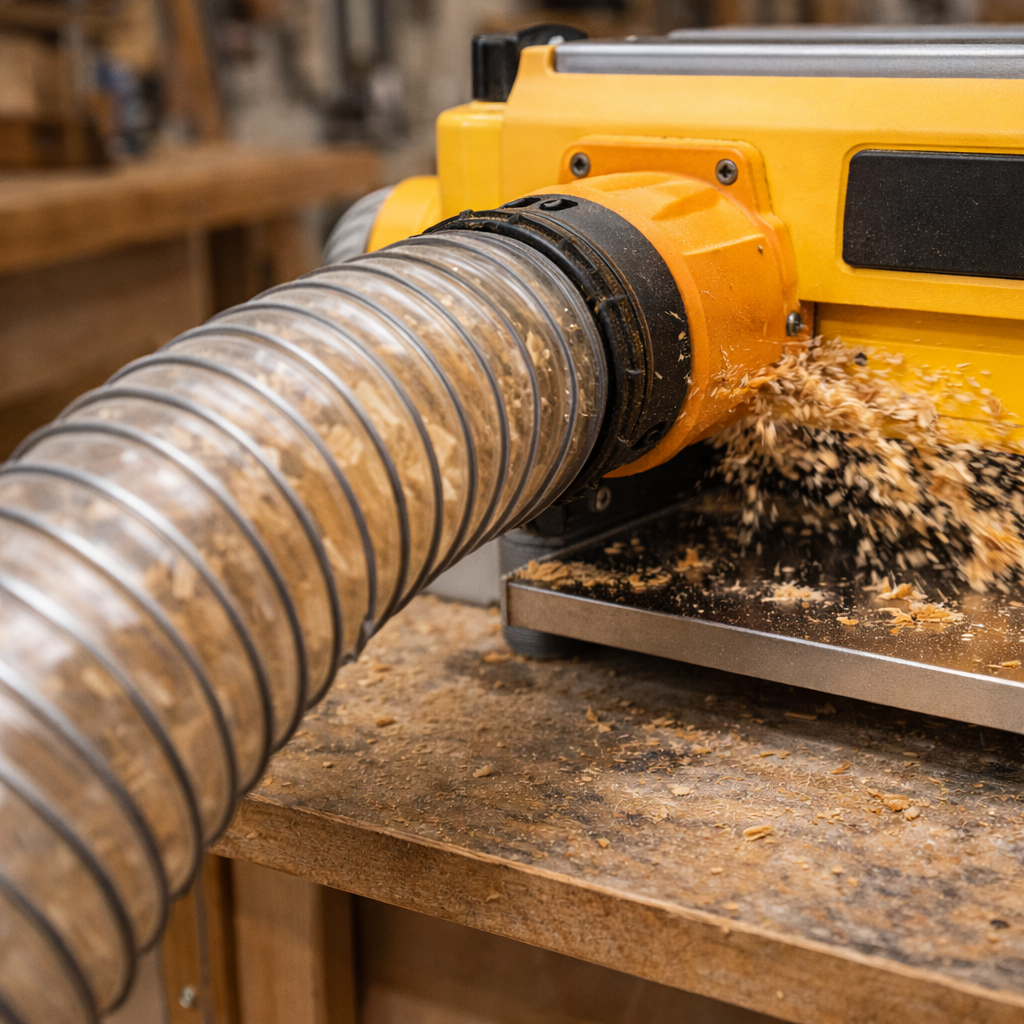
A wood planer is essentially a giant wood-chip factory. In 15 minutes, a standard 13-inch planer can fill two 55-gallon trash bags. Without extraction, chips get trapped, creating “chip bruising”—permanent dents in your wood.
Ditch the Shop-Vac: Most shop vacuums move high-pressure air but at a low volume (CFM). A wood planer needs high CFM.
The 4-Inch Rule: Use a dedicated 4-inch dust hose. Reducing it to a 2.5-inch vacuum hose creates a bottleneck that forces chips back into the cutterhead.
Static Safety: Moving dry chips through plastic creates static electricity. Ensure your Dust Collector is grounded to avoid a literal shock or fire hazard.
📈 The ROI of the “Rough Sawn” Lifestyle: A 5-Year Shop Analysis
Many hobbyists hesitate to buy a wood planer because of the $600+ price tag. However, failing to buy one is actually more expensive in the long run.
The Turning Point: Three years ago, I found a local guy on Facebook Marketplace milling “urban lumber” from fallen trees in his backyard. Because I had a wood planer, I was able to buy thick, rough slabs of Cherry for $3.00 a board foot. That one “score” saved me $600 on a single bedroom set—effectively making my planer free for life.
5-Year Savings Breakdown:
Year 1: Surfacing lumber for three projects saves approx. $350 in retail markups.
Year 3: On larger items like dining tables, savings surpass $1,200. The machine has now paid for itself twice.
Year 5: You gain the ability to source “free” wood or logs from the Marketplace that retail stores won’t touch.
🛠️ Troubleshooting: 5 Common Planer Problems & Fixes
1. Board is Getting Stuck
Cause: Pitch/resin buildup on the bed.
Fix: Clean the bed with mineral spirits and apply a coat of Glide-Cote Table Lubricant.
2. “Chatter” Marks on the Wood
Cause: Taking too deep a cut or the board is vibrating.
Fix: Take lighter passes (1/64″) and support the board with outfeed rollers.
3. Wavy Surface (Ripples)
Cause: Feed rate is too fast, or the cutterhead speed is too slow.
Fix: Switch your planer to the “finishing” speed (if available).
4. Excessive Dust Flying Out
Cause: Clogged dust port.
Fix: Check your Dust Collector filter. Planers produce massive waste.
5. Motor Keeps Tripping the Breaker
Cause: Using an extension cord that is too thin.
Fix: Use a 12-gauge heavy-duty extension cord and keep passes light.
A: Generally, no. Planning the face of plywood will ruin the thin veneer. However, you can plane the edges if you are careful. If you’re working with thin materials, check our Luan vs. Baltic Birch comparison for better edge-finishing alternatives.
Q: How much does a good wood planer cost in 2026?
A: Expect to spend between $400 and $750 for a quality benchtop unit. Anything cheaper usually lacks the rigidity needed for fine furniture.
Q: Is a hand planer better than a power planer?
A: It’s apples and oranges. A manual hand plane is for precision and soul; a power wood planer is for production and accuracy.
Stop settling for mediocre lumber and wobbly joints. The wood planer isn’t just a luxury tool; it’s the foundation of every professional-grade project you’ll ever build. Don’t let the initial cost of the tool scare you—let the ongoing cost of wasted, over-priced lumber motivate you.
Marine Grade Plywood: Avoid This Costly Mistake by Admin April 7, 2026 DIY Marine grade plywood is a high-performance plywood made with waterproof phenolic glue, no internal voids, and multiple thin veneer layers. It is designed for high-moisture…