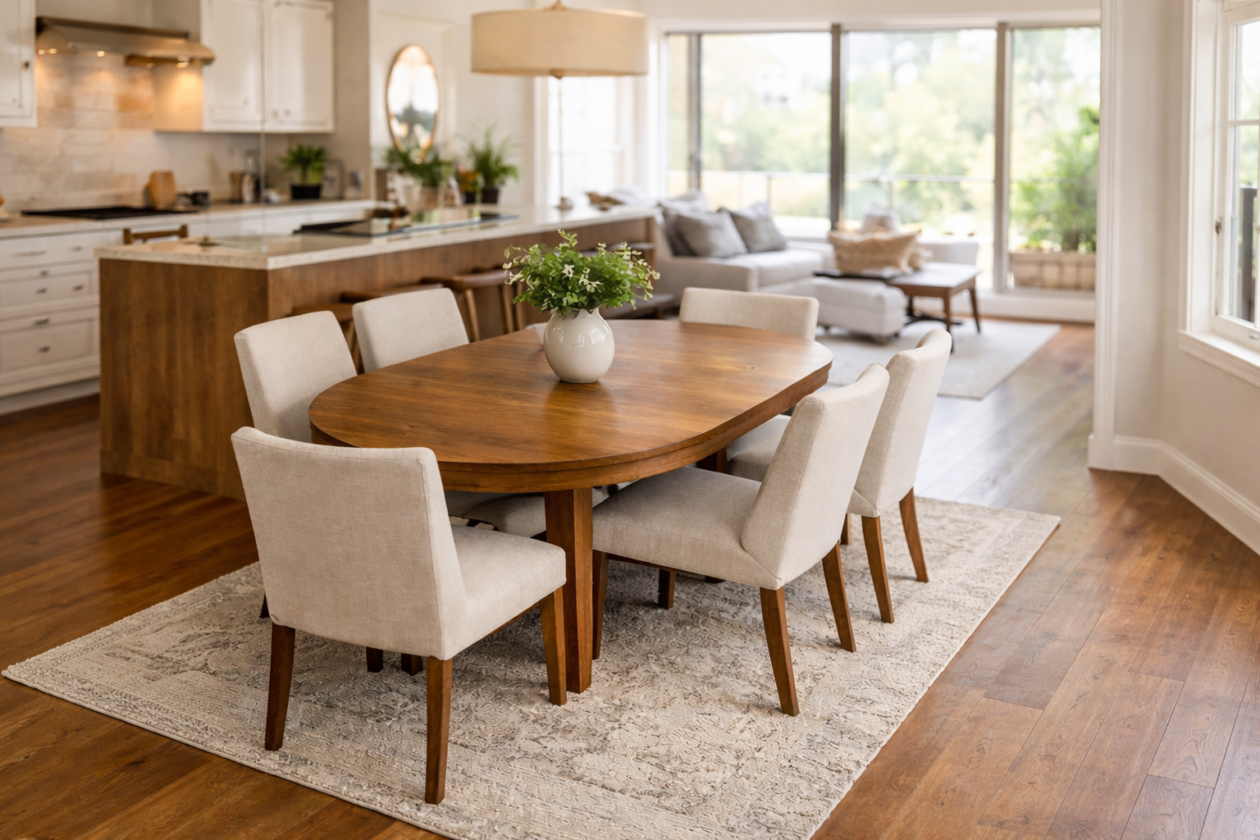
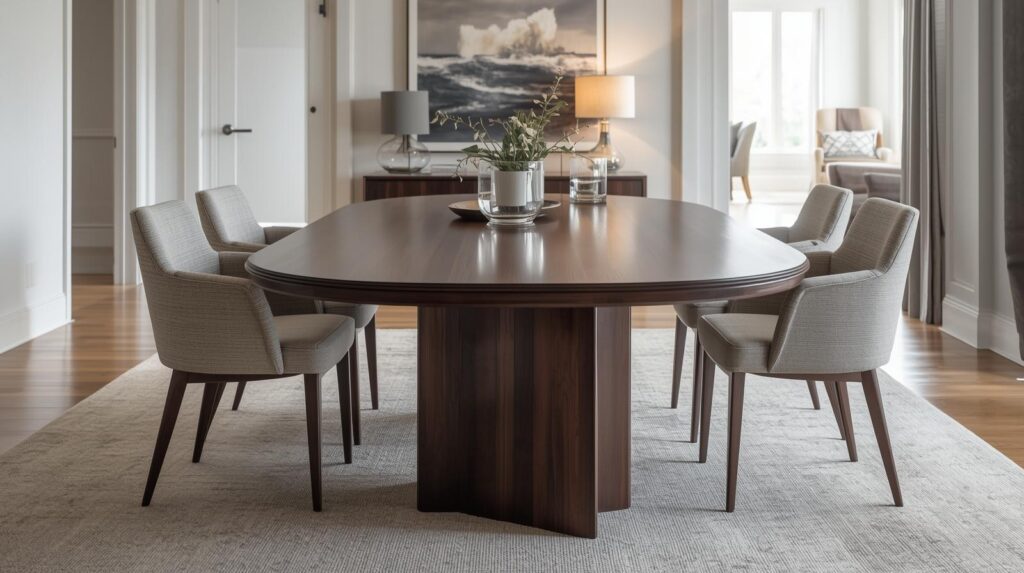
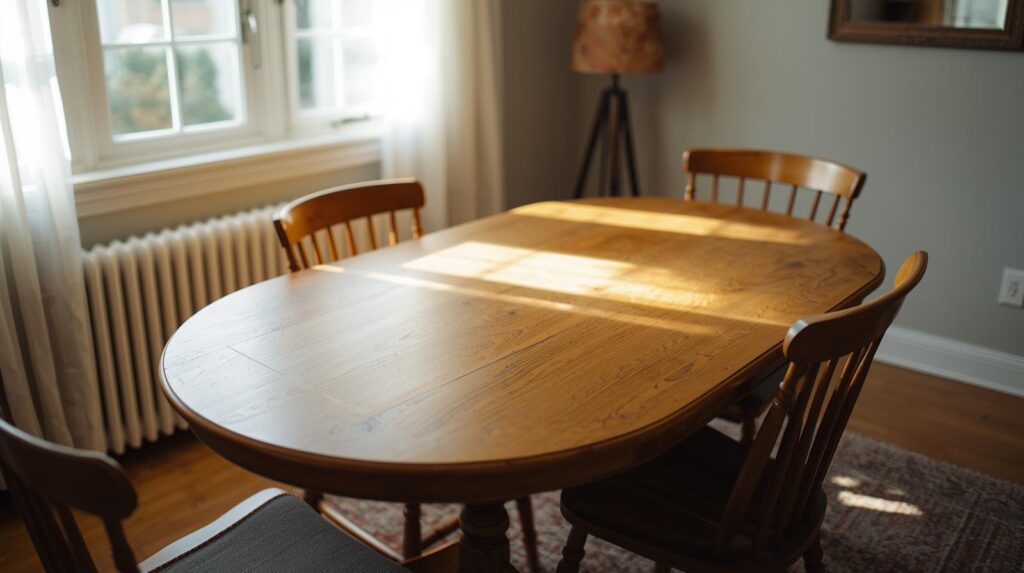
An oval dining table is one of those pieces that quietly solves problems you didn’t even realize you had. Tight corners, awkward walkways, chairs constantly bumping into walls — an oval shape smooths all of that out. Over the years, I’ve owned rectangular tables, round tables, and even a square one that looked great in photos and drove me crazy in real life. The oval dining table is the one I keep coming back to.
This guide covers everything you need to know before buying one—sizing, materials, styles, real room layouts, and which oval tables are worth buying online.
Why Choose an Oval Dining Table?
An oval dining table blends the best features of both rectangular and round tables.
No sharp corners → safer for kids and easier to walk around
Seats more people comfortably than a round table
Better traffic flow than a rectangle in narrow rooms
Visually softer than boxy furniture
In real homes — especially older houses or open-concept spaces — an oval dining table often fits better than any other option.
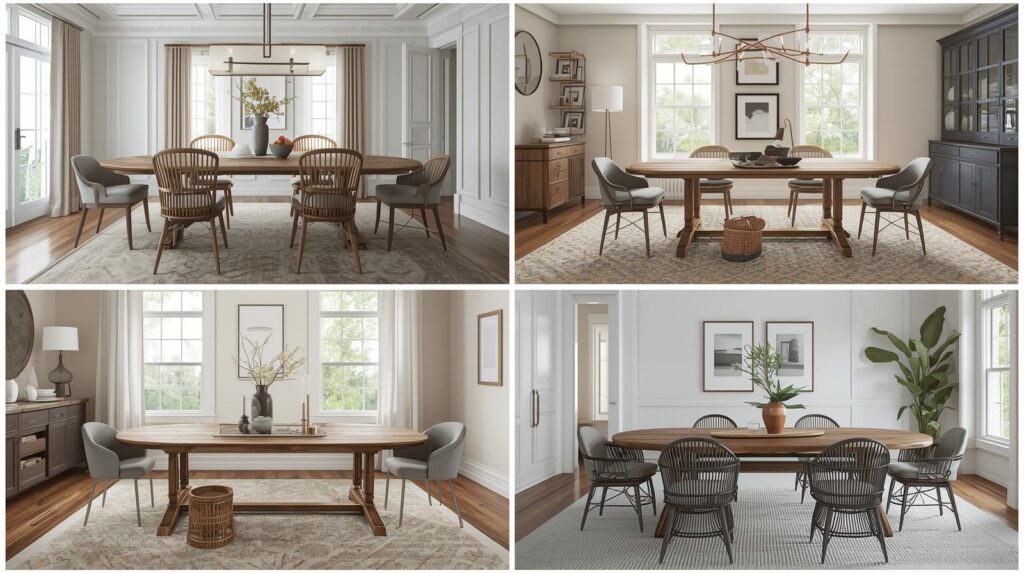
What usually surprises people is how much calmer the room feels once the table is in place. Nothing sticks out at you. You don’t feel like you need to angle chairs just right or walk around the long way. In houses where rooms weren’t designed with modern furniture in mind, that matters a lot. Older layouts, narrower dining areas, and open spaces without clear boundaries tend to make rectangular tables feel cramped. An oval shape softens that tension. It doesn’t try to control the room. It adapts to it, which is why it works in spaces where other tables always felt slightly off.
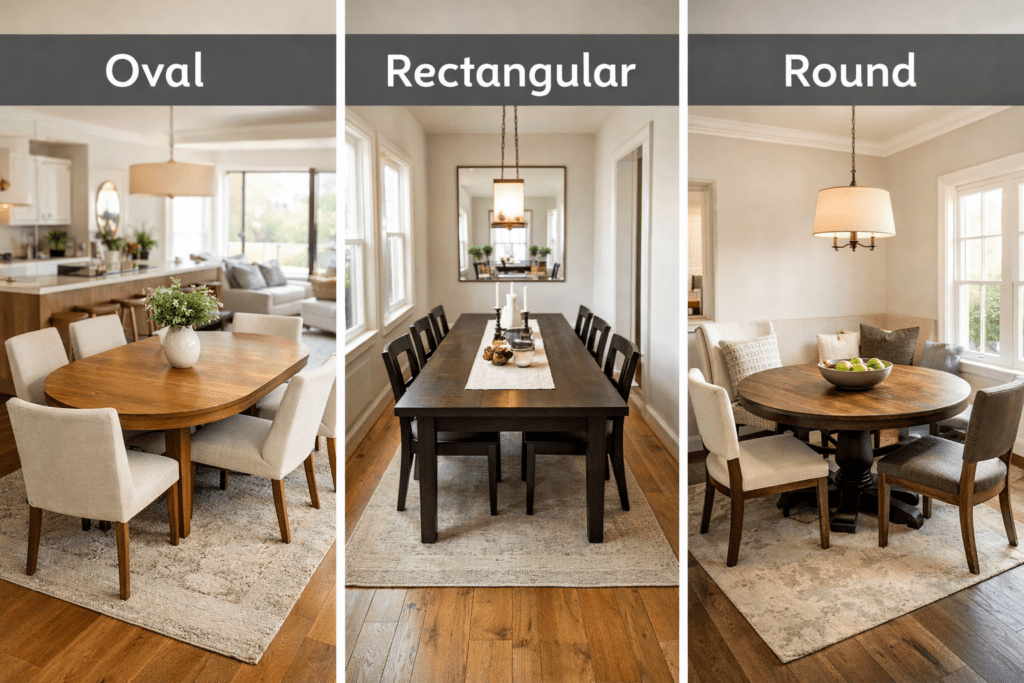
Oval vs Rectangular vs Round Dining Tables
Oval vs Rectangular
Rectangular tables take up space in a very obvious way. You notice the ends. You walk around them instead of past them. In rooms that aren’t wide, that gets old fast. An oval table doesn’t change the size of the room, but it changes how the room feels when you move through it.
Oval vs Round
Round tables work until they don’t. Four people, fine. Maybe five. After that, chairs start touching, and everyone’s too close. An oval table provides the same closeness while keeping things spread out just enough. It doesn’t suddenly feel crowded all at once.
Bottom line: If you entertain, have kids, or want flexibility, Oval wins.
Oval Dining Table Sizes (Real-World Guide)
Choosing the wrong size is the #1 mistake people make.
Common Oval Dining Table Dimensions
Seats
Length
Width
4–6
60–72″
36–40″
6–8
72–84″
40–44″
8–10
84–96″+
44–48″
Clearance Rule (Don’t Skip This)
You need a minimum of 36 inches from the table edge to the wall or furniture. If people often walk behind chairs, 42–48 inches is better.
Best Materials for an Oval Dining Table
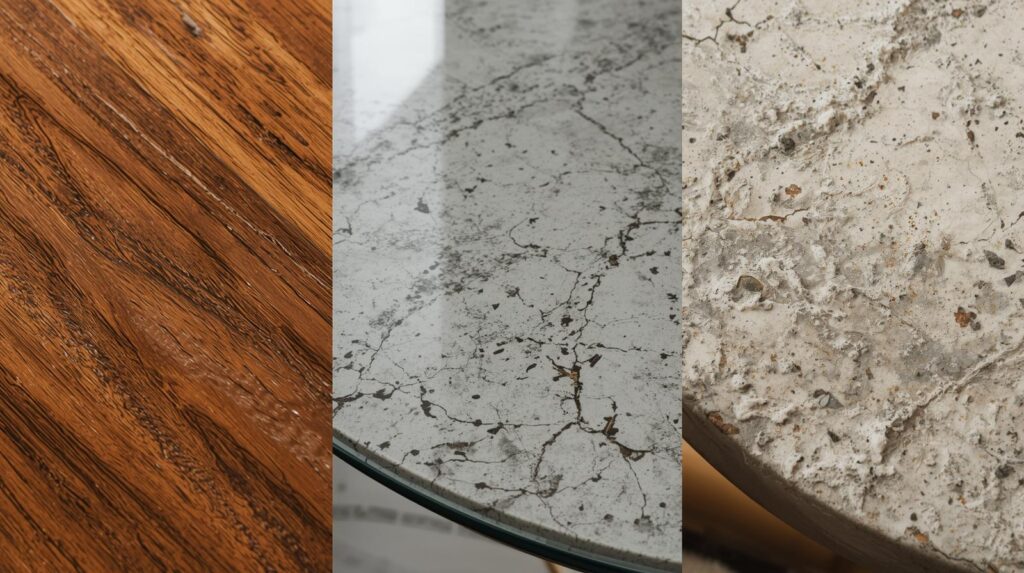
Solid Wood (Best Overall)
Oak, maple, walnut, mango wood
Durable, refinishable, ages beautifully
Heavy (which is a good thing)
Engineered Wood / Veneer
Stable and affordable
Look for thick veneer (not paper-thin)
Avoid MDF-only tops if possible
Glass
Makes small rooms feel larger
Shows fingerprints constantly
Not great with kids
Marble or Stone
Stunning, but cold and heavy
Requires sealing and care
Oval Dining Table Comparison Chart (Amazon Options at a Glance)
If you’re shopping online, especially on Amazon, it helps to compare oval dining tables by material, size range, base style, and typical use, rather than just brand names. Most listings fall into a few clear categories, and understanding those differences makes browsing much easier.
Why Oval Dining Tables Tend to Last Longer in Real Homes
People replace dining tables less often than other furniture, mostly because it’s a hassle. Heavy. Awkward. Expensive. The table you choose must support different phases. Fewer people. More people. Kids. No kids. Hosting more. Hosting less.
Oval dining tables handle those changes better than most shapes. When the table feels slightly too big, the curves help it blend in. When it feels a little small, the ends usually accommodate one more chair without making everything feel cramped. You get some flexibility without needing a totally different setup.
There’s also something about how oval tables wear over time. Small dents and scratches are less noticeable along curved edges. The table doesn’t look “off” the moment it stops being perfect. It just starts looking used, which is kind of the point.
People also tend to move oval tables less once they’re placed. They find a spot, leave it there, and stop adjusting. That’s often why they last longer in the same house. Not because they’re trendy, but because there’s no ongoing annoyance pushing you to replace them.
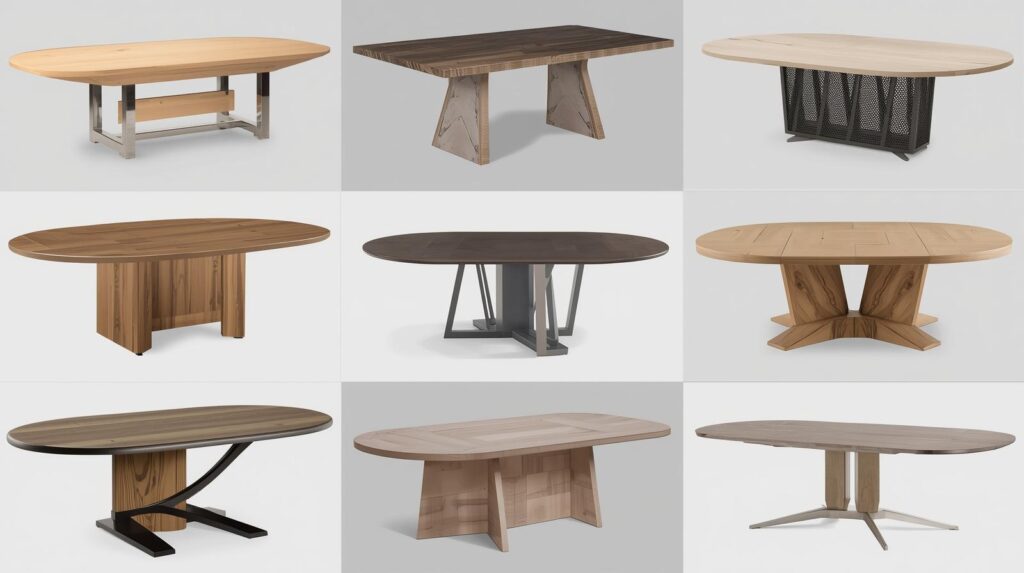
Oval Dining Table Styles (What Actually Works in Homes)
Modern Oval Dining Table
Clean lines, pedestal bases
Great for open-concept spaces
Farmhouse Oval Dining Table
Thick tops, turned or trestle legs
Warm, forgiving finishes
Mid-Century Modern Oval Table
Tapered legs, slimmer profiles
Works well in smaller rooms
Rustic Oval Dining Table
Reclaimed wood, visible grain
Pairs well with mixed seating
What People Don’t Think About Until They Live With an Oval Dining Table
Most people choose a dining table by measuring the room once, reviewing photos, and envisioning how it will look when it’s clean. That’s not how tables get used. A dining table gets messy fast. Stuff lands on it. Chairs get left half-pulled out. Someone always stands next to it rather than sit. That’s when the shape starts to matter.
With an oval dining table, those everyday moments don’t feel as awkward. There isn’t a corner poking into the room. You don’t feel like you’re squeezing past furniture. You don’t have to remind people to push their chairs in all the way. The table absorbs those small habits rather than fighting them.
This is especially noticeable in houses where the dining area isn’t a separate room. Older homes, open layouts, apartments — places where the table shares space with walking paths. A rectangular table can work, but you’re always aware of it. An oval table fades into the background more. Not visually, but physically. It allows the room to behave as it already wants to.
That’s usually when people stop thinking about the table at all. And that’s not a bad thing.
IKEA’s oval extendable dining tables are a solid option if you need flexibility without committing to a heavy, permanent setup. They’re designed for everyday use in real homes, especially where space matters. The oval shape helps the table fit comfortably in smaller dining areas, while the extension feature makes it easy to seat more people when needed.
For the price, stability is better than most expect. When properly assembled, the table feels secure for daily meals, casual work, and hosting without constant wobbling or adjustment. The lighter weight compared to solid-wood tables also makes repositioning easier, which is helpful in apartments or multipurpose rooms where layouts change.
This type of table works well for renters, first homes, or anyone who wants an oval dining table without the cost, weight, or long-term commitment of a solid hardwood piece. It’s practical, adaptable, and does its job without trying to be the room’s centerpiece.
Luxury Look Without Luxury Price
Walker Edison Oval Dining Table
Real wood veneer
Clean modern lines
Oval Extendable Dining Tables (Worth It?)
Yes — if you host occasionally.
Pros:
Daily compact size
Holiday seating without extra furniture
Cons:
Extension seams visible
Heavier mechanisms
Look for butterfly leaves or self-storing extensions.
Best Chairs for an Oval Dining Table
Upholstered side chairs soften the look
Mixed chairs add character
Bench seating works only on straight sides
Avoid bulky armchairs unless the table is 84″+.
Oval Dining Table for Small Spaces
If your dining area is under 10′ wide, an oval is often the only shape that works.
Tips:
Choose a pedestal base
Keep width under 40.”
Use slim chairs
How to Style an Oval Dining Table
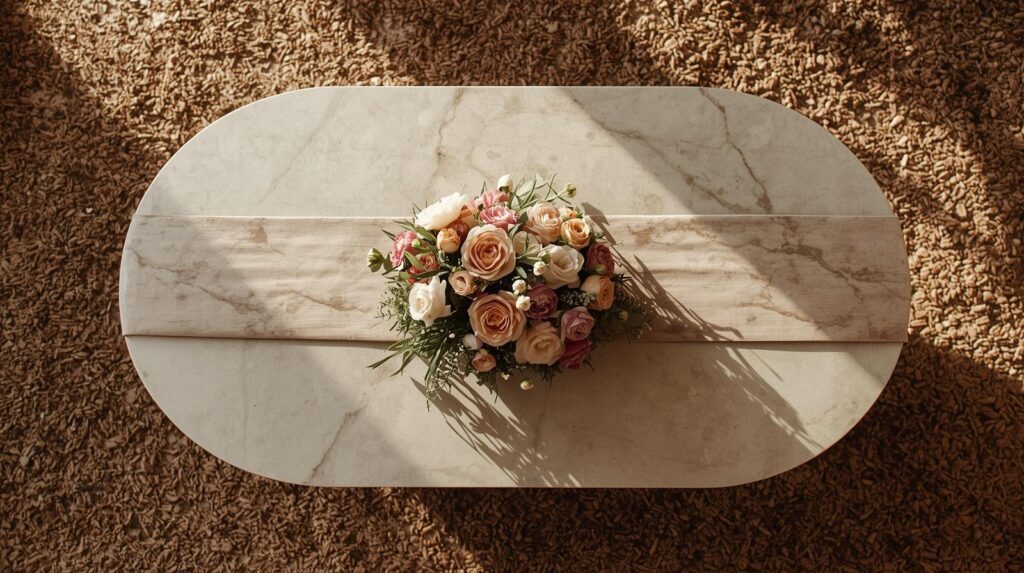
Centerpieces
Oval trays
Low greenery
Avoid tall decor that blocks sightlines
Rugs
The rug should extend 24 inches beyond the chairs
Oval rugs work best, but rectangles are fine
Oval Dining Table Maintenance Tips
Use felt pads under decor
Wipe spills immediately
Oil the solid wood once or twice a year
Avoid direct sunlight long-term
Common Oval Dining Table Mistakes
❌ Buying too wide for the room ❌ Ignoring chair clearance ❌ Choosing style over legroom ❌ Underestimating delivery weight
Is an Oval Dining Table Right for You?
Choose an oval dining table if:
Your room is narrow
You want flexible seating
You hate sharp corners
You host often
Skip it if:
You need maximum surface area
Your room is perfectly square
When an Oval Dining Table Makes Life Easier Without You Noticing
Not every improvement in a home is obvious. Some things just reduce friction. An oval dining table falls into that category.
You notice it when carrying groceries past it. When kids run around, it. When someone pulls out a chair while you’re walking by, you don’t have to stop. None of those moments is dramatic. They just add up.
In rooms where space is shared — dining plus kitchen, dining plus living room — furniture either helps or quietly gets in the way. Oval tables tend to stay out of the way more often. The shape encourages movement instead of blocking it.
That’s why people often say an oval table “fits better” without being able to explain why. It’s not about style. It’s about how often the table interrupts what you’re doing. When that interruption disappears, the room feels calmer. You don’t think about it. You just move through the space as you normally do.
And in a house that gets used every day, that kind of change matters more than how the table looks in a staged photo.
Final Thoughts
An oval dining table is one of the most practical upgrades you can make to a dining space. It’s forgiving, flexible, and timeless. If you choose the right size and material, it’s a piece you’ll use daily — not just something that looks good in photos.