Let’s not overcomplicate this—R-value is just a way to measure how well a material slows down heat from passing through it. The higher the number, the better it keeps your warm air inside in winter, or blocks heat from getting in during summer.
Think of it like the thermal version of a dam. Some materials are great at holding heat back. Others, not so much. And plywood? Well, it’s more of a speed bump than a brick wall regarding insulation.
So, Does Plywood Insulate Much?
Not really. Plywood isn’t meant to insulate—it’s there for structure. But it does provide a little resistance to heat flow. When you’re doing the math on a wall’s total R-value, it’s worth counting.
The rule of thumb I go by is:
🔸 1 inch of plywood = R-value of about 1.25
It’s not huge, but it’s not nothing either. And when you start stacking layers—drywall inside, insulation in the stud bays, plywood or OSB outside—it adds up.
🛠️ How to Boost R-Value Without Rebuilding Your Walls
Let’s say your walls are already built with plywood, basic batt insulation, and drywall. You don’t want to tear everything down—but you still want a warmer house or a more efficient shop. Good news: there are ways to improve your R-value without gutting anything.
1. Add Rigid Foam Insulation to the Outside
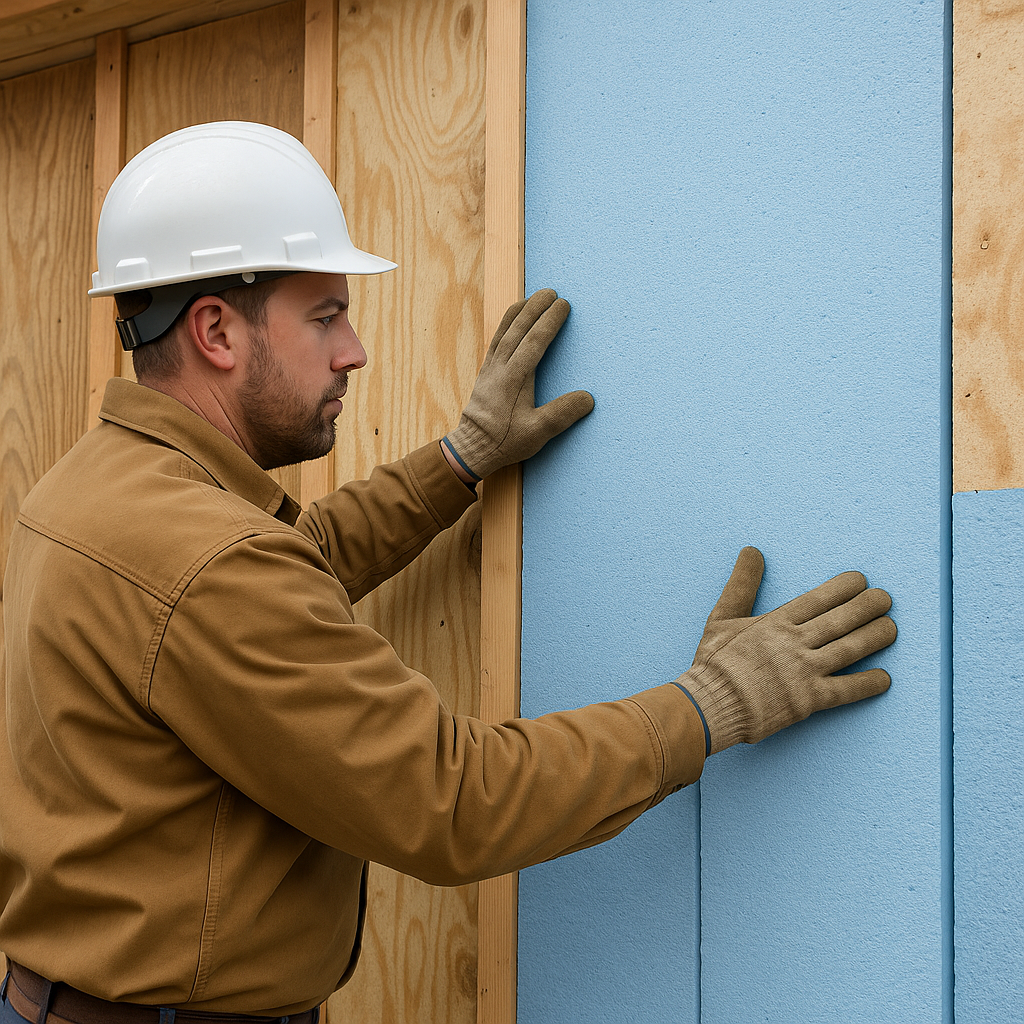
One of the best upgrades you can make is adding foam board insulation (like Polyiso or XPS) on the exterior side of the plywood. Even a 1-inch foam panel can add R-5 to R-6.5, depending on the type. That’s more than quadruple what 1/2″ plywood gives you.
After attaching foam panels, you can layer house wrap and siding over the top like usual. Not only do you boost R-value, but you also reduce thermal bridging from studs.
2. Use Reflective Foil in Attics or Crawlspaces
If you’re dealing with summer heat more than winter cold, radiant barriers like reflective foil can bounce back a surprising amount of heat. While they don’t add traditional R-value, they act like extra insulation by reducing radiant heat gain.
Install them under roof rafters or above attic insulation. In hot climates, it can cut cooling costs by up to 10%.
3. Spray Foam in Hard-to-Reach Spots
For tricky areas like rim joists, wall penetrations, or crawlspace headers, closed-cell spray foam is your best friend. It gives you around R-6.5 per inch, seals air leaks, and resists moisture. It’s expensive—but great in targeted spots.
Pro tip: If you’re doing a remodel, consider a “flash and batt” method—spray a thin layer of closed-cell foam, then fill the rest with fiberglass. You get the air seal plus bulk insulation without breaking the bank.
4. Don’t Forget Doors, Windows, and Electrical Boxes
A weak point in most walls isn’t the plywood or even the insulation—it’s the holes. Gaps around windows, recessed lights, or electrical outlets can bleed heat like crazy.
Here’s what I use in remodels:
Foam gaskets behind outlet plates
Low-expansion spray foam around window frames
Magnetic or vinyl seals on drafty doors
You don’t always need new walls—just smarter seals.
🧪 How to Test Insulation Performance (Beyond R-Value)
While R-value is helpful, it’s not the only metric that tells you how energy-efficient your wall or floor is. Two homes with the same R-values can feel totally different. Here’s how to assess and improve real-world insulation performance.
1. Do a DIY Thermal Inspection
The easiest way to spot heat loss? Use an infrared thermometer or thermal imaging camera. Aim it at walls, ceilings, and floors during cold or hot weather. You’ll immediately spot cold spots, air leaks, and insulation voids.
A good thermal image can tell you more than an R-value chart ever will. Many smartphone-compatible thermal cameras are now under $250 and worth every penny if you’re serious about energy efficiency.
Image Suggestion
Alt Text: Thermal camera showing cold spots in a poorly insulated wall
Caption: Infrared tools reveal where insulation fails—even if the wall has a decent R-value on paper.
2. Understand Effective R-Value vs. Nominal
You’ll often hear that a 2×4 wall with fiberglass batts is “R-13.” That’s the nominal R-value—what the insulation provides in ideal conditions.
But the effective R-value is what your wall actually delivers in the real world. Wood studs, gaps, compression, and air leaks all chip away at performance.
For example, a typical 2×4 wall with 16” stud spacing has about 25% of the area taken up by studs (R-6 per inch). That reduces the wall’s average insulation value.
Solution? Add continuous exterior insulation like rigid foam to bypass thermal bridges.
Most energy loss happens from air leaks, not just conduction. Improving R-value helps, but sealing air movement often delivers even bigger returns.
Focus on:
Rim joists and sill plates
Attic hatches
Plumbing and wiring holes
HVAC penetrations
Use caulk, foam sealant, gaskets, and even fire-rated putty for larger holes. Your energy bills will show the difference before your walls do.
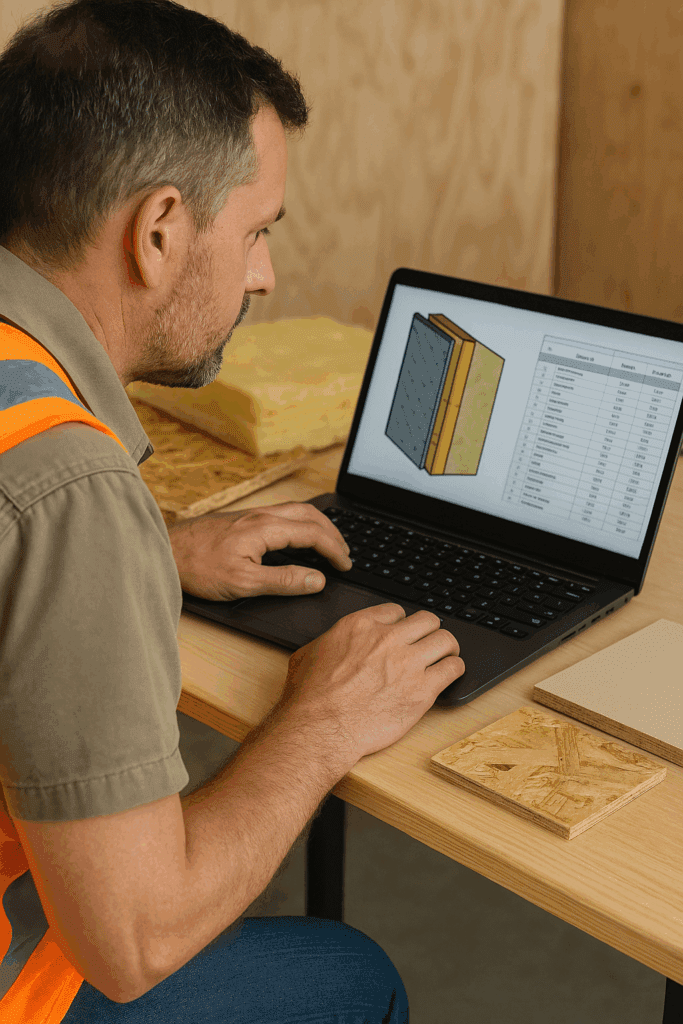
4. Use Energy Modeling Tools
Free online tools like the Department of Energy’s REScheck let you plug in your wall assembly, window types, insulation levels, and roof details to estimate compliance with local building codes and overall energy performance.
They’re great for planning and comparing upgrades, and more realistic than relying on R-value alone.
R-Value of Plywood by Thickness (Real-World Numbers)
Here’s the chart I keep on my phone whenever I’m figuring up walls or helping friends with shop builds:
Plywood Thickness
Approx. R-Value
1/4″
0.31
3/8″
0.47
15/32″
0.59
1/2″
0.63
5/8″
0.77
3/4″
0.94
1″
1.25
1-1/8″
1.41
📥 Want this in your shop binder? Download the cheat sheet as a printable PDF
How Plywood Stacks Up to OSB and Drywall (Literally)
OSB (Oriented Strand Board)
When I use OSB instead of plywood—usually on roof decks or subfloors—it gives me slightly less insulation per inch:
3/8″ OSB = R 0.45
7/16″ OSB = R 0.51
1/2″ OSB = R 0.74
3/4″ OSB = R 0.91
If you’re debating between plywood and OSB, insulation probably won’t be the deciding factor—it’s more about cost and structural needs. Here’s a more detailed comparison: OSB vs. Plywood
Drywall (a.k.a. Sheetrock)
Drywall, meanwhile, insulates even less. Half-inch drywall gives you about R 0.45. So plywood beats it there—but again, drywall’s not meant to keep you warm. It’s just a finishing layer.
How to Figure Out a Wall’s Total R-Value (The Realistic Way)
Let’s say you’ve got a 2×4 wall:
1/2″ plywood outside = R 0.63
R-13 fiberglass in the cavity = R 13.00
1/2″ drywall inside = R 0.45 ➡️ On paper, that’s R 14.08
But in real life? Studs, air leaks, windows, outlet boxes—all of that reduces the effective R-value. I usually knock off about 10–15% to keep my expectations honest.
If you’re planning a build or remodel, I recommend reading our guide to Plywood Wall Sheathing for more details on layering and wall strength.
Particle Board R-Values (If You’re Dealing With It)
Older homes sometimes have particleboard underlayment under the floors or in weird places. It insulates a bit better than plywood per inch:
5/8″ particle board = R 0.82
1″ = R 1.31
Still not great, but worth noting if you’re trying to calculate insulation in existing walls or floors.
Can R-Values Break Down Over Time? Absolutely.
I’ve opened walls in 30-year-old houses and seen insulation resembling crumpled tissue. Moisture, age, and compression—it all erodes effectiveness. That’s why old homes tend to feel drafty even if they technically have insulation.
What makes a difference:
Water leaks (ruins batts fast)
Compressed insulation behind paneling or boxes
Drafty seams around windows, vents, and doors
Gaps in attic hatches or wall penetrations
We break this down more in our Home Insulation Tips article.
Fastest DIY Upgrade: Seal the Air Leaks
You can blow thousands re-insulating your attic—or start with weather stripping and foam tape and feel an instant difference. I’ve used this stuff around garage doors and crawlspaces:
Plywood isn’t your hero when it comes to insulation. But it plays a role—and when combined with fiberglass, foam, drywall, and siding, it’s part of the bigger energy-efficiency puzzle.
Quick recap:
3/4″ plywood = R 0.94
Better than drywall, slightly better than OSB
Always pair with real insulation
Grab the Free Printable Chart
Want a copy of the R-value chart I use in the field?
👉 Click here to download the PDF – print it, laminate it, or tape it to the inside of your toolbox lid.
OSB Board: Pros, Cons and Best Uses by Admin August 25, 2026 DIY OSB is everywhere in modern construction and barely gets a second thought — until something goes wrong with it. It sheathes the walls and roofs…
Wood Cable Spool: Ideas, Furniture Projects & More by Admin May 19, 2025 DIY Wood cable spools aren’t just industrial leftovers—they’re a goldmine for creative DIYers. These oversized wooden reels, originally made for holding electrical lines, telephone wires, or…