Ash plywood is one of the best materials for cabinets because it has a clean, modern grain, finishes evenly, and costs less than oak while delivering a similar high-end appearance. It works especially well for kitchen cabinets, built-ins, and furniture where a smooth, consistent surface is important.
Why Everyone Is Switching to Ash (2026 Trend)
If you’ve been looking at newer kitchens or built-ins lately, you’ve probably noticed something: they look lighter, cleaner, and less “heavy” than older designs.
That shift isn’t random.
Cabinet builders are moving away from bold, traditional woods like oak and toward materials that feel more modern—and ash plywood is right in the middle of that change.
Ash plywood has become one of the most popular cabinet materials in 2026 because it solves a very specific problem: people want real wood, but they don’t want the heavy grain or high cost that comes with it.
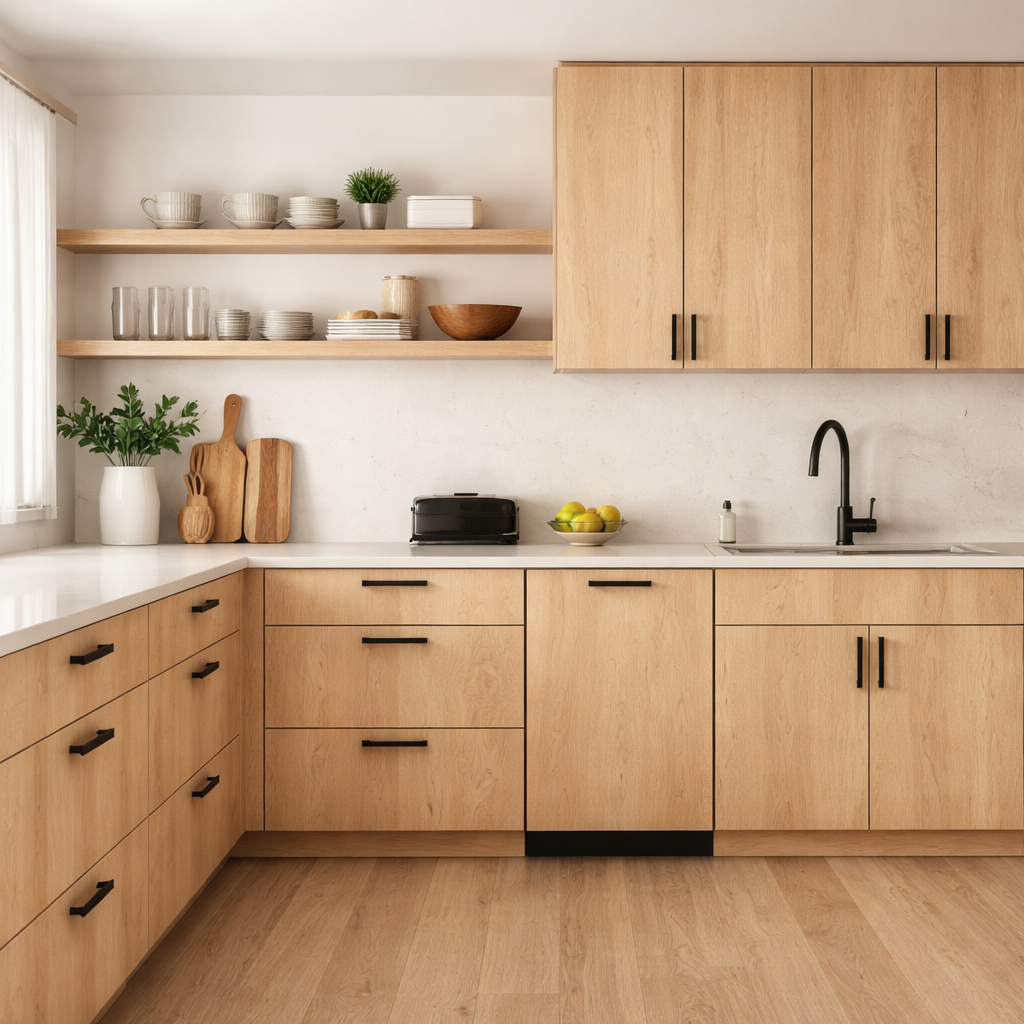
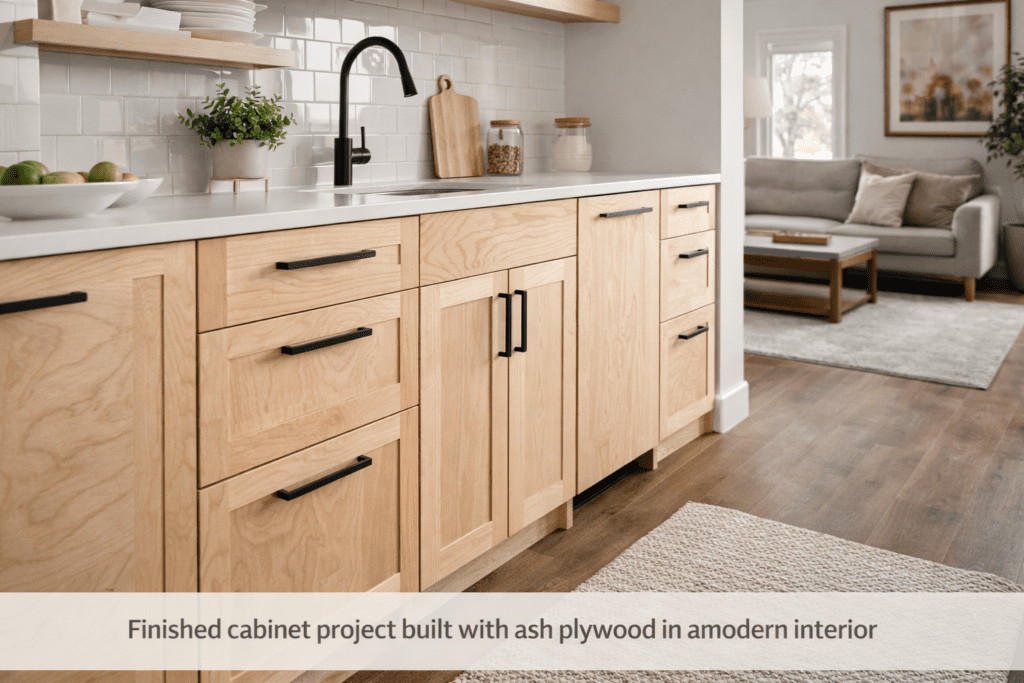
Instead, ash gives you a lighter tone, subtle grain, and a much more controlled look. It pairs easily with white walls, black hardware, quartz countertops, and minimalist designs, which is exactly what most homeowners are going for right now.
Another reason it’s trending is consistency. When you’re building a full kitchen or a long run of cabinets, mismatched grain can ruin the final look. Higher-quality ash plywood tends to be more uniform across sheets, making your finished project look intentional rather than pieced together.
Put simply, ash fits modern design better than most other woods right now.
What Is Ash Plywood?
Ash plywood is a hardwood plywood made with a real ash veneer layered over a multi-ply wood core. This construction offers the visual appeal of solid hardwood, combined with the stability and affordability of engineered panels.
Instead of working with solid ash boards—which can warp, twist, or move with humidity—you get a sheet material that stays flat and predictable. That’s a major advantage when you’re building cabinets, especially across large surfaces like doors, side panels, and shelving.
The outer veneer provides the clean, bright look that ash is known for, while the inner layers add structural stability. This layered construction reduces seasonal movement, which is one of the biggest issues with solid wood.
In practical terms, that means fewer headaches during installation and fewer long-term problems after the project is finished.
This is exactly why ash plywood has become a go-to material for modern cabinetry and furniture builds where appearance matters more than raw structural strength.
Is Ash Plywood Good for Cabinets?
Yes—and in many cases, it’s the best overall choice for modern cabinet builds.
But the real reason isn’t just aesthetics. It’s how the material behaves during the entire process—from cutting to finishing.
Clean, Controlled Grain
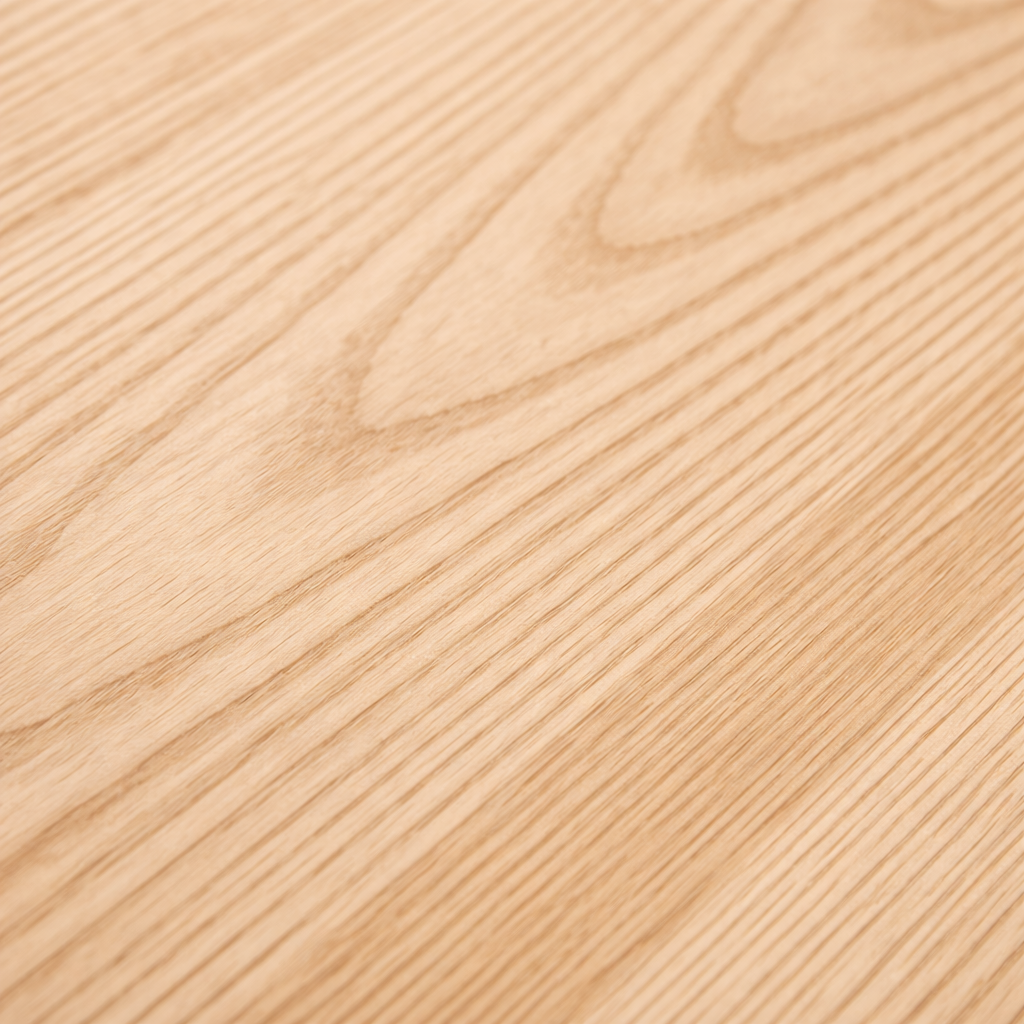
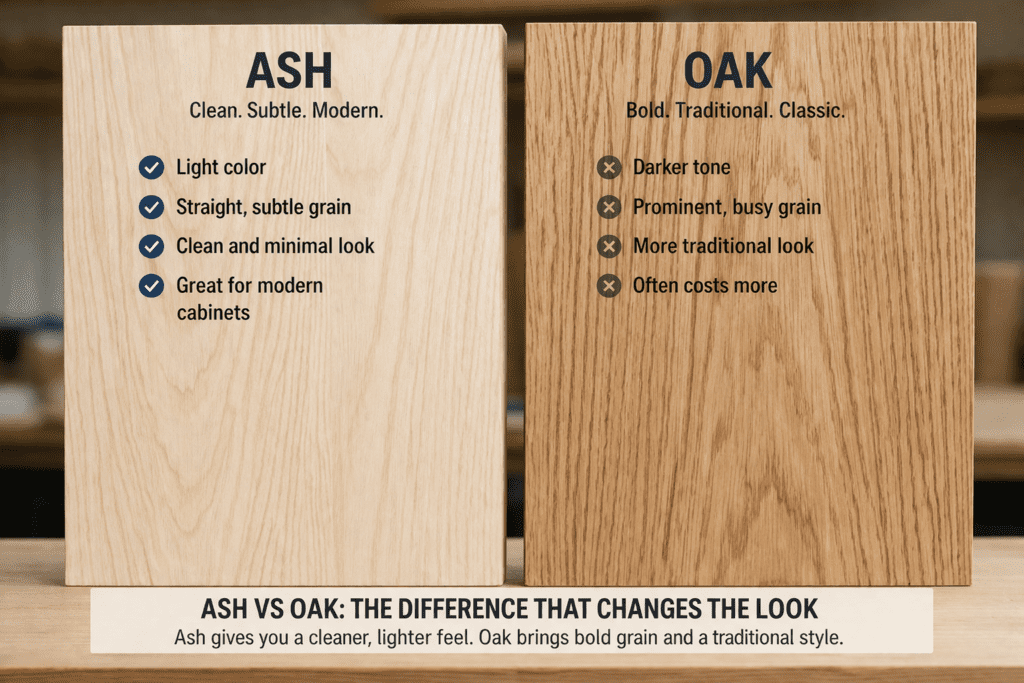
Ash has a straight, subtle grain that looks refined without being distracting. Unlike oak, which can feel busy or overpowering, ash stays visually balanced. This becomes especially important in kitchens with a lot of cabinet surface area.
Finishes Evenly (Huge Advantage)
One of the biggest frustrations in woodworking is uneven finishes—blotches, dark spots, or inconsistent color.
Ash plywood minimizes that problem. Clear coats go on smoothly, and light stains absorb evenly. That alone can save hours of sanding, reapplying, and fixing mistakes.
Better Value Than Oak
Ash typically costs less than oak plywood while delivering a very similar high-end look. For most projects, you’re getting 90% of the visual impact for a lower price.
Predictable Results Across Sheets
When you’re building multiple cabinets, consistency matters more than people expect. Ash plywood—especially higher-quality brands—tends to have fewer defects, fewer patches, and more uniform grain.
That means less sorting, less waste, and better overall results.
🔥 Best Ash Plywood Sheets (2026 Picks)
Product
Best For
Why It’s Worth It
PureBond Ash (3/4″)
Cabinets
Consistent veneer, minimal defects
Patriot Timber Ash
Budget builds
Lower cost, acceptable quality
Timber Products Select
High-end cabinetry
Premium veneer and uniform grain
PureBond 1/2″ Birch Core
Beginners
Easier to handle and cut
Roseburg Panels
Large builds
Reliable sizing and availability
👉 If you want the safest option with the least risk of problems: 3/4″ PureBond ash plywood is the best overall choice.
🛒 Best Ash Plywood & Tools for Cabinets (Top Picks 2026)
Product
Best For
Why It’s Worth It
Check Price
⭐ PureBond Ash Plywood (3/4″) 🏆 Best Overall
Cabinets & kitchens
Most consistent veneer, minimal defects, easiest finishing
Most people think the material is the main factor in how a project turns out.
It’s not.
The tools you use will have a bigger impact than the plywood itself.
Ash plywood has a thin veneer, so mistakes show up immediately. A dull blade or cheap sander can ruin the surface in seconds.
From real experience:
A high-tooth-count blade (like an 80T plywood blade) reduces tear-out
A quality orbital sander prevents uneven sanding
A good topcoat keeps the natural tone without yellowing
If you use low-quality tools, even the best plywood will look bad. If you use the right tools, ash plywood becomes very easy to work with.
What Most People Get Wrong About Ash vs Oak
One of the biggest misconceptions is that oak is automatically better because it’s more expensive or more traditional.
That’s not how it works.
Oak has a strong, bold grain that was popular for years, but in modern interiors, it can feel heavy and outdated. It also tends to require more work to finish cleanly.
Ash, on the other hand, gives you a much cleaner and more controlled look. It doesn’t dominate the space, and it’s easier to finish properly.
This doesn’t mean oak is bad—it just means it’s better suited for traditional designs.
For modern cabinets, ash usually yields better results.
Real Project Experience (Why This Matters)
I used PureBond ash plywood for a cabinet build, and the difference from lower-grade plywood was obvious right away.
There were no random patches, no inconsistent grain, and no surprises during sanding. Everything felt predictable, which is exactly what you want when working on visible surfaces.
The finish went on evenly, and the final result looked far more expensive than the actual material cost.
👉 The quality of the sheet matters more than the wood species itself.
A high-quality ash sheet will outperform a low-grade oak or birch sheet every time.
Ash vs Oak vs Birch vs Maple (Quick Comparison)
Feature
Ash
Oak
Birch
Maple
Look
Light, clean
Bold grain
Slight yellow
Smooth
Style
Modern
Traditional
Utility
Minimal
Finish
Easy
Harder
Moderate
Easy
Best Use
Cabinets
Classic builds
Budget
Flat designs
Practical Takeaway:
ash for modern cabinets
oak for traditional styles
birch for budget projects
maple for ultra-smooth surfaces
Pros and Cons of Ash Plywood
Pros:
clean, modern appearance
consistent grain pattern
easy finishing
strong value for the price
Cons:
thin veneer (easy to damage if mishandled)
not suitable for outdoor use
requires careful cutting and sanding
not designed for structural framing
💸 Cost Breakdown (What You’re Really Paying For)
Ash plywood sits in the middle of the price range, but the value comes from what it saves you.
You’re not just paying for the material—you’re paying for:
fewer defects
less sanding time
better finishing results
less wasted material
Cheaper plywood often leads to more work and worse results, ultimately costing more in the long run.
Real Performance Test
In actual use, ash plywood performs well across all key stages—but only if handled properly.
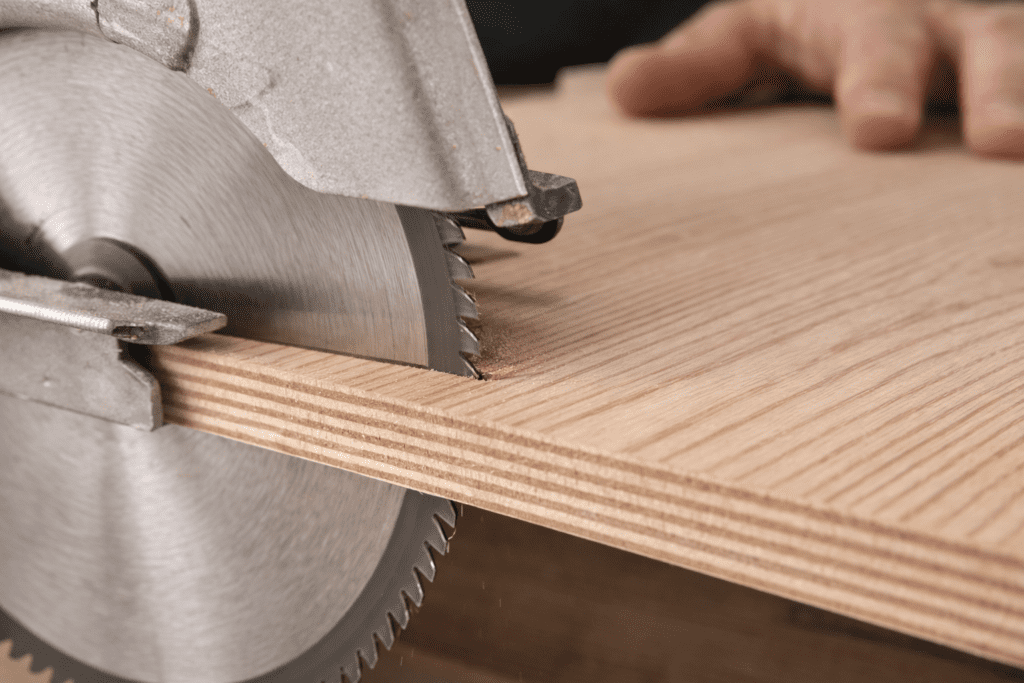
Cutting produces clean edges when using the right blade. Sanding works well with a light touch, but aggressive sanding can damage the veneer. Finishing is where ash really stands out—it absorbs clear coats evenly and maintains a clean, natural look.
This combination makes it ideal for cabinets and furniture, where appearance is the priority.
How to Cut Ash Plywood Without Chipping
To get clean, professional cuts:
Use a high-tooth-count blade
Cut slowly and steadily
Support the sheet fully
Apply painter’s tape along the cut line
Skipping these steps is one of the fastest ways to ruin a sheet.
Best Finishes for Ash Plywood
Ash looks best when you keep the finish simple.
clear coats → preserve natural tone
light stains → add warmth without overpowering grain
Dark stains tend to reduce clarity and make the surface look muddy, which defeats the purpose of using ash in the first place.
Beginner Tips
If you’re new to working with ash plywood:
Start with smaller cuts
Use sharp tools
Sand lightly
Avoid overworking the surface
Ash rewards precision. Rushing the process usually leads to mistakes.
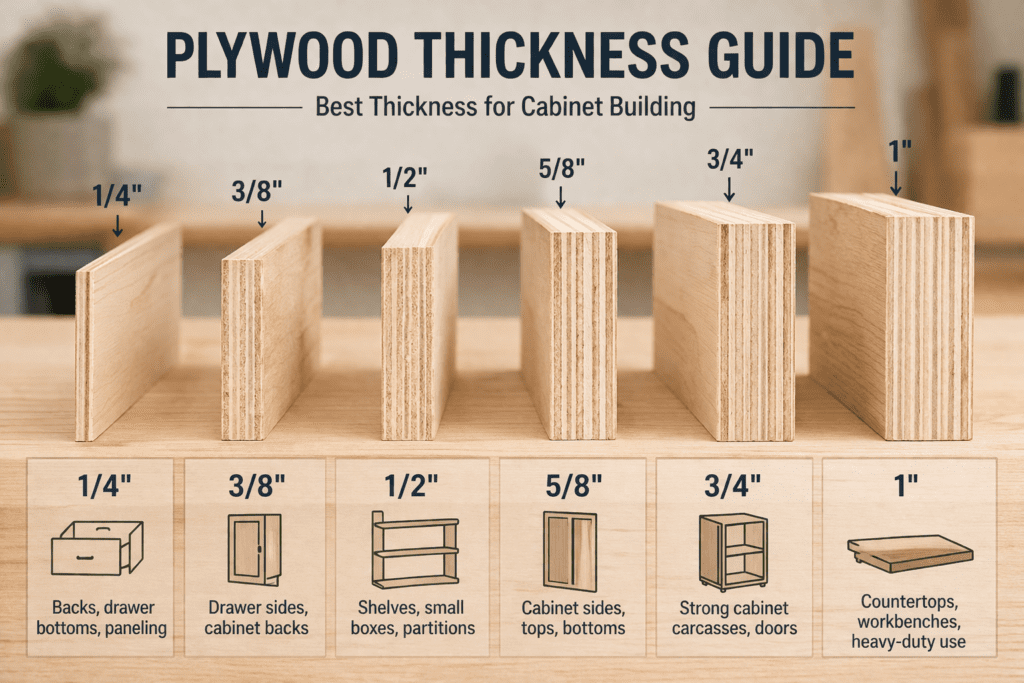
Best Thickness by Project
3/4″ → cabinet boxes and shelves
1/2″ → lighter panels and backs
thinner → decorative use only
Using the wrong thickness is a common mistake that affects both strength and appearance.
Large Projects (Cabinet Runs)
For larger builds:
use full 4×8 sheets
maintain consistent material across all cabinets
plan cuts ahead of time
This reduces waste and improves overall project quality.
⚠️ Biggest Mistake to Avoid
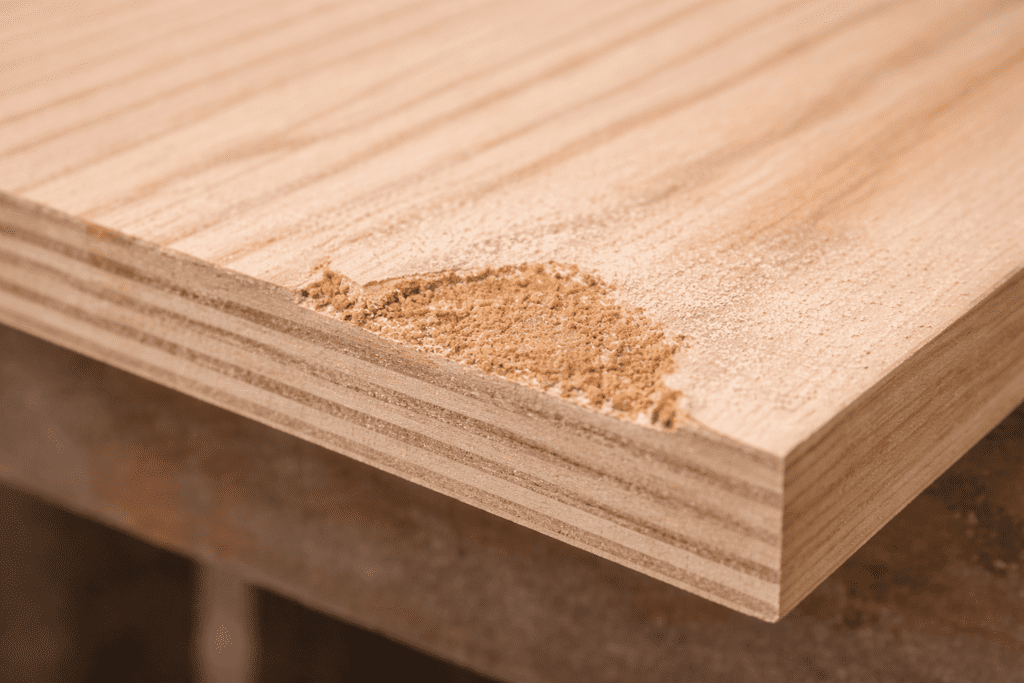
Over-sanding the veneer.
Once you sand through the top layer, it cannot be fixed.
The second biggest mistake: 👉 using the wrong blade, which causes tear-out and chipping.
5 Mistakes That Ruin Ash Plywood Projects
using low-quality blades
sanding too aggressively
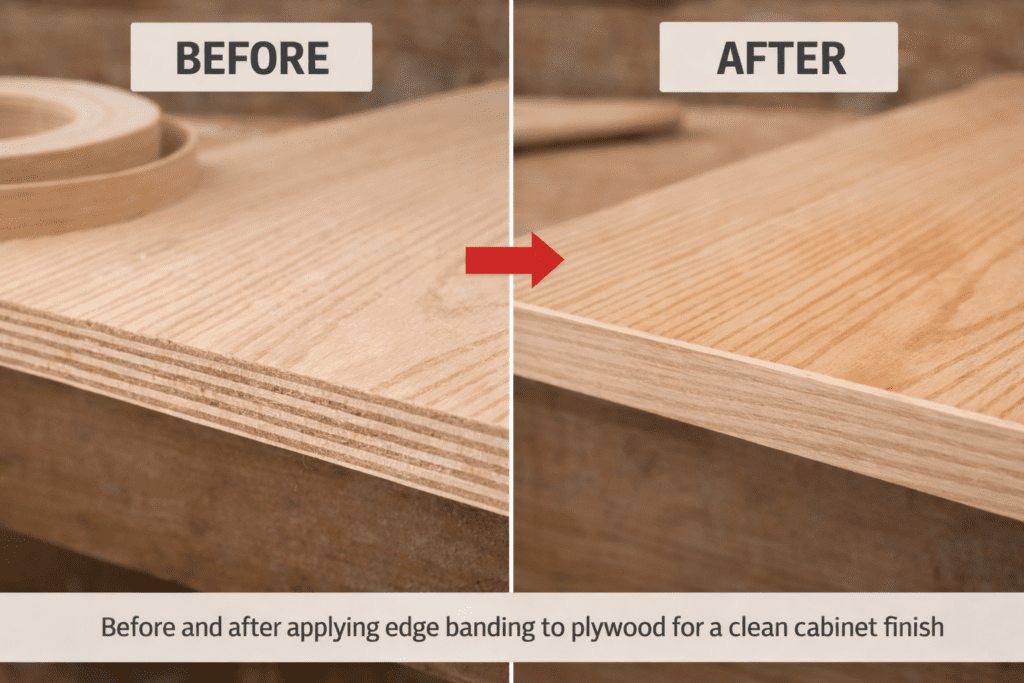
skipping edge banding
using dark stains
choosing an incorrect thickness
Avoiding these alone can dramatically improve your results.
Where Most Buyers Go Wrong
Most people focus on saving money up front.
But cheaper plywood usually leads to:
more defects
more labor
worse final appearance
Spending slightly more on better plywood almost always leads to a better outcome.
FAQ
Is ash plywood good for cabinets?
Yes, it’s one of the best materials for modern cabinets because it offers a clean look, consistent grain, and easy finishing.
Is ash plywood expensive?
It’s mid-range—usually cheaper than oak and slightly more expensive than basic birch.
Can ash plywood be used outdoors?
No, unless it’s specifically treated and sealed for exterior use.
Final Verdict
Ash plywood is one of the best materials for cabinets in 2026.
It provides a modern appearance, predictable performance, and strong value compared to traditional hardwood options.
If your goal is to build cabinets that look clean, modern, and professionally finished:
👉 use ash plywood 👉 use the right tools 👉 take your time
That combination consistently produces high-end results without the cost of solid hardwood.
Related Posts:
ApplePly Plywood Review: Pros, Cons & Where to Buy It by Admin March 31, 2025 Hardwood When I first started woodworking, plywood was just the budget-friendly go-to for garage shelves or workshop benches. But as I began taking on more serious…
Can You Use Plywood for a Deck? Pros, Cons & Costs by Admin June 2, 2026 DIY Choosing the right material for a deck determines how long the structure will last, how much maintenance it will require, and how safe it will…