Hardboard vs MDF: Hardboard (HDF) is thinner, denser, and stronger in small sheets—best for backs, drawer bottoms, and underlayment. MDF is thicker, smoother, and easier to paint—making it best for cabinets, furniture, and wall panels.
Every time I wander into the lumber aisle, I see somebody stuck in the same spot—frozen in front of the stacks, muttering, “Hardboard vs MDF—aren’t these just the same thing?” At first glance, it’s fair. Both are big brown sheets. Both are flat, heavy, and cheaper than many plywood options.
But the first time you cut one, or try to sink a screw into the edge, the differences jump out. Hardboard is thin, dense, and stubborn—like working with stone that happens to come in sheets. MDF comes thicker, cuts smoothly, and when you paint it, the finish looks store-bought. I’ve learned the hard way that grabbing the wrong one means wasted time and sagging projects.
A Little History (Why They Behave Differently)
Hardboard’s been around for over a century. William Mason came up with the process in the 1920s—blast wood fibers apart, then squeeze them back together under steam and pressure. Folks started calling it Masonite, and it showed up everywhere: wallboard, cabinet backs, doors, and those pegboards lining garages.
MDF (medium-density fiberboard) showed up later, really taking off in the 1960s and 70s. Furniture makers wanted panels without knots or grain to fight. MDF gave them exactly that. It cut smoothly, painted smoothly, and came in thick panels. That’s why you see it in everything from cheap bookshelves at the big-box store to custom-painted cabinets.
So here’s the takeaway: Hardboard was born thin and dense, MDF was designed to be versatile and easy to finish.
What Is Hardboard?
Hardboard, or HDF (high-density fiberboard), is made by crushing wood fibers until they behave like a single solid mass. Unlike MDF, which depends on resins and waxes, hardboard often uses the wood’s own lignin to glue itself together under heat and pressure.
The first time I picked up a 1/8-inch sheet, I laughed—thought it’d be light. Wrong. Nearly dropped it, sliding into the truck. Heavy stuff. And once you start cutting, it feels like you’re sawing into a slab of compressed stone.
Hardboard’s Main Traits:
Dense and heavy — more than plywood or MDF pound for pound.
Thin sheets only — usually 1/8″ to 1/4″.
Two faces — one smooth, one textured (great for glue or hidden installs).
Surprisingly tough — resists dents better than you’d expect.
Hates water — unless tempered (oil-treated), it swells fast.
Where I Actually Use It:
Drawer bottoms that need to stay stiff.
Cabinet backs where strength matters, but looks don’t.
Pegboards—if you’ve ever hung tools on one, that’s tempered hardboard.
Flooring underlayment to smooth out bumps.
Jigs and templates in the shop—cheap, flat, and strong enough to last a while.
👉 Quick story: I once tried to use untreated hardboard in a damp basement cabinet. Within a month, the edges looked like a sponge. Lesson learned—tempered only when moisture’s around.
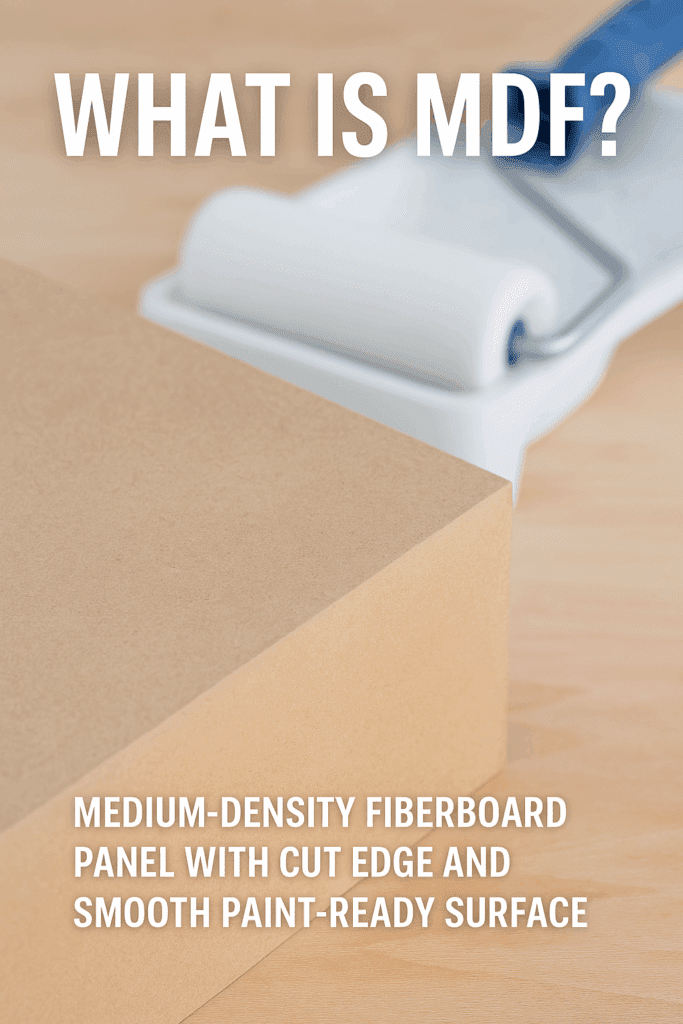
What Is MDF?
MDF—medium-density fiberboard—takes a different path. Wood gets ground down into fine fibers, mixed with resin and wax, and pressed back into panels. It’s lighter than hardboard but comes in much thicker sizes, which makes it a lot more flexible for projects.
Grab a sheet, and you’ll notice right away: heavier than plywood, not quite as dense as hardboard. But the surface? Smooth as glass. That’s MDF’s superpower—it paints like drywall. Once you prime it, you get a flawless finish.
MDF’s Main Traits:
Smooth, consistent surface on both sides.
Wide range of thicknesses—from 1/4″ to over an inch.
Cuts and routs easily (though the dust is brutal—mask up).
No knots, no grain surprises.
Absolutely hates water. Seal the edges or regret it.
Furniture where a smooth painted finish is the goal.
👉 Thinking about cabinets? Check out Best Plywood for Cabinets first—MDF isn’t always the better choice.
Hardboard vs MDF: The Key Differences
Feature
Hardboard (HDF)
MDF
Density
Very dense, heavy
Medium density
Thickness
Thin (1/8–1/4”)
Wide (1/4–1”)
Surface
One smooth, one textured
Both sides smooth
Water Resistance
Only if tempered
Must be sealed
Cost
Usually cheaper per sheet
Slightly pricier
Best For
Backs, underlayment, pegboards
Painted panels, shelves, cabinets
👉 Simple breakdown: hardboard is tough in thin sheets, MDF is flexible and looks good painted.
Strength Reality (Most People Miss This)
Hardboard is strong in thin panels, but not structural
MDF is weak over long spans (bookshelves need support under 24–30″)
Neither replaces plywood for load-bearing builds
Best Uses by Project
Best Material by Project
Underlayment → Hardboard
Cabinet backs → Hardboard
Drawer bottoms → Hardboard
Bookshelves → MDF (but reinforce)
Painted cabinets → MDF
Wall paneling → MDF
4 Mistakes That Ruin MDF & Hardboard Projects
Using MDF in damp areas → swelling and edge blowout
Using non-tempered hardboard near moisture → warping within weeks
Building long shelves with MDF → sagging over time
Skipping edge sealing on MDF → rough, fuzzy paint finish
Cost Comparison
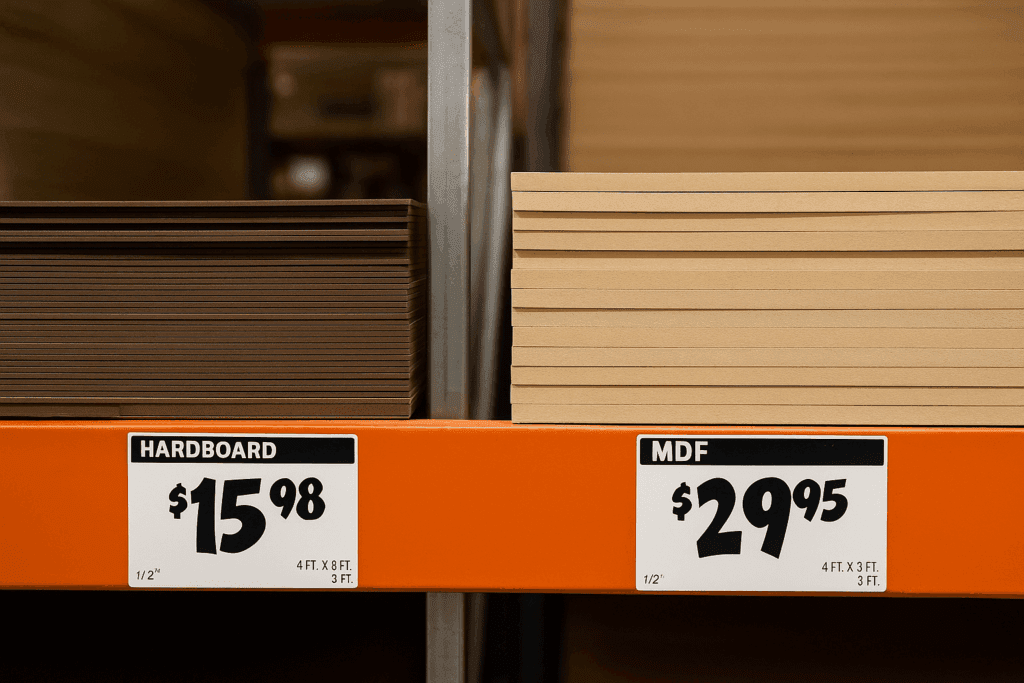
At my local store, a 1/4-inch 4×8 sheet of hardboard costs around $15–$20. Not bad. But don’t be fooled—it’s heavy to haul, even though it’s thin.
MDF runs about $30–$40 for a 1/2-inch 4×8 panel. More expensive, bulkier, and heavier. I’ve had to call for a cart just to get more than two sheets out of the aisle.
So here’s how I think about it: hardboard saves money when the panel is hidden. MDF earns its price when the surface is visible.
Real-World Applications
I stock hardboard in my shop mostly for the unsung stuff—drawer bottoms, cabinet backs, jigs, and pegboards. It’s cheap, it’s stiff, and I don’t feel bad cutting it up. Nobody brags about using it, but it does its job.
MDF is for the showpieces. I once paneled a wall in MDF—after priming and painting, it looked like it came out of a custom mill shop. I’ve built shelves, too. Cuts clean, paints even, and doesn’t fight me like plywood.
👉 Mistake I made once: built a shelf out of MDF, didn’t seal the edges. Within weeks, it sagged and puffed up like wet cardboard. Never again.
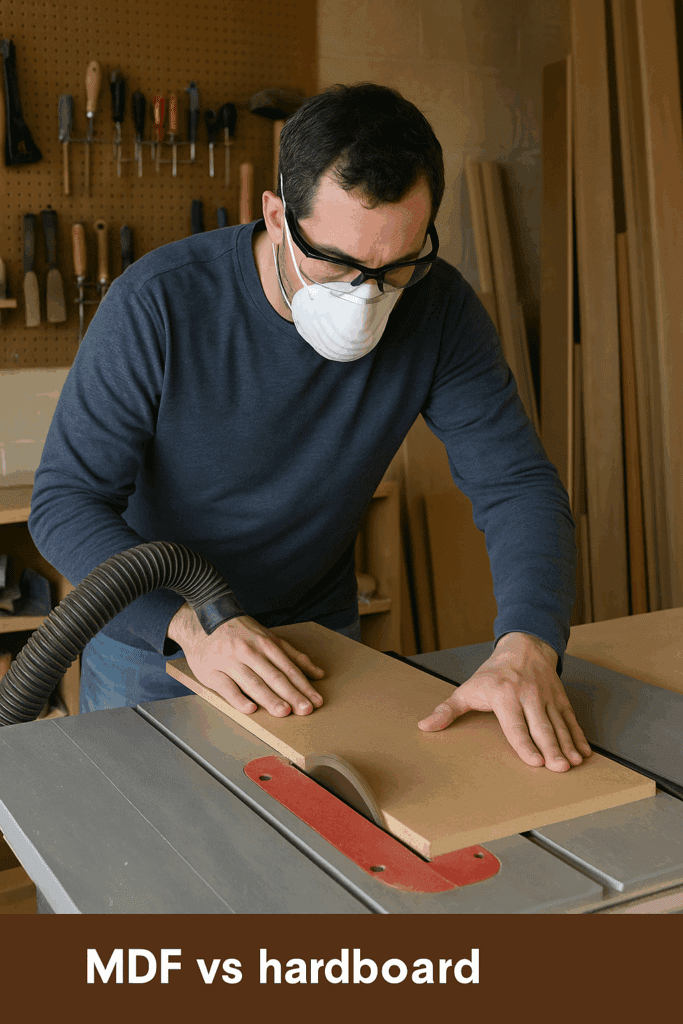
Cutting: Both cut fine with saws. MDF makes dust so fine it feels like baby powder—mask and vacuum required. Hardboard is rougher on blades, feels like sawing stone.
Fastening: Forget screws in hardboard edges. MDF can handle screws, but only if you pre-drill. Skip that, and it splits.
Painting & Finishing: MDF wins, hands down. Hardboard isn’t built for looks—it’s usually tucked away.
Durability: Hardboard shrugs off dents in thin sheets. MDF stays fine indoors as long as you keep water away.
Hardboard pegboard wall: Built one in my garage years ago. Still solid, still holding tools, even after summer humidity and winter chills.
MDF bookshelf: Looked amazing when painted, but I skipped sealing the bottom edge. It wicked up moisture from the floor and ballooned within months. Lesson: seal every edge, no shortcuts.
Hardboard drawer bottoms: I’ve cut dozens for shop storage. They don’t sag under weight and cost a fraction of plywood.
MDF wall paneling: Took more sanding and priming than I thought, but the finish was flawless. Worth the extra prep.
Tool Tips for Working With Hardboard and MDF
Best saw blades: A fine-tooth carbide blade will give you cleaner cuts on both materials. MDF especially loves to chip if you rush.
Dust protection: MDF dust is nasty. I always wear a mask and, if possible, hook up a shop vac. Hardboard dust is coarser, but still worth catching.
Fasteners: MDF takes screws better when pre-drilled. For hardboard, I stick to brad nails, staples, or construction adhesive.
Edge sealing: Wood glue, shellac, or even primer brushed along MDF edges makes a huge difference.
FAQs: Hardboard vs MDF
Is MDF stronger than hardboard? No. Hardboard (HDF) is denser and stronger in thin sheets, but MDF is more versatile in thicker panels. Neither is ideal for structural use.
Does MDF sag over time? Yes. MDF will sag on long spans, especially in bookshelves. Keep supports under 24–30 inches or reinforce it.
Can hardboard get wet? Only tempered hardboard resists moisture slightly. Standard hardboard will swell and warp quickly when exposed to water.
Is MDF good for cabinets? Yes, for painted cabinets. MDF provides a smooth, consistent surface, but edges must be sealed to prevent moisture damage.
Which is cheaper: MDF or hardboard? Hardboard is usually cheaper per sheet. MDF costs more but offers better thickness options and finish quality.
Can hardboard be used outside? Not really. Even-tempered hardboard won’t hold up well outdoors in the long term.
Does MDF hold screws better than hardboard? Yes, but only if you pre-drill. Hardboard edges won’t take screws.
How do you seal MDF edges? I use wood glue or primer—let it soak in, then paint. Keeps moisture out.
Is tempered hardboard worth the price? Yes. Stronger, more resistant, and perfect for pegboards or cabinet backs.
Which is heavier: MDF or hardboard? Hardboard is denser, but a thick MDF sheet outweighs a thin hardboard one.
Can you cut MDF with a hand saw? Yes, but it’s slow and dusty. Power tools make cleaner cuts.
Does hardboard warp over time? Kept dry, it stays flat. Moisture is its biggest enemy.
Which is better for soundproofing? MDF usually wins—it’s dense and is commonly used in speaker boxes.
Can you paint hardboard directly? You can, but it’s better to prime first. The smooth face takes paint; the rough face usually gets hidden.
Is MDF safe for kitchens? It’s fine for cabinets if sealed, but never leave raw MDF exposed where water or steam can hit it.
Why I Sometimes Pick MDF Over Hardboard
If the project requires a painted finish, MDF is usually the preferred choice. It’s smoother, cuts cleaner, and paints beautifully. Hardboard just isn’t built for looks.
One project stands out: I built a big bookshelf from MDF. Carrying the panels nearly wrecked my back, and cutting them turned the shop into a dust storm. But once primed and painted, the thing looked like it rolled out of a high-end furniture store. Worth every headache.
Hardboard: thin, cheap, stubbornly strong. Perfect for drawer bottoms, pegboards, underlayment, and jigs. MDF: heavier, pricier, a dust nightmare—but unbeatable when the surface has to look sharp and clean.
Neither’s perfect, but together, they cover a lot of ground. And if you pick the right one for the job, you’ll save yourself busted shelves, warped edges, and more than a few headaches.
I keep hardboard for the invisible work—drawer bottoms, cabinet backs, jigs. It’s cheap, stiff, and reliable, where looks don’t matter.
MDF is what I use when the surface shows. If it’s getting painted, nothing else gives that same smooth, finished look.
Final rule: If you’re hiding it → hardboard If you’re painting it → MDF If it needs strength → use plywood instead
Plywood vs Hardboard: Which One Is Right for Your Project? by Amy Reed September 8, 2025 More About Whether you're building a cabinet, designing wall panels, or installing subflooring, choosing the right type of wood product is essential. Two popular options, plywood and…