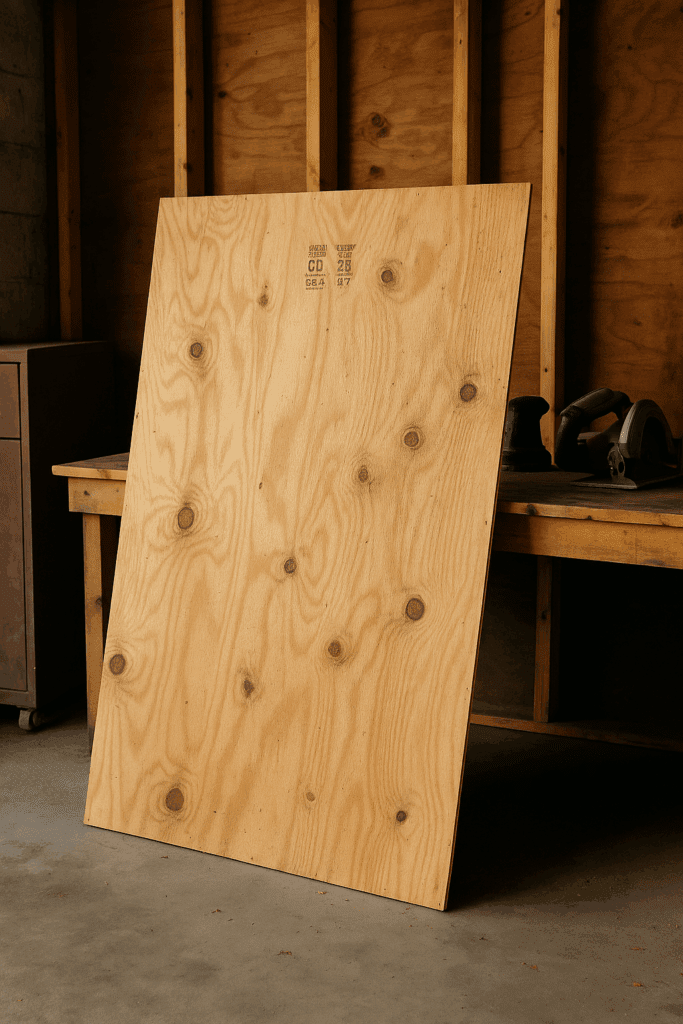
I still remember standing in the lumber aisle, staring at a stack of splintery plywood sheets stamped with the letters “CDX.” I had no clue what it meant—I just knew I needed something tough for a quick fix in my garage. When I asked one of the guys at the counter, he said, “If you want strong and cheap, that’s your sheet.” And that was my first introduction to CDX.
It didn’t take long for me to understand why builders reach for it all the time. CDX isn’t polished or smooth, but that’s not what it’s meant to be. It’s the kind of material you can throw in the back of a truck, screw into framing, or use for something that just needs to work. If it gets beat up along the way, no big deal—that’s part of the charm.
One project turned into a dozen. I’ve used CDX to build subfloors, ramp bases, tool bench tops, and more. My shop still has off-cuts stacked in the corner because they always come in handy. When the job calls for reliability over looks, CDX is the one I grab.
The name might sound technical, but the idea is simple: one usable face, one rougher back, and glue that holds up in a bit of rain. It’s not waterproof, and it’s not pretty—but it’s tough as nails and gets the job done.
That’s why, even in 2025, CDX plywood hasn’t gone anywhere. It’s not glamorous, but if you’re a DIYer who likes building things that last, it belongs in your material stack.
🤔 What Does CDX Plywood Mean?
“CDX” isn’t a brand — it’s a grade classification:
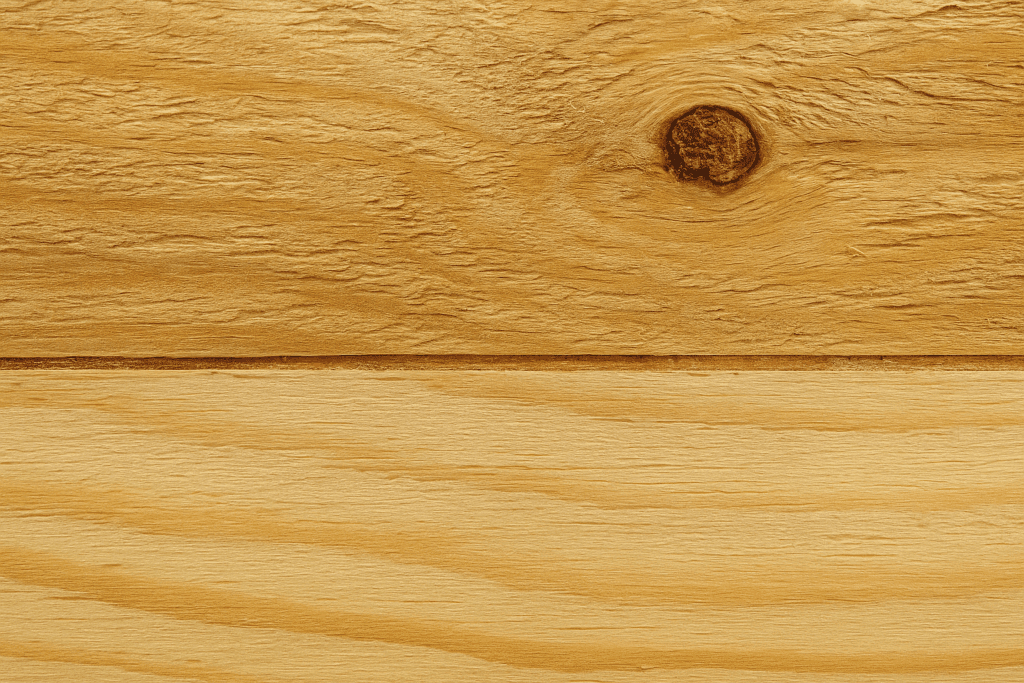
C = One side has moderate flaws (think knots and patches).
D = The back side is rougher, with more visible imperfections.
X = The glue is rated for exposure (not waterproof, but resistant to moisture).
So, what is CDX plywood? It’s construction-grade plywood designed to be structurally strong and affordable, not pretty. It’s great for things like subfloors, roof sheathing, or any structural project where the plywood won’t be visible.
I don’t buy CDX because it’s nice. I buy it because it doesn’t quit.
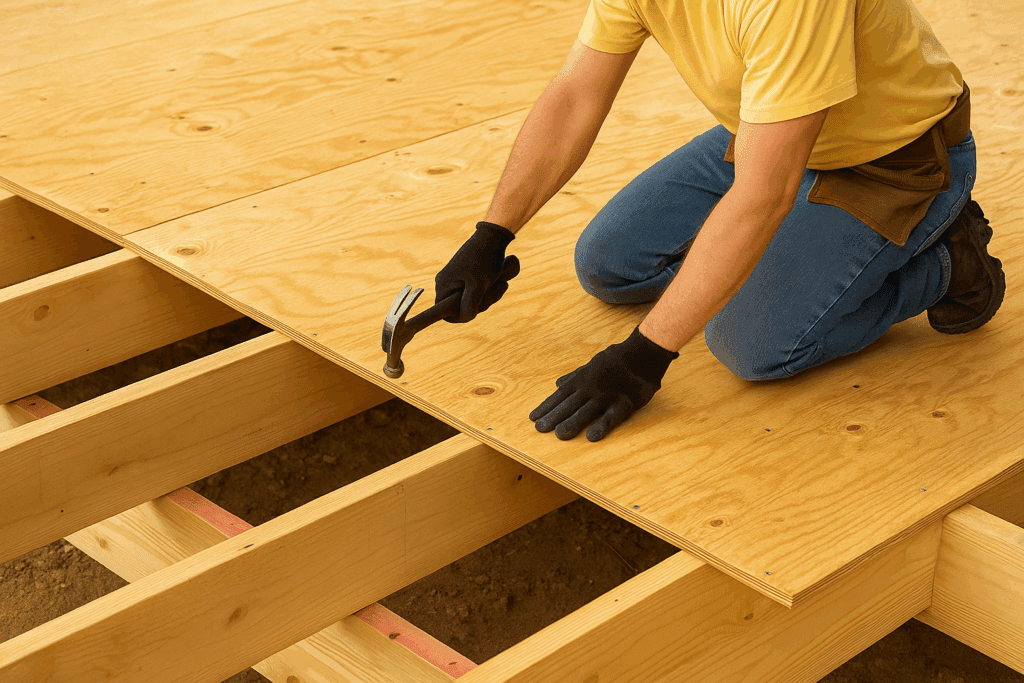
🧱 Subfloor, years ago. Cousin’s place. His floor was soft in spots—you could feel the bounce walking across the living room. We pulled the carpet, saw the rot, and grabbed a stack of 3/4 CDX. Didn’t overthink it. Just laid it down and moved on. No squeaks. That floor’s still holding up, far as I know.
🏡 Roof sheathing on a garage.
We were halfway through framing when the rain hit. Everything got soaked. We thought the plywood would bubble or delaminate, but nope—it dried out by morning. We nailed it down, kept going, never looked back. That was five years ago.
📺 Shed floor.
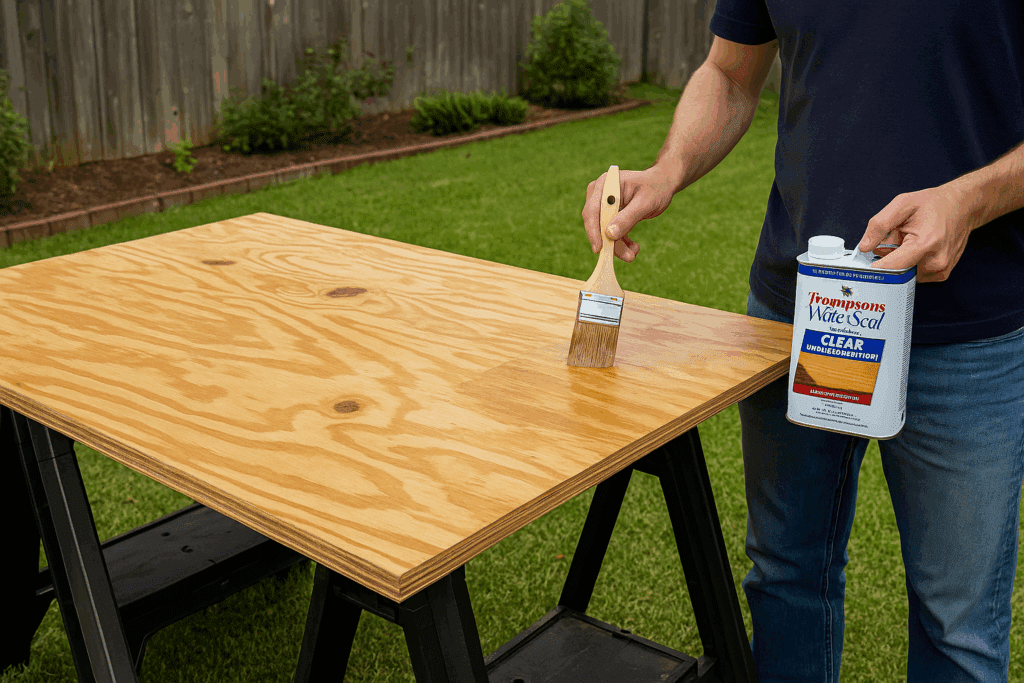
This one’s mine. Threw it together in the spring with some leftover studs and three panels of CDX. Didn’t even paint it—just sealed the top. I’ve dragged mowers across it, spilled gas, and stored wet boots. Still solid.
🚸 Workbench in the garage.
Probably the most honest work surface I’ve ever had. I built it from scraps and didn’t bother sanding. It’s dented, stained, and covered in drill holes. And it’s perfect. Holds everything. I’ve even stood on it to hang drywall.
🎜️ Temporary paths through mud. My backyard turns into a swamp when it rains. I lay down CDX so I can roll barrows through without sinking. Afterward, I dry the boards and reuse ’em for shelves or forms. Doesn’t matter what they look like—they work.
Pro Tip: If your project is visible, such as furniture or cabinetry, consider ACX plywood, birch plywood, or Baltic birch instead.
☔️ Can You Use CDX Plywood Outdoors?
Short answer: Yes, but it needs protection.
CDX is made with exterior-rated glue, which means it can handle short-term moisture. But it will absorb water over time if left unsealed. For outdoor use:
Cut with a sharp blade to reduce chipping and splinters
Seal edges, especially if there’s any outdoor exposure
Label your sides — the “C” side should face outward
Store flat and dry — stack indoors or raise it off the ground with spacers
🤔 Is CDX Right for Your Project?
Whether or not CDX plywood is the right fit comes down to how you plan to use it—and how much you care about looks.
Use CDX plywood if:
You’re building something structural, like subfloors, roof decking, or wall sheathing.
The surface will be hidden or covered once the project’s done.
You want to keep costs low without sacrificing strength.
When I built out the inside of my garage, I used CDX for the lower walls. It didn’t need to look great—just hold up to bumps, scuffs, and tool racks. And it has. Still solid after years of hard use.
Skip CDX plywood if:
You need a smooth finish for painting or staining.
The project will sit outside long-term without sealing.
You’re making furniture, cabinetry, or anything people will see up close.
One mistake I made: I once used CDX as the base for an outdoor bench and skipped sealing the underside. It soaked up water after one wet weekend and started to swell around the edges. Lesson learned.
These days, if I’m unsure, I ask myself two things:
Will anyone see this surface when I’m done?
Will it ever get wet and stay wet?
If the answer to both is yes, I use a different grade—ACX, MDO, or sanded pine. But if it’s going behind drywall, under tile, or inside a shed? CDX gets the call.
It’s not perfect. It’s not pretty. But when the goal is strength, speed, and saving money, CDX rarely disappoints. It’s dependable, easy to work with, and forgiving if you make a mistake. That’s why I always keep a couple of sheets in my garage—you never know when you’ll need one.
Can you paint CDX plywood? Yes, use exterior-grade paint and primer for best results.
Can you stain CDX plywood? Technically yes, but it usually looks blotchy due to knots and grain inconsistencies.
What thickness is best for subfloors? 3/4″ is ideal. For roofs or walls, 1/2″ is common. Go with 3/4″ for subfloors. 1/2″ works for roof sheathing or wall sheathing.
Is CDX stronger than OSB? In some situations, yes — especially when nailed or screwed into framing.
Can I use CDX for shed siding? Yes, but seal and paint it properly to protect it from the weather.
Can CDX be used for garage walls? Absolutely—especially if you’re finishing them yourself. Seal or paint it, and you’re good to go.
🔄 Sustainability and Sourcing
I’ll be honest — for the longest time, I didn’t give a second thought to where plywood came from. I was too busy figuring out if it was flat and how much it cost. That was it. But after a few jobs where I ended up hauling a dozen sheets at a time, I started noticing little stamps on the edges. FSC, HPVA, weird acronyms I didn’t care about… until I looked them up.
Most CDX is made from softwoods like pine and fir. These trees grow fast and are usually regrown after harvesting. That’s better than chewing through slow-growing hardwoods for something that’s just gonna be nailed to studs. Doesn’t make it magic, but it’s a start.
A few weeks ago, I needed ten sheets for a shed floor. The guy at the yard pointed me toward a pile with an FSC stamp. I wasn’t even looking for it, but there it was. Same size, same thickness, just came from a place that replants and manages its forest better. Figured why not — it’s still plywood.
And here’s the thing: CDX isn’t picky. The veneers don’t need to be perfect, which means the mill gets more out of each tree. Knots, rough grain, whatever — they use it. That’s less waste. I’ve even heard of mills burning the scraps to heat the glue lines. Doesn’t get more practical than that.
Is CDX perfect? No. But if you can get a certified stack, you’re doing a little less harm — and still building what you need.
There’s a reason CDX plywood shows up in garages, sheds, and job sites everywhere: it just works. It’s not there to be admired—it’s there to hold strong. I’ve used it more times than I can count, and I’ve never had it let me down when it mattered.
One time, I was helping a friend patch up a corner of his barn after a windstorm ripped the siding off. We didn’t have fancy lumber on hand, but we had a few sheets of CDX. We cut them down, fastened them to the frame, sealed the seams, and they held up through the rest of the winter. No bowing, no rot—just solid protection.
Another weekend, I was building a workbench in my garage. I didn’t want to waste good finish-grade plywood on something that was going to get beaten up by clamps, paint spills, and dropped tools. A single sheet of CDX gave me a surface I could drill into, bolt through, and sand without worrying. It’s still my go-to bench years later.
CDX is also what I used when I had to build a quick ramp for moving appliances. The step into the house was just too high for the dolly to handle, and I didn’t have time to wait. A CDX sheet, angled with a couple of 2x6s underneath, gave me the perfect solution. It flexed a bit but held tight—even with a full-size fridge rolling over it.
Then there was the temporary fix I made for a neighbor’s fence gate that blew off during a windstorm. We cut a panel to size, screwed it in place, and it worked as a barrier for nearly a year until he finally got around to replacing it.
What I’ve learned over the years is this: CDX doesn’t try to be pretty. It doesn’t pretend to be anything it’s not. But when you’re in the middle of a job and just need something that’ll work without fuss—it delivers. It’s the unsung hero of quick fixes, backup plans, and make-it-work moments.
As long as you keep a couple of sheets in the garage or shop, you’re never truly stuck. A soft spot in the floor, a broken deck board, a last-minute project for a neighbor—CDX handles it all.
No, it won’t win awards for looks. But it wins my respect every time it holds firm when everything else gives way. For DIYers and pros alike, it’s not just a panel—it’s peace of mind.
Cedar Plywood: A Complete DIY & Builder’s Guide by Admin September 8, 2025 Softwood If you’ve ever stepped into a cedar-lined closet or opened an old cedar chest, you know the scent. That fresh, woodsy smell isn’t just nostalgic—it’s…
Rhino Lining Plywood: A DIY Way to Make Plywood Last by Admin January 25, 2026 Grades I didn’t start using Rhino lining plywood because I wanted something extreme or clever. I ended up there because I got tired of replacing plywood…
Maple Plywood DIY Guide: Projects & Finishing Tips by Admin August 23, 2025 Hardwood My First Experience With Maple Plywood When I first started messing with plywood, I honestly didn’t care what I was buying. Pine was cheap, easy…